 Skip to main content

Can you shingle over a metal roof? 7 Critical Risks in 2025
Why Homeowners Ask About Shingling Over Metal Roofs
Can you shingle over a metal roof – this question comes up more often than you’d think, especially when homeowners face aging metal panels or want to match their roof to neighborhood aesthetics. Here’s the direct answer:
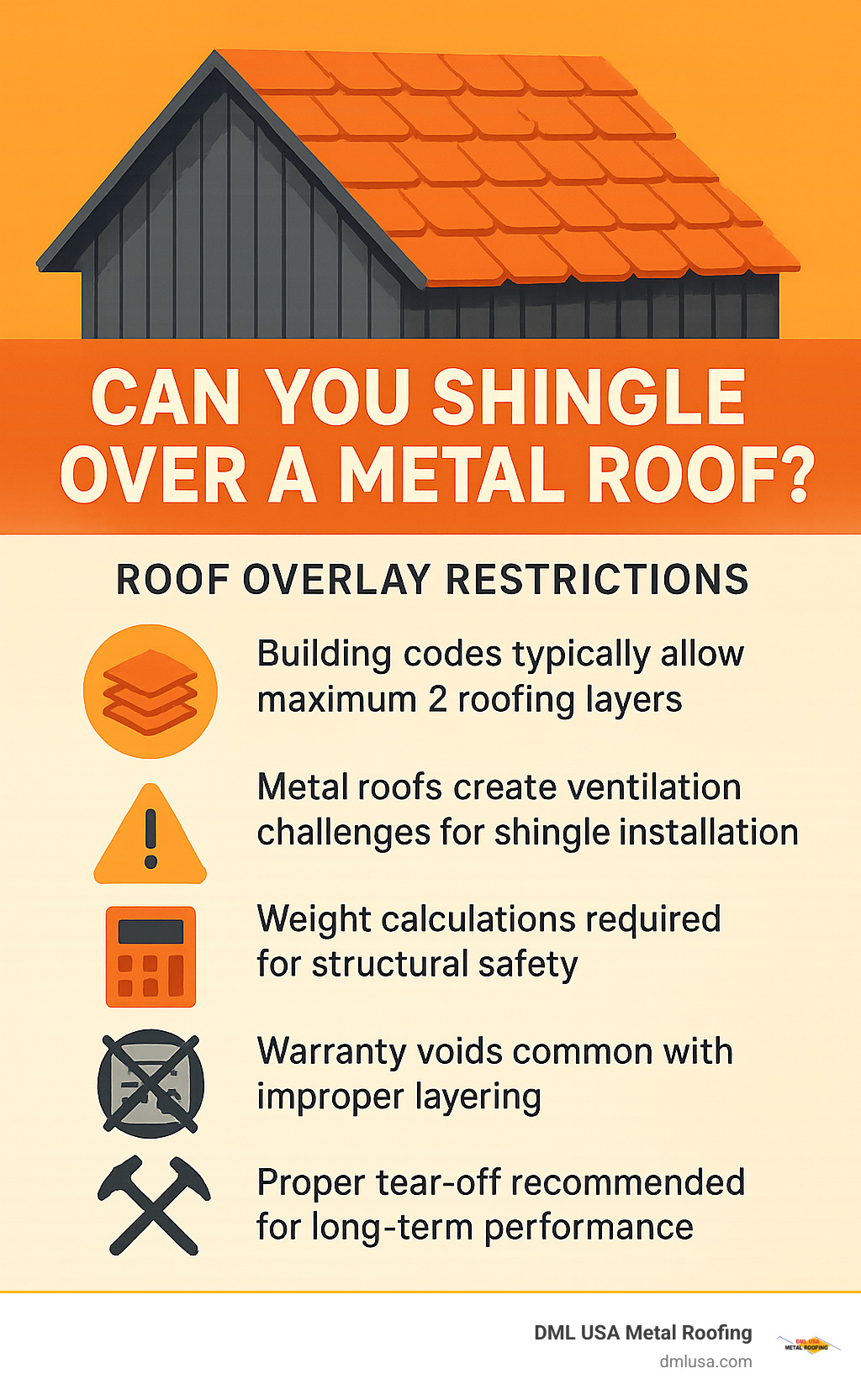
No, you generally cannot and should not shingle over a metal roof. Most building codes prohibit more than two layers of roofing material, metal roofs create ventilation and fastening challenges for shingles, and the practice often voids warranties while creating long-term structural and moisture problems.
The idea persists because homeowners see potential savings in avoiding tear-off costs. As one forum user noted: “Sounds like a contractor got lazy and didn’t remove the old metal roof.” But what seems like a cost-saving shortcut often becomes expensive down the road.
Why the mismatch matters:
– Metal roofs last 40-70 years while shingles last 12-20 years
– Different thermal expansion rates cause fastener failure
– Layering creates complex leak paths that are hard to trace
– Weight limits and structural concerns multiply
Building code reality:
– Most jurisdictions limit roofs to two total layers maximum
– Metal-over-shingles installations often require special permits
– Structural load calculations become critical with added weight
I’m Adam Kadziola, and through years of manufacturing metal roofing at DML USA Metal Roofing, I’ve seen countless homeowners ask can you shingle over a metal roof when they should be considering proper metal roof replacement or repair instead. My experience in home renovations has shown that taking shortcuts with roofing almost always costs more in the long run.
Quick can you shingle over a metal roof definitions:
– can metal roof be installed directly over shingles
– how are metal roofs installed
Can You Shingle Over a Metal Roof? The Short Answer
Let’s get right to it: Can you shingle over a metal roof? In almost every case, the answer is no. Here’s why.
Building codes are the main roadblock. Nearly all local regulations enforce the “two-layer rule”—meaning you can’t have more than two layers of roofing material on your home. If you already have a metal roof (which itself might be over shingles or directly on the roof deck), adding a third layer of asphalt shingles would break the rules in most places. This is not a small technicality; it’s a code issue that most permit offices take very seriously.
When you ask your local permit office about can you shingle over a metal roof, you’ll almost always be told “no”—unless you’re prepared to submit detailed structural calculations. They’ll want to know if your roof structure can support the extra dead load. For context, asphalt shingles add about 2-4 pounds per square foot; metal roofing is lighter, usually around 1-3 pounds per square foot. So, adding shingles on top of metal nearly doubles the roof’s weight. That’s a big deal, especially for older homes that may not have been built for it.
There’s also a big lifespan mismatch. Metal roofs are built to last 40-70 years—sometimes even longer. Asphalt shingles only last 12-20 years before needing replacement. Why cover a roof that can outlast you with a material that’ll need to be torn off while the metal below is still going strong?
Safety inspections bring even more concerns to light. Inspectors often find hidden problems when someone tries to shingle over metal panels. For example, metal expands and contracts with temperature changes, which can make shingles above it shift, crack, or buckle. It’s a recipe for leaks and headaches down the line.
Why the Idea Persists: Cost & Convenience vs. Codes
So why do some folks still consider it? Cost savings is a big reason. Tearing off an old metal roof can cost $1-3 per square foot in labor alone. For a 2,000-square-foot home, that’s $2,000-$6,000 saved—at least up front.
Some homeowners also hope to avoid sending old metal panels to the landfill. It feels greener to keep materials out of the waste stream. But unfortunately, what starts as an eco-friendly idea can backfire, creating more waste later when the layered roof fails and everything has to come off at once.
There’s also the DIY myth. Laying shingles can seem simpler and cheaper than dealing with metal panels. But as many professional roofers (and frustrated homeowners) can confirm, shortcuts like this almost always lead to bigger, more expensive problems later.
Can you shingle over a metal roof legally in your county?
Here’s the bottom line: Whether you can shingle over a metal roof depends entirely on your local building codes and permitting process. Most places follow the International Building Code (IBC), which, again, strictly limits total roofing layers to two.
Before even thinking about adding shingles, you need to:
- Call your county building department. Ask about overlay limits and whether they allow asphalt shingles over existing metal.
- Check structural requirements. Will you need a structural engineer to sign off on the added weight?
- Ask about permits. Some towns require special permits for overlays, especially in areas with heavy snow or strong winds.
- Get it in writing. Ask for written confirmation, not just a verbal OK.
Don’t forget: Some regions (especially those with lots of snow or in hurricane zones) have even stricter rules, so always check local requirements before making any decisions.
If you’re worried about the details, the permit office should be able to answer questions about maximum roof layers, structural safety, inspection rules, and any specific concerns with mixing metal and shingles.
In short: Can you shingle over a metal roof? For almost everyone, the answer is no—and if you’re still tempted, check with your local code office first to avoid a costly mistake.
Engineering & Codes: Weight, Ventilation, and Structural Limits
When thinking about can you shingle over a metal roof, it’s not just about what looks possible from the ladder. Your roof is a carefully engineered system, designed to hold a certain amount of weight—called the “dead load.” Once you add new materials, especially heavy ones like asphalt shingles, you’re asking your rafters, trusses, and deck to do a lot more work than they were built for.
A little number crunching makes this clear. Your original roof deck probably weighs about 2-3 pounds per square foot. Metal roofing adds another 1-3 pounds. Now, let’s say you put asphalt shingles on top—that’s 2-4 more pounds per square foot. Don’t forget underlayment, which is another half to one pound per square foot tucked in. All together? You could nearly double the weight your roof has to support, and in some cases even more. That extra weight can push your structure past safe limits, especially in older homes.
And weight is just the beginning. Metal roofs are famous for expanding and contracting as the temperature changes. That movement can be up to a quarter inch for every hundred feet of metal. Asphalt shingles are not designed to handle this shifting underneath them. The result? Shingles that crack, buckle, or even slide out of place, plus fasteners that work loose over time.
Ventilation is another big trouble spot. Metal roofs often depend on a specific pattern of airflow—using things like ridge and soffit vents—to keep your attic dry and cool. If you block those air pathways with new shingles on top, you lose that airflow. Suddenly, your attic is holding onto heat and moisture. That can mean higher energy bills in the summer and more risk of ice dams in the winter, as the metal under the shingles causes uneven melting and freezing.
Ice dams are especially common in colder climates when layered roofing systems aren’t breathing properly. The metal below can stay cold, while the shingles above trap warmth, leading to melt-and-freeze cycles that create big, heavy ice patches right at the edge of your roof.
If you need a quick visual to make sense of these numbers, check out the infographic below. It shows exactly how much more weight you’re adding with each layer:
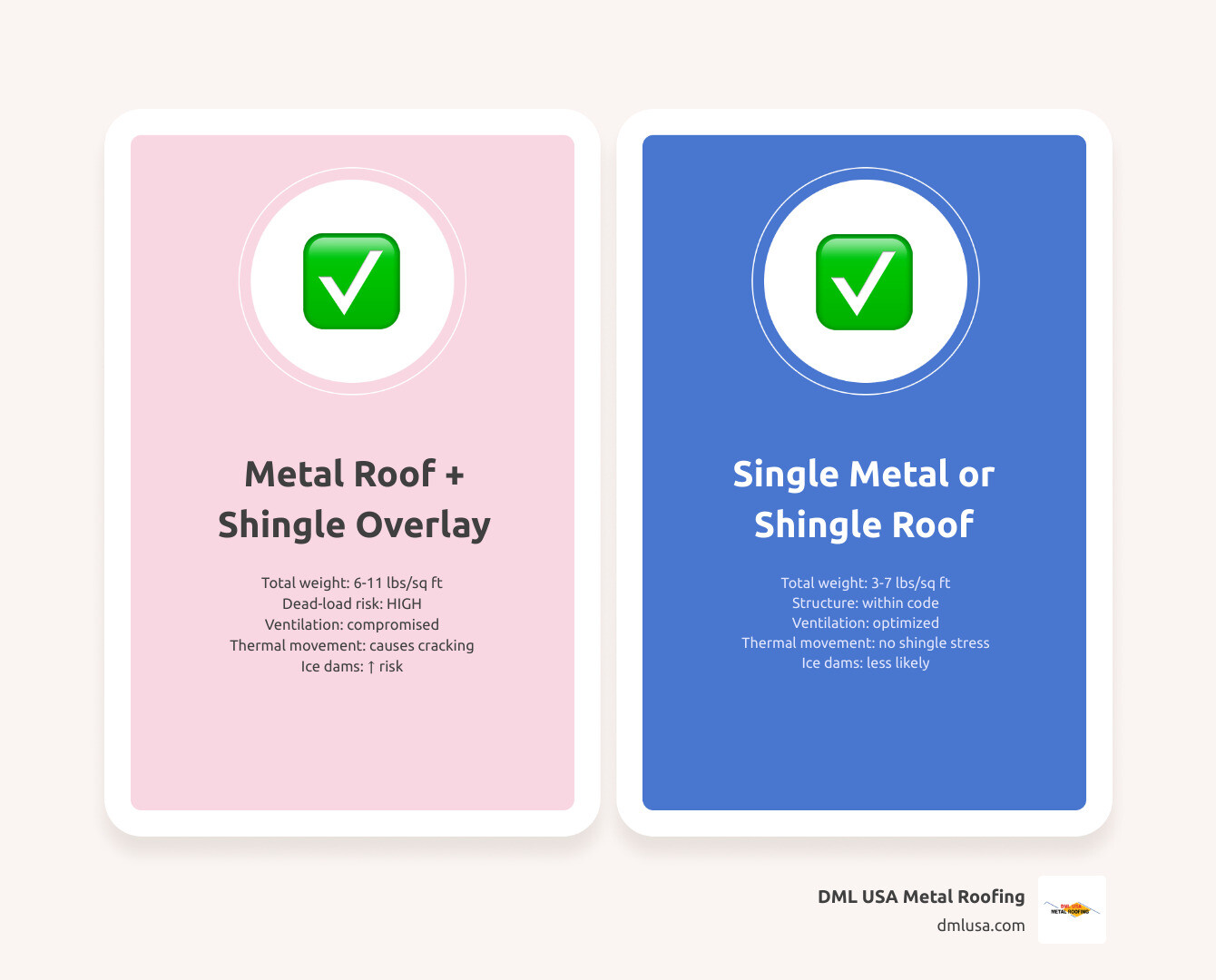
So, if you’re wondering can you shingle over a metal roof from an engineering or code perspective, keep in mind: the risks around weight, expansion, and airflow aren’t just technical details—they’re reasons most building inspectors say “no way” to this shortcut. Your roof, and your home, will thank you for taking the safe route.
Practical Risks and Hidden Costs of Shingling Over Metal
When homeowners ask can you shingle over a metal roof, they’re often focused on upfront savings. But the hidden costs and risks can be staggering – and they show up when you least expect them.
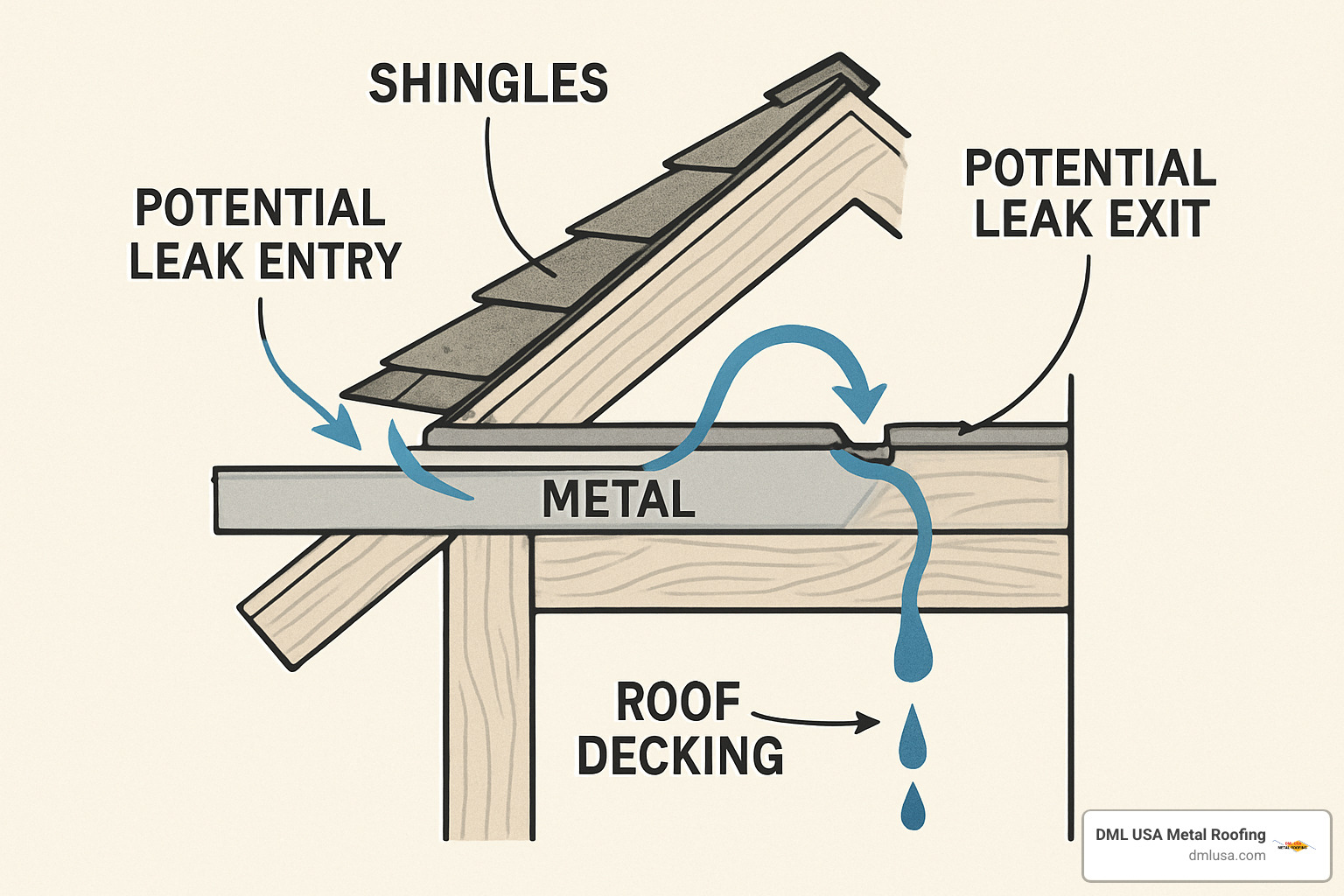
Leak tracing becomes a nightmare with multiple roof layers. Picture this: water enters through a damaged shingle, travels along the smooth metal surface underneath, then drips into your living room three rooms away from where it actually entered. As one frustrated roofing professional put it: “Leaks often do not appear directly below the point of roof penetration.” You’ll spend hours searching for the source while water damage spreads.
Warranty voids are almost guaranteed when you layer materials that weren’t designed to work together. Most shingle manufacturers will void their warranties the moment you install their products over metal roofing. Your metal roof warranty? Gone too. You’re essentially gambling with two warranties and losing both.
Insurance headaches can turn a simple claim into a major dispute. Some insurance companies will deny claims for roofs that don’t meet building codes or manufacturer specifications. I’ve seen homeowners find this the hard way after storm damage, when they needed coverage most.
The resale appraisal nightmare hits when you try to sell your home. Home inspectors flag non-standard roofing installations immediately. One real estate discussion mentioned: “Will the lender have an issue with it… it may have to be an OWC [owner will carry].” That’s not the position you want to be in when selling your biggest investment.
Latest research on metal roof performance shows that properly installed metal roofs actually increase home value. But improper installations? They can decrease it significantly.
Future repair costs multiply when contractors have to work through multiple layers. What should be a simple repair becomes a complex archaeological dig through your roof’s history. Every future maintenance call costs more because nothing is straightforward anymore.
Warranty Wake-Up Call
Here’s what most homeowners don’t realize: manufacturer clauses specifically exclude coverage when you use their products outside intended applications. Installing shingles over metal roofing falls squarely into this exclusion zone.
Material incompatibility creates failures that no manufacturer will cover. Think about it – you’re combining materials that expand and contract at different rates, age differently, and respond to weather in completely different ways. When something goes wrong (and it will), you’re on your own.
Galvanic corrosion sounds technical, but it’s actually simple chemistry working against you. When different metals interact with moisture, they create an electrochemical reaction that accelerates deterioration. This process can destroy your roof faster than normal weathering, and it voids both your metal and shingle warranties.
The warranty wake-up call usually comes too late – after you’ve already invested in the installation and problems start showing up.
Long-Term Dollars & Sense
The energy penalty alone can cost you hundreds of dollars annually. Metal roofs can save up to 40% on energy costs by reflecting sunlight and heat away from your home. Cover that metal with dark shingles, and you’ve just eliminated one of metal roofing’s biggest benefits. You’re paying for air conditioning to fight heat that your metal roof was designed to deflect.
Premature shingle aging happens when you trap heat and moisture between layers. Those shingles that should last 12-20 years? They might start failing in 5-8 years because they’re essentially cooking in the space between layers. You’ll be replacing them long before you planned.
Structural remediation costs can be devastating. If your overlay causes sagging rafters, damaged decking, or other structural problems, you’re looking at major repairs that can cost more than a complete roof replacement. I’ve seen homeowners face $15,000-30,000 bills to fix structural damage caused by improper roof layering.
The math is sobering. What looks like a $5,000 savings on tear-off costs can easily become $20,000+ in problems down the road. When you run the real numbers over the life of your roof, proper installation always wins.
Smart Alternatives and Transition Techniques
Tear-off and inspect first is always the safest approach. This allows you to evaluate your roof deck condition, address any structural issues, and start fresh with a properly designed system.
Hybrid accents offer a compromise solution. Instead of covering your entire metal roof with shingles, consider using shingles only on specific areas like dormers, bay windows, or porch roofs while keeping the main roof in metal.
Standing-seam porch tie-in techniques allow you to blend metal and shingle roofing aesthetically without compromising the main roof system. This approach addresses aesthetic concerns while maintaining proper roofing practices.
Proper flashing becomes critical when transitioning between different roofing materials. Why Choose Metal Roofing explains the benefits of staying with metal, while our Resources page provides technical guidance for proper installations.
A roofing contractor checklist should include:
– Licensed and insured contractors with metal roofing experience
– References from recent metal roofing projects
– Understanding of local building codes
– Willingness to obtain proper permits
– Written warranties on workmanship
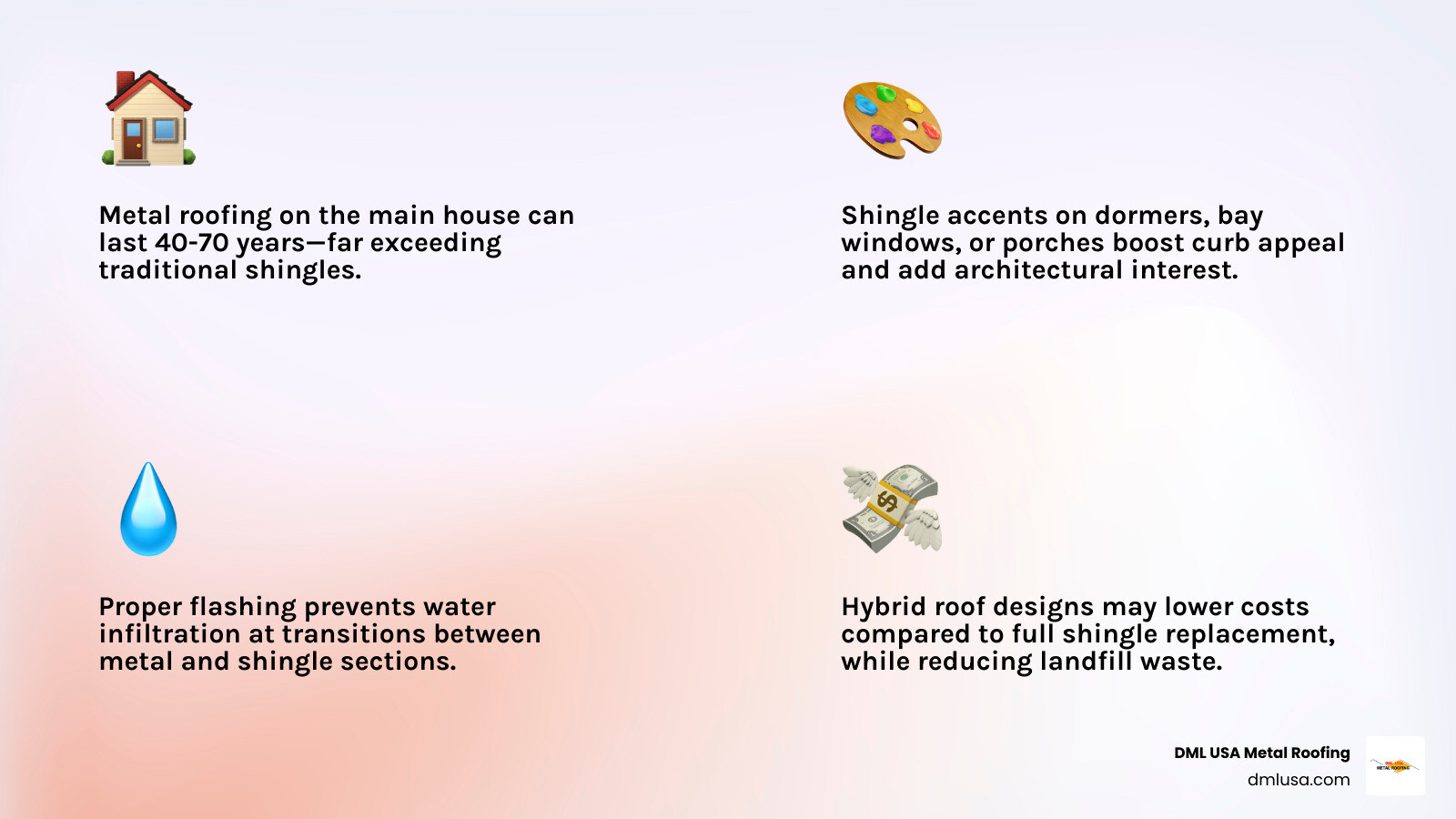
When a Hybrid Roof Makes Sense
Bay windows often benefit from shingle roofing because of their smaller size and complex angles. The shorter lifespan of shingles is less concerning on these smaller areas.
Dormers can use shingles to break up large metal roof areas visually while keeping the main roof’s metal benefits. This approach balances aesthetics with performance.
Porch roofs represent ideal candidates for shingle accents. These areas are easily accessible for maintenance and replacement, making the shorter shingle lifespan more manageable.
Aesthetic accents using shingles can improve curb appeal without compromising your main roof’s performance. Standing seam metal on the main roof provides durability, while shingle accents add visual interest.
Best-Practice Transition Detail: Step-by-Step
Underlayment overlap must extend from the shingle area onto the metal roof area by at least 6 inches to ensure water-tight transitions.
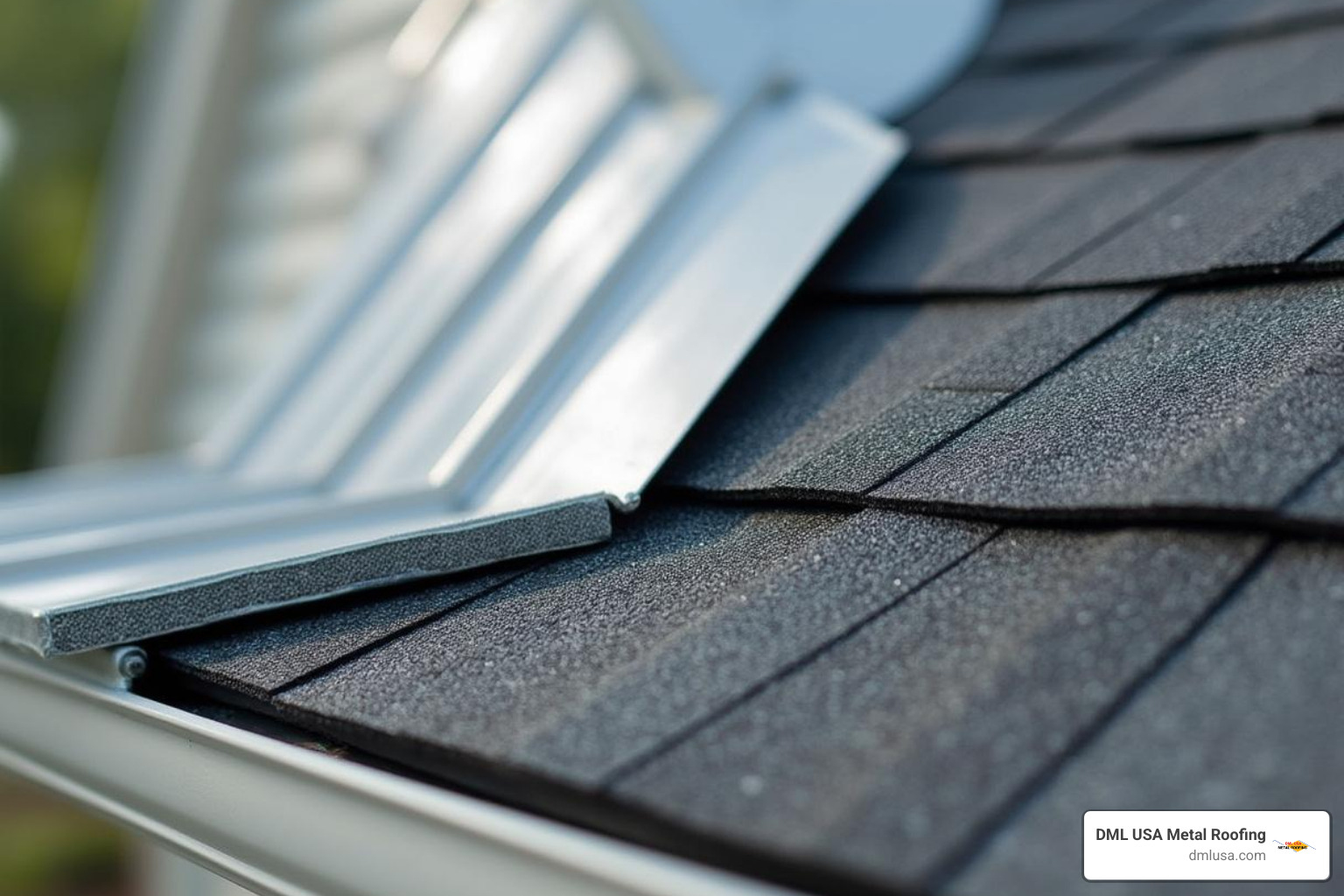
Z-flashing provides the critical barrier between different roofing materials. This step-flashing technique prevents water from traveling between materials.
Counter-flashing over the Z-flashing creates a secondary barrier and directs water away from the transition area.
Sealant choice matters – use high-quality polyurethane or silicone sealants rated for metal and asphalt compatibility.
Frequently Asked Questions about Shingling Over Metal Roofs
Will adding shingles over metal void my homeowner’s insurance?
Here’s the honest truth: it absolutely could, and many homeowners don’t realize this until it’s too late. Insurance companies get nervous about non-standard roofing installations, especially when they don’t meet local building codes or manufacturer specifications.
The bigger issue isn’t just your current coverage – it’s what happens when you try to file a claim. I’ve heard from homeowners who finded their insurance wouldn’t cover damage because their can you shingle over a metal roof experiment violated their policy terms. Some insurers require you to notify them before making major roofing changes, and failing to do so can void your coverage entirely.
The future sale problem is even trickier. When you eventually sell your home, potential buyers might struggle to get insurance on a house with non-standard roofing. This can kill deals or force you to make expensive corrections before closing.
My advice? Call your insurance agent before you even consider this project. Get their answer in writing, because verbal assurances don’t help when you’re filing a claim.
How does the added weight impact my rafters or trusses?
Think about it this way: your roof structure was designed like a bridge – engineered to carry a specific load safely. When you add 2-4 pounds per square foot of shingles and underlayment on top of existing metal roofing, you’re essentially adding a small car’s worth of weight to your roof.
Older homes face the biggest risk because they were built to different standards. A house from the 1960s might have rafters sized for much lighter loads than what we require today. Adding that extra weight can push the structure beyond its limits.
Warning signs your roof is stressed include sagging ridge lines that you can see from the street, cracked drywall appearing on your ceilings, doors and windows that suddenly start sticking, and visible rafter deflection when you look up from your attic. These aren’t just cosmetic issues – they’re signs of potential structural failure.
The scary part? These problems often develop gradually, so you might not notice them until significant damage has occurred. By then, you’re looking at major structural repairs that cost far more than a proper roof replacement would have.
Is there ever a code-approved way to keep the metal and add new shingles?
Technically, maybe – but practically, almost never. I’ve seen a handful of cases where jurisdictions allowed it, but the hoops you have to jump through make it rarely worthwhile.
The rare exceptions require a structural engineer to certify that your specific roof can handle the additional load, custom ventilation systems designed and installed by professionals, special permits that can take months to obtain, and regular inspections throughout the project and afterward.
Even when it’s technically possible, the costs add up quickly. Between engineering fees, special permits, custom installation requirements, and ongoing maintenance needs, you often spend more than you would on a proper tear-off and replacement.
Here’s what really happens: Most contractors won’t touch these projects because of liability concerns. The few who will charge premium prices because of the complexity and risk involved. You end up paying more for an inferior solution that creates ongoing headaches.
The bottom line? Just because something might be legal doesn’t mean it’s smart. After years in the metal roofing industry, I’ve never seen a case where shingling over metal was the best solution when all factors were considered.
Conclusion
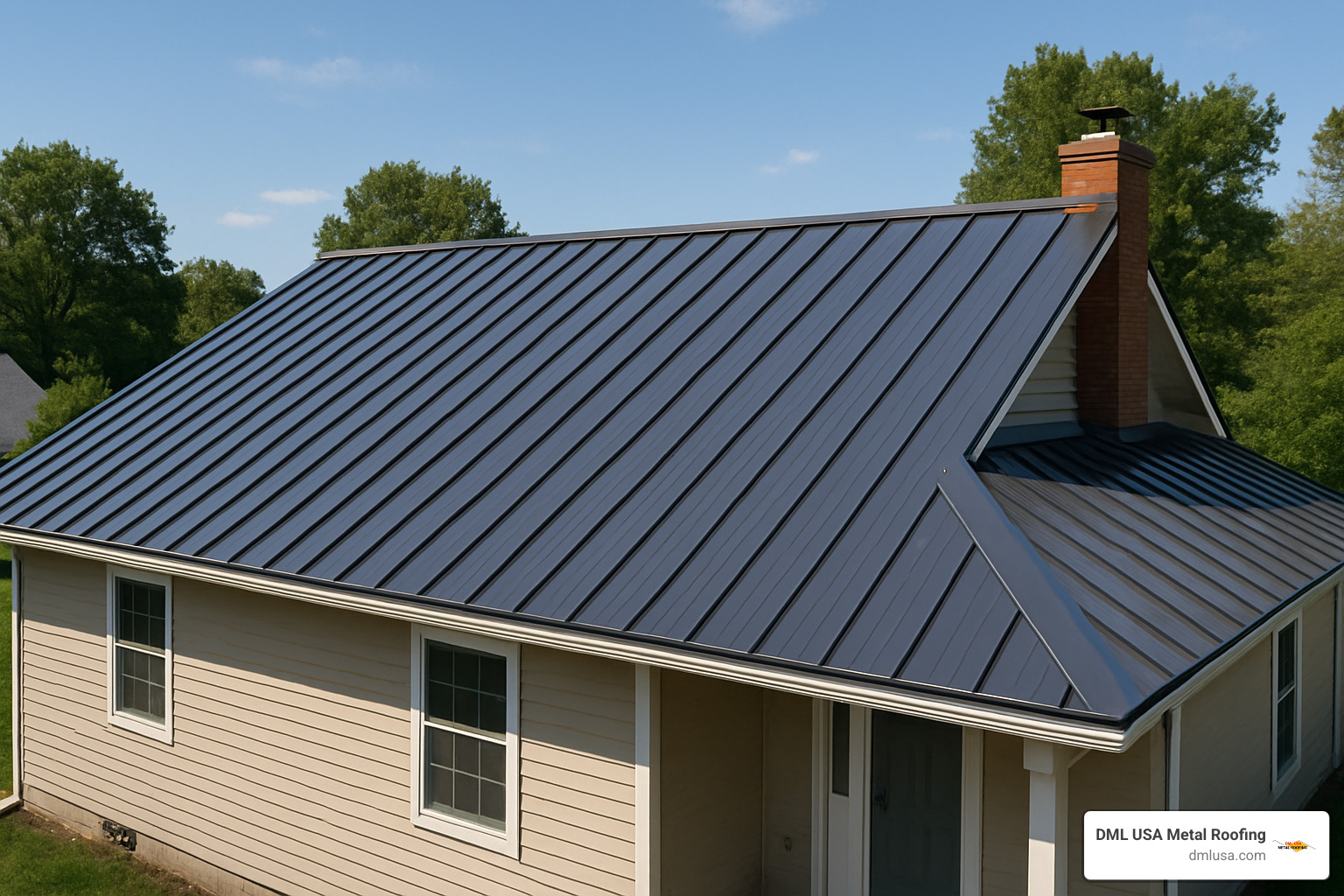
So there you have it – the definitive answer to can you shingle over a metal roof is almost always no. After walking through the building codes, structural engineering, hidden costs, and practical nightmares, it’s clear why roofing professionals shake their heads when homeowners suggest this approach.
I get it though. The idea of saving money on tear-off costs is tempting. Who wouldn’t want to avoid those disposal fees and extra labor? But here’s what I’ve learned after years in this business: roofing shortcuts always come back to bite you. What looks like savings today becomes expensive headaches tomorrow.
The building code violations alone should stop most homeowners in their tracks. But even if you somehow got approval, you’d be covering a superior 40-70 year roofing system with inferior 15-20 year materials. That’s like putting a Band-Aid over a perfectly good wound that’s already healed.
At DML USA Metal Roofing, we’ve seen too many homeowners learn this lesson the hard way. Our durable, maintenance-free panels are engineered to last decades without the complications that come from mixing materials. When you choose quality metal roofing, you’re investing in peace of mind that lasts.
The tear-off recommendation might sting your wallet initially, but it’s the only path that makes sense long-term. You’ll maintain your warranties, keep your insurance company happy, stay within building codes, and avoid the moisture problems that plague layered systems. Plus, you’ll actually be able to find the source of leaks if they ever occur.
Think about it this way – would you rather do this job once and do it right, or deal with ongoing problems for the next two decades? The math becomes pretty clear when you factor in the structural remediation costs, warranty voids, and insurance headaches that come with improper installations.
Ready to explore roofing solutions that actually make sense for your home and your budget? Our team understands the frustration of needing roof work, and we’re here to help you make the right choice the first time. Contact us today to schedule a consultation where we can discuss proper metal roofing options that will protect your home for decades to come.
