 Skip to main content

Metal Shingle Roofing: 7 Powerful Reasons to Choose It in 2025
Why Metal Shingle Roofing Is Changing Modern Homes
Metal shingle roofing combines the classic appearance of traditional asphalt shingles with the superior durability and performance of metal materials. This innovative roofing solution offers homeowners a long-lasting alternative that can withstand extreme weather while reducing maintenance costs and energy bills.
Key Facts About Metal Shingle Roofing:
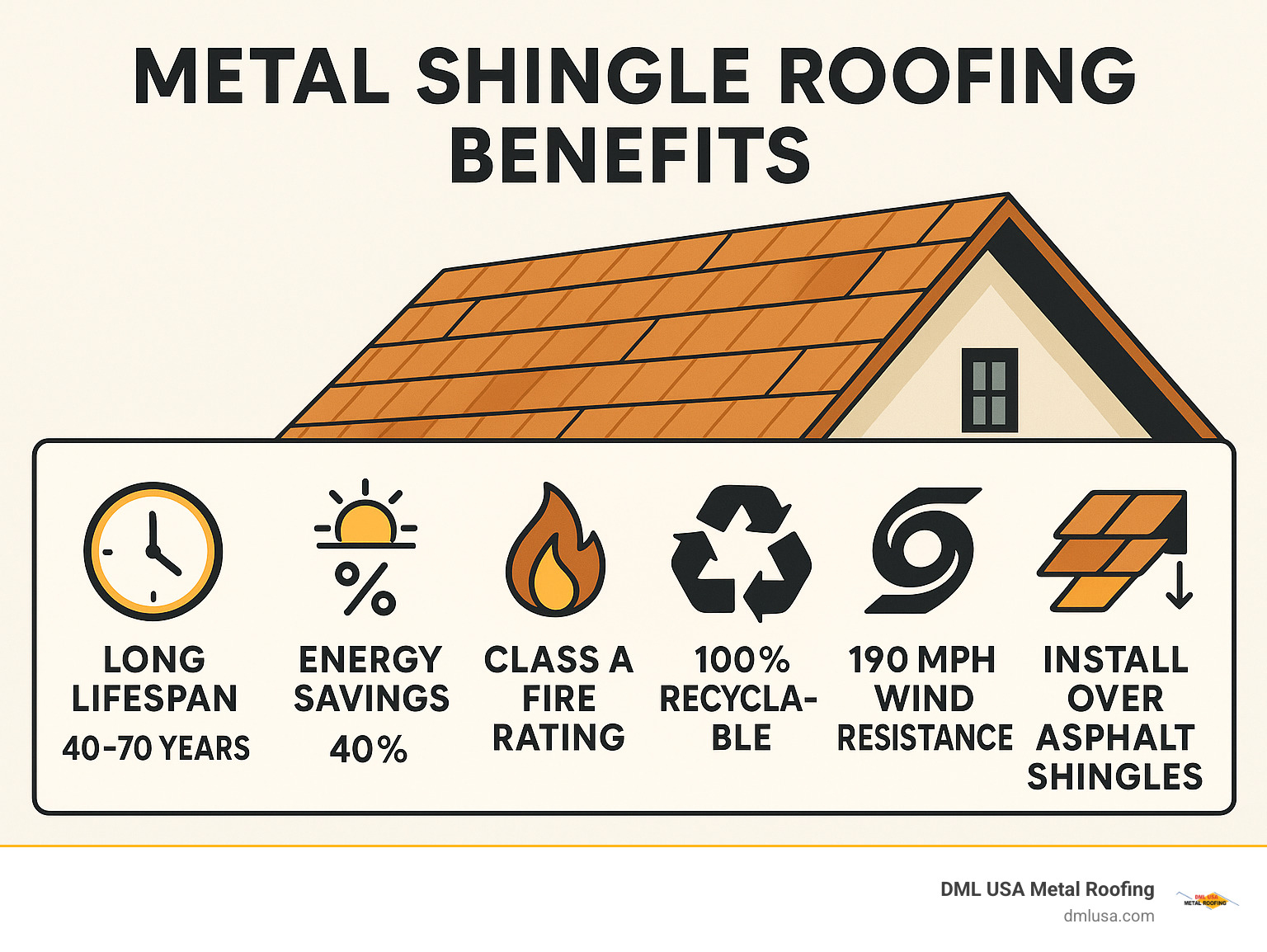
– Lifespan: 40-70 years vs. 12-20 years for asphalt shingles
– Materials: Steel, aluminum, or stone-coated metal panels
– Wind Resistance: Up to 190 mph hurricane-force winds
– Energy Savings: Can reduce cooling costs by up to 40%
– Fire Rating: Class A non-combustible protection
– Recyclability: 100% recyclable at end of life cycle
The growing popularity of metal shingle roofing stems from homeowners’ frustration with frequent roof repairs and replacements. Traditional asphalt shingles contribute 11 million tons of landfill waste annually, while metal shingles can be recycled indefinitely.
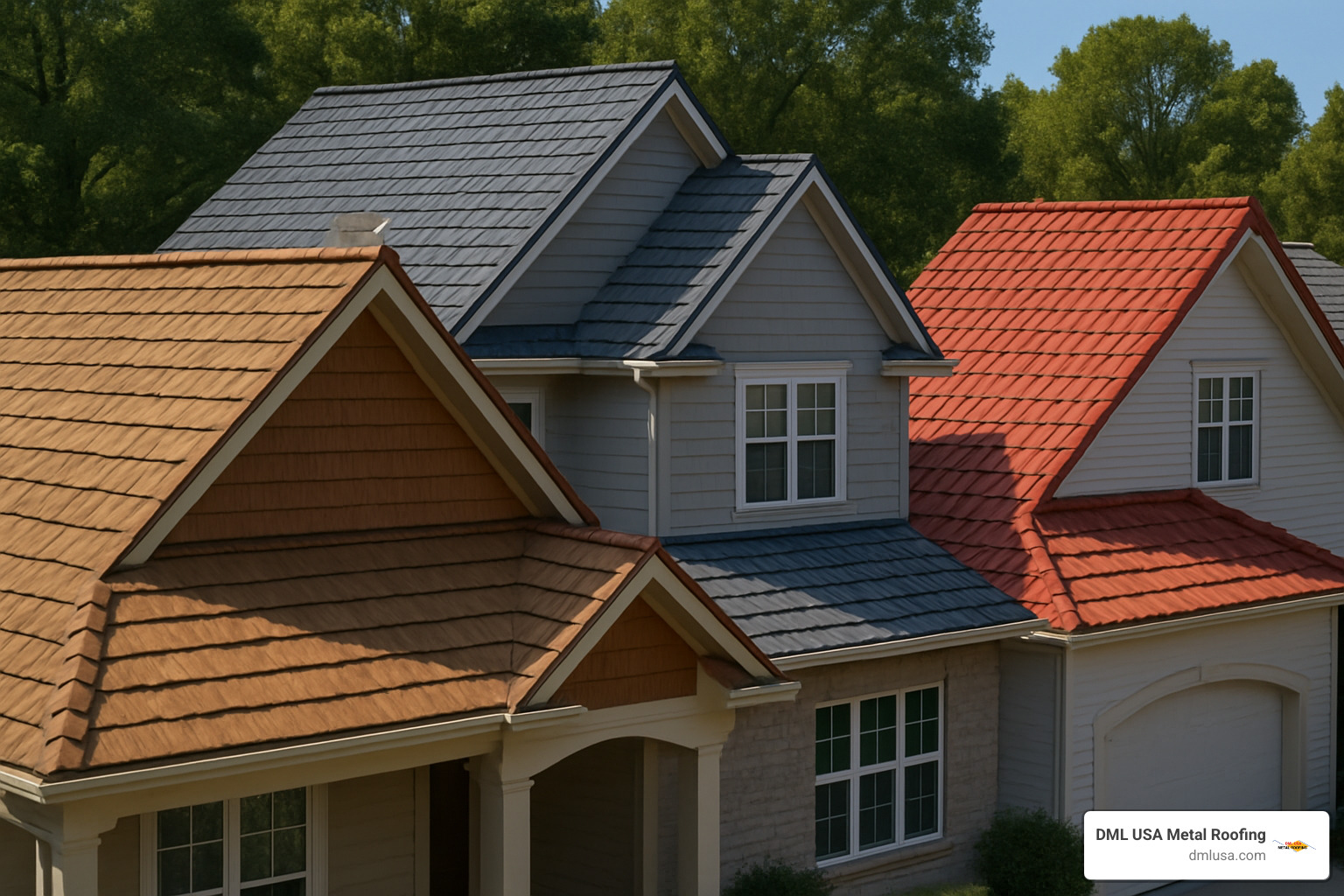
Modern metal shingles are designed to replicate the look of:
– Wood shake profiles
– Natural slate tiles
– Architectural asphalt shingles
– Clay tile patterns
The concealed fastening systems and interlocking design provide superior weather protection compared to exposed fastener systems. Stone-coated varieties offer additional texture and color options while maintaining the lightweight benefits of metal construction.
I’m Adam Kadziola, and I’ve been manufacturing high-quality metal shingle roofing systems since founding DML USA Metal Roofing in 2007. Through years of experience in home renovations and roofing manufacturing, I’ve seen how metal shingle roofing delivers lasting value and peace of mind for homeowners across Illinois and beyond.
Common metal shingle roofing vocab:
– cost difference between metal roof and shingle roof
– what is the cost difference between metal roofing and shingles
What Is Metal Shingle Roofing?
Metal shingle roofing is a modern take on a classic look—bringing together the timeless style of traditional shingles with the serious durability of metal. This roofing option features stamped steel or aluminum panels shaped to look like cedar shakes, slate tiles, or clay, but with superior performance.
Panels are crafted from 26-gauge galvanized steel or corrosion-resistant aluminum. Each panel features interlocking edges and concealed fasteners that create a tight, watertight barrier superior to traditional asphalt. The hidden fasteners eliminate potential water entry points.
Stone-coated metal shingles add a layer of ceramic-coated stone granules fused onto the metal for improved texture and weather resistance. These shingles are incredibly lightweight—around 150 pounds per square compared to 300+ pounds for slate or tile.
| Feature | Metal Shingles | Asphalt Shingles |
|---|---|---|
| Lifespan | 40-70 years | 12-20 years |
| Weight | 150 lbs/square | 250-400 lbs/square |
| Fire Rating | Class A | Class A (varies) |
| Wind Resistance | Up to 190 mph | 60-110 mph |
| Maintenance | Minimal | Regular repairs |
| Recyclability | 100% | 0% (landfill waste) |
Metal Shingle Roofing vs Asphalt Shingles
When comparing metal shingle roofing to traditional asphalt, the differences are significant. Asphalt shingles typically need replacing within 15-20 years, while metal shingles last 40-70 years with minimal maintenance.
Modern metal shingles feature deep-cut edges, rich textures, and dimensional profiles that convincingly mimic traditional materials. Stone-coated versions are so realistic that most people can’t tell the difference.
Maintenance is another major advantage. Asphalt requires regular repairs after storms, while metal shingles need only annual cleaning and debris removal. Environmentally, asphalt contributes over 11 million tons of annual landfill waste, while metal shingles are 100% recyclable.
Core Types & Styles Available
Steel shingles are the most popular choice, made from galvanized or Galvalume steel with 40-50 year warranties. They can be pressed into intricate profiles mimicking wood shakes or slate.
Aluminum shingles excel in coastal areas due to natural corrosion resistance. While more expensive than steel, they’re ideal where salt air is a concern.
Stone-coated steel shingles combine steel strength with ceramic-coated stone granules for improved texture and UV protection. Many earn UL 2218 Class 4 impact ratings for superior hail resistance.
Style options include shake profiles for rustic charm, slate profiles for neat depth, and tile profiles for Mediterranean appeal. Most manufacturers offer extensive color palettes, including cool-roof rated options that reflect heat and may qualify for energy tax credits.
Key Benefits & Limitations
Understanding both advantages and potential drawbacks of metal shingle roofing helps homeowners make informed decisions. The benefits significantly outweigh limitations for most applications.
Primary Benefits:
Exceptional Longevity stands as the most compelling advantage. Metal shingles can last 40-70 years, effectively making them the last roof many homeowners will need. This longevity stems from metal’s resistance to UV degradation, thermal cycling, moisture absorption, and organic decay.
Superior Weather Resistance makes metal shingles ideal for severe weather areas. The interlocking design and concealed fasteners create continuous barriers against wind-driven rain. Many systems withstand hurricane-force winds up to 190 mph, far exceeding asphalt’s 60-110 mph ratings.
Class A Fire Rating provides the highest fire protection available. Metal shingles are non-combustible and won’t ignite from flying embers during wildfires.
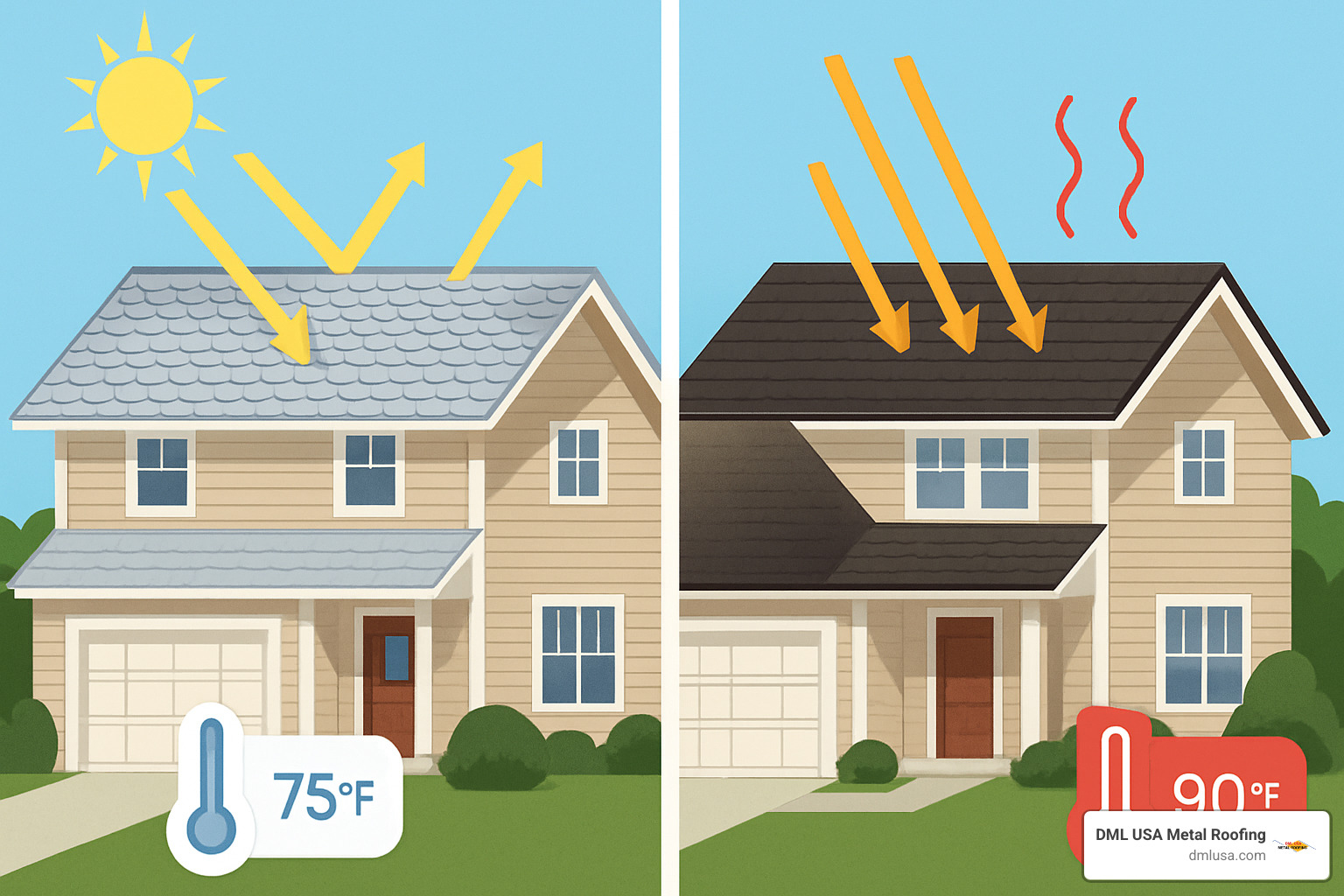
Energy Efficiency delivers measurable utility savings. Metal’s reflective properties can reduce cooling costs by up to 40% compared to dark asphalt shingles. Scientific research demonstrates that properly designed metal roofing systems significantly reduce building energy consumption.
Environmental Sustainability appeals to eco-conscious homeowners. Metal shingles contain 25-95% recycled content and are 100% recyclable at end of life, creating a closed-loop system that eliminates landfill waste.
Realistic Limitations:
Higher Upfront Investment represents the primary barrier. Material costs typically range from $5-12 per square foot, compared to $3-5 for quality asphalt shingles. However, this cost difference often disappears when considering total ownership costs over 30-40 years.
Installation Expertise Requirements mean not every roofer can properly install metal shingles. Specialized techniques and tools can limit contractor options in some areas.
Potential for Denting exists with some products in areas prone to large hail. However, modern metal shingles often achieve UL 2218 Class 4 impact ratings, withstanding hail up to 2 inches in diameter without damage.
Performance in Extreme Weather
Metal shingle roofing systems excel in challenging weather conditions. The four-way interlocking design creates continuous membranes that distribute wind loads across entire roof surfaces. Testing shows quality systems can withstand sustained winds of 120-150 mph, with some rated for hurricane-force winds up to 190 mph.
Hail Resistance has improved dramatically with modern manufacturing. Many products achieve UL 2218 Class 4 impact ratings, withstanding 2-inch diameter hail without damage. Metal’s ability to absorb and distribute impact energy prevents cracking or puncturing while maintaining weather protection.
Snow and Ice Performance benefits from metal’s smooth surface and thermal properties. Snow slides off more readily, reducing ice dam formation. Metal’s thermal conductivity helps equalize roof temperatures, preventing freeze-thaw cycles that create ice dams.
Sustainability & Energy Tax Credits
Metal shingle roofing offers significant environmental benefits beyond recyclability. High reflectivity characteristics help combat urban heat island effects while reducing building energy consumption. Metal shingles with cool-roof coatings can reflect 70-80% of solar radiation, compared to 5-25% for dark asphalt shingles.
Federal Incentives can significantly offset initial investment. The federal Residential Clean Energy Credit allows homeowners to claim 30% of qualifying metal roof costs through 2032, reducing to 26% in 2033 and 22% in 2034.
Energy Star Certification requirements vary by climate zone but generally require specific solar reflectance and thermal emittance values. Many metal shingle products meet these requirements, particularly those with cool-roof coatings.
Cost, Installation & Warranty Guide
Understanding the real cost of metal shingle roofing helps you make smart decisions. While you’ll invest more upfront than asphalt shingles, the long-term value becomes compelling when you consider the bigger picture.
Material costs typically run $5-12 per square foot, with steel shingles on the lower end and premium stone-coated systems costing more. Labor costs add $4-10 per square foot, reflecting the specialized skills required for proper installation.
Additional costs include removing old roofing ($1-3 per square foot), upgraded synthetic underlayment ($0.50-1.50 per square foot), permits and inspections ($100-500), and special flashing work ($2-5 per linear foot).
For a typical 2,000 square foot home, expect $18,000-44,000 total. This significant investment becomes the last roof you’ll likely ever buy. Factor in energy savings, minimal maintenance costs, and avoiding future replacements, and the numbers become attractive.
Money-saving tip: if codes allow and your existing roof is sound, you might install over one layer of asphalt shingles, saving $2,000-5,000 in disposal fees and labor.
Financing options include home improvement loans, home equity lines, and specialized roofing programs. Many manufacturers offer competitive financing, and metal roofing often qualifies for preferential rates as an energy-efficient improvement.
Warranties are impressive—30-50 years of transferable coverage including panel integrity, paint finish performance, and specific weather events. Some include “no-max-wind” clauses protecting you regardless of wind speed.
Metal Shingle Roofing Installation Process
Installing metal shingle roofing requires precision and expertise. Everything starts with thorough deck inspection, checking structural capacity, fastener holding power, and ventilation adequacy. Any damaged decking gets repaired before proceeding.
High-quality synthetic underlayment follows, providing superior tear resistance and UV protection compared to felt paper. The underlayment gets properly lapped and sealed for continuous moisture barriers.
Starter strips and edge details require precise installation since they set the foundation. Panel installation follows systematic patterns from bottom to top, with every locking feature engaging properly and fasteners placed exactly per manufacturer specifications.
Hip and ridge caps use specialized components matching your shingle profile, providing weather protection while accommodating thermal movement. Final inspection verifies proper installation and helps register your warranty.
Understanding Lifetime Warranties
Metal shingle roofing warranties are among the industry’s best. Panel integrity coverage typically provides lifetime protection against manufacturing defects, rust-through, and structural failure, covering repair or replacement costs plus reasonable labor.
Paint finish warranties vary by coating type and environment. Premium PVDF coatings often carry 30-40 year fade and chalk warranties, while standard polyester systems offer 20-25 years.
Registration requirements are crucial but often overlooked. Submit proof of purchase, installation documentation, and property information within specified timeframes to activate coverage. Transferability adds real value if you sell before warranty expiration, with most quality warranties transferring to new owners for small fees.
Maintenance & Long-Term Value
The beauty of metal shingle roofing lies in how little effort it takes to maintain peak performance for decades. Unlike asphalt shingles requiring constant attention, metal shingles are refreshingly low-maintenance.
Your annual routine is surprisingly simple: visual checks from ground level once or twice yearly, examining flashing around chimneys and vents, and ensuring gutters aren’t overflowing. Professional inspections every 3-5 years help catch minor issues early.
Gutter maintenance becomes more important because metal’s smooth surface sheds water so efficiently. Clean gutters at least twice yearly to handle increased water flow—a small price for a self-maintaining roof.
Keeping your roof clean is straightforward. Metal shingles naturally shed debris, but occasionally remove leaves or branches from valleys. Use soft-bristled brushes and gentle water pressure—skip pressure washers and harsh chemicals.
The financial benefits become more impressive each year. Return on investment typically ranges from 85-95%, making it one of the smartest home improvements possible.
Insurance companies offer 5-15% discounts due to metal roofing’s superior fire and weather resistance. Over 40-50 years, these savings total thousands of dollars.
Energy savings continue year after year, with many homeowners seeing 20-40% reductions in cooling costs. In hot climates, these savings can be substantial—some customers report $80+ monthly summer savings.
The compound effect is remarkable. Lower insurance premiums, reduced energy bills, eliminated replacement costs, and minimal maintenance expenses mean your metal roof often pays for itself within 15-20 years, then continues delivering value for decades.
Troubleshooting Common Issues
Most concerns homeowners worry about with metal shingle roofing are either easily preventable or less problematic than expected.
Denting worries top concern lists, but modern metal shingles earning UL 2218 Class 4 ratings handle 2-inch hail without functional damage. Even severe hail causing minor cosmetic denting doesn’t affect protection, insurance often covers damage, and individual panels can usually be replaced without disturbing surrounding areas.
Oil canning sounds scary but is purely cosmetic—slight wavy appearance in flat metal surfaces. Proper installation minimizes it, textured products hide it completely, and it doesn’t affect performance.
Rain noise concerns come up frequently, but properly installed systems are typically quieter than expected. Solid decks, quality underlayment, and interlocking panels work together dampening sound. Most homeowners report noise levels similar to or quieter than old asphalt roofs.
Panel replacement is straightforward when needed. Quality systems allow individual panel removal and replacement without major roof disruption. Keep spare panels from original installation for perfect color matches.
Most “problems” are misunderstandings about how metal roofing works. After manufacturing systems for over 15 years, I can confirm that vast majority of installations require virtually no troubleshooting—they quietly protect homes year after year with minimal fuss.

Frequently Asked Questions about Metal Shingle Roofing
How long does a metal shingle roof really last?
When you choose metal shingle roofing, you’re making a lifetime decision. With proper installation and minimal care, metal shingle roofs typically last 40-70 years—sometimes longer.
True lifespan depends on metal type, protective coating quality, installation, and local climate. Steel shingles with PVDF coatings often provide 50-60 years of service. Aluminum shingles, especially in coastal areas, can last even longer. Stone-coated steel combines steel strength with ceramic layers, often reaching the 70-year range.
Metal’s secret? It stands up to UV rays, moisture, and extreme temperatures without cracking, rotting, or becoming brittle. Proper installation by experienced professionals ensures your roof reaches full life expectancy.
Can metal shingles be installed over one layer of asphalt?
Absolutely—metal shingle roofing can often install directly over single layers of existing asphalt shingles, if local codes allow and your structure supports it. This saves money by avoiding tear-off costs and disposal fees while speeding installation.
Your installer must verify the old asphalt layer is sound—no major leaks, rot, or structural problems. The roof deck must be strong enough for the new roof, with soft spots repaired first.
Proper installation includes high-quality synthetic underlayment over old shingles for extra protection. Ridge and hip shingles are typically removed for proper metal cap and ventilation installation.
While installing over existing shingles saves money, sometimes removing the old roof is smarter—allowing damage inspection, best underlayment installation, and optimal performance. Some manufacturers require full tear-off for strongest warranties.
Will a metal shingle roof be noisy during rainstorms?
No—metal shingle roofing is not noisy in rain! This common myth comes from thinking about barn roofs, which are very different from residential installations.
Residential metal shingles install over solid roof decks with synthetic underlayment layers acting like sound blankets. Shingles are smaller panels, not large sheets, so they don’t drum in rain.
Stone-coated metal shingles have textured surfaces naturally absorbing sound. Many homeowners find their new metal roofs are just as quiet—or quieter—than old asphalt roofs.
Good attic insulation helps maintain quiet comfort regardless of roof type. With proper installation and materials, rainstorms become perfect nap backdrops rather than noise concerns.
Have more questions? Contact our team at DML USA Metal Roofing for expert guidance on choosing the best solution for your home.
Conclusion
Choosing metal shingle roofing is more than just picking a roof—it’s making a smart, lifelong investment in your home. With lifespans reaching 40-70 years, real energy savings (up to 40% lower cooling costs!), and barely-there maintenance, metal shingles give you peace of mind and great value far beyond their upfront price tag.
As we’ve seen, these roofs truly shine when it comes to tough weather, fire safety, and being kind to the environment. They stand strong against wind, hail, and even wildfires. Plus, they cut down on landfill waste, and can help you qualify for valuable energy tax credits. While the initial cost is higher compared to asphalt shingles, you quickly make up for it in what you save on repairs, replacements, and energy bills—not to mention the boost in your home’s value and curb appeal.
At DML USA Metal Roofing, our passion is crafting long-lasting, beautiful, and affordable metal roofing systems right here in Illinois. We blend advanced materials with proven techniques to deliver roofs that are maintenance-free and stand the test of time. And with our strong warranties and expert support, you can relax knowing your home is well protected for decades.
If you’re ready to stop worrying about leaks, shingle cracks, and never-ending repairs, it might be time to look into metal shingle roofing. With the right installation and simple care, this could be the last roof your home ever needs—no more “roof replacement” line items in your future!
Curious if metal shingles are right for your home? Want to learn more about product options, warranties, or energy tax credits? Contact our team today for friendly advice and expert guidance. We’ll help you find the perfect roofing solution for your style, needs, and budget—so you can enjoy lasting confidence, comfort, and curb appeal for generations to come.
