 Skip to main content

Best Type of Metal Roof Standing Seam: Top 3 Powerful Picks 2025
Why Choosing the Best Type of Standing Seam Metal Roof Matters
The best type of metal roof standing seam depends on your specific needs, but here’s what you need to know:
Top Standing Seam Types by Performance:
1. Mechanically Seamed – Ultimate weather protection, works on slopes as low as 0.5:12
2. Snap-Lock with Clips – Best all-around choice, balances performance and cost
3. Nail Strip/Fastening Flange – Most budget-friendly, good for simple installations
4. Batten-Cap – Premium architectural look, highest cost
Standing seam metal roofing has become the gold standard for homeowners who want to never re-roof again. Unlike traditional roofing materials that need replacement every 15-20 years, standing seam systems can last 50+ years with proper installation.
The key difference lies in the concealed fastener design. While exposed-fastener metal roofs have up to 70 screws per square, standing seam panels use hidden clips and raised seams that interlock tightly. This prevents water penetration and protects fasteners from UV rays, moisture, and wind damage.
Why homeowners choose standing seam:
– Weather-tight performance in extreme conditions
– Zero exposed fasteners means fewer leak points
– Thermal expansion handled through clip systems
– 100% recyclable at end of lifespan
– Can support solar panels without roof penetrations
I’m Adam Kadziola, and I’ve been manufacturing high-quality standing seam metal roofing in Illinois since 2007 at DML USA Metal Roofing. Through years of helping homeowners choose the best type of metal roof standing seam for their specific needs, I’ve seen how the right system can permanently solve roofing problems while adding lasting value to homes.
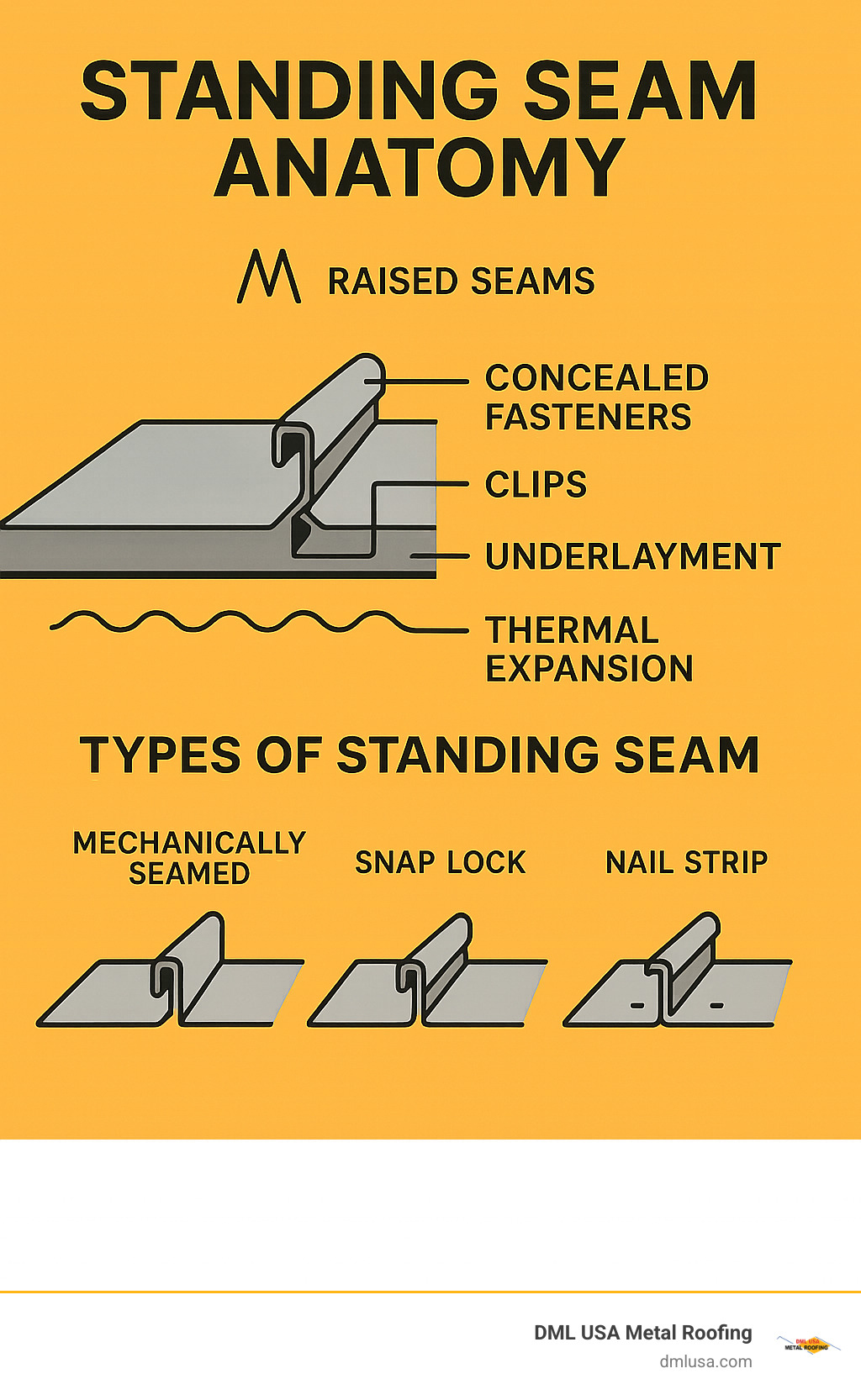
Quick best type of metal roof standing seam definitions:
– Commercial metal roof installation
– Residential metal roof types
Standing Seam Metal Roofing 101
Think of standing seam metal roofing as the engineering marvel of the roofing world. What makes it special? Those distinctive raised seams that run vertically from your gutters to the peak, creating clean lines while hiding every fastener beneath the panels.
Each metal panel has raised edges that interlock with the next panel, creating a weathertight seal. Clips attach your panels to the roof deck while allowing the metal to expand and contract naturally with temperature changes. High-temperature underlayment provides an extra layer of protection beneath the panels. And those raised seams (typically 1-2 inches high) create the watertight connections that make standing seam roofs virtually leak-proof.
Understanding roof slope is crucial when choosing the best type of metal roof standing seam for your home. Hydrostatic systems can handle water submersion and work on slopes as low as 1/4:12. Hydrokinetic systems are designed to shed water efficiently and require steeper slopes of 3:12 or greater.
The genius of thermal expansion accommodation sets standing seam apart from every other roofing system. While rigid materials crack and fail under temperature stress, standing seam panels glide smoothly on their clip systems.
How It Differs From Other Metal Roofs
The difference between standing seam and exposed-fastener metal roofing is like comparing a luxury car to a basic work truck – both get you there, but the experience is completely different.
Exposed-fastener panels rely on screws driven right through the face of the panel into your roof deck. A typical home ends up with 2,500 to 3,000 exposed screws creating potential leak points. Every screw faces daily battles against UV rays, moisture, and thermal cycling. Over time, they loosen, crack, or fail entirely.
Standing seam eliminates this headache entirely. Zero exposed fasteners means zero maintenance headaches. The raised seam design creates watertight interlocks between panels, while the concealed clips handle all thermal movement without stress.
Key Advantages Over Shingles & Tiles
Standing seam metal roofing doesn’t just beat traditional materials – it leaves them in the dust on virtually every performance metric.
Wind resistance tells the whole story. While asphalt shingles start failing around 70-90 mph winds, properly installed standing seam panels can withstand wind speeds exceeding 200 mph.
Fire protection reaches the highest possible rating with standing seam metal. That Class A fire rating means your roof won’t ignite from flying embers, direct flames, or radiant heat.
Solar panel integration becomes seamless with standing seam roofs. The clip-based mounting systems clamp directly to the raised seams without creating any roof penetrations.
The longevity advantage is where standing seam really shines. While you’ll replace asphalt shingles 2-3 times over 40 years, a quality standing seam roof installed today could easily outlast your mortgage.
Which Is the Best Type of Metal Roof Standing Seam System?
When I talk to homeowners about the best type of metal roof standing seam system, I always start with this truth: there’s no single “best” option for everyone. The right choice depends on your roof’s slope, your budget, your local weather conditions, and how long you plan to stay in your home.
| System Type | Weather-Tightness | Min. Slope | Installation | Cost | Best For |
|---|---|---|---|---|---|
| Mechanically Seamed | Excellent | 0.5:12 | Professional | Highest | Low slopes, extreme weather |
| Snap-Lock w/ Clips | Very Good | 3:12 | Moderate | Medium | General residential/commercial |
| Nail Strip | Good | 3:12 | Easy | Lowest | Budget projects, simple roofs |
| Batten-Cap | Excellent | 3:12 | Professional | Premium | Architectural statements |
Snap-Lock Panels – “Best All-Around”
If I had to pick just one system as the best type of metal roof standing seam for most homeowners, it would be snap-lock panels with clips. These panels hit the sweet spot between performance, cost, and installation ease.
The panels literally snap together like giant puzzle pieces. The raised seams interlock securely, while hidden clips underneath handle all the attachment to your roof deck. This gives you the clean, streamlined look of standing seam without the complexity of mechanically seamed systems.
The clip system is what makes snap-lock special. These heavy-duty steel clips slide into grooves on the panel edges, then get screwed to your roof deck. As temperatures change and your metal panels expand or contract, the clips allow this movement without creating stress points.
Most homeowners love snap-lock because it looks great and performs reliably on any roof with at least a 3:12 slope. The 1.75-inch seam height creates nice shadow lines that add visual interest to your roofline.
Mechanically Seamed – “Ultimate Weather-Tight”
For the absolute tightest, most weather-resistant roof possible, mechanically seamed panels are in a league of their own. These systems use specialized seaming machines that fold the panel edges together multiple times, creating a connection so tight it can actually handle standing water.
This is the system you want for extreme conditions. If your roof has very low slopes (down to 0.5:12), faces hurricane-force winds regularly, or needs to meet the most stringent commercial building codes, mechanically seamed panels deliver performance that other systems simply can’t match.
The 2-inch seam height sheds water incredibly well, while the machine-formed connection creates a seal that’s virtually bulletproof. The specialized seaming equipment costs $15,000 or more, so most contractors charge premium rates for installation.
Nail-Strip / Fastening-Flange – “Budget Pick”
Sometimes budget is the biggest factor in choosing your roofing system. That’s where nail-strip panels shine – they give you the clean look of standing seam at the most affordable price point.
These panels eliminate clips entirely. Instead, they use a fastening flange with slotted holes that attach directly to your roof deck. The slots allow for thermal expansion, though not as much as clip systems can handle. This simpler design means faster installation and lower material costs.
Nail-strip systems work well for straightforward roof shapes and moderate climates. The trade-off is some limitations on thermal movement – panels typically max out at about 45 feet before you need expansion joints.
Batten-Cap & Curved Profiles – “Architectural Statement”
For homeowners who want their roof to be a true architectural feature, batten-cap systems create a bold, distinctive look that stands out from typical standing seam installations.
These systems use metal battens – essentially metal strips – that cap the seams between panels. This creates pronounced shadow lines and a three-dimensional appearance that works beautifully on traditional, historic, or high-end contemporary homes.
Beyond looks, batten-cap systems perform excellently. The metal battens provide additional structural support and weather protection. The downside is complexity and cost – batten-cap installation requires skilled craftsmen familiar with the system.
Material Choices for Standing Seam Panels
Choosing the right metal for your standing seam roof is like picking the foundation for your home’s next 50 years. The material you select will determine not just how your roof looks, but how it performs through decades of weather, how much maintenance it needs, and whether it’s the best type of metal roof standing seam for your specific situation.
Each metal brings its own personality to the table. Steel is the reliable workhorse that gets the job done without breaking the bank. Aluminum is the coastal champion that laughs at salt air. Copper and zinc are the aristocrats – expensive upfront but so beautiful they make your neighbors jealous.
The gauge (thickness) matters too. Thicker metals resist denting and oil-canning better, but they also cost more. Most premium installations use 24-gauge steel or equivalent thickness in other metals because it provides the sweet spot between performance and cost.
Steel (24-Gauge Workhorse)
Steel standing seam panels are like the pickup truck of roofing materials – dependable, versatile, and ready for almost anything you throw at them. 24-gauge steel has become the gold standard because it’s thick enough to resist denting and panel distortion while staying affordable for most homeowners.
When we manufacture steel panels at DML USA, we use Galvalume coating (55% aluminum, 45% zinc) as the base protection layer. On top of that, we apply Kynar paint systems that are engineered to maintain their color and finish for 35+ years without significant fading or chalking.
The durability is impressive – properly installed 24-gauge steel can easily last 40+ years, often outlasting the building itself. Cost efficiency makes steel the practical choice for most projects. You get excellent performance without the premium pricing of specialty metals, plus the widest range of color and finish options available.
Aluminum (Coastal Favorite)
If your home is within 10 miles of salt water, aluminum standing seam panels deserve serious consideration. Aluminum’s natural corrosion resistance means it won’t rust even when constantly exposed to salt air – something that can challenge even the best steel coatings over time.

The lightweight nature of aluminum can be a real advantage for older buildings or structures where reducing roof load matters. Aluminum panels can last 50+ years in coastal conditions where steel might show corrosion signs after 20-30 years.
But aluminum isn’t perfect for every situation. It’s more susceptible to denting from hail than steel, which matters if you live in hail-prone areas. Higher cost is aluminum’s biggest drawback – expect to pay significantly more than steel, both for materials and installation.
Copper & Zinc (Premium Metals)
Copper and zinc standing seam roofs are investments in forever. These premium metals cost significantly more upfront, but they can literally last centuries with minimal maintenance.
Copper develops its famous green patina over time, creating a protective layer that actually gets stronger with age. This patina process gives copper its antimicrobial properties – you’ll rarely see moss or algae growing on copper roofs. The architectural value is undeniable; copper roofs are often considered premium features that increase property values.
Zinc offers similar longevity with some unique benefits. Minor scratches actually self-heal through the natural patination process. Both materials are completely recyclable and have minimal environmental impact during production.
The reality check comes with pricing – copper and zinc can cost several times more than steel, both for materials and installation.
Cost, Lifespan & Return on Investment
Let’s talk money – because choosing the best type of metal roof standing seam is really about understanding the complete financial picture, not just the sticker price.
I’ve watched countless homeowners make roofing decisions based solely on upfront costs, only to realize later they’d actually chosen the most expensive option when you factor in replacements, repairs, and energy bills over time.
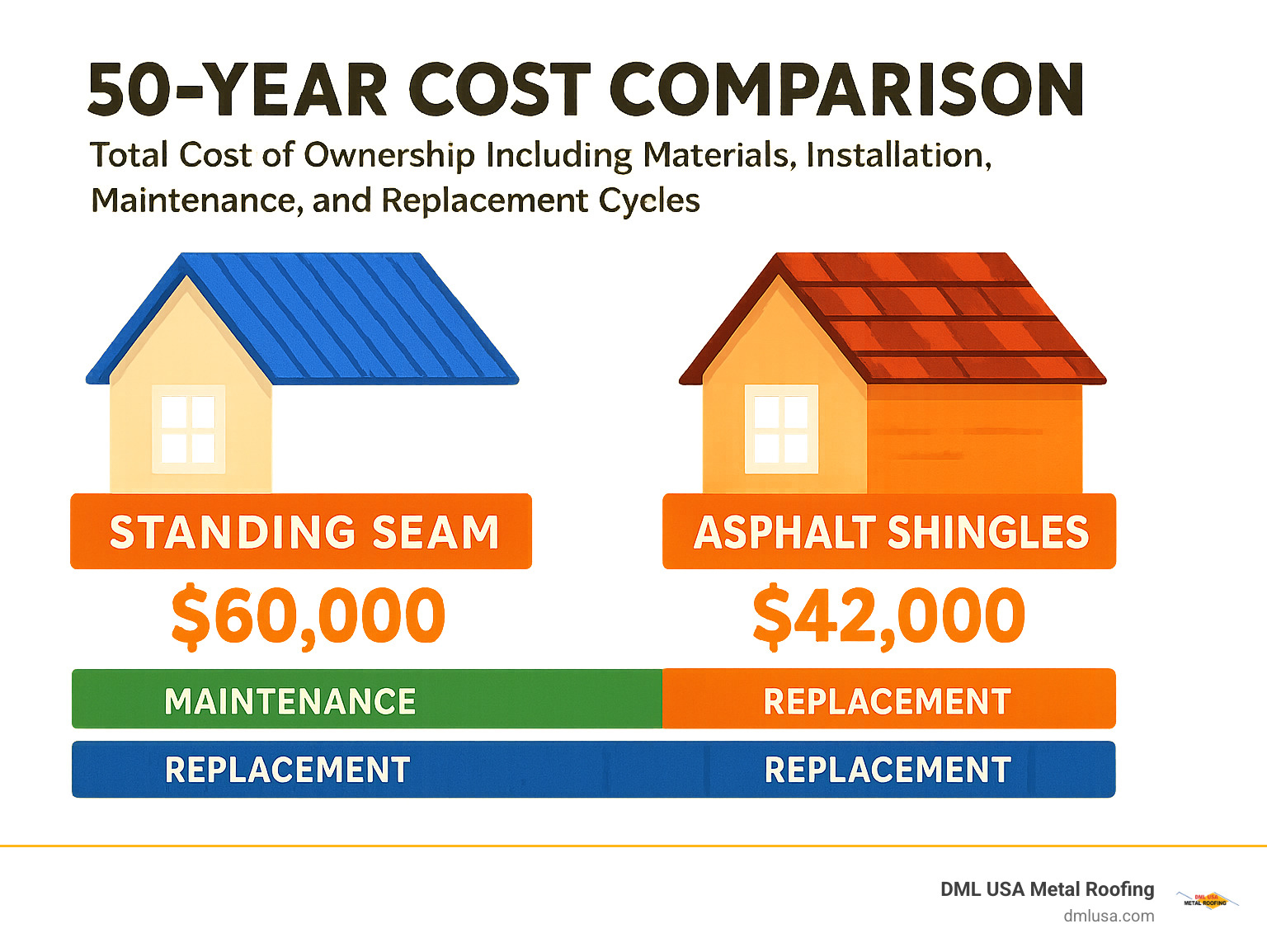
Standing seam metal roofing represents what I call “buy once, cry once” – higher initial investment that pays dividends for decades. While asphalt shingles might need replacement 2-3 times over a 50-year period, your standing seam roof will likely outlast your mortgage.
The math becomes compelling when you consider energy savings from reflective coatings, tax credits available for energy-efficient roofing, and the increased resale value that quality metal roofing adds to your home. Many homeowners see their property values increase by 1-6% with premium standing seam installation.
Current Price Ranges (2024)
Standing seam costs vary dramatically based on your choices, but here’s what you can expect in today’s market.
Steel systems typically run $8-14 per square foot installed for quality 24-gauge panels with proper clip systems. This covers everything from tear-off to cleanup on straightforward roof designs.
Aluminum systems jump to $12-16 per square foot installed, reflecting the material’s premium corrosion resistance and coastal performance benefits.
Premium metals like copper and zinc command $18-25+ per square foot installed, but these are lifetime investments that often outlast the buildings they protect.
For a typical 2,000 square foot home, you’re looking at $16,000-50,000+ total project cost depending on your material choices and roof complexity.
Factors That Move the Needle
Roof complexity is the biggest cost driver after material choice. Simple gable roofs install quickly with minimal waste, while complex designs with multiple valleys, dormers, and penetrations require custom fabrication and detailed flashing work.
Panel type selection significantly impacts both material and labor costs. Mechanically seamed systems require specialized equipment and skilled operators, while snap-lock systems install faster with standard tools.
Metal gauge and coatings affect both upfront costs and long-term value. Stepping up from 26-gauge to 24-gauge steel adds roughly $1-2 per square foot but dramatically improves dent resistance and longevity.
Color and finish choices matter more than you might expect. Standard colors from manufacturer stock cost less than special-order finishes, while premium Kynar coatings add $0.50-1.00 per square foot but provide superior fade resistance and warranty coverage.
Installation & Maintenance Best Practices
A standing seam roof only reaches its promised 50-year life when the details are right.
Start with a flat, well-ventilated solid deck (plywood or OSB) and a self-adhering, high-temperature underlayment designed for metal roofs—regular felt will not do.
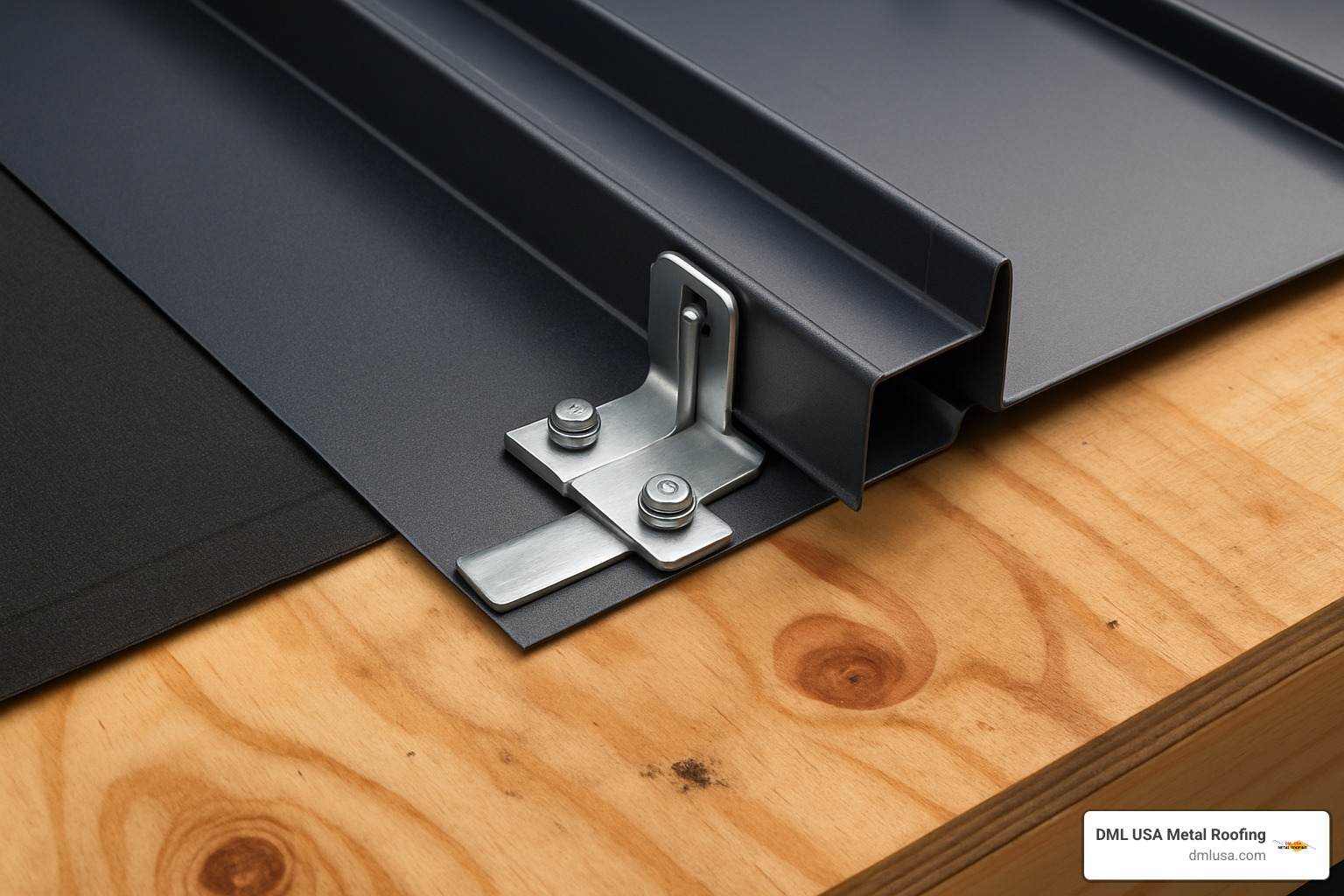
Install clips and fasteners exactly to manufacturer specs (typically 12-24 in. on-center, 5/8 in. thread embedment). Panels longer than 20 ft need sliding clips to absorb thermal movement; skipping them is the fastest way to create leaks.
Color, Finish & Profile Impact on Performance
Finish choice affects more than looks. Cool-roof coatings can reflect up to 67 % of solar energy, trimming cooling costs and slowing paint fade. Striations or pencil ribs help control oil-canning on wide flat panels.
Can You Install Over Existing Roofs?
Often yes, but only when:
- Local code allows an additional layer.
- The structure can accept the extra 1-2 lb/ft² weight.
- The old roof is flat and sound.
If any of these boxes aren’t checked, a tear-off remains the safest route to the best type of metal roof standing seam installation.
Regular inspections (spring and fall) and simple rinsing with a garden hose are usually all the maintenance these roofs need.
Frequently Asked Questions about the Best Type of Standing Seam Metal Roof
After helping thousands of homeowners choose their ideal roofing system over the years, I’ve noticed the same questions come up repeatedly. Let me address the three most common concerns about finding the best type of metal roof standing seam for your home.
What roof pitch is needed for each system?
The slope of your roof plays a huge role in determining which standing seam system will work best. Think of it this way: steeper roofs shed water faster, while flatter roofs need systems that can handle water sitting on the surface.
Mechanically seamed panels are the champions of low-slope applications, working on pitches as gentle as 0.5:12 (that’s only half an inch of rise per foot!). These systems create such a tight seal that they can actually handle standing water without leaking – what we call hydrostatic performance.
The other three system types – snap-lock, nail strip, and batten-cap – all require a minimum slope of 3:12 to perform properly. At this pitch, they rely on gravity to move water off the roof quickly, which is called hydrokinetic performance.
Here’s the practical takeaway: if your roof is nearly flat or very low-pitched, mechanically seamed is likely your only standing seam option. For standard residential pitches, you have all four systems to choose from.
How long will a standing seam roof really last?
This is the question that gets homeowners most excited – and rightfully so! The longevity of standing seam roofing is truly impressive, but it depends heavily on your material choice and installation quality.
Steel panels with premium coatings typically last 40-60 years, which means most homeowners will never need to replace their roof again. The Galvalume coating and Kynar paint systems we use are specifically designed to withstand decades of weather exposure.
Aluminum panels often exceed 50 years, especially in coastal areas where their natural corrosion resistance really shines. I’ve seen aluminum roofs from the 1970s that still look fantastic today.
The premium metals are where things get really interesting. Copper roofing can last 100+ years – there are copper roofs in Europe that have been protecting buildings for centuries. Zinc systems typically provide 80-100 years of service life.
The key insight here is that most standing seam failures happen because of installation mistakes, not material problems. When properly installed with quality materials, these roofs often outlast the buildings they’re protecting.
Are standing seam panels noisy in rain or hail?
I love this question because it reveals a common misconception about metal roofing. Many people imagine living under a metal roof feels like being inside a drum during rainstorms – but modern standing seam installations are surprisingly quiet.
The noise level depends on several factors working together. Solid decking (plywood or OSB) provides natural sound dampening compared to older installation methods over open framing. The high-temperature underlayment we install adds another layer of sound absorption.
Your home’s attic insulation makes the biggest difference in sound control. Standard insulation significantly reduces any sound transmission from the roof to living spaces below. Most homeowners tell me they barely notice rain on their standing seam roof.
For homes where sound control is especially important, we can install 2×4 stringers over the decking filled with insulation. This creates an incredibly quiet installation that actually performs better than many traditional roofing materials.
The bottom line? Hail might create some noise during severe storms (just like it does on any roof), but normal rainfall is typically quieter than you’d expect from a metal roof.
Conclusion
After reviewing all the standing seam options, the best type of metal roof standing seam for your home really comes down to three key factors: your roof’s slope, your budget, and how long you plan to stay in your home.
Here’s the reality – any quality standing seam system will likely be the last roof you’ll ever install. That’s a pretty amazing thing to say about a building material, but it’s true when you choose the right system and have it properly installed.
If you’re dealing with a low-slope roof under 3:12, mechanically seamed panels are your only real option. Yes, they cost more upfront, but they’ll handle conditions that would make other systems fail.
For most homeowners with standard roof slopes, snap-lock panels hit the sweet spot. They give you excellent weather protection, reasonable installation costs, and that clean standing seam look that makes neighbors stop and ask questions.
Nail-strip systems make sense when budget is tight and you have a simple roof design. They’re still standing seam, they’re still concealed fastener, and they’ll still outlast shingles by decades.
And if you’re building something special – maybe restoring a historic home or creating an architectural statement – batten-cap systems provide that premium look that turns a house into a landmark.
The math on standing seam gets better every year. While your neighbors are on their second or third roof replacement, you’ll be enjoying maintenance-free protection and lower energy bills. The combination of longevity, energy efficiency, and complete recyclability makes standing seam one of the smartest investments you can make in your property.
At DML USA Metal Roofing, we’ve been manufacturing maintenance-free standing seam solutions in Illinois since 2007. We’ve seen how the right standing seam system transforms not just roofs, but entire homes. Our systems deliver the durability, energy efficiency, and weather resistance that Illinois homeowners need, backed by comprehensive warranties and energy tax credits that help offset the initial investment.
The truth is, there’s no single best type of metal roof standing seam that works for everyone. But there’s definitely a best type for your specific situation. The key is matching your roof’s requirements with your budget and long-term plans.
Contact us for expert guidance on selecting the ideal standing seam system for your project. Our team has helped thousands of homeowners steer these decisions, and we’d love to help you find the perfect solution that’ll keep you dry and comfortable for decades to come.
