 Skip to main content

Steel roofing for homes: 7 Powerful Benefits in 2025
Steel Roofing for Homes: The Smart, Durable Upgrade Homeowners Love
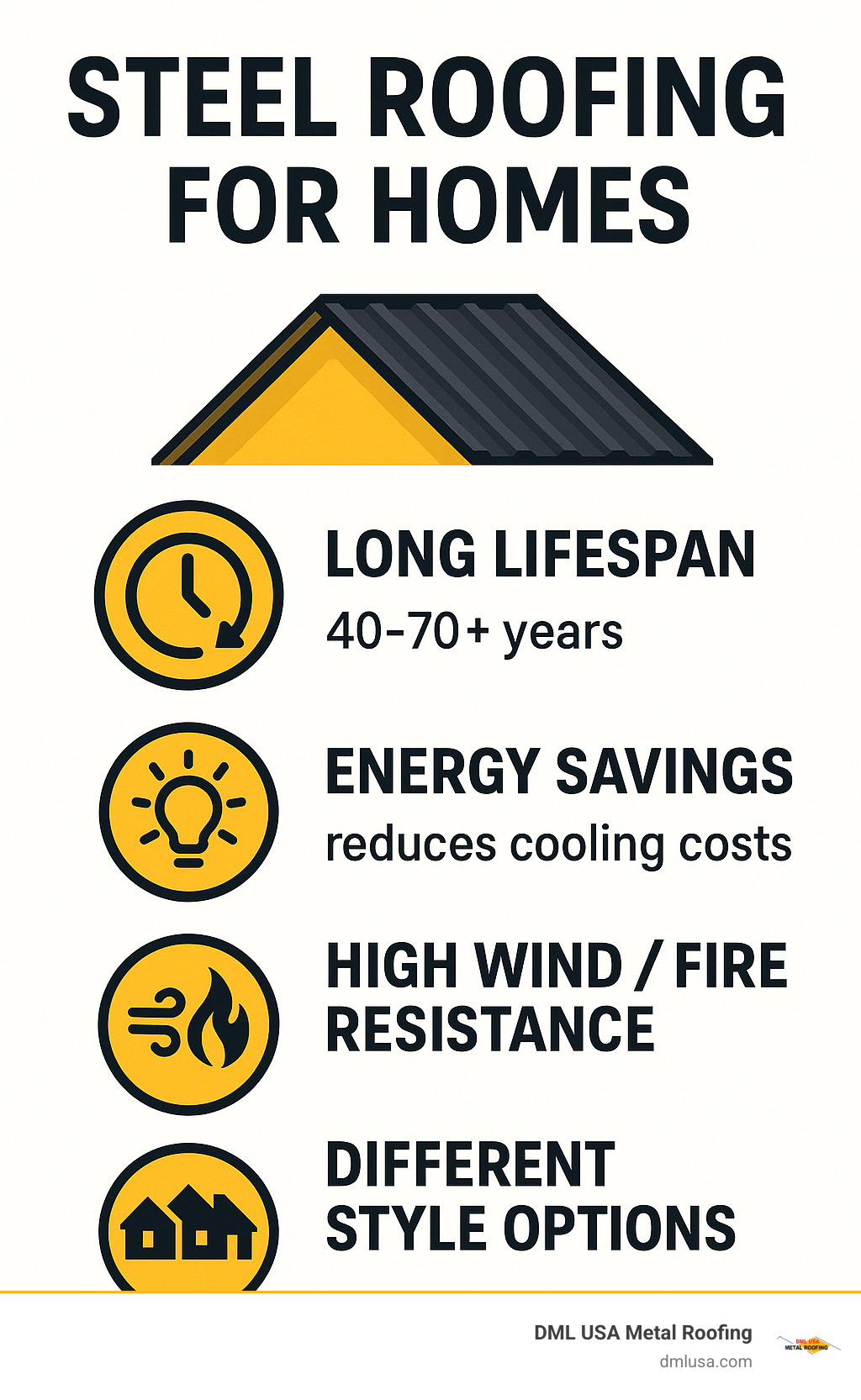
Steel roofing for homes is rapidly becoming the top choice for homeowners who want a roof that lasts, looks great, and saves money over time. If you’re considering a switch from traditional asphalt shingles, here’s what you need to know right away:
Quick Facts: Why Choose Steel Roofing for Homes?
| Benefit | What It Means for You |
|---|---|
| Lifespan | 40–70+ years—2–3x longer than asphalt shingles |
| Durability | Withstands wind up to 140 mph and resists hail, fire |
| Energy Savings | Can cut cooling costs by 10–25% |
| Maintenance | Very low—inspect & clean once or twice a year |
| Sustainability | 100% recyclable, often made with recycled steel |
| Style Options | Many colors and profiles to match your home |
| ROI | Can recoup nearly half the cost when you sell your home |
“Installing a metal roof on your home is a wise investment that provides long service life, curb appeal, durability, weather-resistance and reduced utility expense.”
Homeowners are switching because steel roofs outlast and outperform standard roofs. They also add curb appeal and reduce the hassle of frequent repairs.
As Adam Kadziola, founder of DML USA Metal Roofing, I’ve spent years helping homeowners enjoy the protection, beauty, and peace of mind that steel roofing for homes brings. Our family-owned company specializes in creating strong, maintenance-free roofs built for Midwest weather.
Steel roofing for homes word list:
– Roofing material cost comparison
– Roofing metal vs shingles
What You’ll Learn
Ready to become a steel roofing for homes expert? You’re in the right place! This guide will walk you through everything you need to make a smart decision about your next roof.
First, we’ll dive into the basics of what steel roofing actually is and how it stacks up against other metal options like aluminum and copper. You’ll find why steel has become the go-to choice for so many homeowners.
Next, we’ll explore the different steel roofing systems available for your home. From standing seam to exposed fastener systems, you’ll learn which style fits your budget, climate, and aesthetic preferences.
We’ll get into the real numbers on costs and energy savings. You’ll see exactly how steel roofing compares to asphalt shingles over the long haul, including those helpful tax credits and insurance discounts that can sweeten the deal.
Climate performance is huge, so we’ll cover how steel roofs handle everything from hurricane-force winds to golf ball-sized hail. If you live in an area with extreme weather, this section will put your mind at ease.
Finally, we’ll walk through the installation process and maintenance requirements. You’ll learn what to expect during installation, how to find the right contractor, and the simple steps to keep your roof performing at its best for decades.
By the end of this guide, you’ll have all the knowledge you need to decide if steel roofing for homes is right for you—and how to make it happen.
Steel Roofing 101: Materials, Makeup, and Myths
When people hear “metal roofing,” they often picture old barns or noisy sheds. But steel roofing for homes is a whole different story—it’s engineered for beauty, strength, and decades of dependable service.
Let’s break down what makes steel roofing so special, starting with the basics.
The Core Types: Galvanized Steel, Galvalume, and Coatings
The most common types of steel roofing are galvanized steel and Galvalume steel. Galvanized steel is coated with zinc, making it tough against rust and a classic choice for most climates. If you live in a humid or coastal area, Galvalume steel steps it up with a 55% aluminum and zinc blend, offering even stronger corrosion resistance.
But the secret to those gorgeous, long-lasting roofs is the coating on top. High-performance finishes like Kynar 500® (also known as PVDF) keep your roof looking sharp for decades, protecting against fading, chalking, and rust.
Steel roofs come in different thicknesses, known as gauges. Most homes use 24-gauge steel (thicker and stronger) or 26-gauge (a bit lighter, but still impressively tough). No matter the gauge, nearly all modern steel roofs earn a Class A fire rating—the highest available.
Worried about your roof expanding and contracting in the sun? Top-quality systems use hidden fasteners or clips so the panels can flex with the weather. This helps keep your roof tight and leak-free for years.
Curious about what makes steel so strong? Take a look at this scientific guide to metal hardness.
For even more technical details, visit our steel roofing resource center.
How Steel Differs From Other Metals
Steel isn’t the only metal roof you’ll see, but it’s the standout for most homeowners. Steel is known for its unbeatable mix of strength, affordability, and recyclability—making it a practical and sustainable pick.
Aluminum is lighter than steel and naturally rustproof, which helps in salty, coastal zones, but it’s also softer, so it might dent more easily from hail or tree branches. Copper is the showstopper—lasting over a century and developing a beautiful patina over time, but it comes with a high price tag. Zinc is another premium option, offering a unique self-healing finish and serious durability, though it’s less common and can be expensive.
Bottom line: Steel roofing for homes is strong enough to face Midwest storms, affordable for most families, and tough against whatever the sky throws at it.
Busting Common Myths
Let’s clear up some of the biggest myths about steel roofing:
- Lightning Magnet? Not at all. A steel roof won’t draw lightning any more than your mailbox. And if lightning does strike, steel safely disperses the energy.
- Noisy in Rain? This is an old myth. Modern steel roofs installed over attic spaces, wood decking, and insulation are just as quiet as asphalt shingles—sometimes even quieter.
- Will It Rust? With today’s advanced coatings, steel roofing is designed to resist rust and corrosion for 40 years or more. You’re far more likely to need a new paint color before you ever worry about rust.
- Bad for Resale? Actually, steel roofs can make your house more attractive to buyers and may help your home sell faster.
Ready to dive deeper into the details? Visit our steel roofing resource center for everything you need to know about steel roof systems, materials, and installation.
Steel roofing for homes isn’t just a trend—it’s a smart, lasting upgrade that stands up to myths and the elements alike.
Why Steel Roofing for Homes Is on the Rise
It’s no surprise that steel roofing for homes is having a moment. More and more homeowners are making the switch, drawn by the promise of lower bills, less worry, and a serious boost in style. But what’s really fueling this surge?
One big reason is energy efficiency. Steel roofs are naturally reflective, which means they bounce back the sun’s UV and infrared rays. The result? Cooler attics and noticeably lower air conditioning costs—many families see their cooling bills drop by 10–25%. Saving money while staying comfortable in the summer? Yes, please.
But that’s just the start. Did you know that many insurance companies reward steel roofs with discounted premiums? Because these roofs resist fire, hail, and high winds, your home is less risky to insure—and that can mean real savings year after year.
Sustainability is another huge plus. Most steel roofing is made from 25–95% recycled material, and when it finally reaches the end of its long life, it’s 100% recyclable. That means less waste for landfills and more peace of mind for eco-conscious homeowners.
Let’s not forget curb appeal. Steel roofing isn’t just tough—it’s beautiful, too. With a rainbow of colors and crisp modern profiles, you can find a style that fits any home, whether you love a classic farmhouse look or lean ultra-modern.
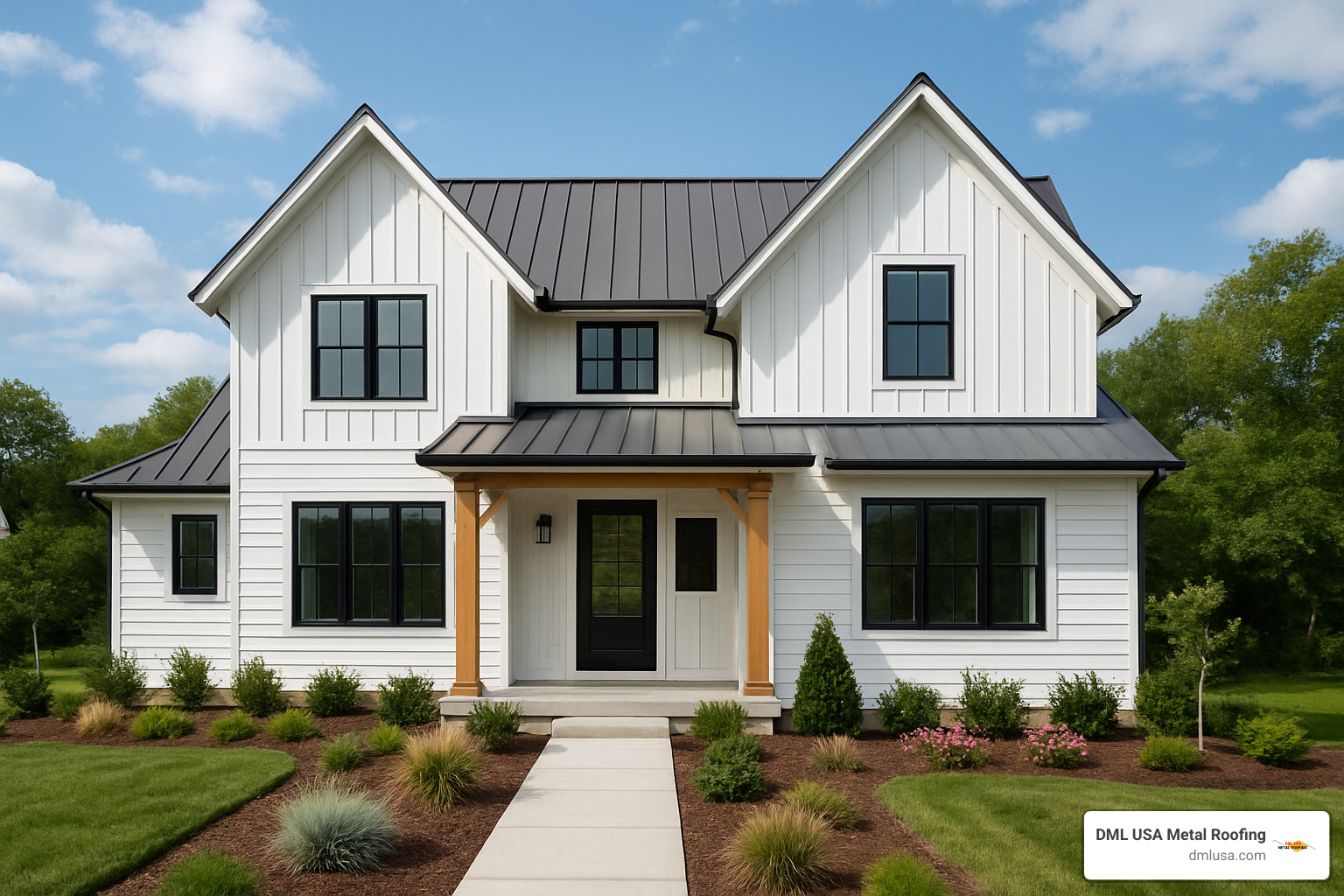
Lifespan & ROI of Steel Roofing for Homes
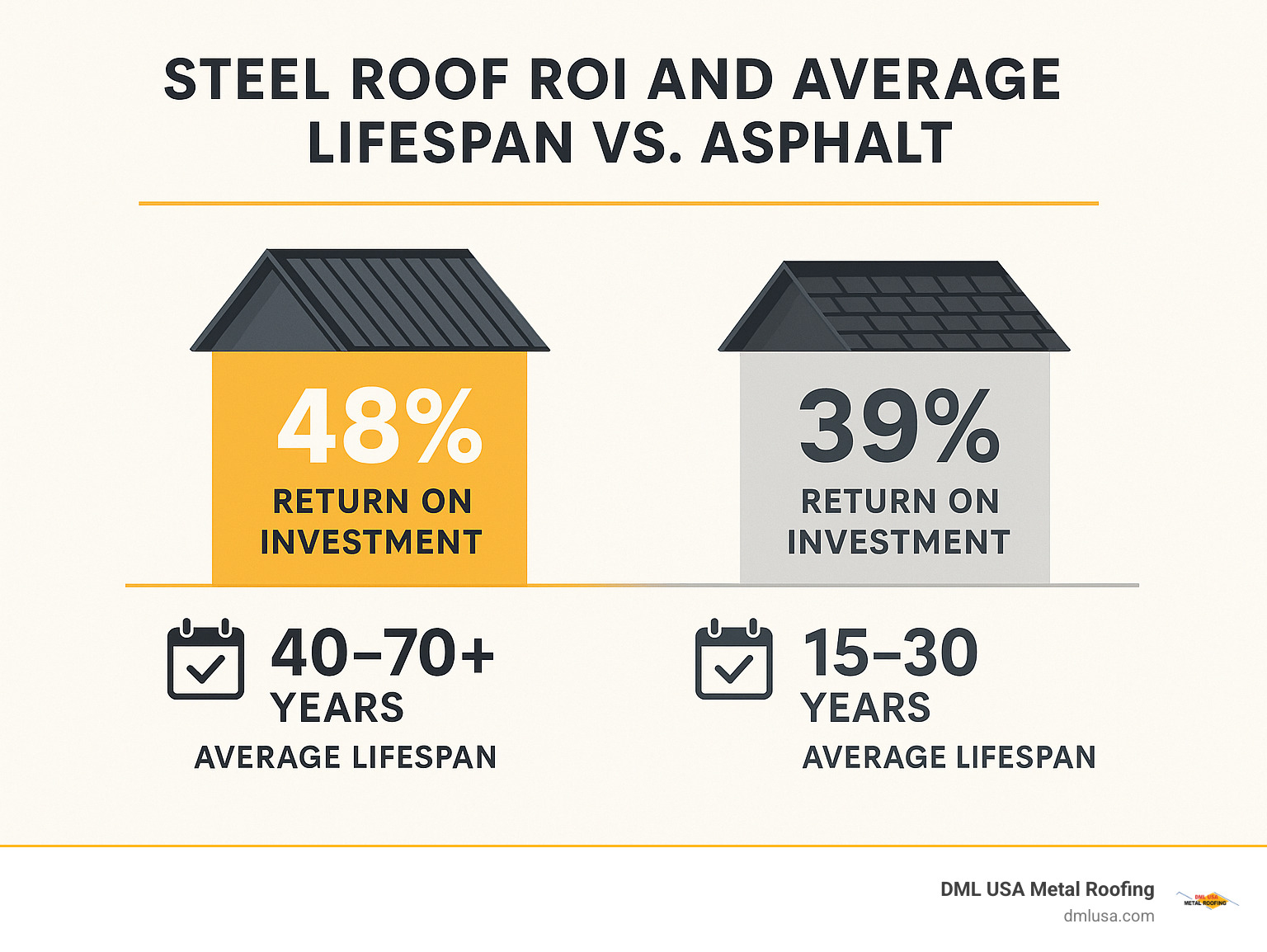
When it comes to longevity, steel roofing for homes is in a league of its own. A well-installed steel roof can last 40 to 70+ years—that’s two or even three times longer than ordinary asphalt shingles. Some premium steel systems are still going strong after 60 years, which means you may never need to reroof again.
The return on investment is also impressive. According to the latest 2024 Cost vs. Value Report, homeowners can recoup nearly 48% of the cost of a steel roof at resale. That’s higher than most major home upgrades and puts more money back in your pocket if you ever decide to move.
And here’s a bonus: If you choose “cool roof” steel coatings, you might be eligible for valuable energy tax credits. Be sure to ask your contractor if your new roof qualifies!
Climate Performance of Steel Roofing for Homes
If you live in an area with wild weather, steel roofing for homes is a game changer. These roofs are engineered to tackle just about anything Mother Nature throws your way.
Properly installed steel roofs can withstand winds up to 140 mph—enough to ride out even serious storms. Thanks to their toughness, most systems earn a Class 4 impact rating, the highest for hail resistance, so they can shrug off two-inch hailstones without flinching. The smooth surface means snow slides off quickly, helping to prevent those dreaded ice dams in winter. And because steel is noncombustible, you get a Class A fire rating, providing peace of mind in wildfire-prone areas or busy neighborhoods.
With all these benefits, it’s easy to see why so many families are choosing steel. Fewer headaches, lower costs, and safety—all wrapped up in a beautiful package. That’s the magic of steel roofing for homes.
Choosing the Right Steel Roof System for Your Home
When it comes to steel roofing for homes, there’s no cookie-cutter approach. Your perfect roof depends on your style preferences, budget, and what Mother Nature throws at your area. Let’s walk through the main options so you can make the right choice for your family.
Standing seam systems are the premium choice for homeowners who want that sleek, modern look with minimal maintenance. These roofs feature hidden fasteners and clean lines that make any home look more upscale. Exposed fastener systems offer a more budget-friendly route with that classic agricultural look—perfect if you’re going for a farmhouse vibe or need to cover a large area affordably.
For homeowners who love traditional looks, steel shingles are game-changers. They give you all the charm of asphalt, wood shake, or slate roofing but with steel’s incredible durability. Stone-coated steel panels take this a step further, using granular coatings to create texture and even help dampen sound during storms.
Want to see these systems in action? Check out our full line of steel roofing products to explore your options.
Standing Seam vs Exposed Fastener
Here’s where the rubber meets the road—or should I say, where the steel meets the weather.
Standing seam systems are the workhorses of residential roofing. The fasteners hide beneath raised seams, which means sun, rain, and temperature swings can’t attack them directly. Even better, the panels can expand and contract freely with temperature changes without creating stress points that lead to leaks.
This “floating” design is especially crucial in places like the Midwest, where we see everything from blazing summer heat to frigid winter cold. Once installed, standing seam roofs are virtually maintenance-free—just clear off debris and check your flashings annually.
Exposed fastener systems show their screws, which creates a different aesthetic that many homeowners love. However, those visible fasteners need attention every 5-10 years as rubber washers age and screws may need tightening or replacement. While they’re great for garages, barns, or workshops, most roofing professionals recommend standing seam for heated living spaces.
Shingles, Tiles & Stone-Coated Panels
Modern steel roofing has come so far that it can convincingly mimic almost any traditional roofing material you can imagine.
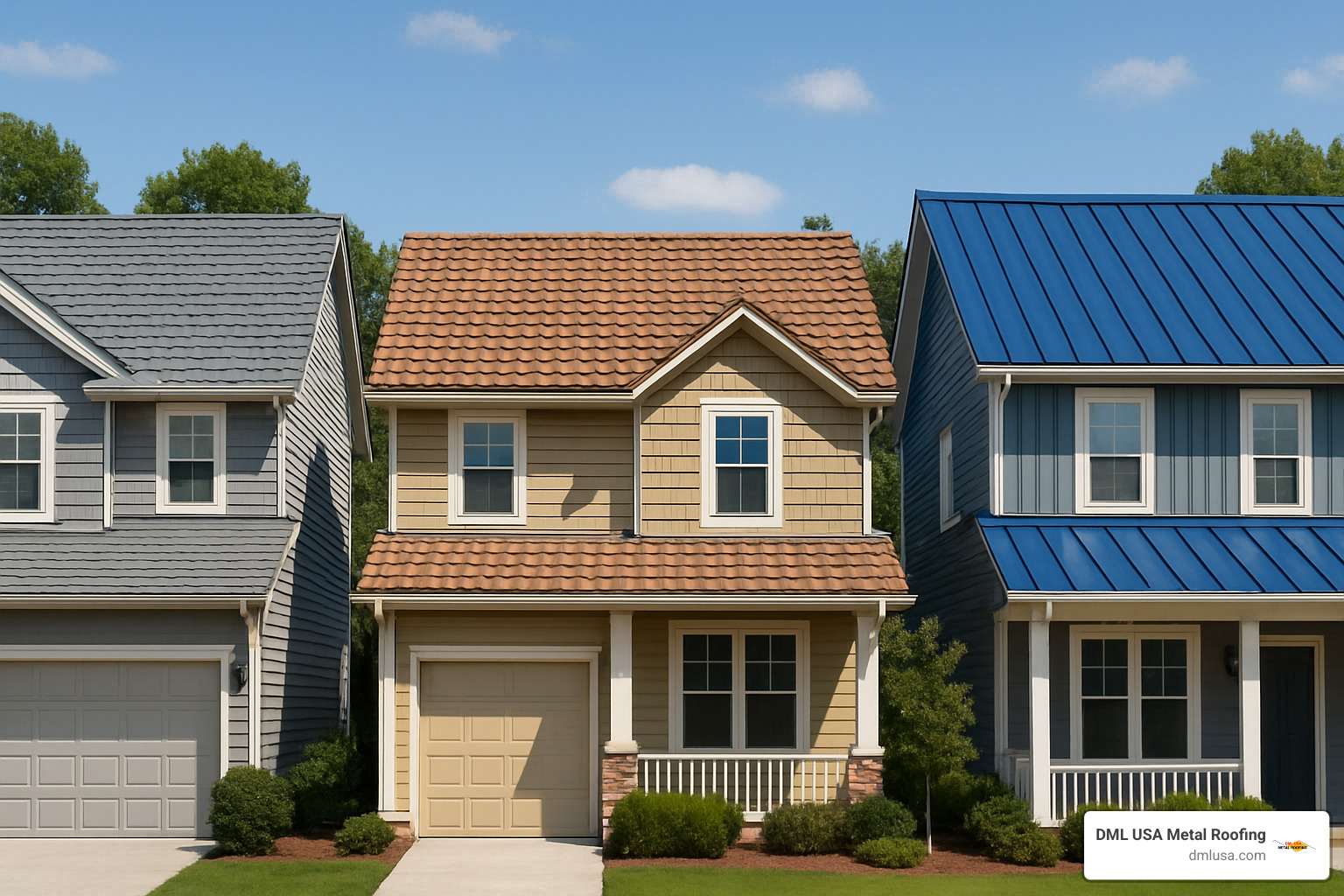
Steel shingles use interlocking technology that creates superior wind resistance while giving you that familiar shingle appearance. Whether you want the look of classic asphalt shingles, rustic wood shakes, or neat slate, steel shingles deliver the aesthetic with 2-3 times the lifespan.
Stone-coated steel panels add another layer of realism with granular coatings that create texture and help absorb sound. These systems are particularly popular with homeowners who want the look of clay tiles or premium shakes but need the lightweight strength that only steel provides.
The beauty of these architectural mimicry systems is that your neighbors might never guess you have a steel roof—until the next big storm proves how much smarter your choice was.
Gauge, Finish & Color Decisions
The devil’s in the details, and these details make all the difference in how your roof performs and looks.
Gauge matters more than you might think. 24-gauge steel is thicker and more robust—ideal for areas with severe weather or when you want maximum durability. 26-gauge is lighter and more affordable while still providing excellent protection for most homes.
When it comes to finish quality, Kynar 500® and other PVDF coatings are worth the investment. These premium finishes resist fading, chalking, and weathering for decades. You can choose between matte finishes for a subtle, sophisticated look or gloss finishes for more vibrant color pop.
Color selection has exploded in recent years. Beyond basic browns and grays, you’ll find everything from deep blues to warm reds. Cool, reflective colors can boost your energy savings, while darker shades might better complement your home’s existing features.
Ready to see how these choices look in real life? Browse our gallery to see steel roofing for homes in every style and color combination.
Cost, Energy & Environmental Payback
Here’s the truth about steel roofing for homes: yes, you’ll pay more upfront, but the long-term savings are where steel really shines. Think of it as buying a quality appliance that runs for decades versus replacing a cheap one every few years.
Upfront Price vs Lifetime Savings
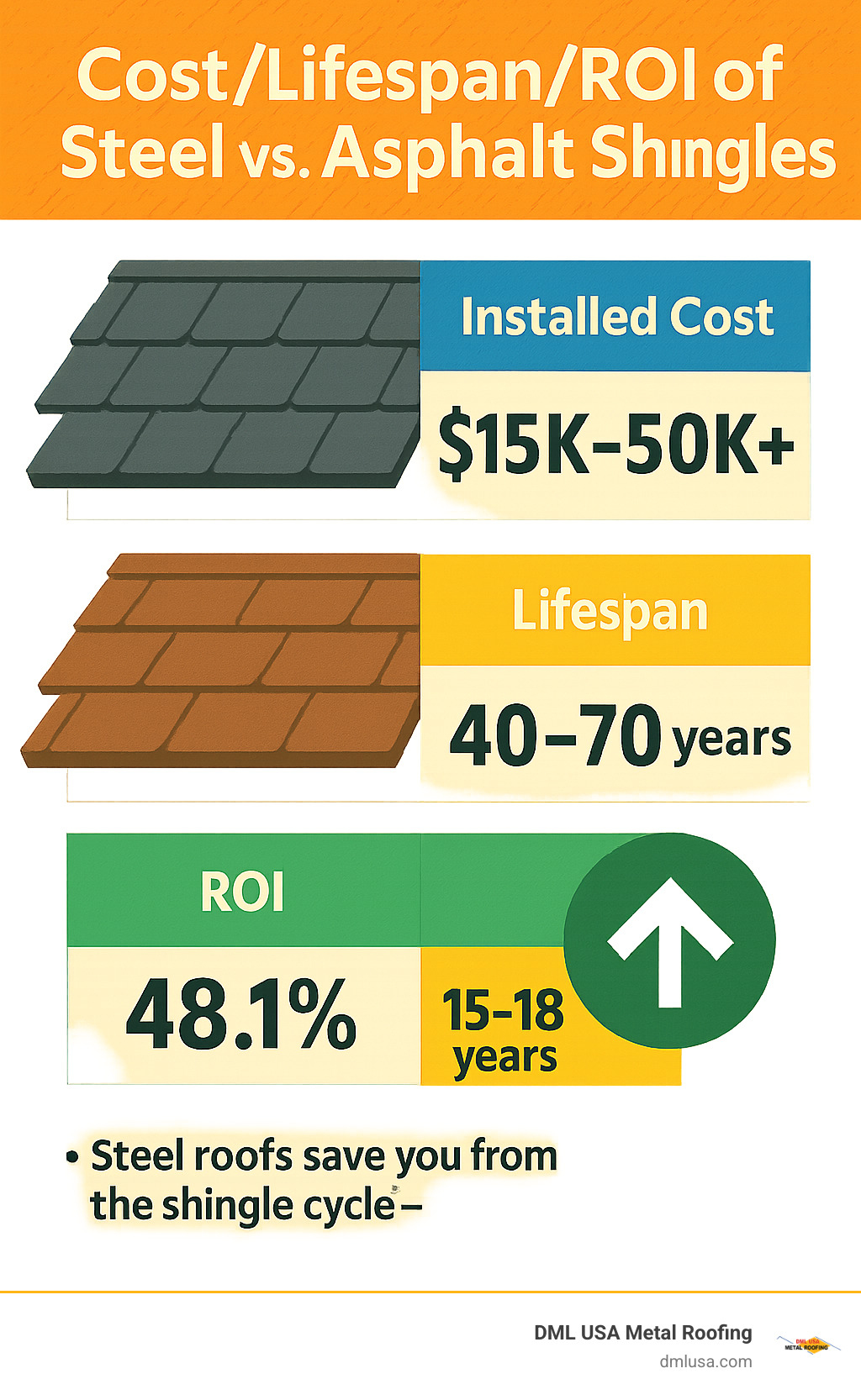
The numbers tell a compelling story. While asphalt shingles might cost around $8,800 installed, they typically last just 15–18 years. That means over a 60-year period, you’re looking at 3–4 complete roof replacements—each time dealing with tear-off costs, disposal fees, and the hassle of another major home project.
Steel roofing for homes starts at around $15,000 and can reach $50,000+ for premium systems, but here’s the kicker: you install it once and you’re done for 40–70 years. No more roofing cycles, no more surprise leaks during storms, no more contractor headaches every couple decades.
The 2024 Cost vs Value Report shows steel roofs deliver a 48.1% return on investment at resale—better than most home improvements. Compare that to asphalt’s ~40% ROI, and steel becomes an even smarter choice.
When you factor in inflation protection—imagine what a roof replacement will cost in 20 years—paying once for a steel roof starts looking like the bargain of the century.
Energy Efficiency Explained
Steel roofs don’t just protect your home—they actively save you money every month on energy bills. The secret is in how they handle the sun’s heat.
Reflective coatings on steel panels bounce sunlight and radiant heat away from your roof instead of absorbing it like dark asphalt shingles. This keeps your attic significantly cooler, which means your air conditioner doesn’t have to work as hard.
Most homeowners see 10–25% lower cooling bills after installing steel roofing. In hot climates or during brutal summer months, those savings really add up. Some families save enough on energy costs to help offset their roof investment over time.
Steel roofs are also solar-ready right out of the gate. The strong, flat panels provide an ideal mounting surface for solar installations, and many steel roofing systems are specifically engineered to work with solar hardware.
Want even better performance? Most steel roofing for homes can be paired with smart attic ventilation systems and radiant barriers for maximum energy efficiency. It’s like giving your home a cool, protective shell that works 24/7 to keep energy costs down.
Plus, certain steel roofs with cool roof coatings may qualify for energy tax credits—another way steel pays you back for choosing smart.
Installation & Maintenance Guide
Ready to take the first step toward a worry-free roof? Here’s a warm look at what happens when you choose steel roofing for homes—and why long-term care is refreshingly simple.
Step-by-Step Installation Process
A new steel roof doesn’t have to mean chaos on your property. First, a professional team will inspect your current roof and decking to be sure everything is solid underneath. In many cases, you can skip the messy and costly tear-off—steel roofing for homes is often installed right over a single layer of existing shingles. That means you save time, money, and keep old shingles out of the landfill.
Next comes the underlayment, a waterproof and breathable layer that shields your home from moisture. Once that’s down, the real fun begins: steel panels or shingles are carefully measured and laid out to suit your roof’s style and maximize curb appeal.
Now, the all-important details: flashing and trim are custom-fitted around valleys, chimneys, skylights, and other tricky spots—because water always tries to find a way in. For standing seam systems, panels are “seamed” together for a watertight finish, while steel shingles or tiles interlock snugly. The finishing touches—ridge caps, gutters, and attic ventilation—wrap up the project and ensure your new roof is ready for anything.
Want to dig deeper? Visit our blog for expert installation tips and insights from the field.
Maintenance Checklist
You’ll love this part: steel roofing for homes is famously low-maintenance. Once or twice a year, take a look (or have a pro check) for leaves and debris in valleys and gutters. On exposed fastener systems, give the screws a once-over to be sure they’re still tight. It’s also smart to glance at the flashing and sealants after a wild Midwest storm—just in case.
If you spot any scratches or small chips, a quick dab of manufacturer-approved paint keeps everything rust-free and looking new.
For extra peace of mind, schedule a professional inspection every few years or following severe weather. Forget about the constant shingle repairs, moss, or curling edges—steel roofing for homes really is set-and-forget.
For more on caring for your roof year-round, check out our maintenance resources. With a steel roof, you can relax and enjoy the view—rain, shine, or snow.
Frequently Asked Questions about Steel Roofs
How long will a residential steel roof really last?
If you’re hoping for a “one and done” roof, you’re in luck. With quality materials and professional installation, steel roofing for homes can last 40 to 70 years or more—and many easily make it past 60 years with little fuss. That’s two to three times longer than standard asphalt shingles. It’s no wonder people call steel “the last roof you’ll ever need.” With a little care and the occasional checkup, your steel roof will quietly outlive just about everything else on your house.
Can a steel roof be installed over my existing shingles?
In most cases, yes! Many steel roofing for homes systems are designed to be installed right over a single layer of asphalt shingles, as long as your roof deck is in good shape. This approach saves money, shortens installation time, and keeps tons of old shingles out of the landfill—a win for your wallet and the planet. If you’re not sure about your roof’s condition, a professional can quickly tell if an overlay is an option for your home.
Will a steel roof make my home noisier in rain or hail?
Here’s a common worry, but the answer is simple: Nope! Modern steel roofs, when installed over attic space and proper underlayment, are no noisier than asphalt shingles—sometimes they’re even quieter, especially if you choose stone-coated panels. The secret is in today’s construction methods, which dampen sound and keep things peaceful indoors, even during a Midwest thunderstorm.
Still have questions about steel roofing for homes? You can always find more detailed guides and resources in our blog and resource center.
Conclusion
Steel roofing for homes isn’t just a trend—it’s the smart choice that keeps giving back year after year. While your neighbors are replacing their asphalt shingles every 15–20 years, you’ll be enjoying decades of worry-free protection with a roof that actually saves you money.
Think about it: 40–70 years of durability, up to 25% energy savings, and a roof that can handle 140 mph winds and 2-inch hail. That’s not just peace of mind—that’s smart investing in your home’s future.
The numbers speak for themselves. Steel roofs deliver better longevity, superior storm resistance, impressive energy efficiency, and genuine curb appeal that makes your home stand out for all the right reasons. Plus, with nearly 48% ROI at resale, you’re not just protecting your family—you’re building equity.
DML USA Metal Roofing manufactures high-quality, maintenance-free systems ideal for Midwest climates. Our steel roofing systems come with energy tax credits and unbeatable durability that’s built to last through whatever Mother Nature throws your way.
Ready to explore your options and find why thousands of homeowners are making the switch? Your dream roof—and decades of savings—are just one conversation away.
Contact our experts today for a personalized quote and let’s help you make the smartest roofing decision you’ll ever make!
Want to dive deeper? Check out Roofing metal vs shingles or browse our roofing material cost comparison for all the details!
