 Skip to main content

Chicago metal roofs: 10 Powerful Benefits for 2025 Success
Why Chicago Metal Roofs Are the Smart Choice for Homeowners
Chicago metal roofs offer exceptional durability and weather resistance for the Midwest’s harsh climate conditions. Here’s what you need to know:
Key Benefits:
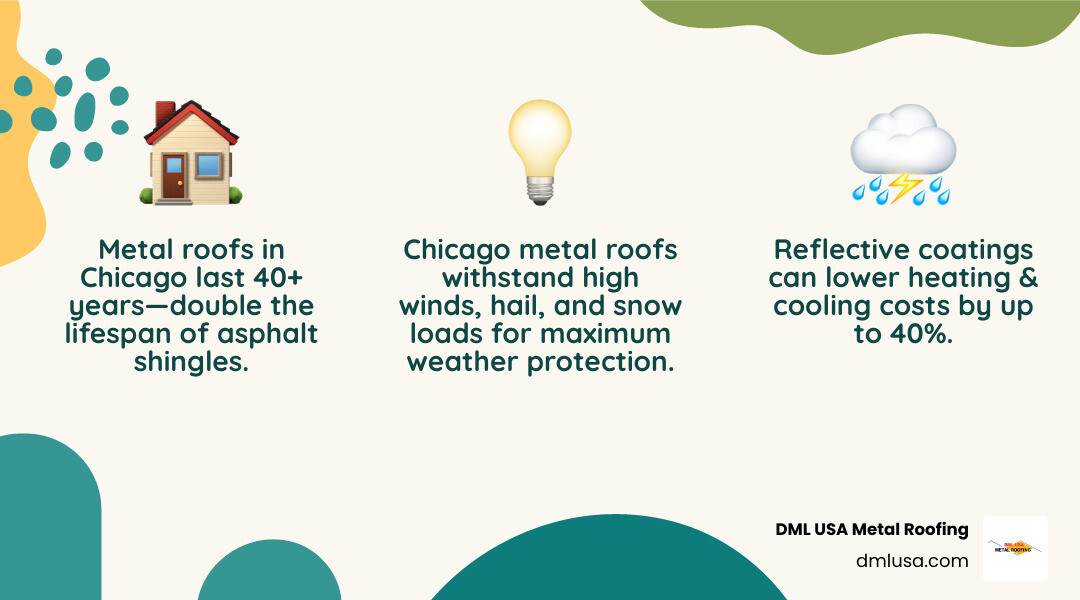
– 40+ year lifespan vs. 15-20 years for asphalt shingles
– Up to 35% reduction in home insurance premiums
– 68% immediate ROI – highest of all major home renovations
– 40% reduction in heating and cooling costs with reflective coatings
– Wind, hail, and fire resistance for Chicago’s severe weather
Popular Types in Chicago:
– Standing seam systems for commercial and residential
– Stone-coated metal tiles for traditional aesthetics
– Structural metal panels for low-slope applications
– Metal shingles that mimic slate or wood shake
Common Materials:
– Galvanized steel with baked enamel finish
– Aluminum systems for coastal areas
– Copper for premium applications
– Kynar 500 finishes with 35-year warranties
Nearly half of all Chicagoland commercial roofs constructed today are metal systems, primarily due to their proven performance against lake-effect snow, high winds, and hail damage. Metal roofs weigh just 96 pounds per square – about 10 times lighter than clay tiles – making them suitable for retrofits without structural reinforcement.
The installation process typically involves steel erectors for pre-engineered systems or specialized roofing contractors for residential applications. Most systems come with lifetime warranties and contain up to 95% recycled content, making them an environmentally responsible choice.
I’m Adam Kadziola, and I’ve been manufacturing high-quality Chicago metal roofs since founding DML USA Metal Roofing in 2007 as a family-owned company passionate about home improvement. Through years of experience serving Chicago-area homeowners, I’ve developed a deep understanding of what it takes to protect homes from our region’s harshest weather conditions.
Key Chicago metal roofs vocabulary:
– Advanced roofing solutions
– Energy efficient roofs
– Affordable roofing contractors
Understanding Chicago Metal Roofs: Types, Materials & Styles
Choosing the right Chicago metal roofs system feels overwhelming at first – there are so many options! But once you understand the basics, it becomes much clearer. Think of it like buying a car: you need to know whether you want a sedan, SUV, or truck before you start picking colors and features.
The good news? Chicago’s challenging climate actually makes the decision easier because it eliminates systems that can’t handle our weather extremes.
Main System Types & Profiles
Standing seam systems are the workhorses of the metal roofing world. Picture two metal panels joining together with a raised seam that stands up about an inch – that’s your standing seam. This design lets the metal expand and contract with temperature changes without cracking or leaking.
The snap-lock panels are probably what you’ll see most often in Chicago neighborhoods. They come in 100, 150, and 175 profiles (those numbers refer to the seam height), and they’re popular because they install faster while still hiding all the fasteners. No exposed screws means better weather protection and a cleaner look.
For even better weather resistance, double-lock panels take things up a notch. These systems create a tighter seal between panels – think of it as double-checking your work. The DL 100 and DL 150 profiles give you that extra peace of mind during those brutal Chicago storms.
Batten-cap systems bring a touch of European elegance to the mix. They feature wider seams that create bold shadow lines, giving your roof a distinctive architectural look while providing superior weather protection.
Now, structural metal panels are a different animal entirely. These heavy-duty panels serve double duty as both your roof and structural support. Almost half of Chicago’s commercial buildings use these pre-engineered systems because they’re incredibly strong and efficient. Steel erectors typically install these rather than traditional roofing contractors.
Metal shingles and tiles give you the best of both worlds – the classic look of traditional roofing with modern metal performance. Stone-coated metal tiles are particularly clever because they can fool anyone into thinking you have real wood shake, clay tile, or slate on your roof.
Don’t overlook corrugated metal roofing either. This classic profile has been protecting buildings for 200 years, and there’s a reason it’s still around. Those familiar ridges and valleys shed water efficiently while providing excellent strength at a reasonable cost.
Interlocking tile systems round out the options, offering sophisticated profiles that mimic premium roofing materials while delivering the durability Chicago weather demands.
Popular Materials & Finishes for Chicago Metal Roofs
Steel dominates the Chicago metal roofing scene, and for good reason – it’s tough, affordable, and handles our weather like a champ. Most Chicago metal roofs use galvanized steel with baked enamel finishes because this combination resists corrosion while keeping costs reasonable. Galvalume coating takes protection even further, making it ideal for our harsh winters and humid summers. More info about why steel & aluminum matter
Aluminum never rusts, which makes it perfect for areas with lots of moisture. At .032 gauge thickness, aluminum panels stay lightweight while providing excellent durability. If you live near the lake or in a particularly humid area, aluminum might be your best friend.
Copper is the luxury option that ages beautifully. You can choose from 16 or 20 oz. weights, and the variety is impressive – traditional copper that develops that gorgeous green patina over time, lead-coated copper for different aesthetics, Freedom Gray copper, and even Samsung’s Light Brown and Dark Brown patina finishes that give you that aged look right from the start.
The Kynar 500 and PVDF finishes represent the premium paint systems. These aren’t your average coatings – they come with 35-year warranties and maintain their color even under Chicago’s intense sun and harsh winters. With a 45-color palette to choose from, you’ll find something that complements your home perfectly.
Cool-roof pigments deserve special mention because they can significantly reduce your attic temperatures. These specially formulated colors reflect solar radiation instead of absorbing it, which translates to real energy savings during those sweltering Chicago summers.
Zinc offers another premium option with its own unique aesthetic appeal, while specialty finishes like Samsung Patina 3000 provide architectural-grade options for homes where appearance is just as important as performance.
The minimum pitch requirements vary by system, but most standing seam systems work well on slopes as low as 1/4:12, making them suitable for a wide range of Chicago-area homes and buildings.
Performance & Benefits in Chicago Climate
Living in Chicago means dealing with wild weather swings—from icy winters to pounding summer storms. That’s exactly why Chicago metal roofs have become the gold standard for both homes and businesses across the city and suburbs. These roofs aren’t just tough—they’re built for Chicago.
Weather Resistance & Insurance Savings
Let’s talk about weather first. Chicago metal roofs are tested and proven against just about anything Mother Nature throws at us.
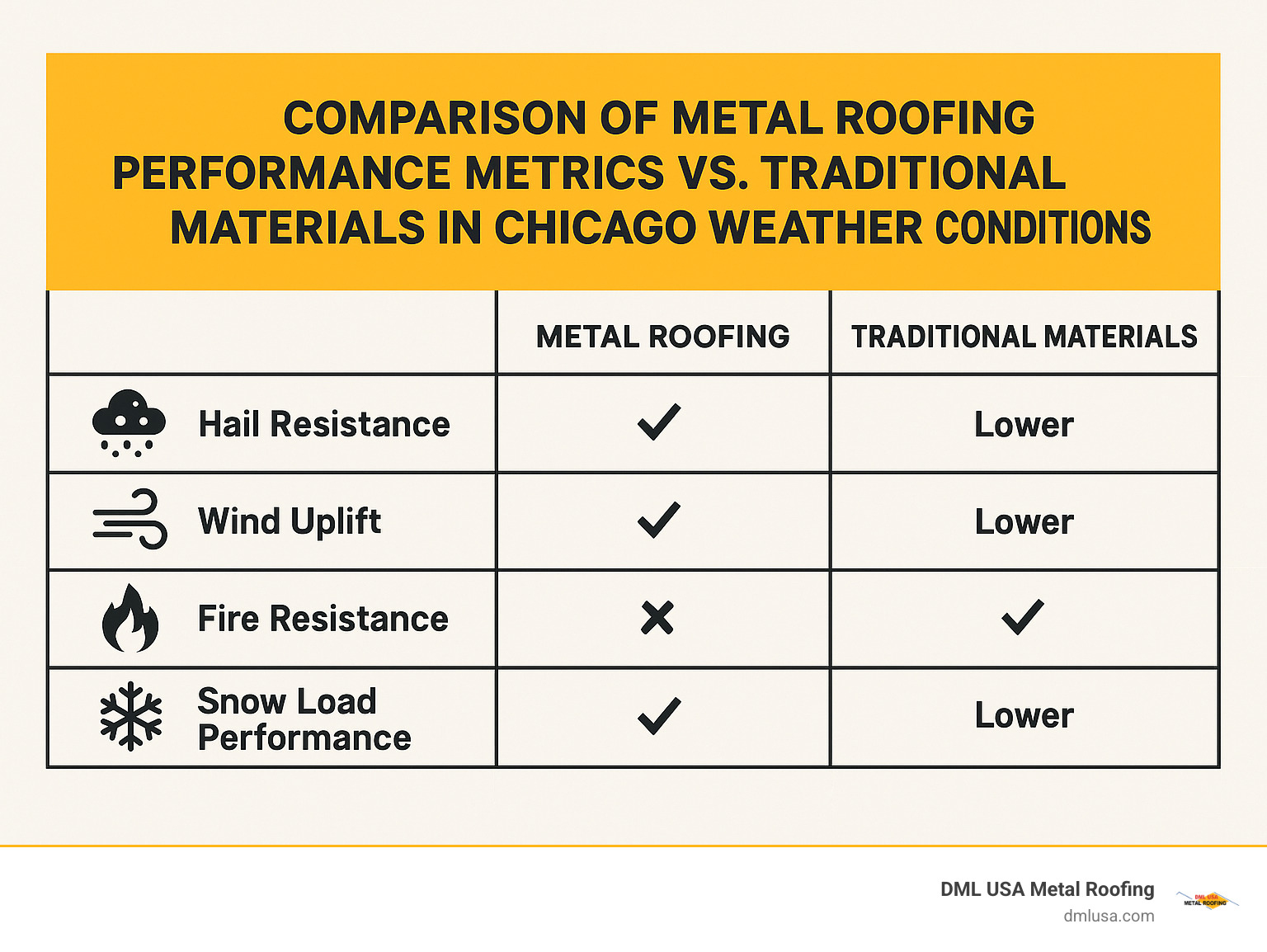
Thanks to their UL 2218 Class 4 impact rating, metal roofs can handle hail like a champ. Imagine golf ball-sized ice falling from the sky—these roofs can take the hit without cracking or caving. When the winds howl off Lake Michigan, quality metal roofing systems stay put, resisting gusts up to 140 mph when installed properly. That’s peace of mind during tornado season and those wild summer storms.
Fire resistance is another major perk. Metal roofs have a Class A fire rating—the highest possible—which helps protect your home and can lower your insurance premiums by up to 35%. That’s real money saved, year after year.
Chicago winters bring heavy snow and ice, but metal roofs have smooth surfaces and strong panels that shed snow quickly. No more worrying about ice dams creeping under your shingles—metal keeps things flowing and your attic dry. And unlike heavy clay or concrete tile, metal won’t sag under the weight of a blizzard.
Energy Efficiency of Chicago Metal Roofs
Now, let’s warm up with some good news on energy savings. Chicago metal roofs are surprisingly smart when it comes to keeping your home comfortable and your bills in check.
Modern coatings and finishes, like Kynar 500 and Alunar®, are designed to reflect sunlight instead of absorbing it. That means during a hot Chicago summer, your attic can stay up to 25% cooler—your air conditioner won’t have to work as hard, and your energy bills stay lower.
In the winter, the tight seams and sturdy construction help keep heat inside, cutting down on drafts and reducing your heating costs. With the right reflective coatings, you can see up to a 40% drop in heating and cooling costs—a real win given how much time we spend battling the elements here.
Even better: most energy-efficient metal roofs qualify for federal energy tax credits. That’s extra money back in your pocket just for making a smart, eco-friendly choice.
If you’re curious about the latest science behind these coatings and their energy-saving magic, check out the research from American WeatherStar.
Between the storm-proof strength, the big insurance savings, and the year-round comfort, it’s no wonder so many folks in Chicagoland are making the switch to metal. With a Chicago metal roof, you’re truly ready for whatever the Windy City brings.
Cost, Installation & Maintenance Essentials
It’s no secret that investing in Chicago metal roofs is a big decision—one that pays off over the long haul. Understanding the costs, installation process, and what’s required for upkeep will help you plan with confidence.
Cost Breakdown & Financing
The price tag for Chicago metal roofs typically falls between $8 and $16 per square foot installed. This range covers everything from practical galvanized steel to premium copper, so your final cost really depends on your choices. If you love the idea of a classic steel roof with a baked enamel finish, you’ll be at the lower end. Prefer something with a little more flair, like copper or a specialty finish? Expect a bump in the budget.
Other big factors include the complexity of your roof (think dormers, valleys, and odd angles), the height and accessibility (tall and tricky roofs need more safety gear and labor), and whether your project is a tear-off or an overlay. One of the perks of metal roofing is that it can often be installed right over an existing asphalt roof, which can save you $2–$4 per square foot by avoiding the mess and cost of tear-off and disposal.
Don’t forget panel gauge—thicker panels last longer and stand up better to the elements, but they do cost a bit more. And if you’re worried about affording your new roof, many contractors offer flexible financing options, so you can start enjoying that 68% immediate ROI and long-term energy savings without draining your bank account all at once.
The Installation Process Step-by-Step
Proper installation is key—Chicago metal roofs only perform their best when installed by a skilled team. The journey starts with a site assessment, where your contractor checks the roof structure, ventilation needs, and local building codes. If your roof deck is a lightweight metal under 22-gauge, you’ll probably need a layer of ½” CDX plywood for extra support.
Next comes precise measurement and planning. This is where on-site panel roll forming shines, allowing your crew to create custom-length panels for a flawless fit—no awkward seams or wasted material.
Before anything shiny goes on your roof, the crew will prep the substrate. That means putting down the right underlayment and planning out ventilation. A well-prepared base means your roof will last longer and stay leak-free.
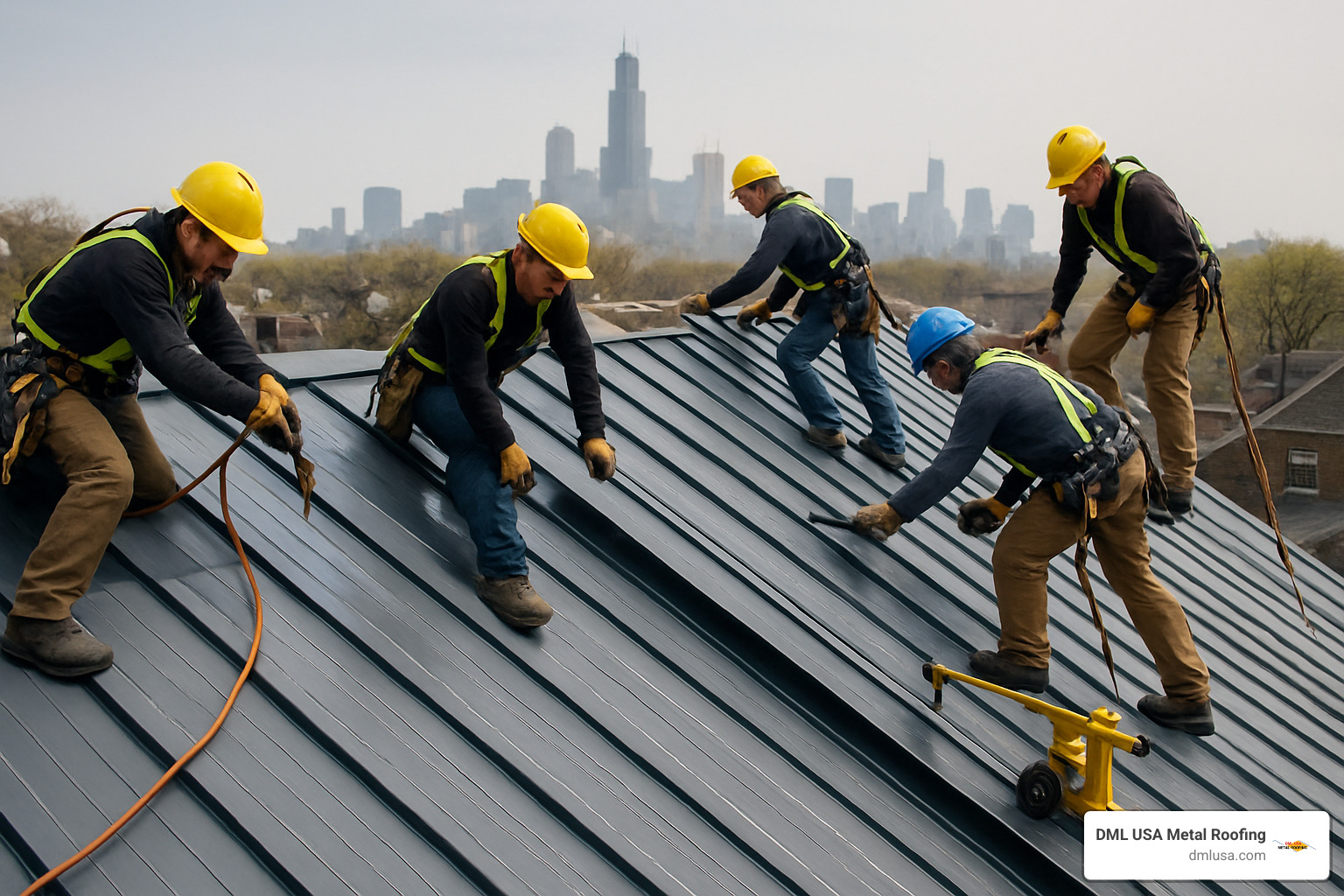
Once everything’s ready, the team will install your standing seam panels vertically up the slope using specialized tools and fasteners designed to handle Chicago winds. The last step is a thorough final inspection. A good crew will leave your property spotless and your roof ready for decades of service.
Maintenance & Common Repair Solutions
One of the best parts about Chicago metal roofs is how little fuss they require. Still, a little TLC keeps them looking and performing their best.
Set a reminder for semi-annual inspections—spring and fall are perfect. These check-ups catch small issues early, like loose fasteners, missing sealant, or leaves building up in the valleys. Give special attention to fastener maintenance: with temperature swings, fasteners can sometimes work themselves loose. Tightening them keeps your roof sealed tight.
Don’t forget to check the sealants around chimneys, skylights, and vents. If you spot any cracks or gaps, a quick touch-up with fresh sealant can prevent leaks. After snowy winters, snow guards are a must to prevent big sheets of snow from sliding off suddenly (and taking your gutters with them). If you or your contractor ever need to go up there, use proper walkways to protect the panels.
For more details on products and maintenance, check out our available products and our resources.
Coatings & Restoration Systems
Even the toughest Chicago metal roofs can show signs of age over the decades. The good news? You don’t always have to start from scratch—a range of restoration and coating solutions can give your roof many more years of life.
Fluid-applied membranes are a popular choice, sealing your roof and boosting energy efficiency by up to 20%. If you spot rust, specialized rust inhibitors can halt the damage and preserve the metal. For roofs with more serious wear, a single-ply overlay is a smart fix: rigid insulation boards fill any gaps, and a new membrane is attached, creating a fresh barrier against the elements.
And here’s some peace of mind—most quality coatings and restoration systems come with warranties from 5 up to 20 years, and many of these can be renewed or even transferred if you sell your home.
With minimal maintenance and the right restoration plan, your Chicago metal roof will keep protecting your home—and your investment—for decades to come.
How to Choose the Right Contractor in Chicago
Finding the right contractor for your Chicago metal roofs project can feel overwhelming, but it doesn’t have to be. The key is knowing what to look for and what questions to ask before you sign on the dotted line.
Think of choosing a contractor like hiring someone to care for your most valuable possession – because that’s exactly what you’re doing. Your roof protects everything you hold dear, so you want someone who treats it with the same respect you would.
Checklist for Vetting Chicago Metal Roof Contractors
Start with the basics: licensing, bonding, and insurance. Any legitimate contractor should happily provide proof of all three. Don’t just take their word for it – call their insurance company directly to verify coverage. This simple step can save you from major headaches down the road.
Manufacturer certifications matter more than you might think. When contractors are certified by metal roofing manufacturers, it means they’ve been trained in proper installation techniques. Even better, many warranties require certified installation to remain valid. It’s like having a stamp of approval that your roof will be installed correctly.
Local expertise makes a huge difference. Chicago building codes aren’t the same as codes in other cities, and experienced local contractors know the ins and outs of permit requirements. They’ll handle the paperwork so you don’t have to steer city hall yourself.
Ask to see their portfolio of recent work – especially projects similar to yours. A contractor who’s proud of their work will eagerly show you photos and provide references. Take the time to call a few previous customers. Most homeowners are happy to share their experiences, both good and bad.
Safety should never be negotiable. Metal roofing installation involves working at heights with specialized equipment. Professional contractors have documented safety programs and clean safety records. If a contractor can’t provide this information, keep looking.
Pay close attention to warranty terms. You want protection for both materials and labor, and you want to understand exactly what’s covered. Quality contractors stand behind their work with comprehensive warranties because they’re confident in their craftsmanship.
Good communication starts from your first conversation. Professional contractors explain the process clearly, provide realistic timelines, and keep you updated throughout the project. If getting information feels like pulling teeth during the sales process, imagine how frustrating it’ll be once work begins.

When comparing bids, look for detailed breakdowns of materials, labor, and additional costs. Professional contractors provide transparency in their pricing. Be wary of bids that seem too good to be true – they usually are.
Notice how contractors handle themselves during the estimate process. Do they protect your landscaping when walking around your property? Do they clean up after themselves? These small details often predict how they’ll handle the actual installation.
Payment schedules tell you a lot about a contractor’s legitimacy. Reputable contractors typically ask for minimal down payments, with the majority due upon completion. Anyone demanding large upfront payments should raise red flags.
More info about supplier network
Common Myths & Red Flags
Let’s clear up some common misconceptions about Chicago metal roofs that unscrupulous contractors might use to steer you toward other options.
The noise myth is probably the most persistent. People imagine metal roofs sound like drums during rainstorms, but modern metal roofing with proper underlayment and insulation is actually no noisier than traditional materials. If a contractor tells you otherwise, they’re either uninformed or trying to sell you something else.
Another favorite scare tactic is the lightning attraction myth. Metal roofs don’t attract lightning any more than other roofing materials. In fact, if lightning does strike, metal roofs are actually safer because they conduct electricity safely to the ground rather than catching fire.
Some contractors play up denting concerns to discourage metal roofing. Quality metal roofing materials are incredibly durable and resist denting from normal hail. Systems that achieve UL 2218 Class 4 ratings can withstand severe impacts that would destroy other roofing materials.
Watch out for low bid traps. When one contractor’s price is dramatically lower than others, there’s usually a reason. They might be using inferior materials, planning to skip important installation steps, or intending to add unexpected charges later. You get what you pay for.
Pressure tactics are another major red flag. Legitimate contractors don’t need to pressure you into immediate decisions with fake urgency or “limited time” offers. Quality work and fair pricing speak for themselves. Take your time, ask questions, and don’t let anyone rush you into a decision you’re not comfortable with.
Trust your instincts throughout the process. If something feels off, it probably is. The right contractor will make you feel confident and informed, not pressured or confused.
Frequently Asked Questions about Chicago Metal Roof Contractors
Do Chicago metal roofs require a full tear-off before installation?
Not always! One of the big perks of Chicago metal roofs is flexibility with installation. In many cases, a new metal roof can go right over your old asphalt shingles. This saves you time, mess, and the cost of tearing off and hauling away all that old material.
But before you get too excited about skipping the tear-off, a few things matter. If your existing roof has major damage, leaks, or structural issues, a full tear-off is usually the safest route. Local building codes also play a role—some have strict limits on how many roof layers you can have. Another thing to consider is ventilation: if your attic needs better airflow, removing the old roof may be best to make room for new vents.
Luckily, metal is lightweight, so most homes can handle an extra layer without trouble. Every roof is different, though. A professional contractor will carefully inspect your setup and walk you through the best option for your home.
How long do warranties on Chicago metal roofs typically last?
You’ll be happy to know that Chicago metal roofs are backed by some of the strongest warranties in roofing. Most metal roofing panels with Kynar 500 or similar finishes come with a 35-year warranty on the finish. Some premium systems boast up to 50-year or even lifetime limited material warranties.
For installation, reputable contractors offer labor warranties ranging from 5 to 20 years. Many warranties are transferable to a new homeowner, which adds value if you ever decide to sell. Some even offer the option to renew or extend coverage for extra peace of mind.
As with any big purchase, take a few minutes to read the warranty details. Know what’s covered, what isn’t, and what basic maintenance is expected from you to keep things valid.
Can Chicago metal roofs be installed during winter months?
Absolutely! It’s a little-known secret that Chicago metal roofs can be put on even in the heart of winter. In fact, winter installation has some upsides: contractors often have more flexibility in their schedules, and you might catch a break on pricing during the off-season. Plus, you won’t have to wait for spring to get protection from snow and ice.
That said, Chicago winters are no joke. Installers may need to pause if there’s a heavy snowstorm, and keeping work areas clear and safe is a must. Some materials—like sealants and adhesives—require special cold-weather formulas to work properly. Safety is always the top concern, so experienced crews plan extra time for weather delays and bring the right equipment to handle the cold.
If you’re considering a winter install, talk with your contractor about timing and what to expect. A great team will have a game plan for any season.
Have more questions? Contact us at DML USA Metal Roofing—we’re always happy to help guide you through Chicago metal roofs!
Conclusion
Choosing Chicago metal roofs is truly one of the smartest decisions you can make for your home. With an impressive 68% immediate ROI – the highest return of any major home improvement – you’re not just getting a new roof, you’re making a solid financial investment.
Think about it: while your neighbors are replacing their asphalt shingles every 15-20 years, you’ll be enjoying 40+ years of worry-free protection. Add in those 35% insurance premium reductions and the significant energy savings, and the numbers really start to add up in your favor.
The secret to getting all these benefits lies in choosing the right contractor. You want someone who truly understands Chicago’s unique weather challenges – from those brutal lake-effect snowstorms to summer hail that can shred a regular roof. Look for contractors with proper licensing, manufacturer certifications, and happy local customers who’ll tell you about their experience.
Chicago metal roofs have come a long way from the old barn roof days. Today’s systems offer incredible variety in styles, materials, and finishes. You can get the look of traditional slate, wood shake, or tile while enjoying the superior performance that only metal can deliver. No more worrying about whether your roof can handle the next big storm.
Here’s what really matters: you’re protecting your family’s most important investment. Whether you’re tired of dealing with an aging roof that’s constantly causing problems, planning new construction, or managing a commercial property, metal roofing delivers the durability and performance you need.
At DML USA Metal Roofing, we’ve been crafting quality, affordable metal roofing products since 2007. We understand what Chicago homeowners face, and our systems are designed to handle everything Mother Nature throws at them – fire, wind, and impact resistance that gives you real peace of mind.
Don’t wait for the next roofing emergency to make your decision. With the right contractor and quality materials, this is likely the last roof you’ll ever need to buy. That’s a pretty good feeling, isn’t it?
