 Skip to main content

Steel Roof Cost 2025: Top 5 Powerful Price Insights
Why Steel Roof Pricing Matters for Your Home Investment
Steel roof cost is one of the most important factors homeowners consider when upgrading from traditional asphalt shingles. With rising material prices and labor shortages affecting the roofing industry, understanding what drives steel roofing expenses helps you make smart decisions for your home.
Quick Answer: Steel Roof Cost Breakdown
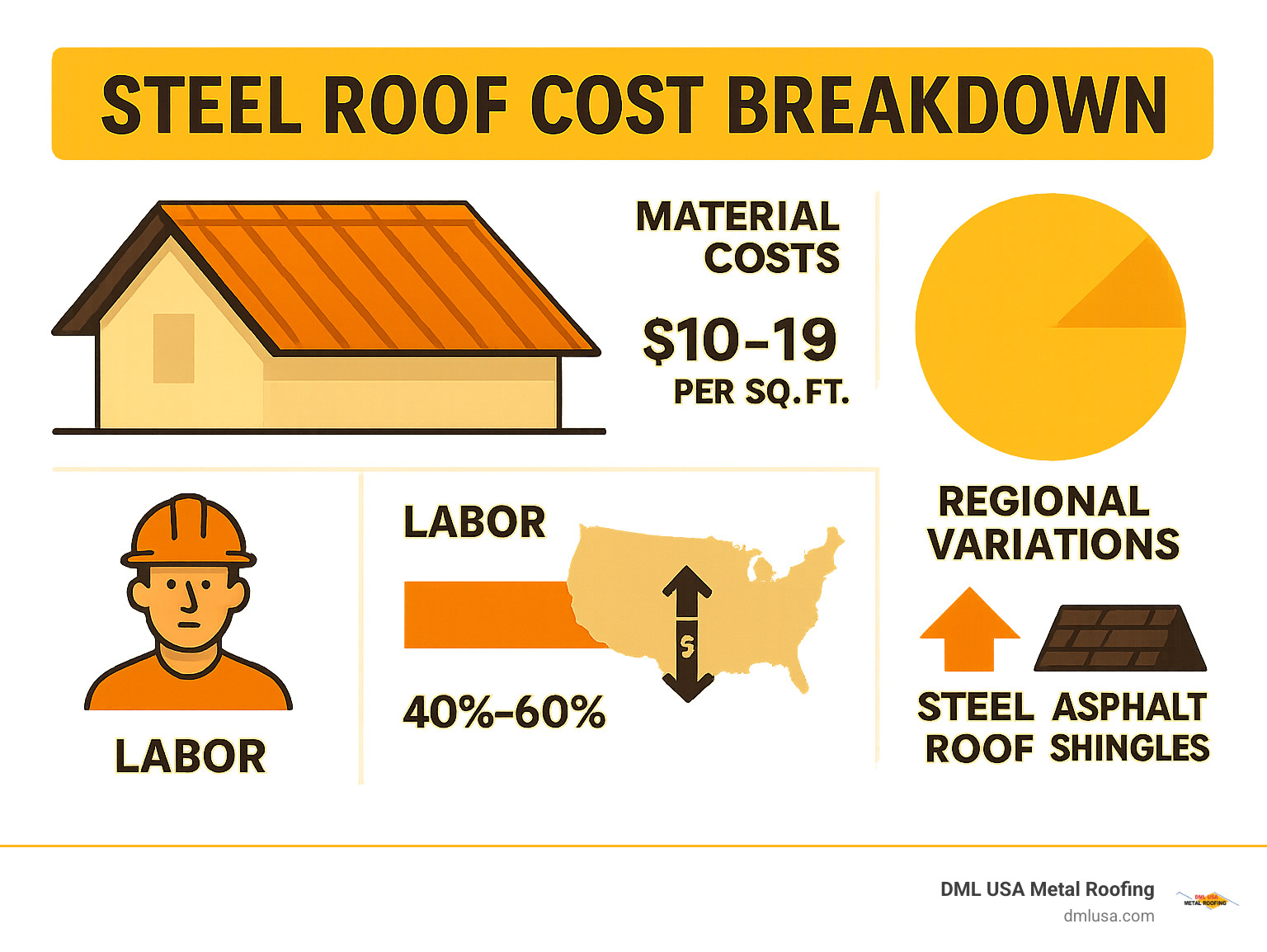
– Material + Installation: $10-$19 per square foot
– Average Home (2,000 sq ft): $36,000-$55,000 total
– Labor Share: 40-60% of total project cost
– Lifespan: 40-70 years vs 15-30 for asphalt
Steel roofing has gained popularity across the country due to energy savings, weather resistance, and long-term durability. But the upfront investment can be 2-3 times more expensive than asphalt shingles initially.
The good news? Steel roofs often pay for themselves through lower maintenance costs, energy savings, and increased home value over their 50+ year lifespan.
Several factors affect your final price tag:
– Roof size and complexity
– Geographic location
– Steel gauge (thickness)
– Fastener type (exposed vs hidden)
– Paint system quality
I’m Adam Kadziola, and I’ve been manufacturing high-quality metal roofing in Illinois since 2007 through DML USA Metal Roofing. Over the years, I’ve helped thousands of homeowners understand steel roof cost factors and make informed decisions about their roofing investments.
Steel roof cost terms to remember:
– cost difference between metal roof and shingle roof
– metal shingle roof cost
Steel Roof Cost Basics in 2024–2025
The conversation around steel roof cost has changed in the last few years. Because of inflation, supply-chain hiccups, and higher demand, most homeowners should now budget $10–$19 per square foot installed. For a 2,000-square-foot roof, that’s roughly $36,000–$55,000.
Roofers measure in squares—100 sq ft of roof area. When you see pricing like $850–$1,600 per square, that already includes both material and labor.
National Averages (installed)
- Materials: $368–$520 per square
- Labor: $400–$800 per square (about 40–60 % of the bill)
- Typical homes:
- 1,500 sq ft: $12,750–$24,000
- 2,000 sq ft: $17,000–$32,000
- 2,500 sq ft: $21,250–$40,000
Regional Trends
Location matters. Coastal states (Florida, the Carolinas, the Gulf) often see premiums of 15–25 % because of hurricane clips, stronger fasteners, and corrosion-resistant coatings. Inland markets—especially the Midwest—run about 10–20 % lower thanks to more moderate wind codes and lower wages.
Salt-air zones may require aluminum or specially coated Galvalume steel. Those upgrades can add another 30–40 % to the material portion of your project but save you from early corrosion repairs.
For granular, city-by-city numbers or to find a vetted contractor near you, visit our Resources page.
Key Factors That Drive Your Final Price Tag
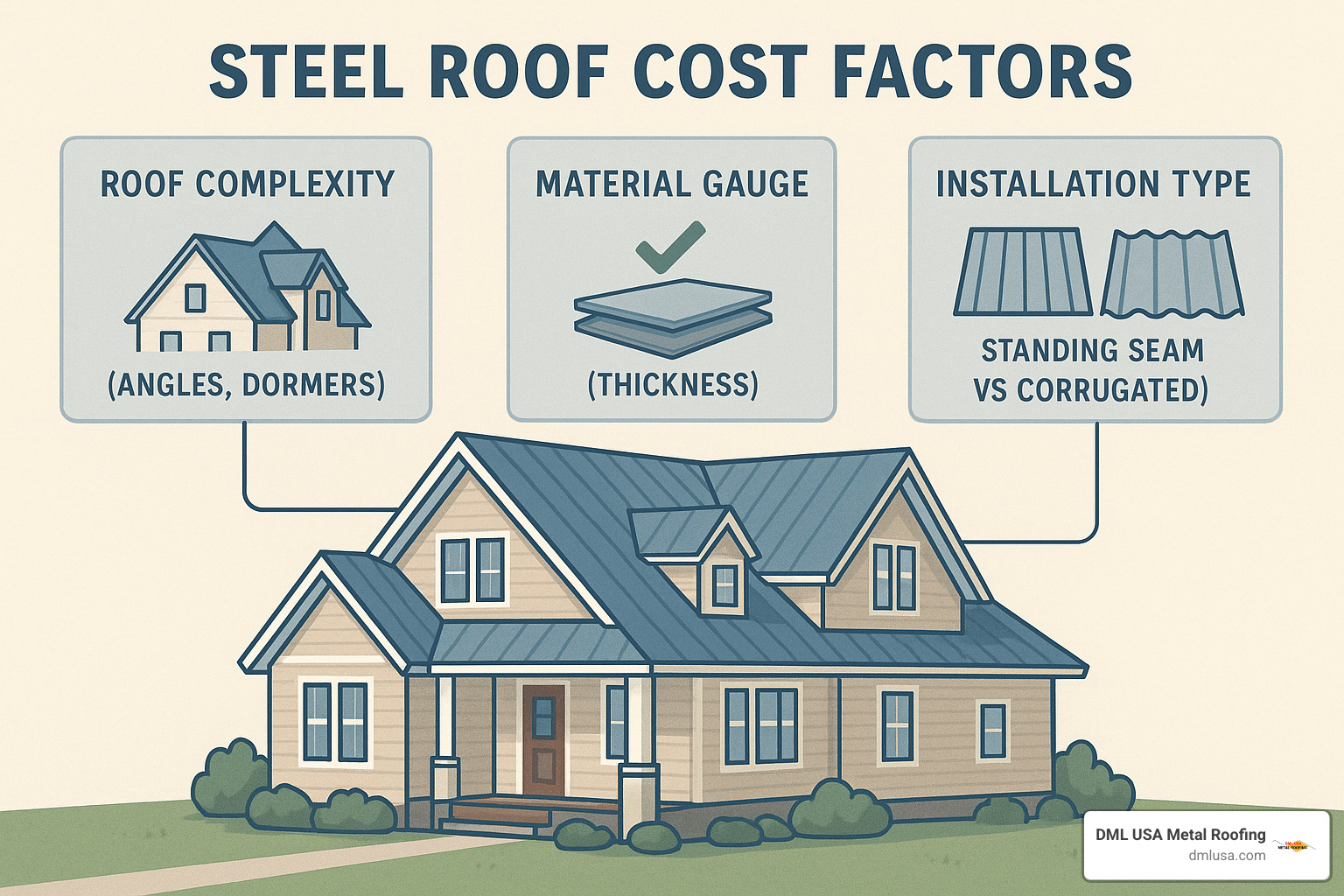
When it comes to steel roof cost, there’s no such thing as one-size-fits-all. Your final price depends on many moving pieces—some obvious, some not so much. Let’s break down what can make your steel roofing quote jump up (or down) before you sign the dotted line.
First, let’s talk about your roof itself. The bigger and more complicated your roof, the higher the cost. If your house has lots of angles, dormers, or skylights, the labor to fit metal panels neatly can quickly add up—sometimes by as much as 50-100%. Even the steepness (pitch) of your roof matters. Steeper roofs mean your crew needs extra safety gear, and work moves a little slower, so labor charges rise.
Where you live also plays a huge role in your steel roof cost. Labor rates change a lot from state to state and city to city. If you’re in a big metro area or somewhere with high demand for skilled roofers, prices can be much steeper than in smaller towns.
Next, steel thickness—or gauge—matters more than most people realize. Thicker steel (lower gauge number) is stronger and lasts longer, but it also costs 25-40% more. If you want a roof you don’t have to think about for decades, it can be worth every penny.
Fastener style is another big decision. Hidden fastener systems (like standing seam roofs) add a premium to your steel roof cost, often running about double the price of exposed fastener systems. But they’re also more weather-tight and last longer, so you might save in the long run.
Don’t forget the paint system, either! While standard SMP coatings are budget-friendly, premium PVDF finishes cost 30-40% more. They resist fading and chalking much better, especially if your roof gets a lot of sun.
Other line items you’ll see on your quote? Removing and hauling away your old roof, which can add $3-$5 per square foot, and local permits or inspections, usually $250-$500. These are the unglamorous details that ensure your new roof is legal and ready to perform.
If your job is on the small side—under 500 square feet—be prepared for a higher rate per square foot. Small jobs come with minimum labor charges and setup costs that can push prices much higher per square foot. That’s why, if you’re already planning other exterior work, it can be smart to bundle your projects and save.
For a full picture of what to expect and how to budget, check out our Resources page.
Exposed vs. Hidden Fasteners—Price & Performance
Your choice between exposed and hidden fasteners has a big impact on both your steel roof cost and how your roof performs down the road.
Exposed fastener systems, like corrugated or 5V crimp panels, are the wallet-friendly choice. Installed, they cost around $5–$12 per square foot and go up fast—installers can get these roofs done two or three times quicker than standing seam ones. The trade-off? They last about 20–30 years, and you’ll need to keep an eye on the fasteners, replacing them every decade or so.
Hidden fastener (standing seam) roofs are more of an investment, usually $10–$35 per square foot installed (expect about $20 as a rule of thumb). They take longer to put on, but that precise fit means fewer leaks and less maintenance. These roofs can go strong for 50 years or more with minimal fuss.
There’s more to the story than numbers. Hidden fastener systems handle expansion and contraction from heat and cold without putting stress on your roof’s seams, which means much lower risk of leaks. While exposed fastener systems save you money up front, the extra maintenance over time can tip the balance if you’re in your “forever home.”
If you want peace of mind, standing seam roofs are hard to beat—they’re nearly leak-proof, handle tough weather, and look crisp and modern. Plus, they often come with longer warranties.
Does Gauge Matter? Thicker Steel, Higher Cost, Longer Life
Let’s talk about steel gauge—basically, how thick your panels are. Lower numbers mean thicker steel. Most homeowners pick between 29, 26, and 24-gauge panels.
- 29-gauge is the lightest and cheapest, best if you live somewhere with mild weather and don’t expect hail or high winds.
- 26-gauge strikes a good balance for most homes: sturdy, affordable, and long-lasting.
- 24-gauge is the premium choice—about 25–40% more expensive than 26-gauge, but extra tough if severe weather is a worry.
If you’re in a hail zone, a coastal hurricane hotspot, or just want your roof to last as long as possible, thicker steel is a smart move. And don’t forget: thicker panels can sometimes mean fewer support beams underneath, which may help with installation costs.
Interestingly, research shows that the type and quality of metallic coating on your steel can matter as much—or more—than thickness alone for fighting rust and corrosion. So, pick your gauge wisely, but make sure you’re getting a quality finish, too. You can read more about the science behind coatings here.
In Illinois and the Midwest, 26-gauge is usually the sweet spot for value and durability—but if you need extra peace of mind, stepping up to 24-gauge can be worth the extra investment.
Every home is different, and every roof tells its own story. The team at DML USA Metal Roofing is always happy to help you balance your budget, performance needs, and style dreams when it comes to steel roof cost.
Comparing Steel to Other Metal Roofing Materials
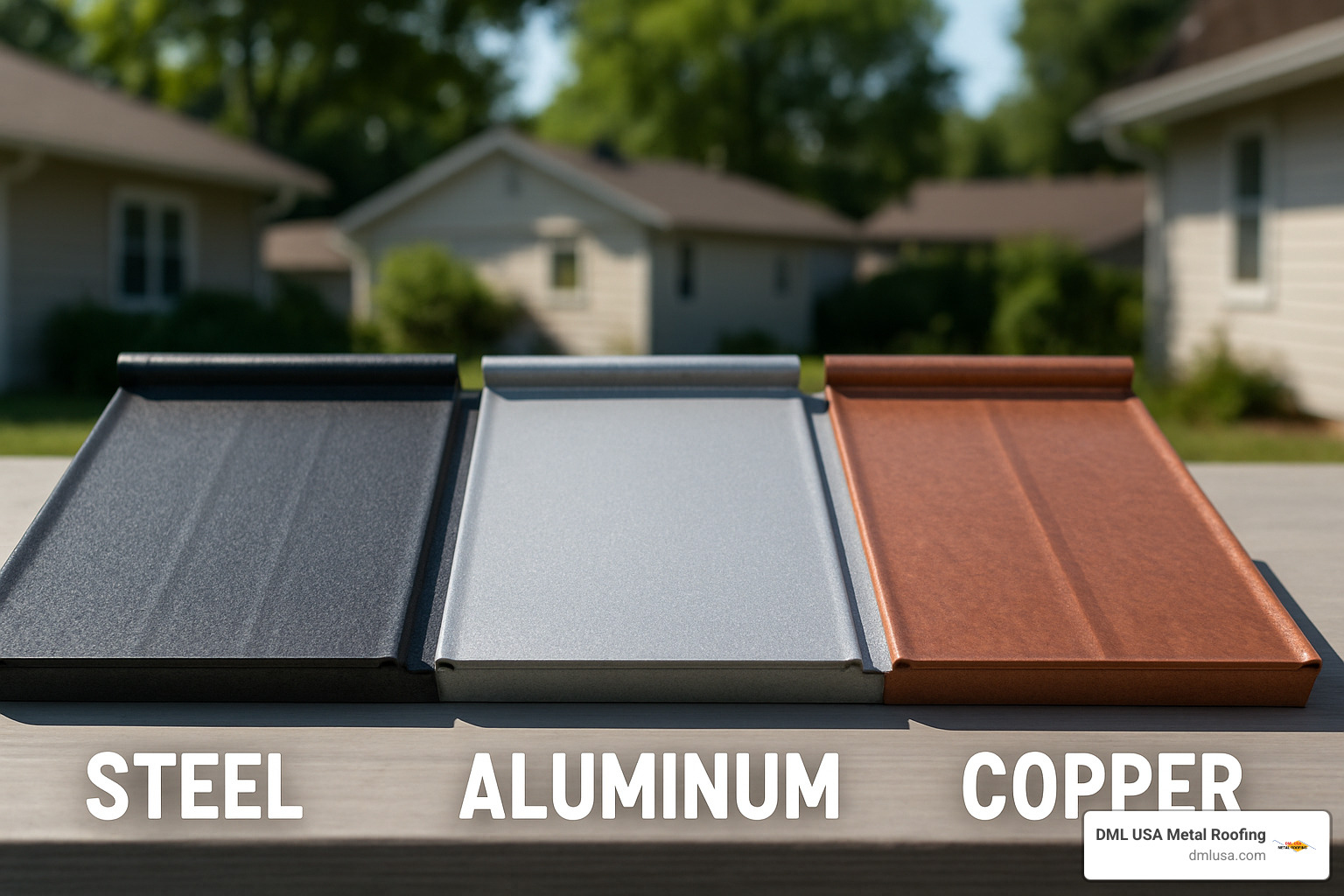
When I talk with homeowners about steel roof cost, one of the first questions they ask is how steel compares to other metal options. It’s a smart question because while steel offers excellent value, other metals might make sense depending on your specific situation and budget.
Steel has become our most popular material at DML USA Metal Roofing for good reason. It hits that sweet spot between performance and affordability that most homeowners are looking for. But let me walk you through how it stacks up against the other players in the metal roofing game.
The price differences between metals can be pretty significant. While steel roof cost typically runs $10-$19 per square foot installed, aluminum comes in slightly higher at $14.50-$20 per square foot. If you’re dreaming of copper, you’re looking at $22.50-$32 per square foot, and zinc falls somewhere in between at $19-$27 per square foot.
Material Prices Side-by-Side
Here’s where things get interesting from a value perspective. Steel gives you incredible strength and durability for the money. It’s the heavyweight champion of metal roofing – literally stronger than aluminum while costing less. Plus, steel is widely available, which keeps pricing stable and installation straightforward.
Steel’s energy efficiency really shines with the right reflective coatings. Many of our customers see noticeable drops in their cooling bills, especially during those brutal Midwest summers. The material is also 100% recyclable, which feels good when you’re thinking about your environmental impact.
Aluminum has its place, especially if you live near the coast. It’s naturally more corrosion-resistant than steel, making it the go-to choice for oceanfront properties. Aluminum is also lighter, which can be helpful if your roof structure has weight limitations. However, you’ll pay a premium for these benefits.
Copper is the luxury option that makes architects swoon. It develops that beautiful green patina over time and can last over a century. But copper’s steel roof cost comparison isn’t even close – you’re paying luxury prices for luxury performance. Most residential projects find steel offers better value.
The lifespan differences are worth considering too. Steel roofing typically lasts 50-70 years, while aluminum can push 50-75 years in ideal conditions. Copper wins the longevity contest hands down, but at three times the initial investment.
Pros & Cons Beyond Price
What really sets steel apart is its fire resistance and impact performance. When hailstorms roll through Illinois, properly installed steel roofing shrugs off impacts that would destroy other materials. Steel also handles thermal expansion well and works beautifully with most home styles.
The energy savings from steel roofing often surprise homeowners. With quality reflective coatings, steel roofs can reduce cooling costs by 10-25%. Those savings add up over decades and help offset the initial investment.
For coastal applications, I’m honest with customers – standard steel needs special coatings or you should consider aluminum. Salt air is tough on metals, and choosing the wrong material can lead to premature corrosion. Galvalume steel with premium paint systems works well in most coastal areas, but aluminum provides extra peace of mind.
Steel’s environmental credentials keep getting better. Most steel roofing contains 25-35% recycled content, and the entire roof can be recycled again at the end of its life. This sustainability factor often qualifies for green building programs and local incentives.
The bottom line? Steel delivers the best combination of performance, longevity, and value for most residential applications. While other metals have their specialties, steel’s balanced approach to strength, cost, and durability explains why it dominates the metal roofing market.
Calculating Your Total Project Budget & Savings
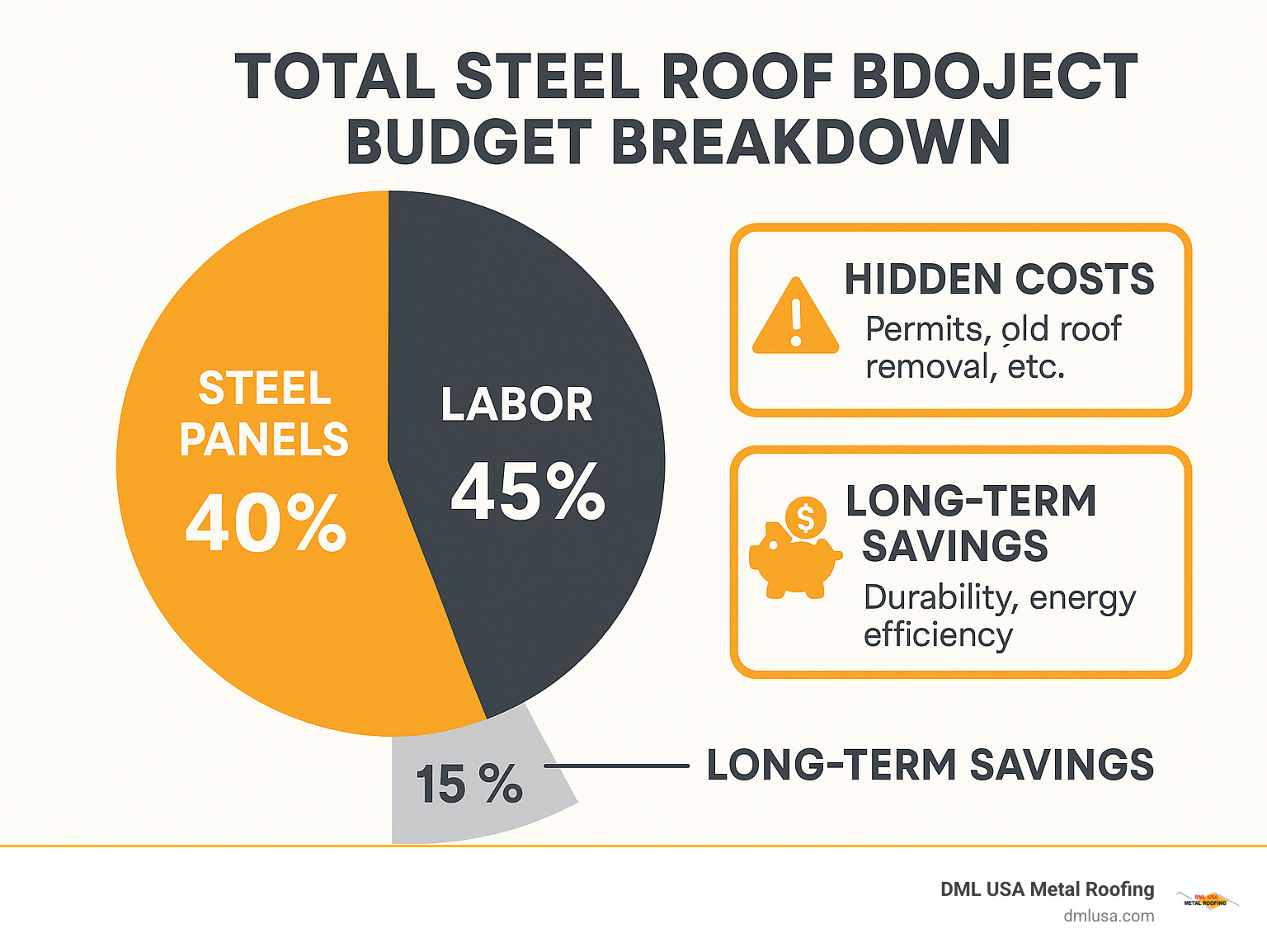
A realistic budget for any steel roof should include more than panels and nails. Below is a streamlined snapshot of where the money goes and where you can earn it back.
Typical Cost Breakdown
- Steel panels: 35–45 %
- Labor: 40–50 %
- Underlayment: $3–$4.50 / sq ft
- Trim & flashing: $5–$15 / linear ft
- Ventilation upgrades: $300–$800
- Tear-off & disposal: $3–$5 / sq ft + $500–$1,500 for dumpsters
- Permits/inspections: $250–$500
Incentives That Offset Costs
- Federal energy-efficient roof credit: up to 30 %
- Utility rebates (where offered): $500–$2,000
- Insurance discounts for impact or fire resistance: 5–15 %
- 0 % or low-APR financing programs are widely available
Hidden Line-Items (Plan a 10–15 % Contingency)
- Decking repairs: $3–$8 / sq ft
- Rafter or fascia reinforcement
- Steep or high roofs can add 20–30 % to labor
- Weather delays may require temporary waterproofing
Lifetime Payback vs. Asphalt
Over 50 years a steel roof typically costs $38,000 (including minimal upkeep) versus $53,000 for three asphalt replacements—about $15,000 saved. Add annual cooling savings of 10–25 % from cool-roof coatings and the math gets even better.
For supplier contacts or installer referrals, browse our Metal Roofing Suppliers Near Me directory.
Frequently Asked Questions about Steel Roof Cost
Does a steel roof really cost more than asphalt in the long run?
It’s easy to look at the upfront steel roof cost and get sticker shock, especially compared to traditional asphalt shingles. But over time, steel usually wins the savings race. Let’s break it down:
If you install a steel roof for around $36,000, you can expect minimal maintenance for decades. Meanwhile, asphalt might look cheaper at first—say, $15,000—but you’ll likely need to replace it once (or even twice!) over 30 to 50 years. That means another $18,000–$30,000 in replacements, plus a few thousand for repairs and upkeep.
After 30 years, you’re likely to have spent about the same on both. But by year 50, steel roof cost is far less—often saving you $15,000 or more over the life of your home. And if you factor in lower energy bills and insurance discounts, steel roofing can break even by year 20. It’s a classic “pay a little more now to pay a lot less later” scenario.
How does panel profile affect steel roof cost?
The style of your steel roofing panels makes a big difference in your final price tag. Think of it like shopping for shoes—some are budget-friendly, others are a splurge, and each serves its own purpose.
Simple profiles like corrugated panels sit at the low end of steel roof cost, ranging from $5–$8 per square foot. 5V Crimp and ribbed panels edge a little higher, while sleek, modern standing seam panels run $12–$20 per square foot. If you want the look of classic metal shingles or even metal slate tiles, expect to pay from $10 up to $18 per square foot.
Why do standing seam roofs cost more? They require more precise manufacturing, specialized installation tools, and a little extra skill (plus, the crew can’t just zip through the job). But you get what you pay for: standing seam and other advanced profiles last longer, look sharper, and offer the best weather protection.
In short, simpler panels install faster and cost less up front. More intricate profiles (like standing seam) cost more now but often pay you back with longer life, better performance, and a polished appearance.
Are there tax credits or warranties that offset steel roof cost?
Absolutely! There are several ways to bring down your net steel roof cost and add peace of mind.
First up, federal tax credits may cover up to 30% of the cost if you choose energy-efficient roofing (or go solar-ready). Your steel roof needs to meet Energy Star standards, but that’s a box most premium steel panels can check.
Next, let’s talk warranties. High-quality steel roofing often comes with paint warranties of 20–40 years (depending on the coating), and you can see substrate protection for 20–50 years against rust. Some systems even include special weathertight warranties for 2–20 years, plus a workmanship warranty from your installer—just ask what’s included before you sign on the dotted line.
Don’t forget insurance discounts: many providers offer 5–15% off for impact-resistant materials like steel, with extra savings if your roof is highly fire- or wind-resistant. And if your local utility offers a rebate for energy-efficient roofs, that’s another $500–$2,000 you might pocket.
Need help managing the investment? There are often 0% APR and long-term financing options available, so you can spread out the payments and still get the roof you want.
At DML USA Metal Roofing, we make sure you know about every possible incentive and warranty to help lower your effective steel roof cost. If you have more questions or want to discuss your options, just reach out. We’re here to help you make your best roofing decision—without any surprises.
Conclusion & Next Steps
Looking at steel roof cost is about more than just numbers—it’s about making a smart, lasting investment for your home. Steel roofing does require a higher upfront cost compared to traditional shingles, but the story doesn’t end there. Over decades, the savings and peace of mind can really add up.
Let’s recap what matters most. Steel roofing usually runs $10–$19 per square foot installed. Yes, that’s more than asphalt at first, but you can save at least $15,000 over 50 years because you avoid repeat replacements and cut down on maintenance. Add in steel’s exceptional durability, its energy efficiency (especially with cool roof coatings), and resistance to fire and storm damage, and the long-term benefits really shine through.
You also get help from financial incentives. Federal tax credits for energy-efficient roofs, plus possible insurance discounts, can take some sting out of the initial price. Don’t forget to check for local rebates or utility incentives in your area—you might be pleasantly surprised!
If you’re starting to plan your project, here’s a simple approach:
- First, accurately measure your roof—including dormers and special features. This will help keep estimates apples-to-apples.
- Next, reach out to several qualified contractors for quotes. Compare not just the materials but the total project cost, including labor, tear-off, and accessories.
- As you compare, focus on the long-term savings steel offers through fewer repairs and lower energy bills.
- Finally, ask about tax credits, rebates, and warranty coverage. These can seriously lower your overall steel roof cost.
Choosing the right contractor makes a world of difference. It’s wise to pick someone who is certified by the metal roofing manufacturer, holds proper licenses and insurance, and can provide references from recent projects. Always get a clear, written contract that spells out exactly what materials and warranties you’re getting. It might sound tedious, but this protects your investment for decades to come.
Here at DML USA Metal Roofing, we take pride in helping Illinois homeowners (and folks all across the Midwest) get the best value for their roofing dollar. We manufacture our steel roofing products locally, so you get both quality and a fair price. Our roofs are maintenance-free, energy-efficient (yes, they qualify for federal tax credits), and built to handle just about anything Mother Nature throws your way.
When you choose us, you get more than just a roof—you get lasting protection, savings, and expert support every step of the way. Our comprehensive warranties are designed to give you true peace of mind.
Remember: The lowest initial steel roof cost isn’t always the best deal. Quality materials, installation by real pros, and solid warranties make all the difference when it comes to long-term value.
If you’re ready to take the next step, or just want some friendly advice about your options, visit our Contact page. One of our steel roofing experts will be glad to help you with a personalized quote and answers to any questions.
Your roof should protect you for decades—and with steel, it absolutely can. Let’s make sure your investment is the right one, today and for the next generation.
