Skip to main content

Cost of metal shingles 2025: Top 5 Powerful Savings Guide
Why Smart Homeowners Choose Metal Shingles Despite Higher Upfront Costs
Cost of metal shingles ranges from $6 to $14 per square foot installed, making them significantly more expensive than asphalt shingles upfront. However, this initial investment pays off through decades of durability and energy savings.
Quick Cost Breakdown:
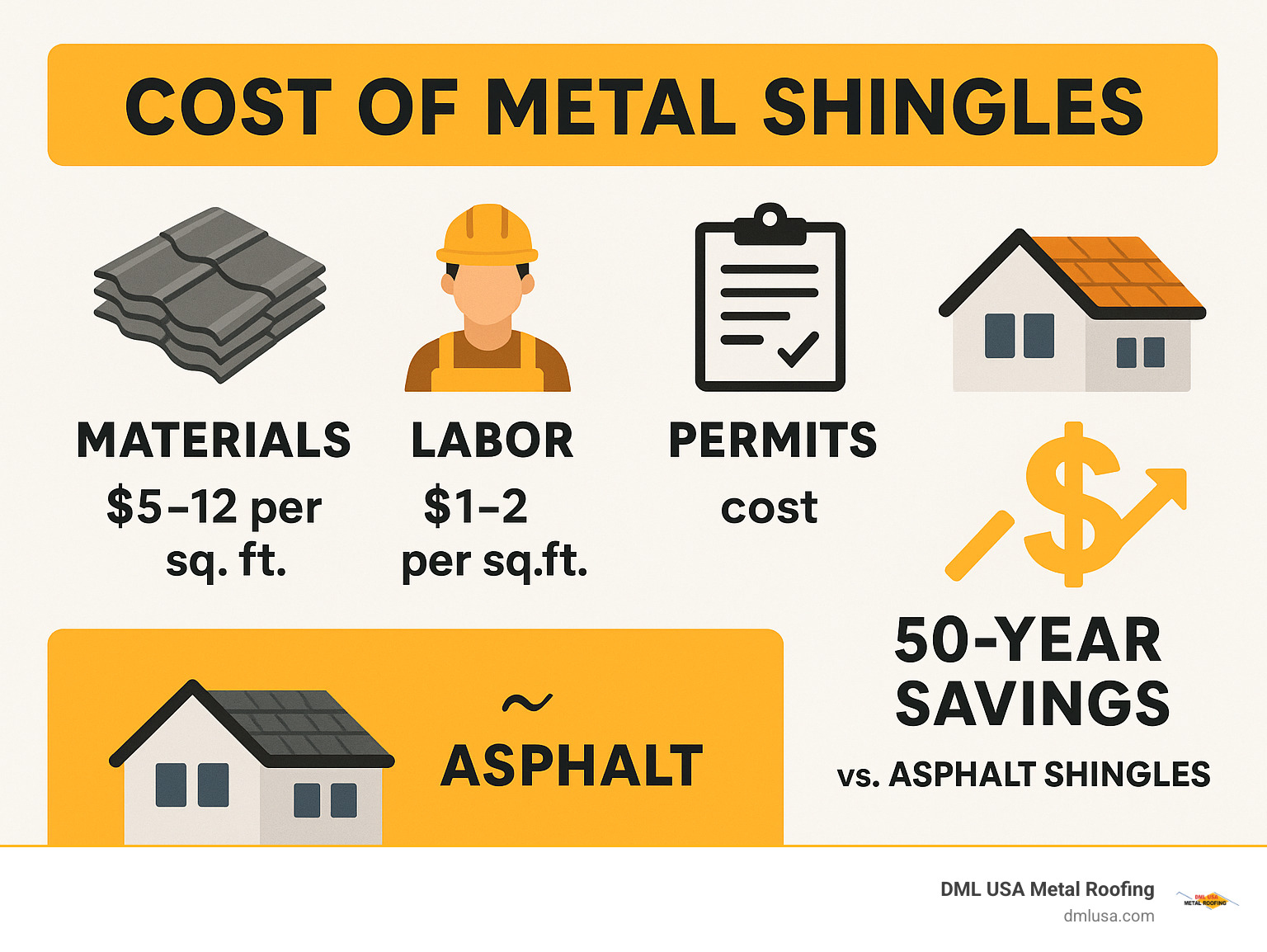
– Materials Only: $5-$12 per square foot
– Total Installed Cost: $6-$14 per square foot
– Typical Home (2,000 sq ft): $12,000-$28,000
– Lifespan: 40-70 years vs 20 years for asphalt
– ROI: 50-60% return on investment
Metal shingles last 2-3 times longer than traditional asphalt shingles while reducing energy costs by up to 25%. They’re also 50% lighter than asphalt, making installation over existing roofs possible in many cases.
The biggest sticker shock comes from labor costs, which account for 45-65% of your total project cost. But here’s what most homeowners don’t realize: you’ll likely never need another roof replacement in your lifetime.
As Adam Kadziola from DML USA Metal Roofing, I’ve helped Illinois homeowners steer cost of metal shingles decisions for over 15 years, watching families save thousands in long-term maintenance while boosting their home values. My experience manufacturing metal roofing since 2007 has shown me that the initial investment anxiety quickly turns into satisfaction once homeowners see their energy bills drop and their curb appeal soar.
Quick look at Cost of metal shingles:
– cost difference between metal roof and shingle roof
– what is the cost difference between metal roofing and shingles
Understanding Metal Shingles: Types, Lifespan & Benefits
When you think “metal roof,” you might picture a barn with corrugated panels. But metal shingles are a whole different story. These premium roofing products are designed to look like traditional shingles, cedar shakes, or even slate tiles—while delivering the rock-solid durability that only metal can provide.
Steel shingles are the most popular choice for good reason. They’re cost-effective and come with protective coatings that laugh in the face of rust. Aluminum shingles weigh practically nothing and never rust, making them perfect for coastal homes where salt air would destroy other materials. If you want to make a statement (and have deep pockets), copper shingles develop a beautiful patina over time and can last over a century. Zinc shingles offer that same premium feel with natural weather resistance and a unique blue-gray color that ages gracefully.
Then there are stone-coated steel shingles—the best of both worlds. You get steel’s strength with a decorative stone chip finish that adds texture and visual appeal. It’s like having your cake and eating it too.
Here’s the kicker: metal shingles typically last 40 to 70 years. That’s two to three times longer than asphalt shingles. While your neighbors are on their second or third roof replacement, you’ll still be enjoying your first metal roof.
The benefits go way beyond longevity. Metal shingles offer fire resistance that can actually lower your insurance premiums. They’re rated for hurricane-force winds and Class 4 hail—the kind of weather that turns asphalt shingles into confetti. Plus, they boost your curb appeal with dozens of colors and profiles that can match any architectural style.
From an environmental standpoint, metal shingles are champions. Most contain 25 to 95% recycled content and are 100% recyclable when their incredibly long life finally ends. They’re also surprisingly light—just 70 to 120 pounds per 100 square feet, which is about half the weight of asphalt shingles.
For a closer look at available styles and materials, check out our metal roofing products.
How Metal Shingles Differ from Other Roofing Materials
Metal shingles aren’t just “fancy asphalt shingles”—they’re engineered completely differently. The weight difference alone is remarkable. At roughly 50% lighter than asphalt and up to 75% lighter than tile or slate, metal shingles put less stress on your home’s structure. This often means no need for expensive reinforcement work.
The installation method is where things get really interesting. Metal shingles use interlocking panels that lock together on all four sides, creating a weather-tight seal that’s virtually impenetrable. Asphalt shingles, on the other hand, rely on simple overlapping and adhesive strips—a system that’s been around since your great-grandfather’s time.
Advanced coatings like PVDF (Kynar 500) and SMP paint finishes protect metal shingles from fading and weather damage for decades. These aren’t just pretty colors slapped on—they’re sophisticated chemical formulations that bond at the molecular level.
When you compare this to asphalt shingles that last 15 to 25 years on a good day, the difference becomes clear. Metal shingles are built for the long game, while asphalt is more of a temporary solution that you’ll replace multiple times.
Pros & Cons at a Glance
Let’s be honest about what you’re getting into. Longevity is metal’s biggest selling point—40 to 70 years versus 15 to 25 for asphalt. The maintenance requirements are minimal; you might need to clean your gutters more often than you’ll need to maintain your metal roof.
The upfront cost is definitely higher, but here’s where the Cost of metal shingles makes sense long-term. You’re looking at one roof purchase instead of three or four asphalt replacements over the same period. The resale value boost is real too—studies show a 50 to 60% return on investment.
Now, about that noise myth everyone talks about. Metal shingles installed over proper sheathing and underlayment are just as quiet as any other roof. The days of noisy metal roofs went out with the barn roof era. Modern installation techniques and materials have solved that problem completely.
The main downside? That initial investment can cause some sticker shock. But when you factor in the decades of performance and energy savings, most homeowners find the math works in their favor.
Cost of Metal Shingles: National Averages & Breakdown
The cost of metal shingles can feel like a moving target, but here’s what you need to know:
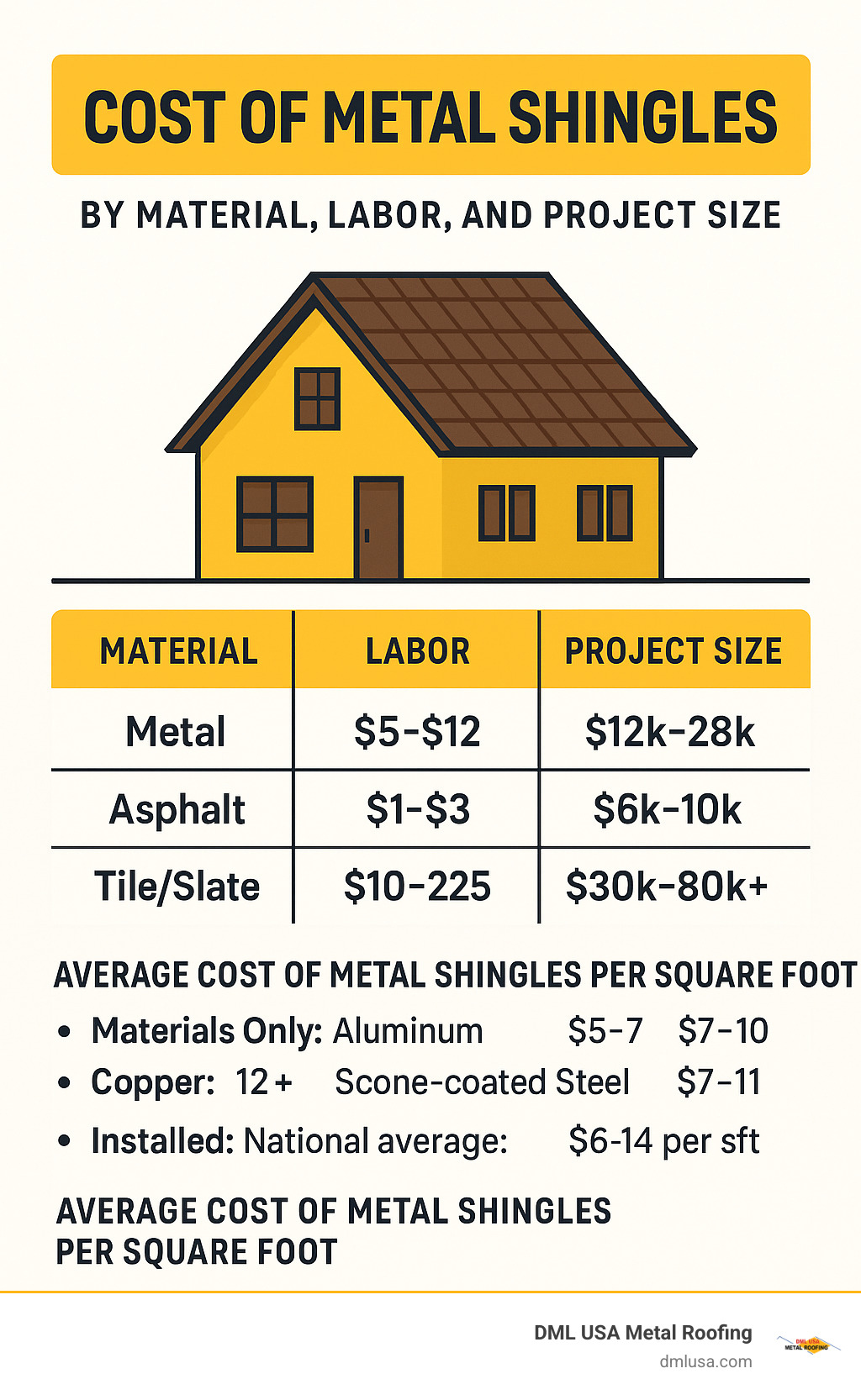
- Materials: $5–$12 per square foot
- Installed: $6–$14 per square foot (includes labor, underlayment, fasteners, and trim)
- Total project (1,500–2,500 sq ft roof): $9,000–$35,000+
- Labor: $4–$10 per square foot (45–65% of the total cost)
- ROI: 50–60% on resale, even higher in snowy or harsh climates
| Roofing Type | Materials/Sq Ft | Installed/Sq Ft | Avg. Roof (2,000 sq ft) |
|---|---|---|---|
| Metal Shingles | $5–$12 | $6–$14 | $12k–$28k |
| Asphalt Shingles | $1–$3 | $3–$5 | $6k–$10k |
| Tile/Slate | $10–$25 | $15–$40 | $30k–$80k+ |
Average Cost of Metal Shingles per Square Foot
Materials Only:
– Aluminum: $5–$7 / sq ft
– Steel: $7–$10 / sq ft
– Copper: $12+ / sq ft
– Stone-Coated Steel: $7–$11 / sq ft
Installed:
– National Average: $6–$14 / sq ft
– Illinois: Typically $7–$13 / sq ft (labor rates are moderate)
Gauge Impact: Thicker metal (lower gauge number) costs more but performs better in hail, snow, and wind. 26 or 24-gauge is standard for most homes; avoid 29-gauge in harsh climates.
Regional Variance: Coastal areas (think Florida, California) and major metros see higher prices—sometimes by 10–20%.
Total Cost of Metal Shingle Roof for Typical Homes
For a 2,000 sq ft roof:
– Mid-range steel/aluminum: $12,000–$22,000
– Premium (copper, complex roofs): $30,000–$40,000+
Labor:
– Simple roofs: $4–$6 per sq ft
– Complex roofs (steep, dormers, skylights): $7–$10 per sq ft
Additional Expenses Homeowners Should Expect
Don’t let hidden costs sneak up on you:
– Underlayment: $1–$3 per sq ft (synthetic is best for metal)
– Flashing, Snow Guards, Fasteners: $1–$2 per sq ft
– Gutters: $4–$40 per linear foot (if upgraded)
– Old Roof Removal: $1,000–$3,000 (if required)
– Permits: $200–$500 in most Illinois municipalities
– Warranties: Often included, but check for extended/transferable options
– Disposal Fees: $300–$800 depending on weight and local dump rates
– Financing: Many contractors offer payment plans, or check with your bank for home improvement loans
Factors Influencing the Total Metal Shingle Roof Cost
When homeowners ask why one quote for a metal shingle roof is higher than another, there’s no single answer. The cost of metal shingles is shaped by a mix of big-picture factors and small details. Let’s walk through the main ones, so you feel confident when comparing bids.
First up: roof size matters—a bigger roof needs more shingles, more underlayment, and more labor hours. If your home has a steep pitch or slope, installers need extra safety equipment and work more slowly, which can add 10–20% to labor costs. The same goes for complex roofs with lots of valleys, dormers, skylights, or chimneys. Every extra feature means more cutting, flashing, and careful work.
Penetrations—like vents, stacks, or skylights—might seem small, but each one adds to the cost for both materials and installation. And let’s not forget location. Labor rates in Illinois are generally moderate, though homes in the Chicago area might see higher prices than those in smaller towns.
Material costs aren’t set in stone, either. Because metal is a traded commodity, market prices can rise or fall each year. If you’re eyeing a premium finish, keep in mind that paint finish premiums—especially for PVDF (Kynar 500)—can raise your cost by 15–35% over standard SMP coatings, but they’ll keep your roof looking sharp for decades.
Where you live also plays a role: Climate zone can influence what thickness (gauge) and finish you need. Harsher weather often means springing for heavier metal and premium paints, increasing your upfront investment but boosting longevity. The good news? Many insurance companies offer discounts for fire- and hail-resistant metal roofs, which can offset part of the upfront cost.
If you’re wondering how reflective, “cool” metal roofs can improve your energy savings—especially in hot climates—check out this scientific research on cool roofs.
Labor & Installation Variables
Let’s talk installation. While some home projects are DIY-friendly, metal shingle roofs really aren’t. Professional installation ensures warranties stay valid and your roof stays leak-free. Certified installers bring the right tools and know-how, so your investment lasts. Make sure your crew is NRCA-certified for peace of mind.
Timing can make a surprising difference. If you can schedule your project for the off-season (late fall or early spring), you might save some money, as roofers are less in demand. On the flip side, if your roof is tough to reach, expect a surcharge for the extra effort. And remember: the skill of your contractor can mean the difference between a roof that lasts a lifetime and one that needs repairs far too soon.
Material Choice Showdown
Your choice of metal also plays a big role in the cost of metal shingles. Here’s a quick rundown:
- Aluminum shingles (about $5–$7 per sq ft) are rustproof and ideal for damp or coastal areas, lasting 40–50 years.
- Steel (Galvalume) is the best value for most homes, running $7–$10 per sq ft and lasting 40–60 years.
- Copper is the showstopper—at $12+ per sq ft and a 70+ year lifespan, it’s perfect for historic or luxury homes.
- Zinc falls in the $10–$15 per sq ft range, with a beautiful patina and 60+ years of protection.
- Stone-coated steel combines decorative looks with durability, costing $7–$11 per sq ft and delivering 40–50 years of service.
Metal thickness, or gauge, counts too:
– 26-gauge is the sweet spot for most homes—a solid mix of durability and price.
– 24-gauge is tougher and best for harsh climates or commercial spaces.
– 29-gauge is the budget pick, but it isn’t recommended where hail or high winds are a concern.
When you’re comparing bids, keep all these details in mind. They explain why the cost of metal shingles can vary so much—from the materials you choose down to the last flashing and fastener. If you have questions or want to see options up close, the team at DML USA Metal Roofing is always here to help.
Saving Money & Maximizing Value with Metal Shingles
The real magic of cost of metal shingles happens after installation—when your energy bills drop, maintenance worries disappear, and your home value climbs.
Metal shingles work like a giant reflective shield on your roof. Those energy efficiency savings of 15–25% aren’t just marketing fluff—they’re real dollars back in your pocket every month. A typical Illinois homeowner saves $300–$800 annually on cooling costs alone.
Federal and state tax credits can put thousands back in your pocket at tax time. Many homeowners don’t realize these programs exist, but they can cover a significant chunk of your initial investment. Always ask your contractor about current Illinois incentives—they change regularly.
Here’s something most people don’t think about: you’ll likely never need another roof in your lifetime. While your neighbors replace their asphalt shingles every 20 years, you’ll be sitting pretty with a roof that lasts 40–70 years. That’s potentially two or three reroofing costs you’ll never have to face.
Insurance companies love metal roofs too. Many offer discounts of 5–15% on homeowner’s premiums because metal shingles resist fire, wind, and hail damage. Over decades, these savings really add up.
The resale value boost is impressive—metal roofs typically return 50–60% of their cost when you sell. In harsh weather regions like northern Illinois, that return can hit 95%. Buyers know they’re getting a home that won’t need a new roof anytime soon.
For help finding quality suppliers in your area, check out our Metal Roofing Suppliers Near Me directory.
Smart Ways to Cut Project Costs
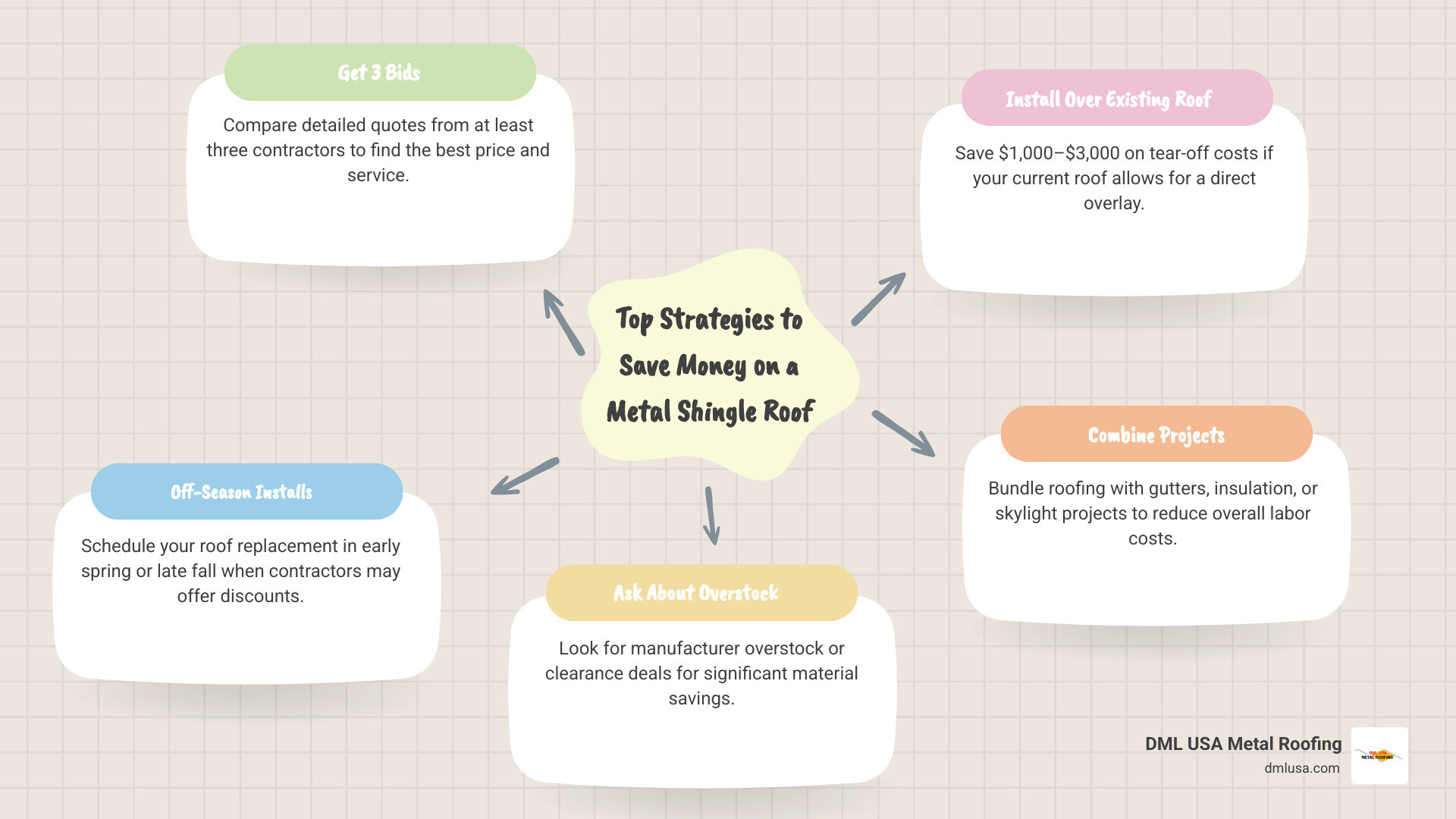
Getting three bids is non-negotiable—I’ve seen quotes vary by $10,000 for the same job. Make sure each contractor is pricing the same materials and scope of work.
Timing matters more than you think. Contractors often offer off-season discounts in late fall or early spring when business slows down. You might save 10–15% just by being flexible with your schedule.
Ask about overstock deals—manufacturers sometimes have excess inventory they’ll sell at a discount. These aren’t damaged goods, just colors or styles that didn’t move as expected.
Installing over your existing roof can save $1,000–$3,000 in tear-off costs, but only if your local code allows it and your roof structure can handle the weight. Not all situations qualify, but it’s worth asking.
Combining projects makes financial sense too. If you need new gutters, insulation, or skylights, doing everything at once saves on setup costs and scaffolding fees.
Long-Term Payback Calculations
Let’s talk real numbers. If metal shingles cut your summer cooling bill from $280 to $220 monthly, that’s $720 saved per year. Over 20 years, you’re looking at $14,400 in utility savings alone—and that’s assuming energy prices don’t rise.
Repair avoidance is where metal really shines. Asphalt roofs need regular maintenance—replacing blown-off shingles, fixing storm damage, treating algae growth. Metal shingles? They just sit there doing their job, year after year.
The lifespan equity calculation is eye-opening. If asphalt needs replacement every 20 years at $12,000 per reroof, you’ll spend $24,000–$36,000 over a metal roof’s lifetime. Your metal roof pays for itself through avoided replacement costs alone.
Check out the latest industry data from the Metal Roofing Alliance for detailed studies on long-term returns and energy savings across different climate zones.
Frequently Asked Questions about the Cost of Metal Shingles
What is the real cost of metal shingles vs asphalt in 2025?
Here’s the honest truth about cost of metal shingles versus asphalt: you’ll pay more upfront, but save thousands over time.
Metal shingles run $6–$14 per square foot installed, which means $12,000–$28,000 for a typical 2,000 square foot roof. Asphalt shingles cost $3–$5 per square foot installed, or $6,000–$10,000 for the same roof.
That’s a big difference initially—but here’s what changes the math completely. Metal shingles last 40–70 years while asphalt typically needs replacement every 15–25 years. You’ll likely reroof with asphalt 2–3 times during the lifespan of one metal roof.
Add in the energy savings (15–25% lower cooling costs), minimal maintenance, and resale value boost of 50–95%, and metal becomes the smarter long-term investment. Most homeowners break even within 10–15 years, then enjoy decades of savings.
For detailed side-by-side comparisons, check out our guides on the cost difference between metal roof and shingle roof and what is the cost difference between metal roofing and shingles.
Can metal shingles be installed over my old roof to save money?
Yes, this is often possible—and it’s one of the best ways to reduce your cost of metal shingles project by $1,000–$3,000.
Metal shingles weigh about half as much as asphalt, so your roof structure can typically handle the extra load. You’ll skip the messy, expensive tear-off process and avoid disposal fees that can run $300–$800.
But there are important conditions: Your local building codes must allow it, and your existing roof decking needs to be in good shape. Any soft spots, water damage, or structural issues need fixing first. Most areas allow one layer of existing shingles to remain, but not two or more.
Always have a professional inspect your current roof before deciding. Sometimes tear-off is necessary for proper installation and warranty coverage. The savings are great when it works, but cutting corners here can lead to bigger problems later.
Are there DIY options to reduce the cost of metal shingles?
We strongly recommend against DIY installation for metal shingles—and here’s why it could actually cost you more in the long run.
Metal shingle installation requires specialized tools, safety equipment, and experience with interlocking panel systems. One mistake can void your warranty completely. Most manufacturers, including DML USA Metal Roofing, only honor warranties on professionally installed roofs.
Safety is another huge concern. Metal roofs are slippery, especially when wet, and the installation process is physically demanding. Professional roofers have the training and equipment to work safely at height.
Better ways to save on your cost of metal shingles: Get multiple quotes, schedule during off-peak seasons, ask about overstock materials, or combine your roof project with other home improvements. These strategies can save you thousands without risking your safety or warranty coverage.
The labor portion of your project (typically 45–65% of total cost) ensures proper installation that will last decades. It’s worth every penny when you consider you’re investing in a roof that may outlast your home ownership.
Conclusion
When you step back and look at the big picture, choosing a metal shingle roof is one of the smartest home decisions you can make. The cost of metal shingles is higher up front than old-fashioned asphalt—but what you’re really buying is peace of mind for decades to come.
Over 40–70 years, you’ll likely spend less on repairs, less on energy bills, and never worry about needing another roof replacement. Metal shingles protect you from fire, wind, and storms. They look gorgeous, boost curb appeal, and can add serious value if you ever sell your home.
For Illinois homeowners, DML USA Metal Roofing offers high-quality metal shingles made to last. Our roofs are maintenance-free, energy-efficient, and may qualify you for energy tax credits. If you want a roof that pays you back in savings, comfort, and confidence—this is it.
Still have questions about the cost of metal shingles or want a quote custom to your home?
Reach out to us at DML USA Metal Roofing, your trusted Illinois metal roofing manufacturer since 2007. We’re here to guide you with honest advice and friendly service every step of the way.
Ready to find out why so many homeowners are choosing metal?
Learn more about why metal roofing could be the perfect fit for your home.