 Skip to main content

How much does a metal roof cost versus shingles? 2025 Shocking Savings Guide
The Real Cost Difference: Metal vs Shingles
How much does a metal roof cost versus shingles is one of the most important questions homeowners face when replacing their roof. Here’s the quick answer:
Upfront Costs (2024):
- Asphalt Shingles: $4.00-$8.00 per square foot installed
- Metal Roofing: $4.50-$16.00 per square foot installed
Total Project Costs for Average Home (1,700 sq ft):
- Shingles: $12,000-$16,000 (standard architectural)
- Metal: $8,500-$40,000 (depending on type)
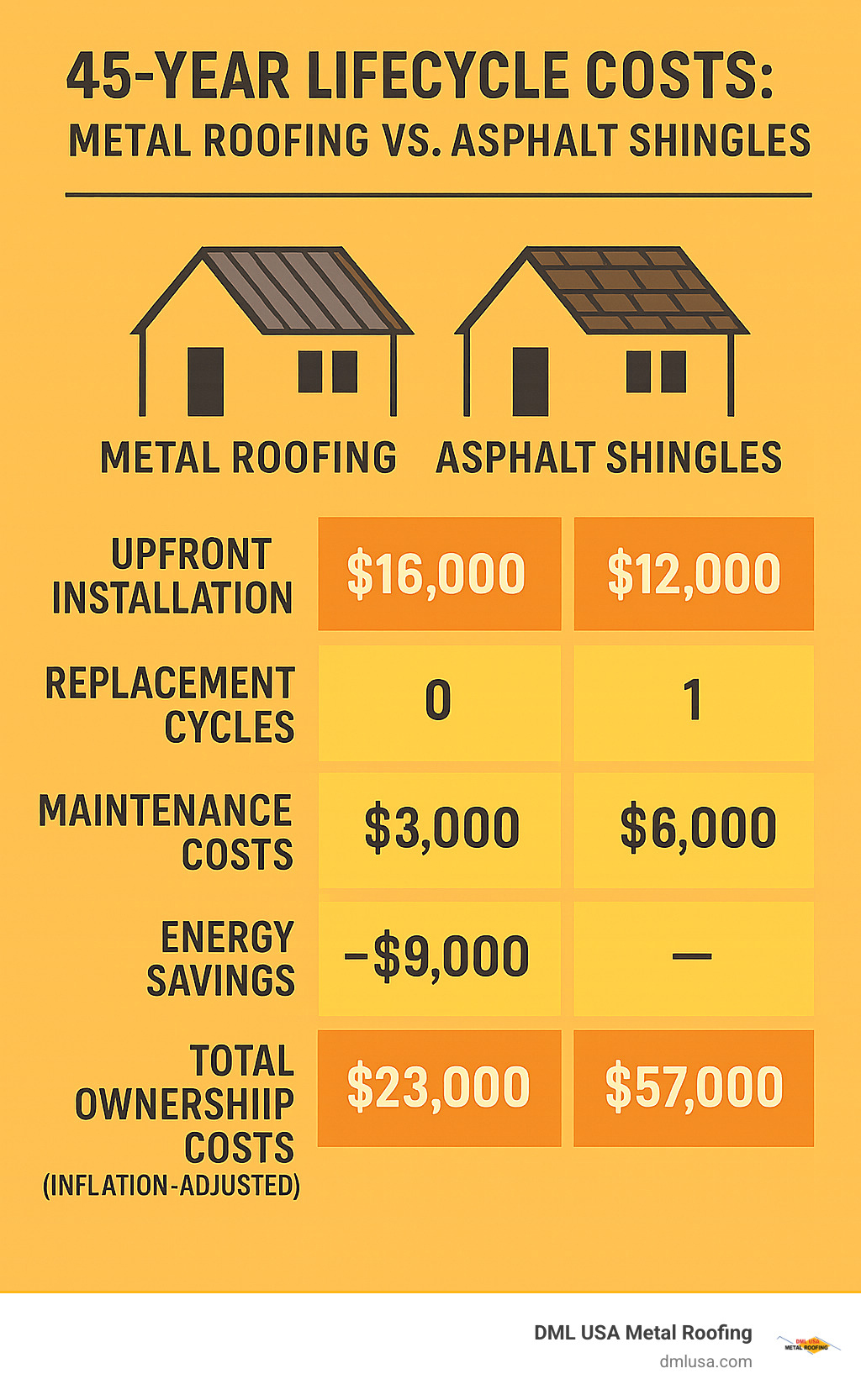
But here’s where it gets interesting. While metal costs more upfront, a typical 2,000-square-foot roof with asphalt shingles will cost around $57,000 over 45 years, versus $23,000 for a metal roof when calculated over the same time frame.
The math changes everything when you factor in replacements, maintenance, and energy savings. Metal roofs last 40-70 years compared to shingles at 15-30 years. Plus, metal roofing can save homeowners up to 20-40% on electricity bills due to its high reflectivity.
Most homeowners focus only on the sticker price. That’s a mistake that can cost tens of thousands over time.
I’m Adam Kadziola, and I’ve spent over 15 years manufacturing metal roofing in Illinois, helping homeowners understand exactly how much does a metal roof cost versus shingles in real-world scenarios. Through DML USA Metal Roofing, I’ve seen how the right roofing choice can save families money while providing decades of peace of mind.
Handy how much does a metal roof cost versus shingles terms:
How Much Does a Metal Roof Cost Versus Shingles in 2024?
Let’s talk real numbers. When homeowners ask, how much does a metal roof cost versus shingles, they want straight-up facts for 2024. At DML USA Metal Roofing, we manufacture right here in Illinois and see nationwide pricing every week, so you’re getting the latest and most accurate info.
Asphalt shingle roofs are still the most common—and their costs have held steady this year. For basic 3-tab shingles, most folks pay about $4.00 per square foot installed. Step up to architectural shingles (the ones with a bit more depth and style), and it’s usually $5.00 to $6.00 per square foot. If you want luxury or designer asphalt shingles, expect to spend $8.00 or more per square foot.
Metal roofing has a wider price range, and that’s because of the different materials and styles. Exposed fastener metal panels (those classic ridged panels you see on barns and many ranch homes) cost around $4.50 to $6.50 per square foot installed. For the sleeker, more modern look of standing seam steel, the price jumps to $12.00 to $16.00 per square foot. If you dream of a roof in aluminum or copper, those premium metals will run from $20.00 to $30.00 per square foot installed.
Why do metal prices vary so much? It all comes down to the material you choose and how complex your roof is. Exposed fastener systems can compete with architectural shingles on price, but standing seam is a true investment—it’s built to outlast almost anything.
Average Price Per Square Foot: How Much Does a Metal Roof Cost Versus Shingles?
Roofing quotes usually break up the material costs and the labor costs—and both matter. For materials alone, you’ll see asphalt shingles ranging from $1.50 to $4.00 per square foot, while most metal panels run $2.50 to $12.00 per square foot, depending on grade and finish.
Now, let’s talk labor. Asphalt shingles are quicker for most crews, so labor runs around $2.00 to $3.00 per square foot. Metal installation requires specialists and more careful work, so you’ll see labor in the $3.00 to $5.00 per square foot range. Standing seam, especially, needs a pro—don’t trust just anyone with your roof warranty!
There are some extras to keep in mind:
- Tear-off fees to remove your old roof usually run $1.00 to $5.00 per square foot.
- You may also need permits (typically $150–$500) and to pay for disposal. Metal is lighter, so disposal is cheaper—sometimes by thousands.
Total Installed Cost: How Much Does a Metal Roof Cost Versus Shingles for the Typical Home?
Let’s put it all together for a real home. For a 1,700–2,000 square foot roof (think: the average American house), here’s what you can expect in 2024:
- A basic 3-tab shingle roof will run between $7,500 and $9,000.
- Architectural shingles: plan on $12,000 to $16,000.
- Luxury shingle roofs can range from $16,000 up to $20,000 or more.
For metal roofing:
- Exposed fastener panels usually total $8,500 to $12,000 installed.
- Standing seam steel is a premium upgrade, often $30,000 to $40,000 for the same roof size.
- Want premium metals like aluminum or copper? That pushes the total to $40,000–$60,000+.
Roof shape matters, too. A simple ranch with a straight roofline will always cost less than a home with multiple angles, dormers, or valleys. Complicated roofs can add 20–30% more, thanks to the extra time and flashing required.
And here’s an insider tip: contractors almost always order about 10% more material than your roof’s measured size. This “waste factor” covers all the little cuts and edge pieces and applies whether you pick shingles or metal.
Need more detailed info about products or want to dive deeper? You’ll find it here: More info about products and metal shingle roof cost.
Understanding how much does a metal roof cost versus shingles is the first step to planning your project and your budget. Stick with the facts, ask lots of questions, and you’ll end up with a roof you love—without any nasty surprises.
What Drives Roofing Cost: Materials, Labor & Complexity
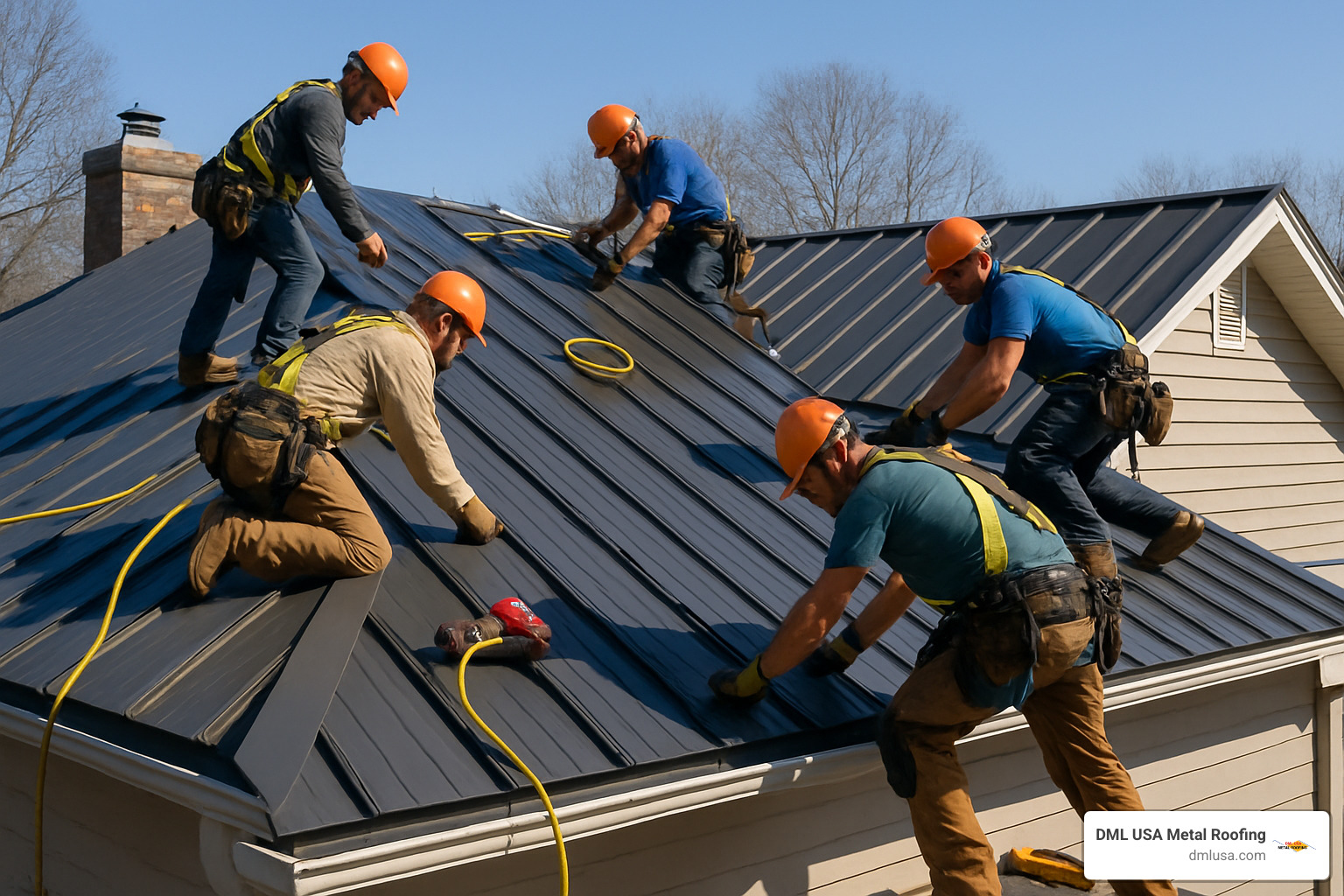
Three factors determine your final roofing cost: the materials you choose, the labor required to install them, and your roof’s complexity. We’ve manufactured thousands of roofing projects, and these variables make the biggest difference in pricing.
Material Choices & Upgrades
Metal Options:
- Steel: Most popular choice, excellent durability at moderate cost
- Aluminum: Lightweight, great for coastal areas with salt exposure
- Copper: Premium option lasting 100+ years, develops natural patina
Shingle Grades:
- 3-tab: Basic protection, 15-20 year lifespan
- Architectural: Improved durability, 20-30 years, better wind resistance
- Luxury: Premium aesthetics, 30+ years, mimics slate or wood
Coating Upgrades:
The coating system dramatically affects long-term performance. We offer PVDF (Kynar 500) coatings that come with 30-year paint warranties. These premium coatings resist fading and chalking far better than standard polyester or SMP coatings.
In our Louisiana testing, we compared SMP versus PVDF roofs over eight years. The SMP panels showed significant chalking and fade while the PVDF remained virtually unchanged.
Labor Skill Gap Between Metal & Shingles
Here’s something most homeowners don’t realize: installing metal roofing requires specialized skills that not every contractor possesses.
Metal Installation Challenges:
- Specialized tools for cutting and forming panels
- Precise measurement and layout for standing seam systems
- Understanding thermal expansion and proper fastening patterns
- Safety equipment for working with metal panels
Time Differences:
- Shingle installation: 1-3 days for average home
- Metal installation: 2-5 days for average home
The extra time translates to higher labor costs, but it’s worth it. Proper installation protects your warranty and ensures decades of performance. We’ve seen too many metal roofs fail prematurely due to improper installation by inexperienced contractors.
Lifetime Ownership Math: Replacement, Maintenance, Energy & Inflation
Here’s where the numbers start telling a different story. Most people just look at the price tag and wonder how much does a metal roof cost versus shingles upfront. But add up everything over 45 years—the real-life lifespan of a good roof—and metal pulls far ahead.
Let’s start with lifespan:
A standard asphalt shingle roof lasts about 15 to 30 years, depending on weather, shingle quality, and a bit of luck. Metal roofing, on the other hand, regularly lasts 40 to 70 years. Some premium metals can even protect your home for a century.
Because of this difference, a homeowner will likely replace an asphalt shingle roof two or three times in 45 years. A properly installed metal roof? You might never need to replace it at all. That’s a lot of skipped hassle—and a mountain of money saved on future replacements.
Now, let’s talk about inflation.
Roofing prices usually double every 15 years or so. This means the $15,000 shingle roof you put on today could cost you $30,000 to replace in 15 years—and a whopping $60,000 if you’re still in the home in 30 years. Ouch. Metal’s one-and-done approach really starts to shine here.
What about maintenance?
Asphalt shingles need regular checkups—inspections after big storms, moss removal, gutter cleaning, and patching up leaks. Over decades, those bills add up. Metal roofs are practically maintenance-free. The main thing is occasionally tightening screws on exposed fastener systems. That’s it! No curling, cracking, or missing granules to fret over.
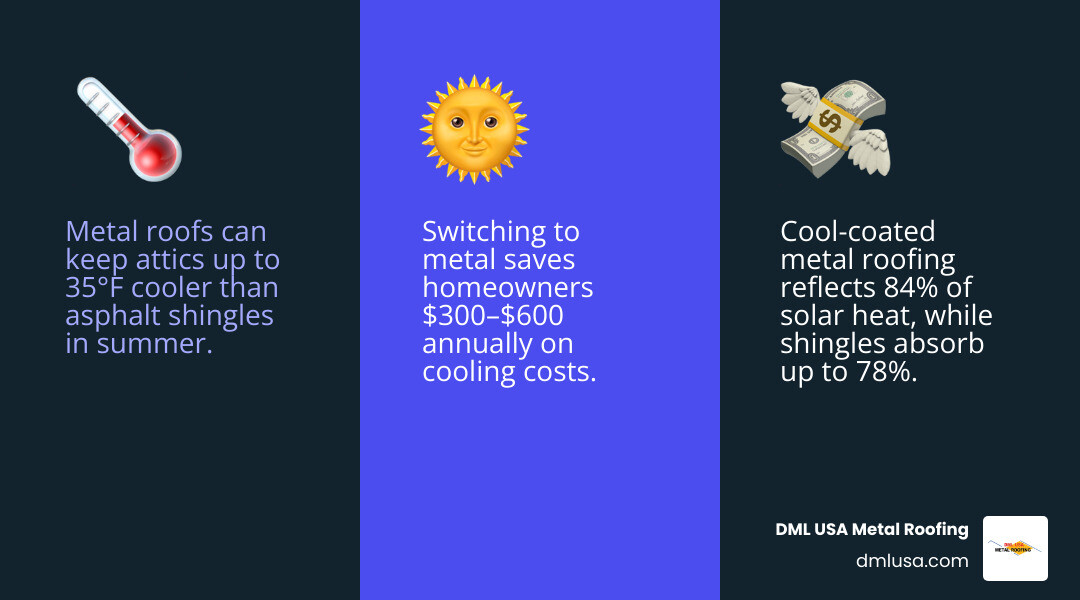
And energy savings? Here’s where the science gets fun. Research on cool roofing shows metal roofs can cut cooling costs by 7-15% in hot places. DML USA’s premium cool-coated panels reflect up to 84% of the sun’s heat, while asphalt shingles can soak up to 78%. That means a cooler attic, a less-stressed air conditioner, and hundreds of dollars back in your pocket each year.
45-Year Life-Cycle Cost Calculator
Let’s crunch the numbers for a typical 2,000-square-foot roof, looking at everything—installations, replacements, maintenance, and energy.
-
Asphalt Shingles: Your first install will run about $16,000. Twenty years in, you’ll shell out $32,000 for a replacement (thanks, inflation). At year 40, it’s another $64,000. Add about $8,000 for routine repairs and upkeep. That’s a total of $120,000 over 45 years.
-
Metal Roofing: The upfront investment is higher at $32,000, but you’ll likely never have to replace it. Maintenance costs? Around $2,000—for the rare screw tightening or inspection. Then factor in about $15,000 in energy savings from lower bills (that’s a 20% cut over 45 years). The grand total? Just $19,000 net cost—and a whole lot less stress.
Energy Efficiency & Utility Savings Over Time
The energy efficiency gap is huge. Metal roofing’s reflective coatings mean your attic can be as much as 35 degrees Fahrenheit cooler on blazing summer days. That takes a real load off your home’s cooling system.
For an average homeowner, that translates to 20-40% savings on cooling during peak months—often $300 to $600 every single year. And if your metal roof is installed with above-sheathing ventilation, you get an extra layer of insulation, making your whole home more comfortable and efficient.
So, when you’re comparing how much does a metal roof cost versus shingles, it’s not just about the day-one quote. It’s about protecting your home, your comfort, and your budget for decades to come. And that’s a calculation worth doing right.
Regional & Performance Factors: Climate, Insurance & Resale Value
Where you live matters—a lot—when it comes to how much does a metal roof cost versus shingles, and what you get for your money. At DML USA Metal Roofing, we’ve seen how climate and location can change not only the sticker price, but the real, long-term value of your new roof.
Take the Midwest, for example (where we call home). Labor costs are moderate, but our weather likes to keep everyone guessing—hail in May, snow in April, and wild wind just about any time. That means durability is key. In coastal regions, the story changes. Salt in the air is tough on steel, so the right material (think aluminum or coated steel) is non-negotiable. In the Southwest, the sun can be relentless. Energy efficiency jumps to the top of the wish list, as every bit of solar reflectivity means lower cooling bills. Up in the Northeast, it’s all about heavy snow—your roof needs to handle the weight and shed ice, or you’ll be dealing with more than just a leaky ceiling.
If you want to dig deeper into why metal roofing is often the best fit for challenging climates, take a peek at our Why Choose Metal Roofing resource.
Climate-Specific Recommendations
In hot, sunny states like Texas or Arizona, metal roofing is practically a cheat code for your energy bills. Modern reflective coatings can cut cooling costs by 25% or more. Over time, that’s a big chunk of change staying in your wallet.
Living by the coast? Salt air is brutal on regular steel. That’s why we recommend aluminum or steel with specialized coatings. Yes, it costs a bit more up front, but you’ll thank yourself when your roof still looks great after decades of salty breezes.
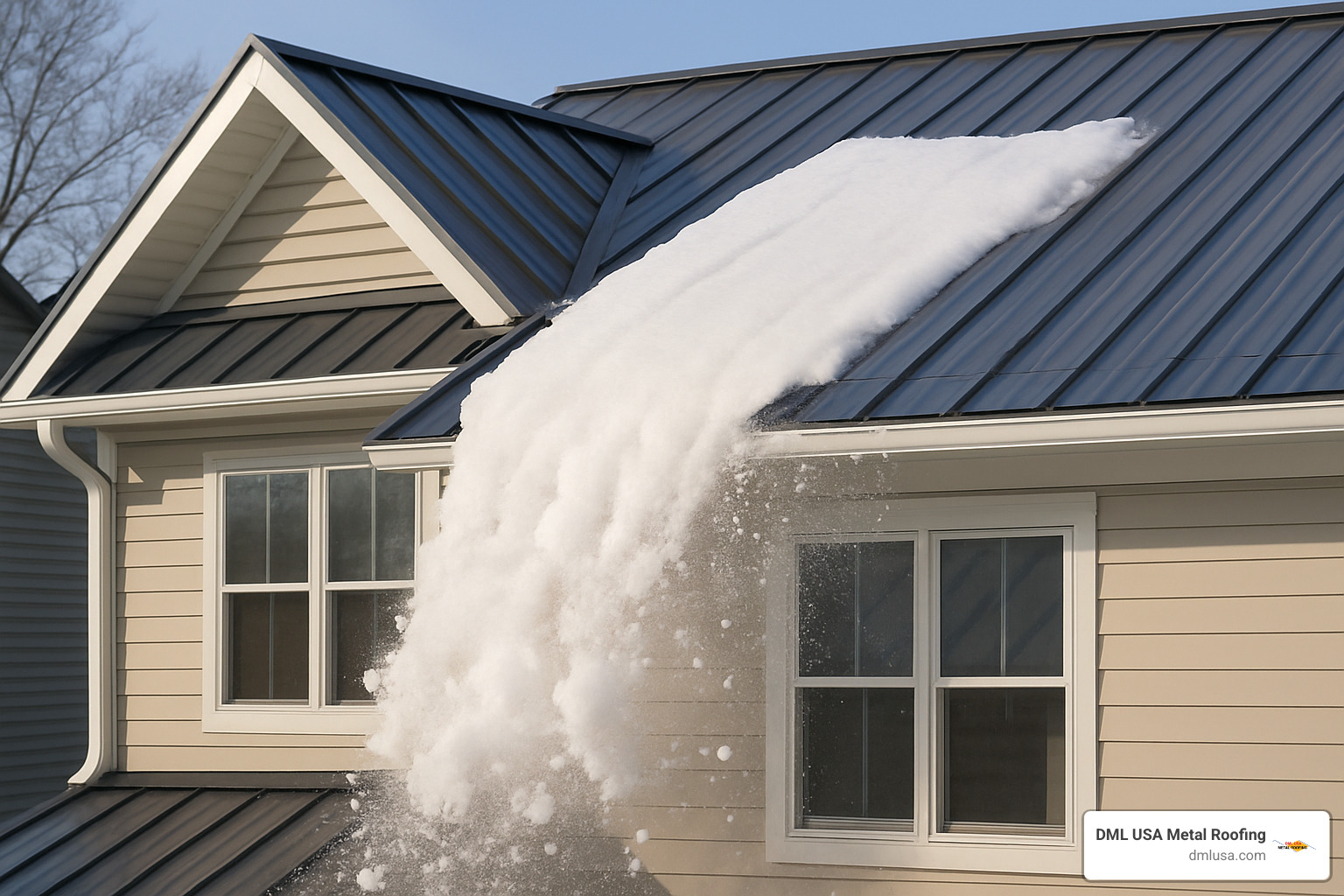
For those in snow country, metal is a game changer. Snow just slides right off, helping to prevent ice dams and heavy pileups that can strain your roof. If you’re worried about big sheets of snow sliding onto your driveway, snow retention systems are easy add-ons.
Insurance & Warranty Considerations
Your insurance company might just love your new metal roof as much as you do. Why? Metal roofing offers Class 4 hail resistance (meaning it can shrug off golf ball-sized hail), is fire-resistant, and stands up to hurricane-force winds when installed correctly. Many insurers reward this with premium discounts—always a nice surprise!
When it comes to warranties, you’ll find a big difference. Asphalt shingles usually come with 20-50 year warranties, but they’re often prorated and not always transferable. Metal roofing, on the other hand, often carries 40-50 year warranties on materials (and yes, ours are transferable). Our PVDF coatings also come with a 30-year fade and chalk warranty. We don’t just promise this—our panels have survived everything from Midwest hailstorms to salty sea air.
Resale Value Impact
If you ever decide to move, your roof might just help seal the deal. Homes with metal roofing see 85-95% cost recovery at resale, and a potential 1-6% increase in home value. Asphalt shingle roofs typically return less—up to 70% of the cost.
When you add up all these regional and performance factors, the answer to how much does a metal roof cost versus shingles gets even clearer. Metal roofs aren’t just about upfront price—they’re about real-life performance, lower insurance costs, and a home that holds its value no matter what Mother Nature throws at it.
Pros, Cons & Your Decision Checklist
Let’s be honest about the trade-offs. No roofing material is perfect for every situation.
Metal Roofing Pros:
- Longevity (40-70+ years)
- Energy efficiency (20-40% cooling savings)
- Weather resistance (hail, wind, fire)
- Low maintenance
- Recyclable at end of life
- Insurance discounts available
Metal Roofing Cons:
- Higher upfront cost
- Requires specialized installation
- Can be noisy without proper insulation
- Limited color changes (you’re committed to your choice)
Asphalt Shingle Pros:
- Lower upfront cost
- Familiar to all contractors
- Easy repairs
- Wide variety of colors and styles
- Good short-term ROI if moving soon
Asphalt Shingle Cons:
- Shorter lifespan (15-30 years)
- Higher long-term costs
- Weather vulnerability
- Regular maintenance required
- Environmental impact (300 years to decompose)
When Metal Wins, When Shingles Make Sense
Choose Metal If:
- You plan to stay 15+ years
- Energy costs are high in your area
- You want the last roof you’ll ever buy
- Severe weather is common
- You value sustainability
Choose Shingles If:
- Upfront budget is tight
- You’re planning to move within 10 years
- Your roof is simple and easy to re-roof
- HOA requires specific aesthetics
- You prioritize initial cost over lifetime value
Frequently Asked Questions about Metal Roof Cost vs Shingles
Do metal roofs really end up cheaper than shingles long term?
In most cases, yes—especially if you’re planning to stay in your home more than 15-20 years. The numbers don’t lie: while the upfront cost of metal roofing is higher, over the course of decades, it almost always comes out ahead. That’s because you usually only need to buy one metal roof, while an asphalt shingle roof will need to be replaced two or even three times.
As our 45-year lifecycle math shows, choosing metal can save you $30,000 to $50,000 (sometimes even more) in the long run. Those savings come from skipping expensive tear-offs, reducing regular maintenance, and—thanks to advanced coatings—cutting down on your energy bills. Plus, don’t forget inflation: the cost to replace a shingle roof only goes up every decade.
Can I install metal roofing over existing shingles?
In many cases, yes! Metal roofing is surprisingly lightweight—about half the weight of asphalt shingles—so it’s often possible to install it directly over your old roof. This can save you quite a bit, sometimes $1,000 to $5,000 in tear-off and landfill fees.
However, keep in mind that this isn’t always the best route. Laying new metal roofing over old shingles can sometimes hide problems like rot or uneven decking beneath. In some areas, local codes may require a full tear-off anyway. We always recommend checking with a professional installer (like us at DML USA Metal Roofing) to make sure you’re getting the safest, longest-lasting solution.
Will a metal roof lower my energy or insurance bills?
You bet! Metal roofing with cool coatings (like the ones we manufacture in Illinois) can cut your cooling costs by 20-40%—that’s potentially $300 to $600 per year back in your pocket if you live somewhere hot. The secret? Metal reflects solar heat, so your attic stays dramatically cooler in the summer.
When it comes to insurance, many companies recognize that metal roofs are tough against fire, hail, and wind. That means you might qualify for 5-15% off your homeowner’s premium. Every insurer is different, but it’s always worth asking about discounts for impact-resistant, fireproof metal roofing.
Still have questions about how much does a metal roof cost versus shingles? Check out our detailed cost comparison guide or reach out to our team at DML USA Metal Roofing for advice you can trust.
Conclusion
How much does a metal roof cost versus shingles? The upfront answer is straightforward: metal costs more initially but delivers better value over time for most homeowners.
After analyzing thousands of roofing projects through our Illinois manufacturing facility, here’s what we’ve learned: If you’re planning to stay in your home for 15 years or longer, metal roofing almost always wins financially. The combination of durability, energy savings, and minimal maintenance typically outweighs that higher initial investment.
For homeowners planning shorter stays or working with tight budgets, quality architectural shingles remain a practical choice. They deliver solid protection without the upfront financial commitment.
Energy tax credits can make the decision even easier. Many metal roofing installations qualify for federal tax credits that offset 10-30% of your installation cost. These incentives can bridge the gap between metal and shingle pricing significantly.
The peace of mind factor shouldn’t be overlooked either. There’s real value in knowing you’ll likely never need another roof replacement. No more worrying about storm damage, no more budgeting for the next re-roof, no more dealing with contractors every 20 years.
At DML USA Metal Roofing, we’ve spent over 15 years perfecting affordable metal roofing solutions right here in Illinois. Our products deliver the durability and energy efficiency that make metal roofing a smart long-term investment. Every panel comes backed by comprehensive warranties and decades of proven performance in harsh Midwest weather.
Align your roof choice with your plans. If this is your forever home, metal roofing offers best long-term value. If you’re planning to move within a decade, shingles might make more sense financially.
The math is clear, but the decision is personal. Consider your budget, your timeline, and your priorities. Both options can serve you well when chosen thoughtfully.
Ready to explore your options? We’re here to help you understand exactly how metal roofing can work for your specific situation, budget, and long-term plans. No pressure, just honest guidance from people who’ve been manufacturing quality roofing for decades.
