 Skip to main content

Impact-resistant roofing products: Top 4 Ultimate Storm Defense 2025
Why Impact-Resistant Roofing Products Are Essential for Modern Homeowners
Impact-resistant roofing products are engineered to withstand damage from hail, wind, and flying debris that would typically crack or puncture standard roofing materials. Here’s what you need to know:
Key Types:
- Class 4 Impact-Resistant Shingles – Polymer-modified asphalt with rubber-like flexibility
- Stone-Coated Metal Panels – Steel substrate with protective stone coating
- Standing Seam Metal Roofing – Interlocking metal panels with concealed fasteners
- Composite Materials – Recycled rubber, plastic, or resin blends
Main Benefits:
- Survive 2-inch hailstones dropped from 20 feet (Class 4 rating)
- Insurance premium discounts up to 35%
- Longer lifespan (30-50 years vs. 12-20 years for standard shingles)
- Reduced repair costs and maintenance
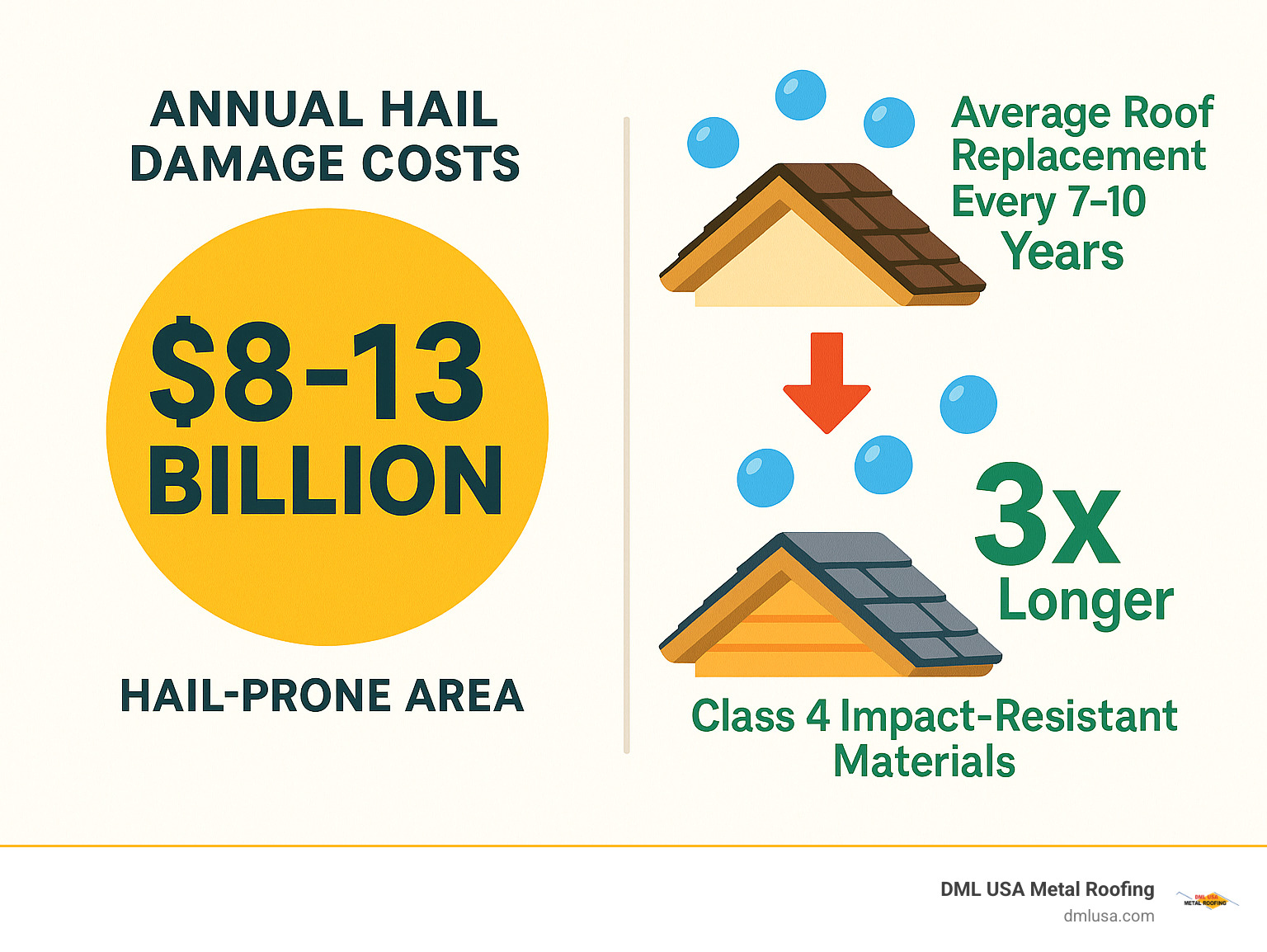
The numbers tell a sobering story. State Farm alone paid $2.9 billion for homeowner hail claims in 2022, while hail damage costs the United States an estimated $8-13 billion annually. In hail-prone regions, roofs may need replacement every 7-10 years instead of the typical 20-year lifespan.
A Kansas City contractor described a 2017 storm that forced him to replace 30-40 roofs in his area. When the next major storm hit, the 15 homes with standard replacement roofs were destroyed again, while those upgraded to impact-resistant materials survived unscathed.
As severe weather events become more frequent and intense, homeowners are finding that upgrading to impact-resistant roofing isn’t just about storm protection—it’s about long-term financial security and peace of mind.
I’m Adam Kadziola, and over the past 17 years at DML USA Metal Roofing, I’ve helped thousands of Illinois homeowners transition from frequent roof repairs to durable, storm-resistant solutions. My experience manufacturing and installing impact-resistant roofing products has shown me how the right materials can transform a home’s resilience against nature’s harshest elements.
Impact-resistant roofing products terminology:
Understanding Impact-Resistant Roofing Products
When I began roofing 17 years ago, most homeowners saw a roof as a simple umbrella. After one Rockford hailstorm left standard roofs shredded while Class 4 upgrades showed only harmless dents, it became clear: today your roof is your home’s first line of defense.
What Are Impact-Resistant Roofing Products?
Impact-resistant roofing products are materials engineered to absorb or deflect energy from hail, wind-blown debris and falling branches. Picture a plastic ruler versus a rubber band: the ruler snaps, the band springs back. Class 4 roofs—the top rating—achieve this with polymer-modified cores or high-strength metals that bend instead of break.
Our metal systems pair galvanized steel with interlocking seams and concealed fasteners, creating one continuous shield that easily meets UL 2218 Class 4 requirements.
Standard vs. Impact Shingles – Key Differences
Standard asphalt shingles typically fail in three stages:
- Granule loss exposes asphalt to UV.
- Brittle asphalt cracks under hail.
- Wind lifts damaged edges and peels shingles away.
Impact-resistant shingles solve each problem. SBS-modified asphalt keeps granules embedded, flexes instead of cracking, and weighs more so wind has less leverage. Metal roofing goes further—there are no granules to lose and even a cosmetic dent leaves the waterproof barrier intact.
That’s why, after a 2017 Kansas City storm, replacement roofs with ordinary shingles were destroyed again while the 15 homes upgraded to impact-resistant products came through untouched.
How Impact Resistance Is Tested and Rated
Two standards—UL 2218 and FM 4473—put impact-resistant roofing products through brutal trials long before they reach your home.
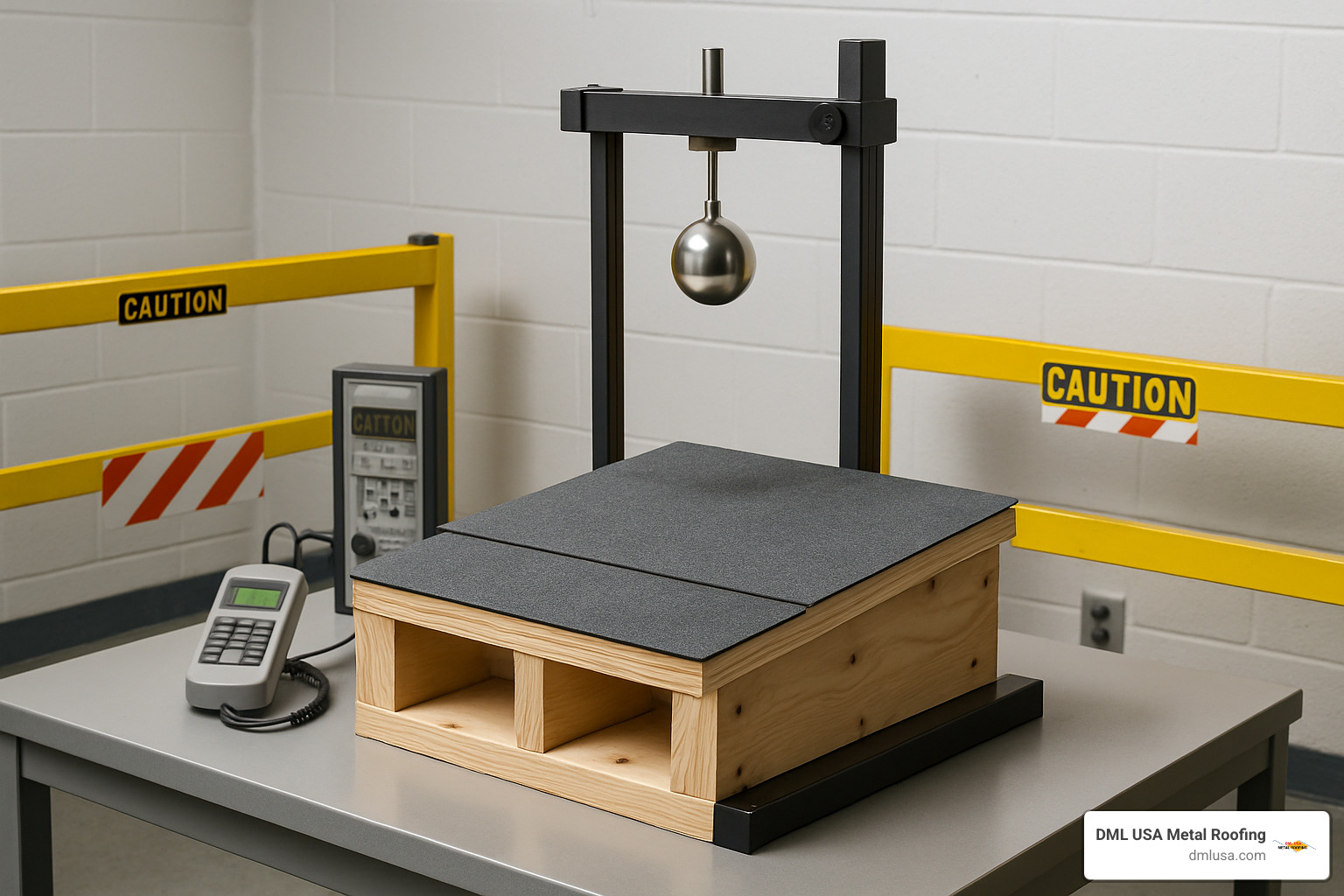
UL 2218 drops steel balls; FM 4473 fires real ice. Surviving a 2-inch steel ball dropped from 20 ft—twice—earns the coveted Class 4 rating. Inspectors then flip the sample: even microscopic back-side cracks mean failure.
Most insurers only reward Class 4 materials, which makes sense when NOAA data show hailstones up to 5 inches falling at 90 mph.
| Test | Standard Shingle | Class 4 Product |
|---|---|---|
| 2-inch impact | Cracks / granule loss | No damage |
| Back-face check | Micro-cracks | Intact |
| Insurance discount | None | Up to 35% |
| Storm survival | 40-60 % | 95 %+ |
How Impact-Resistant Roofing Products Earn Class 4
During “roof boot camp” samples are mounted on real decking, struck twice in the same spot, then dissected. Any crack is an automatic failure. Look for the “UL 2218 Class 4” or “FM 4473 Class 4” label—without it you’re not getting real impact resistance.
At DML USA, our standing-seam metal panels don’t crack; at worst they dent, keeping their waterproof seal and often beating Class 4 requirements by a wide margin.
Materials & Technologies That Boost Roof Impact Resistance
True protection is a marriage of smart design and the right materials.
Polymer-Modified (Rubberized) Shingles
Blending SBS polymers with asphalt turns a brittle cookie into a chewy bar. The flexible core spreads impact, locks in granules and stays pliable even below freezing.
Advanced Metal & Composite Options
Metal roofing leads the pack. Our galvalume steel panels combine a zinc-aluminum coating with interlocking seams and concealed fasteners, forming a continuous shield. Stone-coated panels soften hail blows while preserving curb appeal. Above-sheathing ventilation adds an air cushion and cuts summer cooling costs.
Eco-friendly composites such as recycled-rubber tiles also achieve Class 4 ratings while keeping tires out of landfills.
At DML USA Metal Roofing every component—from steel chemistry to fastening pattern—is chosen to deliver impact-resistant roofing products that last decades with minimal upkeep.
Benefits and Cost Considerations for Homeowners
Impact-resistant roofing products pay you back in multiple ways:
- Insurance premium reductions of 5-35 %.
- Life expectancy of 30-50 years (metal up to 60) versus 12-20 for standard shingles.
- Fewer repairs and deductibles.
- Reflective metal coatings can trim summer cooling bills up to 20 %.
- Higher resale value—buyers know the roof won’t need replacing soon.
Are Impact-Resistant Shingles Worth the Additional Cost?
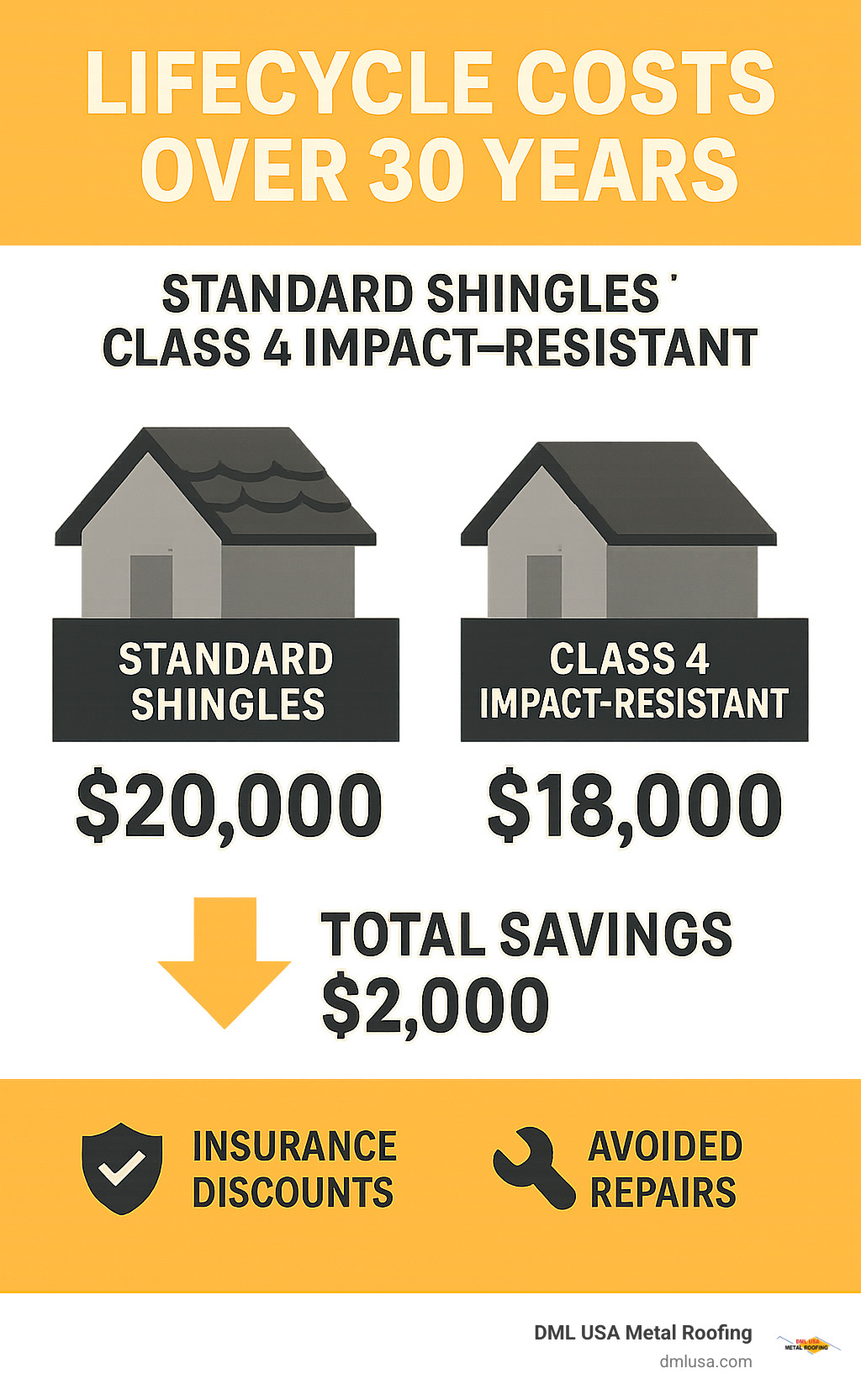
Up-front pricing runs about 10-25 % higher, yet a single avoided hail claim—average $4,000+—can wipe out that premium. In hail-belt states, conventional shingles are often replaced every 7-10 years; a Class 4 system can last three times longer. Over 30 years you’ll pay for several ordinary roofs or one impact-resistant system—the math is obvious.
Our metal roofs regularly qualify for top-tier discounts and 40-60 year lifespans, giving many homeowners a “one-and-done” solution.
Buying, Codes & Installation Tips
- Verify the label: UL 2218 Class 4 or FM 4473 Class 4. No label, no deal.
- Check local codes—some hail-prone areas now require impact-rated roofing.
- Match style to your home; today’s impact-resistant products come in every color and profile.
- Read the warranty; some include cosmetic-hail coverage.
- Want even tougher? Ask about IBHS FORTIFIED Roof standards.
Insurance, Incentives & Finding Qualified Installers
Call your insurer before the project to confirm paperwork for discounts that can reach 35 %. Hire a manufacturer-certified installer—details like fastener spacing, ventilation and flashing make or break both performance and your warranty. Our Metal Roofing Suppliers Near Me directory lists pros trained to work with impact-resistant roofing products.
Frequently Asked Questions about Impact-Resistant Roofing
What does hail damage look like and how does Class 4 stop it?
If you’ve ever seen a roof after a hailstorm, you know the telltale signs: circular dents, little piles of granules at the ends of downspouts, or even dark spots where the asphalt is exposed. Sometimes you’ll notice cracked or split shingles, or pieces that seem a little worse for wear. Damaged gutters and bent flashing are also common.
But here’s the hidden danger—much of the real trouble takes place where you can’t see it. Standard shingles may develop tiny cracks on the back surface after a hail hit. Over time, water sneaks in through these cracks, leading to leaks or even rotting wood decking below. It’s the kind of slow, sneaky damage that keeps homeowners up at night.
Class 4 impact-resistant roofing products are designed to stop all that in its tracks. Thanks to their engineered flexibility and reinforced construction—think of the built-in “bounce” of rubberized asphalt—they absorb the blow from hailstones without cracking or losing granules. Even if a big hailstone lands on a metal roof, you might see a dent, but the roof stays waterproof and solid. No leaks, no stress.
How can I verify a shingle’s impact rating before buying?
It’s smart to double-check what you’re getting. To make sure you’re choosing true impact-resistant roofing products, look for certification labels right on the material or the packaging. The gold standard is “UL 2218 Class 4” or “FM 4473 Class 4”—these labels mean your roofing has passed the toughest impact tests out there.
Still not sure? Visit the manufacturer’s website or contact them directly to confirm the product’s rating. At DML USA Metal Roofing, we make this easy—our products clearly show their certifications and test results, both online and on every bundle. Be cautious of vague terms like “hail-resistant” or “impact-protected” unless you see a real Class 4 rating. If it doesn’t have the official certification, you can’t count on the same level of protection—or qualify for insurance discounts.
Do Class 4 roofs also improve fire or energy performance?
Yes, they often do! Many Class 4 impact-resistant roofing products are also fire-resistant, earning a Class A fire rating (which is the best you can get for roofing). This high level of fire protection is especially reassuring in areas where wildfires, fireworks, or stray embers are a concern.
On the energy front, metal roofs can really shine. Our metal roofing systems at DML USA Metal Roofing often feature reflective coatings that help bounce back the sun’s rays, keeping your attic—and your energy bills—cooler. Some polymer-modified shingles are also designed with “cool roof” technology, giving you impact resistance and lower cooling costs in one neat package. In many cases, you may even be eligible for energy efficiency tax credits on top of your insurance savings.
So, with Class 4 impact-resistant roofing, you’re not just shielding your home from hail. You’re also investing in fire safety, energy savings, and everyday peace of mind. For more details about our certified products, you can always take a look at our products page or drop us a line—we’re happy to help!
Conclusion
When I look back at 17 years of helping Illinois homeowners protect their most valuable investment, one thing stands out: impact-resistant roofing products have transformed from a luxury upgrade to an absolute necessity. The numbers don’t lie – with State Farm alone paying $2.9 billion in hail claims in 2022, we’re not just dealing with occasional bad weather anymore. We’re facing a new reality where your roof needs to be ready for whatever nature throws at it.
What excites me most about this technology isn’t just the impressive test results or insurance savings, though those matter tremendously. It’s the phone calls I don’t get anymore from customers who upgraded to impact-resistant systems. No more 2 AM emergency calls during storms. No more stressed homeowners wondering if their roof will survive another hail season. That peace of mind is priceless.
The math is straightforward, but the benefits go deeper than dollars and cents. Yes, you’ll likely earn back your investment through insurance premium discounts of up to 35%. Yes, you’ll avoid the heartache of replacing a roof every 7-10 years in hail-prone areas. But you’ll also gain something invaluable – the confidence that comes from knowing your home is truly protected.
At DML USA Metal Roofing, we’ve perfected impact-resistant solutions that don’t just meet Class 4 standards – they exceed them by significant margins. Our metal systems can withstand hailstones that would destroy even the best shingles, while lasting 40-60 years with minimal maintenance. It’s not just about surviving the next storm; it’s about thriving through decades of whatever weather comes your way.
The choice really comes down to this: you can keep playing defense with standard materials that need constant replacement, or you can invest once in a roofing system that fights back against severe weather. The storms aren’t getting gentler, but your roof can get tougher.
Every homeowner’s situation is unique, but the principle remains the same. Whether you choose polymer-modified shingles with proven Class 4 ratings or our advanced metal systems with superior longevity, you’re making a decision that protects both your family and your financial future.
Ready to explore your options? Our Products showcase the full range of impact-resistant solutions we manufacture right here in Illinois. From standing seam systems that can last over 60 years to stone-coated panels that blend metal durability with traditional beauty, we have the perfect solution for your home’s style and your family’s needs.
The next major storm is coming – that’s not pessimism, it’s meteorology. The question is whether your roof will be ready for it.
