 Skip to main content

Cost of Metal Roofing Shingles: 7 Powerful Savings in 2025
Why Smart Homeowners Are Rethinking Roofing Costs
The cost of metal roofing shingles ranges from $6-14 per square foot installed, with material costs alone running $3-8 per square foot depending on the metal type. Here’s what you need to know:
Material Costs by Type:
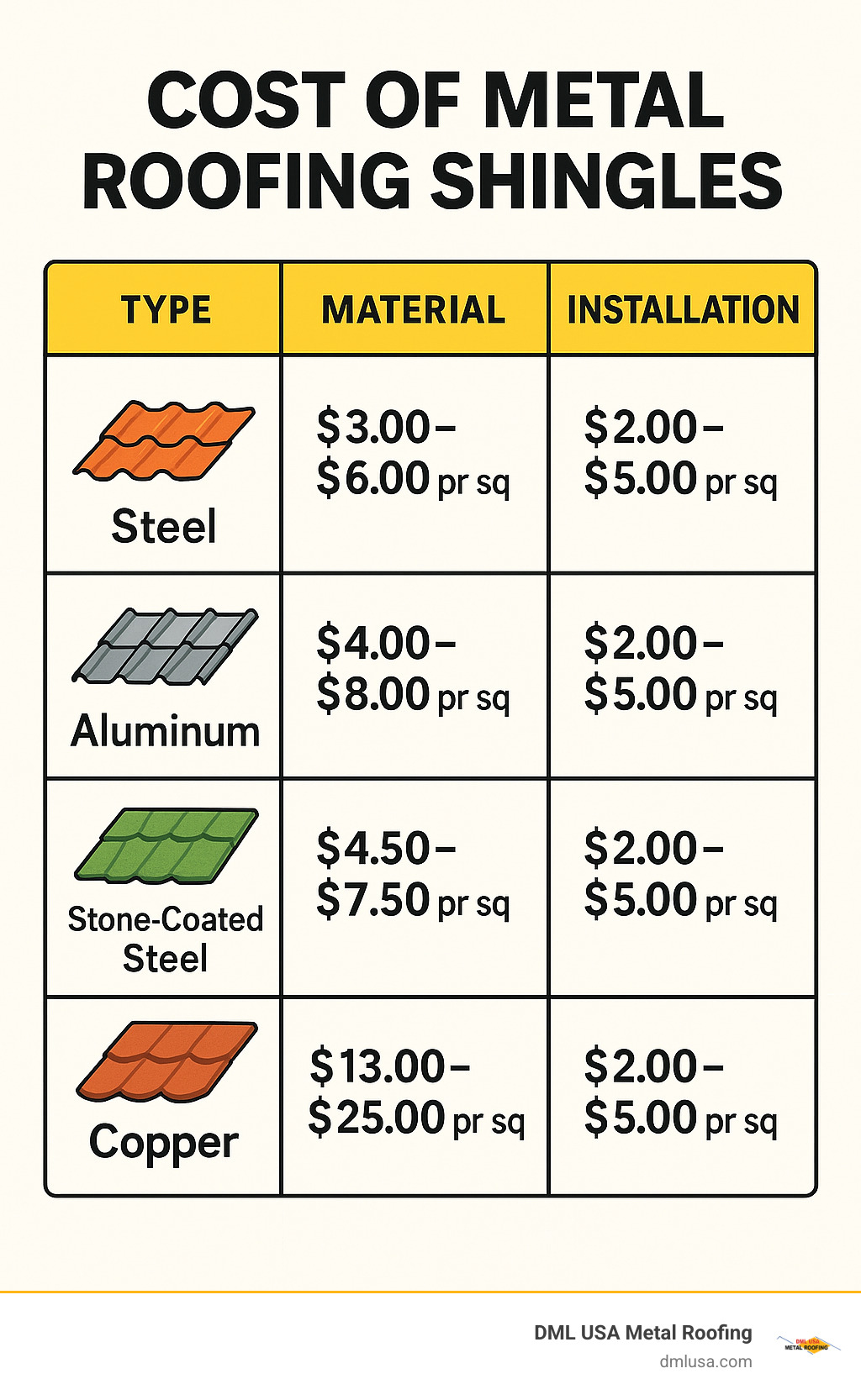
- Steel shingles: $3.00-6.00 per sq ft
- Aluminum shingles: $4.00-8.00 per sq ft
- Stone-coated steel: $4.50-7.50 per sq ft
- Copper shingles: $13.00-25.00 per sq ft
Total Project Costs:
- Average home (1,500-2,500 sq ft): $9,000-35,000
- Labor typically adds $2-5 per sq ft
- Old roof removal: $1-3 per sq ft additional
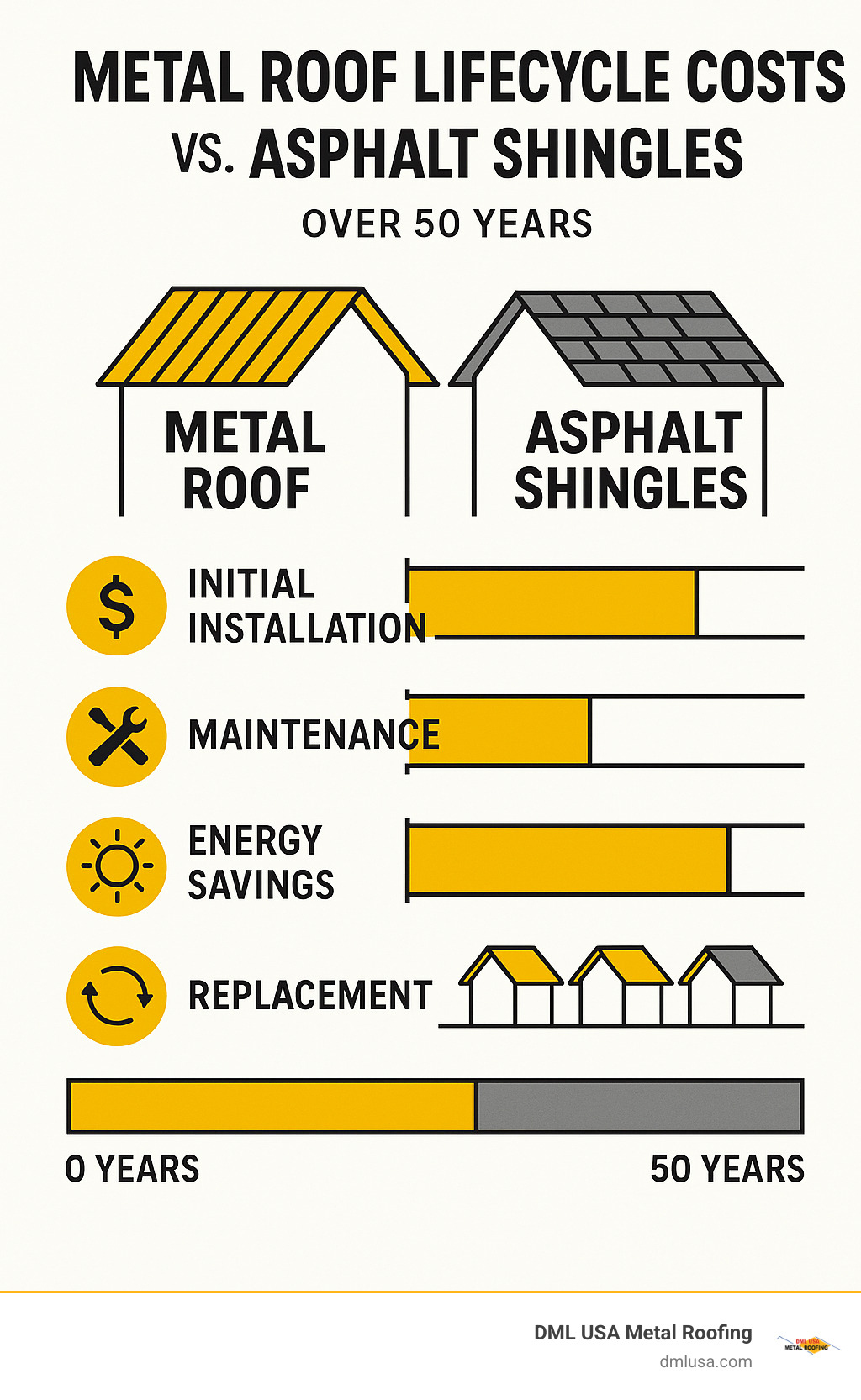
If you’re tired of replacing your roof every 15-20 years, you’re not alone. Metal shingles last 40-70 years compared to asphalt’s 15-30 years, making the math interesting when you factor in replacement costs.
The sticker shock is real – metal costs 2-3 times more upfront than asphalt. But here’s what most homeowners miss: the total lifetime cost often favors metal when you account for energy savings, insurance discounts, and never having to reroof again.
I’m Adam Kadziola, and I’ve been manufacturing metal roofing in Illinois since 2007, helping homeowners understand the true cost of metal roofing shingles beyond just the initial price tag. Through years of working directly with customers, I’ve seen how the right information transforms a scary investment into a smart financial decision.
Understanding the True Cost of Metal Roofing Shingles
Let’s pull back the curtain on what you’re actually paying for when you invest in metal roofing. The cost of metal roofing shingles isn’t just about the shiny panels going on your roof – it’s a three-piece puzzle that includes materials, labor, and what I call the “everything else” category.
Think of it like buying a car. You’re not just paying for the engine – you’re paying for assembly, delivery, and all those little extras that make it road-ready. With metal roofing, your investment breaks down into roughly equal thirds: materials make up about one-third, labor takes another third, and project costs like permits, tear-off, and disposal round out the final piece.
The material costs swing wildly depending on what metal you choose. Our most popular steel shingles run $1.50-3.50 per square foot for basic galvalume, while painted steel bumps up to $2.00-4.00 per square foot. If you’re eyeing aluminum, expect $3.50-6.50 per square foot, and for those dreaming of copper’s timeless beauty, you’re looking at $13-25 per square foot just for materials.
Labor typically adds another $1.50-3.00 per square foot here in the Midwest, though your actual costs depend heavily on your roof’s personality. A straightforward ranch house? Easy install. A Victorian with dormers, valleys, and steep slopes? That’s going to cost more per square foot because it takes longer and requires more skill.
Here’s something most homeowners don’t realize: bigger jobs cost less per square foot. It’s simple economics – larger projects over 1,000 square feet spread the setup costs, delivery charges, and equipment rental across more square footage. We’ve seen tiny jobs under 500 square feet cost double or even triple the per-square-foot rate of larger installations.
The warranty factor plays a huge role in value too. While basic galvanized steel might save you money upfront, premium paint systems with 40-year warranties protect your investment and maintain your home’s curb appeal longer.
Average cost of metal roofing shingles per square foot
Let’s get down to the numbers you really want to know. The cost of metal roofing shingles varies dramatically based on which metal you choose, and each has its sweet spot.
Steel shingles remain our most popular choice at $4-8 per square foot installed. Galvanized steel runs $4.50-6.50 per square foot installed, while galvalume steel (which resists corrosion better) costs $5.00-7.50 per square foot. The 24-gauge steel we manufacture costs about 25-40% more than 26-gauge, but most homeowners find the extra durability worth every penny.
Aluminum shingles cost more upfront but shine in coastal areas where salt air would eat other metals alive. Material costs alone run $3.50-6.50 per square foot, and with installation, you’re looking at $6-12 per square foot total. The investment pays off if you live within 10 miles of the ocean.
Stone-coated steel offers the best of both worlds – traditional asphalt looks with metal’s legendary durability. At $4.50-7.50 per square foot for materials and $7-9 per square foot installed, they’re perfect for homeowners who want metal performance without the “metal roof” appearance.
Copper shingles represent the premium tier at $13-25 per square foot just for materials. With installation, expect $15-30 per square foot, but they’ll outlast you, your kids, and probably your grandkids while developing that gorgeous green patina that screams “quality.”
Installation costs typically add $2-5 per square foot depending on your roof’s complexity, local labor rates, and whether you need the old roof stripped off first.
Regional variations in cost of metal roofing shingles
Location matters more than you might think when it comes to the cost of metal roofing shingles. Here in Illinois, we’re in a sweet spot with competitive pricing, but your zip code can swing costs significantly.
Winter installations can save you serious money – we’re talking 10-20% off labor costs. Most contractors have lighter schedules from December through February, making it prime time for non-emergency roof replacements. The trade-off? Weather delays might stretch your project timeline, but the savings often make it worthwhile.
Geography plays a huge role in pricing. The Chicago area runs 12-18% higher than downstate Illinois for labor costs – that’s just the reality of urban markets. Coastal regions add 15-25% to material costs due to shipping, and if you’re in a remote area, factor in 5-15% surcharges for delivery and limited contractor availability.
Supply chain disruptions have made material costs more like a roller coaster than a steady climb. Steel prices fluctuated 20-30% in recent years, though they’ve settled down somewhat. My advice? Lock in pricing when you’re ready to move forward rather than gambling on future price drops.
Seasonal demand affects more than just labor costs. Spring and summer bring higher material costs as demand peaks. If you can plan your project for late fall or winter, you’ll often find better pricing across the board.
Metal Shingles vs. Asphalt Shingles – Price & Value Showdown
Here’s the moment of truth: asphalt shingles cost $100-200 per square (100 sq ft) while the cost of metal roofing shingles runs $300-600 per square. That’s a tough pill to swallow at first glance.
But here’s what changed my perspective after years in this business: you’re not just buying a roof, you’re buying decades of peace of mind.
The Lifespan Game-Changer
Asphalt shingles last 15-30 years on a good day. Metal shingles? Try 40-70 years. Do the math over 50 years, and you’ll replace that asphalt roof 2-3 times while your metal roof is just getting broken in.
I’ve had customers tell me their grandfather’s metal roof from the 1950s is still going strong. Try finding a 70-year-old asphalt roof that doesn’t leak.
The Money Talk
Metal roofs deliver 85-95% ROI in snow-prone areas like Illinois, with many homeowners seeing up to 60% cost recovery when they sell. But the real magic happens in your monthly bills.
Metal roofs reflect up to 84% of the sun’s heat compared to asphalt roofs that soak up 78% like a sponge. This translates to 10-15% reduction in cooling costs during those brutal Illinois summers. For a typical home, that’s $200-400 annually in energy savings.
Over 40 years, those energy savings alone can pay for a significant chunk of your roof.
The Insurance Bonus
Here’s something most people don’t know: many insurers offer 5-15% discounts for metal roofs because they’re fire-resistant and handle severe weather better. That discount compounds year after year.
The Green Factor
Metal roofing contains 30-60% recycled content and is 100% recyclable when it’s finally time to replace it (which might be never). Asphalt shingles? They’re petroleum-based and mostly end up in landfills.
If you’d like a deeper dive into how conventional asphalt shingles are produced—and why they break down faster—check out this concise asphalt shingle overview.
The compelling math includes no re-roofing costs for 40-70 years, lower insurance premiums, reduced energy bills, higher resale value, and zero maintenance for decades. Scientific research on metal roof benefits backs up these claims with hard data.
When you factor in all these benefits, the initial sticker shock starts looking like the smartest money you’ll ever spend on your home.
Key Factors That Influence Pricing
When I talk to homeowners about the cost of metal roofing shingles, they’re often surprised by how much the price can vary for what seems like the same product. The truth is, several factors beyond the basic material choice can swing your total cost by thousands of dollars.
Metal gauge makes a bigger difference than most people realize. We manufacture both 24-gauge and 26-gauge steel shingles, and while 24-gauge costs 25-40% more, it’s worth every penny in Illinois. The heavier metal handles our brutal winters, high winds, and hail storms much better. I’ve seen too many thin-gauge roofs dent from golf ball-sized hail that wouldn’t even scratch our 24-gauge material.
The paint system you choose affects both your upfront costs and long-term satisfaction. SMP coatings are the budget-friendly option, but they’ll start fading noticeably after 10-15 years. PVDF coatings cost 30-40% more upfront but maintain their color for decades and come with much longer warranties. Most of our customers choose PVDF once they understand the difference.
Your roof’s complexity is where costs can really add up. A simple ranch-style home with a basic gable roof is straightforward to install. But add multiple dormers, and you’re looking at 15-30% higher labor costs. Steep pitches over 8/12 require special safety equipment and slower installation, adding 20-40% to labor. Multiple valleys and ridges increase material waste to around 15%, which gets expensive with premium metals.
Then there are the accessories that many homeowners forget to budget for. Snow guards run $2-8 per linear foot but are essential in our Illinois winters to prevent dangerous ice slides. Upgraded underlayment adds $0.50-1.50 per square foot but provides crucial backup protection. Quality ventilation systems cost $300-800 but prevent moisture problems that could void your warranty.
Location affects your costs more than you might expect. Even within Illinois, Chicago-area projects typically cost 12-18% more than downstate installations due to higher labor rates and stricter permit requirements. Rural areas sometimes cost more despite lower labor rates because contractors factor in travel time and limited local supply access.
The good news? Understanding these factors helps you make smart choices about where to invest and where to save. For more detailed specifications and technical resources, check out our resources page to help you plan your project.
Hidden & Ongoing Costs Homeowners Forget
When budgeting for the cost of metal roofing shingles, most homeowners focus on materials and labor. But I’ve seen too many surprised faces when the “extras” add up. Let me walk you through the costs that often catch people off guard.
Old roof removal is usually unavoidable and adds $1-3 per square foot to your project. While some lightweight metal systems can go over existing asphalt shingles, I generally recommend complete tear-off. You’ll get better inspection of your roof decking, proper ventilation installation, and maximum warranty coverage. Plus, many building codes require it anyway.
The underlayment upgrade might seem like an unnecessary expense, but quality synthetic underlayment at $0.50-1.50 per square foot dramatically improves your roof’s performance. Think of it as insurance for your investment. Many homeowners also use roof replacement as an opportunity to upgrade insulation, adding $1-3 per square foot but slashing energy bills for decades.
Gutters often need replacing when you install a new roof, running $10-20 per linear foot installed. It makes sense to coordinate these projects – you’re already paying for scaffolding and labor setup. Proper drainage is absolutely crucial for metal roof longevity.
If you’re considering skylights, now’s the time. Adding or replacing them during roof installation costs $1,000-2,500 per unit, but retrofitting later costs significantly more. The timing couldn’t be better since your roof decking is already exposed.
Don’t forget about permits and inspections. Building permits typically run $150-500, and some municipalities require special inspections for metal roofing. It’s paperwork nobody enjoys, but it protects your investment and ensures code compliance.
Here’s what makes these upfront costs easier to swallow: the long-term savings most homeowners forget to calculate. Insurance companies often offer 5-15% premium discounts for metal roofs because of their superior fire and storm resistance. Your energy bills typically drop $200-400 annually thanks to metal’s reflective properties.
The real kicker? Zero maintenance costs for decades and no replacement expenses for 40-70 years. When your neighbors are on their second or third asphalt roof, you’ll still be enjoying your original metal installation.
How to Get a Fair, Transparent Quote & Pay for It
Getting accurate pricing for the cost of metal roofing shingles requires careful contractor selection and detailed estimates.
Request Multiple Detailed Bids:
Always get at least three itemized estimates comparing similar materials and scope. Look for contractors who:
- Provide detailed material specifications (gauge, coating, manufacturer)
- Break down labor, materials, and additional costs separately
- Include warranty information for both materials and workmanship
- Show proof of licensing, bonding, and insurance
Verify Contractor Credentials:
Look for contractors with:
- MRA (Metal Roofing Alliance) or NRCA (National Roofing Contractors Association) membership
- Manufacturer certifications from major metal roofing companies
- Local references from recent projects
- Established business history (5+ years minimum)
Financing Options:
Several financing paths can make metal roofing more affordable:
- Home Equity Line of Credit (HELOC): Often the lowest interest rates
- Personal loans: Quick approval but higher rates
- Contractor financing: Convenient but compare rates carefully
- Cash discounts: Many contractors offer 3-5% discounts for cash payment
Tax Credits and Incentives:
Metal roofing often qualifies for energy efficiency tax credits. Check current federal and state programs, as these can offset 10-30% of installation costs.
Payment Protection:
Never pay more than 10% down, and tie payments to completion milestones. Final payment should be withheld until you’re completely satisfied with the installation and have received all warranty documentation.
For help finding qualified metal roofing suppliers in your area, check out our guide on Metal Roofing Suppliers Near Me.
Frequently Asked Questions about the Cost of Metal Roofing Shingles
Is labor really half the cost?
Here’s something that surprises most homeowners: labor typically accounts for 50-60% of your total metal roofing project cost. When I tell customers this, they often think we’re padding the numbers. But there’s a good reason why installing metal shingles costs more in labor than throwing down asphalt.
Metal shingle installation requires specialized skills and precision. Our installers spend years learning proper techniques for cutting, forming, and fastening metal roofing. Unlike asphalt shingles that can be slapped down quickly, metal shingles need careful attention to expansion joints, proper fastening patterns, and precise flashing details.
The cost of metal roofing shingles becomes even more labor-intensive on complex roofs. Homes with multiple dormers, steep pitches, or intricate designs can push labor costs to 70% of the total project. Meanwhile, simple ranch-style homes typically see labor costs closer to 45-50%.
Think of it this way: you’re paying for craftsmanship that will protect your home for 40-70 years. That extra labor investment pays dividends through superior performance and full warranty coverage.
Do prices drop in winter?
Absolutely! Winter installations can save you 10-20% on labor costs, and here’s why: most homeowners want their roof done right now when they find a leak in April. By December, contractors are practically begging for work.
I’ve seen customers save thousands by scheduling their metal roof installation between December and February. The catch? Weather delays can extend your project timeline. Cold temperatures make some materials trickier to work with, and snow days mean work stops.
But here’s an insider tip: if you’re not dealing with an emergency, winter scheduling offers the best pricing opportunities. Just plan for potential delays and you’ll come out ahead financially. Plus, you’ll avoid the spring rush when contractors get booked solid through summer.
Can metal shingles be installed over existing asphalt?
This question comes up constantly, and I understand why. Avoiding tear-off sounds like an easy way to save $1-3 per square foot. Some lightweight metal systems technically allow installation over existing asphalt, but I rarely recommend it.
Installing over existing roofing creates more problems than it solves. You can’t inspect the roof decking for damage, trapped moisture can lead to rot, and many manufacturer warranties become void. Local building codes often prohibit multiple roofing layers too.
I’ve seen too many callbacks from jobs where contractors skipped the tear-off to save money upfront. The homeowner ends up paying twice when problems develop later. Proper installation over clean decking ensures maximum performance and full warranty coverage.
The cost savings rarely justify the risk. When you’re investing in a roof that should last 40-70 years, spending an extra $1-3 per square foot for proper installation makes financial sense. Trust me on this one – do it right the first time.
Conclusion
When homeowners ask me about the cost of metal roofing shingles, I always tell them the same thing: you’re not just buying a roof, you’re making a 50-year investment in your home’s future.
Yes, that initial sticker shock is real. Metal shingles cost 2-3 times more upfront than asphalt – we’re talking $15,000-25,000 for a typical Illinois home versus $8,000-12,000 for asphalt. But here’s what I’ve learned after 17 years in this business: the math changes everything when you look at the full picture.
Think about it this way. Over the next 50 years, you’ll replace that asphalt roof 2-3 times, spending $16,000-36,000 total. Meanwhile, your metal roof is still protecting your home with decades of life left. Add in the $200-400 you’ll save annually on energy bills, plus those 5-15% insurance discounts, and suddenly the numbers start working in your favor.
The break-even point typically hits around year 15-20. After that? Pure savings for the next 30+ years.
What really excites me is seeing homeowners realize they’ve made their last roofing decision. No more worrying about storm damage, no more budgeting for replacements, no more maintenance headaches. Just decades of peace of mind.
Living here in Illinois, we know our weather doesn’t mess around. Hail storms, wind, temperature swings that would make other materials cry for mercy – our metal shingles handle it all. We’ve engineered them specifically for Midwest conditions because we live here too.
The secret to getting full value from your investment? Working with experienced professionals who understand both the product and proper installation. A quality installation today means maintenance-free performance for generations.
Ready to see what options make sense for your home? Check out our products page to explore our full range of metal shingle solutions designed specifically for Illinois homeowners like you.
Brought to you by Illinois-based DML USA Metal Roofing – manufacturing durable, energy-efficient metal roofing solutions since 2007.
