 Skip to main content

Lead Flashing Suppliers Near Me: Top 3 Reliable Picks 2025
Why Finding Quality Lead Flashing Suppliers Near Me Matters
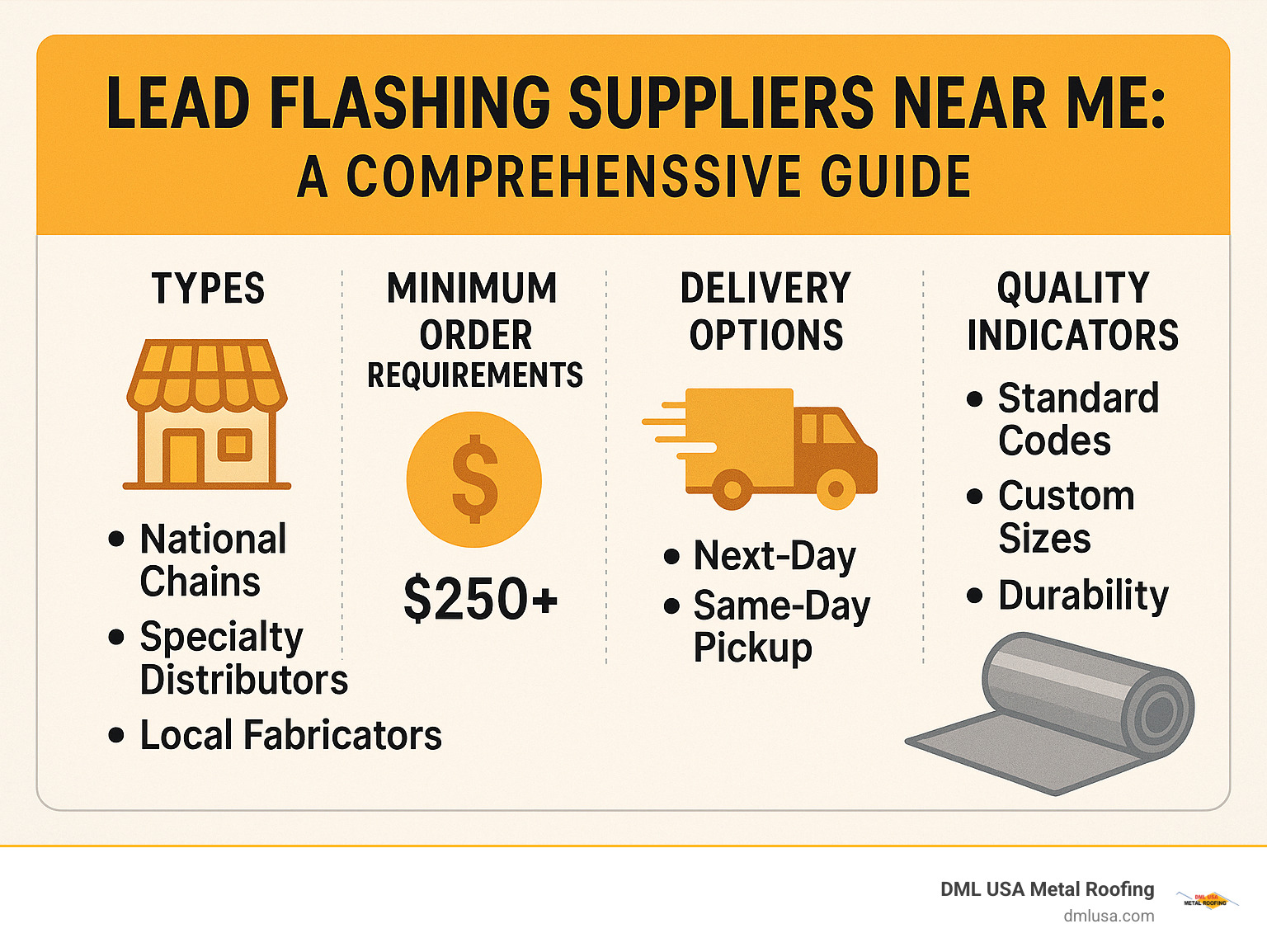
Lead flashing suppliers near me can save you both time and money when you need durable weatherproofing for your roof. Here’s where to find them quickly:
Top Local Sources:
– National chains: Major home improvement stores with extensive product selections
– Specialty distributors: Regional roofing supply companies and local metal fabricators
– Building supply yards: Often carry lead rolls and custom-cut pieces
– Online suppliers: Specialized lead product companies with direct shipping
Key specs to know: Lead flashing comes in codes 3-8, with standard dimensions like 20×20×5/64 inches. Most suppliers require minimum orders ($250+ typical) but offer next-day delivery or same-day pickup.
Lead flashing stands out from aluminum and steel alternatives because of its malleability and non-corrosive qualities. As one industry expert notes, “Lead flashing serves as an impermeable barrier against the elements and can last for many years” – making it ideal for weatherproofing roof seams, joints, and valleys where water damage could cost thousands in repairs.
The challenge? Not all suppliers stock lead flashing, and quality varies wildly. Some offer only basic rolls while others provide custom fabrication, pre-pitched pieces, and professional-grade accessories like patination oil and specialized fasteners.
I’m Adam Kadziola, and after years in metal roofing manufacturing and home renovations, I’ve seen too many homeowners struggle to find reliable lead flashing suppliers near me who actually understand the product. My experience with DML USA Metal Roofing has shown me exactly what to look for in suppliers and how to avoid the common pitfalls.
Lead Flashing 101 – What, Why & When
Think of lead flashing as your roof’s best friend when it comes to keeping water out. This durable barrier is made from a special type of metal that’s both malleable and non-corrosive – which means it bends easily without breaking and won’t rust away over time.
What makes lead so special for roofing? Its incredible flexibility. While other materials might crack or split when your roof expands and contracts with temperature changes, lead just rolls with it. This makes it perfect for creating those crucial weatherproof joints that keep your home dry.
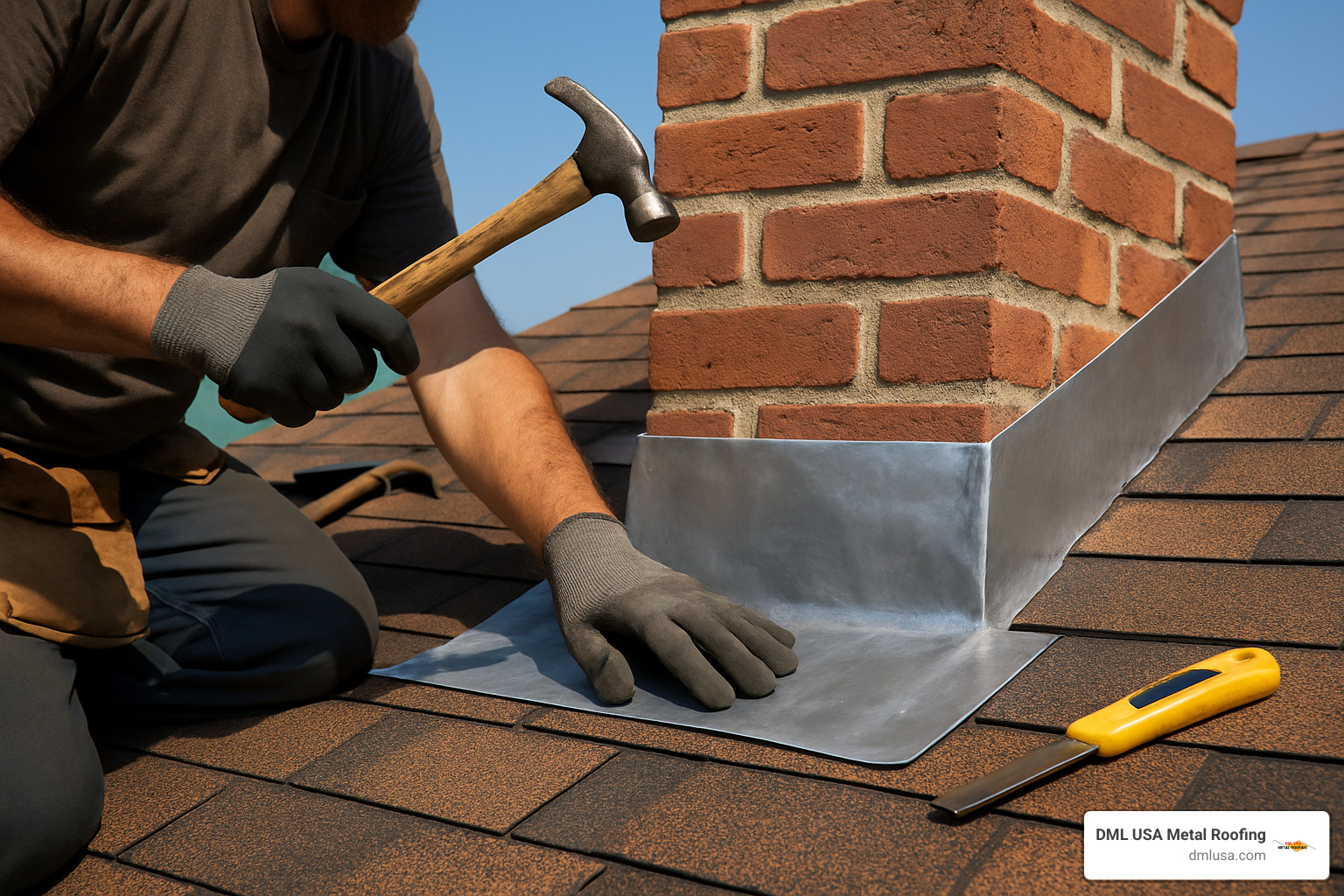
You’ll typically find lead flashing hard at work around chimney seals and valley channels – those tricky spots where water loves to collect and cause trouble. These areas need a material that can handle constant moisture while maintaining a tight seal year after year.
What Is Lead Flashing Used For?
When you’re searching for lead flashing suppliers near me, you’re probably dealing with one of these common roofing challenges.
Roof penetrations are enemy number one for homeowners. Every time something pokes through your roof – whether it’s a vent pipe, chimney, or antenna – you’ve created a potential entry point for water. Lead flashing wraps around these openings like a custom-fitted raincoat, creating a watertight seal that moves with your roof.
Skylight edges present their own unique challenge. Unlike sloped roof surfaces that shed water quickly, skylights create horizontal surfaces where water can pool. Lead flashing around these edges acts like a mini gutter system, directing water away from the frame and into your roof’s main drainage path.
Wall abutments are those spots where your roof meets a vertical wall – think of where a garage roof connects to your house. These joints experience serious stress from thermal expansion, wind, and settling. Lead’s flexibility makes it the ideal material to maintain a seal through all this movement.
Benefits & Drawbacks
Let’s be honest about what you’re getting into with lead flashing.
The longevity factor is pretty impressive. We’re talking about a material that can outlast your mortgage – properly installed lead flashing can protect your roof for over 100 years. That’s several generations of worry-free weatherproofing, which makes the higher upfront cost look pretty reasonable.
Recyclability is another win, especially if you’re environmentally conscious. Nearly 100% of lead materials can be recycled, and this can even contribute to green building certifications. When you eventually replace it decades from now, it won’t end up in a landfill.
But there are some real considerations to keep in mind. Weight is the big one – lead is significantly heavier than aluminum or steel alternatives. Depending on your roof structure, you might need additional support, which adds to your project cost.
Lead toxicity requires respect during installation. While the finished product poses minimal risk once installed, proper safety equipment and handling procedures are essential. This isn’t a DIY weekend project unless you’re experienced with hazardous materials – and that’s exactly why finding quality lead flashing suppliers near me who understand proper handling is so important.
Lead vs. Other Flashing Materials – A Quick Reality Check
Let’s be honest – when you’re shopping around lead flashing suppliers near me, you’re probably wondering if lead is actually worth the extra cost. After all, there are plenty of other materials out there claiming to do the same job.
Here’s the reality check you need.
Aluminum might seem like the obvious choice because it’s lightweight and won’t rust. But here’s the catch – it’s stubborn when you need to bend it around complex roof shapes. Try wrapping aluminum around a curved chimney corner, and you’ll quickly understand why experienced roofers still reach for lead. Aluminum works great for straight runs, but it’ll fight you on anything with character.
Galvanized steel is the budget-friendly option that looks good on paper. It’s strong, relatively inexpensive, and your local supplier probably has plenty in stock. The problem? Time isn’t kind to galvanized steel, especially if you live near the ocean. That protective zinc coating eventually gives up, and rust becomes your new roommate. You might save money upfront, but you’ll be back on the roof in 15-20 years.
Copper is the premium choice that develops that beautiful green patina over time. It’ll outlast most of us and looks fantastic on historic homes. But copper comes with two headaches: the price tag will make you wince, and it plays poorly with other metals. Put copper flashing next to steel screws, and you’ll get galvanic corrosion – basically, your roof materials will start eating each other.
PVC boots are the quick-fix solution for simple pipe penetrations. They’re cheap, easy to install, and available at every hardware store. But they’re also the flashing equivalent of a band-aid. UV rays, temperature swings, and time will turn that flexible PVC into brittle plastic that cracks when you least expect it.
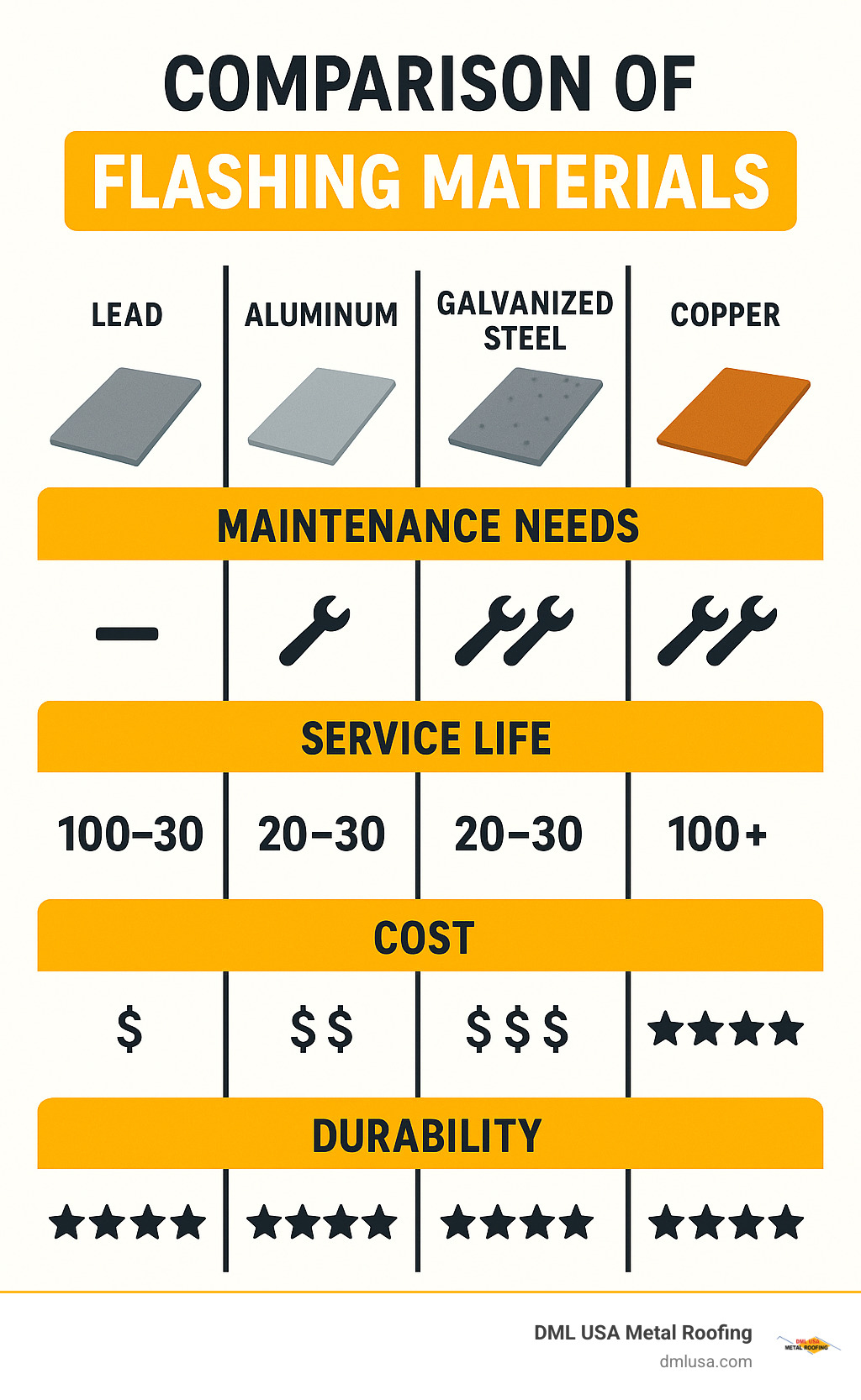
The maintenance reality tells the real story. Lead sits quietly on your roof for decades without asking for attention. Galvanized steel starts demanding replacement after 15-20 years. Aluminum might last longer but will show its age with corrosion and fatigue cracks.
When it comes to service life, you’re looking at a spectrum from 20-30 years for basic materials all the way up to 100+ years for lead and copper. That century-plus lifespan isn’t marketing fluff – there are lead flashings on European buildings that have been doing their job since before your great-grandparents were born.
The truth is, lead costs more upfront but often costs less over the life of your roof. Sometimes the old ways really are the best ways.
Sizing It Right – Codes, Rolls & Pre-Fab Pieces
Getting the right size lead flashing can feel overwhelming at first, but it’s actually pretty straightforward once you understand the system. Lead flashing uses a code system from Code 3 to Code 8 – think of it like t-shirt sizes, where higher numbers mean thicker, heavier material.
Code 3 is your lightweight option, perfect for simple applications like small pipe boots. Code 4 handles most residential jobs beautifully, while Code 5 and above are for heavy-duty commercial work or areas with extreme weather exposure.
Most strip rolls come in 50-pound packages at about 2.5 pounds per square foot. The standard dimensions work well for different projects – 6″×32′ rolls are great for narrow applications like step flashing, while 12″×20′ rolls give you more width for valley work or large penetrations.
Pipe boots take the guesswork out of sizing. They’re pre-made for standard pipe diameters from 1½” up to 6″, with most featuring a 12″×12″×12″ base that provides plenty of overlap for a secure seal.
Here’s where many people get stuck: custom cuts and minimum orders. Most quality suppliers require minimum orders around $250, but this actually works in your favor. You get exactly what you need without waste, and the per-unit cost drops significantly.
Girth charts help you calculate exactly how much material you’ll need before ordering. These charts account for overlap requirements and waste factors, so you don’t end up short in the middle of your project. More info about size charts can save you from costly re-orders and project delays.
Formats on the Shelf
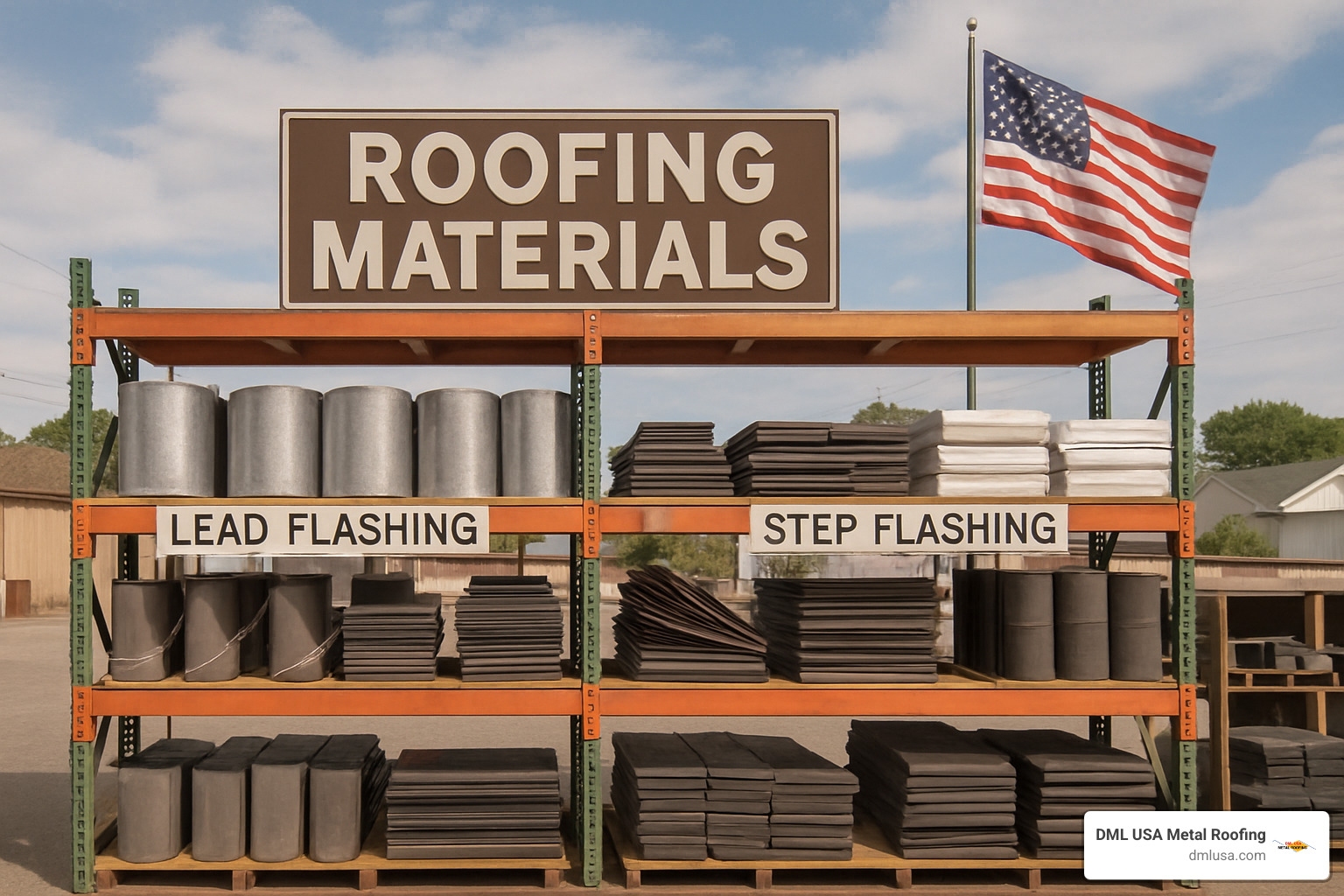
When you’re shopping for lead flashing suppliers near me, you’ll typically find four main formats ready to go.
Roll valley flashing comes in those long, continuous lengths I mentioned – usually 10 to 50 feet. This format shines when you need seamless coverage along roof valleys where water flow is heaviest. No joints mean no weak points.
Step flashing pieces are the workhorses of roof-to-wall applications. These pre-cut rectangles, typically 4″×8″, install in overlapping steps along the intersection. They’re sized perfectly for standard shingle exposure, making installation much faster.
Pipe vent boots come in two varieties that solve different problems. Multi-pitch versions can flex up to about 14 degrees (that’s roughly a 3/12 pitch), while pre-pitched versions are custom-made for your specific roof angle. The pre-pitched ones cost more but create a much cleaner, more professional appearance.
Corner flashings are those specialty pieces that handle tricky spots like dormer windows or roof corners where two planes meet. These prefabricated pieces eliminate the complex measuring and cutting that used to make corner applications a real headache.
The key is matching the format to your specific application. Valley work demands continuous rolls, while step-by-step installations work better with pre-cut pieces. Your local supplier can help you choose the right format based on your project’s unique requirements.
Lead Flashing Suppliers Near Me – How to Track Down & Vet Them
When you need lead flashing suppliers near me, the hunt can feel overwhelming. But here’s the thing – the best suppliers often aren’t the ones with the flashiest websites. They’re the ones who actually understand your project and can deliver quality materials when you need them.
Supplier directories are your first stop. Regional roofing supply networks span multiple locations across the country, and they’re used to working with both contractors and homeowners. These directories save you hours of phone calls because they’ve already vetted their network for quality and reliability.
Your local roofing yards are goldmines of knowledge. The folks there have seen every roofing disaster imaginable, and they know which materials hold up in your specific climate. They’ll often spot potential problems with your project before you even order.
Metal fabricators in your area can be lifesavers for tricky jobs. Got an unusual roof angle or restoring a historic home? These craftspeople can create custom pieces that fit perfectly. It costs more, but it’s cheaper than dealing with leaks later.
Don’t overlook big-box stores entirely. While their selection might be limited, they’re convenient for small repairs or when you need something today. Major home improvement retailers stock hundreds of flashing products – though you’ll need to dig through their inventory to find lead options.
The delivery options can make or break your timeline. Some suppliers offer same-day pickup if they have your materials in stock, while others need time for custom work. Always ask about lead times upfront – especially during busy construction seasons.
Finding Reputable Lead Flashing Suppliers Near Me
Not all suppliers are created equal, and with lead flashing, quality matters more than price. Here’s how to separate the pros from the pretenders.
Start with search filters that actually work. Look for suppliers who specifically mention lead flashing, not just generic “metal flashing.” This shows they understand the material and likely stock it regularly.
Customer reviews tell the real story, but read between the lines. Professional contractors tend to leave more detailed reviews about product quality and service reliability. If you see complaints about wrong materials or delayed deliveries, keep looking.
Those little in-stock badges are worth their weight in gold when you’re on a deadline. There’s nothing worse than finding the perfect supplier only to find they need to special-order everything.
Trade accounts are a good sign that a supplier is serious about the business. Companies that work regularly with contractors understand technical requirements and building codes. They’re also more likely to have knowledgeable staff who can answer your questions.
Minimum Orders, Custom Cuts & Extra Services
Here’s where things get interesting – and sometimes frustrating. Most lead suppliers have minimum orders because this isn’t exactly a high-volume retail product.
Bulk pricing usually kicks in around $250 minimum orders. The per-kilogram cost drops as you buy more, which is great for larger projects but can sting for small repairs. Professional suppliers often offer competitive pricing that improves with volume.
Cut-to-length services are worth paying for if you’re not comfortable cutting lead yourself. Many suppliers can cut rolls to your exact specifications, though this might add a few days to your order. It’s usually cheaper than buying full rolls and wasting material.
Next-day delivery is becoming more common, especially from professional suppliers who understand that roofing projects can’t always wait for the weather. This service is particularly valuable during storm season when everyone needs repairs.
The real value comes from onsite advice from experienced suppliers. I’ve seen suppliers catch installation mistakes before they happen, saving homeowners thousands in water damage repairs. Some even offer technical support for complex installations – a service that’s worth its weight in… well, lead.
Cost, Safety & Compliance – Read This Before You Buy
Before you contact lead flashing suppliers near me, let’s talk money and safety. Lead flashing costs more upfront than aluminum or steel alternatives, but here’s the thing – it can last over 100 years with virtually no maintenance. When you break down the cost per year, lead often wins.
Material pricing typically runs higher than other options, but smart buyers factor in the total cost of ownership. You’re not just buying flashing; you’re buying decades of worry-free protection. Many suppliers offer bulk pricing that kicks in around $250 minimum orders, so it pays to calculate your entire project needs at once.
The good news? Energy credits might help offset some costs. Lead flashing’s superior sealing properties contribute to your roof’s overall energy efficiency, potentially qualifying your project for tax credits or rebates.
Now for the serious stuff – OSHA handling requirements exist for good reason. Lead requires respect during installation. You’ll need proper protective equipment including gloves, eye protection, and respiratory protection when cutting or forming the material. It’s not scary if you follow basic safety protocols, but don’t skip this step.
Many suppliers offer patination oil as an add-on service. This helps your lead develop that characteristic protective finish faster, though it’s not always necessary depending on your climate and aesthetic preferences.
Here’s where things get tricky: local building codes vary widely regarding lead use. Some areas have restrictions, particularly for residential applications or properties near water sources. Before you order, check with your local building department. Scientific research on lead safety provides detailed guidance on proper handling and disposal if you want to dig deeper.
The environmental angle is actually positive – landfill recycling makes lead one of the most sustainable roofing materials. Most metal recyclers eagerly accept old lead flashing because of its high scrap value. When your great-grandchildren eventually replace it decades from now, it won’t end up in a landfill.
The bottom line? Lead flashing represents a significant upfront investment with exceptional long-term value, provided you handle it safely and comply with local regulations.
Frequently Asked Questions about Lead Flashing Suppliers Near Me
What should I look for when choosing a supplier?
The best lead flashing suppliers near me understand that this isn’t just another roofing material – it’s a specialized product that requires expertise. You want suppliers who can speak knowledgeably about Code 3 through Code 8 thicknesses and help you choose the right one for your specific application.
Look for suppliers who offer custom cutting services rather than just standard rolls. This shows they’re serious about serving professionals and homeowners who need precise measurements. They should also stock installation accessories like patination oil and specialized fasteners – these details separate the pros from the amateurs.
Technical support is crucial. A good supplier should be able to discuss local building code requirements and offer advice for complex installations. If they can’t explain why you might need Code 5 instead of Code 3 for your particular roof penetration, keep looking.
Are there building codes that restrict lead flashing in my area?
Most areas allow lead flashing for roofing applications, but there are some important exceptions to know about. Water source restrictions are the most common – some jurisdictions limit lead use near wells, streams, or other water supplies due to environmental concerns.
Residential applications may have additional restrictions in certain areas. While commercial buildings rarely face limitations, some residential codes require specific installation methods or disposal procedures.
The best approach is to contact your local building department before purchasing. They can clarify any restrictions and help you understand proper installation requirements. This five-minute phone call can save you from costly mistakes or project delays.
What are good alternatives if lead isn’t available locally?
If lead flashing suppliers near me don’t have what you need, don’t panic. Copper flashing offers similar longevity and malleability, though you’ll pay more upfront. It’s particularly attractive for visible applications since it develops a beautiful patina over time.
For budget-conscious projects, high-quality aluminum works well for simpler applications like straight runs and basic penetrations. It won’t form around complex shapes like lead, but it’s lightweight and readily available.
EPDM rubber boots are excellent for pipe penetrations and cost significantly less than metal options. They’re easy to install and work well for most residential applications, though they won’t last as long as metal alternatives.
Self-adhesive membrane products can handle some flashing applications, particularly for temporary repairs or less critical areas. Just remember that these have shorter service lives and may need replacement sooner than metal options.
Conclusion
When you’re searching for lead flashing suppliers near me, the key is knowing exactly what you need before you start calling around. The best suppliers understand that lead flashing isn’t just another roofing material – it’s a long-term investment in your home’s protection.
Your project checklist should include determining the correct lead code for your specific application, calculating quantities with a reasonable waste allowance, and confirming those minimum order requirements upfront. Don’t get caught off guard by a $250 minimum when you only need a small piece for a chimney repair.
The suppliers worth your time are the ones who ask questions about your project. They’ll want to know about roof pitch, exposure conditions, and local building codes. These conversations might seem tedious, but they’re actually saving you from costly mistakes and return trips.
One-stop roofing solutions often provide the best value when you’re working on larger projects. Instead of sourcing flashing from one supplier, fasteners from another, and underlayment from a third, working with a manufacturer who understands how all these components work together can streamline your entire project.
At DML USA Metal Roofing, we’ve learned that proper flashing integration can make or break a roofing system’s performance. The most expensive metal roof in the world won’t protect your home if the flashing details are wrong. That’s why we work closely with contractors and homeowners to ensure every component works together seamlessly.
The right supplier relationship really does make all the difference. You want someone who’ll be there when you realize you’re two feet short on a Sunday morning, or when you need technical advice about a tricky installation detail. Take the time to find suppliers who treat your project like it matters – because it does.
More info about contacting our team for guidance on integrating lead flashing with metal roofing systems or any other roofing questions you might have.
