 Skip to main content

Sheet Metal: 10 Powerful Buying Tips for 2025 Success
Why Sheet Metal is the Smart Choice for Your Home Projects
Sheet metal is a versatile, flat-rolled metal product that’s thinner than 3/16 inch, making it perfect for roofing, siding, gutters, and countless other home improvement projects. Whether you’re a DIY enthusiast or working with contractors, understanding sheet metal basics helps you make better buying decisions and get more value for your money.
Quick Sheet Metal Buying Guide:
- Thickness: Measured in gauge (higher numbers = thinner metal)
- Common materials: Aluminum, steel, stainless steel, copper
- Standard sizes: 24″ x 36″, 48″ x 96″, or custom cut-to-size
- Pricing: $2-15 per square foot depending on material and thickness
- Lead times: 2-4 days for standard orders, same-day for stock sizes
The sheet metal industry has grown significantly, with companies like SendCutSend serving over 100,000 customers and 59.8% of Fortune 500 companies relying on custom sheet metal fabrication services. This growth reflects sheet metal’s durability, versatility, and cost-effectiveness compared to other building materials.
Modern sheet metal offers excellent corrosion resistance, especially galvanized steel with its typical 20+ year protection lifespan. For homeowners focused on long-term value, sheet metal provides the perfect balance of durability, aesthetics, and low maintenance costs.
I’m Adam Kadziola, and I’ve spent over 15 years in metal roofing manufacturing at DML USA, where we’ve helped thousands of homeowners understand sheet metal options for their roofing projects.
Sheet metal terms to know:
Sheet Metal Basics: What Is Sheet Metal?
Sheet metal is the backbone of countless home improvement projects, from roofing and siding to gutters and decorative elements. At its core, it’s a flat-rolled metal product that’s been processed through industrial rolling mills to achieve thicknesses less than 3/16 inch (4.76 mm).
Think of sheet metal as the middle child in the metal family. It’s thicker than the delicate foil you use in your kitchen, but thinner than the heavy plate steel used in construction beams. This sweet spot makes it incredibly versatile for homeowners and contractors alike.
The manufacturing process involves heated metal being rolled through progressively smaller gaps until it reaches the perfect thickness. Modern computer-controlled processes ensure every sheet meets exact specifications, giving you consistent quality whether you’re buying one piece or a hundred.
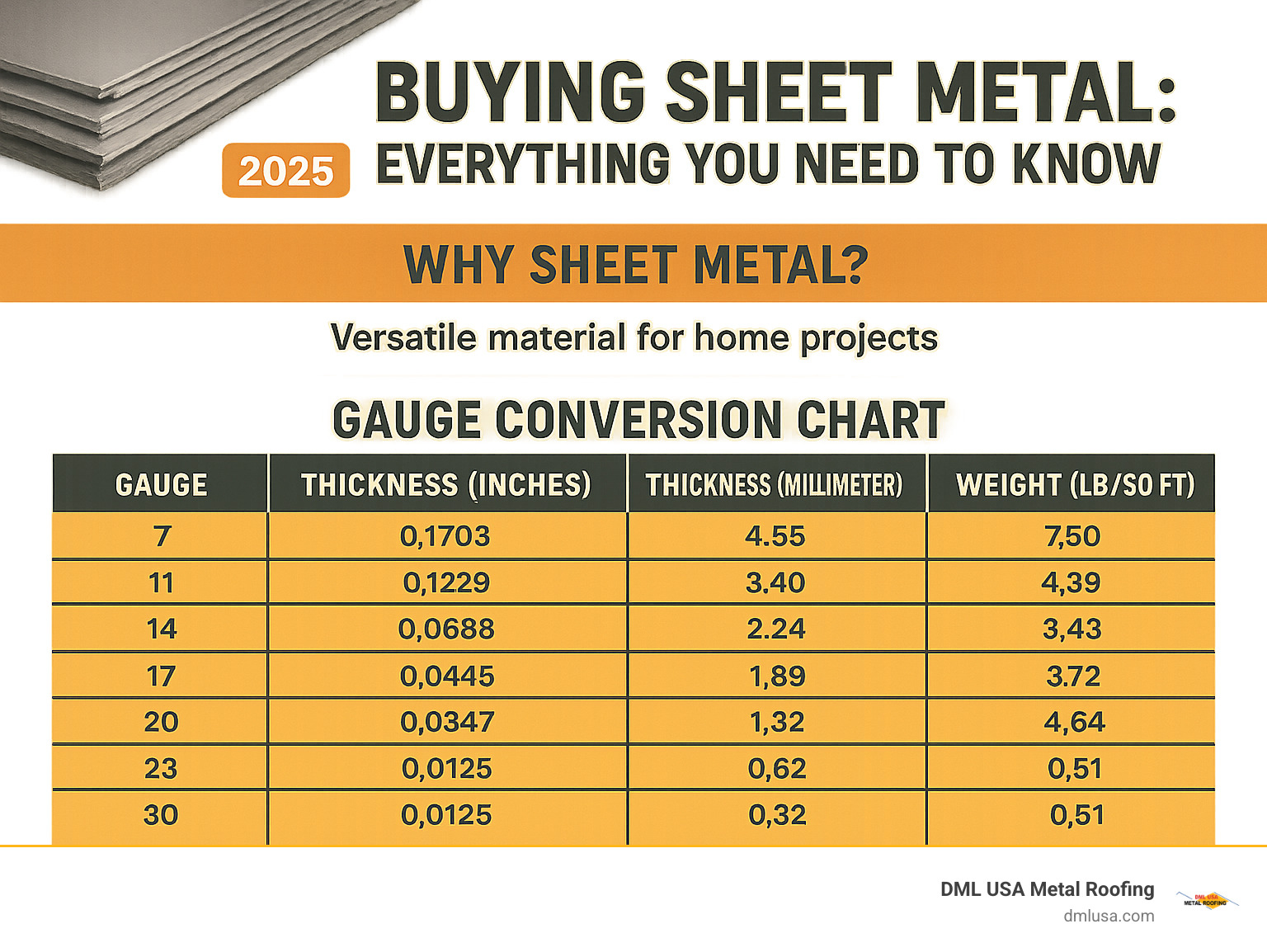
Here’s where things get interesting: sheet metal thickness uses the gauge system in the United States, and it works backwards from what you might expect. Higher gauge numbers actually mean thinner metal. So 30 gauge steel measures just 0.0125 inches thick, while 7 gauge steel is a hefty 0.1875 inches thick.
| Gauge | Thickness (inches) | Thickness (mm) | Weight (lb/sq ft) |
|---|---|---|---|
| 7 | 0.1875 | 4.76 | 7.66 |
| 11 | 0.125 | 3.18 | 5.16 |
| 14 | 0.0781 | 1.98 | 3.28 |
| 16 | 0.0625 | 1.59 | 2.66 |
| 18 | 0.0500 | 1.27 | 2.16 |
| 20 | 0.0375 | 0.95 | 1.66 |
| 22 | 0.0313 | 0.79 | 1.41 |
| 24 | 0.0250 | 0.64 | 1.16 |
| 26 | 0.0188 | 0.48 | 0.91 |
| 30 | 0.0125 | 0.32 | 0.66 |
Sheet Metal Definition & History
Sheet metal has evolved from hand-hammered sheets with inconsistent thicknesses to today’s precision-manufactured materials. The 18th century brought water-powered rolling mills, revolutionizing production and making sheet metal more accessible.
The industrial revolution transformed everything. Mass production techniques created consistent, high-quality materials that opened up new possibilities for architects and builders. The Chrysler Building stands as a testament to sheet metal’s architectural potential, with its Nirosta stainless steel panels that still gleam today, nearly a century later.
Sheet Metal vs Plate vs Foil
Understanding the differences between these three categories helps you choose the right material for your project. Metal foil is the lightweight champion, typically under 0.006 inches thick, perfect for packaging and insulation where flexibility matters most.
Sheet metal occupies the practical middle ground, ranging from 0.006 to 0.1875 inches thick. This thickness range makes it ideal for roofing, siding, and general fabrication work where you need both strength and workability.
Plate metal is the heavy hitter, over 0.1875 inches thick, designed for structural applications that demand maximum strength. Think bridge supports and building frameworks rather than residential projects.
Selecting the Right Sheet Metal: Materials & Properties
Choosing the right sheet metal material for your project doesn’t have to be overwhelming. Each material has its own strengths and ideal applications.
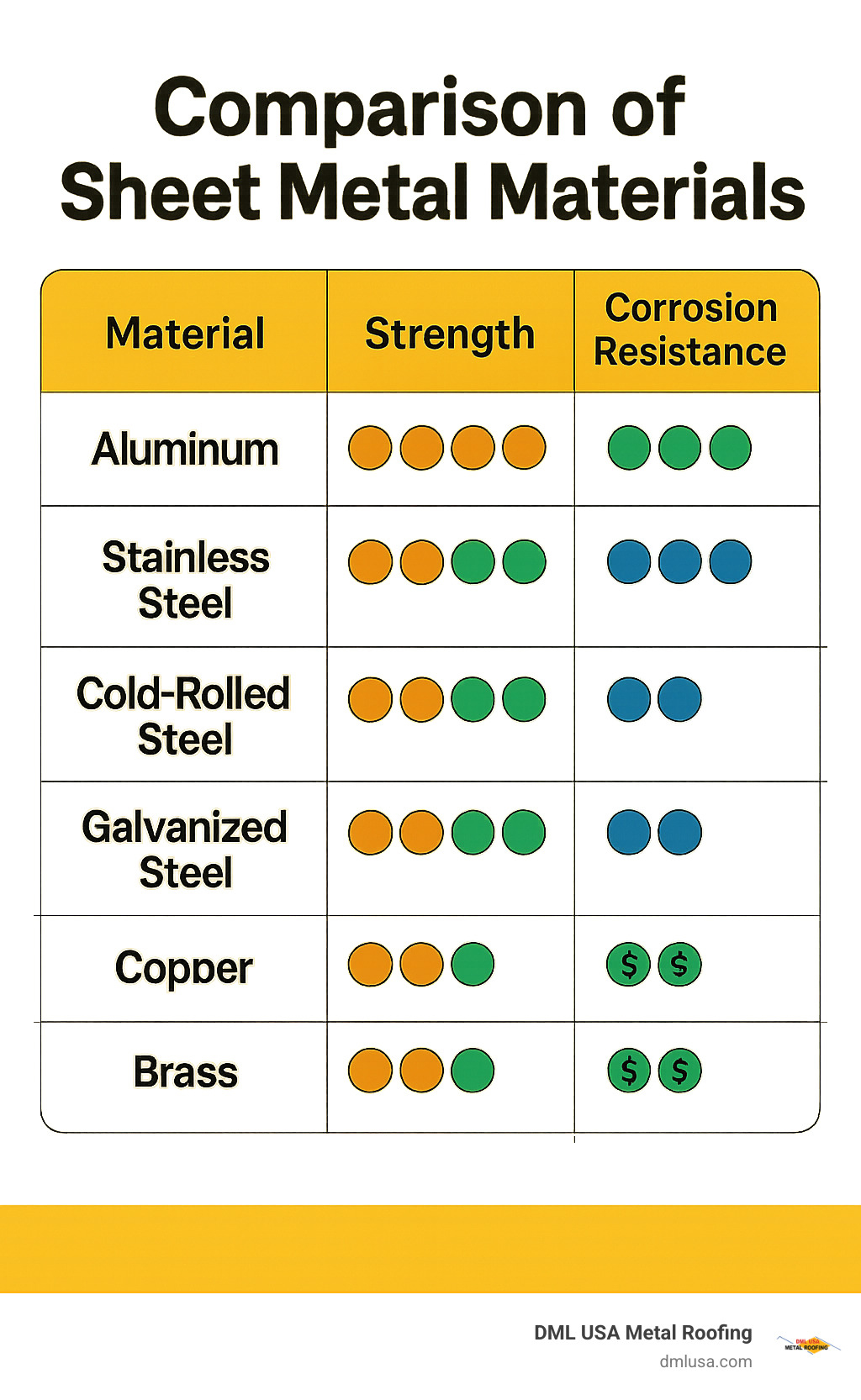
Aluminum 5052-H32 is like the Swiss Army knife of sheet metals. It resists corrosion beautifully, bends without cracking, and weighs significantly less than steel. This makes it perfect for truck bodies, fuel tanks, and decorative panels where you need strength without the weight.
Stainless steel 304 is the premium choice when appearance matters. This grade stays shiny and clean-looking for decades without any protective coatings. It’s the go-to material for kitchen equipment, architectural trim, and anywhere you want that polished, professional look.
Cold-rolled steel gives you the smoothest, most consistent surface finish available. The cold-working process makes it stronger while keeping it easy to form into complex shapes. This material loves paint and holds it well, making it ideal for appliances and automotive panels.
Galvanized steel is your best friend for outdoor projects. That protective zinc coating bonds permanently to the steel, giving you 20+ years of rust protection. It’s the smart choice for roofing, gutters, and siding where weather resistance matters more than appearance.
Copper develops that beautiful green patina over time, creating a living finish that actually protects the metal underneath. While it’s the most expensive option, copper can last over 100 years with minimal maintenance.
Brass combines copper’s corrosion resistance with zinc’s strength, creating an attractive golden alloy primarily used for decorative applications.
For more detailed information about metal types and their applications, visit our resources page.
Material Comparison for Key Applications
Construction projects usually lean toward galvanized steel because it delivers the best bang for your buck. Roofing panels, siding, and gutters all benefit from that protective zinc coating and structural strength.
Automotive applications love cold-rolled steel for body panels because it forms into complex curves without cracking. Aluminum is becoming more popular as manufacturers chase better fuel efficiency through weight reduction.
Aerospace applications demand materials that are both incredibly strong and lightweight. Aluminum alloys dominate aircraft skin because they handle stress well while keeping the plane light enough to fly efficiently.
Appliance manufacturing relies heavily on cold-rolled steel because it’s easy to paint and form into the shapes we need. Stainless steel takes over when the surface will be visible or touch food.
Standard Thickness & Sizing Guidelines
Sheet metal thickness depends on what you’re building and how much stress it needs to handle. Thicker materials give you more strength but become harder to bend and cost more per square foot.
The gauge system works differently for different materials. Steel, aluminum, and stainless steel all have their own gauge-to-thickness relationships. Always double-check the actual thickness measurements when ordering.
Sheet metal comes in both coil and flat sheet forms. Common stock sizes include 24″ x 36″, 36″ x 48″, and 48″ x 96″, though custom sizes are available. Planning around standard sizes helps minimize waste and keeps costs down.
Buying Guide: Pricing, Sizes & Where to Purchase
Understanding sheet metal pricing helps you make smart purchasing decisions and stay within budget. Raw material costs drive most price fluctuations, with steel prices rising and falling with iron ore and coal costs, while aluminum tracks global ingot markets.
Quantity matters when buying sheet metal. Most suppliers offer price breaks at 100, 500, and 1,000 square feet, with substantial savings for larger orders. However, many suppliers now provide competitive pricing even for small DIY projects.
Cut-to-size services add convenience but increase costs by 15-30% compared to standard sizes. For custom projects, this surcharge often makes sense because it eliminates waste and the need for cutting equipment.
Shipping typically takes 2-4 days for standard orders, with same-day availability for stock items. Rush services are available but carry premium pricing.
Online configurators have revolutionized sheet metal purchasing by providing instant pricing and ordering capabilities. These systems offer competitive pricing and eliminate the back-and-forth of traditional quote processes.
Local suppliers provide immediate availability and often better shipping costs. Building relationships with nearby suppliers can lead to better pricing and priority service for urgent projects.
Bulk purchasing reduces per-unit costs but requires storage space and upfront investment. Prototype quantities allow testing different materials before committing to larger orders.
For specific product information and current pricing, visit our products page. Our comprehensive Design Guide: Sheet Metal Fabrication provides detailed technical information for planning your project.
Ordering Sheet Metal Online vs In-Store
Online ordering has transformed how people buy sheet metal. The convenience of 24/7 availability, instant pricing, and detailed product specifications makes online purchasing attractive for both DIY enthusiasts and professionals.
Most online suppliers provide detailed product specifications, material certificates, and technical support through their websites. Delivery typically takes 2-4 days for standard orders, with expedited options available for rush projects. Many suppliers offer free shipping for orders over $39-50.
In-store purchasing provides immediate availability and the chance to physically inspect materials before buying. Local suppliers often provide cutting services, allowing you to leave with finished pieces ready for installation.
Reading Product Specs & Datasheets
Understanding sheet metal specifications ensures you receive materials that meet your project requirements. Width and length specifications should account for your project’s dimensional requirements plus allowances for trimming and waste.
Thickness specifications must match your project’s structural and forming requirements. Gauge numbers vary between materials, so always verify actual thickness measurements.
Temper designations indicate the material’s strength and formability characteristics. Softer tempers offer better formability for complex shapes, while harder tempers provide greater strength for structural applications.
Finish codes describe surface treatments and appearance characteristics. Understanding these codes helps ensure you receive materials with the desired appearance and performance characteristics.
Fabrication, Cutting & Finishing Options
When you’re working with sheet metal, modern cutting and forming techniques can transform flat sheets into precisely shaped components for your roofing, siding, or custom projects.
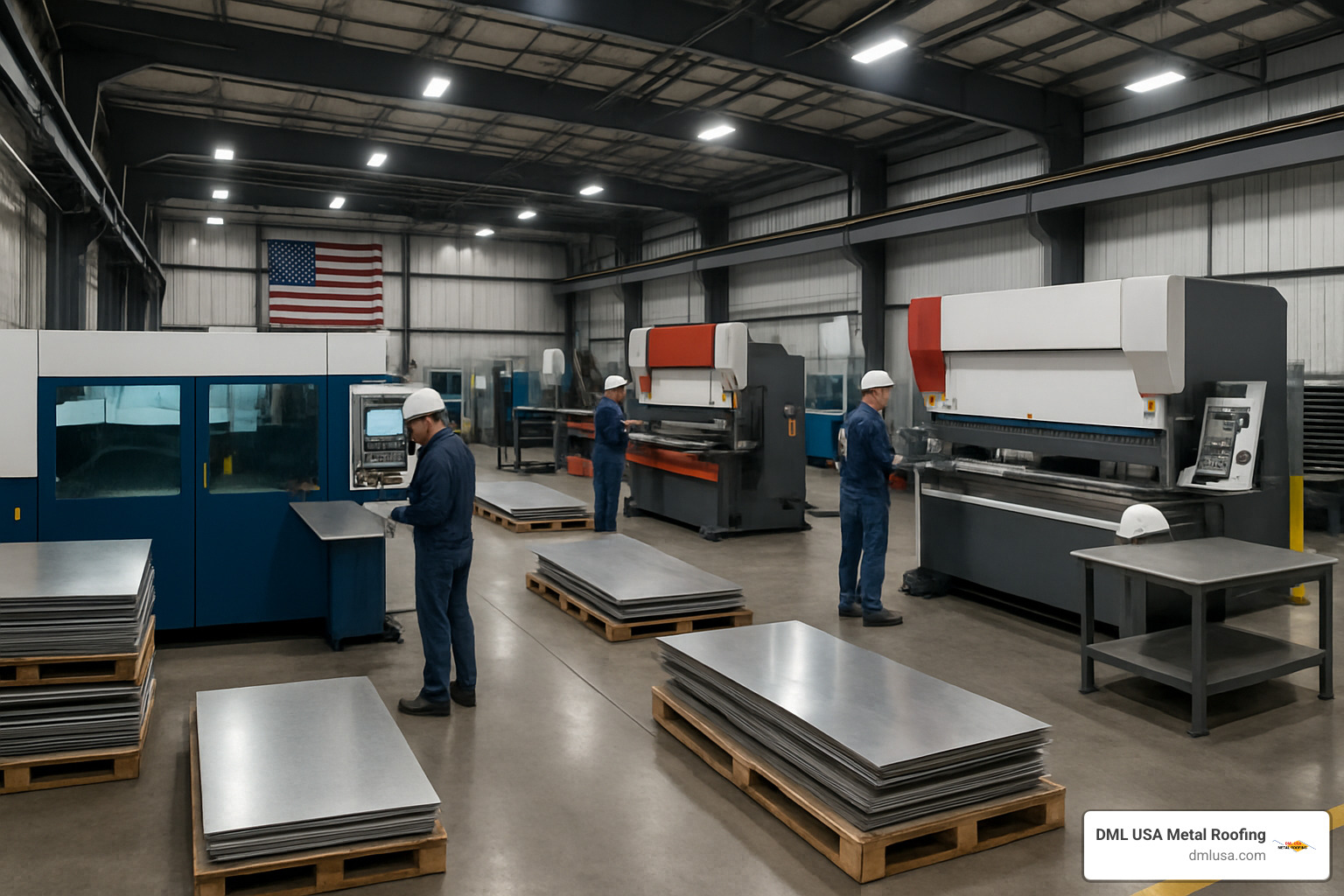
Laser cutting is like having an incredibly precise hot knife that slices through metal with surgical accuracy. These machines maintain tolerances of 0.1 mm while cutting at speeds up to 25 m/min on thin materials. Laser cutting produces clean edges with minimal heat distortion, perfect for intricate shapes.
Water-jet cutting uses high-pressure water mixed with abrasive particles to cut through thicker materials. This process works on virtually any material and produces edges so smooth they often don’t need additional finishing.
CNC punching machines are speed demons, delivering up to 600 strokes per minute. These machines can cut complex parts from blank sheets in under 15 seconds, making them ideal for projects requiring multiple holes or repetitive shapes.
Press-brake bending shapes your sheet metal into angles and forms with remarkable precision. Modern press brakes generate about 25 tons of force per meter, enough to bend thick materials while maintaining consistent angles across long pieces.
Roll forming creates continuous profiles from coil stock, perfect for roofing panels and siding. This process maintains consistent cross-sections while producing excellent surface finishes.
Welding remains the gold standard for permanent joints. Spot welding creates quick, strong connections between overlapping pieces, while TIG and MIG welding offer different advantages depending on your material and application needs.
Riveting provides mechanical fastening when welding isn’t practical. Modern riveting systems create consistent, strong joints with minimal skill requirements.
The finishing processes are where your sheet metal really comes to life. Powder coating offers durable, attractive finishes in virtually any color while providing superior corrosion resistance. Anodizing creates protective oxide layers on aluminum. Plating applies thin metallic coatings for specific performance requirements.
For examples of fabricated sheet metal projects, visit our gallery to see the possibilities.
Joining & Assembly Methods for Sheet Metal
Joining sheet metal pieces requires choosing the right method for your specific application.
Spot welding creates incredibly strong joints by literally melting the metals together at specific points. It’s fast, economical, and perfect for production work.
TIG welding gives you the precision control needed for high-quality joints, especially on thin materials where appearance matters. This process produces clean, strong welds with minimal distortion.
MIG welding offers faster production speeds for thicker materials while maintaining good weld quality.
Self-clinching fasteners solve the problem of creating threaded connections without welding. These fasteners install quickly and provide strong, reliable attachment points.
Adhesives have come a long way from simple glues. Modern structural adhesives provide strength comparable to welded joints while distributing loads over larger areas.
Post-Processing & Aesthetic Finishes
The finish on your sheet metal affects both appearance and performance. Brushed finishes create attractive, uniform surface textures that hide minor imperfections while providing consistent appearance.
Mirror finishes provide highly reflective surfaces perfect for decorative applications. Diamond tread patterns combine functionality with distinctive visual appeal, providing slip resistance while creating an industrial aesthetic.
Color-matching services ensure consistent appearance across multiple pieces. Architectural coatings offer improved durability and appearance for building applications, resisting fading and corrosion while maintaining color consistency over time.
Safety, Standards, Innovations & FAQs
Working with sheet metal doesn’t have to be intimidating when you understand proper safety practices and industry standards. Whether you’re tackling a weekend DIY project or planning a major renovation, following these guidelines keeps you safe and ensures professional results.
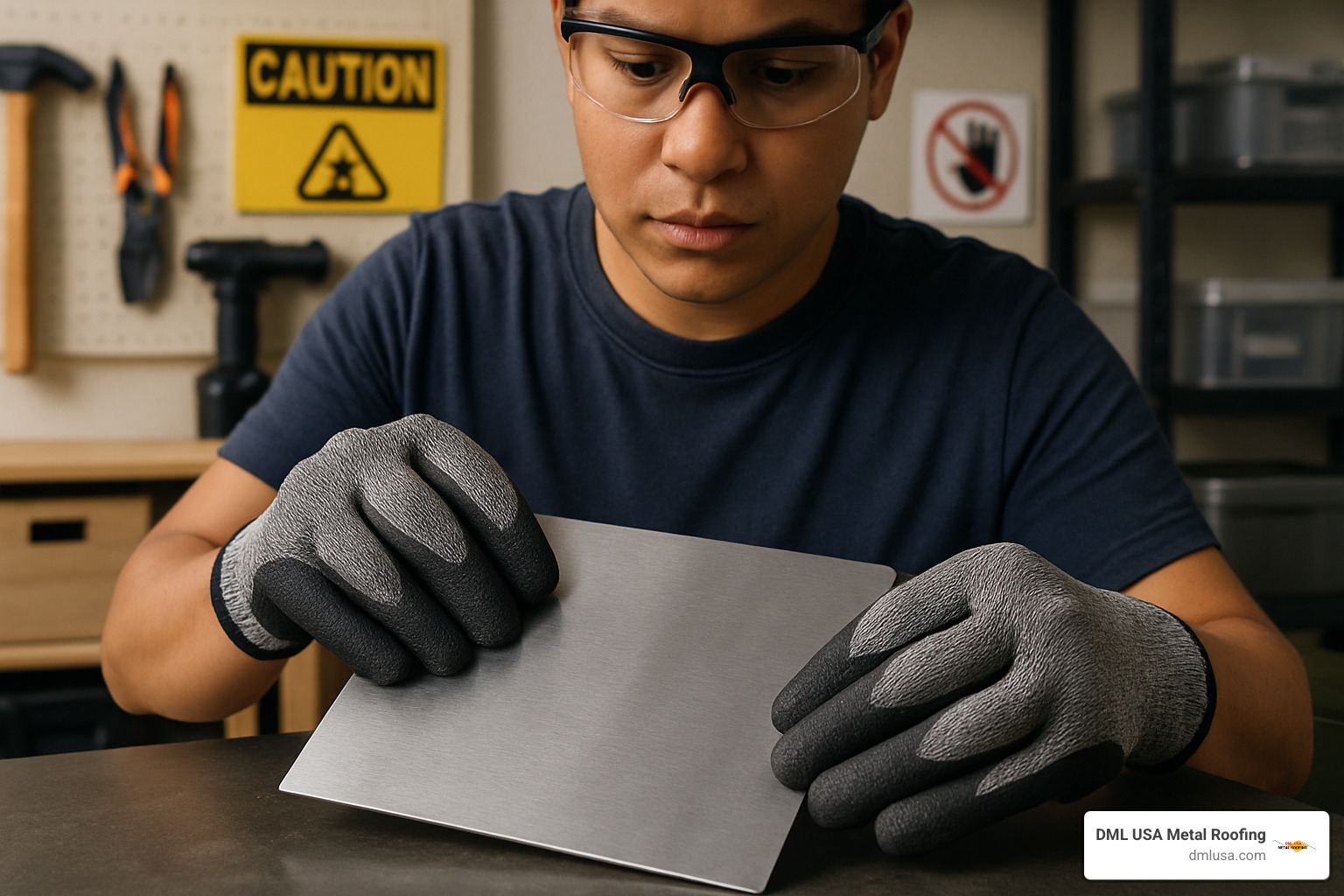
Personal protective equipment forms your first line of defense against sheet metal hazards. Safety glasses protect your eyes from flying metal particles during cutting and grinding operations. Cut-resistant gloves prevent those nasty lacerations from sharp edges. And don’t forget steel-toed boots – you don’t want to drop a 4×8 sheet of steel on your foot!
Sharp edges are probably the biggest safety concern when handling sheet metal. Freshly cut edges can slice through skin like a razor blade, so always handle materials with respect. When in doubt, file down rough edges before handling.
OSHA guidelines cover everything from proper lifting techniques to equipment operation procedures. Following OSHA standards isn’t just about compliance – it’s about getting home safely every day.
The sheet metal industry continues evolving with exciting innovations. Circle-grid strain analysis helps engineers optimize forming operations and prevent material failures. Incremental sheet forming represents a breakthrough for custom fabrication, creating complex shapes without expensive tooling.
Hydroforming uses fluid pressure to shape sheet metal into complex forms with incredible precision. This technology is revolutionizing automotive and aerospace manufacturing.
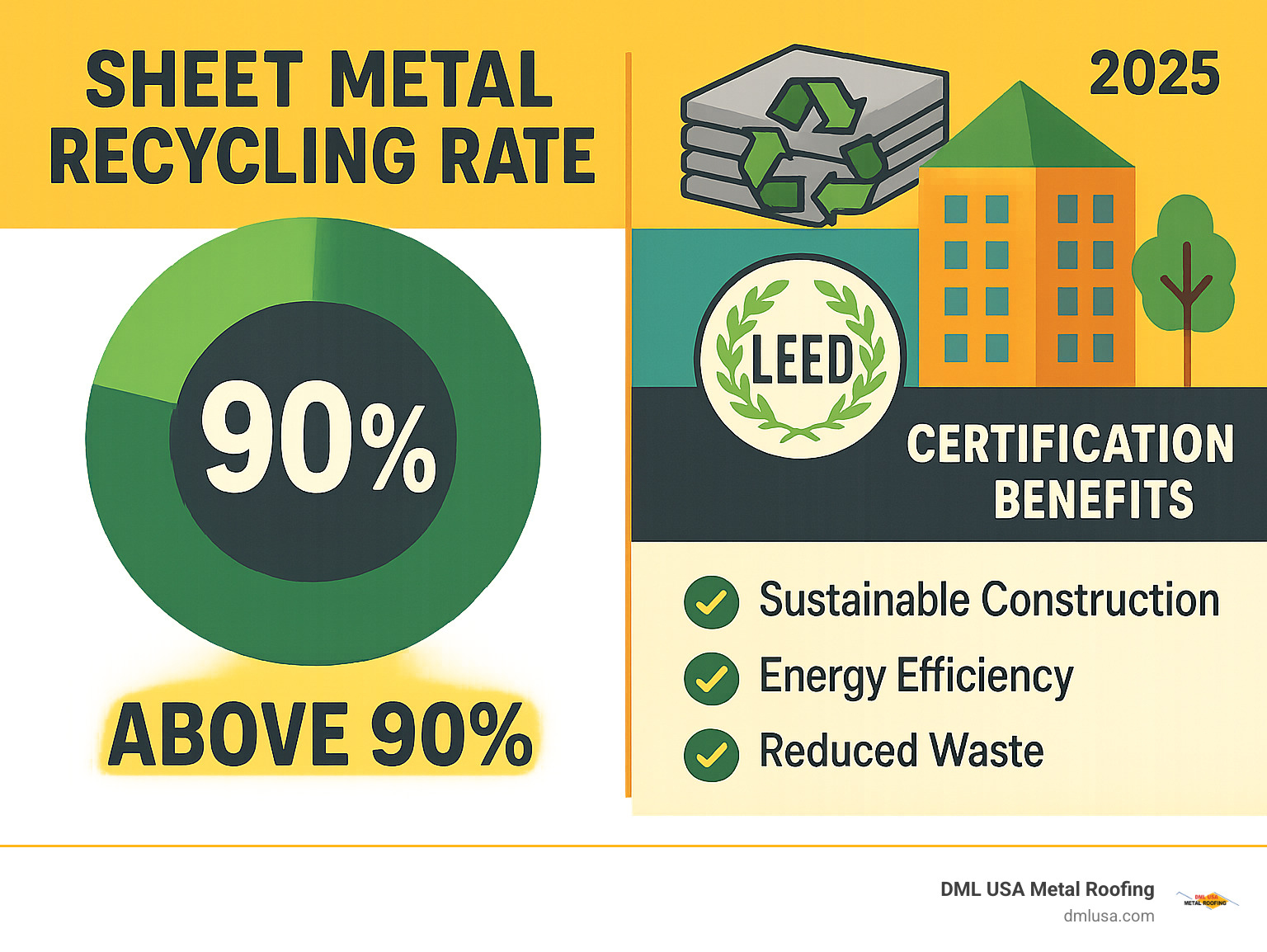
From an environmental perspective, sheet metal offers outstanding sustainability benefits. Over 90% of steel and aluminum gets recycled, making it one of the most environmentally responsible building materials available. Many sheet metal roofing systems qualify for LEED credits in green building projects.
ASTM and ISO specifications provide the quality standards that ensure your sheet metal performs as expected. These standards cover everything from material composition to dimensional tolerances.
For the latest developments in sheet metal applications and technology, check out our blog.
FAQ #1 – How is sheet metal priced?
Sheet metal pricing is straightforward once you understand the key factors. Raw material costs make up about 60-70% of your total price, with processing, transportation, and supplier markup covering the rest.
Material type plays the biggest role in pricing. Basic carbon steel offers the most economical option, while aluminum and stainless steel command premium prices. Copper sits at the top of the price range but offers best longevity.
Thickness affects pricing because thicker materials contain more metal. Quantity discounts typically kick in around 100 square feet, with substantial savings available for larger orders.
FAQ #2 – What’s the difference between gauge and inch?
The gauge system can be confusing because it works backwards from what you’d expect. Higher gauge numbers actually mean thinner material.
Different materials use completely different gauge systems. Steel, aluminum, and stainless steel each have their own gauge-to-thickness relationships. A 16-gauge steel sheet measures 0.0625 inches thick, while 16-gauge aluminum measures 0.0508 inches thick.
Inch measurements eliminate this confusion by providing direct thickness specifications. Always verify actual thickness measurements rather than relying solely on gauge numbers.
FAQ #3 – Can I bend sheet metal at home safely?
Absolutely! Home bending of sheet metal is totally doable with the right approach and safety precautions.
Safety equipment isn’t optional – it’s essential. Safety glasses, cut-resistant gloves, and appropriate clothing are basic requirements.
Tool selection depends on your project complexity. Simple bends work fine with clamps and a straightedge, while a sheet metal brake provides better results for multiple bends.
Material limitations affect what you can accomplish at home. Thin materials (24 gauge and lighter) bend easily by hand, while thicker materials require mechanical advantage or professional equipment.
Start with practice pieces using scrap material to test your setup and techniques before working on your final parts.
Conclusion
Sheet metal has proven itself as one of the smartest investments you can make for your home. Whether you’re planning a roof replacement, adding siding, or diving into a custom project, the durability and versatility of quality sheet metal simply can’t be beat.
After 15 years in the metal roofing industry at DML USA Metal Roofing, I’ve seen how the right sheet metal choice transforms homes. We’ve helped thousands of homeowners across Illinois find why sheet metal roofing offers such incredible long-term value – from energy tax credits to superior resistance against fire, wind, and impact damage.
The beauty of sheet metal lies in its simplicity and reliability. Once properly installed, it quietly protects your home for decades with minimal maintenance. No more worrying about replacing shingles after every major storm or dealing with constant repairs. Quality sheet metal just works, year after year.
What excites me most about this industry is how it keeps evolving. New materials, smarter processes, and innovative applications mean there’s always something better on the horizon. But the fundamentals remain the same – sheet metal delivers exceptional performance at a fair price.
The information in this guide gives you the foundation to make confident purchasing decisions. Quality materials and proper installation aren’t just expenses – they’re investments in your property’s future value and your peace of mind.
Ready to explore how sheet metal can transform your next project? Our team at DML USA Metal Roofing is here to help you steer the options and find the perfect solution for your specific needs. Contact us today, and let’s discuss how durable, maintenance-free sheet metal roofing can work for your home.
