 Skip to main content

Aluminum Gutter Extensions: The Ultimate 2025 Guide
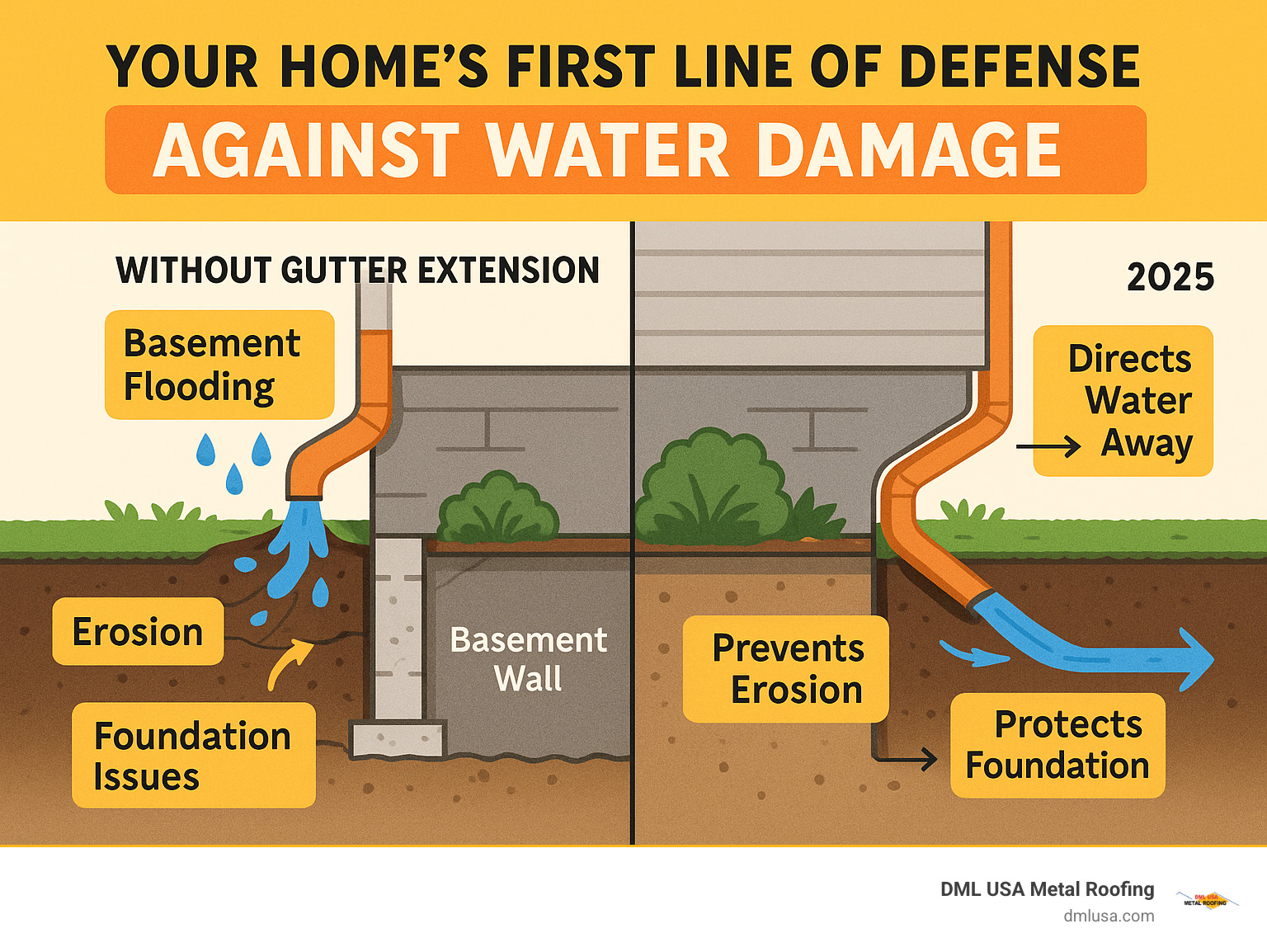
Your Home’s First Line of Defense Against Water Damage
Aluminum gutter extensions are specialized components that attach to your existing downspouts to direct rainwater further away from your home’s foundation. These simple yet crucial additions help prevent water damage, basement flooding, and soil erosion around your property.
Key purposes of aluminum gutter extensions:
- Foundation protection – Direct water 4-6 feet away from your home’s base
- Erosion prevention – Stop soil washout around landscaping and walkways
- Basement flood prevention – Keep water from pooling near foundation walls
- Landscaping preservation – Protect plants and mulch from water damage
As one homeowner finded when installing a septic system, sometimes you need to redirect your downspout extension by 45 degrees to work around new obstacles. This flexibility makes aluminum extensions particularly valuable for adapting to changing property needs.
The research shows that aluminum gutter extensions come in various sizes (2×3, 3×4, 4×5 inches) and are available in over 20 standard colors. They’re manufactured in different gauges (.019″, .024″, .027″) with thicker gauges offering greater durability for commercial applications.
I’m Adam Kadziola, and through my years of experience in manufacturing metal roofing and home improvement products at DML USA, I’ve seen how proper drainage systems – including quality aluminum gutter extensions – protect homes from costly water damage. My background in both manufacturing and home renovations has taught me that investing in the right drainage components upfront saves homeowners thousands in potential foundation repairs later.
The Aluminum Advantage: Why This Metal Excels for Gutter Extensions
When you’re shopping for gutter extensions, you’ll find options in steel, vinyl, and aluminum. But after years of manufacturing roofing systems at DML USA, I can tell you why aluminum gutter extensions consistently outperform the competition.
Aluminum is surprisingly lightweight while still being tough enough to handle whatever Mother Nature throws at it. You won’t struggle with heavy, awkward pieces during installation, and your existing gutter system won’t sag under the added weight. It’s like having the strength of a bodybuilder in the frame of a marathon runner.
Here’s where aluminum really shines: it’s completely rust-free. While steel extensions will eventually rust (especially in humid climates), aluminum naturally forms a protective coating that prevents corrosion. This means your extensions will look good and work properly for decades, not just a few years.
The corrosion resistance goes beyond just rust protection. Aluminum stands up to acid rain, salt air from coastal areas, and other environmental challenges that can eat away at other materials. If you live near the ocean or in an area with harsh winters, this durability becomes even more valuable.
Weather resistance is another major advantage. Aluminum handles extreme temperature swings without cracking or becoming brittle like some materials do. The only thing to keep in mind is that aluminum does expand and contract with temperature changes, which is why proper installation matters.
Cost-effectiveness makes aluminum extensions accessible to most homeowners. You get excellent performance without breaking the bank. The upfront investment pays for itself through the long lifespan and minimal maintenance requirements.
Paint retention with modern aluminum extensions is impressive. The baked-on enamel finishes available today can last over 20 years without significant fading or peeling. This means your extensions will keep your home looking sharp for decades.
| Feature | Aluminum Performance | Benefits |
|---|---|---|
| Durability | 20-30+ years lifespan | Long-term value |
| Cost | Moderate investment | Best price-to-performance ratio |
| Installation | Lightweight, easy handling | Lower labor costs |
| Weather Resistance | Withstands harsh conditions | Minimal maintenance required |
| Color Options | 20+ standard colors | Matches any home exterior |
| Corrosion Resistance | Naturally rust-free | No degradation over time |
A Guide to Common Types of Aluminum Gutter Extensions
Choosing the right aluminum gutter extensions for your home isn’t complicated, but understanding your options makes all the difference. Think of it like buying shoes – you need the right size, style, and quality for your specific needs.
Gutter system compatibility is your starting point. Your extension must match your existing downspout perfectly. It’s like trying to connect puzzle pieces – they either fit together seamlessly or they don’t work at all. A mismatched connection leads to leaks, poor drainage, and frankly, an eyesore on your home’s exterior.
Residential homes typically work best with smaller profiles, while commercial buildings need the heavy-duty options to handle water from those expansive roofs. At DML USA, we’ve learned that proper drainage works hand-in-hand with quality roofing systems. After all, what good is a great roof if the water doesn’t get channeled away properly?
Understanding Sizes, Profiles, and Gauges for Aluminum Gutter Extensions
Let’s break down the common sizes in a way that actually makes sense for your home.
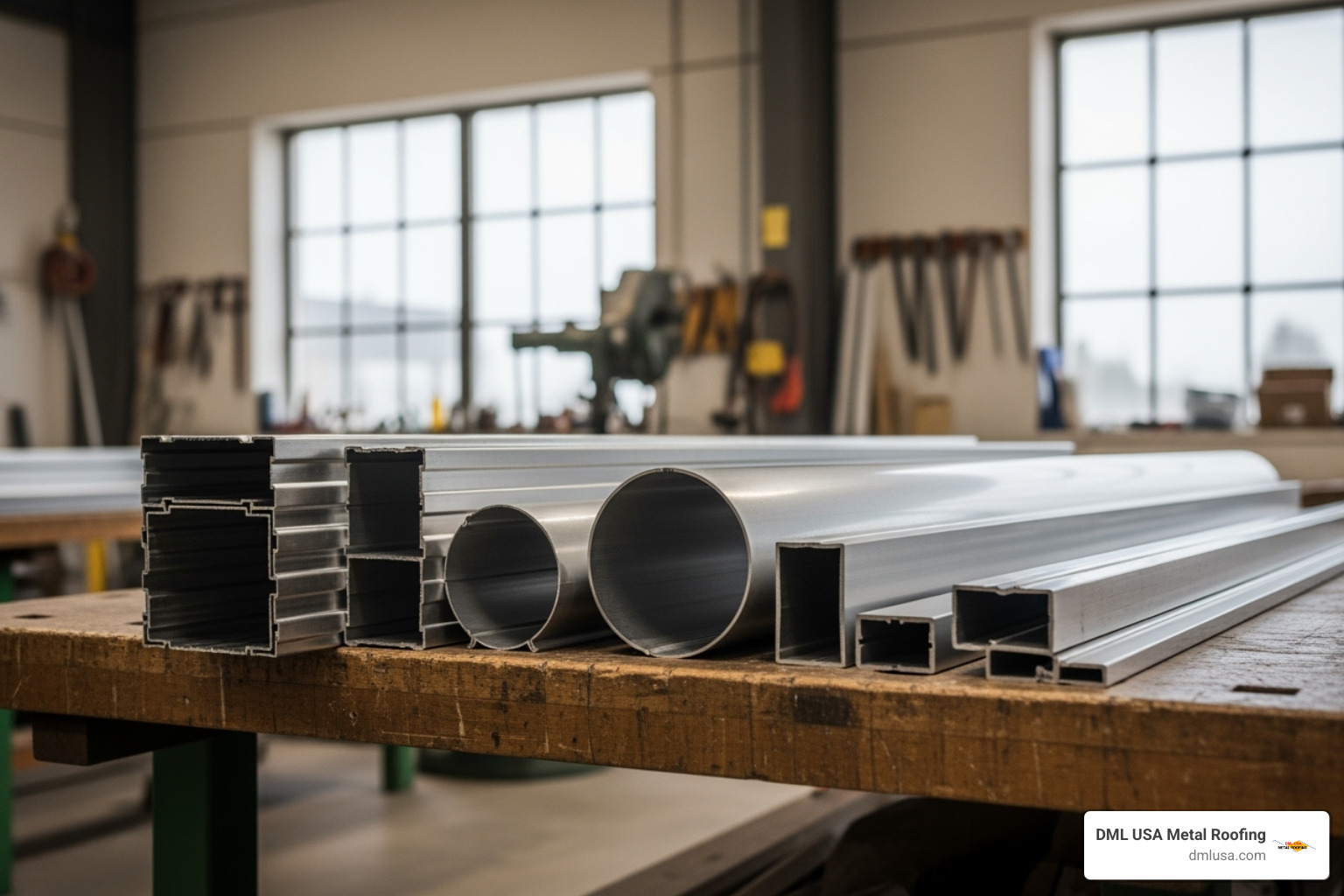
2×3 inch extensions are the compact choice for smaller homes or areas that don’t see torrential downpours. They work beautifully with 5-inch K-style gutters and handle the drainage needs of most single-story applications without looking oversized.
3×4 inch extensions hit the sweet spot for most homeowners. They’re the Goldilocks of gutter extensions – not too big, not too small, but just right. These pair perfectly with standard 5-inch and 6-inch K-style gutters and can drain over 1,000 square feet of roof area. That’s enough for most residential applications.
4×5 inch extensions are the workhorses designed for commercial buildings, churches, and large residential properties. If you’ve got a massive roof area, these are your best friend for handling high-volume water flow.
The round profiles offer a different aesthetic that many homeowners love. 3-inch round extensions create a classic look that works beautifully with half-round gutters or when you want to soften the angular lines of K-style gutters. 4-inch round extensions provide excellent drainage capacity while maintaining that traditional, timeless appearance.
When it comes to profile variations, you’ve got choices. Square corrugated extensions feature those attractive ridged sides that add both strength and visual appeal. They’re particularly popular for their traditional look and extra structural integrity. Plain square extensions offer clean, modern lines that complement contemporary home designs and are easier to keep clean.
Now, here’s where things get technical but important – aluminum gauge. Think of gauge like the thickness of a book cover. .019-inch gauge is your paperback – economical but more prone to damage. .024-inch gauge is your hardcover standard, offering better durability and resistance to dents from hail or falling branches. .027-inch gauge is your premium leather-bound edition – built to last and handle whatever Mother Nature throws at it.
Gauge affects durability in real ways. Heavier gauges resist denting, maintain their shape better over time, and handle those inevitable temperature swings more effectively. They’re also less likely to develop leaks at connection points, which saves you headaches down the road.
Cost increases with gauge thickness, but it’s often worth the investment. A slightly higher upfront cost can save you from replacement and maintenance expenses later. Drainage capacity varies by size, with that popular 3×4 extension handling over 1,000 square feet of roof drainage – perfect for most homes.
Aesthetic Choices: Colors and Finishes
Baked-on enamel finishes are the gold standard for aluminum gutter extensions. This isn’t just paint slapped on and left to dry. The finish gets baked at high temperatures, creating a durable coating that resists fading, chalking, and peeling for decades.
With over 20 standard colors available, you’re not stuck with boring white extensions. High Gloss White remains the most popular choice for good reason – it’s clean, classic, and works with virtually any home style. Royal Brown creates a rich, earthy look that complements traditional homes beautifully.
Matching your home’s siding and trim is crucial for maintaining curb appeal. Your extensions should either match your existing gutters exactly or complement your home’s color palette harmoniously. After all, you want people to notice your beautiful home, not wonder why your gutter extensions look like an afterthought.
Custom colors are available if you need something unique, though they typically require larger orders and longer wait times. This option works well for historic restorations or homes with unique architectural colors.
Mill finish aluminum gives you the raw aluminum look at a lower cost, but it will weather to a dull gray over time. While functional, it rarely provides the polished appearance most homeowners want for their investment.
Installation and Connectivity: A Practical Guide
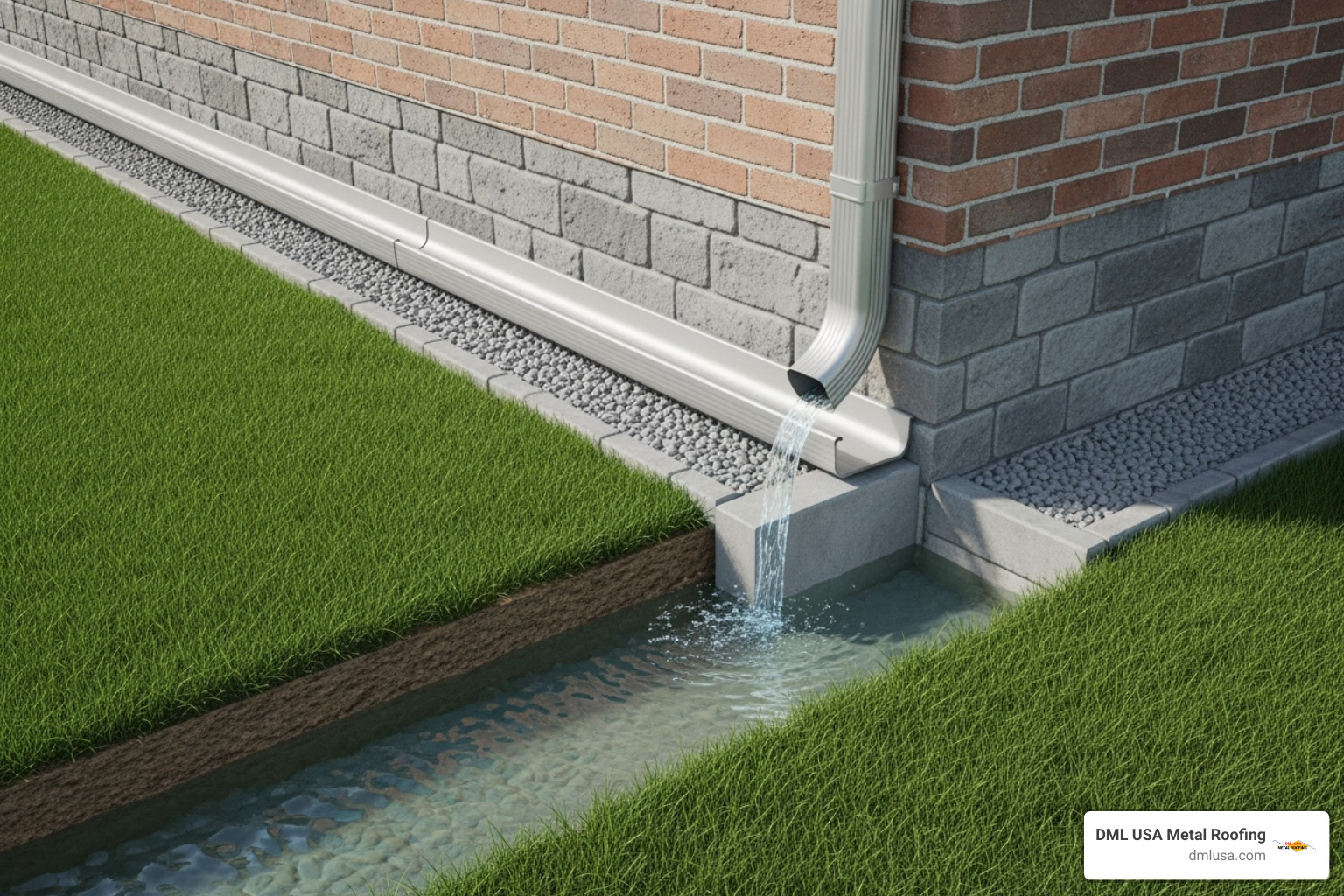
Installing aluminum gutter extensions is one of those home improvement projects that most DIY enthusiasts can tackle with confidence. The good news is that if you can handle basic tools and don’t mind working at ground level, you’re already halfway there.
Ground-level installation is straightforward and safe for most homeowners. However, if your downspouts are positioned high on the wall or you’re uncomfortable working near your roofline, calling in a professional is always the smart choice. There’s no shame in prioritizing safety over saving a few dollars.
You’ll need some basic tools to get the job done right. Tin snips or a hacksaw will handle any cutting you need to do. A drill with appropriate bits helps secure connections, while a level ensures proper pitch for water flow. Don’t forget your measuring tape, sealant, and safety equipment like gloves and safety glasses.
At DML USA, we know that proper drainage systems work hand-in-hand with our metal roofing installations. That’s why we encourage homeowners to check out our Project Gallery to see how well-integrated drainage systems complement quality roofing work.
The key to successful installation is taking your time and double-checking measurements. A properly installed extension should slope away from your home at about a quarter-inch per foot to ensure good water flow.
Connecting to Downspouts: A-Style vs. B-Style Elbows
Here’s where things get interesting – and where many homeowners get confused. Elbows aren’t just about changing direction; they’re about maintaining proper water flow while working around obstacles like air conditioning units, walkways, or newly installed septic systems.
A-Style elbows are your go-to choice for most situations. They bend on one axis, typically bringing the downspout out from the wall or changing direction in a single plane. Think of them as the workhorses of the gutter world – reliable and straightforward.
B-Style elbows bend on the opposite axis and are perfect for those tricky situations where you need to steer around obstacles. One homeowner finded this when they needed to redirect their downspout extension by 45 degrees after installing a septic system. A B-Style elbow solved the problem neatly.
45-degree elbows are available in both styles and offer gentler direction changes than sharp 90-degree turns. This gentler angle helps maintain better water flow, which means less chance of clogs and better performance during heavy rains.
75-degree elbows (also called B-Style) are commonly used for sideways turns. Most installations use two elbows per downspout assembly to steer around building features like porches or landscaping.
The real magic happens when you combine different elbow styles for custom angles. As discussed in a real-world discussion on downspout parts, you can use both A-Style and B-Style elbows together, flexing one slightly to achieve non-standard angles like that tricky 45-degree turn.
Here’s a pro tip I’ve learned from years in the business: always ensure the upper elbow slips inside the lower one. This prevents water from backing up or leaking at the connection point – a small detail that makes a huge difference in performance.
Integrating with Broader Drainage Systems
Modern homes benefit from thinking beyond just getting water away from the foundation. Connecting your aluminum gutter extensions to broader drainage systems creates a comprehensive water management solution that protects your entire property.
Adapters make everything possible when it comes to connecting different materials and sizes. Universal adapters let you transition from rectangular downspouts to round drainage pipes or connect different sized components seamlessly.
Corrugated pipe connections are popular for extending drainage underground to distant disposal points. The flexible nature of corrugated pipe makes it easy to route around obstacles. Just remember that while the extension above ground should be aluminum, buried aluminum corrodes quickly due to soil contact, so transition to other materials below ground.
PVC pipe integration offers excellent durability for underground drainage. Adapters allow you to transition from your aluminum extensions to PVC systems that can handle long-term burial without any corrosion concerns. This combination gives you the best of both worlds – attractive, durable extensions above ground and worry-free drainage below.
Tile adapters help connect your gutter extensions to existing drainage tile systems. This is particularly valuable in areas with high water tables or clay soils where surface drainage alone isn’t enough.
Sometimes simple solutions work best. Splash blocks provide an effective way to disperse water from extensions while preventing soil erosion. They’re perfect for situations where underground drainage isn’t practical or necessary.
Diverters add versatility to your system by directing water to rain barrels or gardens during moderate rainfall, then automatically redirecting overflow during heavy storms. It’s like having a smart drainage system that adapts to conditions.
Maintenance, Purchasing, and Long-Term Value
Taking care of your aluminum gutter extensions is refreshingly straightforward, but a little attention goes a long way toward protecting your investment. I’ve found that homeowners who stay on top of basic maintenance enjoy decades of trouble-free performance from their extensions.
Routine checks twice a year – once in spring after winter storms and once in fall before heavy rains – will catch most issues before they become problems. During these inspections, look for loose connections, proper water flow, and any signs of damage or wear. It’s amazing how a simple 15-minute walk around your home can prevent costly repairs down the road.
Securing connections becomes especially important as your extensions age. Weather cycles cause expansion and contraction, which can gradually loosen screws and joints. A quick tightening of fasteners and a dab of fresh sealant where needed keeps everything working smoothly.
Sometimes professional help makes sense, particularly for complex installations or when you’re integrating extensions with broader drainage systems. At DML USA, we understand that proper drainage works hand-in-hand with quality roofing systems. That’s why we’re always happy to help homeowners create comprehensive water management solutions. Feel free to Contact Us for guidance on your specific situation.
Simple Maintenance for Lasting Performance of Aluminum Gutter Extensions
Debris removal tops the list of maintenance priorities. Leaves, twigs, and even tennis balls (yes, I’ve seen it!) can block your extensions and cause water to back up into your gutter system. The good news? Most debris clears out easily with a garden hose.
Preventing clogs starts with smart landscaping choices. Keep tree branches trimmed back from your extensions, and consider the mature size of plants when landscaping near drainage areas. A little planning now saves hours of cleaning later.
Gutter guards on your main gutter system dramatically reduce the debris that reaches your extensions. While they don’t eliminate maintenance entirely, they can cut your cleaning time in half. Leaf strainers at downspout outlets catch what guards miss, acting as a second line of defense.
Checking for dents should be part of your regular inspection routine. Minor dents from hail or falling branches rarely affect function, but significant damage can create low spots where water pools instead of flowing freely.
Proper pitch ensures water flows away from your home effectively. Extensions should slope gently downward – not so steep that water erodes your landscaping, but not so flat that it pools in the extension itself. If you notice water sitting in your extension after rain, a simple adjustment can usually fix the problem.
Cleaning aluminum extensions couldn’t be easier. A rinse with your garden hose handles most situations, while stubborn buildup responds well to a soft brush and mild dish soap. The smooth aluminum surface doesn’t hold onto dirt and grime like other materials might.
Where to Buy and What to Expect from Shipping
Finding the right aluminum gutter extensions depends on your specific needs and timeline. Local hardware stores offer the convenience of same-day pickup and the ability to see products firsthand. They typically stock the most common sizes and colors, making them perfect for straightforward replacements.
Specialized gutter suppliers become invaluable when you need specific colors, unusual sizes, or commercial-grade materials. These suppliers understand the nuances of gutter systems and can help you select exactly what you need for your project.
Online retailers often provide the best selection and competitive pricing, especially for bulk orders. However, shipping long sections of aluminum requires special handling, which affects both cost and delivery time.
Standard packaging involves 10-foot sections that require protective crating to prevent damage during shipping. Expect crating charges of $50-115 depending on your order size – this might seem like an extra expense, but it’s essential for receiving undamaged products.
Bulk orders make sense for larger projects or contractors. Some suppliers offer 100-foot boxes containing 10 pieces, which can reduce per-foot costs significantly. Contractor pricing is available from many suppliers, with special rates for verified professionals and volume purchasers.
The key is planning ahead. While you can often find basic extensions locally for emergency repairs, ordering the exact size, color, and gauge you want typically requires a week or two for delivery.
Frequently Asked Questions about Aluminum Gutter Extensions
How far should a gutter extension carry water from the foundation?
When homeowners ask me about proper water disposal distance, I always start with the general rule of thumb: 4 to 6 feet minimum. This distance provides basic protection for most homes, but honestly, if you can manage it, the ideal distance is 10 feet from your foundation.
Why the extra distance? Preventing saturation around your foundation becomes much more effective when water is directed further away. I’ve seen too many basement problems that could have been avoided with just a few extra feet of extension.
Protecting basement walls requires understanding how water moves through soil. Water doesn’t just disappear when it hits the ground – it can migrate back toward your foundation through underground pathways. The further you direct it initially, the less likely it is to find its way back to cause problems.
One important consideration many homeowners overlook is local building codes. Some municipalities have specific requirements for water disposal distances, especially in areas with clay soils or high water tables. A quick call to your local building department can save you headaches later.
Can I connect an aluminum extension to a different material downspout?
This is one of the most common questions I get, and the answer is yes, with proper adapters. You’re not stuck replacing your entire downspout system just to add aluminum gutter extensions.
Connecting aluminum to other materials like vinyl, steel, or copper downspouts is definitely possible. The key is using the right transition pieces and taking your time with the installation. I’ve successfully connected aluminum extensions to all types of downspout materials over the years.
Ensuring a secure, leak-proof seal becomes extra important when you’re working with different materials. Use a high-quality sealant designed for multi-material applications, and don’t rush this step. A small leak at the connection point can cause more problems than having no extension at all.
There’s one technical consideration worth mentioning: potential for galvanic corrosion. When aluminum touches certain other metals directly, especially copper or steel, a slow corrosion process can occur. While this takes years to cause problems, using appropriate sealants and avoiding direct metal-to-metal contact will give you peace of mind.
How do I choose the right size extension for my downspout?
Choosing the right size is actually simpler than most people think. Matching dimensions is the golden rule – your extension should match your existing downspout size exactly for the best performance and appearance.
Measuring existing downspout takes just a minute with a tape measure. Measure the outside dimensions of your current downspout – length and width for rectangular profiles, or diameter for round ones. Write these numbers down before you head to the store.
If you have a 2×3 downspout, you need a 2×3 extension. If you have a 3×4 downspout, you need a 3×4 extension. This straightforward approach ensures proper water flow and prevents the awkward appearance of mismatched components.
Sometimes you’ll run into situations where exact matching isn’t possible due to availability. Using reducers or adapters for transitions can work, but it’s always my second choice. These transition pieces can create restriction points where debris might collect, and they never look quite as clean as perfectly matched components.
The bottom line? Take the time to measure accurately and match your existing downspout size. Your drainage system will work better, look better, and cause you fewer headaches down the road.
Conclusion: A Smart Investment in Your Home’s Protection
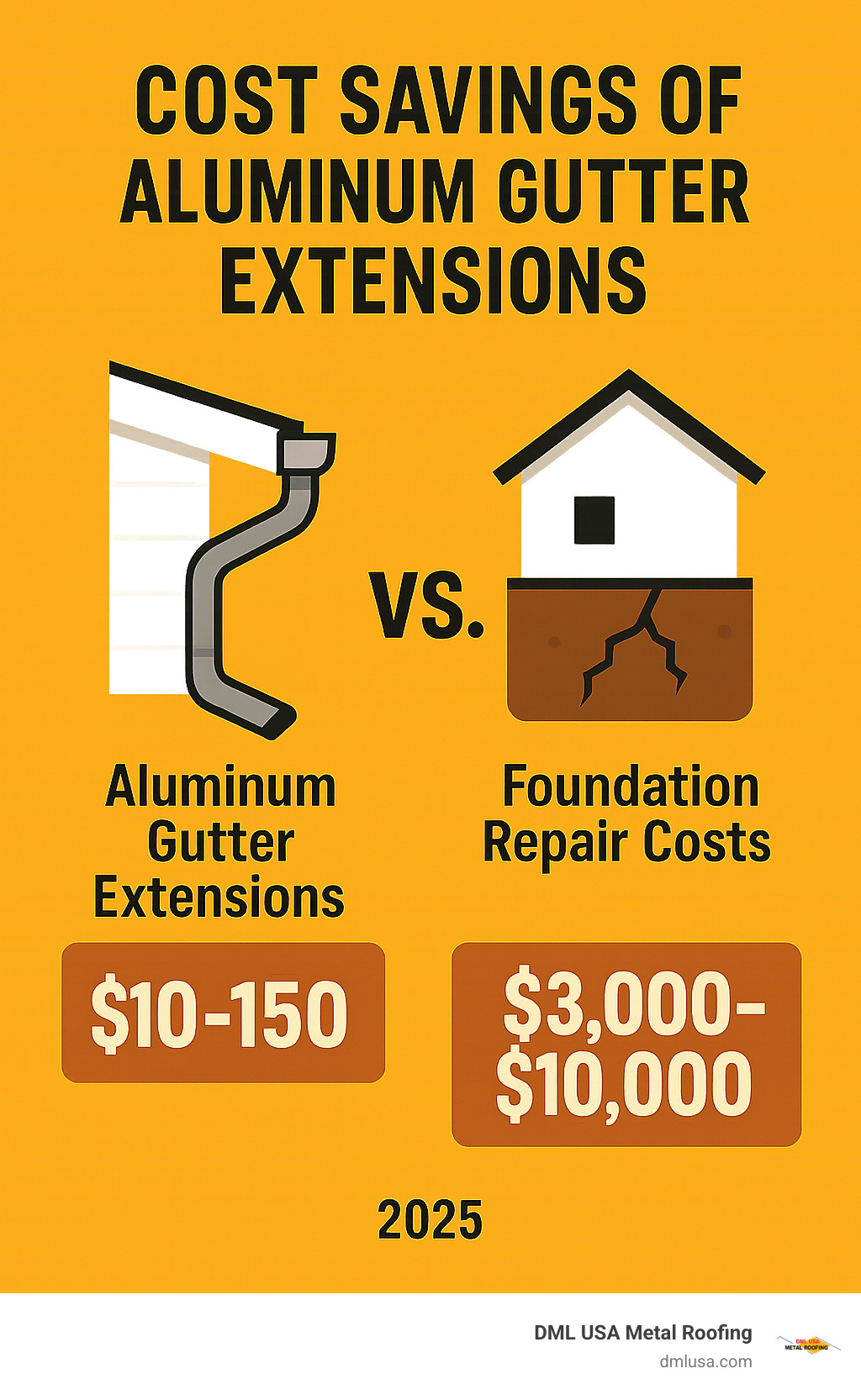
When you step back and look at the big picture, aluminum gutter extensions are one of those simple home improvements that punch way above their weight class. For a relatively small investment – typically between $10-150 – you’re protecting your home from thousands of dollars in potential damage.
Your foundation’s integrity depends entirely on keeping water away from your home’s base. Without proper drainage, water pools around your foundation, creating hydrostatic pressure that can crack basement walls and cause settling issues. It’s like having a slow-motion disaster happening right under your feet.
The math is pretty compelling when you consider the cost-effective nature of this solution. Foundation repairs typically run $3,000-10,000 or more, while basement waterproofing can cost even more. Compare that to the cost of quality aluminum extensions, and you’re looking at one of the best returns on investment you’ll ever make on your home.
Long-term home value protection is another benefit that’s easy to overlook. Water damage has a way of compounding over time. What starts as minor foundation settling can eventually affect door frames, windows, and even your roof structure. Homes with effective water management systems simply hold their value better over time.
At DML USA Metal Roofing, we’ve learned that the best protection comes from thinking about your home as a complete system. Our high-quality roofing systems are designed to shed water efficiently, but that’s only half the battle. The water still needs to go somewhere, and that’s where quality gutter components like aluminum extensions come into play.
A complete drainage system works best when every component is properly matched and installed. Our durable, maintenance-free metal roofing systems work seamlessly with quality drainage components to provide comprehensive weather protection. When you combine our energy-efficient roofing that qualifies for energy tax credits with proper drainage, you get superior resistance to fire, wind, and impact – plus the peace of mind that comes with knowing your home is truly protected.
Whether you’re building new or upgrading your existing drainage system, aluminum extensions deserve serious consideration. They’re one of those unglamorous improvements that quietly protect your biggest investment year after year.
Ready to explore how proper drainage can complement a complete roofing system? Explore our durable roofing and drainage solutions to see how DML USA can help protect what matters most – your home.
