 Skip to main content

Ridge cap for metal roofing: Peak Performance 2025
Why the Right Ridge Cap is Critical for Metal Roofing Success
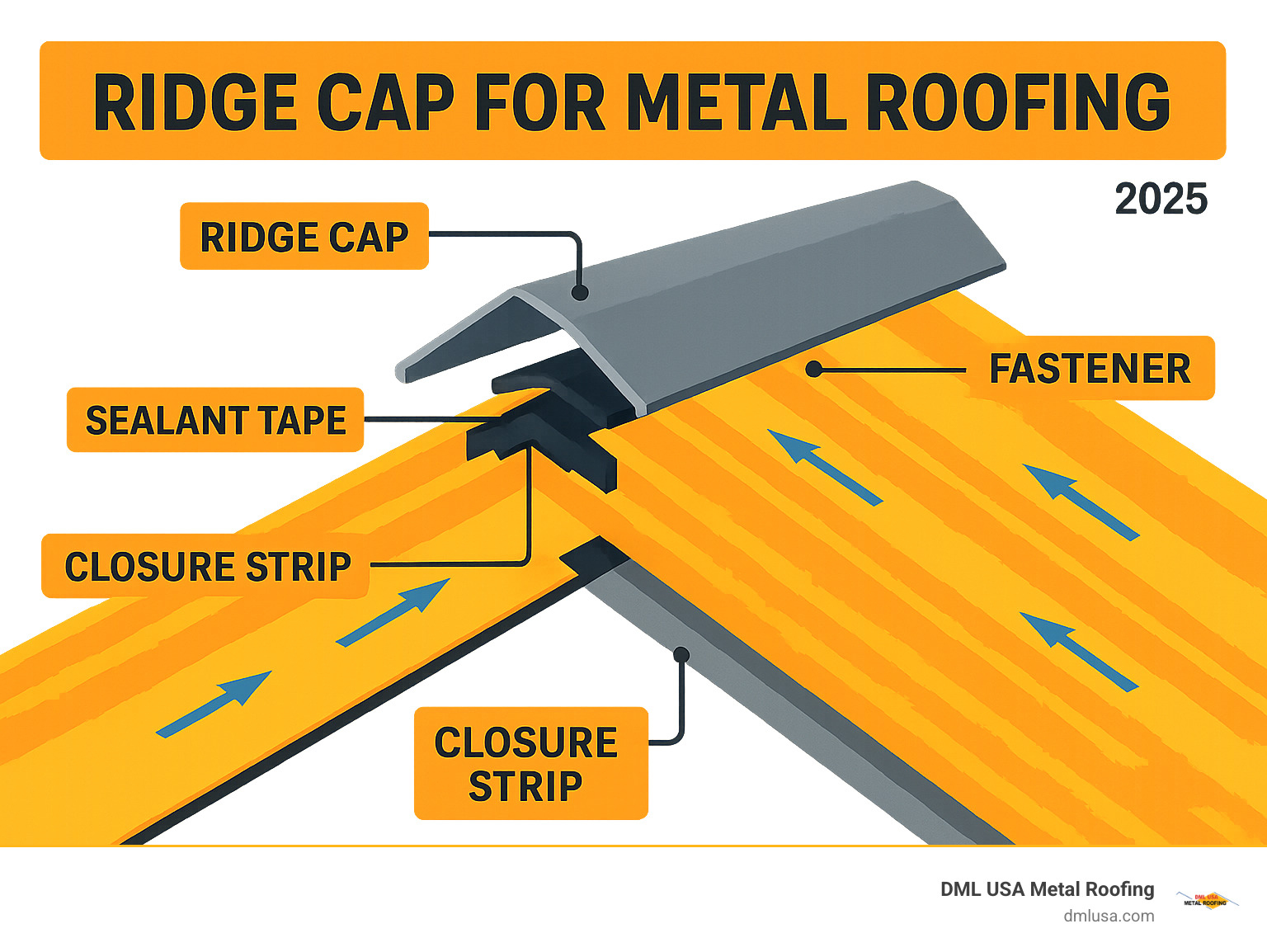
A ridge cap for metal roofing is the trim piece that seals the peak where two roof slopes meet, preventing water, debris, and pests from entering your home. Here’s what you need to know:
Key Ridge Cap Options:
- Vented: Allows attic ventilation, prevents moisture buildup
- Non-vented: Provides weatherproofing without ventilation
- Materials: Galvanized steel, Galvalume®, aluminum, copper
- Standard sizes: 10-20 feet long, 14-20 inches wide
- Common gauges: 24-29 gauge thickness
Essential Installation Components:
- Closure strips (solid or vented)
- Sealant tape
- Specialized fasteners
- Proper overlap (typically 6 inches)
As industry experts note, “trim makes the difference between a good building and a GREAT building!” Your ridge cap choice directly impacts your roof’s performance, aesthetics, and longevity.
The ridge cap creates a three-tiered defense against moisture infiltration while completing your roof’s weatherproofing system. Without proper ridge cap installation, even the highest-quality metal panels won’t perform as designed.
I’m Adam Kadziola, and through years of manufacturing experience at DML USA Metal Roofing, I’ve seen how the right ridge cap for metal roofing transforms both performance and curb appeal. Let me guide you through selecting the perfect ridge cap for your specific needs and installation requirements.
Relevant articles related to ridge cap for metal roofing:
Understanding the Role of a Metal Roof Ridge Cap
Picture the peak of your roof where two slopes meet—that’s where your ridge cap for metal roofing does its most important work. It’s the final guardian that seals your roof’s most vulnerable point, creating an impenetrable barrier against rain, wind, and debris.
A failed ridge cap can lead to water damage, mold, and higher energy bills. That’s why a proper installation creates a three-tiered defense system, integrating with upturned panel ends and underlayment to ensure a watertight seal.
Beyond protection, your ridge cap for metal roofing plays a starring role in your home’s curb appeal. A well-chosen ridge cap creates the clean, finished lines that lift a good roof to a great one, as you can see in our Gallery. The difference between a functional roof and a beautiful one often comes down to this critical detail.
Vented vs. Non-Vented Ridge Caps
The choice between vented and non-vented ridge caps is critical for your roof’s performance.
Vented ridge caps feature integrated airways that allow hot, moist air to escape your attic. This continuous airflow prevents moisture buildup, which can lead to mold and rot, and helps reduce cooling costs in the summer. They are the standard choice for most residential homes needing passive attic ventilation.
Non-vented ridge caps create a complete seal without air exchange. They are best for unheated spaces like sheds, detached garages, or in specific building designs where other ventilation methods are used. In cold climates, they can also help prevent heat loss.
For most homes, a vented ridge cap for metal roofing is the smart choice for a healthier, more energy-efficient environment.
Common Ridge Cap Profiles
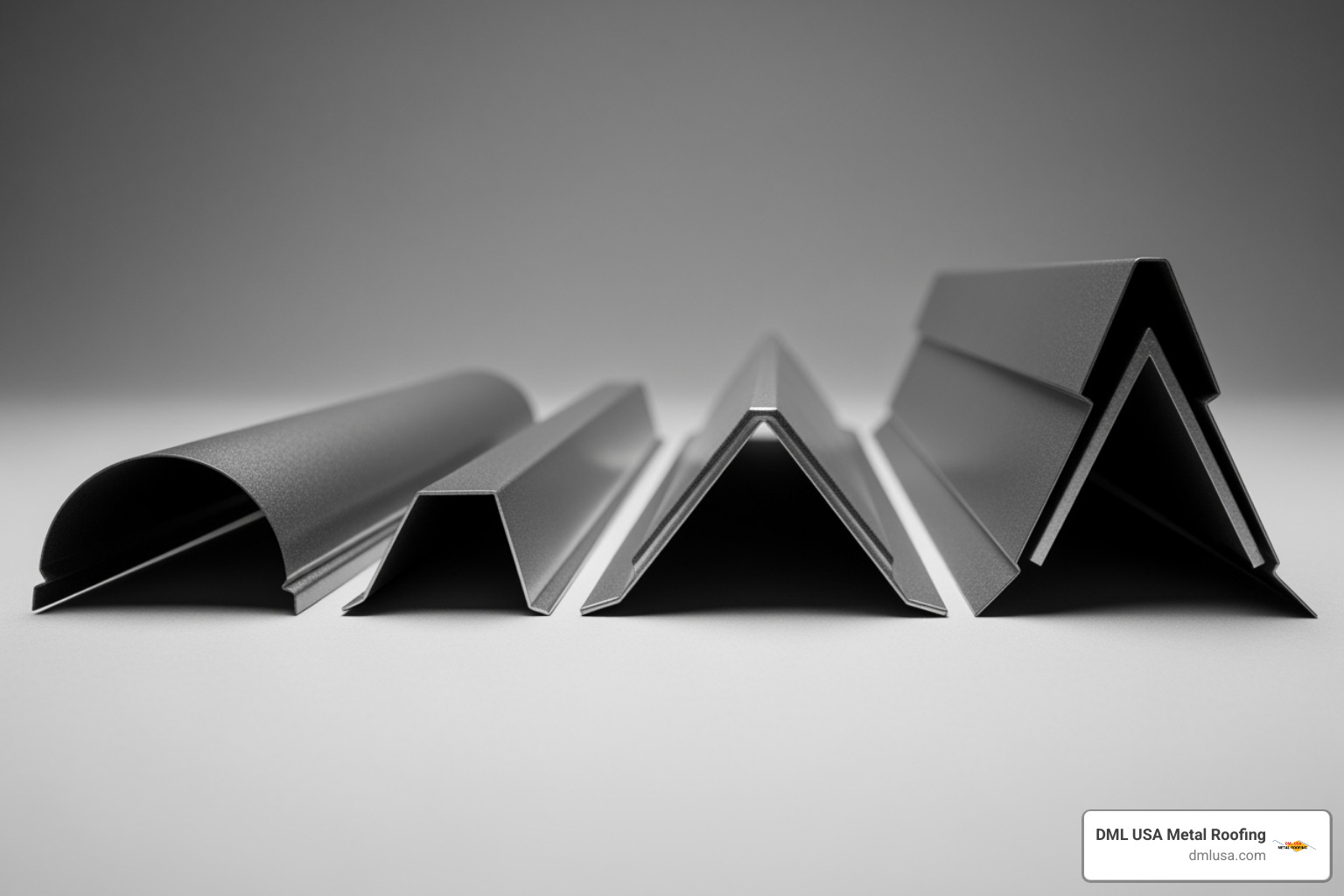
Ridge caps come in various profiles to match your panel type and aesthetic vision, ensuring a proper fit and function.
- Standard Profile: A versatile, factory roll-formed cap with an angled or rounded design. It’s typically made for a 4/12 roof pitch but adapts well to others.
- Low/High Profile: Low profile caps create a subtle, minimalist look, while high profile caps are more pronounced for architectural interest or to accommodate tall panel ribs.
- 5V Ridge Cap: Specifically designed for 5V Crimp metal roofing panels, this versatile profile accommodates nearly any roof pitch.
- Standing Seam Profiles: These integrate seamlessly with standing seam panels, often using hidden fasteners for a sleek, modern appearance.
- Exposed Fastener Profiles: Designed for use with through-fastened panels, these are simple to install and available in many matching colors.
- Custom Profiles: For unique architectural designs, caps can be custom-fabricated to meet exact specifications.
The right profile depends on your metal panel and architectural style. At DML USA Metal Roofing, we ensure our ridge caps are designed for optimal compatibility and performance.
Materials and Dimensions: What Are Ridge Caps Made Of?
Choosing the right material for your ridge cap for metal roofing is as important as selecting your panels. The material determines durability, weather performance, and compatibility with your roof system. At DML USA Metal Roofing, we focus on materials that deliver decades of maintenance-free performance.
For a deeper dive into how Galvalume is manufactured, see this Galvalume Wikipedia article.
Your selection also affects your budget, so understanding the trade-offs between cost and performance is key. Some materials excel in coastal environments, while others offer the best value for standard applications.
| Material | Durability | Cost | Corrosion Resistance | Best Use Case |
|---|---|---|---|---|
| Galvanized Steel | Good | Economical | Good | Standard residential, agricultural, light commercial |
| Galvalume® Steel | Excellent | Moderate | Excellent | Residential, commercial, industrial (not coastal) |
| Aluminum | Excellent | Higher | Superior | Coastal, industrial, highly corrosive environments |
| Copper | Exceptional | Premium | Superior | Architectural, historical, premium aesthetic |
Common Materials for a ridge cap for metal roofing
Let’s review the most popular materials for a ridge cap for metal roofing.
Galvanized steel is coated with a protective zinc layer (designated as G60 or G90) that sacrifices itself to prevent the steel core from rusting. G90 offers superior protection for a modest price increase.
Galvalume® steel is a modern standard, featuring an advanced aluminum-zinc alloy coating (AZ50 or AZ55). It offers superior corrosion resistance and often comes with 45-year finish warranties, making it a top choice for quality metal roofing.
Aluminum is ideal for harsh coastal or industrial environments due to its exceptional corrosion resistance. It is more expensive and expands and contracts more than steel, requiring careful installation.
Copper is a premium, time-tested material that develops a distinctive blue-green patina over time. It is specified by weight (e.g., 16 oz.) and is often used for high-end architectural or historical projects.
Beyond the base metal, advanced paint systems like PVDF/Kynar 500® provide the ultimate defense against fading and chalking, ensuring your ridge cap’s color and integrity last for decades.
Typical Dimensions and Gauges
Getting the dimensions right for your ridge cap for metal roofing ensures a proper fit and long-term performance.
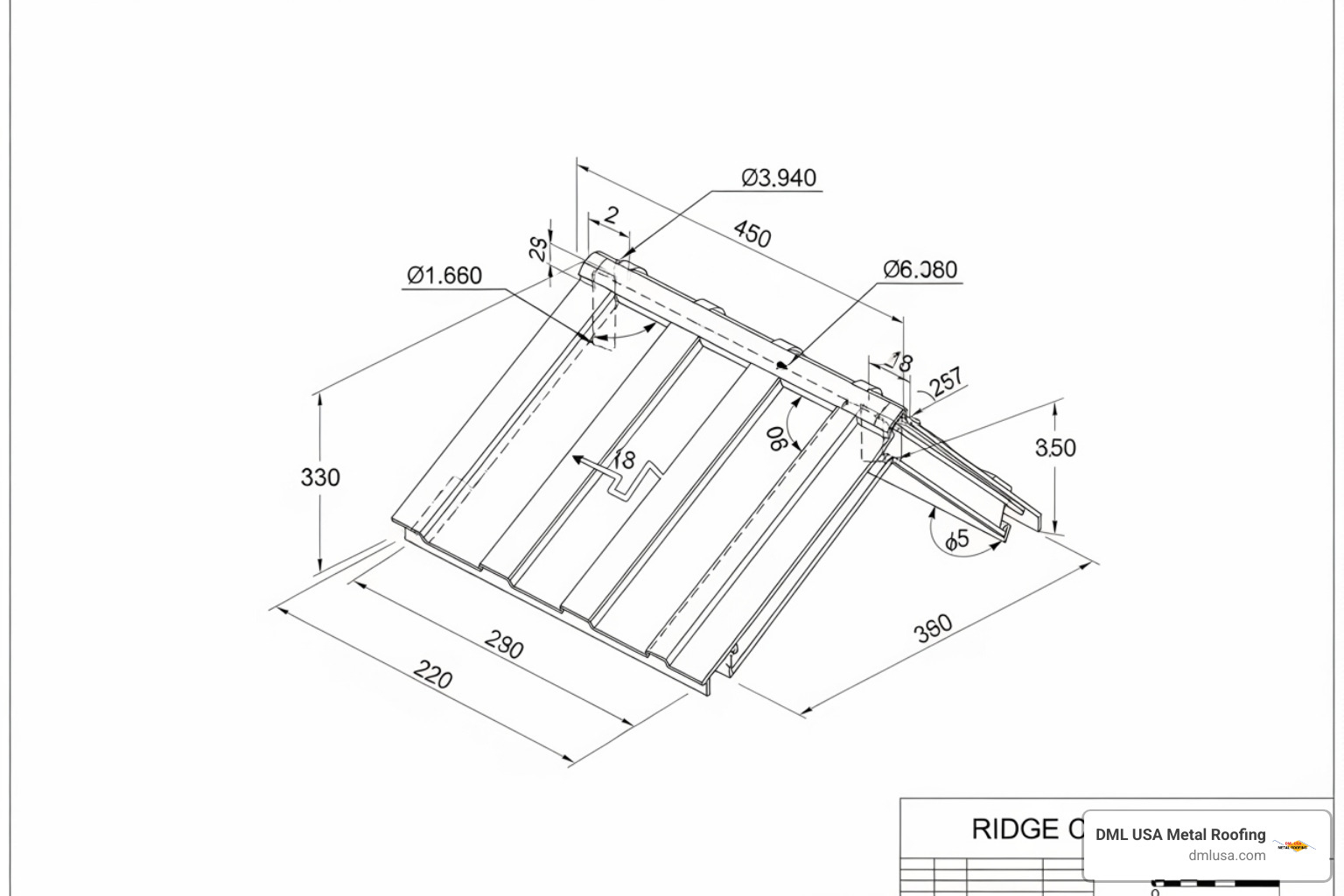
Standard lengths are typically 10 to 10.5 feet to minimize seams, while custom lengths up to 20 feet are available for larger projects.
Ridge cap widths vary from 6 to 20 inches depending on roof pitch and panel profile. Steeper roofs require wider caps for adequate coverage.
Thickness (gauge) directly impacts durability. Lower gauge numbers mean thicker, stronger metal. While some systems use 29-gauge, the most common choices for quality roofing are 26-gauge and 24-gauge for their excellent strength.
Yield strength (measured in PSI) is also critical. Bending high-strength (80,000 PSI) steel into tight trim profiles can cause microfractures at the bends, leading to premature rust. For this reason, quality manufacturers use a more formable, lower-strength (37,000 PSI) steel for trim pieces. This allows the metal to be bent cleanly without cracking, ensuring your ridge cap for metal roofing maintains its integrity.
The Essential Guide to Ridge Cap Installation
Installing a ridge cap for metal roofing is the final, critical step that ensures your roof is watertight. While some experienced DIYers may tackle metal roofing, the ridge cap requires precision in alignment, sealing, and fastening to prevent costly leaks. Safety is paramount; always use proper fall protection and consult our Resources for more guidance.
Before you begin, ensure the roof deck is smooth, straight, and free of debris, as any imperfection will show. Proper alignment is achieved with careful measurements and chalk lines. When installing multiple pieces, a 6-inch overlap is typically required to create a continuous, watertight seal.
Essential Components for Installing a ridge cap for metal roofing
A successful ridge cap for metal roofing installation relies on several key components working together.
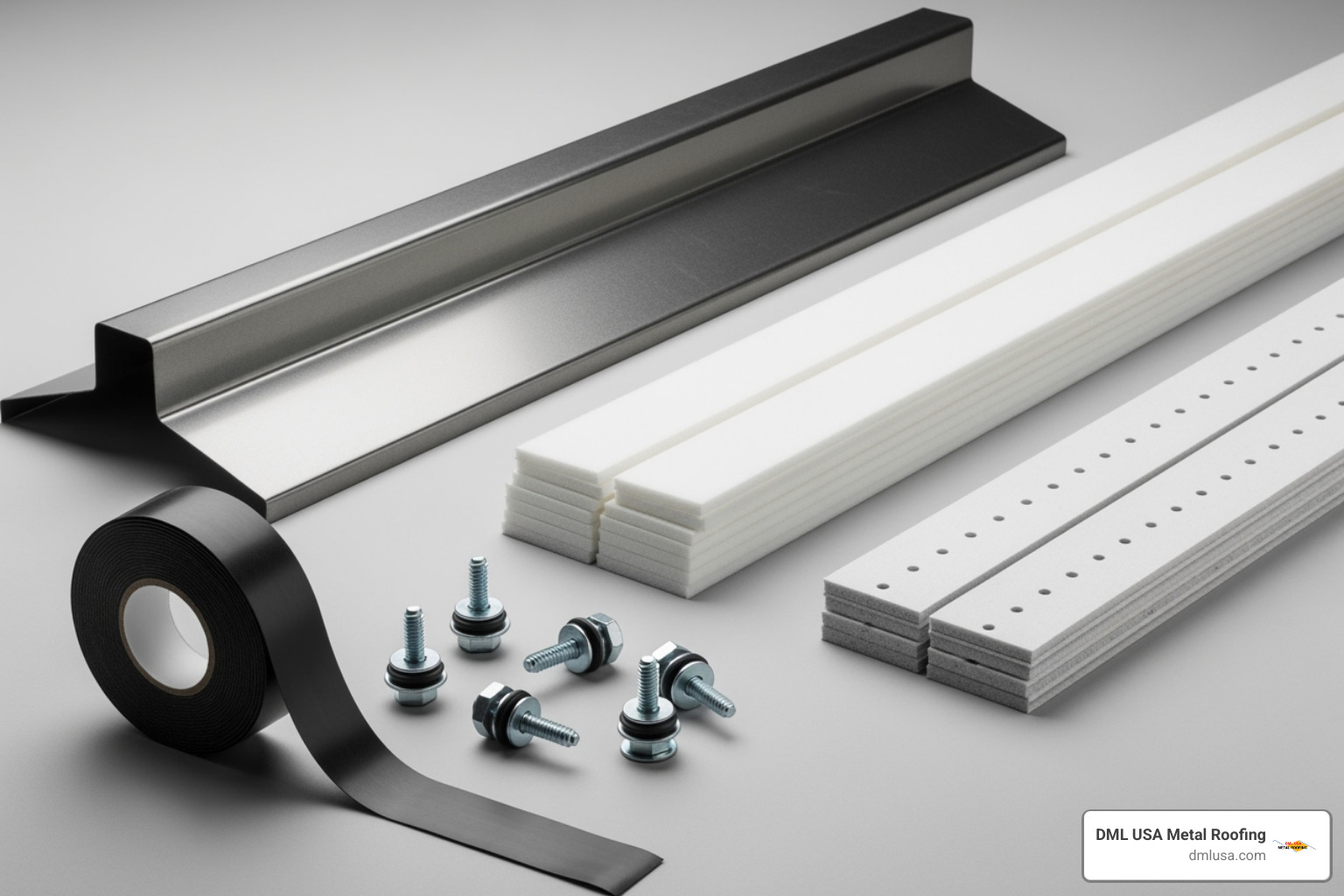
- Closure Strips: These foam pieces fill the gaps between the metal panels and the ridge cap, blocking out pests, debris, and wind-driven rain. They come in solid (for a complete seal) or vented (for attic ventilation) forms.
- Sealant Tape: This self-adhesive butyl tape creates a waterproof gasket between the closure strips, panels, and ridge cap. It is a critical barrier against moisture.
- Specialized Fasteners: Use screws designed specifically for ridge caps. They are longer to penetrate all layers securely and have integrated washers to create a weather-tight seal. Many are color-matched to your roofing.
- Z-Closures and Hemming: In some systems, a metal Z-closure is used for attachment. Hemming, or folding the ridge cap edge over the closure, creates a mechanical interlock for superior wind uplift and moisture resistance.
Step-by-Step Installation Process
Follow these steps for a precise, watertight ridge cap for metal roofing installation. Always consult your manufacturer’s specific instructions, as details can vary.
- Mark Chalk Lines: Center a piece of ridge cap on the peak and mark its lower edges. Snap chalk lines along the entire ridge to guide placement. The line should be about 1/4 inch below where the closure will sit.
- Apply Sealant Tape: Run a continuous strip of sealant tape along the ridge, about 1 inch above your chalk line, to adhere the closure strips.
- Install Closure Strips: Press the closure strips firmly onto the sealant tape along both sides of the ridge. Apply another strip of sealant tape along the top of the installed closures.
- Place the First Ridge Cap: Carefully position the first ridge cap piece, using your chalk lines for alignment. Press it down firmly onto the sealant tape.
- Secure with Fasteners: Drive specialized screws through the ridge cap and closure strips into the underlying structure. Do not overtighten.
- Overlap and Continue: Lap the next ridge cap piece 6 inches over the previous one to ensure a continuous seal. Repeat the placement and fastening process.
- Trim the Final Piece: Measure and cut the last section to fit, maintaining the required overlap, and secure it in the same manner.
Key Considerations for Selecting Your Ridge Cap for Metal Roofing
Selecting the right ridge cap for metal roofing involves balancing function, aesthetics, and performance to serve your home for decades.
First, consider your roof’s pitch (slope). Most standard ridge caps fit a 4/12 pitch, but steeper or shallower roofs require a ridge cap that is custom-formed to match. A poor fit will not seal properly.
For aesthetics, your ridge cap is a highly visible element. Color matching is key to a professional finish. At DML USA Metal Roofing, we offer an extensive palette with durable PVDF/Kynar 500® coatings that resist fading and chalking. The architectural style of your home should also guide your choice; a modern home may suit a low-profile cap, while a traditional home may look better with a more pronounced one.
Your local climate dictates performance needs. In areas with heavy snow loads, the ridge cap must be strong enough to handle the weight. In high wind areas, it must be designed and fastened to resist uplift forces. A key advantage of a metal system is its fire resistance, and the ridge cap for metal roofing is an integral part of that protection. It also provides excellent impact resistance against hail and debris.
Durability, Warranties, and Sourcing
When you invest in a ridge cap for metal roofing, you’re investing in decades of protection. Understanding durability, warranties, and sourcing is crucial.
Material longevity is a major benefit. A quality metal ridge cap can last 45 years or more with minimal maintenance, offering significant long-term value over traditional materials.
Warranties reflect a manufacturer’s confidence. Look for a comprehensive finish warranty (premium PVDF coatings often carry 45-year warranties) to protect against fading and a weathertight warranty to cover performance against leaks.
For sourcing options, going directly to the manufacturer is often best. Our Roof Panel Ridge Caps at DML USA Metal Roofing are engineered for seamless compatibility with our panels, ensuring consistent quality and color matching. For unique projects with non-standard requirements, local fabricators can custom-form metal to your exact specifications, providing a perfect fit.
Conclusion
Your ridge cap for metal roofing is far more than a finishing touch—it’s the cornerstone of your roof’s performance. It seals the peak, protects against moisture, and creates the three-tiered defense that keeps your home safe and dry for decades.
From choosing between vented and non-vented options to selecting the right material like Galvalume® steel, every decision impacts your roof’s longevity. A proper installation creates a weatherproof barrier that withstands harsh weather, from heavy snow to high winds.
The ridge cap for metal roofing you choose is an investment in long-term value, paying dividends through weather protection, energy efficiency, and improved curb appeal.
At DML USA Metal Roofing, we manufacture high-quality components in Illinois because great roofs start with great parts. Our ridge cap for metal roofing options are engineered to work seamlessly with our durable roofing systems, offering the fire resistance, wind protection, and impact durability you need, plus potential energy tax credits that help your wallet.
Ready to complete your project with components built to last? Explore our full range of metal roofing products and see why DML USA Metal Roofing is the choice for homeowners who demand quality and durability.
