 Skip to main content

How to Cut Standing Seam Metal Roofing: Master 2025
Why Proper Cutting Technique Makes All the Difference
How to cut standing seam metal roofing requires the right tools, safety gear, and techniques for professional results. Here’s the essential process:
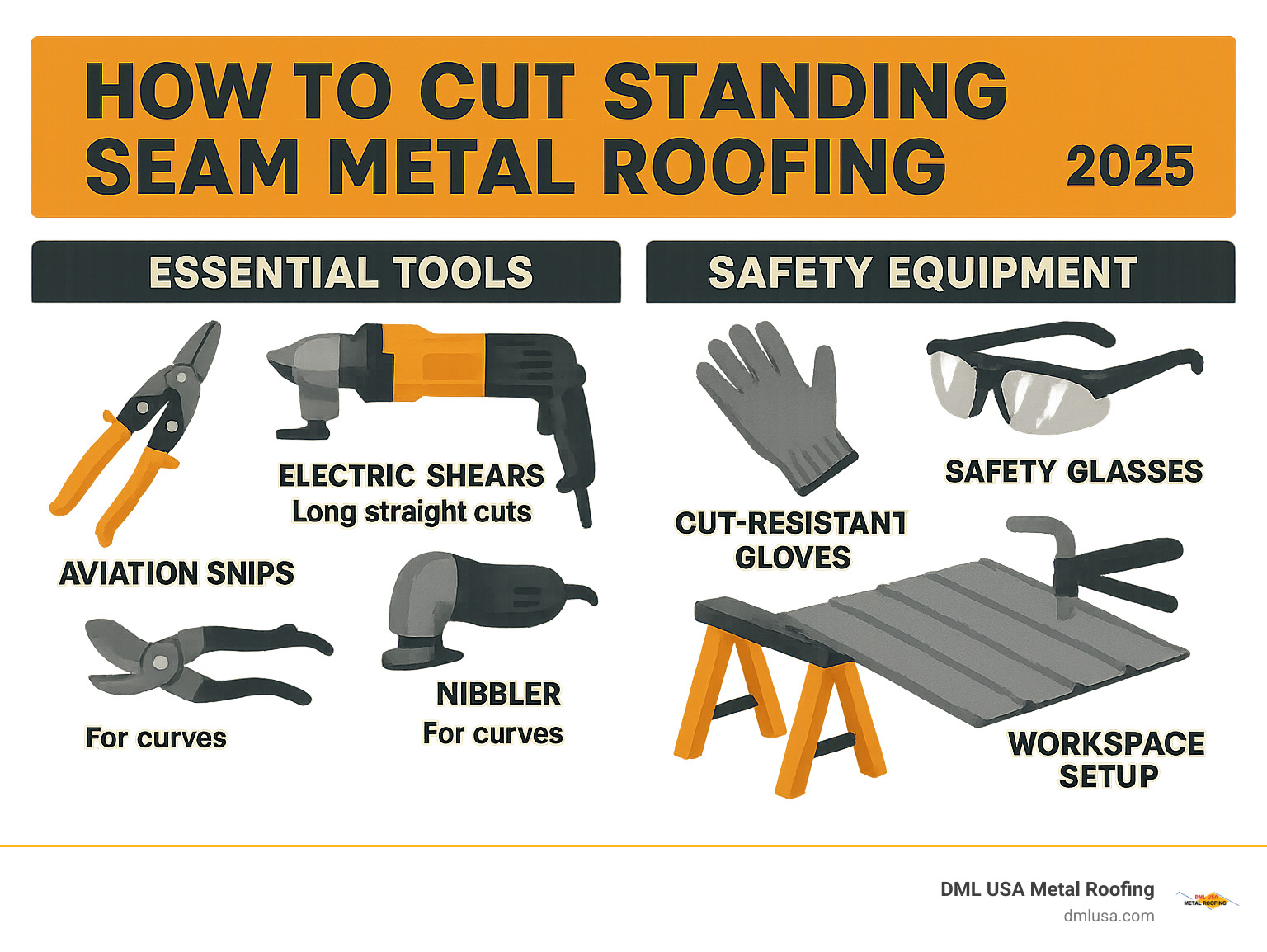
- Essential Tools: Aviation snips, electric metal shears, or nibblers for different cut types
- Safety First: Cut-resistant gloves, safety glasses, ear protection, and long sleeves
- Preparation: Measure twice, mark on the unpainted side, and secure panels with clamps
- Cutting Process: Use steady pressure, make small consistent cuts, and avoid heat-generating tools
- Finishing: Deburr edges, clean metal shavings, and apply rust-resistant primer to cut edges
Standing seam metal roofing offers exceptional durability, but a professional, weather-tight finish depends on precise cutting. The quality of your cuts when trimming panels or creating openings for vents directly impacts the roof’s appearance and performance.
The key to success lies in using the right tools and avoiding common mistakes that can damage protective coatings. Unlike other roofing materials, metal panels require specific cutting methods to preserve their finishes and ensure clean, straight edges.
As Adam Kadziola from DML USA Metal Roofing, I’ve spent over 15 years helping homeowners master how to cut standing seam metal roofing for optimal longevity. My experience has taught me that proper cutting is the difference between a roof that lasts decades and one that fails prematurely.
Learn more about how to cut standing seam metal roofing:
Gearing Up: Essential Preparation Before You Cut
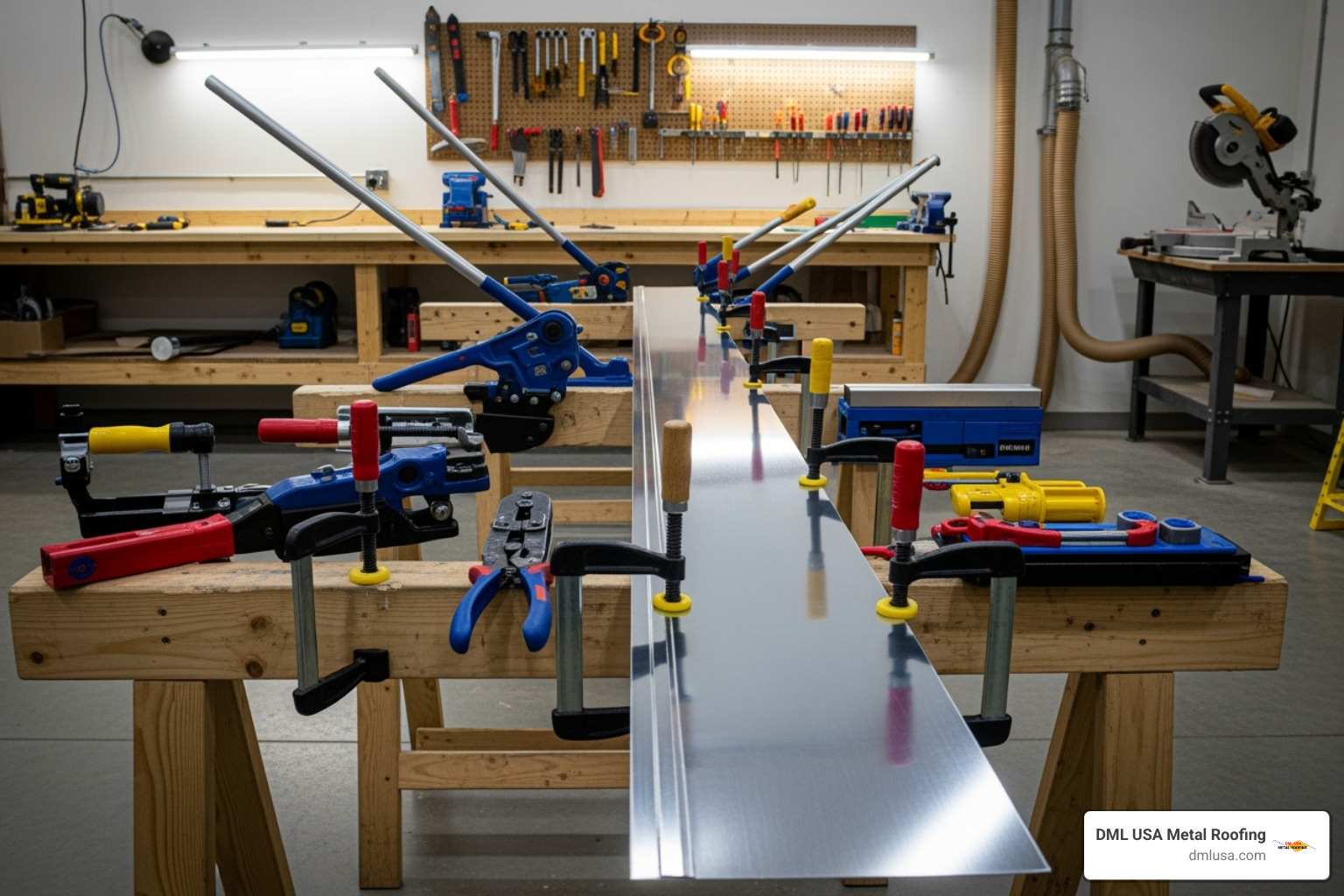
Proper preparation is critical for a smooth, safe cutting process. At DML USA Metal Roofing, we know that getting the safety, tools, and workspace right from the start makes the difference between a professional roof and a frustrating experience.
Essential Tools for How to Cut Standing Seam Metal Roofing
Choosing the right tool preserves the panels you’ve invested in. When learning how to cut standing seam metal roofing, you need tools that handle both flat sections and raised ribs without damaging the protective coating.
Aviation snips are your go-to for precision. These handheld tools excel at small, intricate cuts and notches. They are affordable and portable but can be slow and tiring for long cuts.
Electric metal shears make quick work of long, straight cuts with less physical strain, providing speed and clean edges. They are more expensive and require a power source but are a worthwhile investment for most projects.
Nibblers create clean, curved cuts with minimal distortion by punching out small pieces of metal. They are ideal for openings for vents or pipes but are slower for straight cuts and create significant metal debris that needs careful cleanup.
Circular saws with metal-cutting blades are fast for long cuts but generate heat that can damage panel coatings. If you must use one, turn the panel painted-side down and cut quickly to minimize heat. For beginners, the risks often outweigh the benefits.
Don’t forget a quality measuring tape, a speed square for marking straight lines, and a permanent marker. Never use a graphite pencil, as it is corrosive to metal and will degrade your DML USA panels. C-clamps are essential for securing panels to your work surface, preventing slips and ensuring accurate, safe cuts.
Safety First: Protective Gear and Workspace Setup
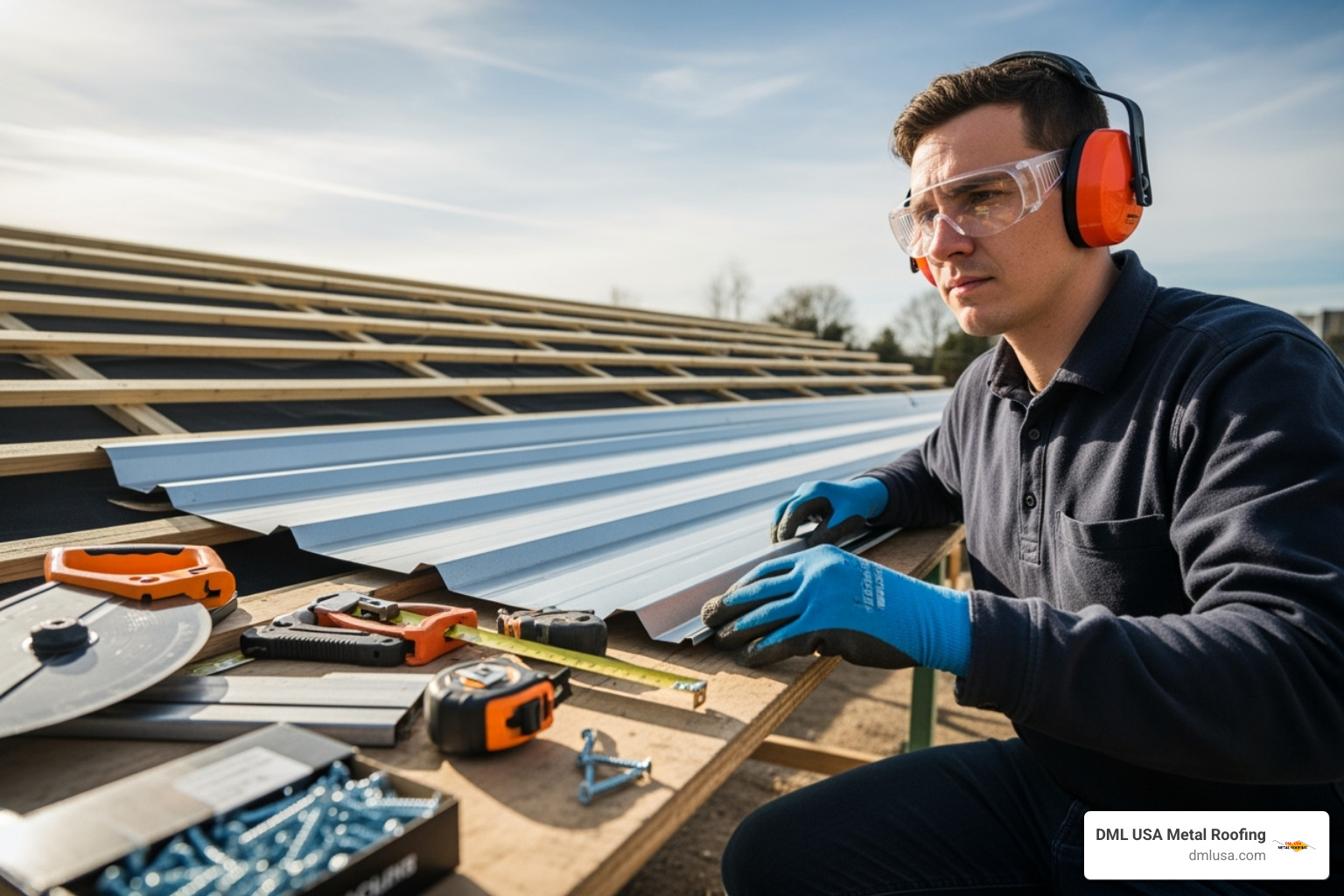
Safety is non-negotiable when cutting metal, as sharp edges and shards can cause serious injuries. We want every DML USA Metal Roofing project to be a safe one.
- Cut-resistant gloves are essential. Heavy-duty, find puncture-resistant options here to protect your hands.
- Safety glasses protect your eyes from flying metal shards.
- Ear protection guards against the loud noise of cutting metal.
- Long sleeves and pants shield your skin from debris.
- A hard hat can prevent head injuries from falling tools or panels.
Your workspace is just as crucial. Always cut on a stable, flat surface like sawhorses, and secure panels with clamps to prevent movement. Lay down tarps to catch metal shavings, making cleanup easier and safer. Keep your work area clear of tripping hazards. If using spark-generating tools, keep a fire extinguisher nearby and ensure good ventilation.
Measuring and Marking Panels for a Perfect Fit
Precision is key, as metal roofing doesn’t forgive errors. The old saying “measure twice, cut once” is your project’s success formula.
Start with accurate measurements of your roof, including overhangs. Use a straightedge or chalk line for long, straight cuts. Always mark on the unpainted side when possible to avoid marring the visible surface. If you must mark the painted side, use a marker that wipes off easily.
Secure panels with C-clamps before marking or cutting to ensure accuracy and safety. Plan your panel layout before cutting to minimize waste. If you have a small gap at the end of a run, consider distributing that distance across two end panels instead of creating one tiny piece. Smart planning reduces waste, saving time and money.
The Step-by-Step Process: How to Cut Standing Seam Metal Roofing
With your panels marked, it’s time to cut. This section walks through the cutting process, from basic straight cuts to handling the unique profile of standing seam ribs. Patience and a steady hand are essential here; rushing will only create more work.
Mastering Straight Cuts: The Foundation of How to Cut Standing Seam Metal Roofing
Straight cuts are the foundation of any metal roofing project. Getting them right is essential for a successful installation.
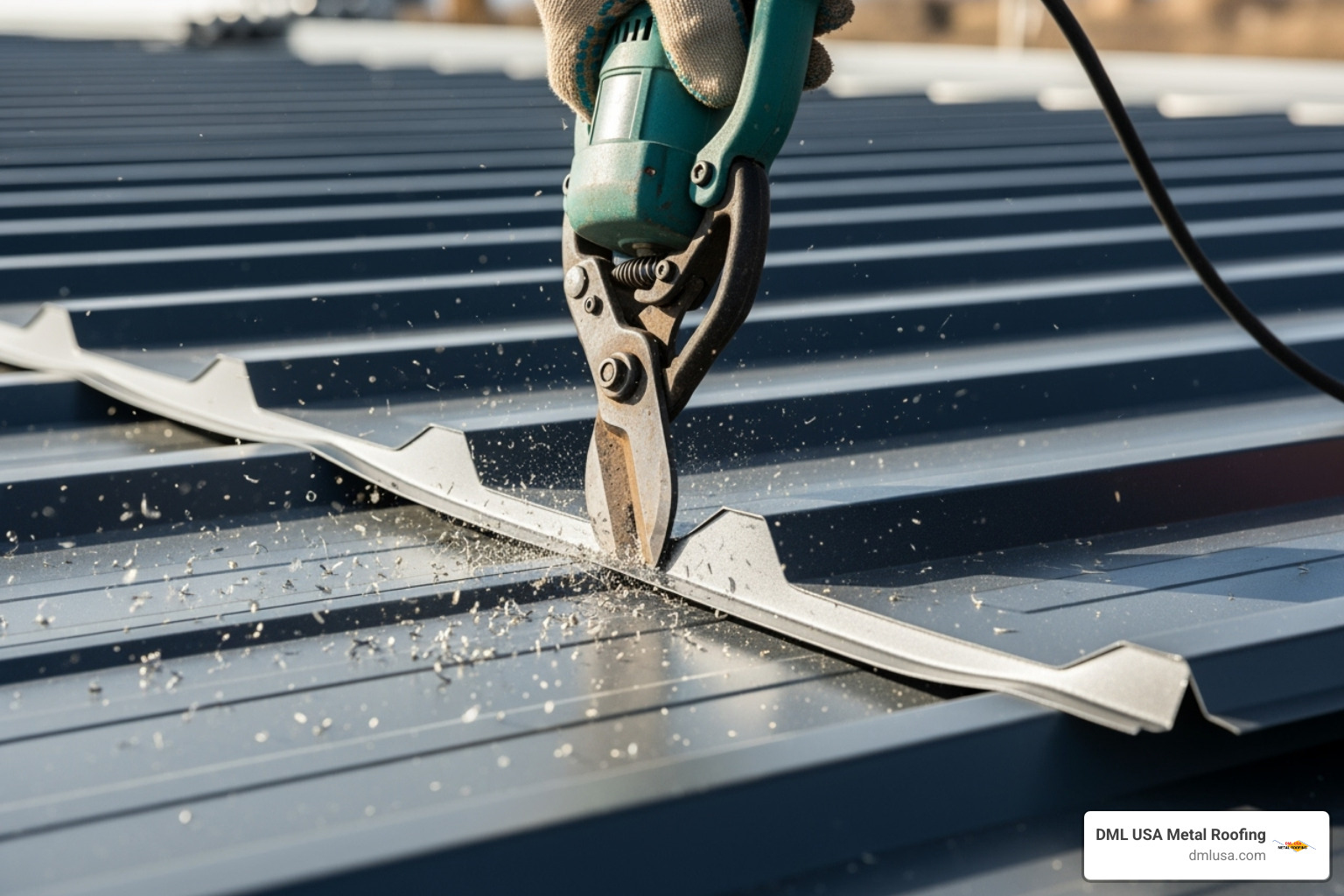
Electric metal shears are my top recommendation for long, clean straight cuts. Align the blade with your marked line and guide the tool steadily, without forcing it.
For very long cuts, a circular saw with a metal-specific blade can be used, but it’s crucial to turn the panel painted-side down. This prevents hot filings from burning the coating, which can cause corrosion and void your warranty. Make quick cuts to minimize heat and preserve the protective Galvalume® coating on our DML USA panels.
Tin snips are useful for shorter straight cuts. Use them like scissors, making small, consistent cuts and rolling the cut metal away from your working line to keep the path clear.
To keep cuts straight, secure your panel firmly to your workbench. Any movement will lead to a crooked cut. Apply steady, consistent pressure and move at a controlled pace for a cleaner result.
Cutting across the flat pan is straightforward, but cutting through the standing seam ribs requires more effort. Maintain a steady pace with power tools. With snips, you may need more force or a series of small snips to work through the thicker profile.
Handling Curves and Notches
You’ll often need to make curved cuts or notches for obstacles and folds. This requires specialized hand tools and patience. Practice on scrap pieces first to get a feel for the tools.
Aviation snips are best for intricate work. The color coding is important:
- Left-cut snips (red handles) for cutting curves to the left.
- Right-cut snips (green handles) for curves to the right.
- Straight-cut snips (yellow handles) for straight lines and starting cuts.
Nibblers are invaluable for clean, precise curves or holes in the middle of a panel, as they minimize distortion. To create an opening, trace your shape, drill a pilot hole large enough for the nibbler’s head, and carefully guide the tool along your line.
Cutting small notches for folds or hems is essential for fabrication work, such as preparing panels for valleys. A small notch on the fold line helps the panel bend without buckling. Aviation snips are perfect for this detailed work.
Post-Cutting Cleanup and Finishing
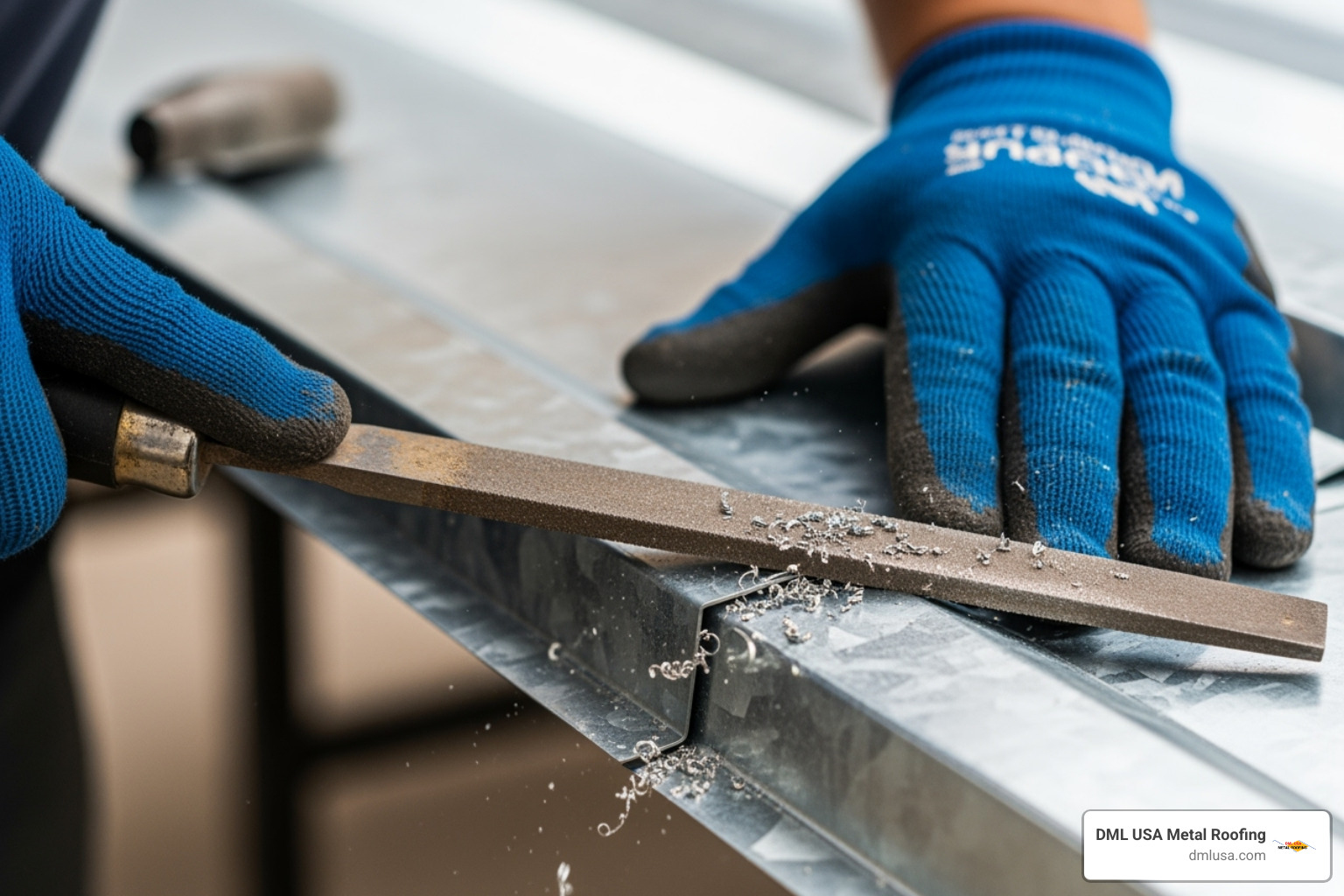
Post-cutting steps are crucial for safety and the longevity of your DML USA Metal Roofing panels.
Deburring edges is your first priority. Freshly cut metal is extremely sharp. Use a metal file or sandpaper to smooth down any burrs, making panels safer to handle and giving them a professional finish.
Cleaning metal shavings is a critical step. These tiny filings (swarf) can embed in the panel’s coating and rust, creating stains. Use a soft-bristle brush or leaf blower to clean all shavings from the panels and work area. Avoid stiff-bristled brooms that can scratch the finish. Dispose of all shavings properly.
Preventing rust on cut edges is your final step. Any exposed raw metal edge is susceptible to rust. For critical or visible areas, apply a high-quality, rust-resistant primer or paint designed for metal. This adds a barrier against moisture, ensuring your roof remains maintenance-free.
Tackling Complex Cuts: Valleys, Hips, and Penetrations
Some roof areas require intricate cuts and careful fabrication. These complex cuts distinguish a professional installation and are where true craftsmanship shows. With patience and the right approach, you can master these techniques for how to cut standing seam metal roofing on complex features.
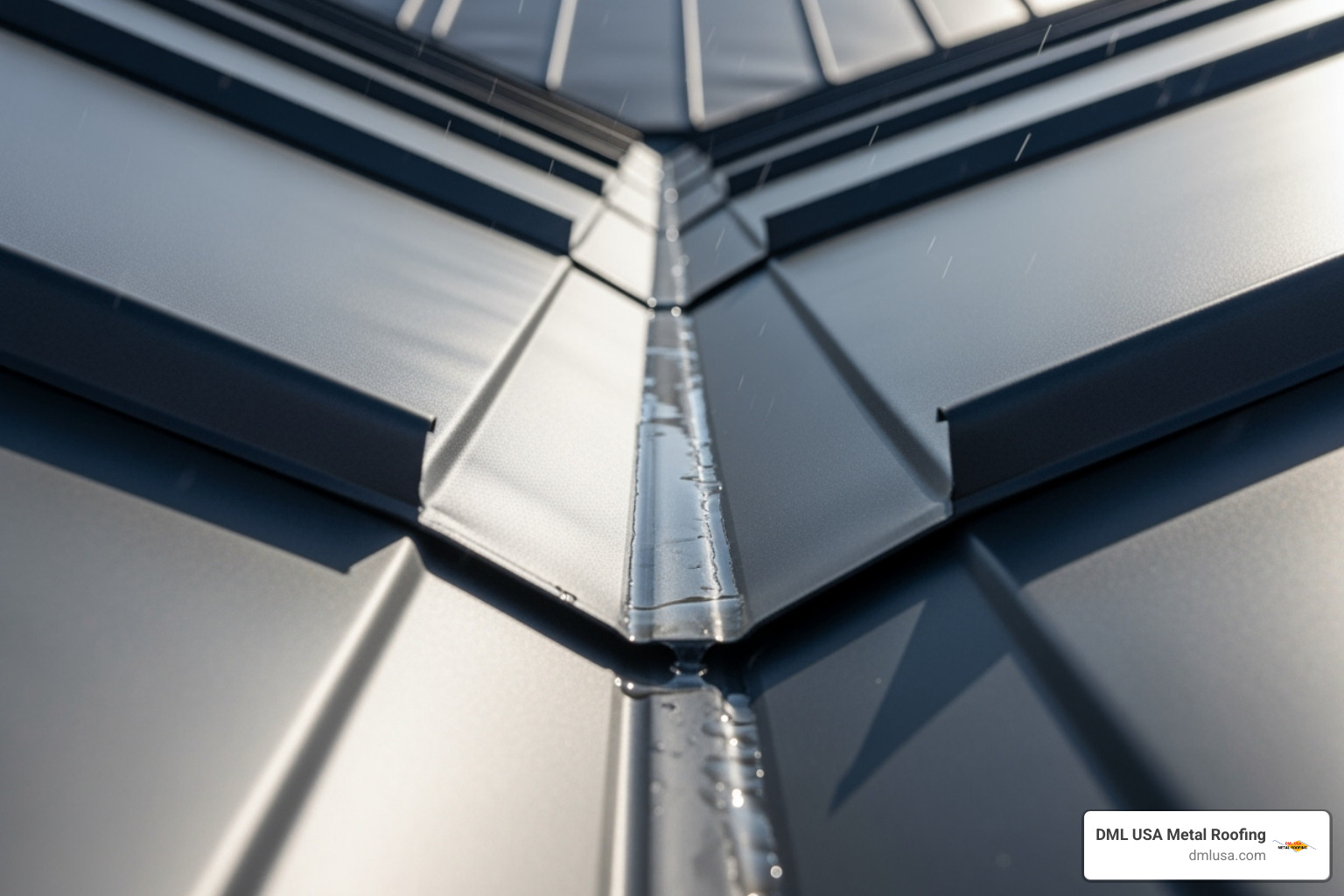
Cutting Panels for Roof Valleys and Hips
Roof valleys and hips involve complex angles that demand precise cutting and fabrication. Every measurement matters.
Finding and marking angles is the first critical step. Transfer the exact angle of the valley or hip onto your panel, often using a template made from scrap. For valley panels, a common method is to make a mark at 11 inches for a fold line, then a second mark at an additional 1¾ inches for the cut line. Use a chalk line or permanent marker—never a corrosive graphite pencil—to clearly mark the angles on your DML USA Metal Roofing panels.
Fabricating valley panels involves both cutting and bending. Use mechanical shears to make clean, long cuts along your marked lines. You may need to cut a small notch on the fold line to help the panel bend without buckling. Carefully bend the panel with a roller bender or hand seamer to the precise angle. This process requires patience.
Ensuring precision for water tightness is crucial. The goal is a watertight seal that lasts for decades. Accurate cuts and a snug fit are essential to prevent leaks and maintain the roof’s integrity and professional aesthetic. For detailed fabrication guides, check out more info about our resources.
Creating Openings for Pipes, Vents, and Skylights
Properly cutting and sealing openings for roof penetrations is critical to prevent leaks. Take your time here.
Tracing the penetration accurately is your foundation. Carefully trace the outline of the pipe, vent, or skylight onto the panel. Pro tip: avoid placing panel seams over penetrations whenever possible to reduce complexity and potential leak points.
Drilling a pilot hole provides a clean starting point. Puncture a pilot hole with a drill inside the traced area, large enough for your cutting tool.
Using tin snips or a nibbler depends on the opening’s shape. For smaller or intricate shapes, insert tin snips into the pilot hole and carefully cut along your traced line. For larger or circular openings, a nibbler excels, punching out small pieces of metal for a clean, smooth edge with minimal panel distortion.
Sealing the penetration is the final, critical step. Use specialized pipe boots, vent flashings, or skylight curbs designed for metal roofs. These components slide over the penetration and are sealed to the panel, creating a watertight barrier. Always follow the manufacturer’s instructions to accommodate the thermal movement of the metal roof.
Frequently Asked Questions about Cutting Standing Seam Panels
Here are answers to the most common questions about how to cut standing seam metal roofing, which will save you time and frustration.
What is the best tool for a beginner to use for cutting metal roofing?
For beginners, I recommend a combination of high-quality aviation snips for small, precise cuts and electric metal shears for long, straight cuts. This pairing offers a great balance of control, safety, and efficiency without the high heat and risk of abrasive saws. You can build your skills and confidence with these tools, which are affordable and effective for achieving professional results.
Can I use an angle grinder to cut standing seam panels?
My answer is always absolutely not. While fast, angle grinders create extreme heat that burns off the panel’s protective galvanized and painted coatings. This damage leads to premature rust and will void your manufacturer’s warranty. Angle grinders also create hazardous sparks and hot metal filings that can embed in the panel’s surface and cause corrosion spots. For the longevity of your roof, stick with the recommended cold-cutting methods.
How do I prevent the metal from warping or bending while I cut?
Warping is preventable with the right technique. Proper support is crucial; ensure your panel is fully supported on a stable, flat surface like sawhorses to prevent flexing. Use sharp blades, as dull tools require more force and can deform the metal. When using snips, make small, consistent cuts instead of large ones to reduce stress on the metal. With power shears, maintain a steady feed rate and let the tool do the work. This combination ensures clean, flat cuts every time.
Your Partner for a Flawless Metal Roof
Mastering how to cut standing seam metal roofing is key to a successful project, ensuring decades of worry-free protection. Every precise cut contributes to better weather sealing, a cleaner aesthetic, and fewer maintenance headaches.
Armed with the right tools, from aviation snips to electric shears, you can tackle any cutting challenge. It’s about making the right cuts that preserve your panels’ protective coatings and ensure long-lasting performance.
At DML USA Metal Roofing, based in Northlake, Illinois, we are passionate about providing high-quality materials that make your installation process as smooth as possible. Our standing seam panels are engineered for durability and workability—they cut cleanly and install beautifully when you follow the proper techniques.
Your properly cut and installed DML USA panels will deliver maintenance-free performance for decades. With exceptional resistance to fire, wind, and impact, you’re investing in true peace of mind. Plus, many of our energy-efficient panels can qualify you for energy tax credits, making your project both smart and economical.
Ready to put your cutting skills to work? Explore our complete selection of metal roofing products and find the perfect panels for your project. We’re here to support you every step of the way—your dream roof is just a few precise cuts away!
