 Skip to main content

Metal Roof Installation Over Shingles: Simple 2025
The Smart Alternative to a Full Roof Tear-Off
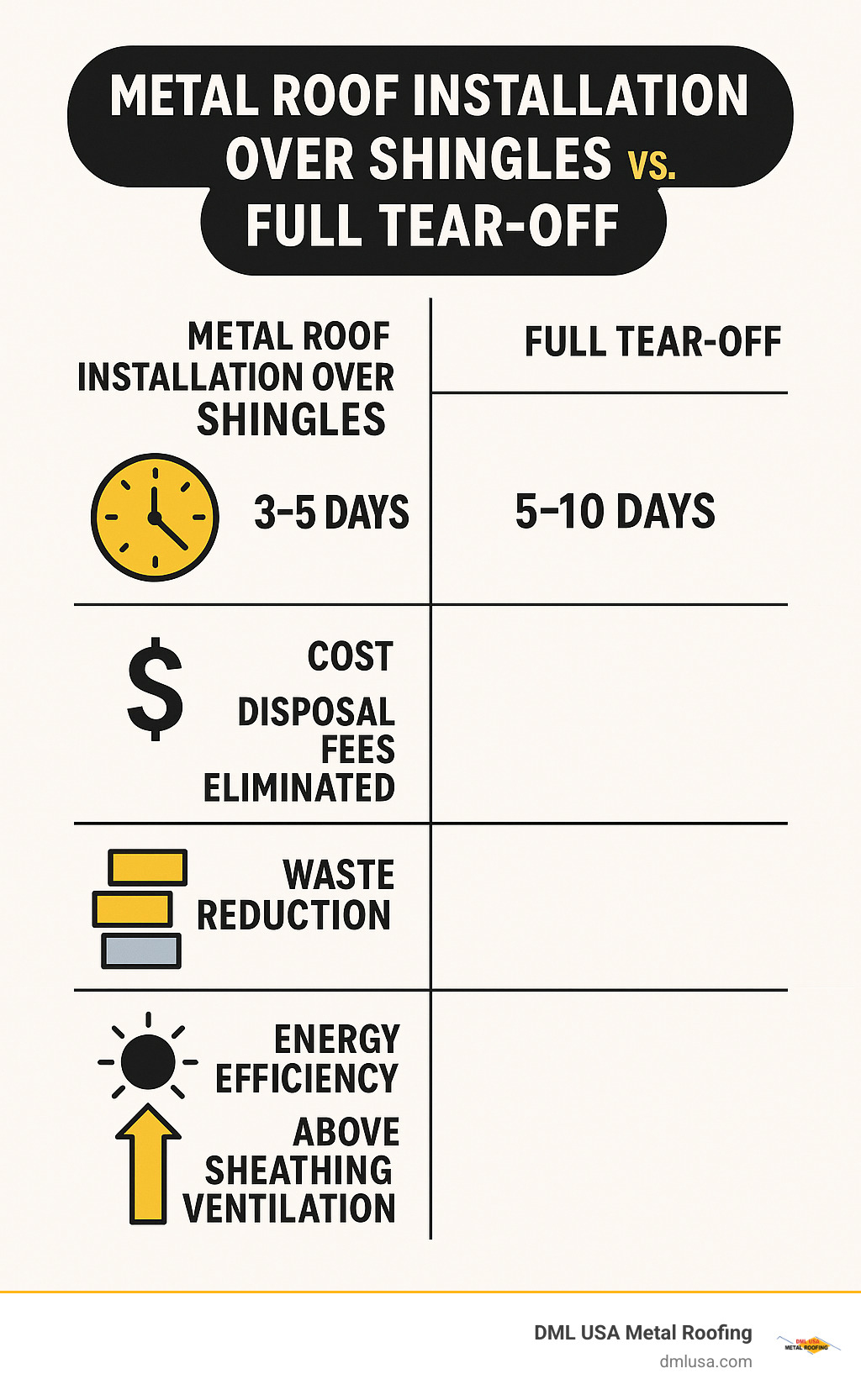
Metal roof installation over shingles is a proven method to upgrade to a durable metal roof without the expense and disruption of removing existing asphalt shingles. Here’s what you need to know:
Quick Installation Process:
- Verify building codes – Most areas allow up to 2 layers of roofing
- Assess existing shingles – Must be in good condition with no widespread damage
- Install protective barrier – Synthetic underlayment prevents moisture and abrasion
- Add furring strips – Creates flat surface and ventilation gap
- Install metal panels – Secure with proper fasteners and overlap correctly
- Finish with trim – Ridge caps, flashing, and vents complete the system
This approach can save homeowners anywhere from a day to a week in installation time and eliminates costly disposal fees for old shingles.
Metal roofing is lightweight—typically one-third to half the weight of asphalt shingles—making it structurally safe to install over existing materials. The key is proper preparation with synthetic underlayment and furring strips to create a flat, ventilated surface that prevents moisture buildup and ensures long-term performance.
Why homeowners choose this method:
- Cost savings – No tear-off labor or disposal fees
- Faster installation – Reduced project timeline
- Environmental benefits – Keeps old shingles out of landfills
- Added protection – Extra layer of weather barrier
- Energy efficiency – Air gap improves insulation
At DML USA Metal Roofing, we’ve seen how metal roof installation over shingles provides a cost-effective path to long-term durability. This guide will walk you through everything you need to know to make an informed decision about this smart roofing solution.
Terms related to metal roof installation over shingles:
Why Install a Metal Roof Over Your Existing Shingles?
When facing aging asphalt shingles, metal roof installation over shingles offers a refreshing alternative to a messy, expensive tear-off. It’s a brand-new roof without the usual headaches.
This approach is highly cost-effective. You get a premium metal roof while keeping your existing shingles as an extra protective layer. This means no disposal fees, labor savings from avoiding tear-off work, and a faster installation.
The benefits extend beyond upfront savings. It’s an environmentally conscious choice that creates reduced landfill waste and gives you a roof built to last for decades.
The Best Longevity of Metal
Metal roofing truly shines in its longevity. While asphalt shingles might last 12 to 20 years, a quality metal roof delivers an impressive 40 to 70 year lifespan. That’s 2-3 times longer than shingles, meaning this could be the last roof you ever need to install.
Minimal maintenance is another game-changer. Metal roofing offers superior weather resistance, standing strong against heavy rain, hail, and high winds. It’s also naturally fire resistant and immune to rot, termites, and other pests.
This durability translates to real peace of mind. You can stop worrying after every storm, confident that your home is protected by one of the most resilient roofing materials available.
Significant Cost and Time Savings
Traditional roof replacement means avoiding tear-off labor costs, which can be substantial. You also are eliminating shingle disposal costs.
The installation process creates less project disruption to your daily routine. You’re looking at faster project completion—often saving a day to a week compared to a full replacement. That means fewer days of construction noise and significantly reduced mess around your property.
An Eco-Friendly Roofing Choice
Choosing metal roof installation over shingles is an environmentally responsible decision. You’re actively diverting shingles from landfills.
Furthermore, metal roofing is 100% recyclable at the end of its long lifespan, contributing to a circular economy. This creates a reduced carbon footprint for your home and supports sustainable building practices.
The energy savings are impressive too—homeowners can save up to 40% on energy costs thanks to metal’s reflective properties and the added insulation layer from the shingles underneath.
When you combine longevity, durability, wind resistance, and energy efficiency, it’s clear why so many homeowners find that metal roofing offers the perfect blend of performance and value.
Pre-Installation Checklist: Is Your Roof Ready for an Overlay?
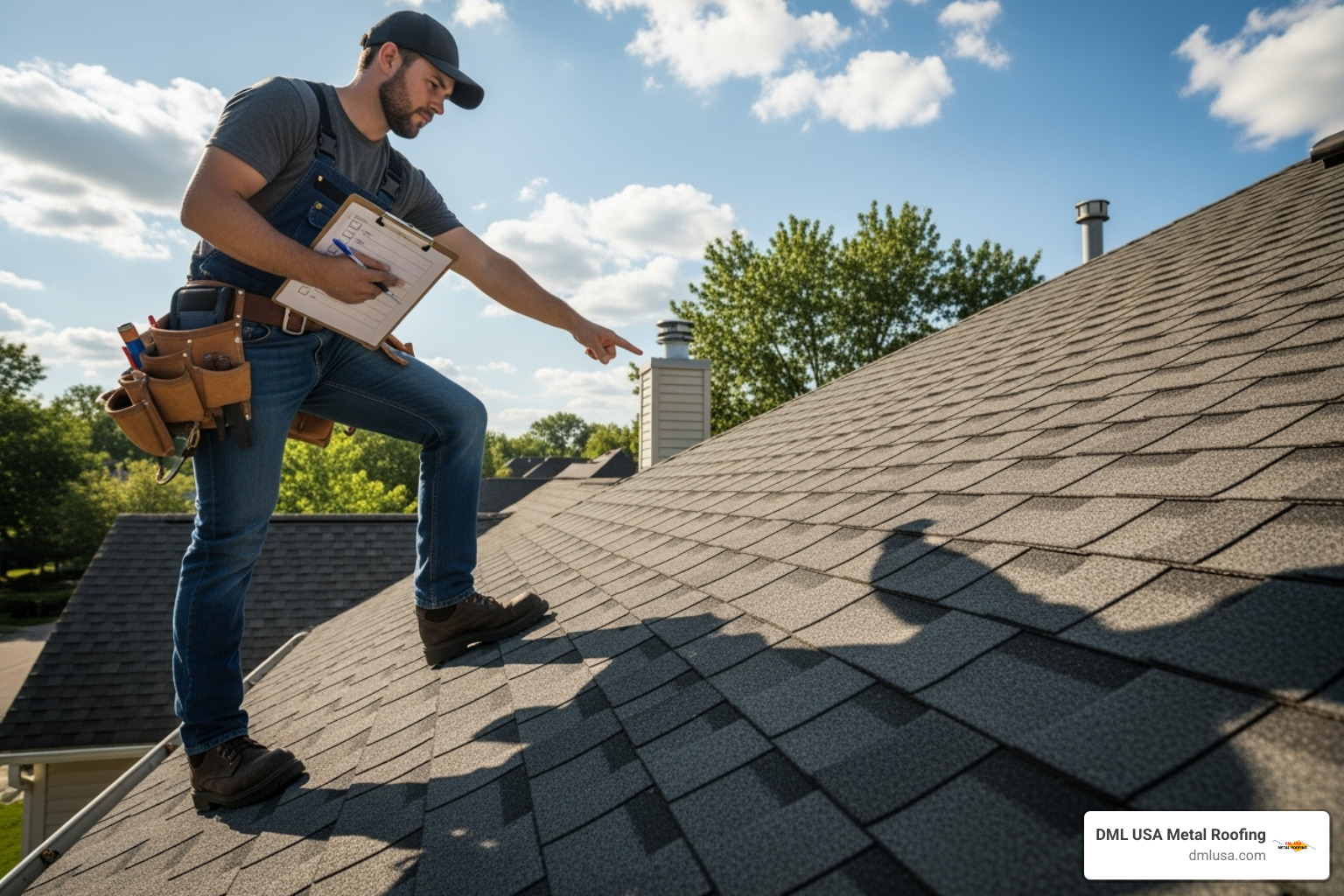
Before laying down your new metal roof, it’s crucial to ensure your existing roof is a suitable candidate for an overlay. A thorough inspection now can prevent significant issues down the line.
1. Verify Local Building Codes
The first step is to consult your local building department. Building codes are a critical factor, and what’s permitted can vary significantly. Many areas allow a new roof over an existing one, but there’s often a limit, typically two layers.
It’s essential to understand:
- The maximum number of roofing layers permitted in your area.
- Any specific weight limitations or structural requirements for overlays.
- Whether a permit is required for this type of installation.
Confirming these details upfront ensures your project remains compliant and avoids costly rework. For more on this technique, check out this white paper by the Metal Construction Association.
2. Assess the Existing Shingle Roof’s Condition
The condition of your existing shingle roof is paramount, as it forms the base for your new metal roof. Here’s what to look for:
- Layer Count: Ideally, you should have only one existing layer of asphalt shingles. If you already have two, you’ll likely need to remove one to comply with building codes.
- Overall Integrity: The shingles should be relatively flat, without extensive curling or widespread damage. Minor issues are manageable, but if the shingles show widespread deterioration, a full tear-off is the safer option.
- Structural Soundness: The underlying shingle roof must be structurally sound. A roof with cosmetic hail damage but a sound structure, for example, is often a perfect candidate for an overlay.
Any areas with significant damage must be addressed. A poor surface can lead to issues like “oil canning” (a wavy appearance) in your new metal panels.
3. Inspect the Underlying Roof Deck and Structure
This step is critical for long-term performance. The foundation beneath the shingles must be solid and capable of supporting the new roof.
- Deck Condition: Inspect the plywood or OSB sheathing for signs of water damage, rot, or sagging, often by checking from the attic. If the roof deck is compromised, the damaged areas must be repaired or replaced before installing a new metal roof. Overlaying a damaged deck is destined for problems.
- Structural Support: While metal roofing is lightweight, confirm that your rafters and trusses can support the combined weight of the existing shingles and new metal panels. Most residential structures can handle this, but a professional assessment ensures peace of mind.
By diligently completing this pre-installation checklist, you lay the groundwork for a successful, long-lasting metal roof installation over shingles.
A Step-by-Step Guide to Metal Roof Installation Over Shingles
Once your roof passes the pre-installation checklist, the installation begins. While professional installation is recommended, understanding the steps helps you appreciate the craftsmanship involved and ensure quality results.
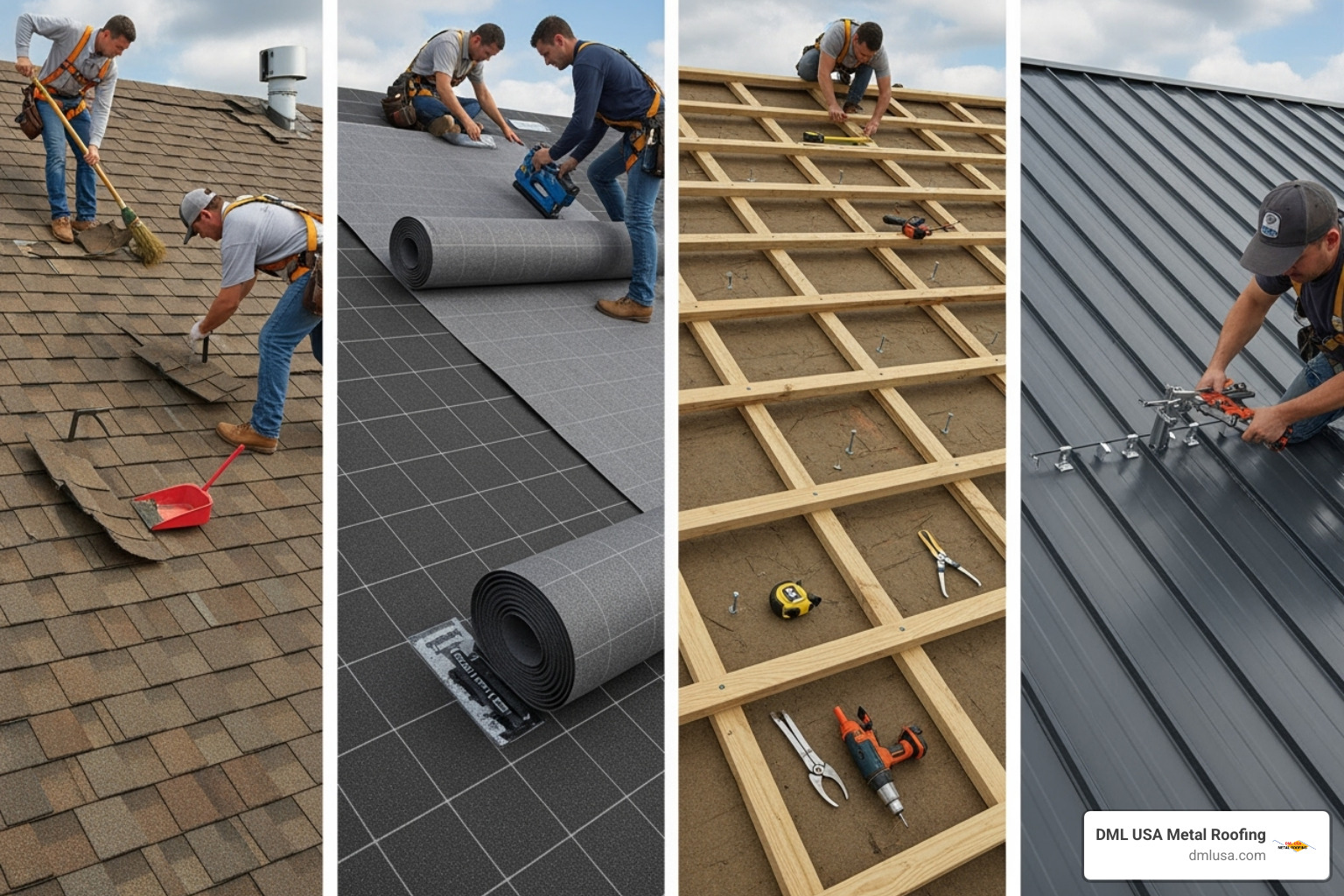
Step 1: Prepare the Existing Roof Surface
Proper preparation of the existing shingle surface is essential to create the best foundation for your new metal roof.
First, thoroughly clean the existing shingles, removing all dirt, debris, and loose granules.
Next, secure any loose or damaged shingles. Re-nail loose tabs and use roofing cement to flatten curled edges to create as flat a surface as possible.
The shingles at the eaves and rakes (gable edges) are trimmed back to make room for new drip edge.
Finally, we install fresh drip edge along the eaves and rake edges to direct water away from the roof edge and into your gutters.
Step 2: Install a Protective Barrier and Furring System
This step is key to a successful metal roof installation over shingles, providing protection, ventilation, and a level surface for the metal panels.
Materials you’ll need:
- High-quality synthetic underlayment
- 1×4 or 2×4 furring strips (pressure-treated if touching metal, with a barrier)
- Fasteners designed for wood and metal
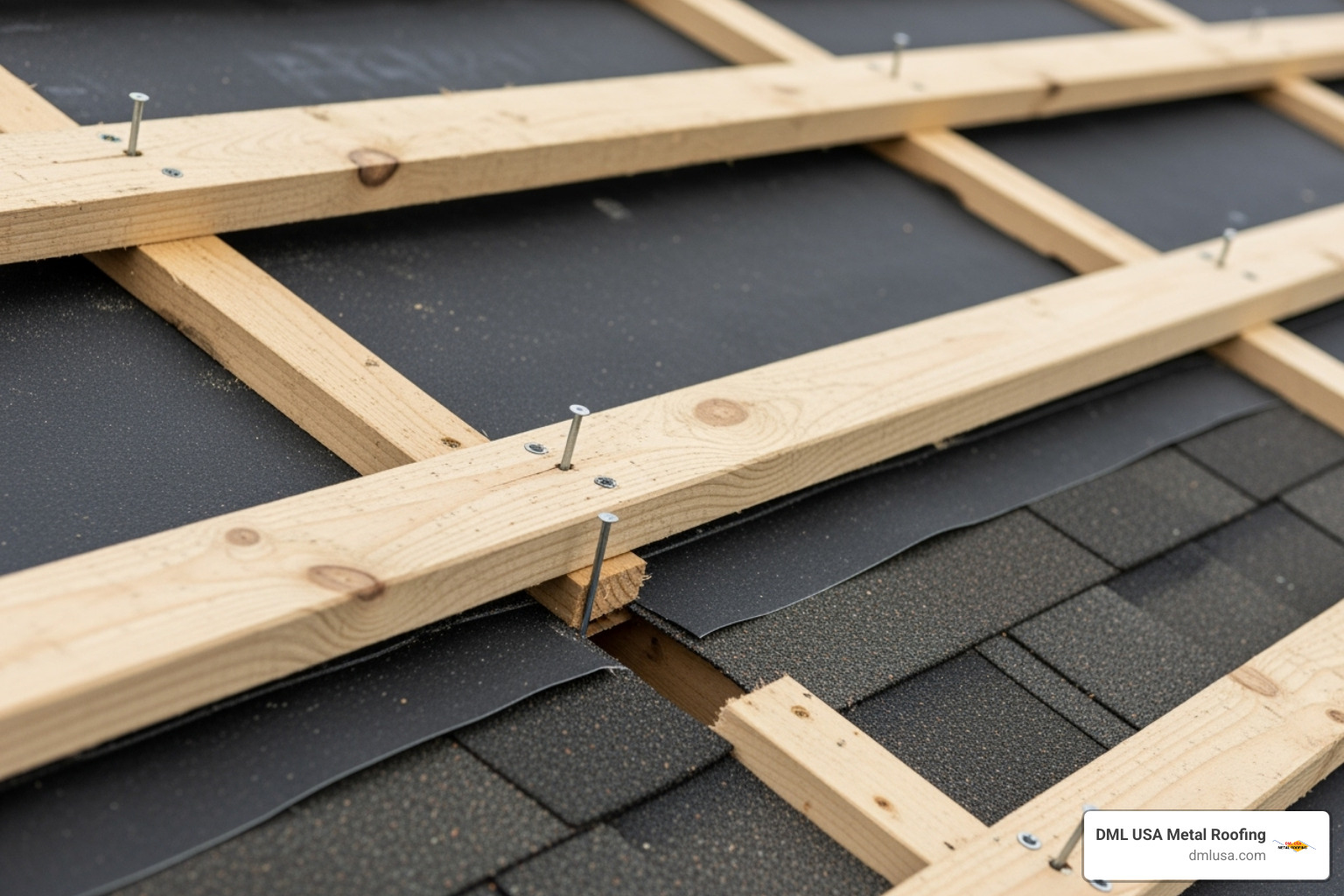
First, lay a high-quality synthetic underlayment over the shingles. This is essential, as the abrasive granules on shingles can scratch metal panels as they expand and contract. This underlayment prevents damage that paint warranties often won’t cover. Unlike felt paper, synthetic underlayment is built to last the life of your metal roof.
Next, install furring strips (typically 1x4s or 2x4s) horizontally, screwing them into the roof rafters. This creates a solid, level foundation and prevents “oil canning” (a wavy appearance) caused by an uneven shingle surface.
The furring strips create a vital air gap of 3/4″ or more, known as Above Sheathing Ventilation (ASV). This airspace allows heat to dissipate instead of transferring into your attic, potentially reducing your electrical bills by 20-30%. ASV also prevents moisture buildup and allows the metal to expand and contract freely.
If using pressure-treated lumber for furring, a barrier like synthetic underlayment is needed between the wood and metal panels to prevent corrosion.
Step 3: The Metal Roof Installation Over Shingles
With the prep work done, it’s time to install your metal panels. This is where your roof transforms into a durable, beautiful shield.
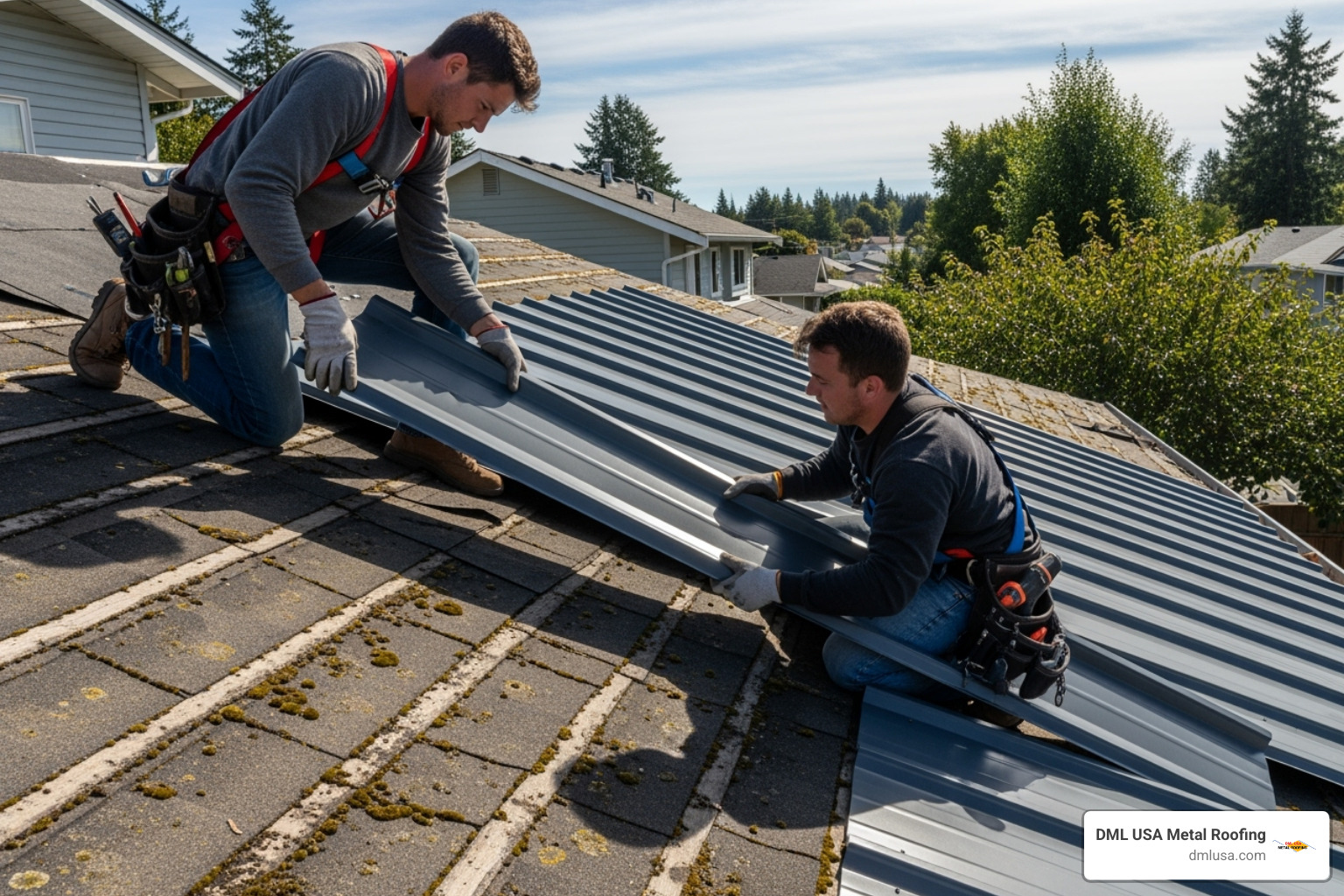
We start with careful panel layout planning to minimize waste and ensure a symmetrical look.
The first panel is absolutely critical for alignment. We ensure it’s perfectly square to the eave, using the furring strips as a guide.
Securing the panels requires specialized screws with gasketed heads. While there’s debate on placement (ribs vs. flats), we always follow manufacturer guidelines for fastening schedules to ensure maximum hold and warranty compliance.
For panels that meet, proper seaming or overlapping creates watertight seals.
As we progress, we precisely cut panels to fit around roof features like chimneys and vent pipes, ensuring every penetration gets a tight, weatherproof seal. Our Metal Roofing Products are manufactured for a seamless installation.
Step 4: Finishing with Trim, Flashing, and Vents
The final touches are crucial for a professional, watertight result.
Ridge caps cover the roof’s peak, providing a watertight seal and often incorporating ventilation. We may recommend upgrading to a continuous ridge vent for better airflow.
Gable trim is installed along rake edges for a clean finish. Valley flashing is installed before panels in valleys to direct water flow.
All pipes, chimneys, and wall intersections require specific flashing to create watertight seals. Eave trim covers the roof edge at the eaves for a finished look.
Restoring proper ventilation is essential. The air gap from furring strips (ASV) works with intake (soffit) and exhaust (ridge) vents to prevent moisture buildup and maintain energy efficiency.
Once all trim and flashing are installed, a final inspection ensures every detail is perfect. You can see examples of our finished work in our Project Gallery.
Potential Drawbacks and Key Considerations
While metal roof installation over shingles offers numerous advantages, it’s important to understand the full picture. Being aware of these considerations upfront helps ensure you’re satisfied with your investment.
Key Considerations for Metal Roof Installation Over Shingles
“Telegraphing” can occur if the existing shingle roof is uneven, causing imperfections to show through the new metal panels. This is a purely aesthetic issue that doesn’t affect performance and is easily prevented with proper preparation using furring strips to create a flat surface.
Proper ventilation is critical for long-term success. Without adequate airflow, trapped moisture can lead to mold and rot. This is why Above Sheathing Ventilation (ASV) is essential, not just a nice-to-have feature.
Your warranty protection deserves careful attention. Not all metal roofing warranties cover installation over existing shingles, so verify this before starting. Additionally, a protective barrier is crucial to prevent abrasion from shingles, which can cause rust that may not be covered by paint warranties.
Choosing the right fasteners is a critical detail. Using screws designed for metal roofs, with proper gaskets, and following manufacturer recommendations makes the difference between a watertight roof and future headaches.
Is Professional Installation Required?
Metal roof installation over shingles is a job for professionals, not a DIY project.
- Technical Complexity: The process involves precise measurements, specialized cutting, and understanding how metal expands and contracts. It’s far more complex than installing shingles.
- Specialized Tools: The job requires tools for cutting, seaming, and fastening metal that most homeowners don’t own.
- Safety Concerns: Roofing has inherent risks like falls and cuts. Professionals are trained in safety protocols and have the right equipment to work safely at height.
- Warranty Compliance: Many manufacturers require professional installation for their warranties to remain valid. An experienced contractor ensures all guidelines are met, protecting your investment.
When you hire qualified professionals, you’re buying peace of mind. They can properly assess your existing roof and ensure you get a durable, watertight, and beautiful finish that will protect your home for decades.
Frequently Asked Questions about Metal-Over-Shingle Installations
Here are answers to the most common questions we receive about metal roof installation over shingles.
Can any type of metal roof be installed over shingles?
Yes, most metal roofing systems, including standing seam panels and exposed fastener systems, can be installed over shingles. The key is proper preparation, typically using furring strips to create a flat, stable, and ventilated surface for the new metal panels. Furring strips create a new, flat deck over the old shingles, ensuring a smooth finish. This makes virtually any metal panel profile a viable option for your home.
How does a metal roof overlay affect my home’s energy efficiency?
It significantly improves it. The old shingles provide an extra layer of insulation. More importantly, the air gap created by installing the metal roof on furring strips (Above Sheathing Ventilation or ASV) allows heat to dissipate instead of transferring into your attic. This keeps your home cooler and can lead to savings of up to 40% on energy costs. Combined with the natural reflectivity of metal, this helps reduce your utility bills.
Will installing a metal roof over shingles make it noisy when it rains?
This is a common myth. When installed correctly over existing shingles with a proper underlayment and furring strips, a metal roof is not noticeably louder than other roof types. The existing shingle layer, the air gap, and the underlayment all act as excellent sound dampeners. Many homeowners find the gentle sound of rain on their new roof to be quite soothing. Proper installation is key to ensuring your new roof is quiet, durable, and energy-efficient.
Your Long-Term, Durable Roofing Solution
A metal roof installation over shingles is one of the smartest investments you can make in your home. It offers all the benefits of a premium metal roof without the cost and hassle of a full tear-off.
You’re getting a roofing system that can last 40 to 70 years with minimal maintenance, while saving money upfront and protecting the environment.
The beauty of this approach lies in its effectiveness. By following the proper installation steps—from verifying your roof is a suitable candidate to ensuring proper ventilation with furring strips—you’re setting yourself up for decades of worry-free protection. The result is a roof that’s more durable and efficient than what you started with.
At DML USA Metal Roofing, we’ve seen countless homeowners transform their roofs using this method. Our Illinois-made metal roofing products are specifically designed for superior durability and maintenance-free performance. They offer high resistance to fire, wind, and impact – often qualifying for energy tax credits that can help offset your investment costs.
The peace of mind that comes with a properly installed metal roof is invaluable. It’s a long-term solution that protects your home from storm damage, frequent repairs, and high energy bills.
Ready to explore your options? Our full range of metal roofing products offers the quality and durability you need for your next roofing project. With proper installation over your existing shingles, you’ll have a roof that’s built to last.
