 Skip to main content

Metal roof installation DIY: Simple 2025 Guide
Why Metal Roof Installation DIY is a Game-Changer for Smart Homeowners
Metal roof installation DIY is becoming increasingly popular among homeowners who want to save thousands on labor costs while installing a roof that can last 40-70 years. According to industry data, DIY installation can save up to 45% of the total project cost, with some homeowners completing a 1,000 square foot metal roof for under $500 in materials.
Quick Answer for DIY Metal Roof Installation:
- Feasibility: Yes, for exposed fastener systems on simple roofs
- Time Required: 2-7 days depending on roof size and complexity
- Skill Level: Intermediate to advanced DIY skills needed
- Cost Savings: Up to 45% compared to professional installation
- Best Panel Type: Corrugated or ribbed panels for beginners
- Key Requirements: Safety equipment, proper tools, and 1-2 helpers
The appeal is clear. As one Reddit user shared about their garage project: “I re-did my 1000 sq ft garage roof with exposed fastener metal roofing in a long weekend for under $500.” But while the potential savings are significant, success depends on honest assessment of your skills, roof complexity, and commitment to safety.
Metal roofs offer best durability – surviving hurricanes, hail, and wildfires while requiring virtually no maintenance. They’re energy efficient, reflecting the sun’s heat to reduce cooling costs (you can check ratings on the Cool Roof Rating Council’s database), and they’re completely recyclable at the end of their long lifespan.
However, this isn’t a project for everyone. Standing seam systems and complex roof geometries are typically best left to professionals, while simpler exposed fastener systems on basic roof shapes can be tackled by skilled DIYers.
I’m Adam Kadziola, and after founding DML USA Metal Roofing in 2007, I’ve helped thousands of homeowners understand metal roof installation DIY projects through our manufacturing expertise and customer guidance. My experience in both manufacturing high-quality roofing materials and home renovations gives me unique insight into what makes DIY metal roofing successful – and when to call the pros.
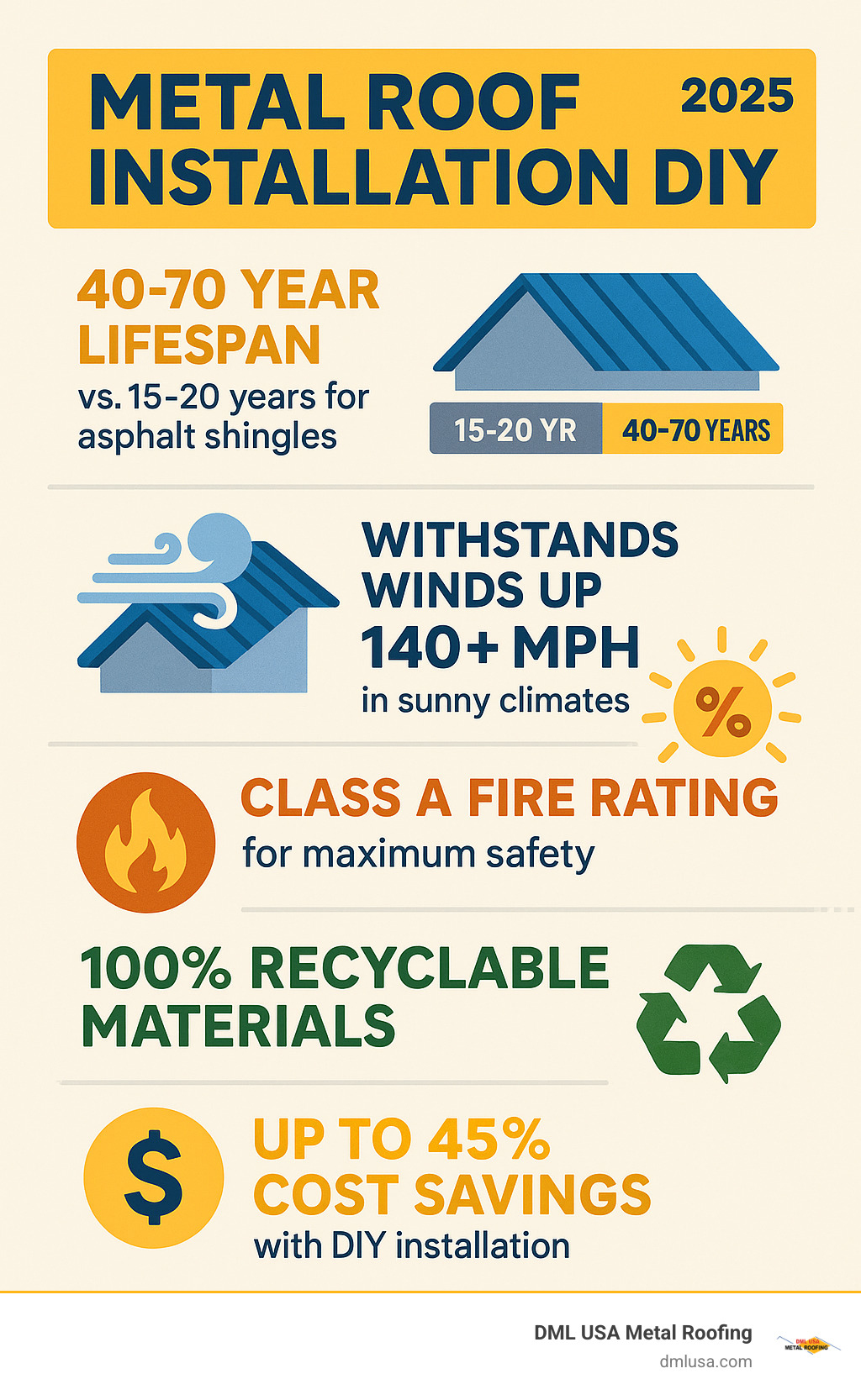
Metal roof installation DIY definitions:
Before You Begin: Is DIY Metal Roof Installation Right for You?
So, you’re thinking about tackling a metal roof installation DIY project? I completely understand the excitement! There’s something incredibly satisfying about changing your home with your own hands while saving thousands of dollars in the process. But before we roll up our sleeves and start measuring panels, let’s have an honest conversation about whether this ambitious project makes sense for you and your specific situation.
The truth is, not every roof is a good candidate for DIY installation, and not every homeowner has the skill set needed for success. But don’t worry – by the end of this section, you’ll have a clear picture of what it takes and whether you’re ready for the challenge.
Assessing the Project Scope and Your Skills
The biggest factor in determining whether metal roof installation DIY is right for you comes down to two things: your roof’s complexity and your comfort level with demanding physical work.
Let’s start with roof complexity. If you have a simple gable roof – think basic A-frame like you’d find on a garage, shed, or straightforward ranch home – you’re in great shape for a DIY project. These roofs have minimal valleys, few penetrations, and predictable angles that make installation much more manageable.
On the flip side, if your roof looks like it belongs in a fairy tale with multiple dormers, complex valleys, and various pitch changes, you might want to reconsider. Each additional angle and obstacle multiplies both the time and skill required exponentially.
Roof pitch also plays a crucial role. Low-slope roofs (less than 3:12 pitch) require extremely careful sealing techniques to prevent water intrusion, while steep pitches present serious safety challenges that demand robust fall protection systems.
Then there are the obstacles like chimneys and skylights. Each penetration through your roof needs meticulous flashing and sealing work. This is where many well-intentioned DIYers run into trouble – one poorly sealed chimney can turn your dream project into a nightmare of leaks and water damage.
Now let’s talk about you. Are you genuinely comfortable with heights? I can’t stress this enough – you’ll spend hours on ladders and walking around on your roof. If the thought makes you queasy, this isn’t the project for you, and there’s no shame in that.
You’ll also need physical strength for lifting panels, especially longer ones that can be heavy and awkward to maneuver. Basic carpentry skills are essential too – accurate measuring, precise cutting, and confident tool use are non-negotiable.
Here’s something many people don’t consider: having 1-2 helpers isn’t just recommended, it’s practically essential. Whether you’re managing tear-off debris, lifting long panels, or simply having someone spot you on a ladder, extra hands make the job safer and much more efficient.
Choosing the Right Type of Metal Roof for a DIY Project
Not all metal roofing systems are created equal when it comes to DIY installation. Your choice here can make the difference between a successful weekend project and a frustrating ordeal.
Exposed fastener panels – typically corrugated or ribbed designs – are your best friend as a DIYer. The screws with neoprene washers are visible on the surface, and the straightforward fastening method is forgiving for beginners. These systems are also the most affordable option, making them perfect for first-time metal roof installers.
Metal shingles offer a beautiful aesthetic that mimics traditional materials like slate or tile. While they’re more intricate than corrugated panels with more cuts and overlapping required, they’re still within reach for determined DIYers with good attention to detail.
Standing seam panels, however, are a different beast entirely. These systems feature concealed fasteners and interlocking seams that create that sleek, modern look you see on high-end homes. While they offer superior weather resistance, the installation complexity puts them firmly in professional territory for most homeowners.
When it comes to materials, steel offers the best combination of durability and affordability for DIY projects, while aluminum provides excellent corrosion resistance, especially if you live near the coast.
For more detailed information about the advantages of metal roofing systems, I encourage you to explore our Why Choose Metal Roofing page. You can also browse various metal roofing options on the DML USA Metal Roofing website to find the perfect match for your project and skill level.
Understanding the Costs and Potential Savings
Let’s talk numbers – because the potential savings are probably what got you interested in metal roof installation DIY in the first place. By eliminating labor costs, you can potentially save up to 45% of the total project expense, which often translates to thousands of dollars staying in your pocket.
| Factor | DIY Metal Roof Installation | Professional Installation |
|---|---|---|
| Total Cost | Materials + permits + tool rental (save up to 45% on labor) | Materials + labor + permits + markup |
| Time | 2-7 days depending on roof size and help available | 1-3 days with full crew |
| Skill Level | Intermediate to advanced DIY skills required | Professional expertise included |
| Warranty | Material warranty only; workmanship warranty depends on your skill | Both material and workmanship warranties |
Material costs will be your biggest expense, typically ranging from $3-8 per square foot depending on the panel type and quality you choose. Don’t forget to budget for tool rental fees if you don’t own everything needed, permit fees from your local municipality, and waste disposal costs for old roofing materials.
The return on investment for metal roofing is excellent regardless of installation method. These roofs last 40-70 years with minimal maintenance, provide energy savings through heat reflection, and often increase your home’s value. When you factor in the labor savings from DIY installation, the financial benefits become even more compelling.
For help with budgeting and planning your project, check out our Metal Roofing Resources page, which offers valuable tools for calculating costs and understanding the investment you’re making in your home’s future.
The key is being realistic about your capabilities and honest about your roof’s complexity. If everything aligns, metal roof installation DIY can be one of the most rewarding home improvement projects you’ll ever tackle.
Introduction
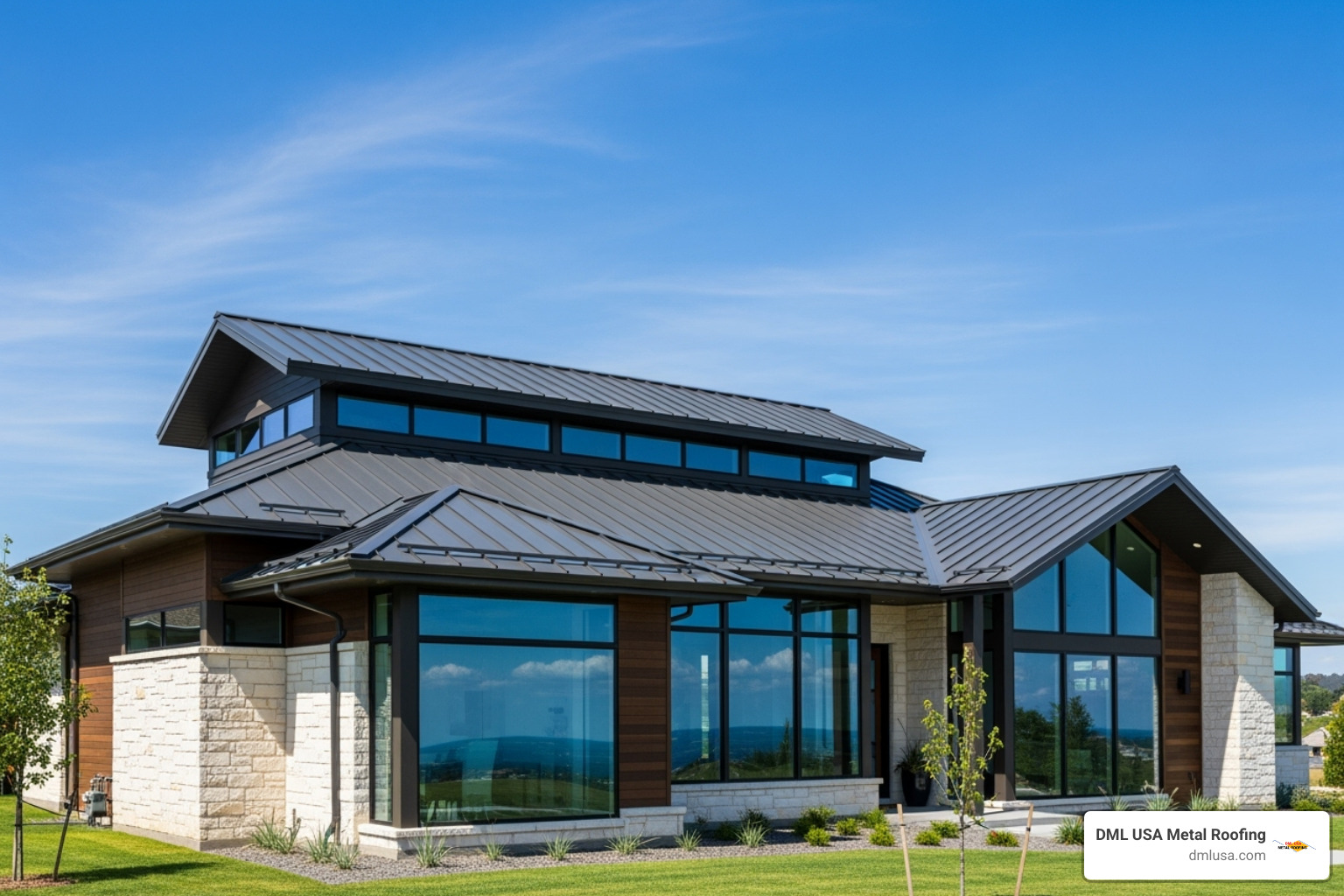
Why Metal Roof Installation DIY is a Game-Changer for Smart Home homeowners
Metal roof installation DIY is becoming increasingly popular among homeowners who want to save thousands on labor costs while installing a roof that can last 40-70 years. According to industry data, DIY installation can save up to 45% of the total project cost, with some homeowners completing a 1,000 square foot metal roof for under $500 in materials.
Quick Answer for DIY Metal Roof Installation:
- Feasibility: Yes, for exposed fastener systems on simple roofs
- Time Required: 2-7 days depending on roof size and complexity
- Skill Level: Intermediate to advanced DIY skills needed
- Cost Savings: Up to 45% compared to professional installation
- Best Panel Type: Corrugated or ribbed panels for beginners
- Key Requirements: Safety equipment, proper tools, and 1-2 helpers
The appeal is clear. As one Reddit user shared about their garage project: “I re-did my 1000 sq ft garage roof with exposed fastener metal roofing in a long weekend for under $500.” But while the potential savings are significant, success depends on honest assessment of your skills, roof complexity, and commitment to safety.
Metal roofs offer best durability – surviving hurricanes, hail, and wildfires while requiring virtually no maintenance. They’re energy efficient, reflecting the sun’s heat to reduce cooling costs (you can check ratings on the Cool Roof Rating Council’s database), and they’re completely recyclable at the end of their long lifespan.
However, this isn’t a project for everyone. Standing seam systems and complex roof geometries are typically best left to professionals, while simpler exposed fastener systems on basic roof shapes can be tackled by skilled DIYers.
I’m Adam Kadziola, and after founding DML USA Metal Roofing in 2007, I’ve helped thousands of homeowners understand metal roof installation DIY projects through our manufacturing expertise and customer guidance. My experience in both manufacturing high-quality roofing materials and home renovations gives me unique insight into what makes DIY metal roofing successful – and when to call the pros.
Metal roof installation DIY definitions:
Before You Begin: Is DIY Metal Roof Installation Right for You?
So, you’re thinking about tackling a metal roof installation DIY project? I completely understand the excitement! There’s something incredibly satisfying about changing your home with your own hands while potentially saving thousands of dollars in the process. But before we dive headfirst into this trip, let’s take an honest look at whether this project makes sense for you and your specific situation.
The truth is, not every roof or every homeowner is suited for a DIY approach. Some projects are perfect weekend challenges, while others are better left to the professionals. Let’s figure out which category your project falls into.
Assessing the Project Scope and Your Skills
The success of your metal roof installation DIY project really comes down to two main factors: how complex your roof is, and how comfortable you are with demanding physical work. Think of it like this – installing metal roofing on a simple garage is quite different from tackling a multi-story home with dormers, valleys, and chimneys.
Roof complexity is your first consideration. If you’re looking at a straightforward gable roof – the classic triangle shape you might draw as a kid – you’re in good territory for a DIY project. These simple designs are forgiving and manageable. However, if your roof looks more like a geometric puzzle with multiple angles, dormers, and complicated intersections, you might want to reconsider. Every additional angle and penetration multiplies the complexity and potential for problems.
Roof pitch matters more than you might think. Roofs with very low slopes (less than 3:12 pitch) require extremely careful sealing techniques to prevent water intrusion. On the flip side, steep pitches create serious safety challenges that require robust fall protection systems. The sweet spot for DIY projects is usually somewhere in the middle range.
Don’t underestimate the physical demands of this work. You’ll be carrying heavy panels up ladders, maneuvering them into position on the roof, and spending hours in potentially challenging weather conditions. If you’re not comfortable with heights or don’t have the physical stamina for extended periods of demanding work, this project might not be for you – and that’s perfectly okay.
Your basic carpentry skills will get a real workout here. You’ll need to measure precisely, cut accurately, and use tools like drills and metal snips with confidence. If you’ve successfully completed other home improvement projects and feel comfortable learning new techniques, you’re probably on the right track.
Here’s something I can’t stress enough: don’t plan to do this alone. Even experienced DIYers benefit enormously from having one or two helpers. Many tasks, like lifting long panels or managing tear-off debris, are not only easier with help – they’re significantly safer. Some DIY teams of three people have even completed entire metal roof installations, including tear-down, in about five days!
Choosing the Right Type of Metal Roof for a DIY Project
The type of metal roofing system you choose will make or break your DIY experience. Let me walk you through your options, starting with the most DIY-friendly.
Exposed fastener panels are your best friend as a beginner. These are the corrugated or ribbed panels where you can see the screws on the surface. They’re straightforward to install, relatively forgiving if you make small mistakes, and typically the most affordable option. The installation process is logical and easy to understand – you overlap the panels, drill your screws through the ridges, and move on to the next panel.
Metal shingles offer a more traditional aesthetic, designed to mimic conventional shingles, slate, or tile. While they create a beautiful finished product, they require more intricate cutting and overlapping techniques. If you’re set on this look and have solid DIY skills, they’re manageable, but they’ll definitely test your patience and precision.
Standing seam panels are the premium option that creates that sleek, modern look you see on high-end homes. However, I have to be honest with you – these systems are significantly more complex than exposed fastener systems. They require specialized tools, extremely precise measurements, and a higher level of roofing expertise. While some highly skilled DIYers might attempt standing seam on simpler structures like sheds or garages, I’d strongly recommend professional installation for your home’s main roof.
When it comes to materials, steel is often your most economical and durable choice for DIY projects. It’s strong, relatively easy to work with, and offers excellent longevity. Aluminum is another great option, especially if you live in a coastal area where corrosion resistance is important.
If you want to explore more about the benefits and options available, I encourage you to check out our page on Why Choose Metal Roofing. You can also browse through various metal roofing options on the DML USA Metal Roofing website to get a better feel for what might work best for your specific project.
Understanding the Costs and Potential Savings
Let’s talk numbers – because that’s probably a big part of why you’re considering the DIY route in the first place. The potential cost savings from metal roof installation DIY can be substantial, with many homeowners saving up to 45% of the total project cost by eliminating labor expenses.
Here’s how the costs typically break down:
| Factor | DIY Metal Roof Installation | Professional Installation |
|---|---|---|
| Total Cost | Materials + tools/permits ($3,000-8,000 typical home) | Materials + labor ($8,000-15,000+ typical home) |
| Time Required | 2-7 days depending on size/complexity | 1-3 days |
| Skill Level | Intermediate to advanced DIY skills | Professional expertise |
| Warranty | Material warranty only | Material + workmanship warranty |
Material costs will be your biggest expense, typically ranging from $2-6 per square foot depending on the type and quality of metal roofing you choose. Don’t forget to factor in tool rental fees if you don’t already own everything you need – things like scaffolding, power tools, and safety equipment can add several hundred dollars to your budget.
Permit fees vary by location but usually range from $100-500. This isn’t optional – most areas require permits for roofing work, and skipping this step can create problems if you ever sell your home.
Waste disposal is often overlooked in initial budgets. If you’re doing a complete tear-off, you’ll need a dumpster, which typically costs $300-600 depending on your area and the amount of debris.
The return on investment for metal roofing is excellent, whether you install it yourself or hire professionals. Metal roofs can increase your home’s value and provide decades of maintenance-free protection. The DIY route simply lets you capture more of that value as immediate savings.
For help with budgeting and planning your project, check out our Metal Roofing Resources page, which offers valuable tools and information to help you make informed decisions about your roofing investment.
While the cost savings are attractive, the most important factors are safety and getting a quality installation that will protect your home for decades to come. If you have any doubts about your ability to complete the project safely and correctly, consulting with professionals is always a wise investment.
