 Skip to main content

Best adhesive for metal roofing 2025: Essential
Why the Right Adhesive is Your Roof’s Best Friend
Finding the best adhesive for metal roofing is critical for a roof that truly lasts. You want a roof that protects your home for decades, not one that constantly needs repairs. The right adhesive makes all the difference.
Here are the top types of sealants widely considered the best adhesive for metal roofing:
- Silicone Sealants: These offer great flexibility and can handle a lot of movement. They resist UV rays and moisture very well.
- Butyl Tape: Known for amazing longevity, this tape creates a durable, waterproof seal. It’s often used between panels where it’s not exposed to sunlight.
- Polyurethane Sealants: These create a very strong bond and can often be painted to match your roof. Make sure to check their flexibility in cold weather.
Metal roofs are tough. They can last between 40 and 70 years. That’s a long time!
But the secret to that long life isn’t just the metal itself. It’s how well the roof is sealed. The truth is, the lifespan of a metal roof depends more on how long the sealants last.
If the sealant fails, your whole roof can fail. Even if the metal panels look perfect, leaks can start. This is why picking the right adhesive is so important. It protects your investment.
I’m Adam Kadziola, and with years of experience in manufacturing and home renovations at DML USA Metal Roofing, I’ve seen how critical choosing the best adhesive for metal roofing is for long-term performance. Our commitment to lasting quality ensures your home is protected from the harshest elements, thanks in part to these vital sealing solutions.
Best adhesive for metal roofing vocab explained:
- best corrugated roofing material
- best metal roofing material for a wood shed
- most common metal roofing material
Decoding Metal Roof Adhesives: The Main Contenders
Imagine your metal roof as a super tough shield for your home. The metal panels are indeed strong, but it’s the adhesives that truly seal the deal, acting like the invisible, super-strong glue holding everything together. They stop sneaky water from finding its way inside! Without the right kind of “glue,” even the toughest roof can have weak spots. When it comes to finding the best adhesive for metal roofing, we’ve found three main types that really stand out: butyl sealant tape, silicone sealants, and polyurethane sealants. Each one has its own special strengths and a few things it’s not so great at. Let’s get to know them better!
Butyl Sealant Tape
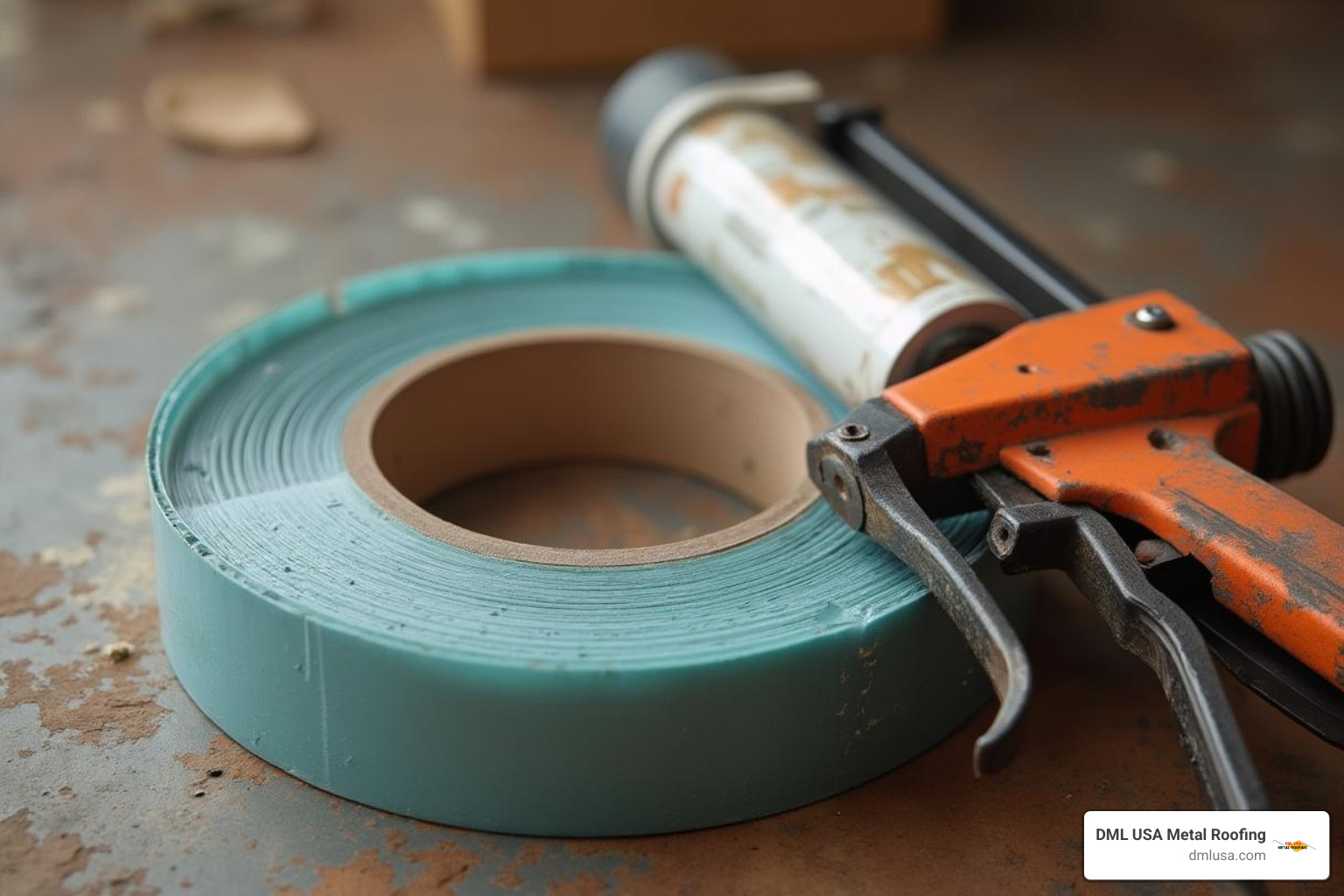
Have you ever seen a sticky, stretchy ribbon that just seems to last forever? That’s pretty much what butyl sealant tape is like! It comes in a tape form, which makes it super easy to use and helps you get a smooth, even seal every time.
This tape is a real superstar for sealing up panel seams and overlaps. Think of it as a perfect gasket between different metal pieces, like under pipe caps or trim. The big secret to butyl tape is that it’s meant to be used between parts of your roof, hidden away from the sun.
Why is it so great? Well, for one, its longevity is truly exceptional. An industry study found that butyl tape used in metal roofs showed no wear and tear even after an amazing 35 years! And get this: based on long-term studies, this tape could last over 60 years. That’s almost a lifetime for your roof! It stays sticky and flexible for decades, moving with your roof as temperatures change. This means a uniform, reliable seal that really holds up.
Now, for its one weakness: it’s not for UV exposure. Direct sunlight is butyl tape’s kryptonite. If the sun hits it directly, it will break down quickly. That’s why we always recommend using it in places that are hidden from the sun’s harsh rays.
At DML USA Metal Roofing, we build our durable metal roofing systems to last. Using high-quality sealants like butyl tape helps make sure your roof stands strong for years to come. You can find more info about our durable metal roofing systems right here: More info about our durable metal roofing systems.
Silicone Sealants
When most people think of sealants, silicone sealants are often the first thing that comes to mind. And there’s a good reason for that! This type of sealant comes in a caulk form, which you apply with a standard caulk gun. It’s a fantastic, high-performing choice for many roof needs.
One of silicone’s greatest strengths is its excellent flexibility. Think of it like a highly skilled gymnast – it can stretch and squish a lot without breaking. This is super important for metal roofs, which naturally expand and shrink as the temperature changes throughout the day and year. Silicone can handle all that movement!
Another big plus? UV resistance. Unlike butyl tape, silicone loves the sun! It stands up wonderfully to UV rays, meaning it won’t get chalky, crack, or lose its color when it’s out in the open. This makes it perfect for parts of your roof that are visible and get a lot of sunshine. It also offers superior adhesion to all sorts of materials, from metal to wood to masonry, creating a very strong, watertight bond.
Of course, every superhero has a weakness. For silicone, it’s often the higher cost. All those amazing benefits do come with a slightly higher price tag than some other options. Also, some silicone sealants are not paintable. While a few kinds can be painted, especially with water-based paints, it’s always a good idea to test a small spot first to make sure the paint sticks well.
Polyurethane Sealants
Last but not least, let’s talk about polyurethane sealants. These are another powerful choice among the best adhesive for metal roofing, and like silicone, they come in caulk form for easy application with a caulk gun. They’re famous for how incredibly strong their bond is.
Polyurethane creates a very strong bond to many different materials, including metal. This makes it an excellent choice for areas where you need a really tough, secure seal. A great bonus is that many polyurethane sealants are paintable. This means you can paint right over them to perfectly match your roof’s color, making them blend in beautifully. They are also generally UV resistant, so they can handle being exposed to sunlight without breaking down.
However, they do have a couple of things to watch out for. While they’re strong, some types of polyurethane can get a bit stiffer in very cold temperatures compared to silicone. This might mean they don’t stretch quite as much with extreme temperature changes. Also, sometimes you might need to prime the surface before applying them to make sure they stick as well as possible.
How to Choose the Best Adhesive for Your Metal Roofing Project
When it comes to picking the best adhesive for metal roofing, it’s a bit like being a chef choosing the perfect ingredient. You wouldn’t use sugar for a savory dish, right? The ideal choice really depends on a few key things: where on your roof you’ll be using it, what your local climate is like, and even the type of metal you’re working with. Getting this right ensures your roof performs flawlessly for decades to come.
To help simplify your decision, here’s a quick comparison of our main contenders:
| Feature | Butyl Sealant Tape | Silicone Sealants | Polyurethane Sealants |
|---|---|---|---|
| Form Factor | Tape (non-curing) | Caulk (curing) | Caulk (curing) |
| Lifespan | 60+ years (concealed) | 10-20 years | 10-20 years (typical) |
| UV Resistance | Poor (must be concealed) | Excellent | Good |
| Flexibility | Excellent (non-curing) | Excellent | Good (can stiffen in cold) |
| Adhesion | Excellent (between layers) | Superior to many materials | Strong |
| Paintable? | N/A (concealed) | Some types (not translucent) | Yes, generally |
| Application Areas | Between panels, under trim, hidden joints | Exposed joints, flashing, penetrations | Exposed joints, flashing, general sealing |
Finding the best adhesive for metal roofing based on application
Let’s talk about specific spots on your roof. Think of your roof as having different ‘zones,’ each needing its own specialized sealant.
For panel seams, especially those hidden overlaps in standing seam systems, butyl tape is a true superstar. Its unique, non-curing nature means it can gracefully adjust to your roof’s constant thermal movements without breaking a sweat. But if those panel seams are out in the open, greeting the sun every day, then a high-quality silicone sealant is often the top pick thanks to its incredible UV resistance and flexibility.
When it comes to flashing – those crucial metal pieces around chimneys, skylights, or where the roof meets a wall – you need a sealant that’s tough and UV-resistant. This is where silicone or polyurethane sealants really shine, as they bond beautifully to both the flashing and the surrounding building materials, keeping water out.
Similarly, for all your trim pieces, like rake or eave trim, silicone or polyurethane are excellent choices. They can handle the elements and maintain a strong bond to the metal, keeping everything neat and watertight.
Gutters and downspouts are your roof’s drainage system, so their seams absolutely must be watertight. Flexible, water-resistant sealants like silicone or polyurethane are ideal here, ensuring smooth water flow and no drips.
Anywhere your roof has a hole for vents or pipe boots is a potential leak point. For these penetrations, a robust, flexible, and UV-resistant sealant is non-negotiable. Silicone is a go-to choice for sealing around these items, creating a durable, weatherproof barrier. You can even add an extra layer of protection by using butyl tape underneath these components before they are fastened.
And for those minor repairs or quick fixes, a versatile silicone or polyurethane sealant can often do the trick. Just remember, a clean and dry surface is key for proper adhesion!
Choosing metal roofing for your home is already a smart decision for its durability and low maintenance. Understanding these adhesive nuances only amplifies that choice. Why Choose Metal Roofing.
Matching the Adhesive to Your Climate
Your local weather isn’t just about what jacket to wear; it’s also a huge factor in how your roof’s adhesive performs! A sealant that thrives in a desert might struggle in a snowy, humid region.
Consider temperature extremes. Metal roofs expand when hot and contract when cold – a lot! Adhesives like silicone and butyl tape are fantastic because they remain flexible and stable across a wide range of temperatures. While polyurethane is strong, some types might get a bit stiff in very cold weather.
If the sealant will be directly exposed to sunlight, UV exposure is a big deal. You need something that won’t chalk, crack, or fade. Silicone and polyurethane are specifically designed for this, whereas butyl tape needs to be hidden from the sun’s rays to last.
In areas with high humidity and moisture levels, you need sealants that are truly waterproof and can stand up to constant dampness. All the sealants we’ve discussed offer good moisture resistance, but their application and long-term performance in consistently wet conditions should always be considered.
Lastly, while sealants primarily keep water out, a strong bond also adds to your roof’s overall wind resistance. By keeping components securely fastened, the right adhesive contributes to your roof’s ability to withstand harsh winds and storms.
Application Hotspots: Where to Use Sealant on a Metal Roof
Think of your metal roof as a giant jigsaw puzzle. Each piece fits together, but where those pieces meet, or where something pokes through, that’s where water can try to sneak in. Our job, as roofing gurus, is to make sure those sneaky spots are sealed tighter than a drum!
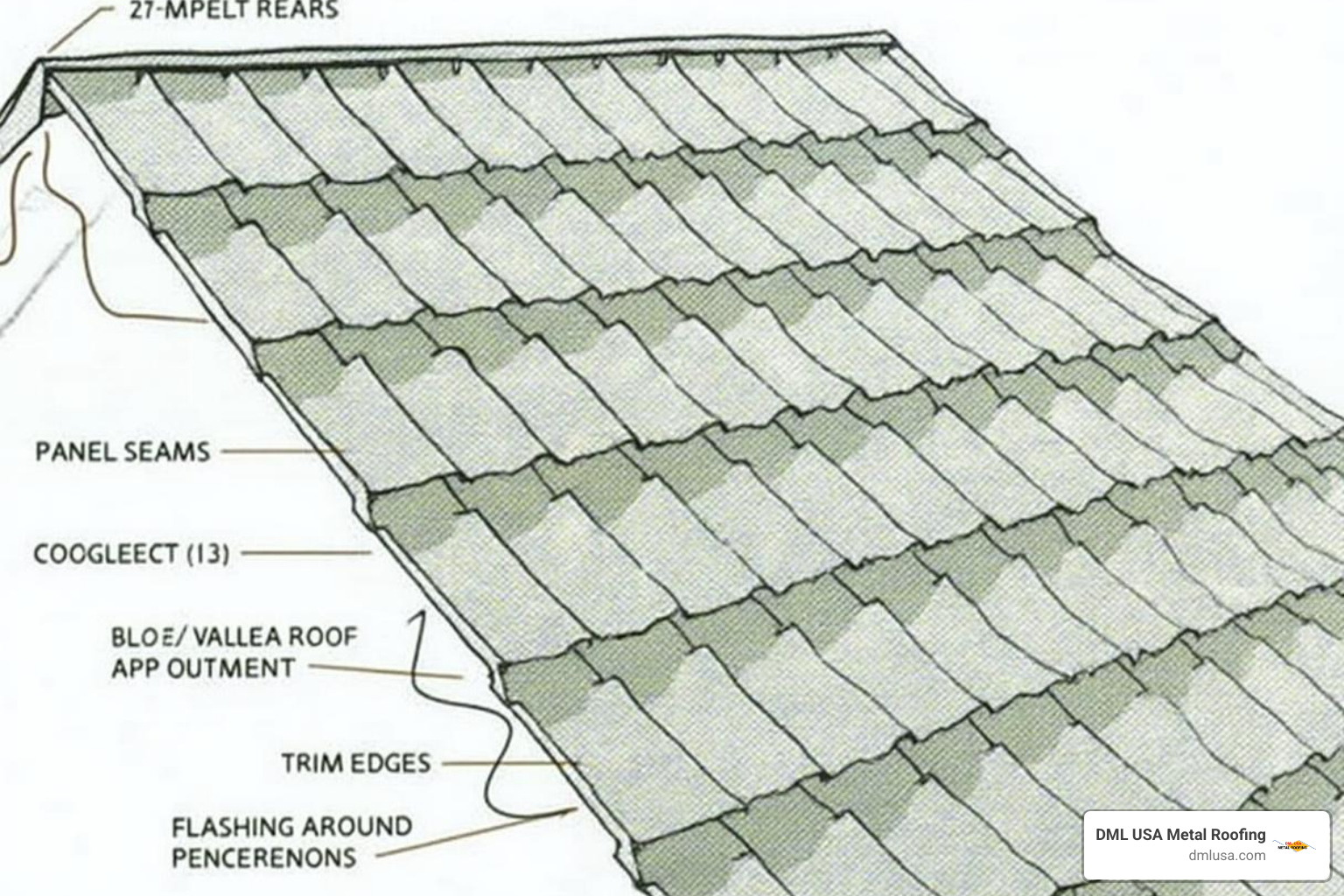
From the very top of your roof to its edges, every potential entry point for water needs careful attention. Imagine a tiny water droplet looking for a way in – we want to make sure every seam, every connection, every hole is protected. That’s where applying the best adhesive for metal roofing truly makes all the difference.
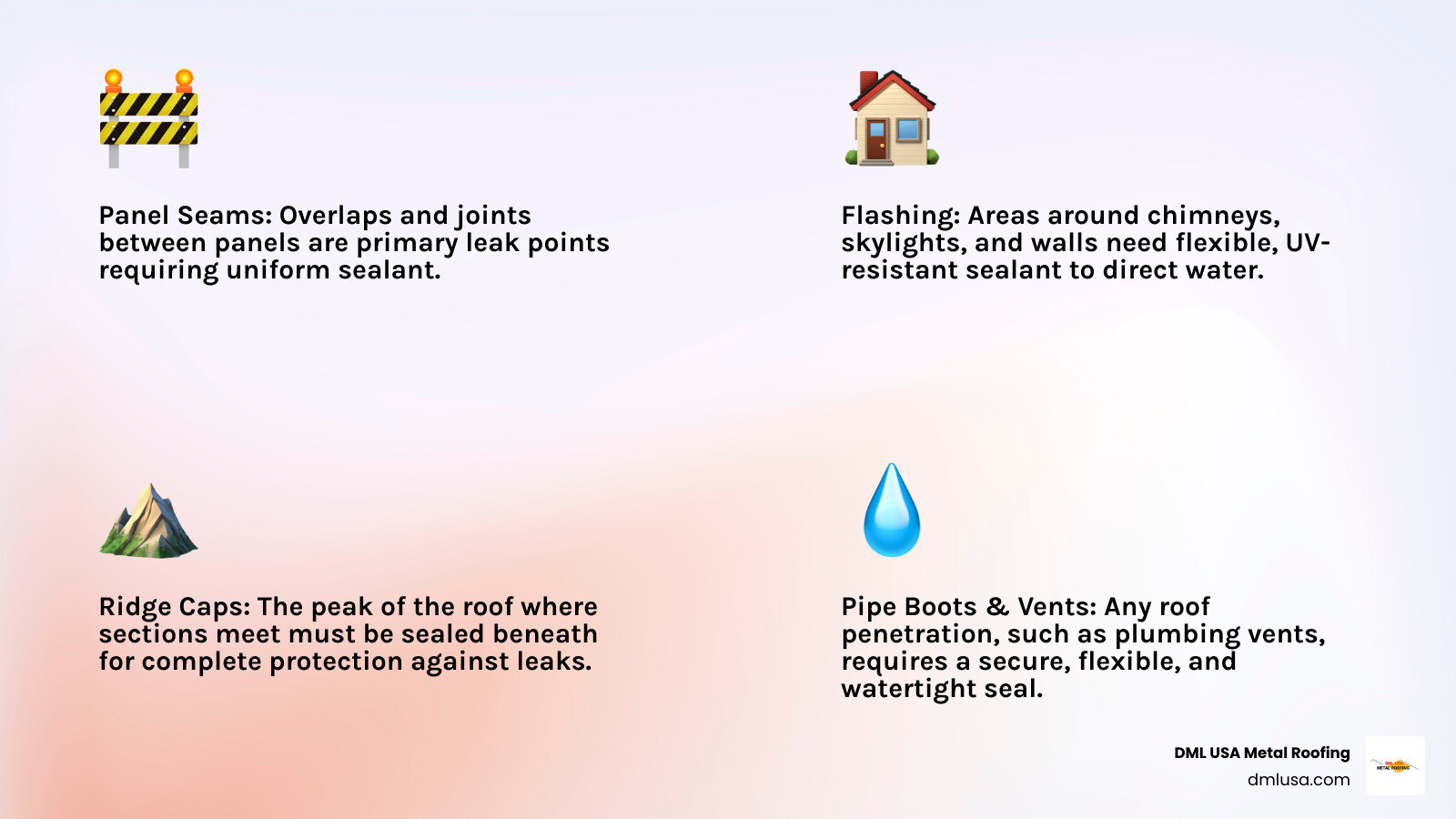
This includes protecting your panel seams, which are the lines where individual metal panels join together. Then there are the ridge caps, the crowning glory of your roof that covers its very peak. Don’t forget the valleys, those V-shaped channels where two roof slopes meet, or the eaves, which are the edges of the roof overhanging your walls.
Anywhere there’s flashing – the metal pieces used to direct water away from junctions like chimneys or walls – needs sealant. And remember, every fastener (that’s every screw or nail driven into the roof) creates a tiny hole that needs sealing. Finally, those flexible collars around pipes, called pipe boots, are crucial spots for a watertight seal.
Sealing Joints and Seams for a Watertight Barrier
These areas are arguably the most critical spots to seal. They represent the largest stretches where water could potentially sneak in.
Think about lap joints, where one panel or piece of trim overlaps another. For hidden areas like these, butyl tape is often a fantastic choice. It creates a continuous, long-lasting seal that won’t dry out.
Even with standing seams, where the panels rise vertically, sealants are crucial. While these are often mechanically sealed, you’ll still need sealant at the end laps (where one panel finishes and another begins) or wherever panels terminate. This stops water from wicking its way in.
And those tiny gaps? Any small opening between components where water could potentially infiltrate can be a problem. A precise bead of silicone or polyurethane caulk can fill these effectively, giving you peace of mind.
Comprehensive studies on the service life of metal roof systems highlight just how important proper sealing is. It’s key to keeping the entire roof assembly strong and healthy for decades.
Protecting Penetrations and Trim
Your roof isn’t just a big, flat surface. It has important features that add character and make your home functional, but these also create potential weak spots.
Take vents, for example. Whether they’re for your bathroom, kitchen, or attic, any vent that passes through the roof needs careful sealing. The same goes for skylights – they’re beautiful and let in light, but they demand meticulous sealing around their edges to prevent leaks. And a classic roof penetration like a chimney requires robust flashing and sealant work to keep water out.
Then there’s the trim that gives your roof its finished look, like rake trim and eave trim along the edges. These pieces need to be sealed wherever they meet the main roof panels or other trim parts.
Basically, any accessory or finishing piece on your metal roof – from custom-bent flashing made from slit coils or flatsheets to soffit and fascia where they meet your roof deck or walls – needs attention. If there’s a join or a break in the smooth surface, that’s where the best adhesive for metal roofing comes in to create a watertight seal and protect your home.
Frequently Asked Questions about Metal Roof Adhesives
We get a lot of great questions about metal roof adhesives, and rightly so! It’s a topic that might seem small, but it has a monumental impact on your roof’s performance. Let’s tackle some of the most common ones.
How long does metal roof sealant last?
This is a fantastic question, and the answer, like many things in life, is “it depends!” Generally, most metal roof sealants, like the silicone or polyurethane types we discussed, typically last between 10 to 20 years. That’s a good chunk of time! But remember, a metal roof itself can last 40 to 70 years. So, you’ll likely need to give your roof a little re-sealing touch-up at least once, possibly twice, during its long life.
However, butyl tape is a bit of a superstar in this category. As we mentioned, studies have shown that butyl tape, when properly installed and protected from UV light, can last an incredible 60+ years! This makes it an incredibly durable choice for those hidden spots on your roof.
The key takeaway? Regular inspection is super important. We always recommend annual check-ups to see how your sealants are doing. Catching a failing sealant early can prevent minor issues from turning into major headaches. It’s all about making sure the best adhesive for metal roofing is always doing its job!
Can you apply new sealant over old, failed sealant?
While it might seem like a quick fix, applying new sealant directly over old, failed sealant is generally not the best approach. Think of it like trying to put a fresh coat of paint over peeling, rusty metal. It might look okay for a moment, but it won’t last because the foundation isn’t sound.
For the very best performance and to truly maximize the life of your new sealant, we highly recommend these steps:
- Surface Preparation is Key: This is the most crucial step! The surface absolutely must be clean, dry, and free of any loose debris, dirt, grease, or, yes, that old, failing sealant.
- Removal of Old Sealant: Carefully remove as much of the old, degraded sealant as possible. This ensures that your new adhesive bonds directly to the clean, sound roofing material, not to a crumbling layer underneath.
- Ensuring Proper Adhesion: A clean surface allows for the strongest possible bond. Sometimes, a surface might even benefit from a primer if the sealant manufacturer recommends it.
- Maximizing New Sealant Life: By following these best practices, you’re not just patching a problem; you’re creating a fresh, durable seal that can perform for its full intended lifespan, protecting your home effectively.
It’s a little extra effort upfront, but trust us, it pays huge dividends in long-term protection and peace of mind!
Is metal roof sealant the same as a roof coating?
No, not at all! While both metal roof sealants and roof coatings are designed to protect your roof and prevent water from getting in, they serve very different purposes and are applied in different ways.
- Metal Roof Sealant: Think of sealant as a precise tool for specific areas. Its primary job is to protect and seal joints, seams, overlaps, fasteners, and penetrations. Essentially, it’s for any point where two parts of your roof meet or where something passes through the roof. It’s a localized application, often applied as a bead from a caulk gun or in tape form, creating a watertight barrier at these vulnerable points. Its main purpose is to prevent leaks at these specific weak spots.
- Roof Coating: A roof coating, on the other hand, is applied across the entire surface of your roof. It’s like giving your whole roof a protective, often flexible, layer. Coatings are designed to provide broad surface protection against UV rays, harsh weather, and general wear and tear. They can even offer benefits like energy efficiency or rust prevention. They typically come in liquid form and are applied by rolling, spraying, or brushing.
In short, sealants are for the fine details and vulnerable connections, like a surgical strike against potential leaks. Coatings are for the broad strokes of surface protection, like a full body armor for your roof. Both are important components of a robust metal roofing system, but they’re definitely not interchangeable!
Conclusion: Securing Your Investment for Decades to Come
So, we’ve reached the end of our journey through metal roof adhesives! It’s pretty clear now that while your metal roof panels are tough as nails, the true longevity of your roof often comes down to those “unsung heroes” – the sealants and adhesives that hold everything together. We’ve seen how crucial it is to pick the right one, whether it’s the long-lasting butyl tape, the super flexible silicone, or the strong-bonding polyurethane.
The truth is, even the most durable metal roof can falter if its sealants give out. When a sealant fails, water finds a way in, and suddenly that beautiful, tough roof isn’t doing its job anymore. That’s why, here at DML USA Metal Roofing, we believe so strongly in using only the highest quality components and ensuring every installation is done right.
Based right here in Illinois, DML USA Metal Roofing is all about manufacturing high-quality, affordable metal roofing products that truly stand the test of time. We design our roofs to be incredibly durable and virtually maintenance-free, built to withstand even the harshest weather. Not only are they super strong against fire, wind, and impact, but they can also offer energy tax credits – making them a truly smart investment for your home.
A truly strong roof system isn’t just about the panels; it absolutely requires the best adhesive for metal roofing to ensure every seam and every penetration is sealed tight against the elements. We’re incredibly proud to offer products that contribute to the long-term integrity and protection of your home.
Curious to see our commitment to quality in action? Take a peek at our past work and view our gallery of completed projects. We’re here to help you secure your investment, providing peace of mind for decades to come. And remember, you can always learn more about our products right here: DML USA Metal Roofing Products.
