 Skip to main content

Why Chicago’s Roofing Market Demands Expert Knowledge
Roofing Chicago services require specialized expertise due to the city’s unique climate challenges and architectural diversity. Choosing the right contractor and materials is crucial for protecting your home from Chicago’s unpredictable weather, which ranges from intense summer heat to heavy snowfall and spring hailstorms. This extreme weather puts immense stress on roofing systems, leading to issues like significant water infiltration from ice dams and wind-driven rain if a roof isn’t up to the task.
Top Chicago Roofing Services:
- Emergency roof repair – Available 24/7 for storm damage
- Complete roof replacement – Asphalt, metal, flat, and specialty systems
- Preventive maintenance – Biannual inspections and gutter cleaning
- Commercial roofing – TPO, EPDM, and modified bitumen systems
- Specialty installations – Slate, tile, cedar shake, and metal roofing
Common signs your Chicago roof needs attention:
- Water stains on ceilings or walls
- Missing or damaged shingles after storms
- Ice dams forming along gutters
- Rising energy bills from poor insulation
- Granules collecting in gutters
I’m Adam Kadziola, and since founding DML USA Metal Roofing in 2007, I’ve helped countless Chicago homeowners protect their investments with durable, weather-resistant roofing Chicago solutions. Our family-owned company understands the specific challenges that harsh Midwest weather presents to roofing systems.
Roofing chicago terminology:
How Chicago’s Unpredictable Climate Impacts Your Roof
Living in Chicago means experiencing a full spectrum of weather, and your roof bears the brunt of these dramatic seasonal changes. Understanding how Chicago’s climate affects your roofing Chicago system is key to making smart decisions about maintenance and materials.

Chicago’s weather puts your roof through a year-round endurance test involving harsh weather, intense winds, heavy snowfall, and hail damage. The constant freeze-thaw cycles can create cracks, while ice dams can lead to significant water infiltration.
The Challenge and Solution for Chicago’s Seasons
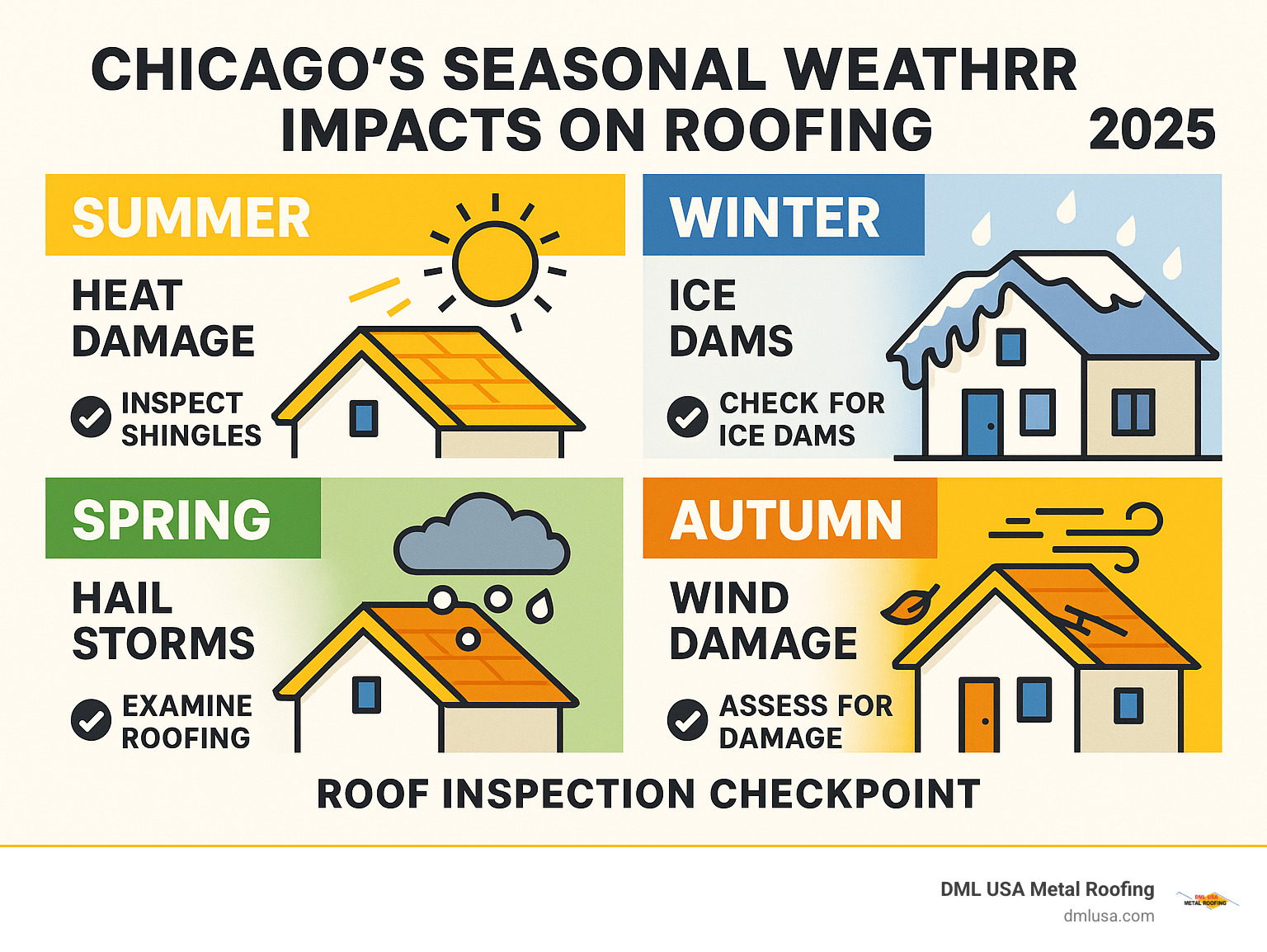
Each of Chicago’s seasons presents a unique threat to your roof:
- Summer: Intense heat and UV rays cause materials like asphalt to expand, crack, and become brittle over time.
- Winter: Heavy snow loads stress the roof’s structure, while melting and refreezing snow at the roof’s edge creates ice dams, forcing water under shingles.
- Spring: Hail storms can puncture or crack shingles, creating weak spots that lead to leaks and storm damage.
- Autumn: Strong winds can lift shingles and damage flashing, while falling debris can clog gutters.
To protect your home, proactive measures are essential. Proactive inspections in spring and fall help catch damage early. Choosing impact-resistant materials like metal roofing significantly reduces the risk from hail. Ensuring proper drainage through clean gutters prevents water pooling and ice dam formation. An Ice and Water Shield membrane installed under shingles provides a critical watertight barrier. Finally, selecting materials with high wind resistance ratings ensures your roof stays intact during severe storms.
7 Telltale Signs Your Chicago Roof Needs Professional Attention
Your roof is constantly sending signals about its condition. In Chicago’s tough climate, catching these warning signs early can be the difference between a simple repair and a costly roof replacement. Staying alert to these key signs will help you protect your most valuable investment.
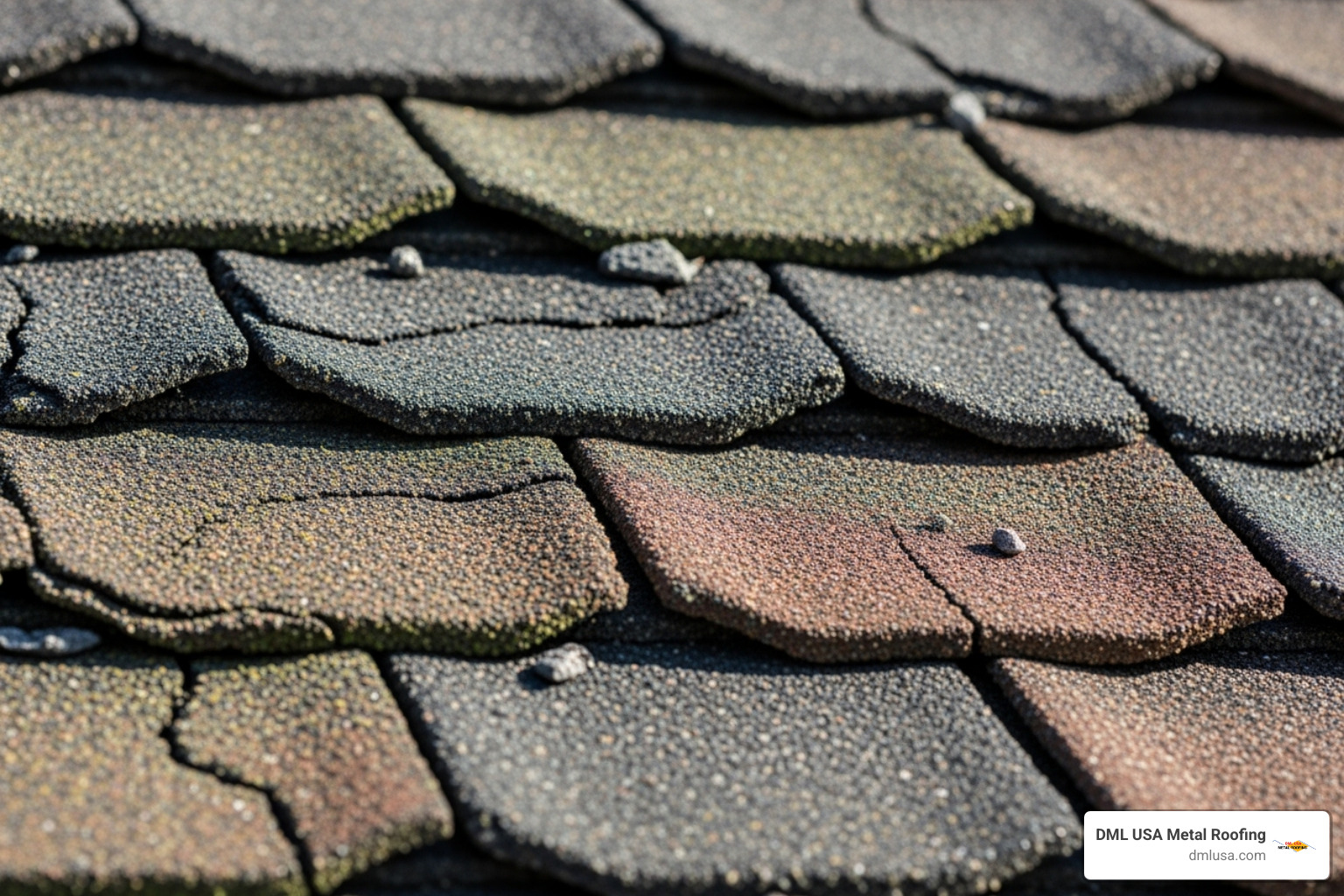
Here are the most common signs that your roof needs a professional inspection:
-
Interior Water Stains: Yellow or brown spots on ceilings or walls are a clear sign of a leak. Water can travel, so the source of the leak may not be directly above the stain.
-
Damaged or Missing Shingles: Look for shingles that are cracked, curling, buckling, or completely missing, especially after a windstorm. Curling shingles often indicate old age, while buckling can point to moisture issues underneath.
-
Granules in Gutters: Finding excessive amounts of shingle granules (which look like coarse sand) in your gutters means your asphalt shingles are aging and losing their protective layer.
-
Sagging Roofline: Any dip or curve in the straight lines of your roof is a serious structural issue that requires immediate attention. It often points to water damage or stress from heavy snow loads.
-
Light in the Attic: If you can see daylight through your roof boards from inside the attic, you have holes that water and pests can easily enter.
-
Moss or Algae Growth: While it may look rustic, moss and algae trap moisture against your roof, leading to rot and deterioration, especially in Chicago’s humid summers.
-
Rising Energy Bills: If your heating and cooling costs are climbing without explanation, poor roof insulation or ventilation due to damage could be the culprit.
If your roof is over 20 years old or you notice any of these signs, it’s time to call in the roofing Chicago professionals who understand how our unique climate affects your home.
Choosing the Right Shield: A Guide to Roofing Materials in Chicago
Picking the right roofing material in Chicago is about finding a durable shield against our extreme weather. Your choice determines whether your roof lasts for decades or needs constant repairs.
| Material Type | Lifespan (Years) | Cost (Relative) | Durability | Maintenance in Chicago |
|---|---|---|---|---|
| Metal Roofing | 50-100+ | High | Excellent | Very Low |
| Asphalt Shingles | 20-30 | Low-Medium | Good | Moderate |
| TPO/Flat Roofs | 15-30 | Medium | Good | Low-Moderate |
Traditional Roofing Options
- Asphalt Shingles: The most common choice due to affordability and style variety. However, Chicago’s freeze-thaw cycles and UV exposure limit their lifespan to 20-30 years.
- Slate & Tile Roofing: Extremely durable (50-100+ years) and fire-resistant, but very heavy and expensive. They can become brittle in Chicago’s temperature swings.
- Cedar Shake: Offers a rustic look and can last 30-50 years, but requires significant maintenance in our damp climate to prevent rot and moisture issues.
Modern Solutions: The Rise of Metal and Energy-Efficient Roofing in Chicago
For homeowners seeking a long-term solution, metal roofing is the smart choice for handling Chicago’s weather while saving money.
- Durability: Metal roofs are built to last 50-100+ years, embodying our “Never Re-Roof Again.®” promise.
- High Wind & Fire Resistance: Engineered to withstand winds of 140+ mph and inherently non-combustible, metal offers superior protection.
- Energy Efficiency: Our Alunar® Coating System uses Cool Roof technology to reflect solar heat, cutting cooling costs by up to 25%.
- Low Maintenance: Metal sheds snow and ice, resists moss, and eliminates the constant repairs other materials require.
- Lifetime Value: While the upfront cost is higher, the long lifespan, energy savings, and low maintenance deliver incredible long-term value.
- Eco-Friendly: Our metal roofing contains recycled content and is 100% recyclable.
Flat and Commercial Roofing Chicago Solutions
Flat and low-slope roofs require specialized systems to manage water drainage.
- TPO Roofing: A durable, energy-efficient single-ply membrane ideal for commercial roofing Chicago projects due to its reflective surface and resistance to punctures.
- EPDM Rubber Roofing: A flexible synthetic rubber membrane that handles Chicago’s temperature extremes without cracking, offering a cost-effective waterproof seal.
- Modified Bitumen: Asphalt improved with polymers for superior flexibility and waterproofing, often installed in multiple layers for maximum protection.
- Roof Coatings: Protective roof coatings can extend the life of an existing flat roof by adding a seamless, waterproof, and reflective layer.
Your Step-by-Step Guide to Hiring a Roofing Chicago Contractor
Finding the right contractor for your roofing Chicago project is the most important step in protecting your home. You need a skilled, trustworthy professional who understands the unique demands of our local climate.
Finding and Vetting a Qualified Local Roofer
- Prioritize Local Experience: A contractor familiar with Chicago’s weather knows which materials and techniques work best here.
- Verify License and Insurance: Always confirm they have a valid Illinois roofing license, plus current certificates for both workers’ compensation and general liability insurance. This protects you from liability.
- Check References and Past Work: Ask for recent customer references you can call. Review their portfolio of completed projects to assess the quality of their craftsmanship.
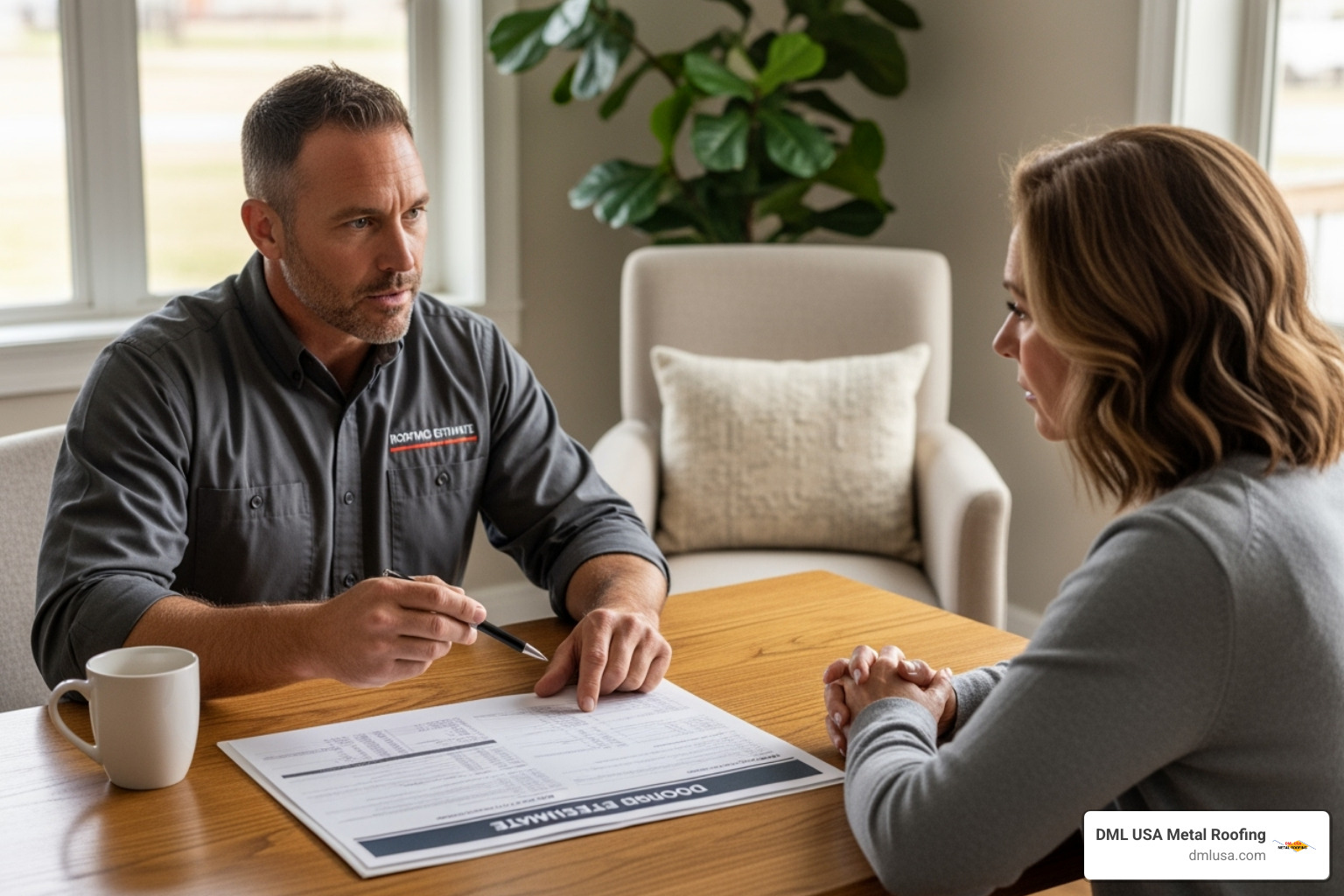
- Get Detailed Written Estimates: Collect at least three itemized estimates that break down all costs for materials, labor, and debris removal. Be wary of bids that are unusually low.
- Understand the Warranties: A reputable contractor provides a clear warranty on their workmanship, in addition to the manufacturer’s warranty on materials. Read all contracts carefully before signing.
Understanding the Roofing Process and Regulations
- The Initial Inspection: A professional will conduct a thorough assessment and provide a free, no-pressure estimate, explaining your options clearly.
- Tear-Off vs. Cover-Over: A complete tear-off of the old roof is almost always recommended. It allows for inspection of the underlying roof deck and provides a solid foundation for the new system.
- Flashing is Critical: Proper replacement of flashing (the metal pieces around chimneys, vents, and valleys) is essential for preventing leaks.
- City of Chicago Permits: For most roof replacements, your contractor must obtain a permit from the city. This ensures the work meets safety codes and protects you from future issues.
- Timeline and Cleanup: A typical residential roof replacement takes 1-3 days, weather permitting. A professional crew will maintain a clean and safe job site and perform a thorough cleanup, including using magnetic tools to find stray nails.
The Critical Role of Proactive Roof Maintenance
Ignoring roof maintenance in Chicago’s harsh climate is a recipe for disaster. Just like a car, your roof requires regular check-ups to perform its best and protect your home. Proactive maintenance is an essential investment that prevents small issues from becoming expensive emergencies.
Regular maintenance is the key to extending your roof’s lifespan. It helps you prevent major repairs by catching problems early, saving you thousands in potential water damage. Furthermore, many manufacturers’ warranty requirements mandate regular professional inspections to remain valid.
Key maintenance tasks for roofing Chicago homes include:
- Biannual Inspections: A professional should inspect your roof every spring and fall to assess storm damage and prepare for the coming season.
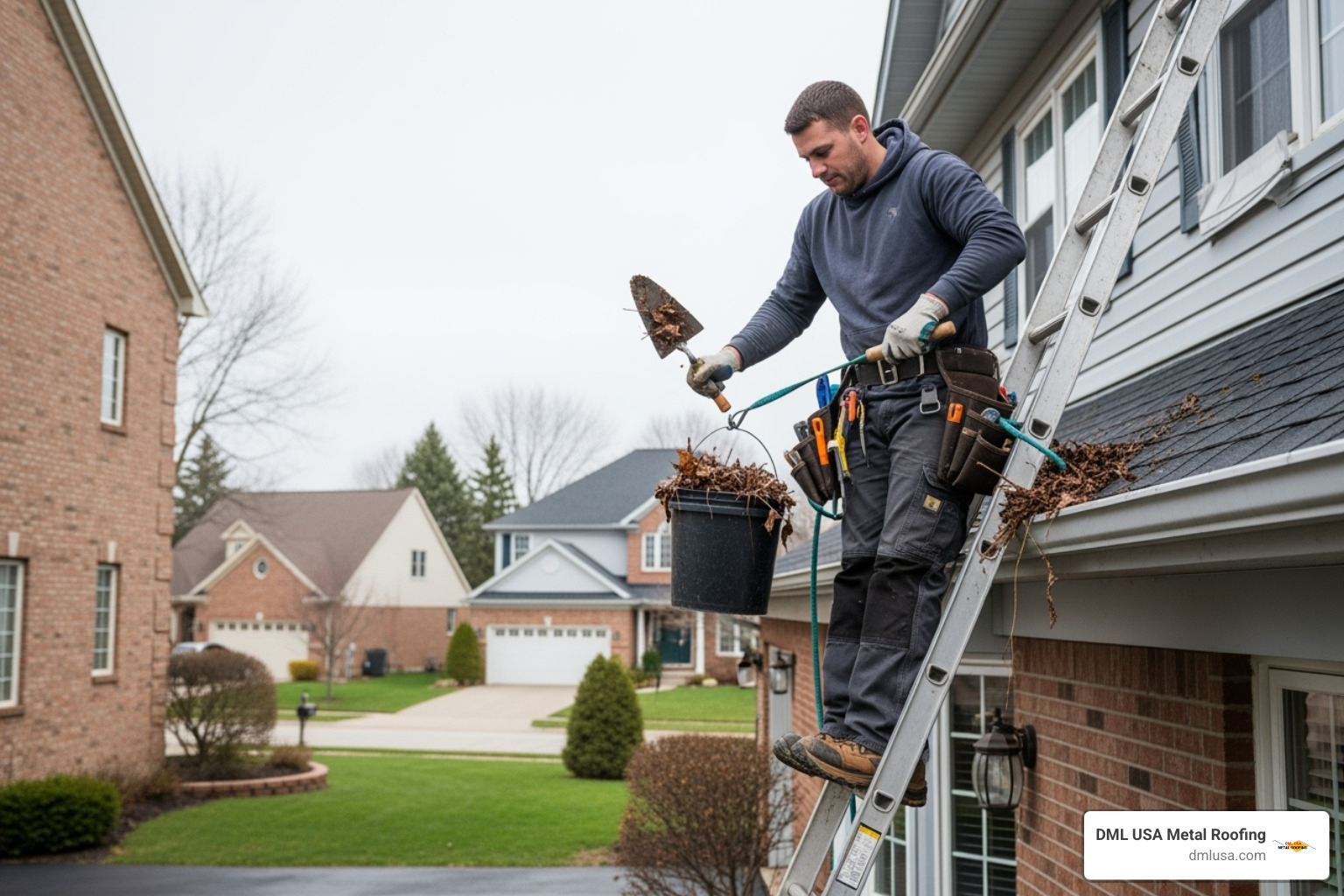
- Gutter Cleaning: Clogged gutters cause water to back up under shingles and form ice dams in winter. Regular cleaning is crucial.
- Debris Removal: Leaves and branches trap moisture, which accelerates the deterioration of roofing materials.
- Sealing Minor Cracks: Addressing small cracks in sealant around vents and flashing is a quick fix that prevents water infiltration.
A well-maintained roof protects your family, your belongings, and your peace of mind.
Frequently Asked Questions About Chicago Roofing
We understand that a roofing Chicago project brings up many questions. Here are concise answers to the most common concerns we hear from Chicago homeowners.
How long does a typical roof replacement take in Chicago?
For an average-sized home, a complete roof replacement typically takes one to three days. Larger or more complex roofs may take longer. While Chicago’s weather can cause delays, a professional crew will ensure your home remains watertight at the end of each workday.
Do I need a permit for my roofing project in Chicago?
Yes, a permit is required for most roof replacements in Chicago. Any project involving a full tear-off of the existing roof requires a permit from the City of Chicago Department of Buildings. This ensures the work is up to code and protects you as the homeowner. A reputable contractor will handle the entire permit process for you.
Can my roof be repaired, or does it need a full replacement?
The answer depends on the age of your roof and the extent of the damage.
- Repair is often suitable for: Localized issues, such as a few missing shingles or a minor leak around a vent, on a roof that is otherwise in good condition.
- Replacement is usually necessary when: Your roof is nearing the end of its 20-25 year lifespan, there is widespread damage (like extensive granule loss or curling shingles), you have recurring leaks in multiple spots, or there are structural issues like a sagging roof deck.
An honest contractor will assess the situation and recommend the most cost-effective long-term solution. If repair costs approach 30% of a replacement, investing in a new roof is typically the smarter choice.
Conclusion: Protecting Your Biggest Investment
Your home is your most significant investment, and in Chicago, your roof is its primary defender against our demanding four-season climate. It battles scorching heat, heavy snow, high winds, and hail to keep your family safe and dry.
This guide highlights several key insights for Chicago homeowners:
- Chicago’s climate is uniquely stressful on roofing systems, making durable materials essential.
- Proactive maintenance and early detection of warning signs are the best ways to prevent costly disasters.
- Choosing the right materials and contractor is the foundation for decades of peace of mind.
While traditional materials have their place, modern solutions offer superior performance. For homeowners seeking the ultimate in superior durability and energy efficiency, materials from manufacturers like DML USA Metal Roofing offer a long-term, maintenance-free solution. Our metal roofing systems are engineered to provide high resistance to fire, wind, and impact—exactly what a Chicago home needs.
Investing in a quality roof is a smart financial decision that pays dividends in energy savings, protection, and lasting value. Your home works hard to protect you; ensure its roof is up to the challenge.
