 Skip to main content

Why Metal Roof-Overs Are Becoming the Smart Choice for Illinois Homeowners
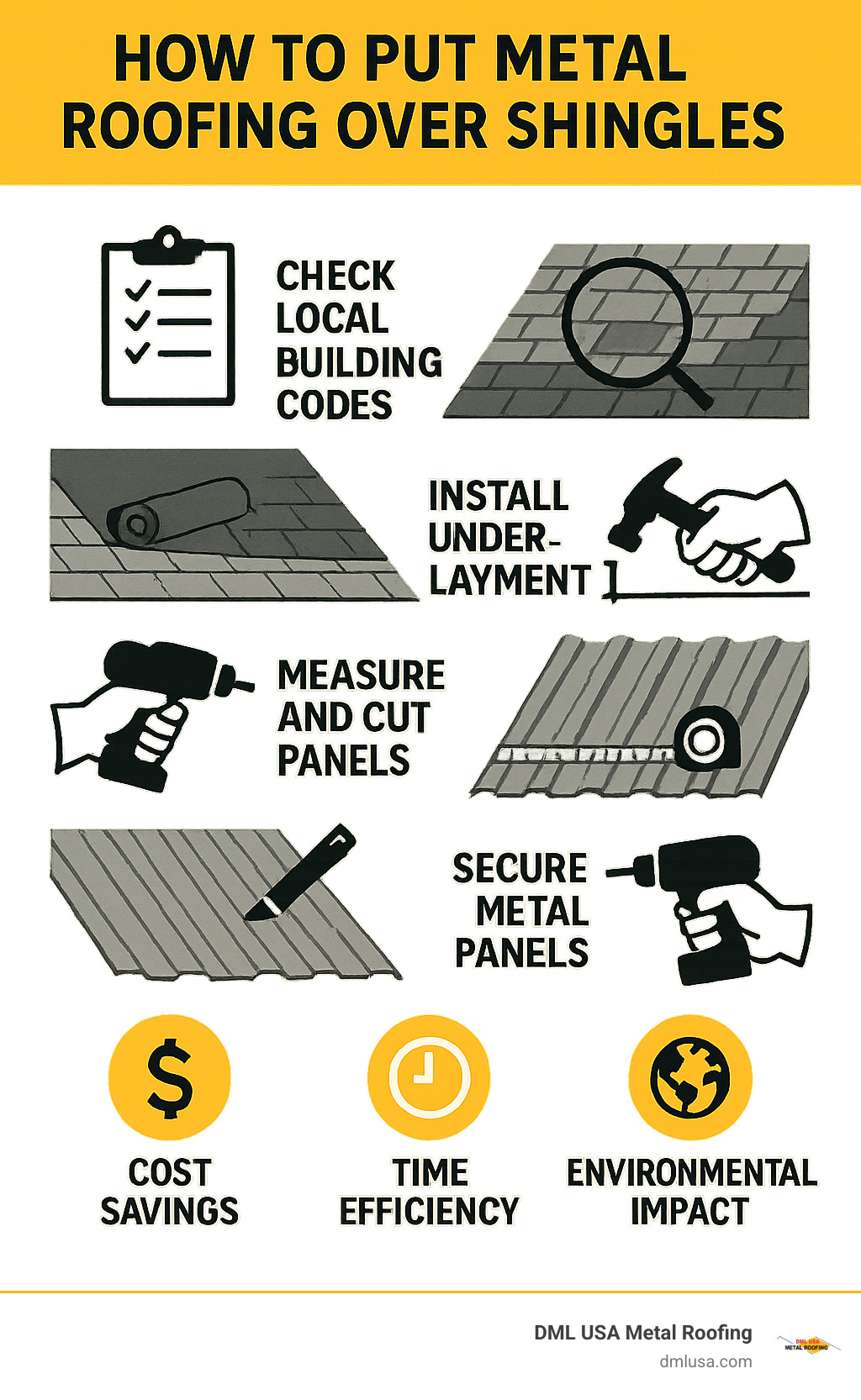
How to put metal roofing over shingles is a proven method that can save you thousands while giving your home a durable, energy-efficient upgrade. Here’s the essential process:
Quick Answer: Installing Metal Over Shingles
- Check local building codes – Ensure your area allows roof-overs
- Inspect existing roof – Verify shingles are in good condition with no structural damage
- Install underlayment – Add synthetic moisture barrier over existing shingles
- Add furring strips (recommended) – Create air gap for ventilation and level surface
- Measure and cut panels – Account for proper overhang and penetrations
- Secure metal panels – Start at eaves, overlap correctly, fasten into high ribs
- Install flashing and ridge cap – Seal all vulnerable areas for watertight protection
This roof-over method can save 25-35% on installation costs compared to a full tear-off, adding 40-70 years to your roof’s lifespan and potentially reducing cooling costs by up to 25%. Success depends on a structurally sound existing roof and permissive local building codes. The process takes just 1-3 days with minimal disruption, making it an environmentally conscious choice that keeps old shingles out of landfills.
I’m Adam Kadziola, and since 2007, I’ve manufactured high-quality metal roofing in Illinois. My experience in manufacturing and home renovations has given me a deep understanding of what makes roof-over installations successful and long-lasting.
Know your how to put metal roofing over shingles terms:
Is a Metal Roof-Over Right for You? Pros, Cons, and Key Considerations
Deciding on how to put metal roofing over shingles isn’t for every home, but it can be a game-changer. A roof-over can save thousands, but cutting corners leads to headaches. It’s like renovating a kitchen versus gutting it—sometimes you can work with what’s there, and other times you need a fresh start. The key is knowing which situation you’re in.
| Feature | Metal Roof-Over | Full Roof Tear-Off |
|---|---|---|
| Cost | 25-35% savings (no tear-off/disposal fees); typically $8-$14 per square foot. | Higher upfront cost (labor, disposal, new underlayment); typically $12-$20+ per square foot. |
| Installation Time | Faster (1-3 days vs. a week); less disruption. | Slower (days to a week+); more disruptive. |
| Longevity | Metal roof itself lasts 40-70 years; may be impacted by underlying shingle condition. | Metal roof lasts 40-70 years; optimal longevity due to clean, inspected deck. |
| Inspection Depth | Limited inspection of underlying deck; relies on pre-installation assessment of shingle condition. | Full inspection of roof deck allows for repair of hidden damage (rot, soft spots). |
| Environmental Impact | Reduces landfill waste significantly. | Contributes to landfill waste. |
| Structural Integrity | Requires verification that existing structure can support additional weight; lightweight metal helps. | Decking fully exposed for reinforcement if needed. |
| Warranty | May be voided by some manufacturers if not installed over a clean deck; crucial to verify terms. | Full manufacturer warranty typically applies. |
| Aesthetics | Potential for “telegraphing” (shingle irregularities showing through metal); less flat surface. | Flat, smooth surface; ideal aesthetic outcome. |
| Ventilation/Moisture | Requires careful planning for ventilation and moisture barriers to prevent trapping. | Easier to implement comprehensive ventilation and moisture control. |
The Benefits of Installing Metal Over Shingles
Here’s why many Illinois homeowners are choosing metal roof-overs when they’re the right candidate.
Your wallet will thank you. You can save 25-35% on your total project by skipping the tear-off. This avoids labor and disposal fees, which can mean saving $3,000 to $8,000 on a typical Illinois home.
Time is money, and you’ll save both. Most roof-overs are completed in just 1-3 days, compared to a week or more for a tear-off. This means less disruption and chaos for your family.
You’re investing in serious longevity. Asphalt shingles last 15-20 years, but a new metal roof protects your home for 40-70 years—potentially the last roof you’ll ever need. Our roofs are built to withstand Illinois storms and look great for decades.
Your energy bills will drop. Metal roofs can save up to 40% on energy costs by reflecting solar heat. This keeps your attic cooler during Illinois summers, reducing the strain on your air conditioner.
You’re doing right by the environment. A roof-over keeps tons of old asphalt shingles out of landfills. Plus, at the end of its long life, your metal roof is 100% recyclable.
Potential Drawbacks and When to Tear Off
Now for the straight talk: let’s discuss when how to put metal roofing over shingles might not be your best option. Ignoring these red flags can be an expensive mistake.
Hidden problems stay hidden. Without a tear-off, you can’t inspect the roof deck for hidden rot, water damage, or structural issues. These problems can worsen over time if not addressed.
Moisture can become trapped. Poor ventilation can trap moisture between the old shingles and new metal, leading to condensation, mold, and deterioration. However, proper underlayment and ventilation design prevent this.
Weight adds up. Metal roofing is lightweight, but you’re still adding a layer. Most homes can handle it, but if you have multiple shingle layers or structural concerns, a professional assessment is necessary.
Warranty terms matter – a lot. Some manufacturers void warranties for installations over existing shingles. Always check the warranty terms before committing to a roof-over to avoid costly issues later.
Imperfections can show through. Uneven or curled shingles can create an irregular surface that might “telegraph” through the new metal panels. Furring strips help, but a severely damaged base is not ideal.
When you absolutely need to tear off: A tear-off is necessary if you have multiple shingle layers (most codes limit it to two), severe shingle damage (curling, splitting), or signs of known leaks or rotted decking. These underlying issues must be fixed first.
Pre-Installation Prep: Getting Your Roof Ready
A metal roof-over is a fantastic choice for your Illinois home, but proper preparation is what separates a successful installation from a costly headache. This phase is the groundwork for decades of protection. Rushing prep work is like building on quicksand; your new metal roof needs a solid foundation, which starts with understanding your existing roof and local laws.
Step 1: Check Local Building Codes and Regulations
Before ordering materials, your first stop should be your local building department. Codes in Illinois vary significantly between towns, and they exist to ensure safety and protect your investment.
The number of allowable roof layers is critical. Most jurisdictions follow the “two-layer rule,” meaning if your home already has two layers of shingles, you’ll need a full tear-off before installing metal. This law prevents excessive weight on your home’s structure.
Permit requirements are another non-negotiable step. A permit ensures your project meets safety standards and protects your investment. Plus, many insurance companies require proper permits for coverage claims.
Some areas have specific installation requirements for metal roofing. Having manufactured metal roofing in Illinois since 2007, I’ve seen how these local variations can make or break a project.
Don’t wing it – call your local building authority. For broader technical guidance, you can also learn more from the Metal Construction Association about retrofitting existing roofs with metal.
Step 2: Thoroughly Inspect the Existing Shingle Roof
A thorough inspection of your existing shingle roof is crucial. It’s the foundation for your new metal roof, and inspecting it now prevents expensive surprises later.
Start with a structural assessment. Carefully walk the roof, feeling for soft spots that indicate rot or water damage in the decking. Any compromised decking must be replaced before proceeding.
Next, examine your existing shingle condition. Remove any shingles that are severely curled, cupped, or damaged to create a smoother surface.
Pay special attention to existing flashing around chimneys, vents, and skylights. Replace any questionable flashing now to prevent future leaks.
Finally, clean the surface thoroughly, removing all debris, leaves, and loose granules.
Step 3: Gather Your Tools and Materials
Having all your tools and materials ready beforehand ensures a smooth installation and prevents multiple trips to the hardware store.
Your essential tools include a reliable cordless drill, sharp metal snips for precise cuts, and a tape measure and chalk line for alignment.
Safety equipment is not optional: use a safety harness and rope, non-slip shoes, and protective gloves. You’ll also need a circular saw with a metal-cutting blade, a caulking gun, a utility knife, pry bar, and a sturdy ladder.
Your material list includes our DML USA metal panels, synthetic underlayment for moisture protection, and recommended furring strips (1×4 wood or metal battens). You’ll also need self-tapping roofing screws with neoprene washers, roofing sealant, flashing, ridge caps, and foam closure strips.
How to Put Metal Roofing Over Shingles: A 7-Step Guide
With prep work done, it’s time to learn the practical steps of how to put metal roofing over shingles. This process will transform your old roof into a durable, long-lasting protector for your home.
Step 1: Install a Protective Underlayment
Your protective underlayment is the first line of defense. Synthetic underlayment is best as it’s stronger than felt and won’t tear easily. Roll it out directly over the shingles, starting at the eave and working up. This layer acts as a moisture barrier and provides abrasion protection from the rough shingle granules. Secure the underlayment tightly, overlapping each row by at least 6 inches to create a continuous protective blanket. Follow the manufacturer’s fastening instructions.
Step 2: Install Furring Strips (Recommended)
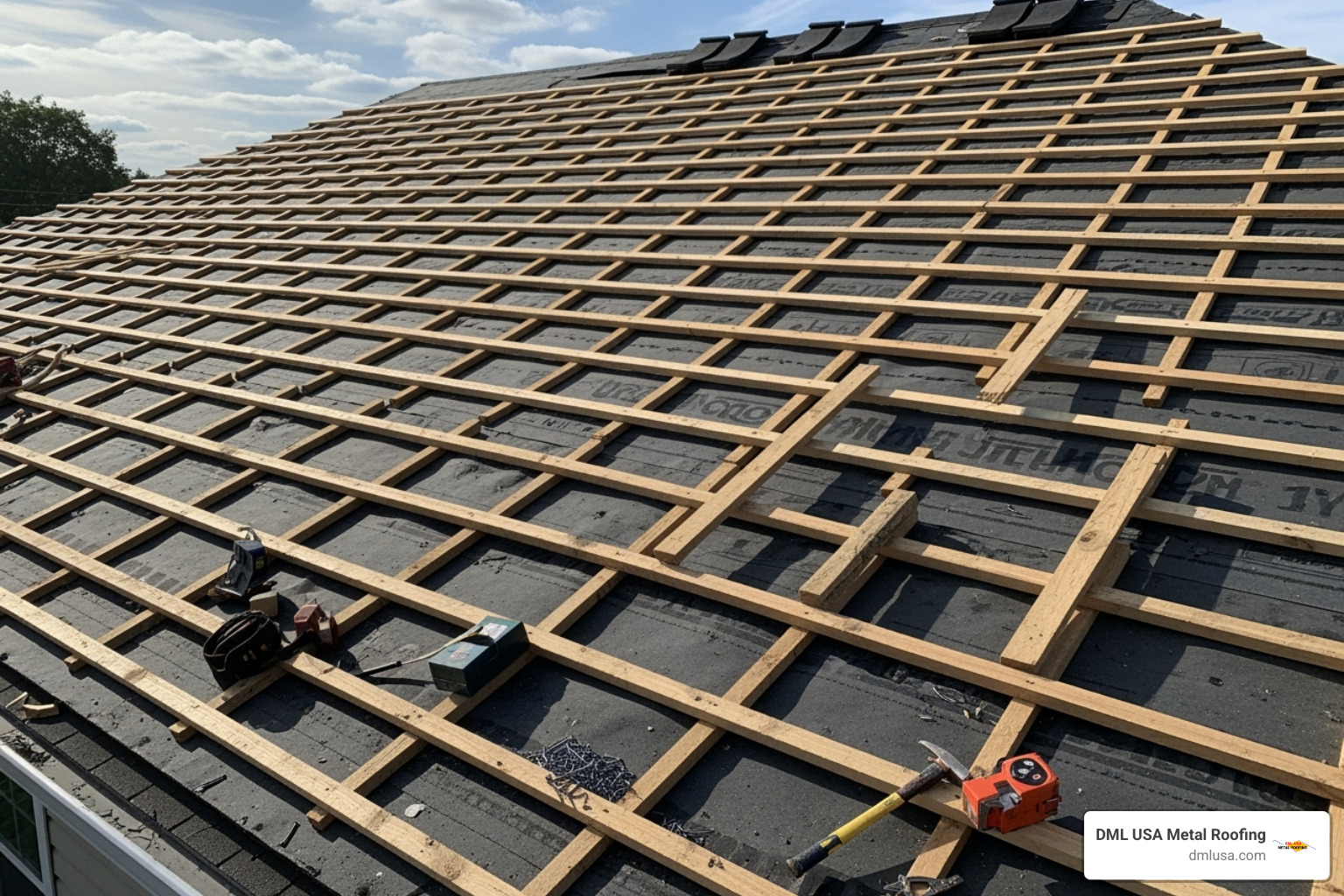
While you can install metal directly over shingles, adding furring strips is highly recommended. Furring strips create an air gap (Above Sheathing Ventilation) that improves energy efficiency and prevents condensation. These 1×4 wood or metal battens also create a level surface for a smoother finish. Install furring strips horizontally, spaced 24 inches apart, and fasten them directly into the roof rafters for a solid foundation. If using pressure-treated lumber, place a barrier between the wood and metal to prevent corrosion.
Step 3: Measure and Cut Metal Panels
Remember to measure twice, cut once. Measure from the eave to the ridge, adding a 1-2 inch overhang at the bottom to direct water into your gutters. Account for all roof penetrations like chimneys and vents. For cutting, metal snips are great for detailed work, while a circular saw with a metal-cutting blade works well for long, straight cuts. Always wear safety glasses and gloves. Take your time with complex areas like valleys, as precision is crucial to avoid mistakes.
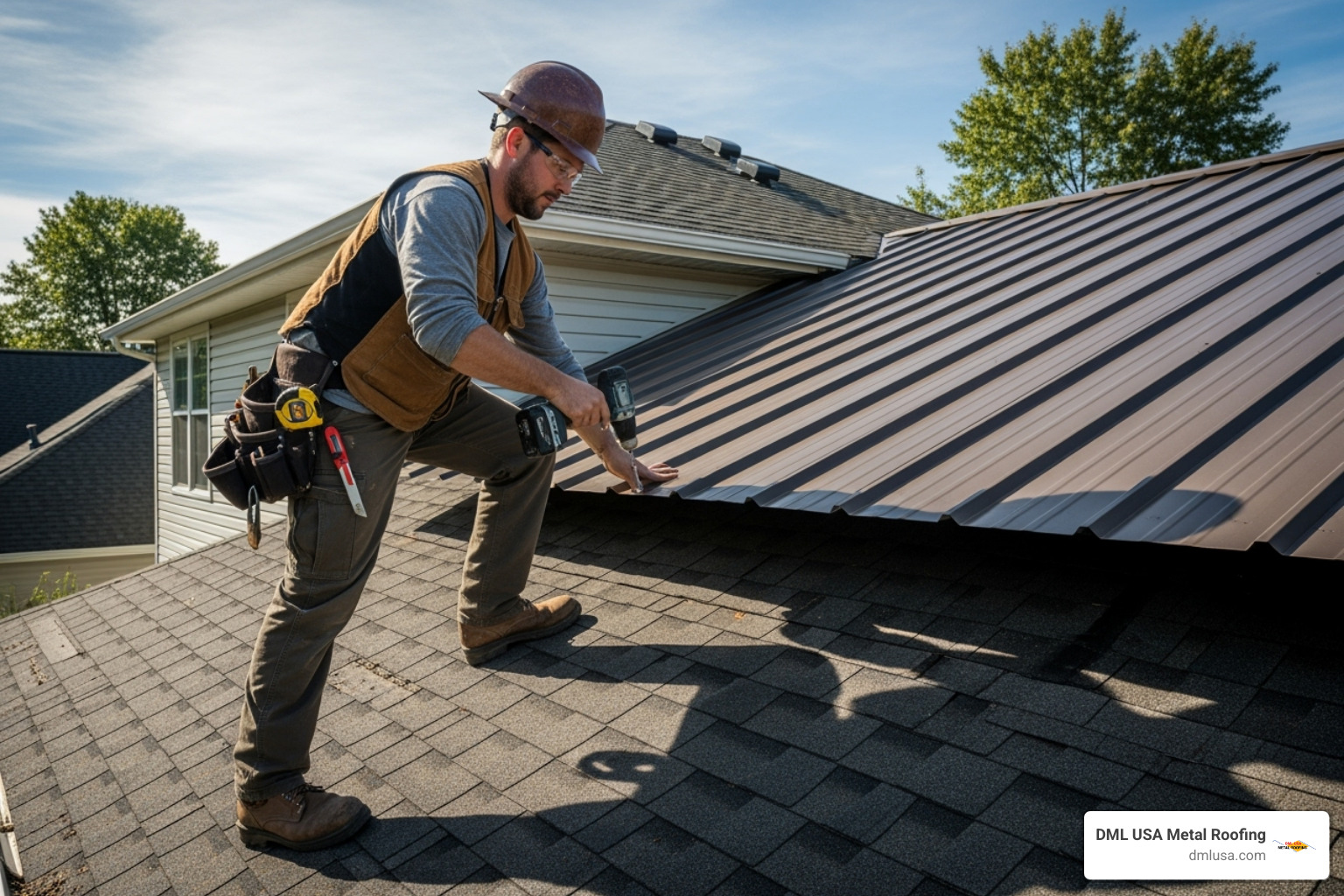
Step 4: Secure the Metal Roofing Panels
Start at the eave and work your way up, installing panels from one side of the roof to the other. Pay close attention to panel overlap (typically 1-2 inches) to create a watertight seal. Use self-tapping screws with neoprene washers, fastening them into the high rib of the panel, never in the flat areas where water flows. Don’t overtighten the screws; the washer should be compressed but not squeezed out. This can deform the panel and compromise the seal. Aim for screws every 12-24 inches along the ribs.
Step 5: Install Flashing and Trim
Flashing is critical for a watertight seal. Every roof penetration—chimneys, vents, skylights—needs proper flashing. Install valley flashing to channel water and step flashing around chimneys. Add eave and rake trim for a clean, protected edge. Use high-quality roofing sealant generously around all flashing components to prevent leaks.
Step 6: Attach the Ridge Cap
The ridge cap covers the roof peak. First, install foam closure strips along the top of the panels to block pests and wind-driven rain. Secure the ridge cap with screws into the panel ribs below, ensuring they hit the furring strips. Overlap multiple ridge cap sections as specified by the manufacturer and seal the ends with roofing sealant.
Step 7: Final Inspection and Cleanup
Finally, walk the roof carefully to inspect every fastener, ensuring screws are properly seated and all flashing is secure. A crucial step is to remove all metal shavings and debris with a leaf blower or broom to prevent future rust stains. Once clean, your new roof is ready to protect your home for decades.
Frequently Asked Questions About Metal Roof-Overs
When you’re learning how to put metal roofing over shingles, questions naturally arise. Here are straight answers to the most common concerns.
How does putting metal roofing over shingles affect the roof’s weight?
Metal roofing is surprisingly lightweight, typically under 1 pound per square foot, compared to asphalt shingles (2.5-4 lbs/sq ft). While you are adding weight, a home built for shingles can usually support the additional lightweight metal layer. The main concern is adding a third layer over two existing shingle layers, which can exceed structural limits. This is why building codes exist and why a professional assessment is essential before proceeding. An experienced contractor can evaluate your roof’s capacity to ensure safety.
Will a metal roof over shingles be noisy in the rain?
The idea of a noisy metal roof is a common myth. When installed over shingles, you create multiple layers of sound dampening: the shingles, the underlayment, an air gap (if using furring strips), and your attic insulation. These layers work together to create a quiet system. Many customers report their metal roof is actually quieter than their old asphalt shingles during rainstorms.
What are the warranty implications when you put metal roofing over shingles?
This is a crucial question, as warranty terms vary significantly by manufacturer. Some will void their warranty if the metal is not installed over a clean, bare deck. Others are more flexible but may have specific conditions, like allowing installation over only a single shingle layer. Our strong recommendation is to contact the manufacturer directly before starting. Ask for their warranty terms for roof-over installations in writing to protect your investment. At DML USA, we are transparent about our requirements. Poor workmanship can void any warranty, so choosing an experienced installer is vital.
Conclusion: A Durable and Cost-Effective Roofing Solution
Learning how to put metal roofing over shingles is a smart move for Illinois homeowners. This guide has shown how a roof-over saves 25-35% over a tear-off and can be completed in just 1-3 days.
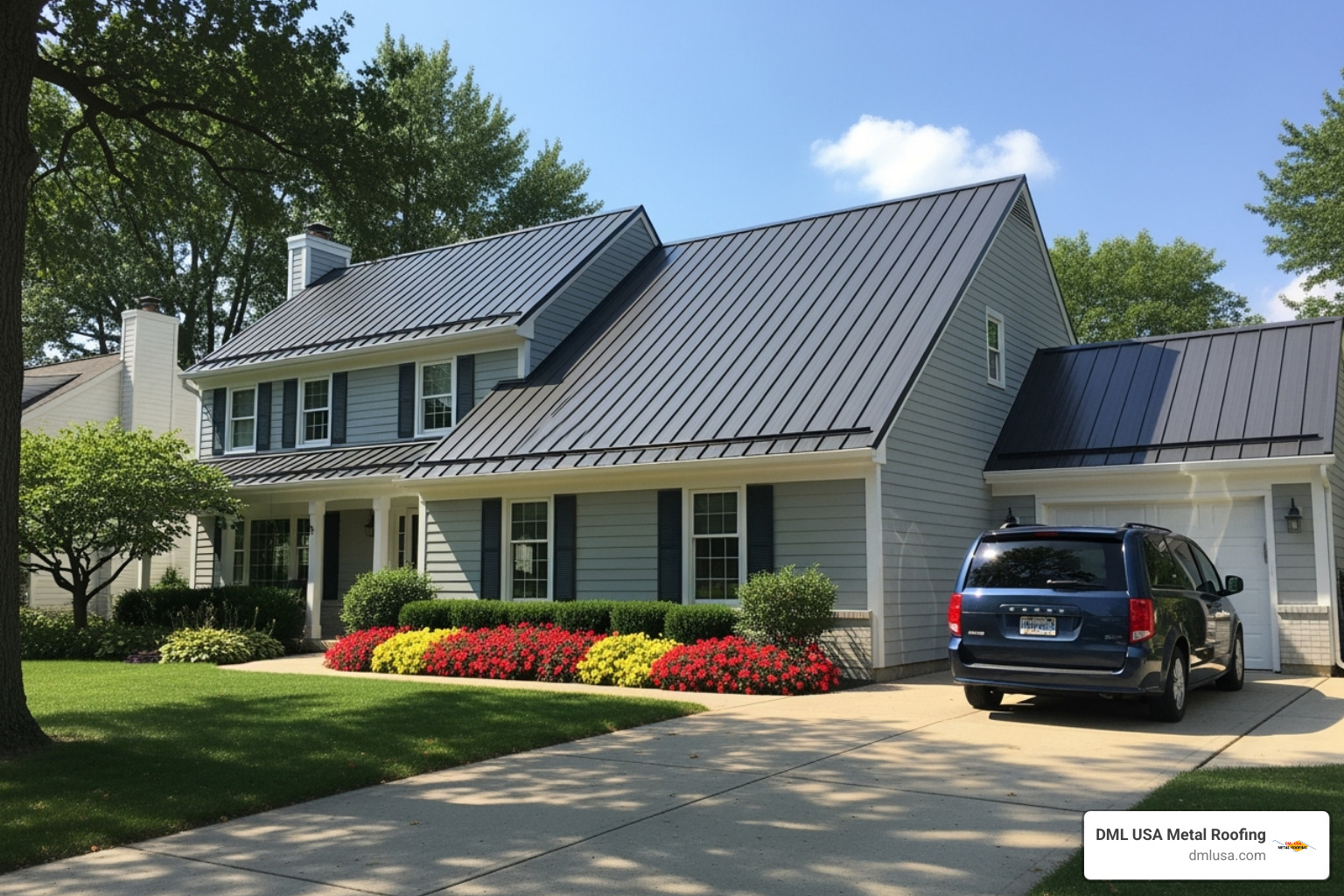
The benefits are clear: a roof that lasts 40-70 years, potential cooling cost savings up to 40%, and a positive environmental impact by reducing landfill waste.
However, success hinges on proper installation and careful preparation. Following the steps, from checking building codes to ensuring your existing roof is sound, is essential for a long-lasting result. When done right, a metal roof-over is a durable, cost-effective solution.
At DML USA Metal Roofing, we’ve manufactured high-quality metal roofing products in Illinois since 2007. Our solutions are designed for our state’s weather, offering superior resistance to fire, wind, and impact for your peace of mind.
Ready to give your home the protection it deserves? Explore our metal roofing products and see how we can help you build a roof that lasts for generations.
