 Skip to main content

False
Why Metal Roof Valley Installation Is Critical for Your Home’s Protection
Metal roof valley installation is one of the most crucial aspects of protecting your home from water damage and ensuring your roofing system performs flawlessly for decades. A roof valley is the V-shaped channel where two roof slopes meet, and it’s designed to direct massive amounts of water away from your home during storms and heavy rainfall.
Quick Guide to Metal Roof Valley Installation:
- Install high-quality synthetic underlayment extending 12 inches past the valley on each side
- Measure and cut valley flashing with proper overhangs (1 inch minimum, plus 12 inches for overlaps)
- Secure flashing with pancake screws placed 12 inches apart and 1 inch from edges
- Apply butyl sealant at all overlaps and panel connection points
- Install adjoining metal panels with proper hemming and 1-2 inch gap from valley centerline
Why valleys matter so much: These channels handle the highest volume of water runoff on your entire roof. According to industry research, metal roofs can last 40-70 years when properly installed, but improper valley installation is one of the leading causes of premature roof failure and costly water damage.
The installation process requires precision – valley flashing typically costs $3 to $6 per linear foot, but the cost of water damage from improper installation can reach thousands of dollars. Open valley systems are strongly recommended for metal roofs because they provide superior water channeling and debris shedding compared to closed valley systems.
I’m Adam Kadziola, and through my years of experience at DML USA Metal Roofing, I’ve seen how proper metal roof valley installation makes the difference between a roof that protects your family for generations and one that fails within a few years. Our family-owned company has been manufacturing high-quality metal roofing products since 2007, and we’ve developed proven techniques that ensure your valleys perform flawlessly in even the harshest weather conditions.
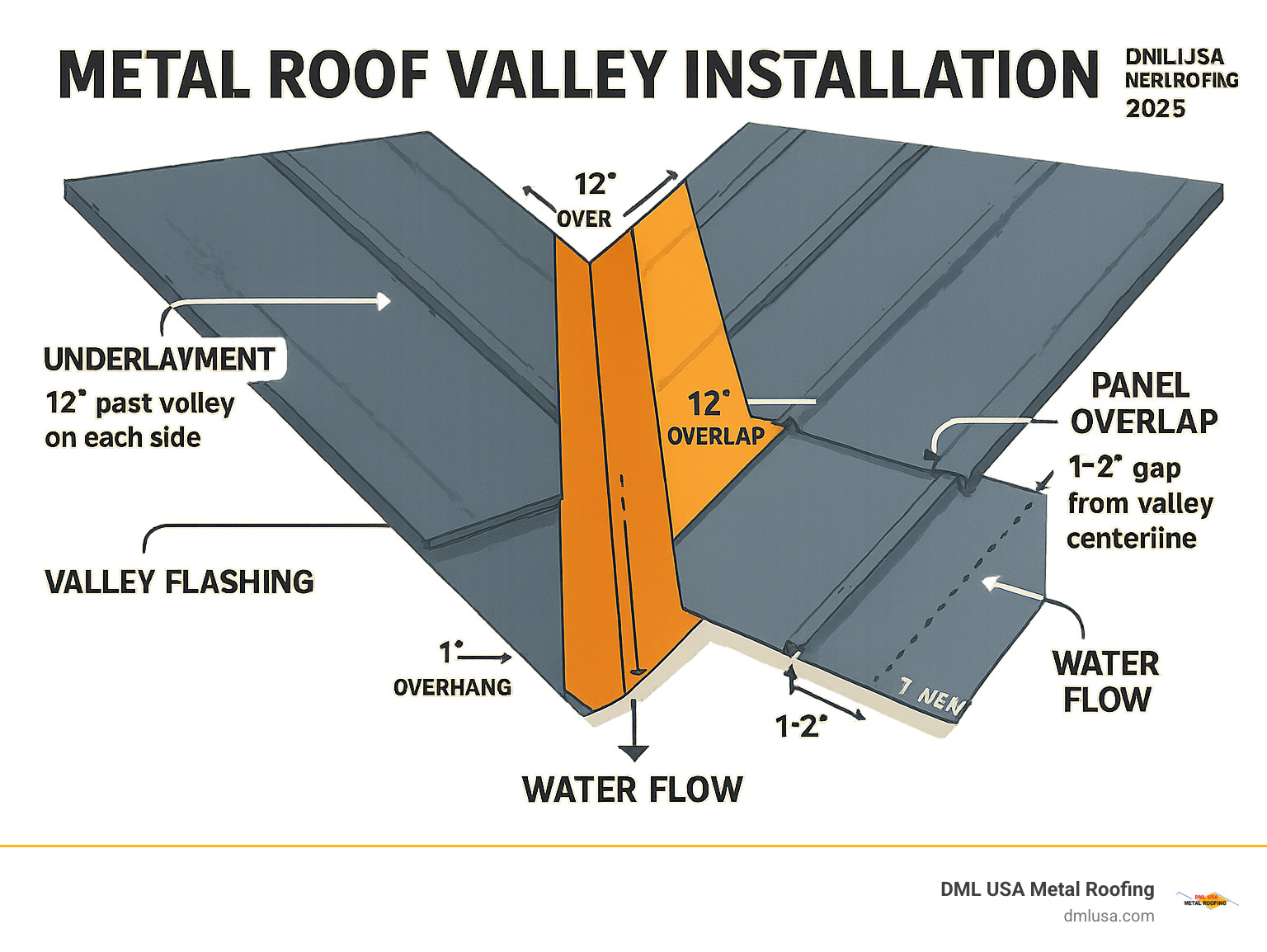
Basic metal roof valley installation vocab:
Understanding Metal Roof Valleys: Types and Importance
Picture your roof during a heavy rainstorm. All that water needs somewhere to go, and that’s where valleys come in. Metal roof valley installation isn’t just about filling a gap between roof sections – it’s about creating a superhighway for water that protects your entire home.
Valleys are the V-shaped channels where two roof planes meet, and they handle more water flow than any other part of your roof system. Think of them as the gutters of your roof surface, channeling thousands of gallons away from your home during major storms. Without properly installed valleys, water can pool, seep under your metal panels, and turn a small problem into a major headache involving rotted decking and structural damage.
The good news? A well-executed metal roof valley installation directly contributes to your roof’s impressive 40-70 year lifespan. But not all valleys are created equal, and understanding the differences can save you from costly repairs down the road.
| Feature | Open Valley | Closed Valley |
|---|---|---|
| Appearance | Visible metal flashing creates clean lines | Roofing material covers the flashing |
| Water Handling | Superior drainage with wide channel | More restricted water flow |
| Debris Shedding | Excellent – leaves and debris slide off easily | Poor – debris can get trapped |
| Installation Complexity | Straightforward with fewer steps | More complex, requires precise weaving |
Open valley systems use wide, pre-formed metal flashing that stays visible on your roof surface. The flashing creates a smooth, unobstructed path for water and debris to flow down and off your roof. This design makes them the clear winner for metal roofing applications.
Closed valley systems hide the flashing by weaving roofing materials across the valley. While this might look seamless with some materials, it creates potential trouble spots where debris can accumulate and water flow gets restricted.
W-valley design is a specialized open valley configuration that creates an even wider channel with raised edges, providing maximum water-carrying capacity for homes in heavy rainfall areas.
Why Open Valleys Are Recommended for Metal Roofs
When it comes to metal roof valley installation, open valleys are hands-down the best choice. Here’s why this design works so well with metal roofing systems:
Superior water and debris shedding means your valleys stay clear during storms. The wide, smooth channel allows leaves, twigs, and other debris to slide right off instead of creating dams that can force water under your roofing panels.
Reduced risk of ice dams makes open valleys especially valuable in colder climates. The unobstructed design prevents ice buildup that can create serious problems during freeze-thaw cycles.
Easier to inspect and repair saves you money over time. You can easily spot potential issues from the ground or during routine maintenance, and repairs don’t require removing and replacing multiple roofing panels.
Aesthetic integration with metal panels creates clean, professional lines that complement your metal roofing’s modern appearance. The flashing becomes part of the design rather than something to hide.
For the highest quality materials that ensure your valleys perform flawlessly for decades, explore DML USA’s complete range of metal roofing products designed specifically for superior weather protection and longevity.
Preparation: Tools, Materials, and Safety
Getting ready for your metal roof valley installation is like preparing for any important project – the better your preparation, the smoother everything goes. And trust me, when you’re working on a roof, smooth is exactly what you want!
Safety isn’t just a suggestion here; it’s absolutely critical. Working at heights requires respect and preparation. Always use a sturdy ladder that’s properly positioned, and if your roof has any significant pitch, a safety harness isn’t optional – it’s essential. We want you to complete this project with both a perfectly functioning valley and all your limbs intact!
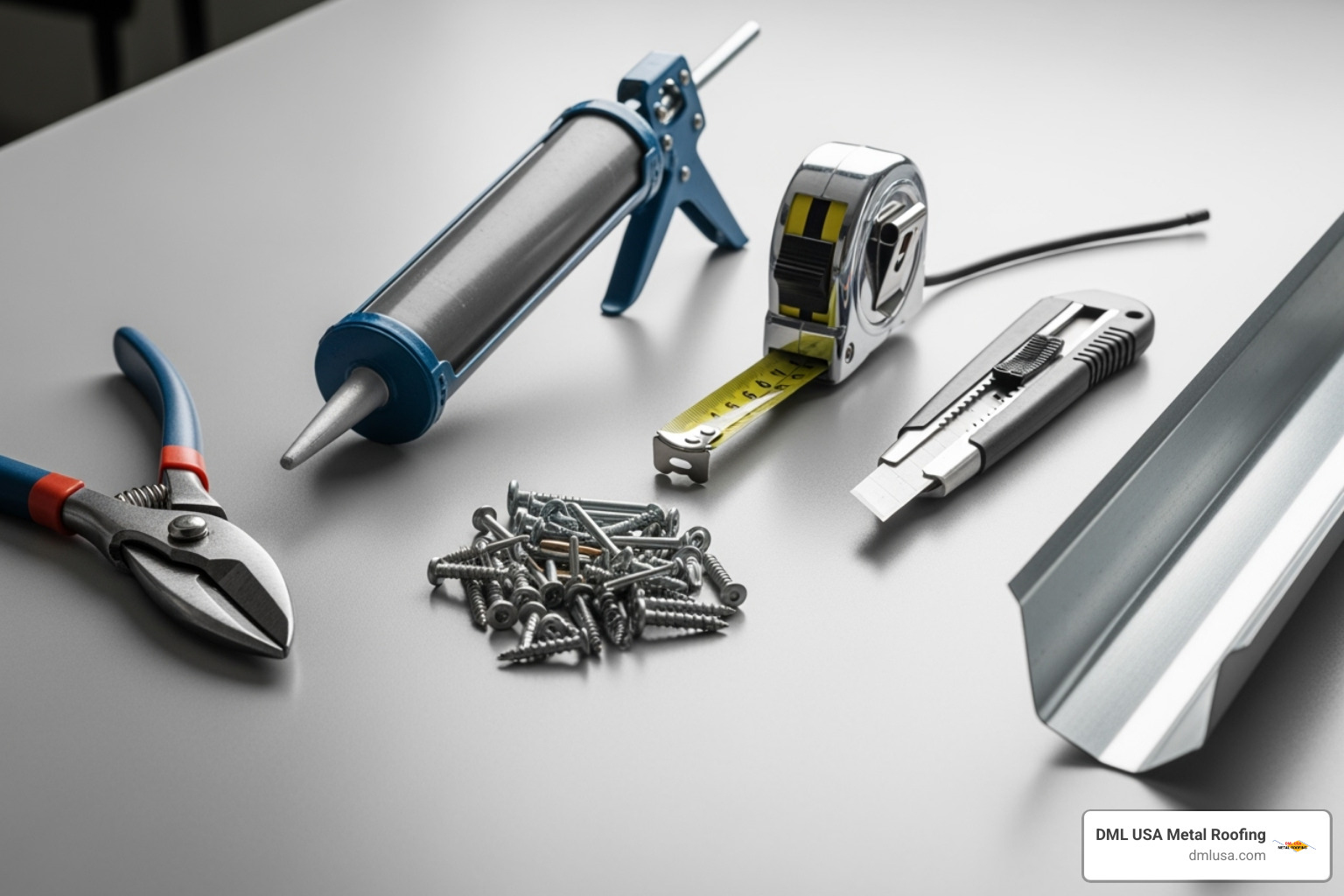
Essential Tools and Materials
The difference between a professional-looking metal roof valley installation and a weekend warrior disaster often comes down to having the right tools and materials. Let’s make sure you’re set up for success.
Your tool arsenal should include metal snips for making those precise cuts that separate the pros from the amateurs. A power drill will save your arm from fatigue and ensure consistent screw placement. Don’t forget your caulking gun – it’s your best friend for creating those watertight seals that keep your home dry.
Measuring tools are absolutely crucial. You’ll need a tape measure for accuracy and a chalk line for marking straight lines. Safety gloves protect your hands from sharp metal edges while providing better grip, and safety goggles shield your eyes from metal shards and debris.
The star of your material list is the metal valley flashing itself. These typically come in 10-foot lengths, though 12-foot pieces are available for longer runs. Make sure it matches your roof’s material and color – nobody wants a valley that looks like it was borrowed from a different house! Consider a W-valley design for superior water flow and debris shedding.
Your supporting cast includes high-quality synthetic underlayment for that extra layer of protection, butyl sealant tape for creating bulletproof seals, and corrosion-resistant pancake head screws (#10 x 1″) designed specifically for metal roofing. These low-profile fasteners won’t create water-trapping ridges like regular screws might.
Preparing the Roof Deck
Think of your roof deck as the foundation of your entire metal roof valley installation. Just like you wouldn’t build a house on shaky ground, you can’t install a lasting valley on a compromised deck.
Start with a thorough inspection of the existing roof deck. Look for any signs of rot, water damage, or compromised sheathing. If you find soft spots or damaged areas, fix them now – not after you’ve installed your beautiful new valley. A damaged deck is like trying to hang a picture on a crumbling wall; it’s just not going to hold.
Next, clear away all debris from the valley area. We’re talking leaves, twigs, dirt, old roofing materials – everything has to go. A clean surface ensures your underlayment and flashing will adhere properly and lay flat. Think of it like preparing a canvas before painting a masterpiece.
Finally, make sure the surface is smooth and solid. Any bumps, ridges, or irregularities will prevent your materials from lying flat, which can create gaps where water can sneak through. Your goal is a surface so smooth and clean that your new valley materials will practically install themselves.
The Step-by-Step Metal Roof Valley Installation Process
Now that we’ve got our ducks (and tools!) in a row, let’s walk through the actual metal roof valley installation process. Think of this as your roadmap to success – each step builds on the last, creating a watertight system that’ll protect your home for decades.
This isn’t just about slapping some metal in a valley and calling it good. We’re creating a precision-engineered water management system that channels thousands of gallons away from your home during storms.
Step 1: Installing the Underlayment
The underlayment is your roof’s unsung hero – the protective layer that works behind the scenes to keep moisture out. For metal roof valley installation, we always recommend high-quality synthetic underlayment, and in valleys specifically, an ice and water shield is your best friend.
This self-adhering membrane creates an incredible barrier against water intrusion. In colder climates where ice dams love to cause trouble, it’s absolutely essential.
Here’s how to get it right: Center the underlayment directly in the valley, running it along the valley’s centerline like you’re laying a carpet runner down a hallway. When you add subsequent sheets, make sure they overlap by at least 6 inches – this creates that continuous protective barrier we’re after.
The magic number for valley coverage is 12 inches extending past the valley on each side. This generous coverage ties into your main roof underlayment and gives you that extra insurance against water finding its way where it shouldn’t be. Don’t forget to seal the edges with roofing cement, especially where sheets overlap.
Step 2: A Guide to Measuring, Cutting, and Fitting the Flashing
This is where precision truly pays off in metal roof valley installation. Your metal valley flashing needs to be measured and cut with the care of a master craftsman. You can always trim excess material, but you can’t magically add what’s missing!
Measuring your valley length starts from the eave (bottom) all the way to the ridge (top). But here’s the key – you need extra material for a minimum 1-inch overhang at the eave and 12 inches for overlaps between pieces. If you’re working with the ridge end, give yourself at least 3 inches for proper ridge preparation.
Finishing the eave end is critical for directing water into your gutters smoothly. Start by placing your lower valley trim with that crucial 1-inch overhang. Use your carpenter’s pencil to outline where the valley meets the eave, then cut along this line with metal snips, stopping right at the valley seam.
The process gets a bit technical here, but stick with me. Measure 2 inches from your outline and make a straight cut through the seam. Mark 90-degree lines on both sides, then make a notch cut in the middle. After removing both flaps, cut the left flap at a 45-degree angle and use your hammer to tap it inward at 90 degrees. The right flap gets folded the same way, but trim it first so it bends completely.
Finishing the ridge end requires similar attention to detail. Lay the valley at the ridge and trace the outline, then measure your valley seam height and mark the center. Connect corners to this center mark and draw lines down the seam. On each side, draw parallel lines 3 inches from your trace, then use a protractor for perfect 90-degree lines from seam edge to valley edge.
Always use sharp metal snips for cutting – think surgical precision here! Clean edges fit snugly and prevent water from sneaking under. Avoid abrasive cutting wheels because the heat they generate can damage your metal’s protective coating.
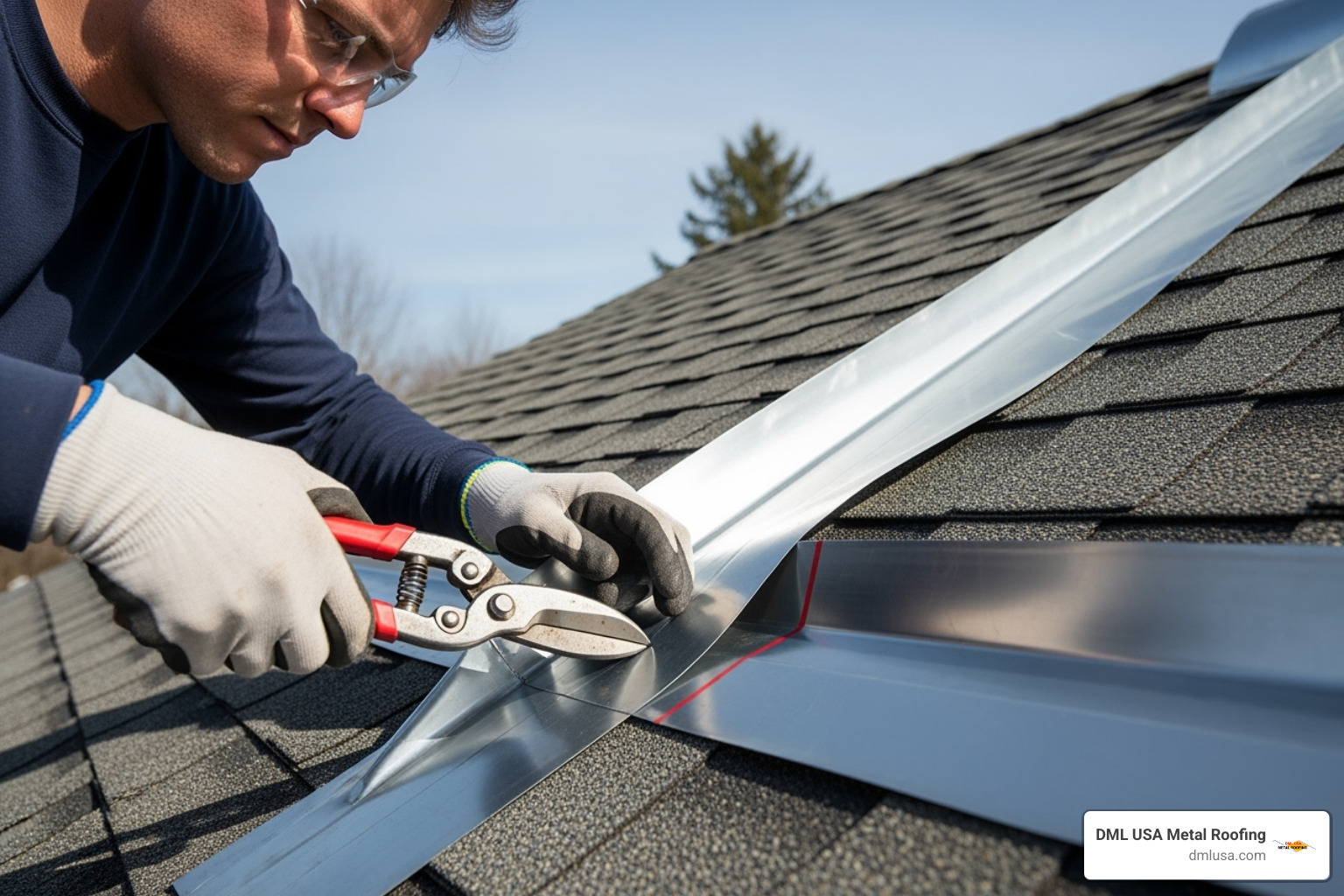
Step 3: Securing the Valley Flashing
With your underlayment down and flashing pieces cut to perfection, it’s time to secure everything. This is where your valley truly starts looking like the professional installation it is.
Start at the lowest point – the eave – and position your first piece with that 1-inch overhang properly placed. As you work your way up toward the ridge, overlap each piece by a minimum of 12 inches. This isn’t being overly cautious – this generous overlap is your insurance policy against water intrusion during those heavy downpours or spring snowmelts.
Secure everything with #10 x 1″ pancake screws placed about 12 inches apart and exactly 1 inch from the flashing edge. This spacing gives you strong, consistent hold without overdoing it. Make sure you’re driving those screws into the roof deck for a rock-solid connection.
Here’s a pro tip that’ll save you headaches later: remove any protective plastic film from your valley flashing before you start fastening. This ensures your sealants will adhere properly and gives you that clean, professional finish.
Step 4: Achieving a Watertight Seal for Your Metal Roof Valley Installation
This step is absolutely critical for preventing leaks and ensuring your metal roof valley installation lasts for decades. A watertight seal is your ultimate defense against moisture, and getting this right separates the pros from the amateurs.
Where your valley flashing pieces overlap, apply a continuous bead of high-grade butyl sealant. For overlaps specifically, apply silicone about 1 inch from the bottom of the overlap. This creates a flexible, durable barrier that moves with your roof’s natural expansion and contraction.
Don’t forget the outer edges where your metal roof panels will sit. Apply sealant along both edges of the valley flashing to create that tight seal between flashing and panels. It’s like creating a gasket that keeps everything watertight.
Once your screws are in place, cover each fastener head with a dab of roofing cement or adhesive. This might seem like overkill, but it’s absolutely vital for preventing water from seeping under screw heads and into your roof structure. Applying roofing cement properly over fastener heads gives you that extra layer of protection that makes all the difference.
Step 5: Installing the Adjoining Metal Roof Panels
With your valley flashing secured and sealed like a fortress, it’s time for the main event – installing your metal roof panels. Proper integration here is what makes your roof look seamless and function flawlessly.
Each panel that meets the valley needs to be cut at the correct angle to match your valley’s slope. Take careful measurements and transfer that angle to the back of your panel before making any cuts with your metal snips. Measure twice, cut once – that old saying exists for a reason!
Hemming the panel edges that sit in the valley gives you a clean finish and added protection. This means folding the cut edge back on itself, creating a smooth, reinforced edge that sits perfectly against your valley flashing. It’s a small detail that makes a huge difference in both appearance and performance.
Here’s something crucial: maintain a 1-2 inch gap between your panel’s cut edge and the valley flashing centerline. This gap isn’t wasted space – it’s essential for unrestricted water flow and prevents debris from building up. It also reduces direct contact between panel and valley, minimizing friction and wear over time.
When fastening panels to the roof deck, follow the manufacturer’s guidelines but remember this golden rule: never drive screws directly through the center of the valley flashing. All your panel fasteners should penetrate the roof deck outside the valley channel, keeping that critical water pathway completely free of penetrations.
Post-Installation: Inspection, Maintenance, and Troubleshooting
Congratulations! You’ve just completed a professional-grade metal roof valley installation, and I bet you’re feeling pretty proud right about now. But before you crack open that celebratory beverage, let’s make sure your hard work will protect your home for the next several decades. Think of this final phase as your victory lap – important, but also immensely satisfying.
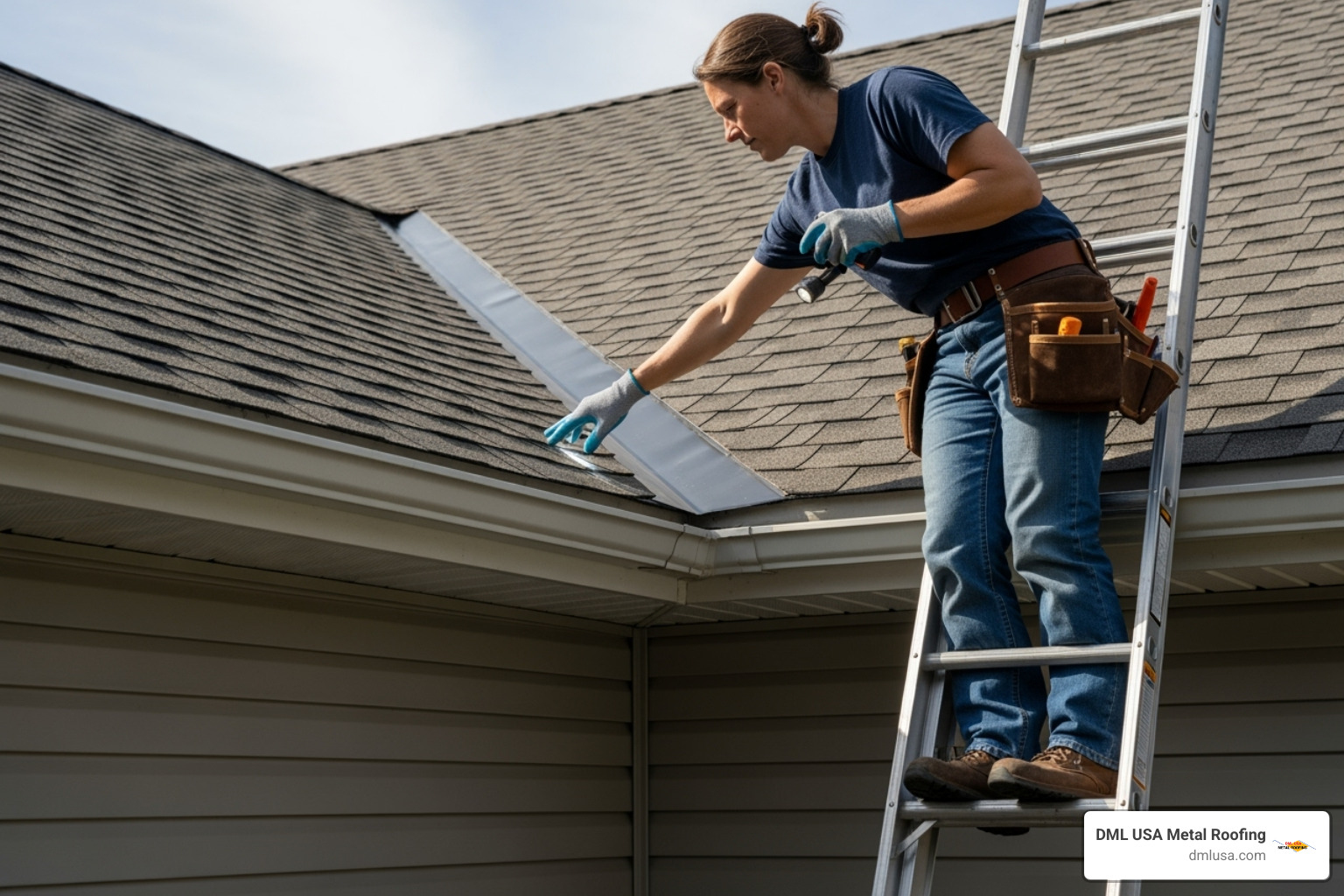
The importance of post-installation checks cannot be overstated. A metal roof system is designed to last 40-70 years, and your valley is a critical component that needs to perform flawlessly throughout that entire lifespan. A few minutes spent on inspection now can save you thousands of dollars in potential water damage down the road.
Inspecting Your New Valley
Your first mission is a thorough inspection to catch any potential issues while they’re still easy to fix. Start with a visual inspection for gaps from a safe vantage point – either from a secure ladder or from ground level with binoculars if your roof is steep. Look carefully at the entire length of the valley, paying special attention to where the flashing pieces overlap and where your metal panels meet the valley edges.
Next comes the fun part: performing a water test with a garden hose. This is like giving your valley its first real-world exam. Gently saturate the valley with water, starting from the top and working your way down. The water should flow smoothly and quickly down the channel without any pooling, backing up, or mysterious disappearing acts. If you see water hesitating or pooling anywhere, that’s your cue to investigate further.
Don’t forget to check the attic space for any signs of moisture after your water test or following the next good rainfall. This is honestly the ultimate truth detector – if there’s any water making it through your valley system, the attic will tell you. Look for water stains, dampness on the roof deck, or any suspicious moisture on your insulation.
Finally, take a moment to ensure all fasteners are secure. Those pancake head screws should be snug and sitting flush, with no loose or protruding fasteners that could compromise your seal.
Long-Term Maintenance and Care
Here’s the beautiful thing about a properly installed metal roof valley – it’s remarkably low-maintenance. But “low-maintenance” doesn’t mean “no-maintenance,” and a little attention goes a long way.
Regular inspections should become part of your annual home maintenance routine, ideally scheduled for late fall before winter weather arrives. This timing allows you to clear out fallen leaves and prepare your roof for the challenging months ahead.
Keeping the valley clear of leaves and debris is probably your most important ongoing task. Valleys naturally collect everything that slides off your roof – leaves, twigs, pine needles, and even the occasional tennis ball. While a few leaves won’t hurt anything, accumulated debris can block water flow and create ice dams in colder climates. Plus, organic matter holds moisture against your metal, which isn’t ideal for long-term durability.
Over the years, you’ll want to periodically inspect your sealant for cracking or peeling. Even the highest-quality butyl sealant will eventually show signs of age after decades of temperature cycling and UV exposure. Catching small cracks early and touching them up is much easier than dealing with a full-blown leak later.
In snow country, safely removing snow and ice buildup becomes important during heavy winter weather. While metal roofs excel at shedding snow naturally, ice dams can still form in valleys under certain conditions. If you need to remove significant buildup, consider hiring professionals rather than risking a dangerous climb on an icy roof.
Common Problems and How to Avoid Them
Even with the best intentions and careful workmanship, certain issues can crop up during metal roof valley installation. The good news? Most of these problems are entirely preventable with the right knowledge.
Leaks from improper sealing top the list of valley troubles. This usually happens when someone gets a bit stingy with the sealant or uses a product that’s not compatible with metal roofing. The fix is simple: be generous with high-grade butyl sealant at all overlaps and joints, and always cover those fastener heads completely.
Damage from incorrect cutting can create gaps, poor fits, and exposed edges that invite corrosion. Sharp metal snips are your best friend here, along with the age-old carpenter’s wisdom: measure twice, cut once. Actually, make that measure three times – precision really matters in roofing.
Inadequate panel overlap might seem like a minor detail, but wind-driven rain can find its way under panels that don’t extend far enough over the valley flashing. Maintain that crucial 1-2 inch gap from the valley centerline while ensuring your panels provide adequate coverage.
Using the wrong type of fasteners or sealant is like building a house on sand – it might look good initially, but it won’t last. Standard hardware store screws will rust and stain your beautiful roof, while incompatible sealants may fail to bond properly or break down quickly under UV exposure.
At DML USA Metal Roofing, we’ve been perfecting these techniques since 2007, and we’ve seen what works and what doesn’t. A properly installed valley using quality materials will serve your family faithfully for generations.
Frequently Asked Questions about Metal Roof Valleys
I’ve been in the metal roofing business for years, and trust me, metal roof valley installation questions come up all the time. That’s actually a good thing – it means homeowners are taking this critical component seriously! Let me share the answers to the most common questions I hear, based on real-world experience and what I’ve learned working with countless roofing projects.
Do screws go in the valley on a metal roof?
Here’s where I see a lot of DIYers make a costly mistake. Absolutely not – you should never drive fasteners through the center of the valley channel where water flows. Think about it this way: your valley is like a highway for water, and putting a screw in the middle would be like placing a roadblock on that highway.
The valley flashing is designed to be one continuous, smooth channel. When you secure it, those pancake head screws go along the outer edges, at least one inch away from the raised hem or center fold. Your main metal roof panels get fastened to the roof deck separately, with their edges simply resting over the valley flashing.
I’ve seen too many roofs leak because someone thought they needed extra security and added screws in the wrong place. Don’t be that person!
What is the difference between an open and a closed valley?
This is where understanding the difference can save you from major headaches down the road. With metal roof valley installation, we always recommend open valleys, and here’s why.
Open valleys use visible valley flashing – usually that nice wide metal channel with a raised “W” shape in the center. Your metal panels are cut back a few inches from the valley centerline, leaving a clear, unobstructed path for water. It’s like having a dedicated express lane for rainfall and snowmelt.
Closed valleys, on the other hand, involve weaving the roofing material across the valley, hiding the flashing underneath. While this might look seamless, it’s not ideal for metal roofs. The problem? Metal panels are slick, debris can get trapped more easily, and water doesn’t flow as freely.
Open valleys are the clear winner for metal roofing because they shed water and debris better, resist ice dams more effectively, and are much easier to inspect and maintain. Plus, if you ever need repairs, you can actually see what’s going on!
When should I hire a professional for my metal roof valley installation?
Look, I love that homeowners want to tackle projects themselves – there’s real satisfaction in doing it right with your own hands. But metal roof valley installation is one of those jobs where the stakes are pretty high. Get it wrong, and you’re looking at water damage that could cost thousands.
Here’s when I’d strongly recommend calling in a professional: if your roof has multiple valleys or complex intersections, you’re dealing with a steep pitch that makes you nervous, or you’ve never worked with metal before. Cutting, bending, and sealing metal properly takes practice and the right touch.
Safety is my biggest concern, though. If you’re not completely comfortable working at heights or don’t have proper safety equipment, please don’t risk it. Professional roofers are trained for this stuff and have the right gear to stay safe.
Here at DML USA Metal Roofing, our team has installed valleys on everything from simple ranch homes to complex architectural designs throughout Illinois. We’ve been manufacturing high-quality metal roofing products since 2007, and we know how to make these systems work perfectly together. Plus, when we install your valley, it comes with a warranty that protects your investment.
Sometimes the peace of mind alone is worth the cost of professional installation. Your roof is protecting everything you care about – it deserves to be done right.
Conclusion
Looking back on everything we’ve covered today, you now have all the tools and knowledge needed for a successful metal roof valley installation. From understanding why valleys are so critical for your home’s protection to mastering each precise step of the installation process, you’re well-equipped to tackle this important project.
The key takeaways? Proper preparation is everything – having the right tools, quality materials, and a clean work surface sets you up for success. Precision in measuring and cutting ensures your valley flashing fits perfectly and channels water effectively. And most importantly, meticulous sealing at every overlap and connection point is what transforms a good installation into a leak-free system that protects your home for decades.
A well-installed valley isn’t just a component of your roof – it’s a guardian that works 24/7, channeling thousands of gallons of water away from your home during storms and heavy rainfall. When properly maintained, your metal roof valley installation will be a cornerstone of your roof’s impressive 40-70 year lifespan.
At DML USA Metal Roofing, we’ve been manufacturing high-quality, durable metal roofing products since 2007 because we believe every homeowner deserves a roof that performs flawlessly year after year. Our commitment to excellence means every valley flashing, every panel, and every component is designed to work together seamlessly, giving you the maintenance-free protection and peace of mind you deserve.
Whether you decide to tackle this project yourself or work with a professional installer, the most important thing is getting it done right. Your family and your home’s structural integrity depend on it. A properly installed valley is an investment that pays dividends in protection and peace of mind for generations to come.
Ready to get started with premium materials that make the difference? Explore our durable metal roofing options for your next project and find why so many homeowners trust DML USA Metal Roofing for their most important investment – their home’s protection.
