 Skip to main content

False
Why the Purlin Question Matters for Your Metal Roof Investment
Are purlins required for metal roofing over shingles? The short answer is no, they aren’t strictly required. However, they are highly recommended for the best performance and longevity of your new roof.
Quick Answer:
- Not Required: Metal roofing can be installed directly over shingles with proper underlayment.
- Highly Recommended: Purlins create a vital ventilation space and prevent moisture problems.
- Two Methods: You can choose between a direct-to-deck installation or using purlins.
- Climate Matters: High-humidity areas like Illinois benefit significantly from the ventilation purlins provide.
- Cost vs. Performance: Purlins add to the upfront cost but improve long-term durability and can save you money over time.
When you’re considering a metal roof over your existing shingles, you’re making a smart choice. Metal roofs can last 50+ years with minimal maintenance—two to three times longer than traditional shingles. Plus, you’re keeping old shingles out of landfills, where they make up a significant portion of waste.
But here’s where many homeowners get conflicting advice. One roofer says you need purlins (also called furring strips), while another says you can screw directly through the shingles into the deck. So, who’s right?
The truth is, both methods can work, but they have very different outcomes for your home’s performance, energy efficiency, and long-term durability. At DML USA Metal Roofing, we’ve seen how the decision to use purlins impacts homeowner satisfaction. The right installation method makes all the difference between a roof that performs for decades and one that creates problems down the road.
Terms related to are purlins required for metal roofing over shingles:
Understanding the “Roof-Over” Method: Is It Right for You?
Instead of a messy and costly tear-off, the roof-over method involves installing your new metal roof directly over your existing shingles. This approach is popular for its significant cost savings, as it eliminates the labor and disposal fees associated with removing the old roof. It’s also an environmentally friendly choice, keeping tons of asphalt shingles out of landfills.
However, a roof-over isn’t suitable for every home. Before proceeding, two critical factors must be addressed:
- A Professional Roof Inspection: This is non-negotiable. A qualified inspector must verify that your roof deck is structurally sound and free from rot or water damage. Installing a new roof over a compromised structure is a recipe for disaster. Key red flags include sagging, soft spots, and signs of leaks. The condition of the existing shingles also matters, as a severely damaged surface won’t provide a stable base.
- Local Building Codes: Most municipalities, including many in Illinois, limit roofs to a maximum of two layers. If you already have two layers of shingles, a complete tear-off is required by law before installing a new metal roof.
The Critical First Step: Before You Cover, Inspect
A roof inspection is like a medical checkup before surgery. An inspector will look for specific red flags that could spell disaster later. A sagging roof deck is an immediate no-go, as it signals structural problems that a new metal roof will only worsen.
Water damage is another deal-breaker. Brown stains on your ceiling or moldy spots under the eaves indicate that moisture is already getting in. Installing over a leaky roof just traps the problem.
The inspector will also check for soft spots by walking on the roof. These spongy areas usually mean the underlying plywood has started to rot, which means fasteners won’t hold securely.
Your existing shingle condition also matters. Severely curled, brittle, or missing shingles can create an unstable base for your new metal roof.
Finally, they’ll count how many layers you already have. If you’re at the two-layer limit, a roof-over won’t be possible under most local codes.
As one industry expert puts it: “If you install your metal roof over a leaky or buckling roof, it will lead to an expensive repair job.” Skipping this inspection to save a few hundred dollars upfront often leads to thousands in repairs later. A thorough inspection sets you up for success, whether you end up using purlins or going with a direct-to-deck installation.
Are Purlins Required for Metal Roofing Over Shingles?
Here’s the heart of the matter: are purlins required for metal roofing over shingles? The straight answer is no—they’re not technically required. But based on our experience manufacturing metal roofing in Illinois, they’re almost always worth it.
There are two main installation methods when putting metal roofing over existing shingles, and each one leads to very different outcomes for your home. The choice you make here will affect everything from how your roof looks to how long it lasts to how much you spend on energy bills.
Let’s break down both methods:
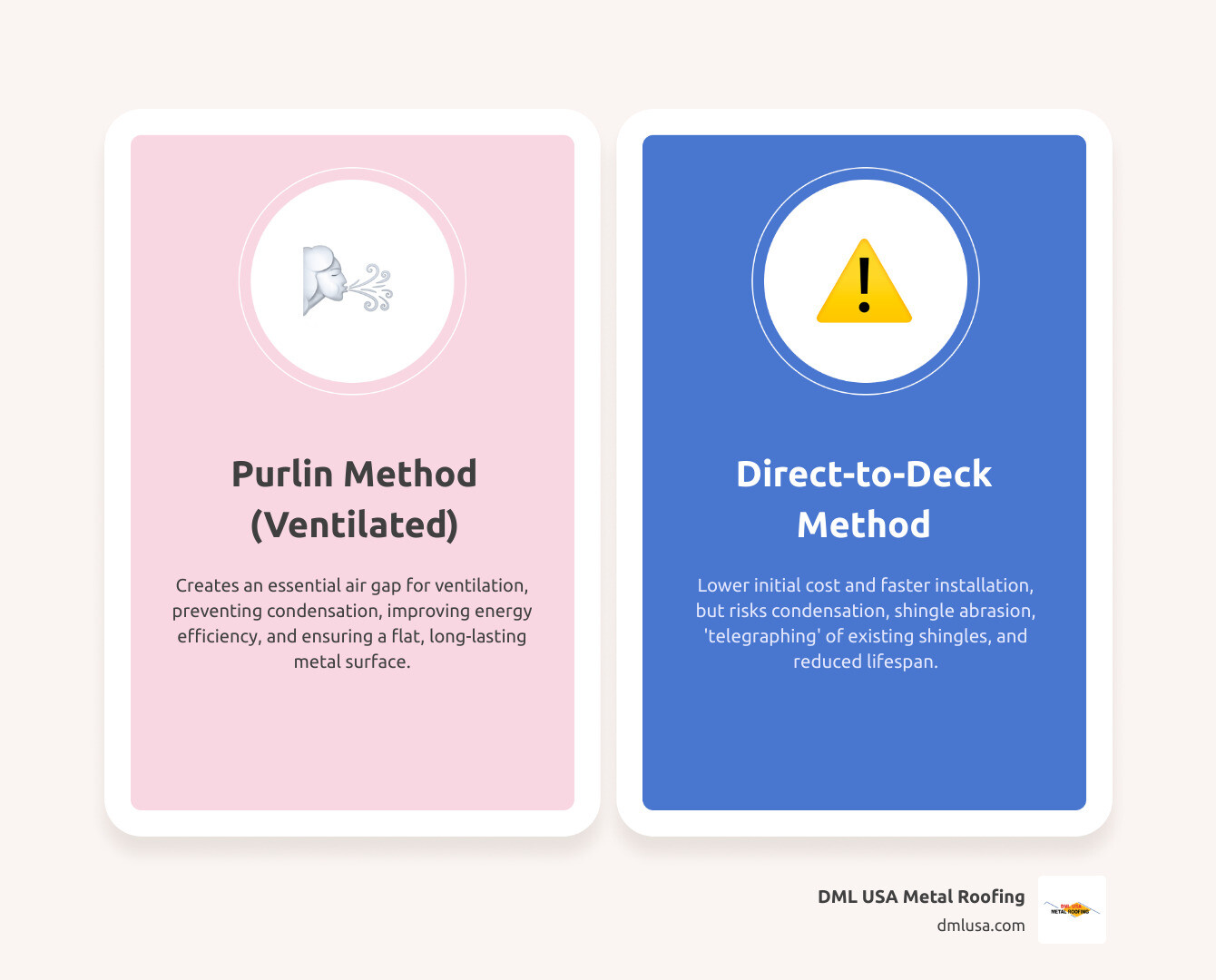
| Feature | Purlin Method (With Furring Strips) | Direct-to-Deck Method (Without Furring Strips) |
|---|---|---|
| Cost | Higher upfront (materials and labor) | Lower initially |
| Ventilation | Excellent air gap prevents moisture | No air gap, traps moisture |
| Longevity | Maximum lifespan, prevents condensation | Shorter lifespan due to moisture issues |
| Aesthetics | Smooth, professional appearance | Old shingle lines may show through |
Method 1: Installing With Purlins (The Ventilated Method)
Purlins (or furring strips) are wood strips installed over the old shingles, creating a new, level surface for the metal panels. This method offers several key advantages:
- A Level Surface: Purlins create a perfectly flat plane, ensuring your new metal roof looks smooth and professional. This prevents “telegraphing,” where the bumps and lines of the old shingles show through the metal.
- Solid Attachment: They provide a secure base for fastening the metal panels, which is crucial for withstanding high winds.
- Ventilation Air Gap: This is the most significant benefit. The space created by the purlins allows for Above Sheathing Ventilation (ASV). Air circulates between the old and new roofs, carrying away heat in the summer and moisture in the winter. This improves energy efficiency, reduces the risk of ice dams, and prevents condensation.
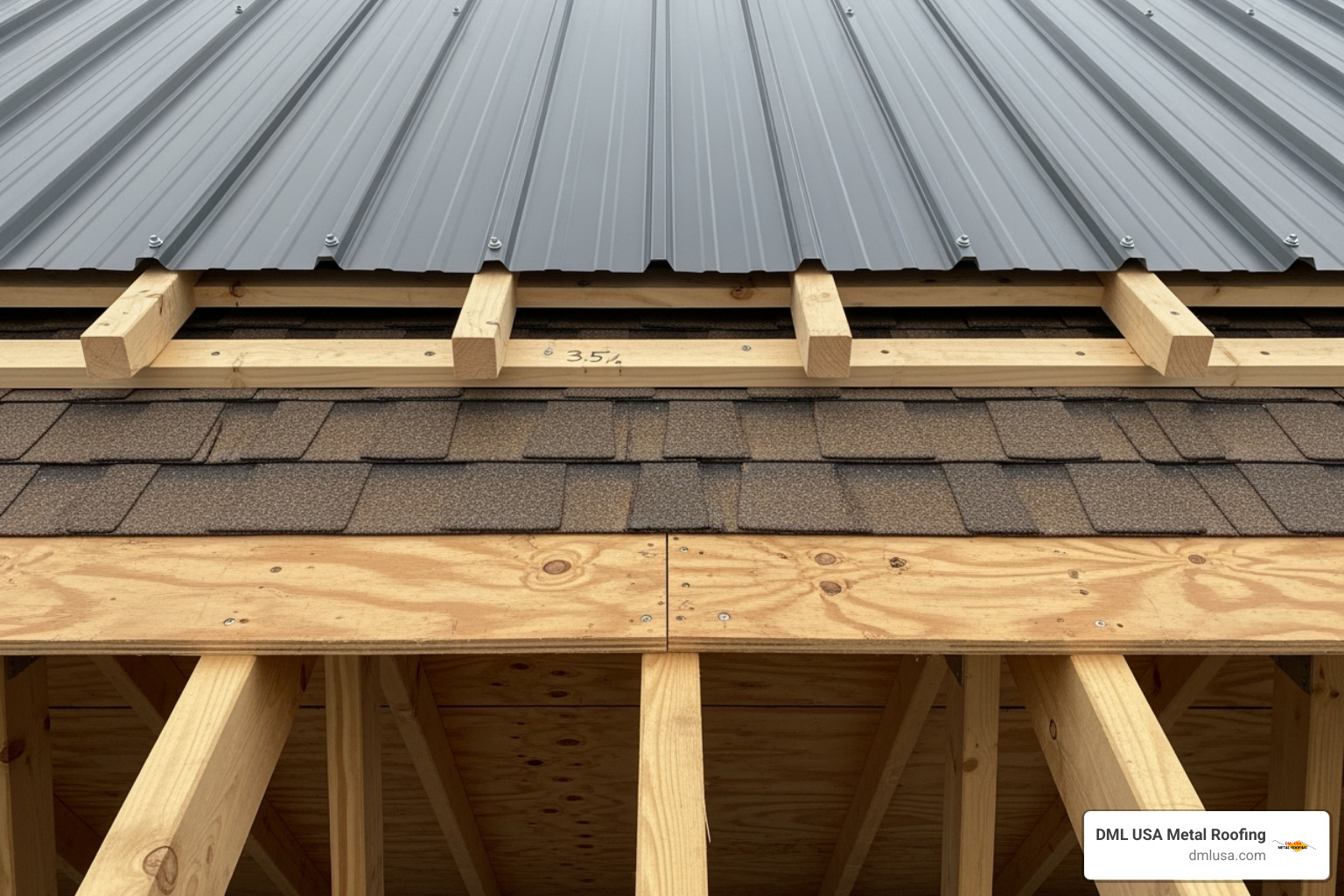
While purlins add to the initial cost, they create a high-performance roofing system that protects your home and saves you money for decades.
Method 2: Installing Without Purlins (The Direct-to-Deck Method)
The direct-to-deck method involves laying a synthetic underlayment over the old shingles and screwing the metal panels directly to the roof deck. It’s faster and cheaper upfront, but it comes with significant drawbacks:
- Shingle Granule Abrasion: The rough surface of the old shingles can wear away the protective coating on the back of the metal panels as they expand and contract.
- “Telegraphing” Issues: Without a leveling layer, the uneven surface of the old shingles will be visible through the new metal, resulting in a wavy, unprofessional look.
- No Ventilation: This is the biggest problem. Trapped heat and moisture can lead to condensation, mold, and increased energy costs.
- Poor Fastener Grip: Screws may not hold as securely if the underlying shingles and decking are old or deteriorated.
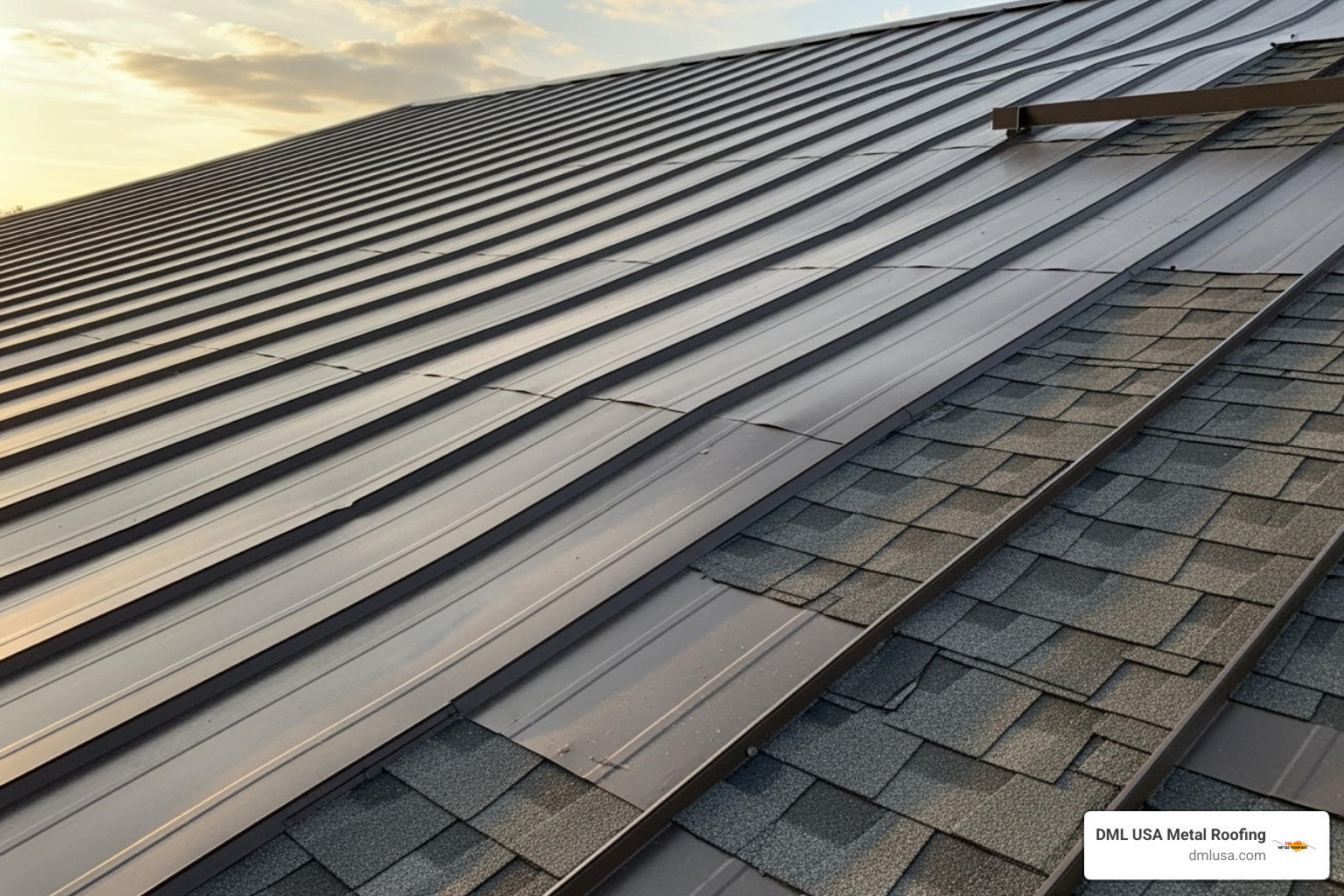
While the direct-to-deck method might save money today, it often leads to aesthetic disappointments and performance problems tomorrow. For the quality and longevity our customers expect from DML USA Metal Roofing, we generally recommend against this approach unless specific circumstances make it the only viable option.
The Critical Role of Ventilation and Condensation Control
Proper ventilation and condensation control are crucial for the longevity of your metal roof, especially in a climate like Illinois with its hot, humid summers and cold winters.
When warm, moist air from inside your home meets the cold underside of a metal roof, condensation forms. This trapped moisture can lead to serious problems:
- Corrosion: Metal panels can rust from the inside out.
- Mold and Rot: The underlying roof deck and old shingles can decay, leading to structural damage and health concerns.
- Reduced Insulation: Wet insulation loses its effectiveness, increasing your energy bills.
A metal roof that should last over 50 years can fail prematurely without proper moisture management.
How Purlins Create a “Cool Roof” Air Gap
Purlins are key to creating what’s known as Above Sheathing Ventilation (ASV). By creating a 3/4″ to 1.5″ air gap between the old shingles and the new metal panels, they allow for continuous airflow from the eaves to the ridge.
This air gap has two primary functions:
- Heat Dissipation: In the summer, hot air under the metal panels is vented out, reducing heat transfer to your attic. This can lower attic temperatures significantly, cutting down on air conditioning costs.
- Moisture Removal: In any season, the airflow carries away moisture vapor before it can condense on the underside of the metal, preventing rust and rot.
Managing Moisture in High-Humidity Climates
In humid climates like Illinois, managing moisture is even more critical. The air gap created by purlins is the most effective way to combat condensation. This system also helps prevent the formation of ice dams in the winter by keeping the roof deck temperature more consistent.
To create a complete moisture management system, we also recommend:
- Breathable Synthetic Underlayment: This acts as a secondary water barrier while allowing vapor to escape.
- Proper Attic Ventilation: Ensure your soffit and ridge vents are clear and working with the ASV system to create a continuous flow of air.
- Vapor Barriers: In homes with high interior humidity, a vapor barrier on the warm side of the insulation can stop moisture from entering the attic space.
Structural, Code, and Cost Considerations for Your Project
Beyond performance, the decision to use purlins involves important structural, legal, and financial factors.
Building Codes and Warranty Implications
Before starting a roof-over project, you must consider these critical rules:
- Local Building Codes: Most areas, including many in Illinois, have a two-layer roofing limit. If your home already has two layers of shingles, you must tear them off before installing a new metal roof. Always check with your local building department.
- Manufacturer Warranties: Some manufacturers may void their warranty if a metal roof is installed directly over shingles without the proper ventilation that purlins provide. At DML USA Metal Roofing, we design our products for durability, but proper installation is key to ensuring your warranty remains valid. Always verify the specific requirements for your chosen roofing system.
- Structural Load: While metal roofing is lightweight, adding it over existing shingles still adds weight. For older homes or those with known structural issues, a professional assessment is recommended to ensure the structure can support the additional load.
Are purlins required for metal roofing over shingles: A Cost-Benefit Analysis
The choice between using purlins and a direct-to-deck installation often comes down to cost versus long-term value.
- Upfront Cost: The direct-to-deck method is cheaper initially because it requires less material and labor.
- Long-Term Value: The purlin method, while more expensive upfront, offers significant long-term benefits. The ventilation gap it creates leads to energy savings on cooling bills for decades. It also prevents moisture damage, saving you from potentially costly repairs down the road. A properly installed, high-performance metal roof can also increase your home’s resale value.
For most homeowners, especially those planning to stay in their home, the long-term savings and added durability of the purlin method make it the smarter financial investment. It ensures your DML USA roof performs at its best for its entire 50+ year lifespan.
Frequently Asked Questions about Metal Roof Overlays
What kind of underlayment should I use for a metal roof over shingles?
A high-quality synthetic underlayment is essential when installing a metal roof over shingles. Unlike traditional felt, synthetic underlayments offer superior tear resistance and water protection, ensuring they last as long as your metal roof.
- With Purlins: A breathable synthetic underlayment is ideal. It allows moisture vapor to escape, working with the air gap to keep the roof deck dry.
- Without Purlins (Direct-to-Deck): The underlayment acts as a crucial barrier, protecting the metal from the abrasive granules of the shingles below.
Can I install a metal roof over more than one layer of shingles?
No, this is not recommended and is prohibited by most building codes. Most municipalities enforce a two-layer maximum for roofing materials. Installing over more than one layer can cause several problems:
- Excessive Weight: The combined weight can strain your home’s structure.
- Hidden Damage: It’s impossible to inspect the roof deck for rot or water damage.
- Poor Fastener Grip: Screws may not secure properly through multiple layers, compromising wind resistance.
If you have two or more layers of shingles, a complete tear-off is necessary before installing a new metal roof.
How does my climate impact the decision to use purlins?
Your local climate is a major factor. For homeowners in Illinois, with our hot, humid summers and cold, snowy winters, purlins are highly recommended.
- Humidity and Heat: The air gap created by purlins provides crucial ventilation, allowing heat and moisture to escape. This reduces cooling costs in the summer and prevents condensation that can lead to rust and mold.
- Snow and Ice: Proper ventilation helps prevent the formation of destructive ice dams by keeping the roof deck temperature more consistent.
- Temperature Swings: Purlins provide a stable, flat surface that allows the metal to expand and contract without stress, which is important during Illinois’s dramatic temperature changes.
For these reasons, purlins are a smart investment for maximizing the performance and lifespan of a metal roof in the Midwest.
Conclusion: Making the Right Choice for a Lasting Roof
So, are purlins required for a metal roof over shingles? While not always mandated by code, our experience shows they are a crucial investment for the long-term health and performance of your roof.
Choosing to install with purlins provides:
- Superior Ventilation: An air gap prevents moisture buildup, corrosion, and mold.
- Improved Durability: A flat, stable surface ensures a secure attachment that withstands harsh weather.
- Improved Aesthetics: A smooth, professional finish without “telegraphing” from the old shingles.
- Long-Term Savings: Lower energy bills and fewer repair costs over the 50+ year lifespan of your roof.
The direct-to-deck method may save money upfront, but it risks moisture damage, a shorter lifespan, and a less attractive finish. For homeowners in Illinois, where the climate is demanding, the benefits of using purlins are undeniable.
Before starting, always get a professional roof inspection and check your local building codes for layer limits. To ensure your investment is protected, a proper installation is key.
Ready to make the smart choice for your home? Explore our durable metal roofing products and see how DML USA Metal Roofing can give you decades of worry-free protection with the energy efficiency and curb appeal you deserve.
