 Skip to main content

False
Why Ice Dams Are a Serious Threat to Your Illinois Home
For homeowners in Illinois, the sight of icicles can be a beautiful part of winter, but it often signals a serious problem: an ice dam. Metal roof ice dam prevention matters because these ridges of ice can force water under roofing materials, cause indoor leaks, and even lead to mold.
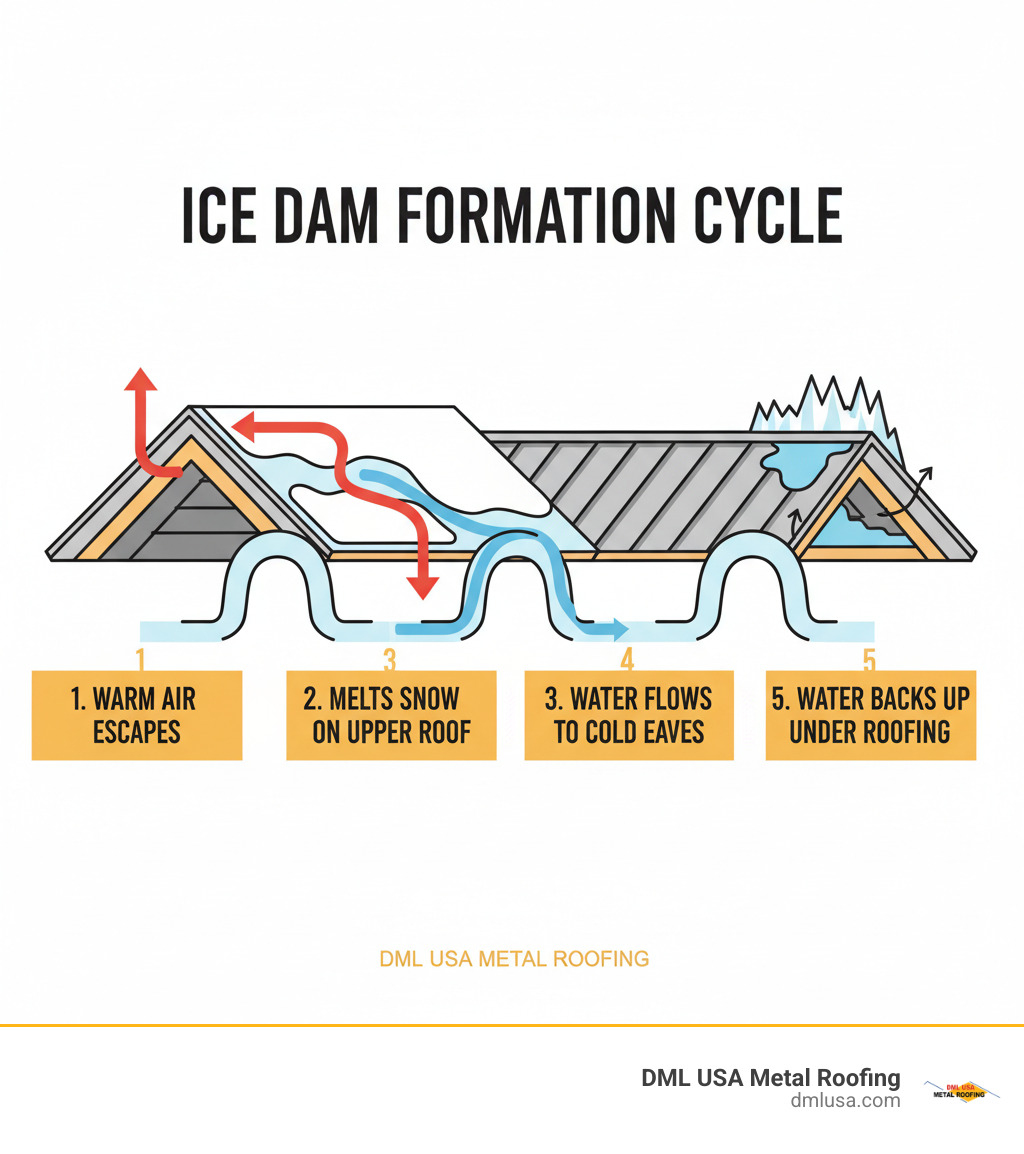
Ice dams form when household heat escapes, melts snow high on the roof, and that meltwater refreezes at the cold eaves. The ice ridge traps more meltwater, which then backs up under the roof covering.
Seeing an ice dam is also a red flag for energy waste. With research indicating that 90% of U.S. homes are under-insulated, many attics are leaking heat. The good news: a properly detailed metal roof, paired with insulation and ventilation upgrades, dramatically lowers risk and can cut energy bills.
Understanding Ice Dams and the Damage They Cause
Those picturesque icicles are a warning sign. In communities like Arlington Heights, Crystal Lake, and Glenview, ice dams can translate into costly repairs if ignored.
An ice dam is a ridge of ice at the roof edge that blocks drainage. Meltwater pools behind the dam and seeks a way in—often under the roof covering and into your home.
Potential Damage to Your Home and Roof
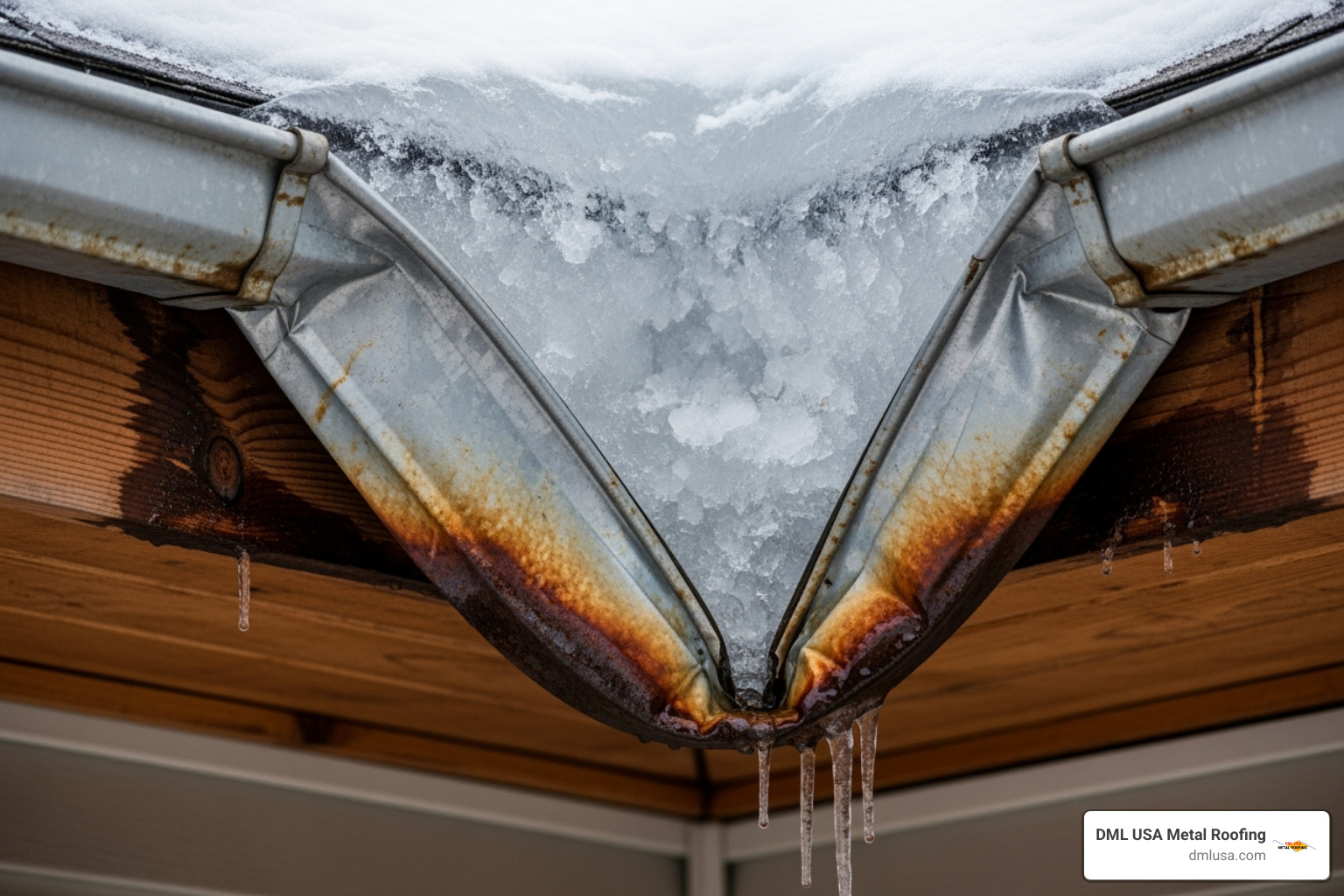
- Structural stress: Heavy ice can yank gutters, damage fascia, and strain framing.
- Water intrusion: Backed-up water causes ceiling/wall stains and active leaks.
- Insulation and mold: Wet insulation stops working and can fuel invisible mold and mildew issues.
- Roof damage: Even robust Metal Roofing Panels can see stressed seams and lifted edges from freeze-thaw cycles.
If you see dams or long icicles, it’s not just a winter quirk—it’s a sign of heat loss. Addressing the root cause is the only durable path to effective metal roof ice dam prevention. For added resilience, explore our Weatherproof Metal Roofing.
The Real Culprit: Why Ice Dams Form
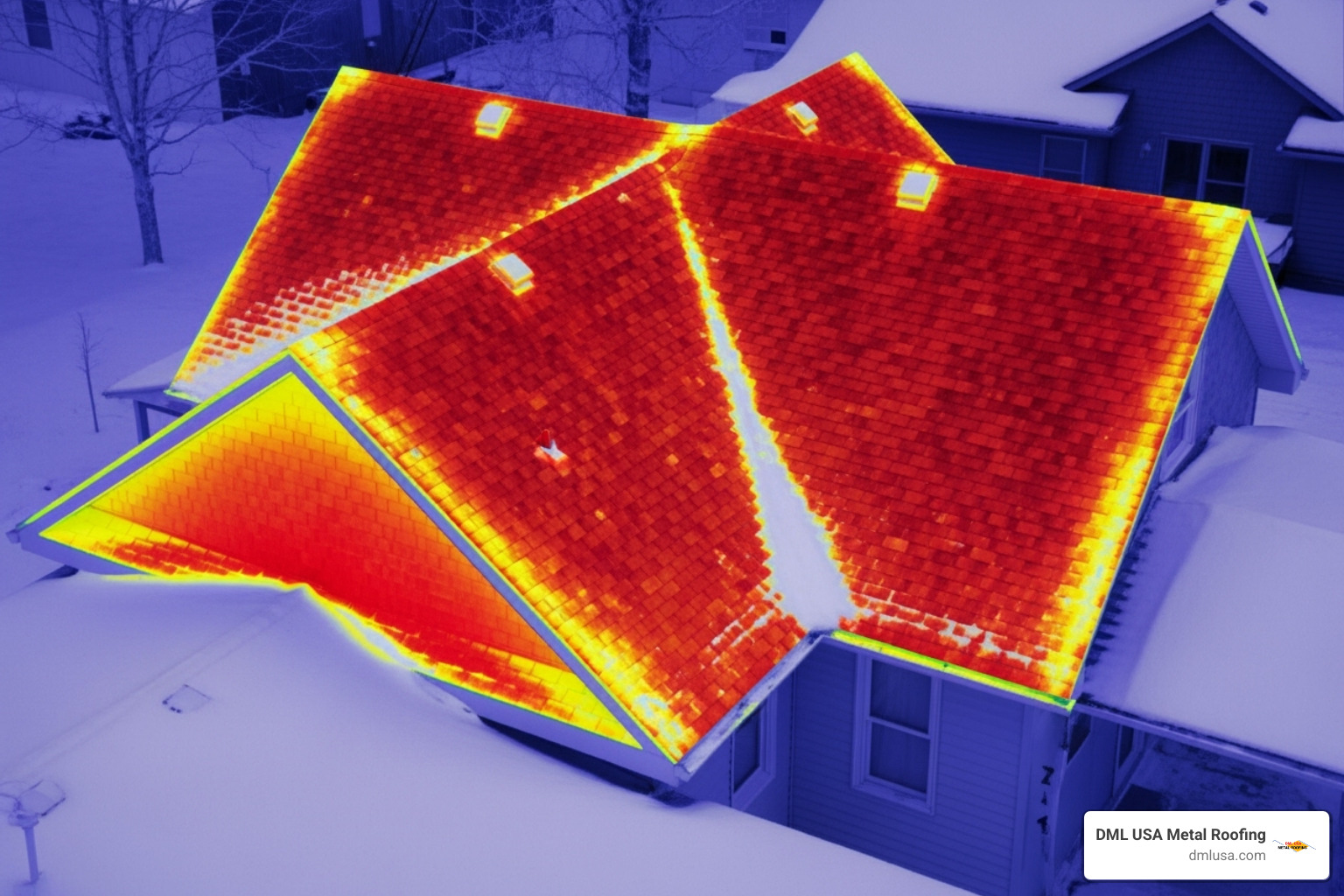
Ice dams are a building-science problem: heat escapes into the attic, warms the roof deck, melts snow, and meltwater refreezes at the cold eaves. The result is a ridge of ice and trapped water.
With studies showing that 90% of homes in the U.S. are under-insulated, most attics are vulnerable. Solving heat loss with insulation, air sealing, and balanced ventilation is the surest path to a stable, energy-smart roof system—especially when paired with our Energy Efficient Roofing Systems.
The Critical Role of Insulation
The goal is a cold, uniform roof deck. That means keeping warm air in your living space and out of the attic.
- Target at least R-49 of attic insulation in Illinois, installed as a continuous, gap-free layer.
- Air seal first: close bypasses around can lights, bath fans, plumbing stacks, chases, and the attic hatch so heat doesn’t skip past insulation.
- Better thermal control also pairs well with our Energy Efficient Metal Roof Colors, helping lower both winter and summer bills.
How Attic Ventilation Fights Ice Dams
Ventilation removes any heat that sneaks into the attic and helps keep the roof deck close to outdoor temperature.
- Intake: continuous soffit vents
- Exhaust: a continuous ridge vent at the peak
- Balanced airflow prevents hot spots that start the melt-refreeze cycle
Proactive Metal Roof Ice Dam Prevention Strategies
Effective metal roof ice dam prevention is a system: tighten the building envelope, design the roof to shed snow and drain meltwater, and maintain the setup. Our Durable Metal Roof Installation is built for Illinois winters and works best with the steps below.
Building Envelope Solutions for Metal Roof Ice Dam Prevention
- Professional air sealing: close attic bypasses around lights, fans, pipes, and chases.
- Attic hatch: insulate and weatherstrip to stop it acting like a chimney.
- Insulation upgrade: after sealing, increase to R-49+ in a continuous layer.
- Avoid common pitfalls with our guide to Metal Roof Installation Mistakes.
Smart Roof Design and Components
- Steeper pitch (>3/12) sheds snow faster.
- Choose a Standing Seam Metal Roof for fewer exposed fasteners and excellent water management.
- Right-size gutters and downspouts to handle meltwater without clogging.
Add-On Products and Maintenance for Metal Roof Ice Dam Prevention
- Heated de-icing cables: helpful for creating meltwater channels; they treat symptoms, not causes.
- Snow guards: improve safety by preventing sudden slides; they don’t fix underlying heat loss.
- Snow removal: use a long-handled roof rake from the ground to clear the first few feet at eaves.
- Keep gutters clear so meltwater can drain. Our Steel Roofing for Homes is tough, but clean drainage keeps it working its best.
Are Metal Roofs a “Cure” for Ice Dams?
Metal roofs aren’t magic, but they are far more resistant to ice dam damage than many alternatives thanks to smooth surfaces, liftd seams, and superior water management. Combine a quality metal roof with a tight, well-ventilated attic and you’ve built a highly resilient system.
| Feature | Metal Roofs | Asphalt Shingles |
|---|---|---|
| Snow Shedding | Excellent; smooth surface sheds snow easily. | Poor; granular texture holds onto snow. |
| Surface Texture | Smooth and slippery, reducing accumulation. | Rough and gritty, creating friction. |
| Seam Integrity | Raised, interlocking seams channel water away. | Overlapping layers create many entry points. |
| Leak Resistance | Highly resistant to water backup. | Vulnerable to water seeping under shingles. |
For best performance, pair a Standing Seam Metal Roof with proper insulation and ventilation. Explore more reasons Why Choose Metal Roofing and see our analysis in Metal Roofing Compared to Shingles.
ARTICLE SPECIFICATIONS
- Topic: Metal roof ice dam prevention
- Format: How-to guide (concise)
KEY QUESTIONS TO ANSWER
- What is an ice dam and how does it form on a metal roof?
- What attic issues (insulation, ventilation, air leaks) drive ice dams?
- What damage can ice dams cause to roofs and interiors?
- Are metal roofs more resistant than shingles?
- What design choices reduce risk on new installs?
- How do insulation and ventilation prevent ice dams?
- What maintenance helps homeowners stay ahead of ice dams?
- Which add-ons (heated cables, snow guards) actually help—and how?
- When should homeowners call a pro?
- Are any roofs truly ice-dam-proof?
RELEVANT STATISTICS
- 90% of homes in the U.S. are under-insulated.
- About 500,000 people were treated for ladder-related injuries in 2023; 300 fatalities.
- Around 40% of ladder accidents involve extension ladders; most fatal falls occur from 10 feet or less.
- 57% of buyers would pay $5,000+ extra to save $1,000/year on utilities.
EXTERNAL MD LINKS TO INCLUDE IN THE ARTICLE
INTERNAL MD LINKS TO INCLUDE IN THE ARTICLE
Standing Seam Metal Roof
Energy Efficient Roofing Systems
Why Choose Metal Roofing
Metal Roof Installation
Metal Roofing Materials
Durable Metal Roof Installation
Weatherproof Metal Roofing
Metal Roof Colors
Energy Efficient Metal Roof Colors
Metal Roof Energy Savings Calculator
Eco-Friendly Metal Roofing
Long-Lasting Roofing Options
Roof Load Distribution
Metal Roofing Compared to Shingles
Best Type of Metal Roofing
Metal Roof Installation Mistakes
Best Type of Metal Roof Standing Seam
Metal Roof Repair Companies
Metal Roofing
Steel Roofing for Homes
Most Common Metal Roofing Material
Residential Metal Roofing
Wind Resistant Roofing
Hurricane Proof Roofs
Impact Resistant Roofing
Best Metal Roofing Companies Near Me
Metal Roofing Panels
Metal Roof Design Options
Best Butyl Tape for Metal Roofing
Metal Roof Over Shingles
Are Metal Roofs a “Cure” for Ice Dams?
Metal roofing greatly reduces ice dam risk, but no roof is 100% ice-dam-proof. The smooth surface helps snow slide, raised seams move water away, and concealed fasteners cut potential leak paths. The real win happens when you combine a quality system with a tight, ventilated attic.
| Feature | Metal Roofs | Asphalt Shingles |
|---|---|---|
| Snow Shedding | Excellent – smooth surface allows snow to slide off easily, especially when warmed by sun | Poor – rough texture grips snow, holding it in place longer |
| Surface Texture | Smooth, slippery surface reduces snow accumulation | Granular, rough surface creates friction and holds snow |
| Seam Integrity | Standing seam panels have raised vertical seams that channel water effectively; fewer penetration points | Multiple overlapping shingles create many potential entry points for water backup |
| Leak Resistance | Highly resistant – interlocking panels and concealed fasteners provide superior water barrier | Vulnerable – water can work under lifted or damaged shingles when ice dams form |
Pair our Weatherproof Metal Roofing with proper air sealing, insulation, and ventilation, and you’ll have a system that’s highly resilient in Illinois winters. Learn more in Why Choose Metal Roofing and Metal Roofing Compared to Shingles.
KEY SOURCES AND SEO INSIGHTS
- Ice dams form when attic heat melts roof snow and refreezes at eaves, creating a barrier that traps water.
- Main causes: air leaks from living spaces, inadequate insulation, unbalanced/insufficient ventilation.
- Damage: gutter/fascia failure, seam stress, interior leaks, wet insulation, and mold.
- Prevention priorities: air sealing, R-49+ attic insulation in Illinois, balanced soffit-to-ridge ventilation, steeper roof slopes, right-sized gutters, careful detailing around penetrations.
- Add-ons: heated cables can open channels; snow guards improve safety but don’t solve heat loss.
- Safety: DIY removal is risky—ladder injuries are common; consider professional steaming for severe dams.
- Buyer interest: energy upgrades matter—over half of buyers will pay more for lower utility costs.
Actionable highlights we follow in our guides and installations:
- Seal first, then insulate, then ventilate (in that order).
- Prefer continuous soffit intake and ridge exhaust; maintain clear baffles.
- Aim for a cold, uniform roof deck; eliminate attic hot spots.
- Use standing seam profiles and robust underlayments at eaves.
- Keep gutters clean and sized for winter drainage.
These insights shape our Illinois-focused recommendations and support the performance benefits of our metal roof systems year-round.
