

Best type of metal roof against hail damage: Top 5 Proven Solutions 2025
Why Hail-Resistant Metal Roofing Matters More Than Ever
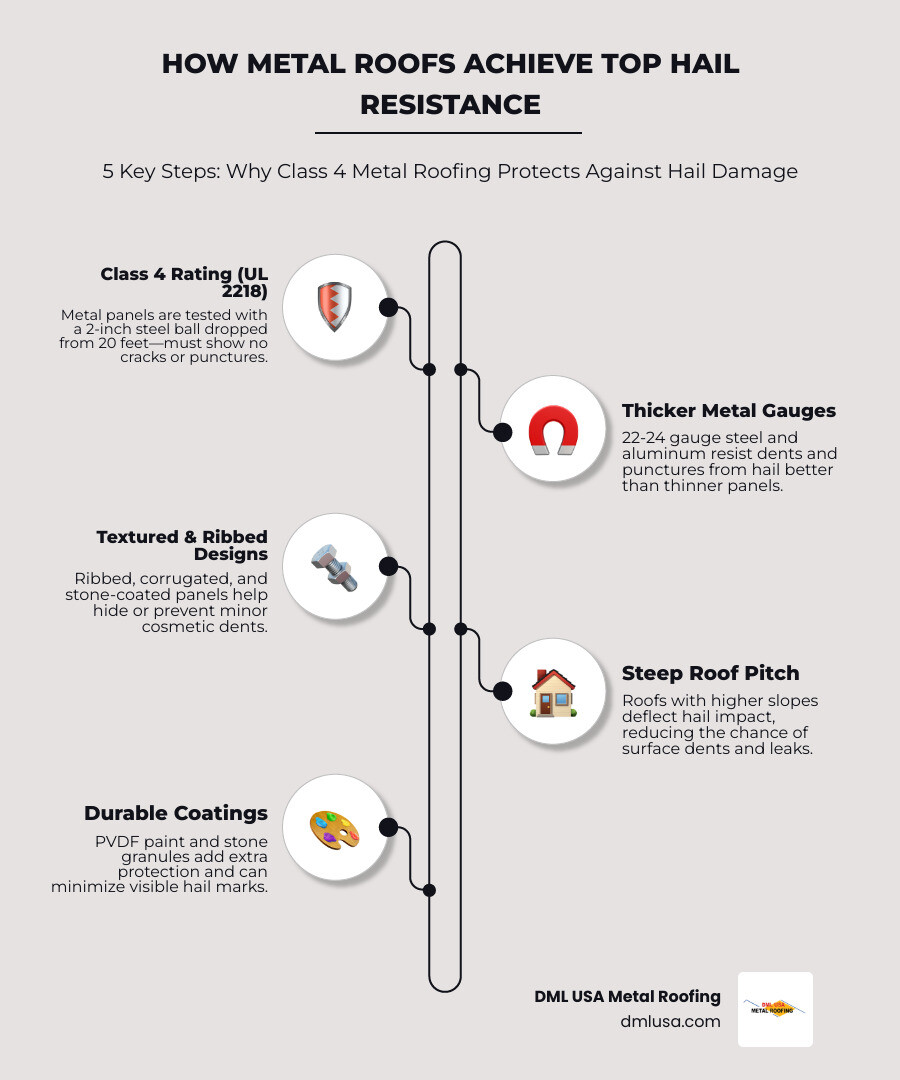
The best type of metal roof against hail damage combines Class 4 impact resistance with smart material choices and proper installation. Here’s what protects your home best:
Top Hail-Resistant Metal Roof Options:
1. 24-gauge Galvalume steel with standing seam profiles
2. Stone-coated steel tiles with granular surface texture
3. Aluminum panels with ribbed or corrugated designs
4. Copper roofing for premium longevity (expensive but lifetime solution)
Key Features for Maximum Protection:
– UL 2218 Class 4 impact rating (withstands 2″ steel ball drop test)
– Thicker gauge metal (22-24 gauge preferred over 26-29 gauge)
– Textured or ribbed surfaces to hide minor dents
– Steep roof pitch (deflects hail strikes better)
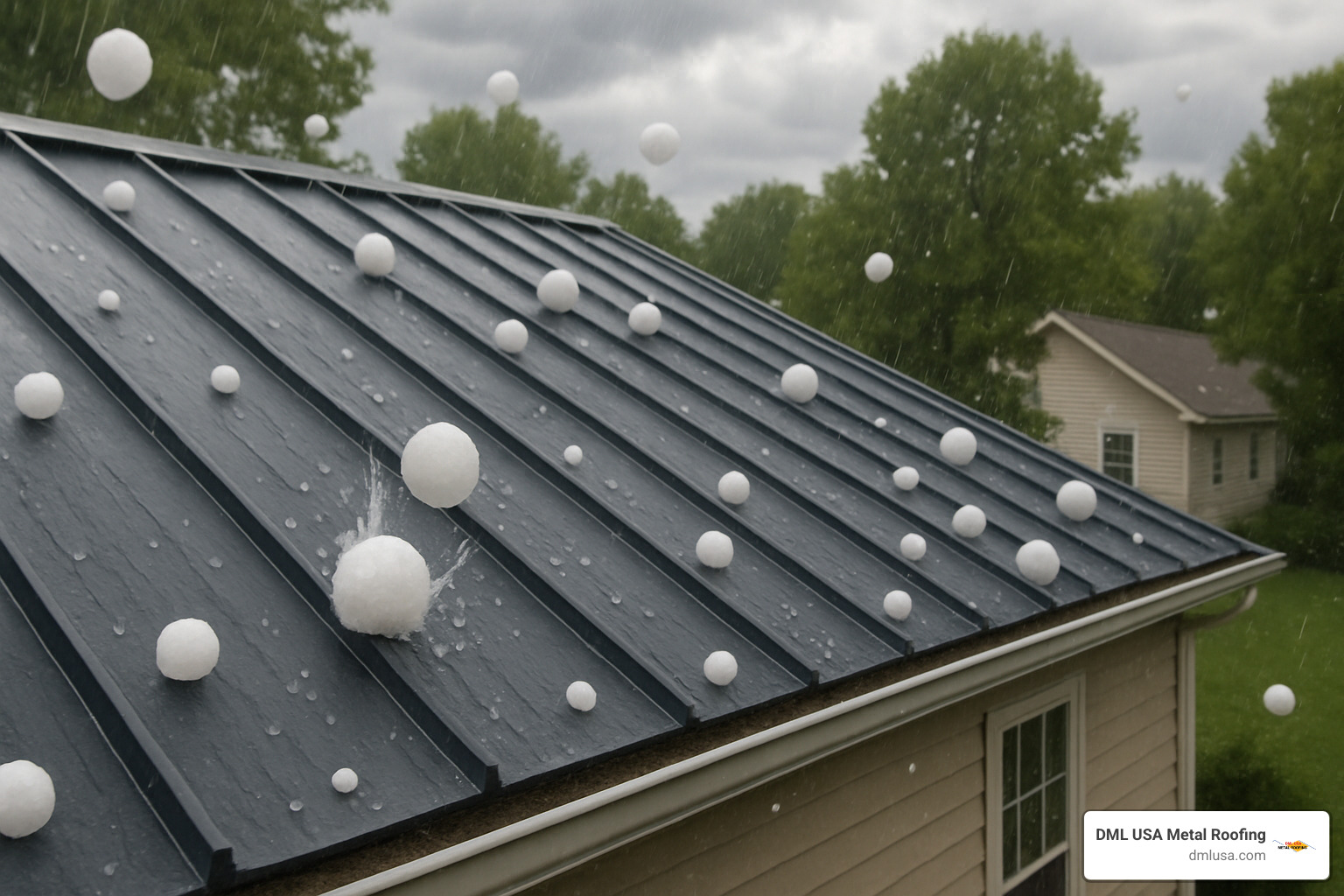
Hailstorms cause $8-14 billion in damage annually across the United States. With over 4,600 major hail events recorded in a single year, protecting your home isn’t just smart – it’s essential. Metal roofs routinely withstand hailstones up to 2 inches in diameter, while most hailstorms produce stones smaller than this threshold.
The financial benefits are clear: Metal roofs can reduce insurance premiums, last 40-70 years (versus 12-20 for asphalt shingles), and maintain their waterproof integrity even when cosmetically dented. Insurance companies often offer discounts because metal roofing is far less likely to be punctured by hail compared to other materials.
I’m Adam Kadziola, and through my years of experience manufacturing metal roofing in Illinois since 2007, I’ve seen how the best type of metal roof against hail damage can permanently protect homes from nature’s harshest elements.
Essential best type of metal roof against hail damage terms:
– Commercial metal roof installation
– Residential metal roof types
Why Metal Beats Hail: The Science of Impact Resistance
When hailstones come crashing down, your roof material has two choices: bend or break. Asphalt shingles crack under pressure, lose their protective granules, and often tear completely. But metal? Metal plays it smart by absorbing that brutal impact energy and creating small, controlled dents instead of catastrophic failures.
The best type of metal roof against hail damage uses this natural flexibility to its advantage, protecting your home’s interior even when Mother Nature throws her worst tantrum. This controlled deformation prevents the real nightmare scenario – punctures that let water pour into your home.
The gold standard for measuring this toughness is the UL 2218 test, developed by Underwriters Laboratories. Technicians drop steel balls from 20 feet onto roofing materials, simulating the worst hailstorms nature can dish out.
A 2-inch steel ball dropped from 20 feet packs about 32 joules of kinetic energy. That’s roughly equivalent to the impact force of most natural hailstones you’ll encounter. Since most hailstorms produce stones smaller than 2 inches, Class 4 metal roofs can handle the vast majority of hail events without breaking a sweat.
Impact Resistance Classification:
| Class Rating | Steel Ball Size | Drop Height | Typical Hail Size Equivalent |
|---|---|---|---|
| Class 1 | 1.25 inches | 12 feet | Grape-sized hail |
| Class 2 | 1.5 inches | 15 feet | Walnut-sized hail |
| Class 3 | 1.75 inches | 17 feet | Golf ball-sized hail |
| Class 4 | 2 inches | 20 feet | Tennis ball-sized hail |
What Makes a Roof “Class 4” Impact-Rated?
Earning that coveted Class 4 rating requires surviving a brutal test – technicians drop a 2-inch steel ball from exactly 20 feet onto the same spot twice. To pass, the material can’t show any signs of cracking, splitting, fracturing, or rupturing.
This rating carries serious weight in the real world. Insurance companies love Class 4 products, often offering premium discounts of 10-35% for homes with Class 4 impact-resistant roofing.
Cosmetic vs. Structural Hail Damage
Cosmetic damage is like a minor bruise – it might look concerning up close, but it doesn’t affect your roof’s ability to do its job. These small dents don’t compromise the waterproof integrity that keeps your home protected.
Structural damage is the real villain – cracks, punctures, or tears that compromise your roof’s ability to shed water effectively. This type of damage demands immediate attention and typically qualifies for insurance coverage.
The best type of metal roof against hail damage is specifically engineered to absorb repeated impacts while maintaining structural integrity. Even when Mother Nature leaves her calling card in the form of small dents, your roof keeps doing what it does best – keeping you dry and comfortable inside.
Best Type of Metal Roof Against Hail Damage
When hailstones start falling, not all metal roofs are created equal. The best type of metal roof against hail damage comes down to three critical factors: choosing the right material, getting the proper thickness, and selecting a profile that works with nature instead of against it.
Steel dominates our recommendations for hail-prone areas, especially Galvalume-coated steel in 24-gauge thickness. The aluminum-zinc coating on Galvalume steel has this amazing self-healing property that helps control rust at cut edges. Even when hail creates minor surface scratches, your roof keeps protecting your home for decades.
Stone-coated steel tiles offer another fantastic option that combines steel’s toughness with the classic look of traditional roofing. The granular surface texture works like natural camouflage, hiding minor dents while actually absorbing some of the impact energy.
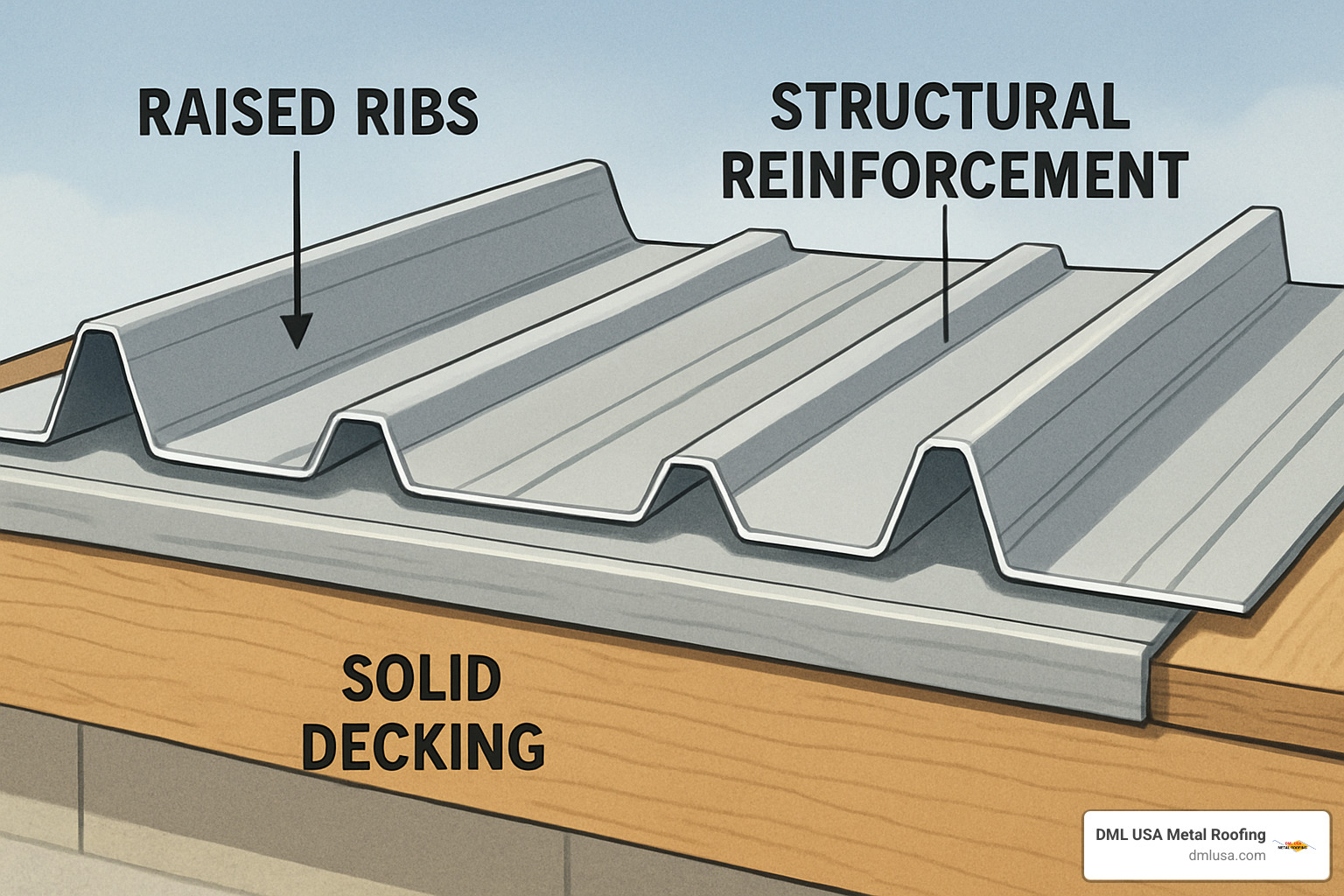
Standing seam profiles are like the superhero of hail resistance. Those raised vertical seams provide structural reinforcement that helps panels resist denting. The smooth surface actually works in your favor, allowing hail to deflect rather than creating direct impact points.
Aluminum works well in coastal areas where salt air is a concern. While aluminum might dent more easily than steel, it never rusts and can be easily repaired or refinished.
For those seeking the ultimate in longevity, copper represents the premium choice. Yes, it’s expensive upfront, but copper roofs can last over a century with minimal maintenance.
More info about Products available through our manufacturing facility includes various hail-resistant options designed specifically for challenging weather conditions.
Best Metal MATERIALS for Hail Zones
Galvalume steel sits at the top of my recommendation list for regions that regularly face hail. This substrate is coated with 55% aluminum, 43.4% zinc, and 1.6% silicon that delivers superior corrosion resistance and impact performance.
What makes Galvalume special is its self-healing coating. When hail creates minor scratches, the coating actually flows to cover the exposed areas, preventing rust from taking hold.
Aluminum brings natural advantages through its inherent malleability and complete resistance to rust. While you might see more visible dents compared to steel, aluminum never rusts and maintains its structural integrity through decades of weather exposure.
Copper offers the ultimate investment for homeowners thinking long-term. The initial cost makes some people wince, but copper roofs regularly outlast the homes they protect.
Best GAUGE & THICKNESS Choices for Hail Resistance
24-gauge steel hits the sweet spot between protection and practicality for most applications. At approximately 0.024 inches thick, this gauge provides excellent dent resistance while keeping material costs reasonable and structural weight manageable.
22-gauge steel steps up the protection for areas experiencing frequent large hail or where aesthetics are critical. This premium thickness at approximately 0.030 inches significantly reduces visible denting and provides improved longevity.
26-gauge steel and lighter materials might work in areas with minimal hail risk, but I don’t recommend them for regions with regular storms. The modest upfront savings rarely justify the reduced protection.
Best PANEL PROFILES for the Best Type of Metal Roof Against Hail Damage
Standing seam profiles lead our hail resistance recommendations for good reason. Those raised vertical seams provide structural reinforcement that helps resist denting, while the concealed fastener system eliminates penetration points that could develop leaks after hail damage.
Corrugated panels offer excellent protection through their wave-like profile that deflects hail strikes and distributes impact forces across larger areas. This inherent strength allows for lighter gauge materials while maintaining impact resistance.
Stone-coated metal tiles excel at damage concealment through their textured granular surface. The stone coating absorbs impact energy and makes minor dents virtually invisible from ground level.
How Roof Pitch Affects the Best Type of Metal Roof Against Hail Damage
Steeper slopes cause hailstones to strike at oblique angles, reducing impact force and increasing the likelihood of deflection rather than direct hits.
Steep slopes at 8:12 pitch and higher provide optimal hail protection by encouraging glancing blows instead of direct strikes. These steep slopes also ensure rapid water drainage, preventing pooling that could lead to leaks if minor damage occurs.
Low slopes under 4:12 pitch face more direct hail impacts and require additional protection measures. For these applications in hail-prone areas, we recommend thicker gauge materials and improved sealing systems.
Smart Design & Installation Factors That Boost Hail Performance
Getting the best type of metal roof against hail damage isn’t just about picking the right material – it’s about how everything comes together during installation.
The foundation of any hail-resistant roof starts with solid decking. When we install metal panels over solid plywood or OSB sheathing, we’re creating a rigid backing that prevents excessive flexing during impact. Skip sheathing or widely spaced purlins might save money upfront, but they allow panels to flex too much during hail strikes.
Concealed fastener systems eliminate one of the biggest vulnerabilities in roofing – all those penetration points where water could sneak in. Traditional exposed fastener systems create thousands of potential leak spots where washers and sealants could get damaged by hail.
High-build coatings do double duty – they provide extra impact resistance and help hide the battle scars from hail storms. Premium paint systems like PVDF maintain their flexibility and adhesion even after getting pummeled.
More info about Resources includes our detailed installation guides that cover all these design considerations.
Coatings & Finishes That Hide or Prevent Dents
PVDF paint systems are the workhorses of metal roofing coatings. These fluoropolymer coatings bend without breaking during hail impact, which prevents the paint chipping that makes dents glaringly obvious.
Stone-coated granular surfaces are nature’s camouflage for hail damage. The bumpy, irregular texture breaks up light reflection, making small dents virtually invisible from the ground. Plus, those granules actually absorb some impact energy.
Galvalume’s self-healing properties might sound like science fiction, but they’re real. When hail scratches the surface, the aluminum in the coating migrates over to protect the exposed steel underneath.
Matte and low-gloss finishes are your secret weapon against visible dents. High-gloss surfaces act like mirrors, highlighting every little imperfection. Satin or matte finishes scatter light naturally, making minor damage blend into the overall appearance.
Installation Best Practices
Fastener spacing might seem like a minor detail, but it’s critical for panel performance during hail events. Proper spacing provides adequate support without creating stress concentrations that could lead to problems.
Clip systems for standing seam panels require precision alignment and secure attachment. High-quality clips made from compatible metals prevent corrosion while maintaining strong connections through thermal cycling and weather events.
Contractor certification ensures your installer understands both general roofing principles and the specific requirements for hail-resistant installations. Certified contractors also provide better warranty support.
Metal Roofing Suppliers Near Me connects you with qualified installers in your area who understand local weather patterns and building codes.
Insurance, Inspection & Maintenance After a Hailstorm
Understanding insurance coverage and post-storm procedures can save thousands of dollars and ensure proper roof maintenance. The best type of metal roof against hail damage provides excellent protection, but knowing how to handle the aftermath of severe weather is equally important.
Insurance policies vary significantly in their coverage of hail damage, particularly regarding cosmetic versus structural damage. Many policies include cosmetic damage waivers that exclude coverage for dents that don’t affect the roof’s function.
Actual Cash Value (ACV) coverage pays the depreciated value of your roof, which can leave you significantly short of replacement costs. Replacement Cost Coverage pays the full cost of replacement with similar materials, providing much better protection for homeowners.
Wind and hail deductibles often differ from standard policy deductibles and may be calculated as a percentage of your home’s insured value rather than a fixed dollar amount.
Understanding Cosmetic Damage Waivers
Cosmetic damage waivers represent a trade-off between premium costs and coverage comprehensiveness. These waivers exclude coverage for damage that doesn’t affect the roof’s function, potentially saving 10-30% on insurance premiums while limiting claim payouts for aesthetic damage.
Premium savings from cosmetic waivers can be substantial, particularly for expensive roofing materials. However, the savings must be weighed against the potential cost of addressing cosmetic damage out-of-pocket.
When to sign cosmetic waivers depends on several factors: roof age, material type, local hail frequency, and financial priorities. Newer metal roofs with good hail resistance might be good candidates for waivers.
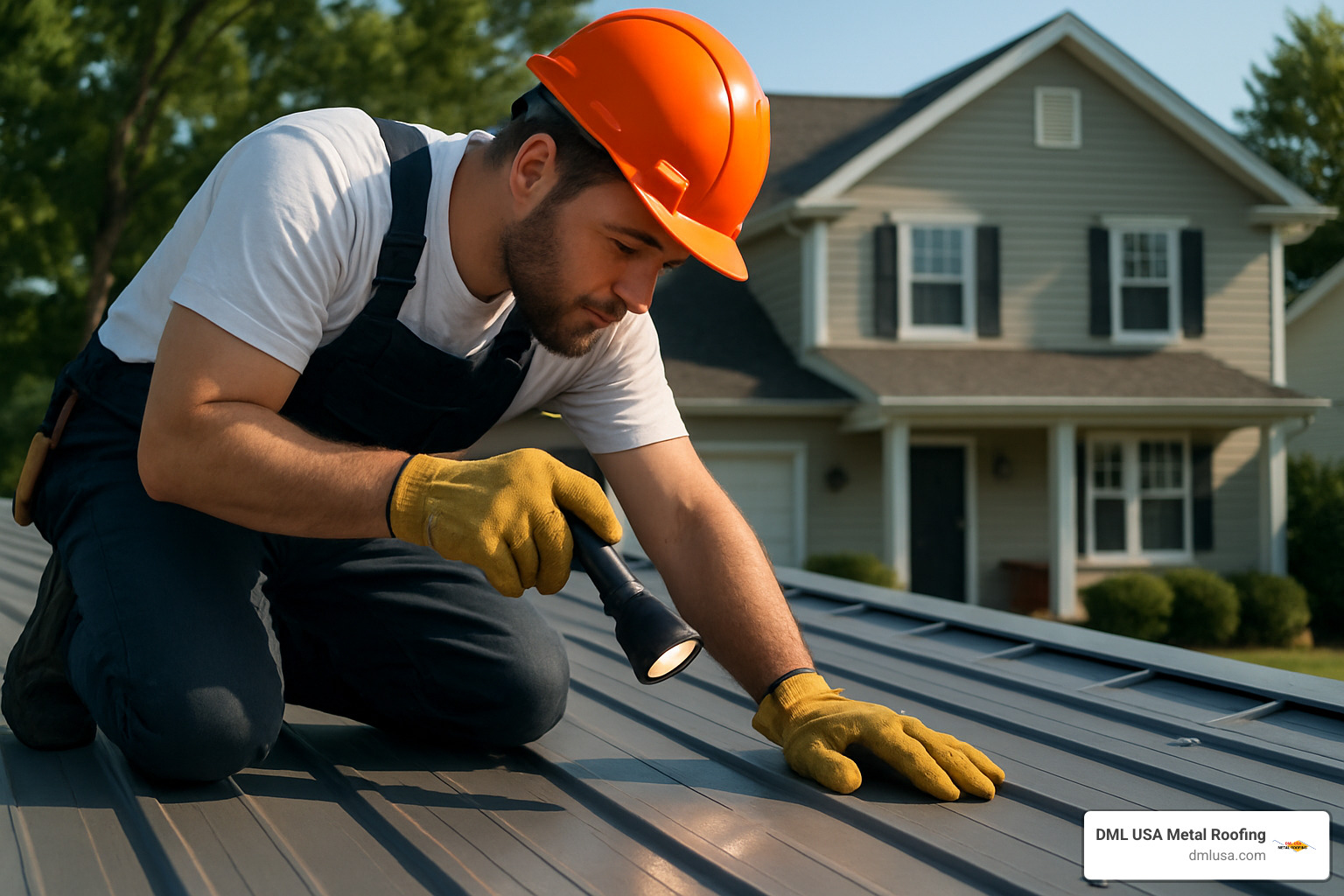
Post-Storm Inspection Checklist
Systematic inspection after hail events helps identify damage early and supports insurance claims when necessary.
Gutter inspection often reveals the first signs of hail damage. Dents in gutters and downspouts indicate hail size and intensity, helping assess potential roof damage.
Panel inspection should focus on visible dents, scratches, or coating damage. Use binoculars for safety rather than walking on potentially damaged surfaces.
Fastener inspection includes checking exposed fasteners for loosening or seal damage. Concealed fastener systems should be inspected for clip displacement or panel separation.
Documentation photos should be taken from multiple angles and distances to show both overall roof condition and specific damage areas.
Filing a Claim & Qualifying for Discounts
Impact-resistant roof credits can significantly reduce insurance premiums, with discounts ranging from 10-35% depending on your insurer and location. Class 4 rated roofs typically qualify for the maximum available discounts.
Adjuster meeting tips include having a qualified contractor present during the inspection to ensure all damage is properly identified and documented.
Claim timing is critical – most policies require prompt notification of damage, typically within 30-60 days of findy.
Frequently Asked Questions about Hail-Resistant Metal Roofing
When homeowners start considering the best type of metal roof against hail damage, they naturally have questions about real-world performance and practical concerns. After manufacturing metal roofing in Illinois for over 15 years, I’ve heard these questions countless times – and I’m always happy to share what we’ve learned.
What size hail can damage a metal roof?
Here’s the straight answer: most quality metal roofs can handle hailstones up to 2 inches in diameter without any structural damage. That’s tennis ball-sized hail, which covers the vast majority of storms you’ll ever encounter.
Class 4 rated systems – the gold standard for hail resistance – are specifically tested to survive 2-inch steel ball impacts dropped from 20 feet. This test simulates the force of large natural hailstones, and passing this test means your roof can handle most weather events without problems.
Smaller hail under three-quarters of an inch typically leaves only minor surface marks that don’t affect your roof’s performance at all. Think of them as battle scars that prove your roof is doing its job.
Now, I won’t sugarcoat it – hailstones larger than 2 inches can create visible dents even on premium metal roofs. Baseball-sized stones (2.75+ inches) can cause significant cosmetic damage and might compromise thinner materials. But here’s the thing: most hailstorms produce stones smaller than 2 inches, meaning your quality metal roof will handle the majority of what nature throws at it.
The damage equation also depends on your roof’s design. Steep roofs deflect larger stones better than flat surfaces, while strong winds can increase impact velocity. That’s why proper design matters as much as material selection.
Do dents void my roof warranty or insurance coverage?
This is probably the most common worry I hear, and I have good news: cosmetic dents typically don’t void your warranty or insurance coverage, as long as your roof still keeps water out.
Most metal roof warranties specifically distinguish between cosmetic and functional damage. They’ll cover perforation and water infiltration – the stuff that actually matters for protecting your home – while excluding purely aesthetic concerns. It’s like having a small scratch on your car that doesn’t affect how it runs.
Insurance coverage follows similar logic, though your specific policy terms matter here. Standard policies usually cover functional damage that affects your roof’s performance, while cosmetic-only damage might be excluded depending on what coverage you chose. If you signed a cosmetic damage waiver to lower your premiums, purely aesthetic dents won’t be covered.
The key question insurance companies and manufacturers ask is: Does the damage affect functionality? If dents don’t allow water penetration or compromise structural integrity, they’re considered cosmetic. However, if dents crack paint coatings or create stress points that could lead to future problems, they might qualify as functional damage.
Here’s a practical tip: document your roof’s condition with photos after installation. This helps establish what’s normal wear versus storm damage if you ever need to file a claim.
Can I install solar panels on a Class 4 metal roof?
Absolutely! Class 4 metal roofs are actually excellent platforms for solar panel installations. The same impact resistance that protects against hail also provides the durability needed for mounting hardware and occasional maintenance access.
Think about it logically – metal roofs last 40-70 years, which matches or exceeds most solar panel lifespans. This means you won’t need to remove expensive solar equipment to replace your roof, unlike with shorter-lived materials.
Standing seam metal roofs work particularly well with solar because mounting clamps can attach directly to the raised seams without penetrating your roof surface. This maintains complete weatherproof integrity while providing rock-solid panel attachment. No holes, no potential leak points, no worries.
The combination of hail-resistant metal roofing and solar panels creates a powerful one-two punch for both storm protection and energy savings. Many of our customers find that solar energy production helps offset the higher initial investment in premium metal roofing materials.
Plus, both metal roofing and solar panels can qualify for various tax credits and incentives, making the combined investment even more attractive. It’s like getting paid to protect your home and reduce your energy bills at the same time.
Conclusion & Next Steps
Making the right choice for the best type of metal roof against hail damage isn’t just about buying a product – it’s about investing in your family’s security and your home’s future.
Your best protection comes from 24-gauge Galvalume steel with standing seam profiles. This combination delivers the sweet spot where superior hail resistance meets reasonable cost. If you prefer the look of traditional roofing, stone-coated steel tiles give you that classic appearance with modern storm-fighting power.
But here’s what really matters: even the finest materials won’t protect your home properly without smart installation. The details we’ve covered – solid decking, concealed fasteners, proper coatings, and adequate roof pitch – these aren’t just technical specifications. They’re the difference between a roof that looks good in the showroom and one that keeps your family dry during the next major storm.
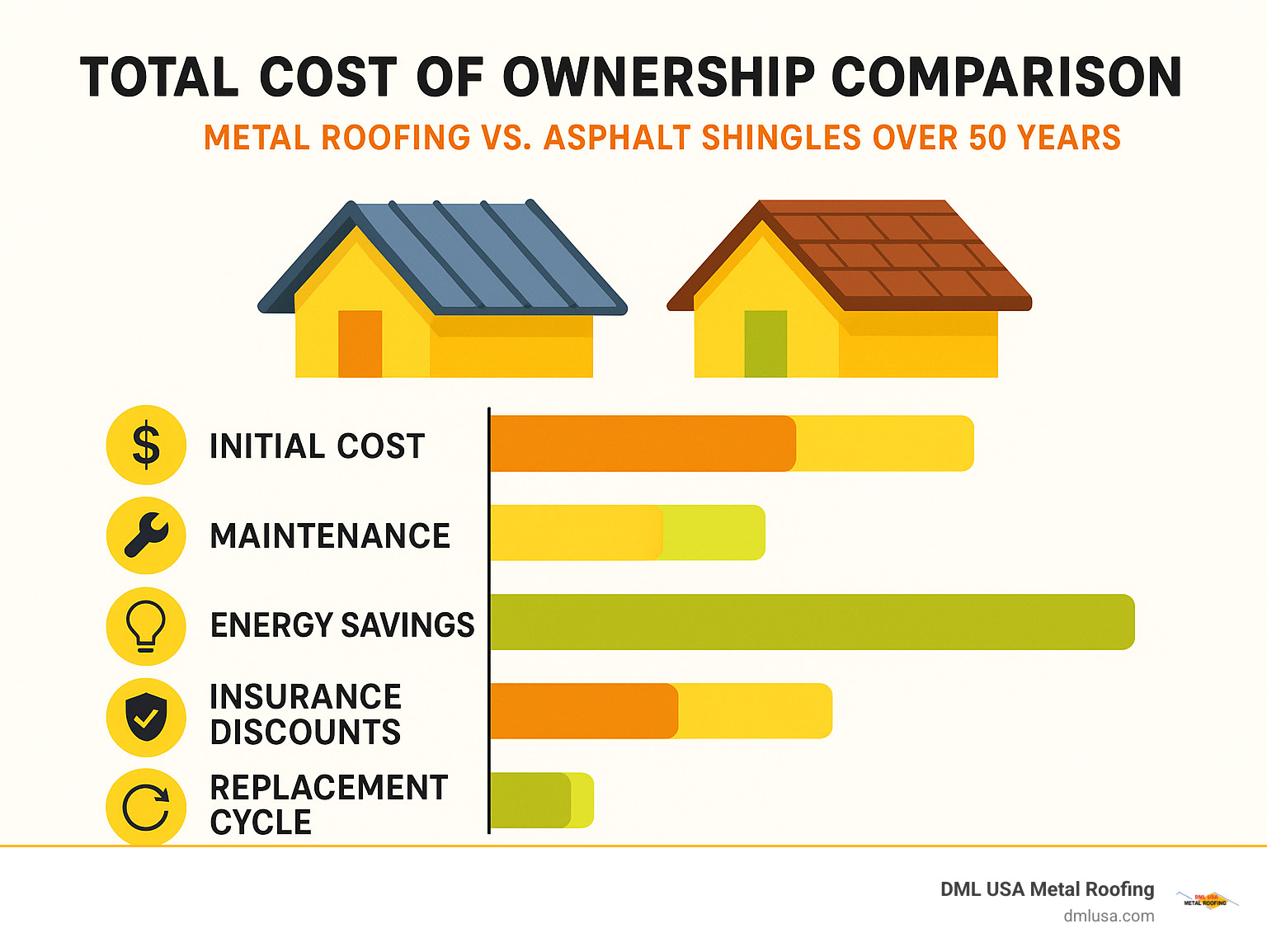
The financial picture tells a compelling story too. Yes, quality metal roofing costs more upfront than basic materials. But when you factor in insurance discounts, 40-70 year lifespan, and energy savings, the numbers work strongly in your favor. Many homeowners find their insurance savings alone pay for the material upgrade over time.
At DML USA Metal Roofing, we’ve been perfecting these systems since 2007 right here in Illinois – a state that knows something about severe weather. Our manufacturing process focuses on the details that matter most when hailstones start falling.
The truth is, you can’t predict when the next severe storm will hit your area. Weather patterns are becoming more unpredictable, and hailstorms are occurring in regions that rarely saw them before. What you can control is how prepared your home will be when that storm arrives.
Ready to move forward with confidence? Our Gallery shows real installations that have weathered actual storms, giving you a clear picture of how these systems look and perform in the real world.
Contact our team to discuss your specific situation. We’ll help you steer the options based on your local weather patterns, budget, and home’s unique requirements. Every recommendation we make is backed by years of manufacturing experience and real-world testing.
For a deeper dive into all the advantages metal roofing brings to your home, explore More info about Why Choose Metal Roofing. You’ll find benefits that extend far beyond hail protection.
The next storm is coming – that’s not pessimism, it’s reality. But with the right best type of metal roof against hail damage protecting your home, you can watch the weather reports with confidence instead of anxiety. That peace of mind? It’s worth every penny.