

Best Type of Metal Roofing: Top 5 Powerful Choices 2025
Why Choosing the Right Metal Roofing Material Matters
The best type of metal roofing depends on your climate, budget, and style preferences, but here are the top performers:
Top Metal Roofing Materials:
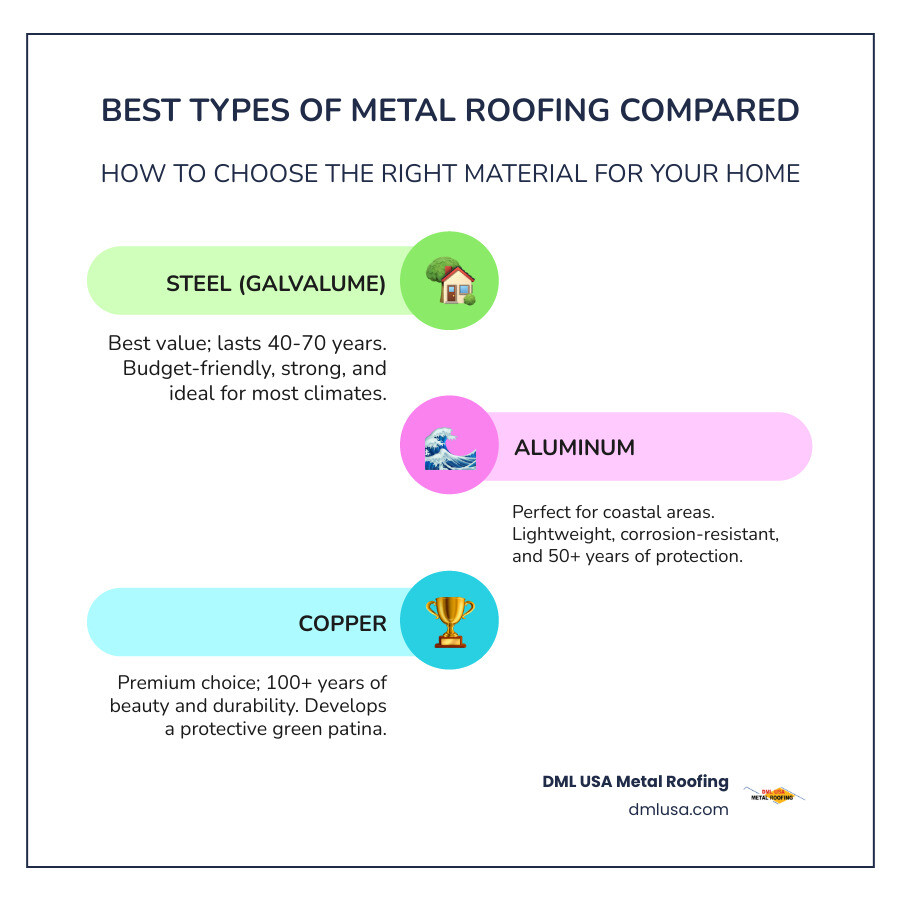
– Steel (Galvalume) – Best overall value, 40-70 years lifespan, $9-18/sq ft
– Aluminum – Best for coastal areas, 50+ years, corrosion-resistant, $14-20/sq ft
– Copper – Premium choice, 100+ years, develops protective patina, $22-32/sq ft
– Standing Seam – Best panel style for durability and weather protection
– Stone-Coated Steel – Best traditional look with metal benefits
When you’re tired of replacing asphalt shingles every 15-20 years, metal roofing offers a “one and done” solution. Metal roofs typically last 40 to 80 years, depending on the material, with copper and zinc roofs lasting up to 100 years or more.
The choice isn’t just about longevity. Different metals perform better in different climates. Aluminum excels in coastal environments due to its corrosion resistance, while steel offers the best balance of cost and performance for most homeowners. Premium options like copper provide best durability but come with higher upfront costs.
Your roof replacement is likely one of your home’s biggest investments. The right metal choice can reduce cooling costs by up to 20%, increase your home’s value, and potentially lower insurance premiums due to superior fire and wind resistance.
I’m Adam Kadziola, and I’ve spent over 15 years helping homeowners find the best type of metal roofing for their specific needs through our family-owned company, DML USA Metal Roofing. My experience in manufacturing and home renovations has shown me that the right metal roof choice depends on understanding both the materials and your unique situation.
Best type of metal roofing terminology:
– Commercial metal roof installation
– Residential metal roof types
Metal Roofing Materials at a Glance
When you’re choosing the best type of metal roofing, understanding your material options is like picking the right tool for the job. Each metal has its own personality and strengths, and knowing these differences will help you make a smart investment.
Steel roofing is the workhorse of the metal roofing world. Most modern steel roofs use something called Galvalume coating – a fancy name for a protective blend of 55% aluminum, 43.4% zinc, and 1.6% silicone. This coating is what gives steel its impressive 40-70 year lifespan while keeping costs reasonable at $9-18 per square foot. It’s no wonder steel remains the most popular choice for homeowners.
If you live near the ocean, aluminum roofing might be your best friend. This lightweight champion laughs at salt air that would make other metals cry. Aluminum roofs can easily last 50+ years and cost $14-20 per square foot. Plus, when it’s time to replace it decades from now, aluminum is 100% recyclable.
Copper roofing is the luxury car of metal roofing materials. With a potential lifespan of up to 200 years, copper develops a beautiful green patina over time that actually protects the metal underneath. The catch? You’ll pay $22-32 per square foot for this premium option. Many homeowners use copper strategically as accent material rather than covering their entire roof.
Zinc roofing has been popular in Europe for decades, covering about 70% of European metal roofs. Here in the U.S., it’s gaining ground thanks to its self-healing patina that can take anywhere from 2-30 years to fully develop. With a 100+ year lifespan and costs of $19-27 per square foot, zinc offers excellent long-term value.
Stainless steel contains at least 10.5% chromium, which gives it excellent corrosion resistance. However, it’s rarely used in residential applications because the costs rival copper and zinc without offering additional benefits for most homeowners.
When someone mentions tin roofing today, they’re usually talking about galvanized steel or aluminum panels designed to look like old-fashioned tin. True tin roofing was popular centuries ago but has largely disappeared due to cost and availability issues.
Here’s something that might surprise you: metal roofs are typically made from 25-95% recycled materials and are completely recyclable when their long life finally ends. Compare that to asphalt shingles, which create nearly 100 million tons of waste every year in the U.S. alone.
The sustainability factor is impressive across all metal types. Scientific research on sustainability shows that metal roofing’s environmental benefits extend far beyond just recyclability – they also reduce energy consumption and last decades longer than traditional roofing materials.
When you’re weighing cost versus lifespan, the cheapest option upfront isn’t always the smartest choice. A steel roof might cost more initially than asphalt shingles, but when you factor in its 40-70 year lifespan versus replacing asphalt shingles 2-3 times over the same period, the math starts looking pretty attractive.
Panel Styles & Fastening Systems Explained
Choosing the right material is only half the battle. The panel style and fastening system you select can make or break your metal roofing investment. Think of it this way: you wouldn’t buy a car based only on the engine – the design and features matter just as much.
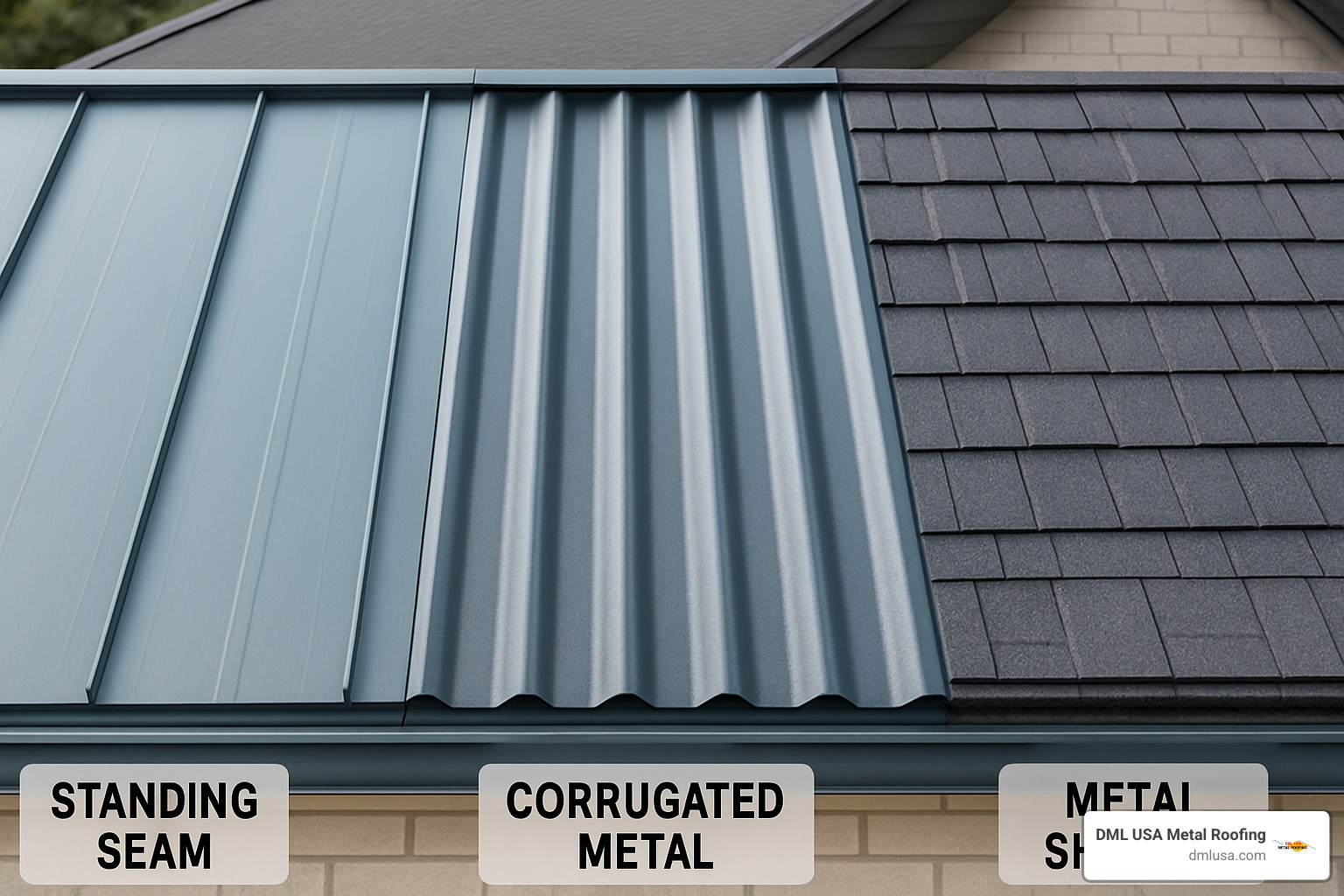
Standing seam panels are the premium choice for good reason. These feature flat metal sections connected by raised vertical ribs, with all fasteners hidden underneath. This design allows your roof to expand and contract naturally with temperature changes without putting stress on the attachment points. It’s like giving your roof room to breathe.
The beauty of exposed fastener panels lies in their simplicity and affordability. The screws go directly through the panel into your roof deck, making installation straightforward. However, those visible fasteners will need attention over the years – typically requiring replacement every 5-10 years as rubber washers age and thermal cycling takes its toll.
Corrugated metal roofing brings that classic barn look to residential applications. Those wavy ridges aren’t just for show – they add serious structural strength while keeping costs reasonable. You’ll commonly see 7/8″ and 1/2″ rib heights, with the taller ribs providing better water shedding.
Metal shingles solve the age-old problem of wanting metal’s durability without the industrial appearance. Modern manufacturing creates incredibly realistic textures that fool even experienced contractors from a distance. They install similarly to traditional shingles but last decades longer.
Stone-coated steel panels deserve special recognition as potentially the best type of metal roofing for homeowners who want it all. The steel provides strength and longevity, while stone granules offer traditional looks, improved energy efficiency, and surprisingly effective sound dampening during rainstorms.
Today’s color choices go far beyond basic white and gray. Modern coating technology delivers rich blues, deep reds, earth tones, and even finishes that mimic aged copper or weathered steel. The key is choosing colors that complement your home’s architecture and neighborhood character.
Oil canning – that subtle waviness you sometimes see in flat metal panels – concerns many homeowners more than it should. While it’s a natural characteristic of metal roofing, choosing heavier gauge materials (22 gauge instead of 24 or 26 gauge) and panels with stiffening ribs minimizes this visual effect significantly.
For detailed information about our specific panel options and installation services, check out our resources page.
Standing Seam vs Exposed Fastener – Which is the best type of metal roofing?
This question comes up in nearly every consultation, and honestly, both systems have earned their place in the market. The right choice depends on your specific situation, budget, and long-term plans.
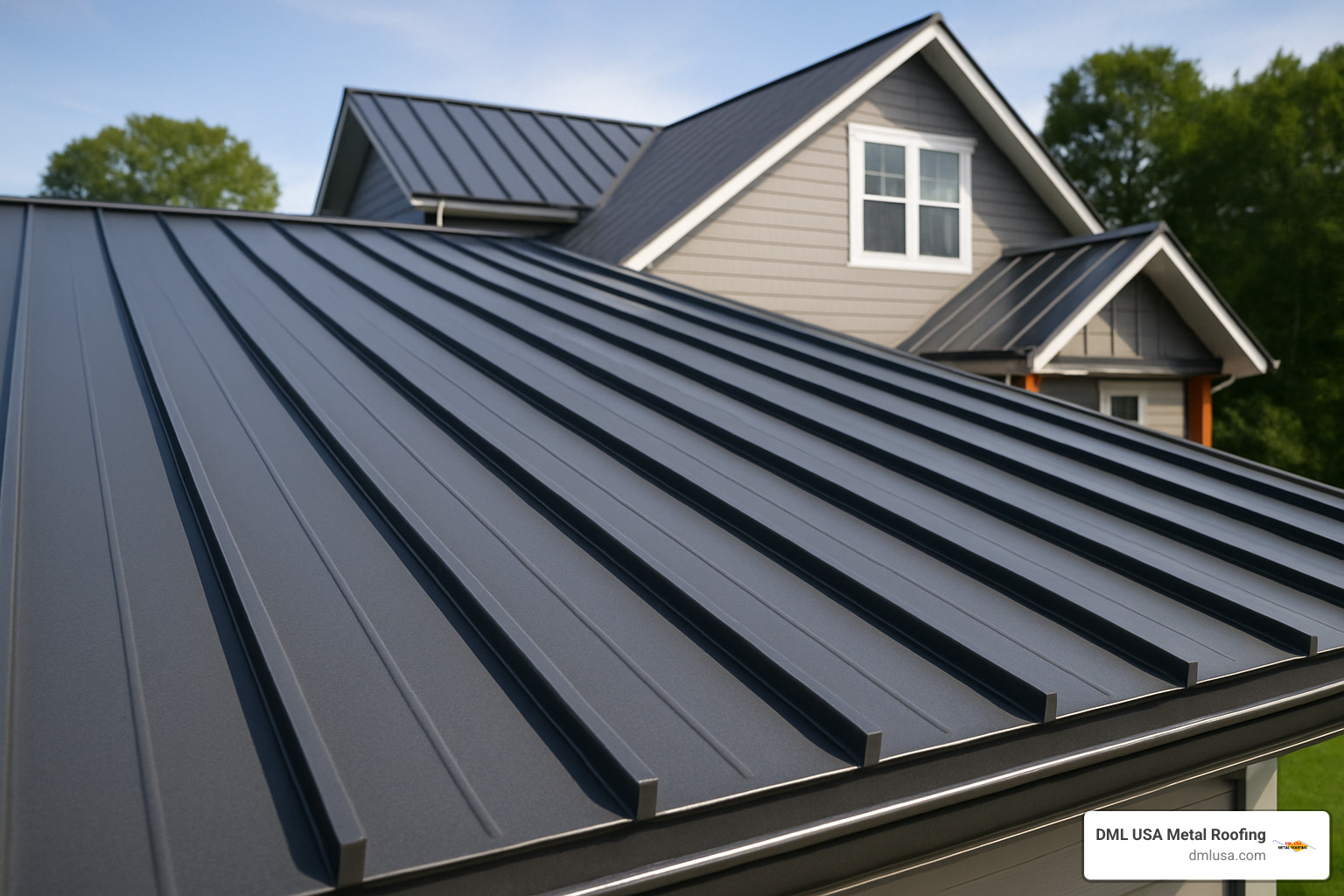
Standing seam systems excel in weathertightness because no fasteners penetrate the flat surface of your roof. Instead, clips attach to your roof deck, and the panels snap or fold over these clips. This creates expansion gaps that let your roof move naturally with temperature changes without compromising the weather seal.
The sleek, modern appearance of standing seam appeals to homeowners seeking contemporary aesthetics. It’s also the go-to choice for solar panel installations since mounting systems can clamp directly to the seams without creating additional roof penetrations.
However, standing seam requires more skilled installation and costs roughly 50% more upfront than exposed fastener systems. The color selection, while growing, remains more limited than exposed fastener options.
Exposed fastener systems shine in their simplicity and cost-effectiveness. Installation moves quickly, keeping labor costs down. The wide variety of available colors and profiles means you’ll likely find exactly the look you want. These systems also work well on lower-slope roofs where standing seam might not be suitable.
The trade-off comes in maintenance requirements. Those exposed screws and their rubber washers will need inspection and potential replacement over time. Thermal movement can gradually enlarge fastener holes, though this typically takes many years in quality installations.
For heated living spaces like your main home, we generally recommend standing seam as the best type of metal roofing choice. The superior weather protection and reduced maintenance requirements justify the higher initial investment. For unheated structures like garages, barns, or storage buildings, exposed fastener systems often make more economic sense.
Metal Shingles, Tiles & Specialty Looks
Gone are the days when metal roofing meant choosing between “industrial” and “more industrial.” Today’s manufacturing techniques create metal products that convincingly replicate traditional materials while delivering superior performance.
Shake-look metal shingles capture the rustic charm of cedar shakes with deep shadow lines and varied surface textures. They’re perfect for homes in fire-prone areas where wood shakes would be risky, or for homeowners who love the aesthetic but don’t want the maintenance headaches of real wood.
Slate-look metal panels offer the sophisticated appearance of natural slate without the weight concerns or fragility issues. A natural slate roof can weigh 800-1,500 pounds per square, while metal slate alternatives typically weigh just 50-150 pounds per square. Your roof structure will thank you.
Barrel tile profiles bring Spanish and Mediterranean architecture to life with authentic-looking curves and shadow lines. Metal tile roofing provides the visual appeal of clay tiles while being significantly lighter and more impact-resistant. No more worrying about tiles cracking during hailstorms or maintenance visits.
Stone-coated steel represents an interesting hybrid approach. The steel substrate provides strength and longevity, while embedded stone granules deliver traditional aesthetics and practical benefits. The granules reflect solar heat for improved energy efficiency and create a surprisingly effective sound barrier during rain events.
Accent panels offer a clever way to incorporate premium materials like copper or zinc without breaking the budget. Consider copper gutters, flashing, or accent panels around dormers and architectural features. You get the neat appearance of premium metals while keeping the majority of your roof in more affordable materials.
The key to success with specialty looks is choosing profiles that complement your home’s existing architecture. A Tudor-style home looks fantastic with slate-look metal, while a ranch house might shine with shake-look panels or stone-coated steel.
The Best Type of Metal Roofing for Your Climate & Budget
Choosing the best type of metal roofing isn’t just about picking a color you love (though, let’s be honest, that’s pretty fun too!). It’s about matching the right metal and style to your home’s unique climate and your budget, so your roof will stand strong for decades.
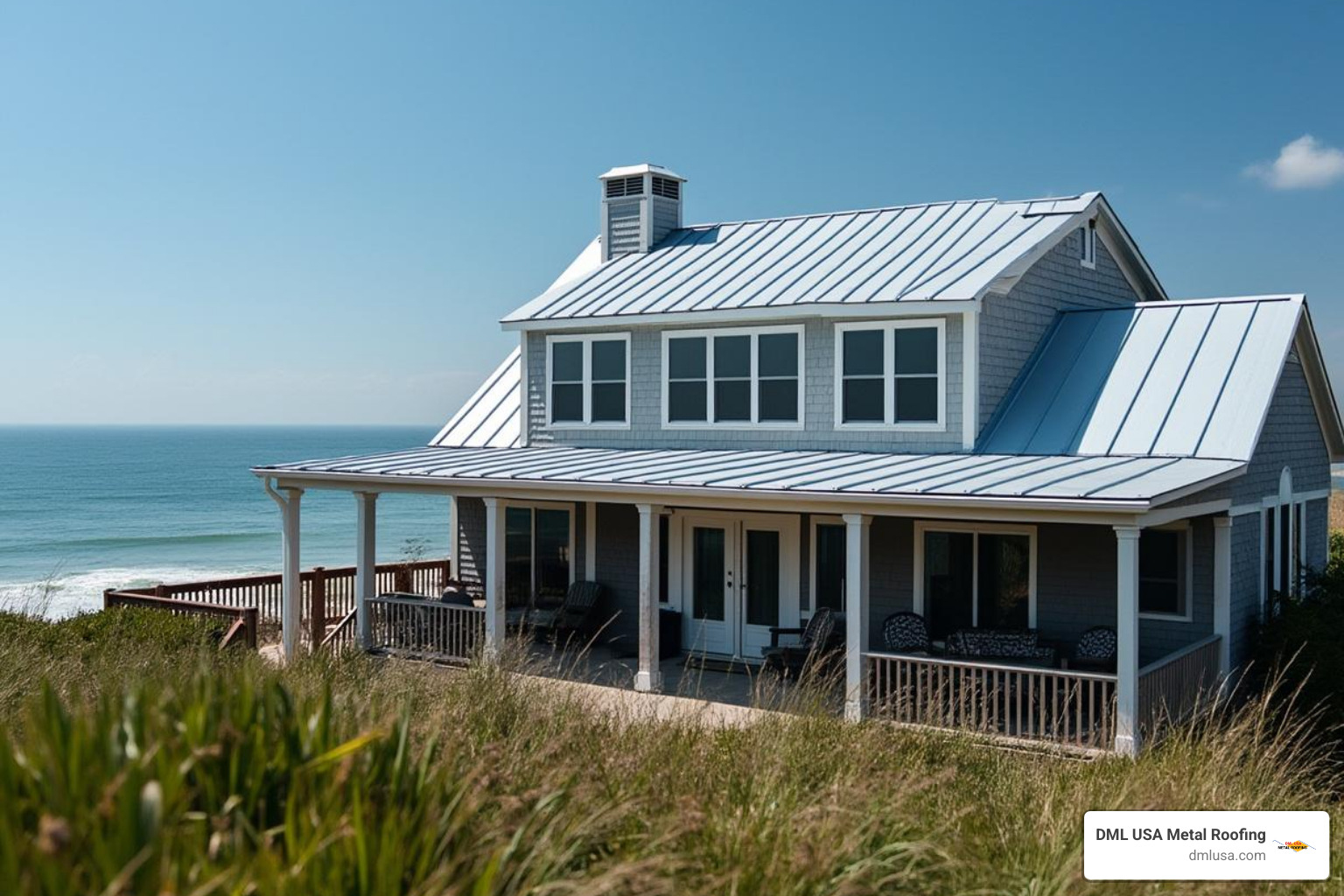
Your local weather is one of the biggest factors to consider. For example, what works beautifully under the Florida sun might flop in snowy Minnesota. Here’s what you need to know:
If you live near the coast, salty air can wreak havoc on some metals. That’s why aluminum and stainless steel are favorites for shoreline homes—they shrug off salt and humidity like pros. In these regions, aluminum roofs can easily last over 50 years with minimal fuss, and stainless steel is another top performer, especially when you need even more durability. Zinc is also an excellent option, developing its own protective patina, but it does take time to form.
Galvalume-coated steel is great for many environments, but it’s not the best pick within 1,500 feet of saltwater unless you’re using a special marine-rated version. If you love the look of steel and want to use it near the ocean, look for panels with additional marine coatings—these add a tough outer layer to help resist corrosion.
Living in a cold, snowy climate? Heavy-gauge steel is your friend. Standing seam panels are especially helpful because their sleek design helps snow slide right off—no more shoveling your roof at 6 a.m. (unless you’re into that sort of thing). Steep pitches and snow guards keep heavy snow from sliding off all at once. And always go with at least 24-gauge steel or thicker to handle those winter loads. Good insulation will stop ice dams from forming, so your roof stays trouble-free all winter.
If you’re in a hot, sunny, or high-humidity area, the right metal roof can make your home cooler and your energy bills happier. Light-colored metals with cool-roof coatings reflect the sun’s rays, dropping your roof’s temperature by up to 60°F compared to darker options. Features like “above-sheathing ventilation” can boost efficiency even more, helping you stay comfortable through the hottest months.
For homes in high-wind zones or hurricane-prone areas, it’s all about secure attachment. The best type of metal roofing here uses properly rated panels secured with hurricane clips or strong fastening systems so they can withstand winds over 150 mph. And if hail is part of your weather story, opt for impact-resistant panels—many metal roofs now carry a Class 4 rating, so they can take a beating and still look fantastic.
From an investment perspective, metal roofing is smart business. According to the 2024 Cost vs Value Report, standing seam metal roofs recoup about 48.1% of their cost at resale. Plus, you’ll likely see energy savings—metal roofs can cut your cooling costs by up to 25%, and many options qualify for energy tax credits or insurance discounts.
If you’re curious about how different metals stand up to tough environments, check out this Scientific research on corrosion for more details.
At DML USA Metal Roofing, we help you sort through these choices so you get a beautiful roof that’s built for your local weather—and your wallet. If you want to see which options fit your home and budget, our resources page is a great place to start.
Finding the best type of metal roofing for your climate really comes down to matching the right material and style to your local needs. And yes, picking your favorite color!
Lifespan, Maintenance & ROI
One of the biggest advantages of metal roofing is its exceptional lifespan and low maintenance requirements.
Material Lifespans:
– Steel (Galvalume): 40-70 years
– Aluminum: 50+ years
– Copper: 100-200 years
– Zinc: 100+ years
– Stainless Steel: 50+ years
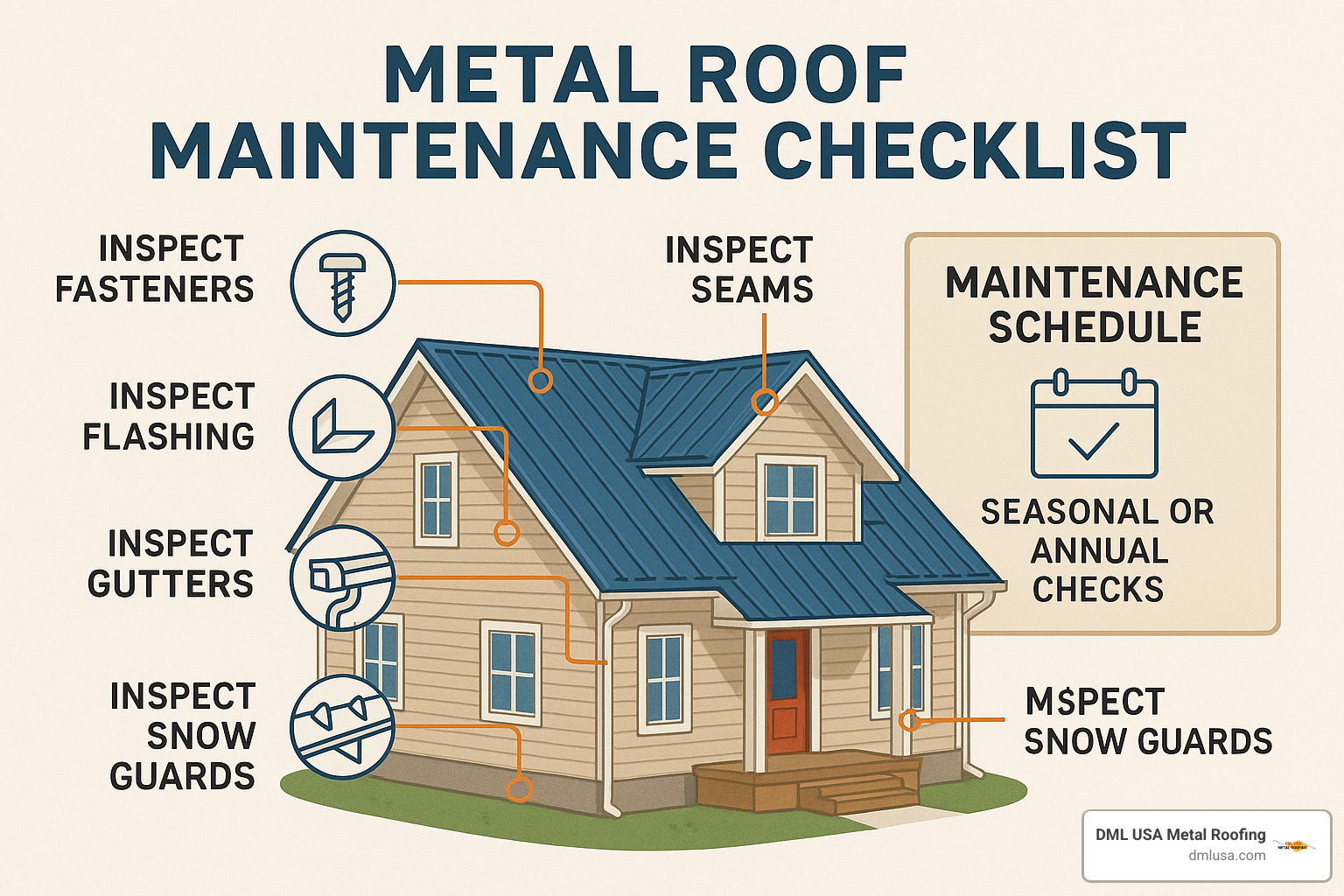
Maintenance Requirements are minimal compared to other roofing materials:
– Annual inspection for debris and damage
– Gutter cleaning to prevent water backup
– Occasional washing to maintain appearance
– Fastener inspection (exposed fastener systems only)
Warranty Coverage typically includes both material and weathertight warranties. Paint warranties often extend 30-40 years, while substrate warranties can be 20-30 years or more.
Energy Savings can be substantial. Metal roofs reflect UV rays and heat, reducing cooling costs. In hot climates, annual savings of $100-300 are common.
Resale Value benefits are significant. Metal roofing has a 48.9% return on investment according to Remodeling Magazine’s Cost vs. Value Report. The durability and energy efficiency are attractive to potential buyers.
Noise Myths persist about metal roofing. When properly installed with decking, insulation, and underlayment, metal roofs are no noisier than asphalt shingles during rain.
For more information about the benefits of choosing metal roofing, visit our why choose metal roofing page.
Cost Breakdown & Financing Tips
Understanding the total cost of metal roofing helps you make an informed decision and plan your investment.
Material vs. Labor Costs:
– Materials typically account for 40-60% of total cost
– Labor costs vary by region and complexity
– Standing seam installation requires more skilled labor
– Exposed fastener systems install faster and cost less
Tax Credits can significantly reduce the net cost. The federal solar tax credit applies to metal roofing that supports solar panels. Some states offer additional incentives for energy-efficient roofing.
Recycling Rebates may be available for the metal content in your old roof. Scrap metal dealers often pay for aluminum and copper roofing materials.
Long-Term Savings include:
– Reduced energy costs (up to 20% savings on cooling)
– Lower maintenance costs
– Potential insurance discounts
– Increased home value
Financing Options:
– Home equity loans often offer the best rates
– Some manufacturers offer financing programs
– Energy-efficient improvements may qualify for special loan programs
FAQ – Best Type of Metal Roofing
Are metal roofs noisy in the rain?
This is probably the most common question we hear, and the answer might surprise you. Modern metal roofs are not significantly noisier than other roofing materials when properly installed.
Sound Dampening occurs naturally when metal roofing is installed over solid decking with proper underlayment and insulation. The combination of these layers absorbs sound effectively.
Proper Installation is key. Metal roofing installed directly over open framing (like in some agricultural buildings) will be noisier than residential installations with solid decking.
Stone-Coated Steel is particularly quiet due to the sound-absorbing properties of the stone granules. Many homeowners report that stone-coated metal roofs are actually quieter than their previous asphalt shingle roofs.
Can metal roofing go over existing shingles?
In many cases, yes, but there are important considerations to keep in mind.
Weight Considerations are crucial. Metal roofing is much lighter than most roofing materials, so structural capacity is rarely an issue. However, building codes may limit the number of roofing layers allowed.
Building Codes vary by location. Most areas allow metal roofing over one layer of asphalt shingles, but local codes should always be checked first.
Ventilation requirements may change when installing over existing shingles. Proper airflow is essential to prevent moisture problems and maintain energy efficiency.
Benefits of installing over shingles include:
– Reduced labor costs (no tear-off required)
– Less waste going to landfills
– Faster installation
– Additional insulation value
How long does the best type of metal roofing last?
The lifespan of metal roofing depends on the material, installation quality, and environmental conditions.
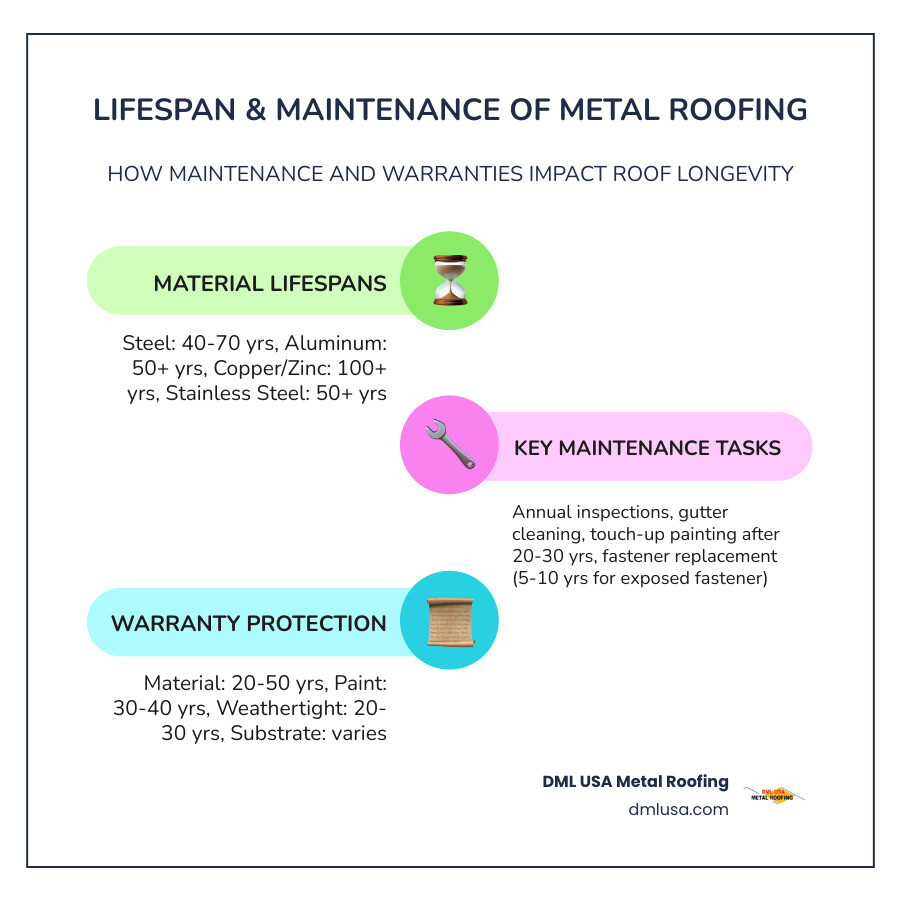
Material Lifespans vary significantly:
– Steel with Galvalume coating: 40-70 years
– Aluminum: 50+ years
– Copper: 100-200 years (some copper roofs are centuries old)
– Zinc: 100+ years
– Stainless steel: 50+ years
Maintenance Schedule affects longevity:
– Annual inspections recommended
– Gutter cleaning prevents water damage
– Touch-up painting may be needed after 20-30 years
– Fastener replacement (exposed fastener systems) every 5-10 years
Warranty Types include:
– Material warranties (20-50 years typical)
– Paint warranties (30-40 years common)
– Weathertight warranties (20-30 years)
– Substrate warranties (varies by manufacturer)
Conclusion
After decades of helping Illinois homeowners steer roofing decisions, I can tell you that choosing the best type of metal roofing is one of the smartest investments you’ll make for your home. It’s not just about finding any metal roof – it’s about finding your perfect metal roof.
The beauty of metal roofing lies in its versatility. If you live near the coast, aluminum will serve you faithfully for 50+ years without succumbing to salt air corrosion. For those dealing with harsh winters, standing seam steel provides the strength and snow-shedding capabilities your home needs. Budget-conscious homeowners often find steel with Galvalume coating offers the perfect balance of performance and affordability.
Your climate tells much of the story, but your personal priorities fill in the details. Maybe you’re drawn to the timeless elegance of copper that will outlast several generations. Perhaps you prefer the modern, clean lines of standing seam panels. Or you might love how stone-coated steel gives you that traditional look while delivering all the benefits of metal.
The energy savings alone make metal roofing compelling. We regularly see homeowners reduce their cooling costs by 20% or more, and many qualify for energy tax credits that help offset the initial investment. When you factor in the increased home value and potential insurance discounts, the financial case becomes even stronger.
Here at DML USA Metal Roofing, we’ve seen how the right metal roof transforms not just homes, but lives. No more worrying about storm damage or planning for the next roof replacement in 15 years. Metal roofing truly is the “one and done” solution that gives you peace of mind and protects your family for decades.
The maintenance requirements are refreshingly simple – an annual inspection, occasional gutter cleaning, and that’s about it. Compare that to the constant repairs and replacements other roofing materials demand, and the choice becomes clear.
The best type of metal roofing for your home is waiting for you. It might be the cost-effective reliability of steel, the coastal durability of aluminum, or the premium longevity of copper. The key is understanding your specific needs and working with experienced professionals who genuinely care about getting it right.
We’ve built our reputation on manufacturing quality products and helping homeowners make informed decisions. Your roof is too important to leave to chance, and we’re here to ensure you get exactly what your home needs.
Ready to find which metal roofing solution is perfect for your home? Visit our products page to explore our complete range of options, or reach out to our team for personalized guidance. We’re excited to help you join the thousands of homeowners who’ve already finded the lasting value of quality metal roofing.