

Commercial Metal Roof Panels: 10 Powerful Benefits in 2025
Why Commercial Metal Roof Panels Are Changing Modern Buildings
Commercial metal roof panels are engineered roofing systems designed specifically for business, industrial, and institutional buildings. Unlike residential panels, they feature heavier gauges (24-29 gauge), wider coverage areas, and improved structural performance to meet commercial building codes and weather demands.
Quick Answer for Commercial Metal Roof Panels:
– Durability: Last 40-70+ years vs. 15-20 years for traditional roofing
– Types: Standing seam, ribbed, corrugated, PBR/R-panel, snap-lock systems
– Benefits: Fire/wind/hail resistance, energy savings up to 25%, Class A ratings
– Applications: Warehouses, retail stores, schools, healthcare facilities, offices
– Cost: Higher upfront investment but 2-4x longer lifespan reduces lifecycle costs
Metal roofs can last 60+ years with minimal maintenance compared to asphalt shingles that need replacement every 12-20 years. They resist wind gusts up to 140 mph, reduce cooling costs by 10-25%, and often qualify building owners for insurance discounts.
From exposed-fastener systems that offer budget-friendly installation to concealed-fastener panels that provide architectural elegance, today’s commercial metal roofing delivers both performance and aesthetics. Advanced coatings reflect solar heat, while recyclable steel construction supports green building initiatives.
I’m Adam Kadziola, and I’ve spent over 15 years in metal roofing manufacturing and home renovations, helping customers understand how commercial metal roof panels deliver lasting value through superior durability and energy efficiency.
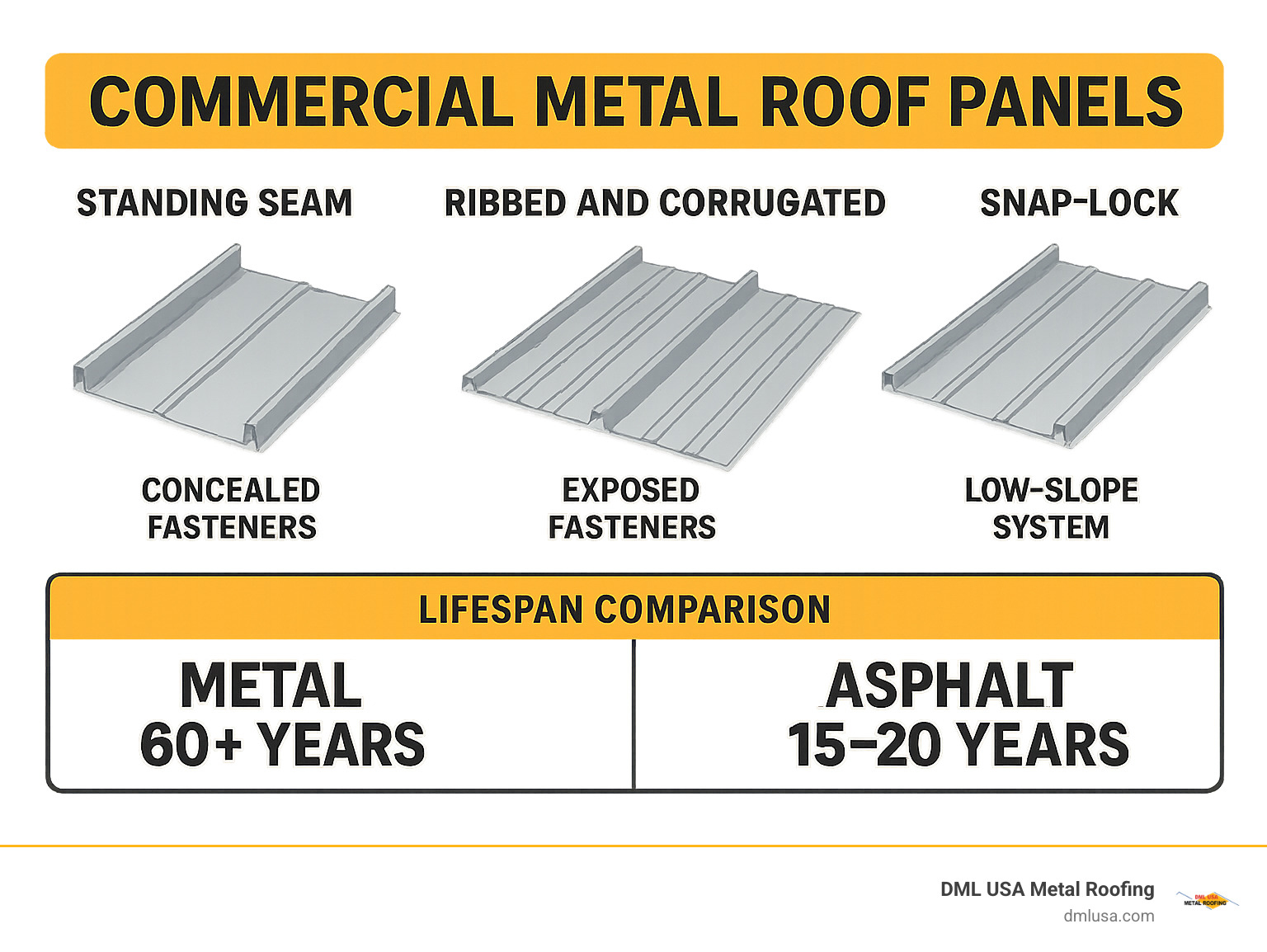
Common commercial metal roof panels vocab:
– corrugated metal
– metal flashing suppliers near me
– lead flashing suppliers near me
What Are Commercial Metal Roof Panels?
Commercial metal roof panels are the heavy-duty cousins of residential roofing. While typical houses use lighter 29-gauge steel, commercial buildings need the strength of 24-gauge, 26-gauge, and 29-gauge materials. A 24-gauge commercial panel weighs 1.08 pounds per square foot, while 26-gauge hits 0.85 pounds per square foot.
Coverage width is another advantage. Most commercial metal roof panels span 36 inches, meaning fewer seams across massive warehouse or retail store roofs. The rib height typically ranges from 3/4 inch to 1.25 inches, adding structural strength and efficient water flow.
Code approvals separate professional systems from basic options. Commercial panels must earn UL 580 Class 90 wind uplift ratings, UL 790 Class A fire resistance, and UL 2218 Class 4 impact resistance. In hurricane zones, they need Miami-Dade County certifications.
The longevity is impressive: while residential metal roofs last 40-50 years, commercial installations can reach 60-70 years with proper care. Many systems qualify for energy tax credits and utility rebates, especially with cool-roof coatings that slash cooling costs by 10-25%.
Hidden vs Exposed Fasteners in Commercial Metal Roof Panels
Concealed fastener systems use clips or snap-lock mechanisms underneath, letting panels expand and contract freely. No visible screws mean superior weather-tightness and clean aesthetics perfect for corporate headquarters, schools, or retail centers.
Exposed fastener systems use color-matched screws with EPDM washers directly through panels. They’re budget-friendly and install quickly, ideal for warehouses and industrial facilities where function trumps form.
Longevity of Commercial Metal Roof Panels
Properly installed metal roofs deliver 60+ year service life. Scientific research on metal roof service life confirms metal roofs outlast virtually every other commercial option.
Corrosion resistance starts with Galvalume or galvanized steel substrates, plus paint systems for extra protection. PVDF coatings like Kynar 500 maintain color and integrity for decades under intense UV exposure.
Warranties reflect this confidence: 25-40 year paint warranties, 25-30 year corrosion protection, and 20-30 year system warranties covering complete weatherproofing.
Types of Commercial Metal Roof Panels & Profiles
Choosing the right commercial metal roof panels means matching your specific needs with the right profile. Here’s a breakdown of the most popular options:
| Panel Type | Minimum Slope | Fastener Type | Best Applications | Coverage Width |
|---|---|---|---|---|
| Standing Seam | 1/4:12 | Concealed | Architectural, Low-slope | 12″-18″ |
| Snap-Lock | 1:12 | Concealed | Commercial, Retrofit | 12″-16″ |
| PBR/R-Panel | 1:12 | Exposed | Industrial, Agricultural | 36″ |
| Ribbed | 3:12 | Exposed | Warehouses, Barns | 36″ |
| Corrugated | 3:12 | Exposed | Utility, Storage | 26.75″ |
| Insulated Metal | 1/4:12 | Concealed | Climate-controlled | Varies |
Standing seam panels create clean, modern lines perfect for upscale office buildings and retail centers. Ribbed panels like PBR and R-Panel systems are workhorses for commercial roofing, with purlin-bearing leg design providing extra support. Corrugated panels offer budget-friendly durability that’s protected buildings for over a century.
Snap-lock systems provide concealed-fastener benefits at mid-range pricing. Mechanically-seamed systems use field equipment for weathertight seams on critical facilities. Insulated metal panels combine roofing and insulation for climate-controlled buildings.
Standing Seam & Snap-Lock Profiles
Standing seam systems handle thermal movement excellently through clip systems that allow free expansion and contraction. Their low-slope capability works on slopes as gentle as 1:12, perfect for modern architectural designs.
The architectural appeal creates sophisticated, contemporary looks for corporate headquarters and educational buildings. Snap-lock systems deliver similar benefits at more accessible pricing, making them attractive for retrofit projects.
Both systems excel in challenging weather with raised seam designs that naturally shed water and concealed fasteners that eliminate potential leak points.
Ribbed, Corrugated & PBR Classics
PBR and R-Panel systems feature clever purlin-bearing leg designs that overlap adjacent panels for improved weather protection and structural support. The structural efficiency allows panels to span greater distances between supports.
Ribbed panels offer clean aesthetics with wide 36-inch coverage for faster installation and lower labor costs. Corrugated panels remain the most budget-friendly option while using the same high-quality steel and coatings as premium systems.
These exposed-fastener systems excel in industrial applications – warehouses, manufacturing facilities, and distribution centers choose these profiles for decades of reliable performance at sensible prices.
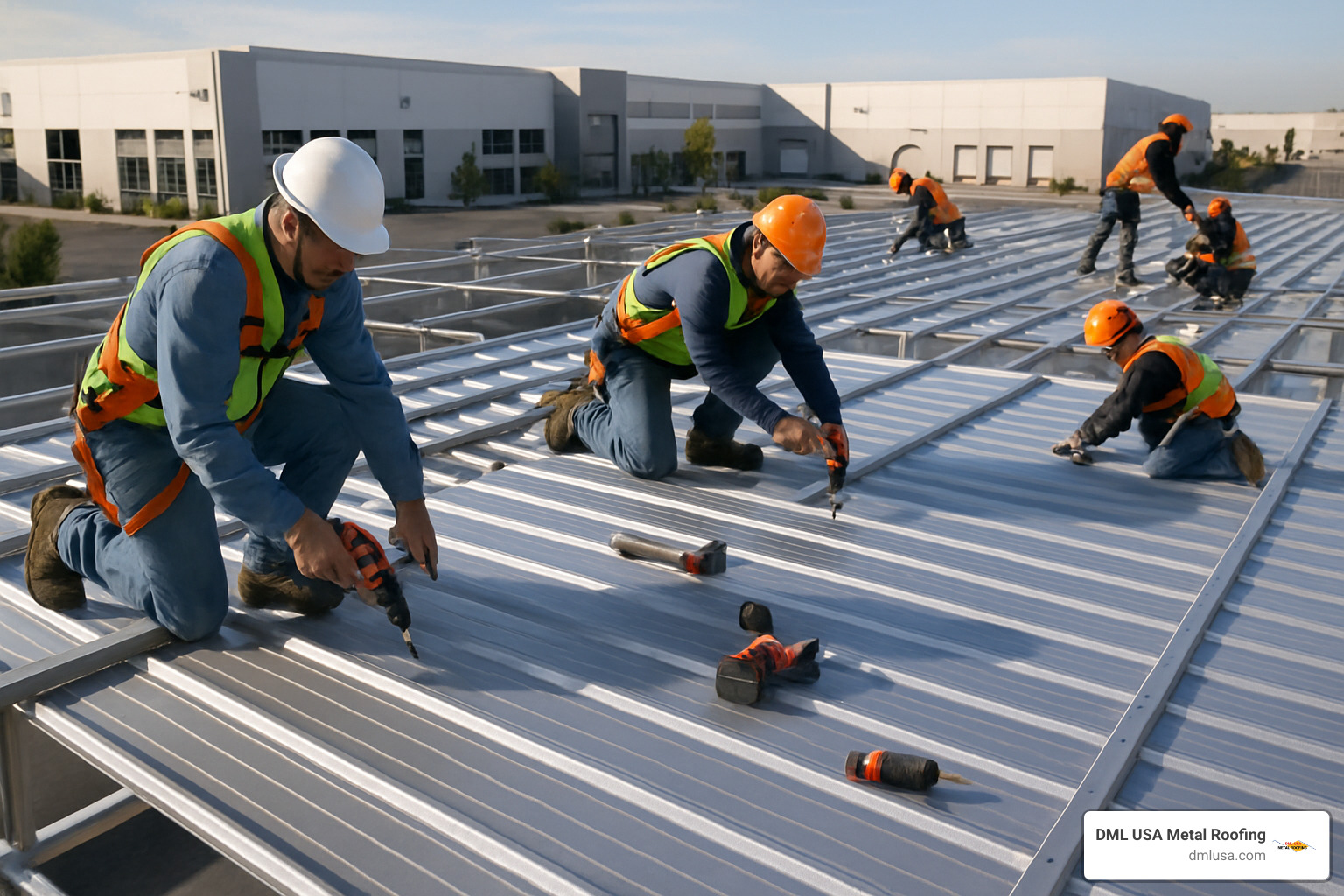
Benefits, Costs & Sustainability of Metal Roofing
Commercial metal roof panels require higher upfront investment but deliver exceptional long-term value. The smart money focuses on lifecycle costs rather than initial price tags.
Fire, wind, and hail resistance puts metal roofing in its own league. These panels earn Class A fire ratings (UL 790), withstand wind gusts up to 140 mph, and achieve UL 2218 Class 4 impact resistance against hail damage.
Energy savings of 10-25% come from cool-roof coatings that reflect 25-67% of solar radiation. For massive warehouses or retail centers, this translates to thousands in annual savings. More info about energy-saving roofs shows how environmental benefits compound over decades.
Steel roofing contains 25-95% recycled content and remains 100% recyclable when its long life ends. While asphalt shingles fill landfills, metal roofing supports the circular economy.
Insurance benefits include 5-15% discounts because insurers recognize superior resistance to fire, wind, and hail. Tax incentives for cool-roof systems help offset initial investment through federal credits and utility rebates.
Latest certification data confirms which systems meet Energy Star requirements for maximum performance and incentives.
Cost Breakdown & Long-Term Savings
Initial investment includes material costs of $3-8 per square foot and labor costs of $2-5 per square foot. Accessories add 15-25% to material costs.
Long-term savings accumulate through maintenance-free performance, fewer replacements over building lifetime, and energy savings of $0.50-1.50 per square foot annually.
Lifecycle cost analysis over 30 years shows metal roofing often costs 20-40% less than alternatives. Break-even typically occurs within 10-15 years.
Green Building & Energy Credits
Cool roof technology reduces roof surface temperatures by 50-60°F, lowers cooling loads by 10-25%, and qualifies for Energy Star certification.
LEED points accumulate through Materials and Resources credits from recycled content, Energy and Atmosphere points from cool-roof performance, and Innovation credits for advanced systems.
Solar-ready platforms make metal roofing ideal for commercial solar installations, with structural strength supporting panel loads and 60+ year roof life matching solar warranties.

Installation & Maintenance Best Practices
Proper installation of commercial metal roof panels determines whether your roof lasts 30 years or 60+ years. Getting the basics right prevents expensive problems later.
Roof pitch requirements vary by system: Standing seam handles slopes as low as 1/4:12, snap-lock needs 1:12 minimum, while exposed fastener panels typically require 1:12 to 3:12.
Installation methods include solid substrate using plywood or OSB for maximum support, open framing over steel purlins for cost savings, and hybrid approaches combining both methods strategically.
Underlayment selection matters significantly. Synthetic underlayments offer superior durability, self-adhering membranes work well around penetrations, and vapor barriers prevent condensation in climate-controlled buildings.
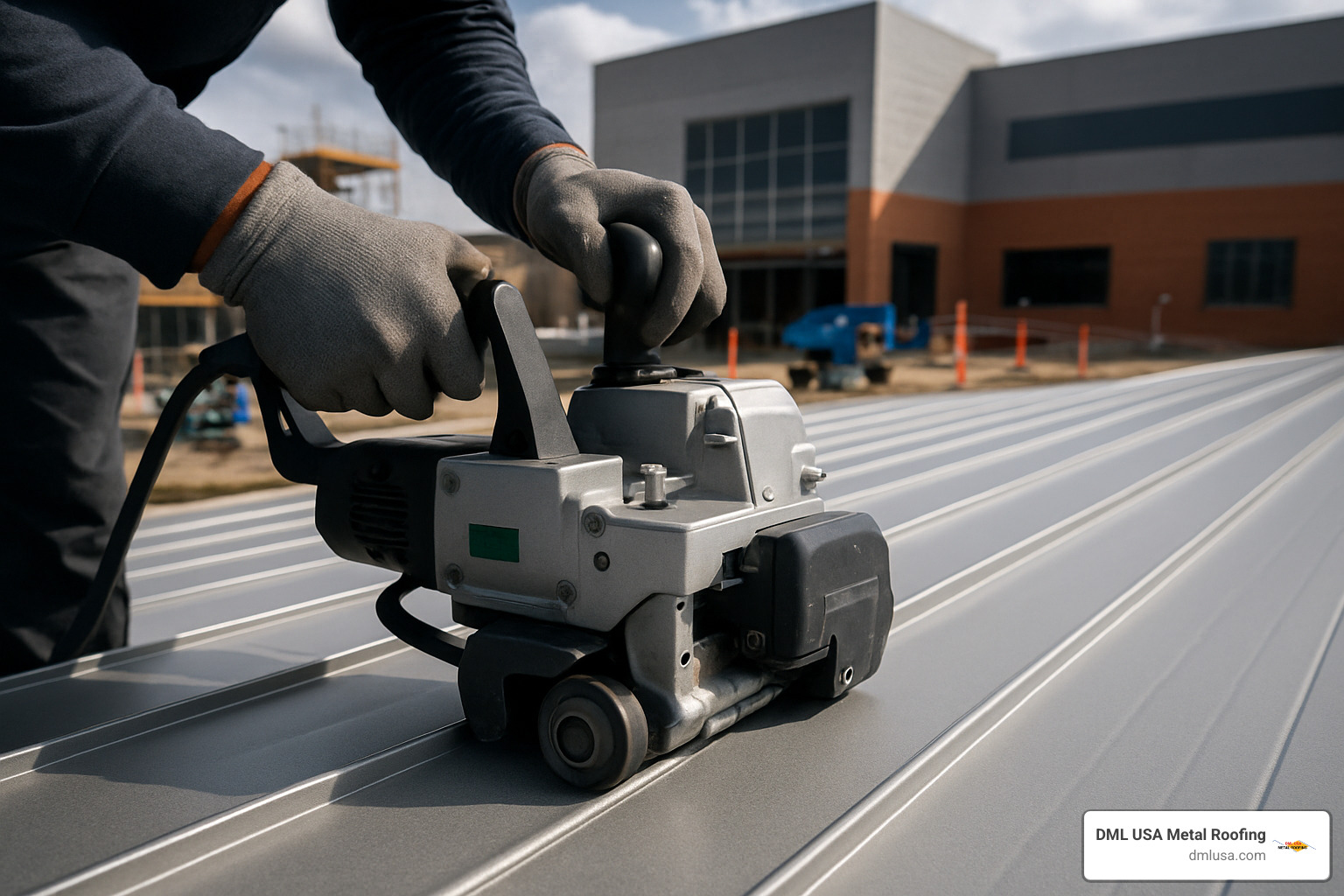
Proper ventilation through ridge and soffit systems keeps roof systems healthy for decades. Field seaming requires specialized equipment and dry conditions for weathertight joints.
More info about resources covers safety protocols essential for commercial projects.
Preparing the Deck & Flashings
Moisture barriers provide first-line defense against condensation and weather infiltration. Vapor retarders are essential in climate-controlled buildings, while air barriers prevent infiltration carrying moisture and energy losses.
Thermal breaks prevent condensation through continuous insulation, thermal spacers, and anti-condensation membranes. Fastening patterns must follow manufacturer specifications for proper wind load transfer.
Edge detailing requires extra attention since roof edges see highest wind loads. Custom flashings for each penetration type and compatible sealants prevent most future leak issues.
Routine Inspection & Quick Repairs
Commercial metal roof panels deliver their 60+ year lifespan with minimal but consistent maintenance.
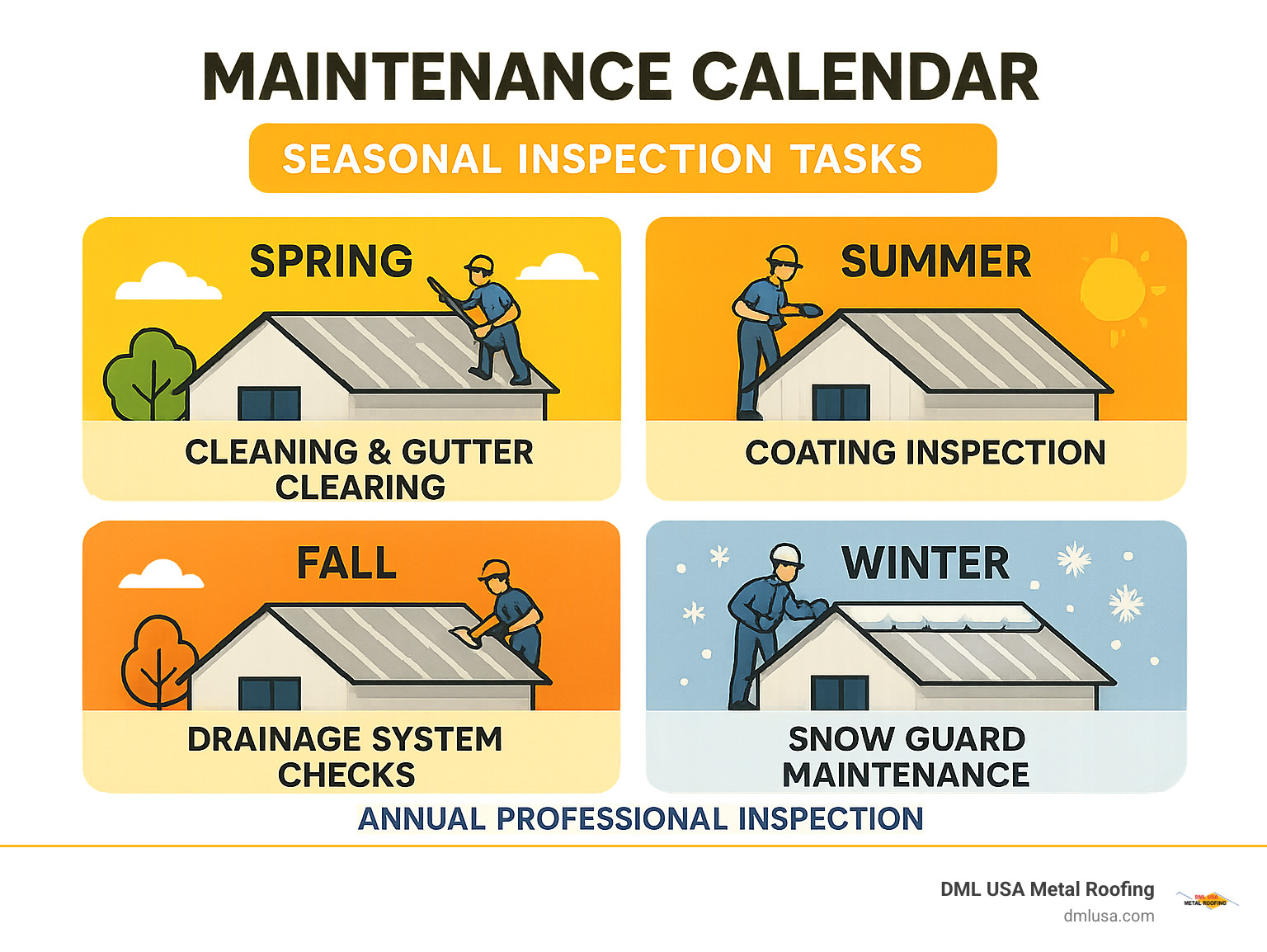
Annual inspections should check for loose panels, coating damage, impact marks, loose fasteners, deteriorated washers, cracked sealants, and clear drainage systems.
Cleaning maintains both appearance and performance. Most environments need annual cleaning with low-pressure washing and appropriate detergents. Avoid high-pressure systems that can damage coatings.
Sealant maintenance typically occurs every 10-15 years. Remove old material completely before applying new, compatible sealants during appropriate weather conditions.
Snow guards prevent dangerous ice dams and snow slides in appropriate climates. Install according to specifications and inspect annually for damage.
Most minor issues can be fixed quickly: replace loose fasteners immediately, adjust shifted panels, address coating damage with touch-up paint, and use appropriate temporary repairs until permanent fixes are completed.
How to Select the Right Panel for Your Commercial Project
Selecting perfect commercial metal roof panels requires systematic evaluation of your specific requirements and constraints.
Climate loads drive performance requirements. High-wind coastal areas need Miami-Dade County approvals and 140+ mph ratings. Snow-heavy regions demand serious load-bearing capacity. Seismic zones require flexible attachment systems.
Building purpose shapes panel selection significantly. Retail centers need architectural appeal – standing seam or snap-lock systems deliver professional appearance. Warehouses prioritize cost-effectiveness, making ribbed or PBR panels smart choices. Educational buildings balance aesthetics with budgets, while healthcare facilities prioritize reliability.
Budget considerations extend beyond initial cost. Standing seam systems cost more upfront but often save money over 20+ years through reduced maintenance. Calculate total cost of ownership including financing options and tax credits.
Code compliance varies significantly by location. Florida Building Code and Miami-Dade County have strict hurricane requirements. Texas Department of Insurance mandates specific hail ratings. Check local amendments early.
More info about product options shows detailed specifications. Scientific research on wind uplift provides valuable high-wind application data.
Checklist for Architects & Facility Managers
Structural requirements include maximum span requirements, dead load capacity of existing structure, and panel gauge selection affecting structural performance.
Performance specifications must match exposure: fire ratings for specific occupancies, wind uplift requirements by location and height, impact resistance for hail-prone areas with potential insurance benefits.
Environmental factors include cool-roof requirements in energy codes, green building programs like LEED rewarding recycled content, and local climate challenges affecting coating selection.
Supplier evaluation covers supplier proximity for shipping costs and support, manufacturing quality certifications, warranty backing requiring financial stability, and technical support availability.
Installation planning affects cost and quality through lead times for specialty panels, installer qualifications for metal roofing skills, weather windows for installation, and quality control procedures.
Working with Suppliers & Installers Near You
Local sourcing offers reduced shipping costs, faster delivery times, better ongoing support, and regional expertise in codes and climate challenges.
Supplier evaluation requires assessing manufacturing quality, technical support, warranty backing, and product range for consistency across projects.
Installer qualifications include commercial project experience, manufacturer certifications, adequate insurance coverage, and strong safety records.
When requesting samples, ask for full-size panel sections, accurate color chips, fastener samples, complete technical literature, and actual warranty documents.
Key supplier questions: What’s your lead time? Do you offer installation support? How do you handle warranty claims? Can you provide recent project references?
Essential installer questions: How many similar projects completed? What certifications do you hold? How do you handle weather delays? What installation warranty do you provide?
More info about metal roofing suppliers near me helps locate qualified local suppliers who understand regional requirements and provide ongoing support.
Frequently Asked Questions about Commercial Metal Roofing
How low can the roof pitch be with commercial metal roof panels?
The minimum roof pitch for commercial metal roof panels depends entirely on which type of panel system you choose. It’s one of the most important decisions you’ll make, especially if you’re dealing with a nearly flat commercial building.
Standing seam systems are your best friend for low-slope applications. These premium panels can handle slopes as gentle as 1/4:12 – that’s just 1/4 inch of rise for every 12 inches of horizontal run. Some specialized mechanically seamed systems can go even lower when properly engineered. The secret is in their concealed fastener design and raised seams that channel water away effectively, even when there’s barely any slope to work with.
Snap-lock panels need a bit more help from gravity, requiring at least a 1:12 minimum slope. While they still use concealed fasteners, their lower profile compared to standing seam means they need that extra slope to shed water properly.
Exposed fastener systems like PBR, ribbed, and corrugated panels typically need 1:12 to 3:12 slopes minimum. Those exposed fasteners create potential entry points for water, so adequate slope becomes crucial for keeping things dry inside.
When you’re working with low slopes, a few things become especially important. Sealant requirements often increase because you’re relying more on the panel system than gravity for weather protection. Drainage design becomes absolutely critical – you can’t afford any ponding water on a low-slope metal roof. The roof will also experience greater thermal stress as it heats and cools throughout the day.
The good news is that many manufacturers now offer low-slope versions of their standard panels with improved sealing features, factory-applied sealants, or special lap designs that boost weather resistance.
Do metal roofs make buildings hotter or noisier?
This question comes up constantly, and honestly, it’s one of the biggest myths about commercial metal roof panels. The reality is pretty much the opposite of what most people think.
Let’s tackle the heat issue first. Metal roofs actually help keep buildings cooler, not hotter. Modern cool-roof coatings can reflect 25-67% of solar radiation right back into the sky instead of absorbing it into your building. Unlike materials like concrete or asphalt that store heat all day and release it slowly, metal has low thermal mass – it heats up quickly but also cools down fast.
We’ve seen cooling cost reductions of 10-25% in commercial buildings after switching to reflective metal roofing. That’s real money back in your pocket every month, especially during those brutal summer cooling seasons.
Now for the noise concern. Properly installed metal roofing isn’t significantly noisier than other roofing materials. The key phrase here is “properly installed.” When you have solid decking with quality underlayment, you get excellent sound dampening. Add adequate insulation, and sound transmission drops even further.
Rain on a metal roof? It’s actually comparable to the sound levels you’d get with asphalt shingles. Hail might be audible, but in most commercial settings, your HVAC systems and normal building operations mask any roof sounds anyway.
The installation details make all the difference. Quality underlayment acts like a sound barrier between the panels and the building interior. Proper fastening prevents panels from moving around and creating unnecessary noise. Adequate insulation serves double duty, providing both thermal and acoustic benefits.
Can I retrofit panels over an existing membrane roof?
Absolutely! Retrofitting commercial metal roof panels over existing membrane roofing is not only possible – it’s often the smartest financial move you can make. We call this a “recover” or “retrofit” installation, and it’s become incredibly popular for good reasons.
The structural side needs attention first. You’ll want to verify that your existing structure can handle the additional weight of the metal panels. The good news is that most commercial buildings have plenty of structural capacity. Your existing deck needs to be sound and properly fastened, and you might need to add insulation to meet current energy codes.
Installation typically involves furring strips that create a level surface and ventilation space over your existing membrane. Some systems can attach directly to the existing deck through the membrane, and hybrid approaches combine solid substrate in critical areas with open framing elsewhere.
The benefits are pretty compelling. You eliminate expensive tear-off and disposal costs – we’re talking thousands of dollars saved right there. Installation happens faster with less weather exposure, and your building operations can usually continue during the work. Plus, it’s a perfect opportunity to upgrade your insulation performance.
Most membrane types work great for retrofit applications. Whether you have EPDM rubber, TPO, PVC, or modified bitumen systems, metal panels can typically go right over them with proper installation techniques.
Design considerations include creating proper ventilation space to prevent moisture issues, allowing for thermal movement between the old and new systems, and modifying existing penetrations for the new roof height. Edge details need special attention to properly terminate the new system.
Check your local building codes for any specific retrofit requirements. Some areas have particular rules about multiple roof systems, but most jurisdictions welcome this approach because it reduces landfill waste.
This retrofit approach can extend your roof life by 60+ years while giving you immediate improvements in energy efficiency and weather protection. It’s like getting a brand new roof without the headache and expense of tearing off the old one.
Conclusion
Commercial metal roof panels deliver undeniable value through 60+ year lifespans while traditional roofs need replacement every 15-20 years. This longevity transforms building economics fundamentally.
Today’s metal roofing offers remarkable versatility. Budget-friendly exposed-fastener ribbed panels provide decades of reliable warehouse protection. Architectural standing seam systems deliver clean, professional lines that improve corporate headquarters. The environmental benefits keep improving – up to 95% recycled content, 25% cooling cost reductions, and 100% recyclability.
Energy savings alone often pay for the roof over time. Combined with reduced maintenance, fewer replacements, and insurance discounts, metal roofing frequently costs less over its lifetime than cheaper alternatives.
Success requires three fundamentals: choosing the right system for your needs, ensuring professional installation, and following basic maintenance guidelines. Get these right, and your roof protects your building for decades with minimal fuss.
At DML USA Metal Roofing, we’ve spent over 15 years manufacturing durable, affordable metal roofing from our Illinois facilities. Our panels deliver fire, wind, and impact resistance while qualifying for energy tax credits that improve your bottom line.
Whether you’re designing new facilities, managing aging roofs, or planning ahead, we’d love to help you explore how commercial metal roof panels solve your specific challenges.
More info about Contact page – Let’s discuss how the right metal roofing solution can protect your investment for generations.
Why settle for roofs needing constant attention when you could install systems that practically maintain themselves? Future-proof your building today with commercial metal panels that will perform beautifully for decades.