

False
When Your Metal Roof Shows Its Age: Making the Right Choice
Replacing a metal roof becomes necessary when your current roof shows signs of significant wear, damage, or reaches the end of its service life. Here’s what you need to know:
Key Signs You Need Replacement:
- Widespread rust or corrosion beyond surface level
- Multiple leaks throughout the roof system
- Storm damage affecting panel integrity
- Wallowed-out fasteners on exposed fastener systems
- Roof age exceeding manufacturer warranty periods
When Repainting May Be Enough:
- Surface-level fading or minor discoloration
- Roof structure remains sound and watertight
- Age is within 20-30 years with good maintenance history
Metal roofs are known for their impressive durability, lasting 40 to 70 years when properly maintained. However, even the most robust roofing systems eventually face a critical decision point: should you repaint to restore appearance and extend life, or is it time for a complete replacement?
This decision isn’t just about cost – it’s about long-term value, safety, and peace of mind. A metal roof showing signs of significant wear might seem like a candidate for repainting, but underlying issues like structural damage or widespread corrosion often make replacement the smarter choice.
The key lies in understanding what your roof is telling you. Fading paint is different from structural deterioration. Surface rust requires different action than compromised fasteners. Making the wrong choice can lead to ongoing repairs, water damage, and ultimately higher costs down the road.
As Adam Kadziola from DML USA Metal Roofing, I’ve spent years helping Illinois homeowners steer the complexities of replacing a metal roof and determining when repair or replacement makes the most financial sense. My experience in manufacturing high-quality metal roofing products has shown me that the right decision today prevents costly headaches tomorrow.
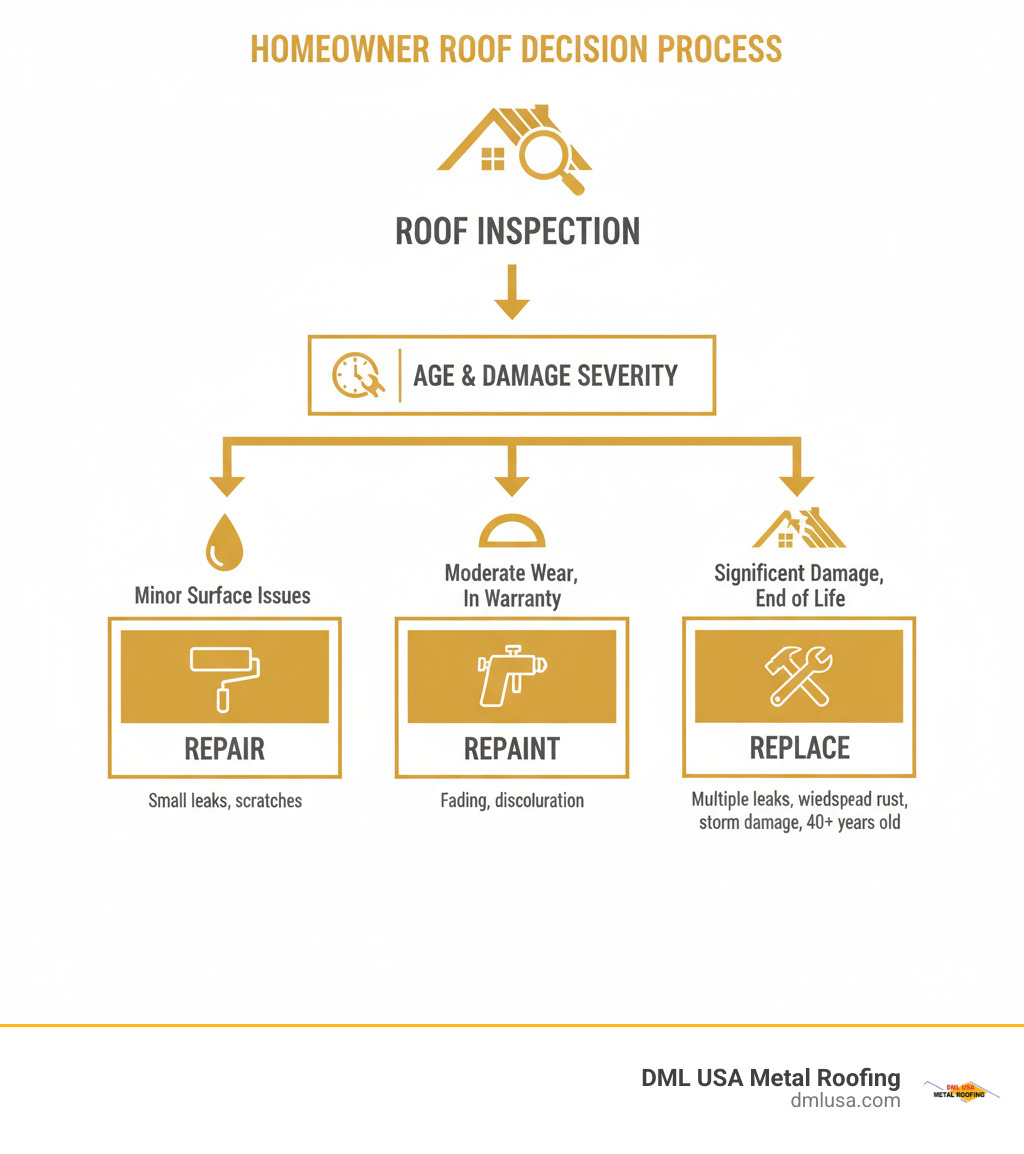
Quick replacing a metal roof terms:
The Deciding Factors: Repainting vs. Replacing Your Metal Roof
Deciding between a repaint and replacing a metal roof is a major home maintenance choice. It’s not just about curb appeal; it’s a financial decision that protects your home for years. Signs of wear aren’t always obvious from the ground. What looks like simple fading could be a serious structural issue, while a weathered roof might have decades of life left. A professional inspection is invaluable for revealing the true condition of your roof.
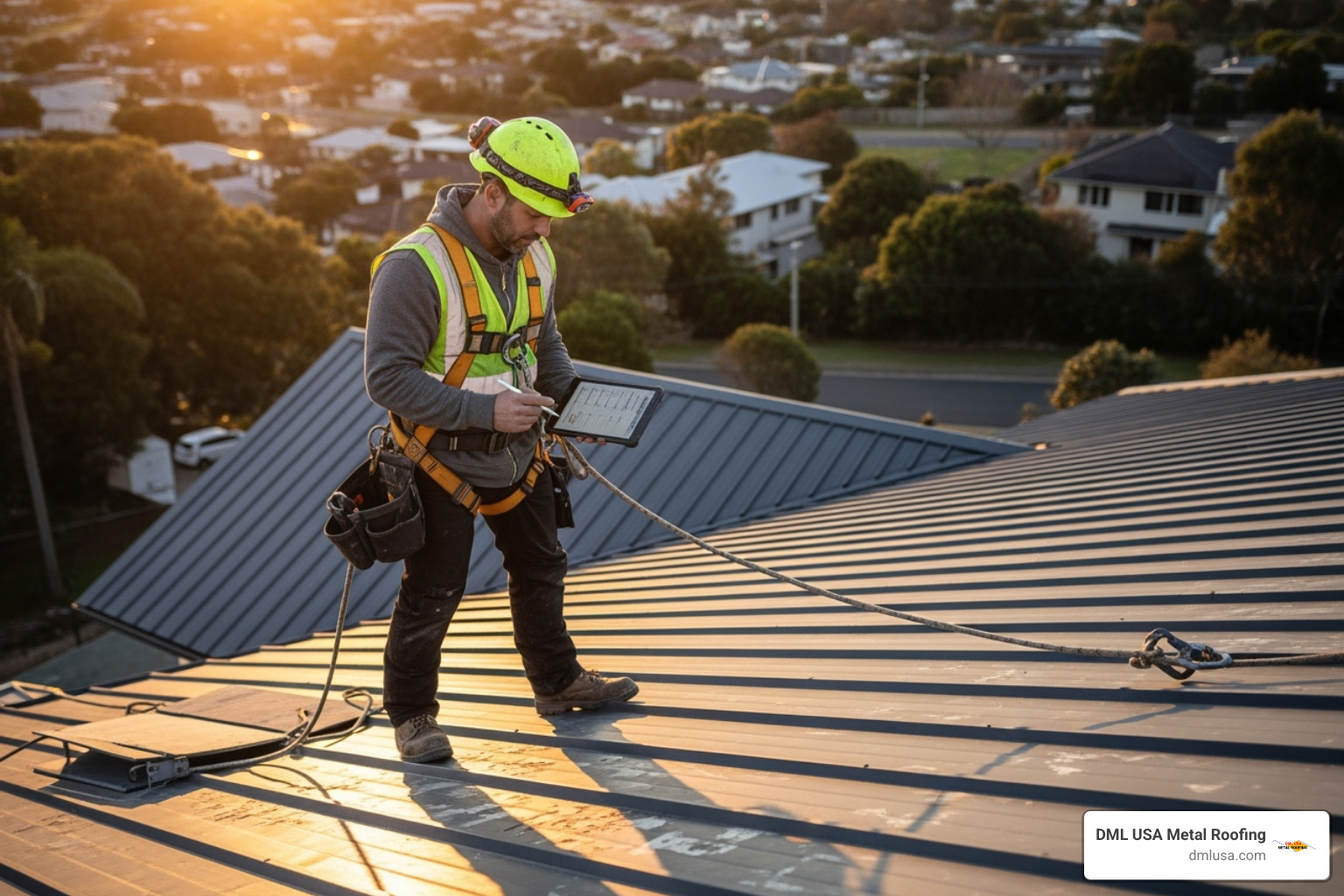
A cost-benefit analysis should consider more than the initial price. Factor in warranty, roof age, and expected life extension. We recommend a professional assessment before deciding on Metal Roof Restoration.
When to Repaint Your Metal Roof
Repainting is a great option when your roof is structurally sound but its appearance is faded. It offers an impressive return on investment by restoring your home’s look.
- Aesthetic Improvement: The most noticeable benefit is aesthetic. Fresh paint transforms a tired, faded roof, and our wide range of Metal Roof Colors lets you update your home’s style.
- Cost-Effectiveness: Repainting is cost-effective, typically running $4 to $8 per square foot. This is significantly less than a full replacement, often less than half the cost of replacing a metal roof.
- Lifespan Extension: A professional repaint can extend your roof’s life by 10 to 20 years. Proper surface preparation and the right paint system, like a durable PVDF finish, are key to achieving this longevity.
- Process Overview: The process involves thorough cleaning, surface preparation, rust treatment, priming, and applying a high-quality finish coat designed for metal.
However, repainting isn’t a fix for underlying structural issues like deep corrosion or failed fasteners. It can also have warranty implications, as repainting a newer roof might void its original paint warranty.
When a Full Replacement is Necessary
Sometimes, replacing a metal roof is the only sensible option. Recognizing the signs early saves you from wasting money on temporary fixes.
- Widespread Rust or Corrosion: Rust that has eaten through the metal indicates the protective coating has failed and the panel’s integrity is compromised.
- Significant Storm Damage: While durable, extreme Illinois weather can cause large dents, punctures, or torn panels that compromise your roof’s integrity.
- End of Service Life: As a roof nears or exceeds its 40 to 70-year lifespan, replacement becomes the most practical choice.
- Multiple Leaks: Recurring water intrusion in various areas often means the entire system is compromised.
- Wallowed-Out Fasteners: On exposed fastener systems, thermal expansion can enlarge screw holes, causing leaks and loose panels. Widespread wallowing often signals the need for a full assessment from Metal Roof Repair Companies.
Key Influences on Your Decision
Beyond visible wear, other factors influence the repaint vs. replace decision. Understanding them ensures a choice you’ll be happy with for decades.
- Roof Age vs. Paint Warranty: Consider your roof’s age against its paint warranty. A high-quality system may have a 30-year paint warranty on a high-performance PVDF finish. Once expired, paint breakdown is normal and doesn’t mandate replacement. However, repainting a roof still under warranty could void it.
- Roof System Type: Standing Seam Metal Roof systems with concealed fasteners have fewer leak points than exposed fastener systems like Corrugated Metal Roofing.
- Geographic Climate: The Illinois climate, with its heavy snow, freeze-thaw cycles, and strong winds, accelerates wear. Our products are engineered specifically for these challenges.
- Professional Roof Inspection: An inspector can spot subtle wear, assess structural integrity, and provide an unbiased recommendation. They identify hidden damage and determine the extent of issues like corrosion, ensuring you don’t make the wrong choice.
A Step-by-Step Guide to Replacing a Metal Roof
Once you’ve decided on replacing a metal roof, understanding the process can make you more confident in your investment. Here’s what to expect.

Safety is paramount in any roofing project. Working at heights with heavy materials requires expertise, which is why we recommend professional Metal Roofing Installation. Professionals have the training, tools, and insurance to complete the job safely and in compliance with all codes and specifications. This guide is a process overview, not a DIY manual.
Step 1: Preparation and Roof Deck Inspection
A solid roof deck is the foundation for a long-lasting roof. This first step is critical for the decades of protection your new roof will provide.
- Removing Old Roofing: Most projects begin with removing old roofing materials. While installing over shingles is sometimes possible, we recommend a complete tear-off. This allows for a full inspection of the roof deck to identify and fix hidden issues. For more on this, see Can You Install a Metal Roof Over a Shingle Roof?.
- Inspecting the Deck: With the old roof removed, the focus shifts to thoroughly inspecting the roof deck. We look for warped boards, soft spots indicating water damage, and sheathing that is pulling away from the rafters.
- Making Repairs: Any damaged plywood or OSB boards are replaced and loose areas are secured. This step is not optional; a new metal roof requires a solid, stable foundation to ensure its longevity.
Step 2: Installing Underlayment and Flashing
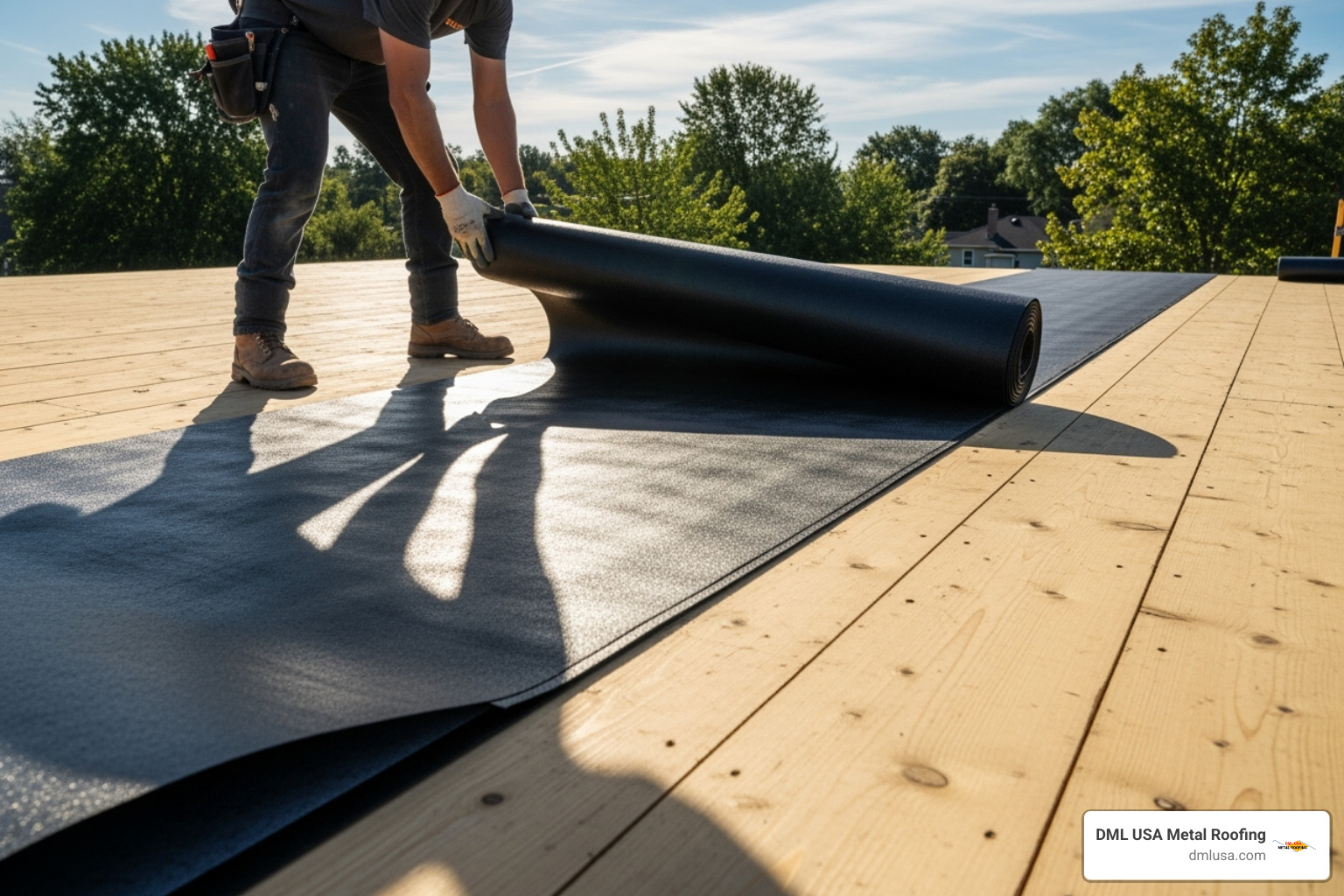
With a repaired roof deck, the next step is installing the underlayment. This creates a crucial secondary water barrier between the metal panels and your home.
- Choosing Underlayment: We use high-quality synthetic underlayment designed for metal roofing because it is tear-resistant, stable in temperature changes, and more durable than traditional felt paper.
- Laying Underlayment: We work from the eave upwards, overlapping each row by four to six inches and securing it properly to create a smooth, watertight barrier.
- Installing Drip Edge: This critical detail protects vulnerable roof edges and directs water away from the fascia and into the gutters.
Step 3: Installing New Metal Panels
This is where precision craftsmanship brings your new roof to life. Every measurement is critical for a successful installation.
- Aligning the First Panel: The first panel must be perfectly square to the eave. An incorrect start will throw off the entire roof.
- Proper Fastening: Techniques depend on the system, like a Standing Seam Metal Roof or Corrugated Metal Roofing. Screws must be driven to the correct torque—not too loose to prevent leaks, and not too tight to avoid damaging the panel.
- Overlapping and Sealing: We follow manufacturer specifications for panel overlap and seam sealing to create durable, watertight joints. Using quality Metal Roofing Materials is key.
Step 4: Finishing Touches
The final details are what make a roof great, ensuring flawless performance and appearance for years.
- Installing Flashing: Valley, vent, and chimney flashing requires custom fitting and meticulous detail. Since these transition areas are common leak spots, we ensure each piece is perfectly sealed and integrated.
- Attaching the Ridge Cap: The ridge cap, installed with closure strips, seals the roof’s peak. This creates a clean, weatherproof line.
- Final Inspection and Cleanup: We check every fastener, seam, and flashing seal. We then remove all debris, including metal shavings that can cause rust stains. This attention to detail is what makes a new metal roof a truly Low Maintenance Roofing solution.
Cost, ROI, and Common Pitfalls
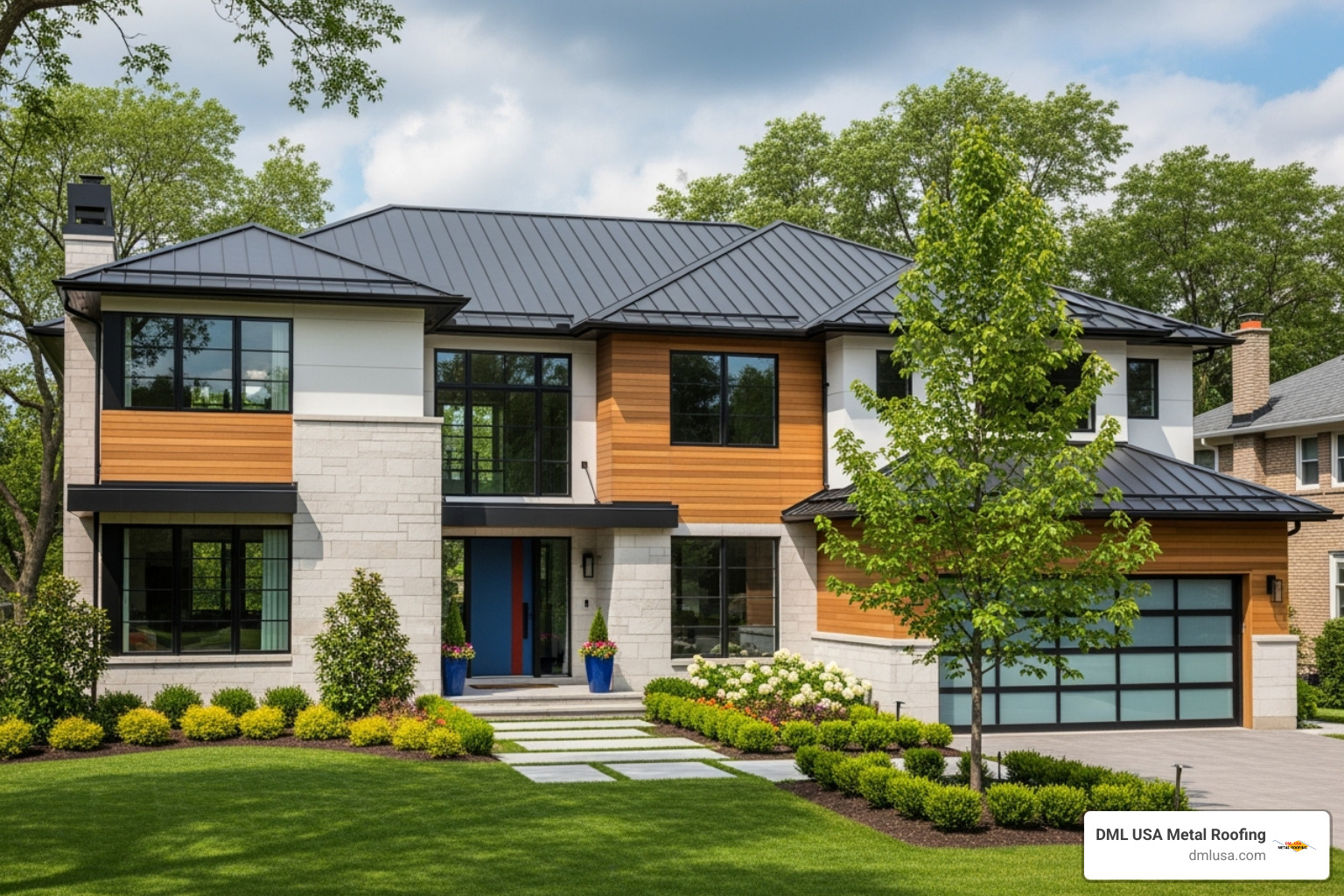
Replacing a metal roof is a significant investment that pays dividends for decades. While upfront cost is a common concern for Illinois homeowners, it’s crucial to look at the bigger picture. The long-term financial sense is Why Choose Metal Roofing is a smart choice.
Typical Costs Associated with Replacing a Metal Roof
The cost of replacing a metal roof varies based on materials, complexity, and labor. Understanding these factors helps you plan your budget.
| Metal Type | Average Cost per Square Foot |
|---|---|
| Galvanized Steel | $7 – $16 |
| Aluminum | $4 – $11 |
| Copper | $15 – $30 |
Several factors drive the total cost. Labor typically accounts for about 60% of the investment, reflecting the skill needed for a proper installation. Roof complexity is also a major factor; a simple gable roof is less expensive than one with many angles, dormers, or skylights. The type of metal and finish also impacts the price. The national average cost to replace a metal roof on a 1,700-square-foot home ranges from $6,800 to $51,000. For a detailed comparison, see our guide on the Cost of Metal Roofing vs. Shingles.
Maximizing Your Investment
A metal roof is one of the smartest investments you can make in your home.
- Return on Investment: The 2024 Cost vs. Value Report shows homeowners recoup an average of 48.1% of the cost upon resale after replacing a metal roof.
- Energy Efficiency: Metal roofs are excellent Energy Efficient Roofing solutions. Their reflective surface keeps attics cooler, reducing air conditioning costs during hot Illinois summers.
- Tax Incentives: Certain energy-efficient metal roofs may qualify for a Roofing Tax Credit. Consult a tax professional for current guidelines.
- Increased Resale Value: Buyers recognize the long-term value of a durable, low-maintenance metal roof, which can lead to higher offers and a faster sale.
Common Mistakes to Avoid When Replacing a Metal Roof
Based on our experience, here are some common and costly mistakes to avoid when replacing a metal roof.
- Skipping the Deck Inspection: Any underlying rot, moisture, or structural weakness must be addressed before installing the new roof. Cutting corners here leads to much costlier repairs later.
- Using Incorrect Fasteners: This can void warranties and cause leaks. Each system has specific requirements for screw type, spacing, and torque.
- Inadequate Panel Overlap: Manufacturer guidelines for overlap and sealing must be followed to ensure a watertight roof.
- Ignoring Building Codes: Local codes and manufacturer instructions protect your home’s safety and structural integrity and ensure your warranty remains valid.
- Attempting a DIY Installation: Replacing a metal roof requires specialized tools, knowledge, and safety measures. Savings are often lost to fixing mistakes or hiring a professional to correct the work.
Frequently Asked Questions about Metal Roof Replacement
When homeowners start thinking about replacing a metal roof, they naturally have questions. After years of helping Illinois families upgrade their roofing systems, we’ve heard these concerns countless times. Let me share the answers that matter most to you.
Can a new metal roof be installed over an old one?
Here’s the short answer: sometimes, yes – especially over a single layer of asphalt shingles. This approach, called a “retrofit” or “re-cover” installation, can save you money on tear-off and disposal costs.
But here’s what we’ve learned from years of manufacturing and installing metal roofing: a full tear-off is almost always the better choice. Why do we recommend this extra step? Because it’s your chance to catch problems before they become expensive headaches.
When we remove the old roofing completely, we can inspect every inch of your roof deck. We’ve found hidden rot, moisture damage, and structural issues that would have compromised even the best new metal roof. A full tear-off also gives us that perfectly flat, solid surface your new roof needs to perform at its best for decades.
If you do choose to install over existing shingles, the old roof must be in stable condition, and we need to account for the added weight and proper ventilation. Learn more about the specifics of Metal Roof Installation Over Shingles.
How long does a new metal roof really last?
This is where metal roofing truly shines! A professionally installed, high-quality metal roof will protect your home for 40 to 70 years. Some premium materials like copper can last even longer – we’re talking potentially 200 years with proper care.
Compare that to traditional asphalt shingles, which typically need replacement every 15-30 years. When you’re replacing a metal roof, you’re often making a once-in-a-lifetime investment. That’s peace of mind you simply can’t put a price on.
Our metal roofing products are specifically engineered to be Long Lasting Roofing Options that stand up to Illinois weather year after year. The durability comes from superior materials, protective coatings, and manufacturing processes designed for the long haul.
Will a metal roof make my house louder in the rain?
I love this question because it gives me a chance to bust one of the biggest myths about metal roofing! The answer is a definitive no – when properly installed, a metal roof is no louder than asphalt shingles during rain or storms.
The key phrase there is “when properly installed.” We install metal roofing over a solid roof deck with quality underlayment and proper attic insulation. These layers absorb and dampen sound just like they would with any other roofing material.
The “noisy metal roof” reputation comes from old barns and sheds where metal panels were installed directly over open rafters with no deck or insulation underneath. That’s completely different from how we install residential metal roofing today.
In fact, many of our customers tell us they were pleasantly surprised by how quiet their new metal roof is. Some even say they miss hearing the gentle patter of rain they used to notice with their old shingle roof!
Conclusion: Your Next Steps for a Durable, Beautiful Roof
When you’ve reached the end of your current roof’s lifespan, replacing a metal roof represents one of the smartest investments you can make in your home. It’s not just about getting a new roof – it’s about choosing longevity, durability, and energy efficiency that will serve your family for decades to come.
The benefits speak for themselves. While other roofing materials need frequent repairs and replacements, a quality metal roof becomes a one-time decision that protects your home through countless Illinois winters, summer storms, and everything in between. The long-term value of this investment far outweighs the initial cost, especially when you consider the reduced maintenance, energy savings, and increased home value.
At DML USA Metal Roofing, we understand that replacing a metal roof is a significant decision. That’s why we’ve built our reputation on manufacturing high-quality, affordable metal roofing products specifically designed for our challenging Illinois climate. Our roofs aren’t just beautiful – they’re engineered to be Fire Resistant Roofing and Wind Resistant Roofing solutions that stand up to whatever Mother Nature brings.
Using high-quality, durable materials is absolutely key to a successful replacement project. We’ve seen too many homeowners cut corners on materials only to face problems years down the road. Our products are designed to deliver the performance and peace of mind you deserve from such an important investment.
Whether you’re in Arlington Heights, Barrington, Chicago, Crystal Lake, Des Plaines, Elk Grove Village, Glenview, Hawthorn Woods, or anywhere else across our Illinois service areas, our team is ready to guide you through every step. We’re not just selling you a roof – we’re providing a solution that will protect your family and your investment for generations.
The time to act is when you’re ready to stop worrying about your roof and start enjoying the confidence that comes with superior protection. Your home deserves the best, and you deserve the peace of mind that comes with a roof built to last a lifetime.