

Corrugated Metal: Top 5 Best Local Suppliers 2025 Guide
Why Finding the Right Corrugated Metal Supplier Matters
Corrugated metal has become the go-to choice for homeowners seeking durable, low-maintenance roofing and siding solutions. This versatile building material offers exceptional strength-to-weight ratios and can last 40-70 years with minimal upkeep.
Key Facts About Corrugated Metal:
– Lifespan: 40-70 years depending on coating type
– Energy Savings: 10-25% reduction in heating/cooling costs
– Materials: Galvanized steel, Galvalume, aluminum, stainless steel
– Common Profiles: ⅞” and ½” corrugations in gauges 18-31
– Coverage: Standard 24″ width with various length options up to 30 feet
The signature wave pattern provides “one of the highest strength-to-weight ratios of any construction material” by distributing loads across the ridges and valleys.
Popular Applications:
– Residential and commercial roofing
– Exterior siding and wall cladding
– Agricultural buildings and barns
– Fencing and decorative screens
– Interior accent walls and wainscoting
Finding a reliable local supplier makes all the difference in your project’s success. The right partner will offer quality materials, competitive pricing, custom cutting services, and reliable delivery schedules.
I’m Adam Kadziola, and I’ve spent over 15 years helping Illinois homeowners choose the perfect corrugated metal solutions for their roofing and building needs. Through DML USA Metal Roofing, I’ve seen how the right supplier relationship can transform a stressful renovation into a smooth, successful project.
Basic corrugated metal glossary:
– lead flashing suppliers near me
– metal flashing suppliers near me
– metal roof wholesale near me
Corrugated Metal 101: How It’s Made and Why It Works
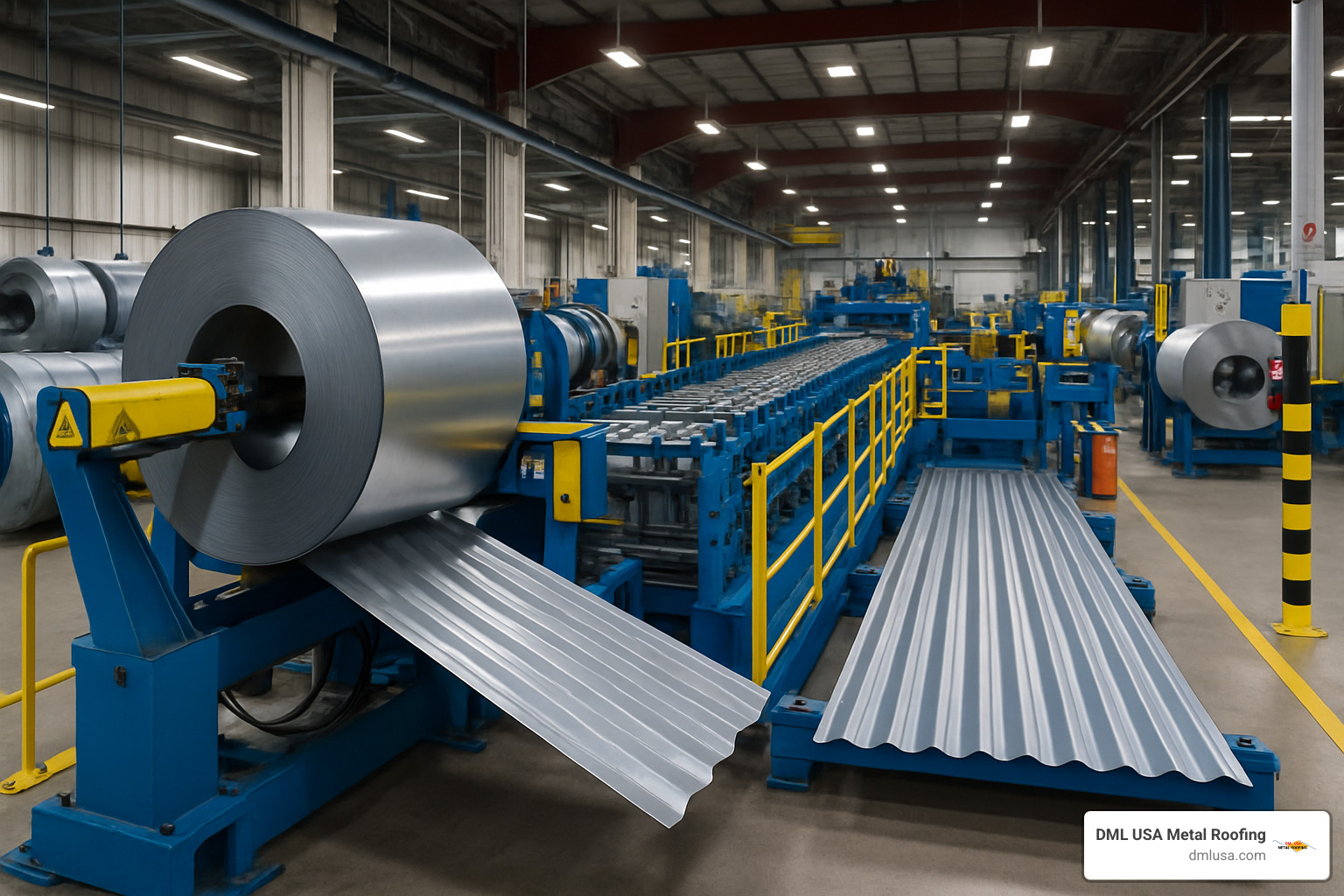
The distinctive wavy panels get their signature ridges through roll forming – a fascinating process where flat metal coils are fed through specially designed rolling dies. This cold-form process gradually shapes the metal without heat, maintaining the material’s strength.
This process actually boosts the tensile strength of the metal. The pitch and depth of each wave matters – most modern panels use a 3-inch pitch with rib heights ranging from ¼” to ⅞”.
The corrugation history goes back nearly 200 years to Henry Robinson Palmer, who patented the first corrugated iron in 1829. His goal was simple: create a building material that unskilled workers could install quickly. Corrugated iron history shows how this innovation spread worldwide.
The Science Behind Corrugated Metal
The material chemistry of modern corrugated metal typically involves hot-dip galvanized mild steel that’s been cold-rolled to form those essential waves.
The rib geometry creates alternating ridges and valleys that distribute weight across multiple contact points. The ridges act like tiny I-beams, while the valleys provide flexibility for thermal expansion.
Benefits Unique to Corrugated Metal
Weather resistance tops the list. Those corrugations naturally shed water and snow, while the coated steel handles hail, wind, and temperature swings. We’ve seen panels perform beautifully through Illinois winters and scorching summers.
The fire rating gives homeowners peace of mind. Metal panels won’t burn or contribute to fire spread, earning superior safety ratings compared to wood or asphalt materials.
Finally, there’s the recyclability factor. Steel panels are 100% recyclable when their 40-70 year service life eventually ends.
Types, Sizes & Profiles of Corrugated Metal Panels
Walking into a corrugated metal supplier for the first time can feel overwhelming. Once you understand the basics, choosing the right panels becomes much simpler.
The material you choose makes the biggest difference in longevity. Galvanized steel remains popular because it offers solid protection at a budget-friendly price, giving you 15-20 years of reliable service.
Galvalume steel takes things up a notch with its 55% aluminum and 45% zinc coating. This combination gives you 40-60 years of protection – potentially triple the lifespan for just a modest price increase.
| Coating Type | Composition | Typical Lifespan | Best Use |
|---|---|---|---|
| Galvanized | 100% Zinc | 15-20 years | Budget projects, low-corrosion environments |
| Galvalume | 55% Aluminum, 45% Zinc | 40-60 years | Most residential and commercial applications |
| Aluminum | Pure Aluminum | 50+ years | Coastal areas, premium applications |
| Stainless Steel | Steel Alloy | 70+ years | Industrial, extreme environments |
Aluminum panels shine in coastal areas where salt air can be tough on steel. Stainless steel represents the premium end – virtually indestructible but with a price tag to match.
The ⅞” profile creates deep, dramatic shadow lines that make buildings look substantial. The ½” profile offers gentler waves that feel more traditional, though you’ll need about 23% more material due to overlap requirements.
Mini-corrugation offers the best of both worlds for interior projects with smaller 1-1/4″ x 1/4″ waves.
Matching Profile to Project Needs
Roofing applications need at least a 3:12 slope for proper drainage, and deeper profiles handle heavy rain and snow loads better.
Siding projects give you more freedom to choose based on looks and budget. Interior design applications work well with any profile, though mini-corrugation often provides the right amount of texture.
Understanding Gauges & Coverage for Corrugated Metal
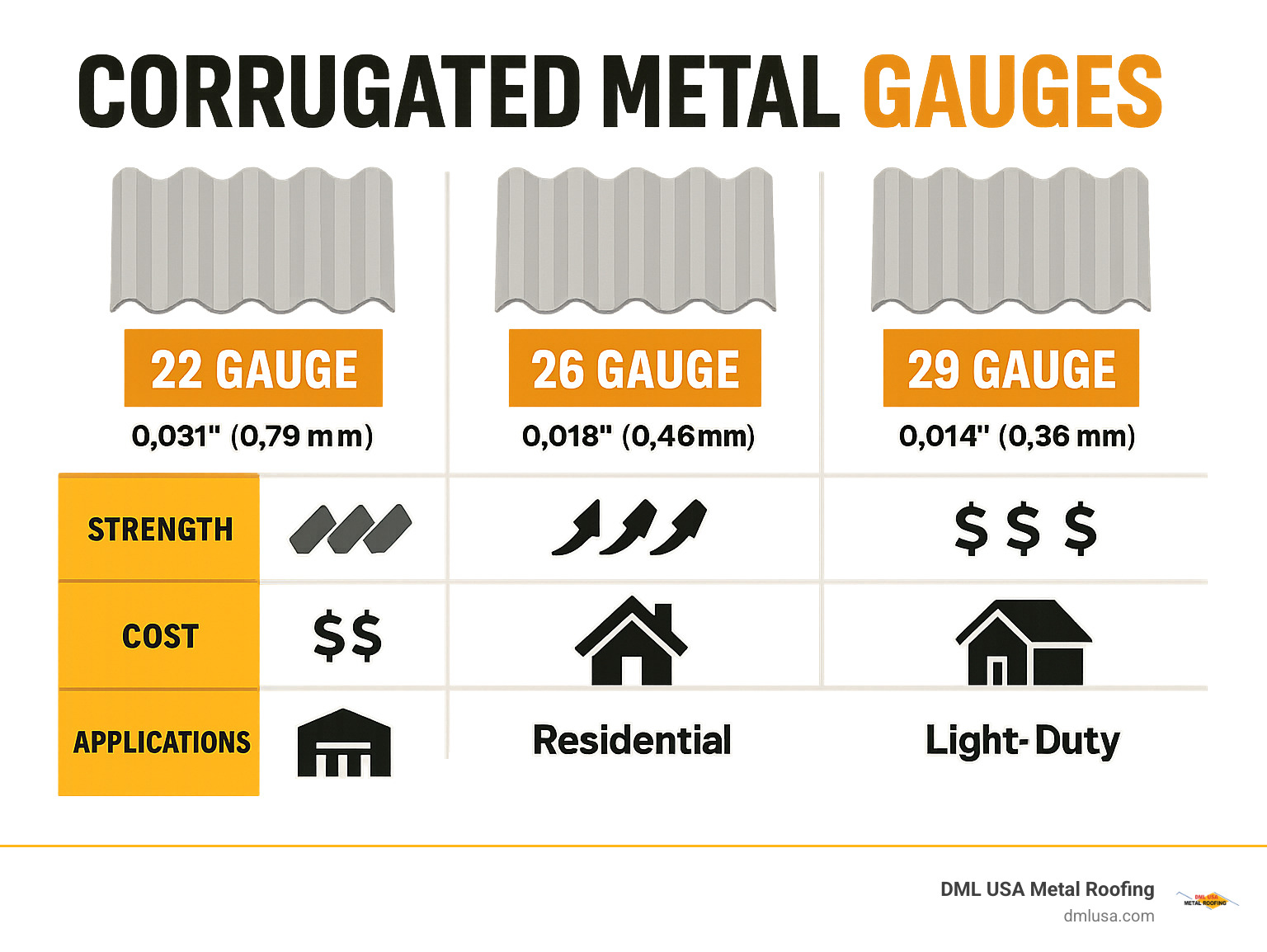
Gauge numbers work backwards – smaller numbers mean thicker, stronger material. Most residential projects use gauges 26, 29, or 31, with 26-gauge being the strongest.
Here’s the real gotcha: coverage calculations. That 8-foot panel doesn’t actually cover 8 feet due to overlaps. With ⅞” corrugated panels, you need to overlap by two full corrugations for proper weather protection.
Smart contractors always order 10-12% extra corrugated metal panels for roofing and about 6% extra for siding projects.
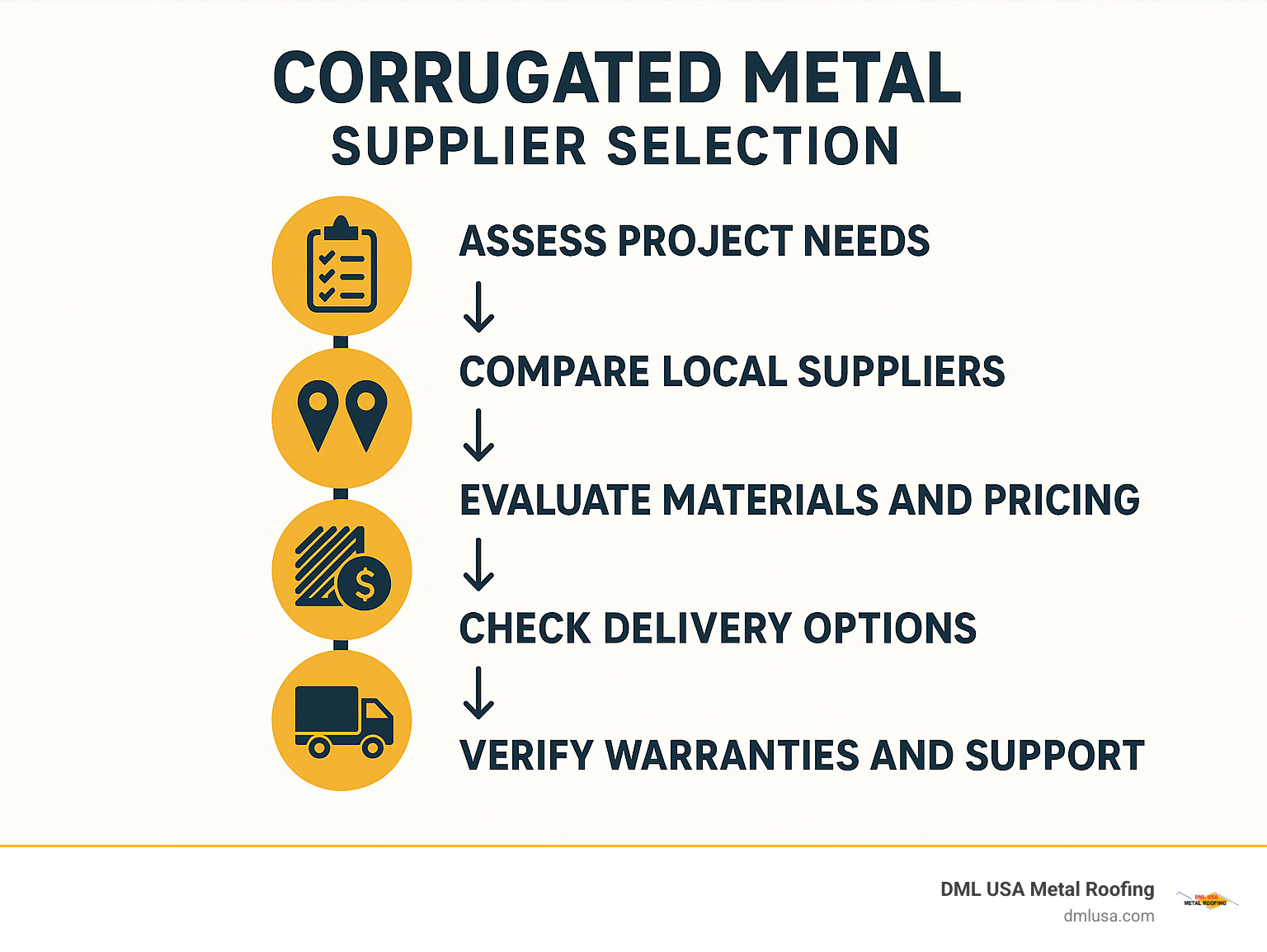
Buying Guide: Corrugated Metal Suppliers Near Me
Shopping for corrugated metal can feel overwhelming when you’re staring at dozens of supplier options online. After helping hundreds of Illinois homeowners steer this process, I’ve learned that the right supplier makes your project smoother, cheaper, and less stressful.
Location matters more than you might think. When your supplier is within driving distance, you can pick up materials yourself and avoid freight charges that can add $200-500 to your project cost.
Local suppliers understand Illinois weather patterns and building codes. They know which gauges perform best in our wind zones and can recommend the right fasteners for our freeze-thaw cycles.
The best suppliers maintain deep inventory across multiple gauges, profiles, and finishes. Custom cutting services separate good suppliers from great ones, saving you time and reducing waste.
More info about Metal Roofing Suppliers Near Me can help you understand regional options.
How to Evaluate a Corrugated Metal Supplier
Clean, organized warehouses indicate attention to detail and proper material handling. Knowledgeable staff should explain coating differences, recommend appropriate gauges, and calculate coverage requirements accurately.
Material certifications and warranty terms reveal supplier confidence. Galvalume corrugated metal should come with 25-45 year perforation warranties.
Customer reviews and references from local contractors provide real-world insights into supplier reliability.
Negotiating Price & Delivery on Corrugated Metal Orders
Bulk pricing kicks in around 25 panels. Freight costs can shock first-time buyers, especially for long panels over 12 feet.
Timing your order strategically can save money. Spring creates shortages, while winter orders often get better pricing. Order materials 2-3 weeks before installation to allow for delays.
Installation, Maintenance & Longevity
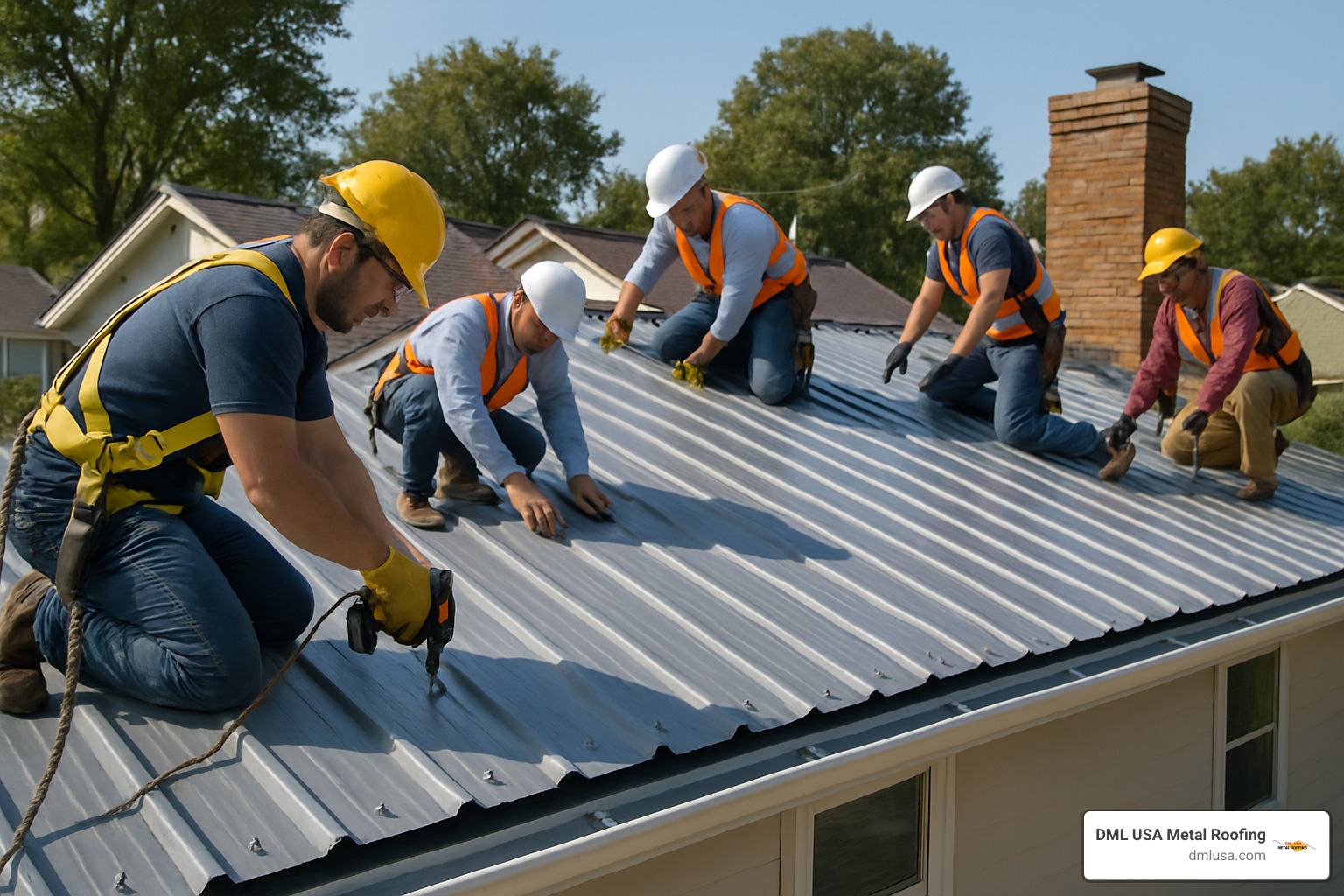
Getting your corrugated metal installation right from the start makes all the difference between a roof that lasts 20 years versus one that performs beautifully for 50-70 years.
Corrugated metal is forgiving to work with compared to standing seam profiles. The exposed fastener system means you can see exactly what you’re doing.
Your roof needs a minimum slope of 3:12 for proper water runoff. Fastener selection is critical – use unplated Type 410 stainless steel screws with neoprene washers.
Proper overlap patterns follow industry standards: 1.5 corrugations laterally and 150mm vertically. Sealant application between overlapping panels prevents water infiltration.
When installed correctly, your corrugated metal will deliver 40-70 years of reliable service with energy savings of 10-25% on heating and cooling bills.
For technical guidance, check our Resources section. Historic images of corrugated iron show installations from nearly 200 years ago still standing today.
DIY vs. Professional Installation for Corrugated Metal
Many homeowners successfully tackle corrugated metal installations themselves, particularly for simpler projects. Essential tools include metal cutting shears, drill with hex drivers, chalk line, and proper safety equipment.
When to call professionals? Complex roof geometries, steep slopes over 6:12 pitch, and multi-story installations require specialized experience.
Vetting contractors means looking for installers with specific metal roofing experience and local references.
Extending the Life of Corrugated Metal Panels
Premium paint systems make a huge difference. PVDF coatings resist sun and weather damage far better than standard paints.
Annual inspections are your best defense. Look for loose fasteners, damaged sealant, or debris collection. Clean panels annually with water rinse and light scrubbing if needed.
Touch up scratches promptly and keep gutters clear of debris. In coastal areas, panels may need more frequent attention due to salt spray.
Frequently Asked Questions about Corrugated Metal Purchasing
How long does corrugated metal last?
The lifespan of corrugated metal varies significantly based on coating type. Galvanized steel panels typically last 15-20 years in most climates. Galvalume coating can protect panels for 40-60 years. Aluminum panels last 50+ years, while stainless steel represents the premium option at 70+ years.
Environmental factors play a huge role. Panels facing south get more UV exposure. Areas with frequent storms may experience more wear. With proper installation and basic maintenance, most homeowners easily hit the higher end of these ranges.
Where can I buy corrugated metal locally?
Building supply stores offer convenience and basic corrugated panels in standard sizes. Metal roofing specialists provide the widest selection and best technical support. Agricultural suppliers serve the farm community but welcome residential customers with competitive prices.
Online directories help locate suppliers in your area. Search for “metal roofing suppliers near me” to find local options.
For Illinois customers, we serve the greater Chicagoland area from our Northlake and Chicago locations with comprehensive corrugated panel selection.
What gauge of corrugated metal is best for my roof?
Commercial applications typically need 22-24 gauge panels. Most residential roofing works perfectly with 26-29 gauge panels. Light-duty applications like siding can use 30-31 gauge panels.
Budget considerations matter because thicker gauges cost more upfront but provide better long-term value. Local building codes sometimes specify minimum requirements, especially in high-wind areas.
Conclusion
After helping hundreds of Illinois homeowners choose the perfect corrugated metal solutions over the past 15 years, I’ve seen how the right supplier partnership transforms what could be a stressful project into a smooth success story.
The difference between a good corrugated metal project and a great one often comes down to the supplier you choose. Quality materials matter, but so do competitive pricing, reliable delivery schedules, and having knowledgeable support when questions arise during installation.
At DML USA Metal Roofing, we’ve built our reputation by focusing on what matters most to homeowners: durable, maintenance-free corrugated solutions that qualify for energy tax credits while delivering superior resistance to fire, wind, and impact damage. Our Northlake and Chicago locations keep comprehensive inventory on hand, so you’re not waiting weeks for materials to arrive.
What makes corrugated metal such a smart investment isn’t just the 40-70 year lifespan or the 10-25% energy savings. It’s the peace of mind that comes from knowing your roof or siding will handle whatever Illinois weather throws at it, year after year, with minimal maintenance required.
The key is understanding what you’re buying before you buy it. Match your material type and gauge to your specific application – don’t assume the cheapest option will serve you well long-term. Factor in coverage loss when calculating how much material you need, because running short mid-project is frustrating and expensive. Prioritize suppliers with strong warranties and local support over distant companies offering rock-bottom prices.
Most importantly, plan for proper installation and regular maintenance from day one. Even the highest-quality corrugated panels won’t perform as expected if they’re installed incorrectly or neglected over time.
More info about products can help you explore our complete range of corrugated metal solutions and find the perfect match for your specific project needs.
Your investment in quality corrugated metal panels and the right supplier relationship pays dividends through decades of trouble-free performance, lower energy bills, and improved property value. Take time to research your options thoroughly – choosing durability over shortcuts today saves money and headaches tomorrow.
That’s the approach we’ve taken at DML USA Metal Roofing for over 15 years, and it’s why our customers keep coming back for their next projects.