

Understanding the True Investment Behind Roof Replacement
The cost of replacing shingle roof varies significantly based on materials, but here’s a quick look at what you can expect to pay in 2025:
Quick Cost Breakdown:
- Asphalt Shingles: $5,700 – $16,000 (average $12,300)
- Metal Roofing: $10,245 – $41,640
- Slate: $39,925 – $54,020
- Cost per square foot: $4.50 – $12.25 for most materials
Whether your roof has curling shingles, water damage, or has simply reached its 20-year mark, understanding replacement costs is key. The national average is around $10,800, but your final bill depends on roof size, material choice, and local labor rates. While costs have risen due to material shortages and inflation, choosing the right material can save you money long-term through reduced maintenance and energy costs.
I’m Adam Kadziola of DML USA Metal Roofing. Since 2007, I’ve helped Illinois homeowners steer the cost of replacing shingle roofs with durable, long-lasting solutions. My expertise in manufacturing and home renovations provides unique insight into material costs and long-term value.
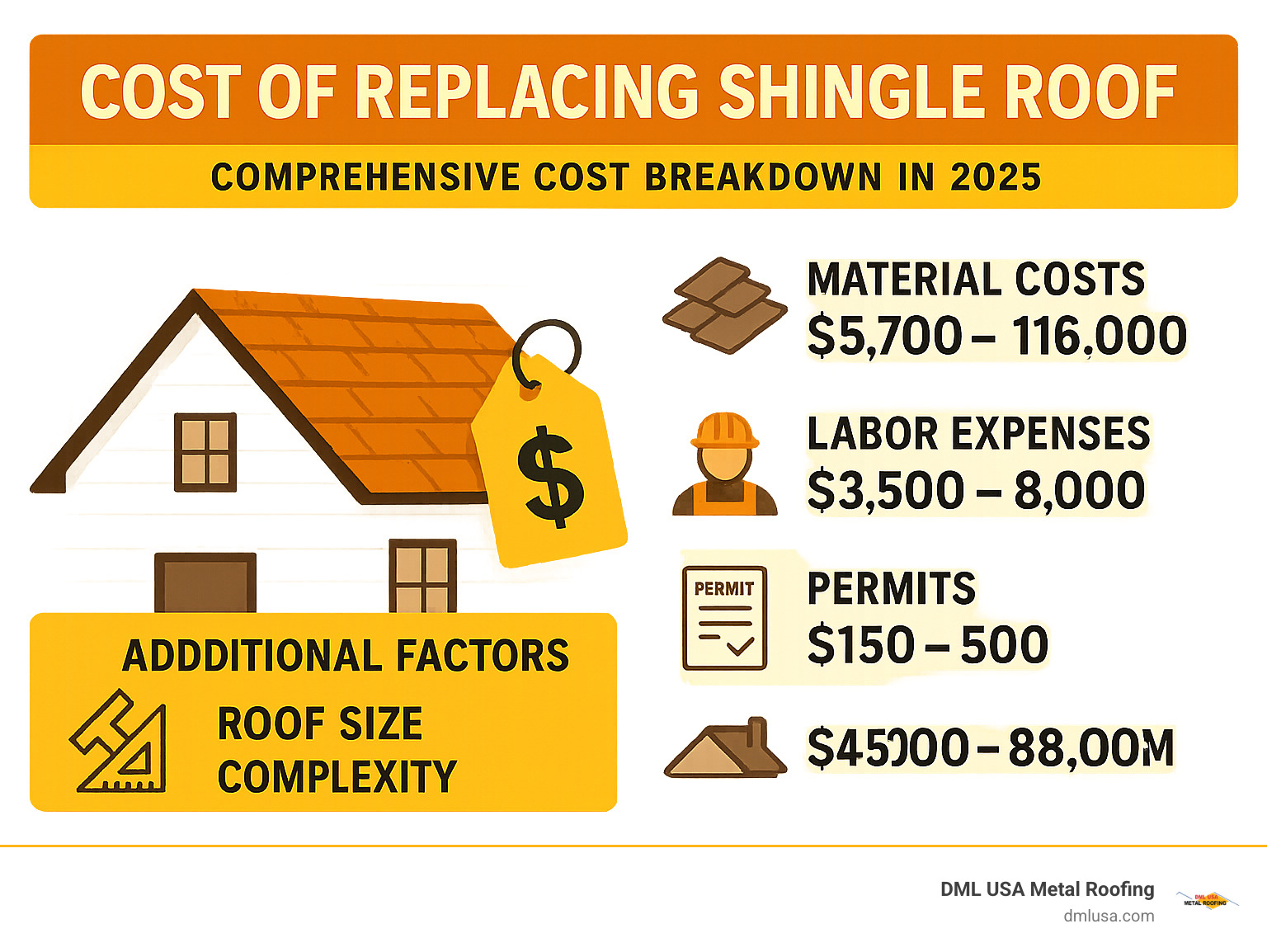
Cost of replacing shingle roof definitions:
When to Repair vs. Replace
The decision to repair or replace depends on the extent of damage, your roof’s age, and your long-term goals.
Signs of damage that warrant a closer look include:
- Curling, cracking, or missing shingles
- Granules from shingles accumulating in your gutters
- Water stains on ceilings or a sagging roof deck
- Extensive moss or algae growth
- Rust or wear around vents and chimneys
The age of your roof is a major factor. Most asphalt shingles last 20-25 years. If your roof is near or past this age, replacement is often more cost-effective than a series of repairs. For example, a 20-year-old 3-tab asphalt roof is likely due for replacement.
Minor repairs might cost $380 to $2,000, while a full replacement averages $8,000 to $24,000. That patching a roof may not carry the same warranty as a full replacement, and matching new shingles to old ones can be difficult. A professional inspection will determine the best course of action.
What is the True Cost of Replacing Shingle Roof? A Material-by-Material Breakdown
When considering the cost of replacing shingle roof, it’s helpful to think of it like shopping for a car—there are basic models, luxury options, and everything in between. Your material choice affects not just upfront cost, but also your roof’s lifespan, appearance, and future maintenance. The smart investment considers the total cost over time, not just the initial price.
| Material Type | Avg. Cost per Sq. Ft. (Installed) | Lifespan | Key Pros | Key Cons |
|---|---|---|---|---|
| Asphalt Shingles | $2.50 – $8.00 | 15-30 years | Most affordable, widely available, variety of colors/styles | Shorter lifespan, lower wind resistance than other materials |
| Metal Roofing | $6.00 – $24.50 | 40-70+ years | Extreme durability, energy-efficient, fire/wind/impact resistant | Higher upfront cost, can be louder during heavy rain |
| Slate Shingles | $12.00 – $30.00 | 50-200+ years | Best longevity, luxurious aesthetic, fireproof | Very high cost, very heavy (may require structural reinforcement) |
Let’s walk through each option to help you decide.
Asphalt Shingles: The Common Choice
Asphalt shingles are the most common roofing material in America, primarily due to their affordability. The cost of replacing shingle roof with asphalt typically runs between $5,000 and $11,000 for a standard home. The total installed cost usually falls between $4.50 and $12.25 per square foot.
There are three main types:
- 3-tab shingles are the most basic option, costing $3.43 to $4.65 per square foot installed and lasting 12-15 years.
- Architectural shingles are the most popular choice, offering a more dimensional look, a 17-25 year lifespan, and better wind resistance for $3.50 to $5.50 per square foot installed.
- Luxury shingles are the premium asphalt option, mimicking slate or wood shakes. They cost $4.50 to $8.00 per square foot installed and can last 25-40 years.
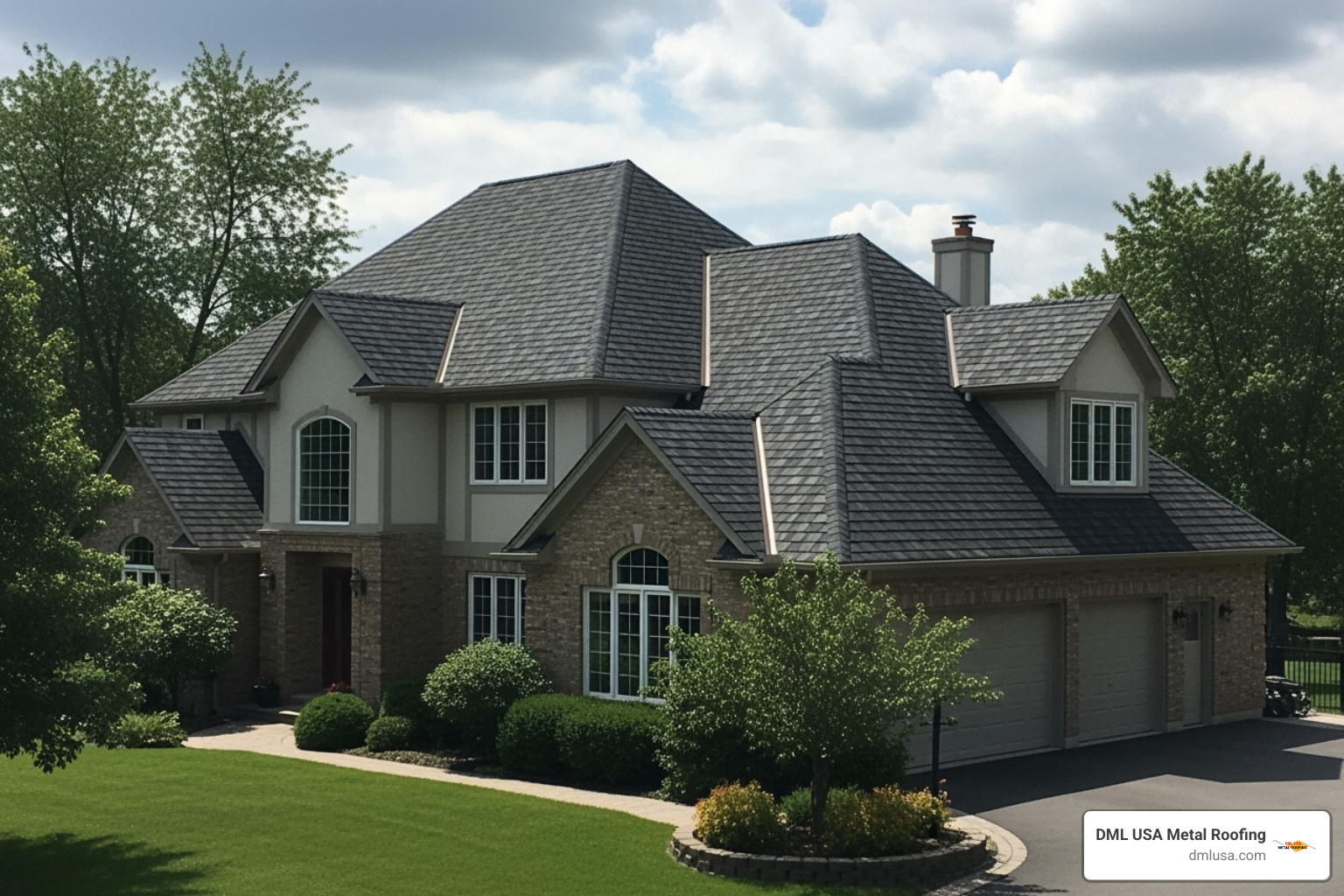
While asphalt offers variety and straightforward installation, its main drawback is a shorter lifespan and lower durability against severe weather compared to other materials.
Metal Roofing: The Durable Investment
At DML USA Metal Roofing, this is our specialty. While the upfront cost of replacing shingle roof with metal is higher—typically $6.00 to $24.50 per square foot installed—it may be the last roof you ever buy. Metal roofs last 40 to 70+ years, with some aluminum systems lasting up to 80 years.
In Illinois, we manufacture steel shingles ($8 to $12.65 per sq. ft. installed) and aluminum shingles ($8.50 to $13.75 per sq. ft. installed) that offer incredible durability. Aluminum is especially resistant to corrosion, making it ideal for humid climates.
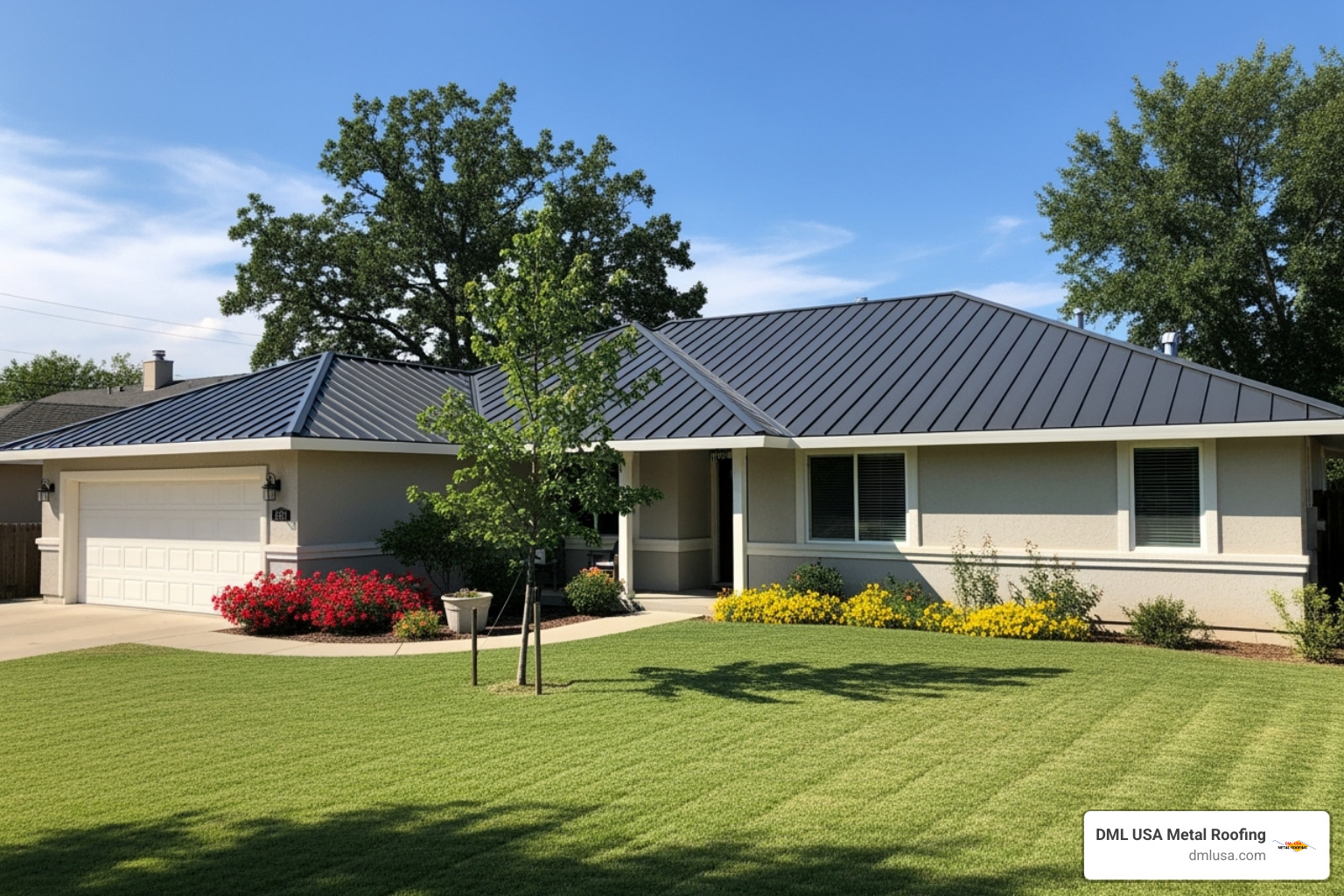
Key benefits of metal roofing include top-tier fire and wind resistance, excellent impact resistance against hail, and energy efficiency. Metal roofs reflect solar heat, which can lower cooling bills and qualify for energy tax credits. Best of all, they are virtually maintenance-free. The only real downside is the initial investment, though modern installation with proper insulation has largely solved any concerns about noise. For more details, you can explore More info about metal roofing on our site.
Slate & Other Premium Options
For those seeking luxury and ultimate longevity, premium materials are available. Natural slate is the most expensive, costing $12 to $30 per square foot installed, but can last 100 years or more. Its weight often requires structural reinforcement.
Other high-end options include:
- Composite shingles ($7.50 to $13/sq. ft.) mimic slate or wood, are made from recycled materials, and last 40-50 years.
- Wood shakes ($8 to $14.30/sq. ft.) offer natural beauty but require more maintenance and last 15-30 years.
- Clay tiles ($12 to $25/sq. ft.) provide excellent insulation and a 50-100 year lifespan, but are also heavy.
These premium materials involve complex installation, leading to higher labor costs and longer project timelines, but offer unique aesthetics and durability.
Key Factors That Drive Your Final Roof Replacement Bill
While material choice is a major decision, the final cost of replacing shingle roof is influenced by a number of other factors. Understanding these elements is key to getting accurate roofing quotes and avoiding surprise expenses during the project.
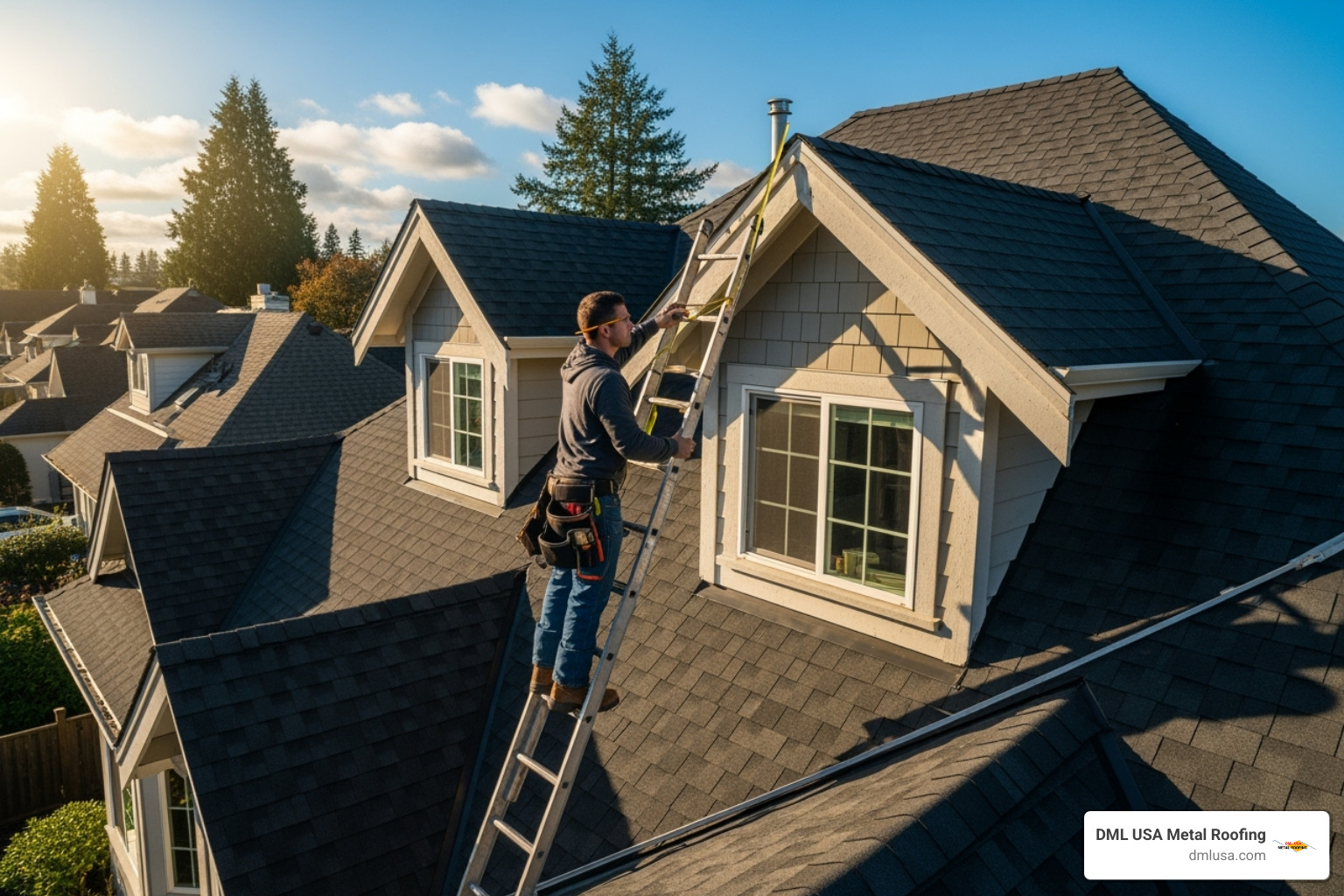
Roof Size, Pitch, and Complexity
The physical characteristics of your roof are fundamental to the final cost.
- Square footage: Roofers measure in “squares” (100 sq. ft.). A larger roof requires more materials and labor, increasing the price.
- Steep pitch: A steep roof is more dangerous and difficult to work on, requiring extra safety equipment and slowing down installation. This can add up to 10% to your total cost.
- Complexity: Features like multiple stories, dormers, skylights, and chimneys add complexity. Each requires precise cutting and custom flashing to prevent leaks, which increases labor time and material costs.
Labor Costs & Installation Method
Labor typically accounts for about 60% of a total roofing budget, with rates ranging from $30 to $80 per hour. A key decision affecting labor cost is whether to do a full tear-off or an overlay.
- A tear-off involves completely removing the old roof down to the wooden deck. This adds $1,000 to $1,500 to the project but allows for a thorough inspection of the decking for rot or water damage, ensuring a solid foundation for your new roof.
- An overlay involves nailing new shingles over the old ones. While cheaper initially, it prevents inspection of the underlying deck and the added weight can stress the roof structure. Most building codes limit roofs to two layers, so this isn’t always an option.
Old shingle disposal is typically included in tear-off costs. The project timeline also affects labor costs; a simple asphalt roof may take 1-3 days, while a complex metal roof could take 6-8 days. Quality underlayment installation and proper flashing around vents and chimneys (costing $200 to $500) are critical for a watertight seal.
Permits, Decking, and Other Materials
Several other materials and administrative costs are essential to a roof replacement.
- Building permits ($250 to $500) are required by law and ensure your new roof meets local safety codes.
- A pre-work roof inspection (around $220) can identify hidden issues before they become costly mid-project surprises.
- Decking repair is a common unforeseen cost. If the wood decking is rotted, it must be replaced at a cost of $2.20 to $3.00 per square foot.
- Underlayment ($1.50 to $2.10/sq. ft.) provides a secondary water barrier.
- Ice and water shields ($1.87 to $2.53/sq. ft.) are crucial in cold climates to prevent ice dams.
- Drip edge ($1.50 to $3.00/linear ft.) directs water into the gutters.
Other potential costs include replacing fascia boards, soffits, pipe boots, and gutters ($1,000 to $6,500). Adding an attic fan ($300 to $900) or new skylights ($1,600 to $4,200) will also add to the total. An itemized quote should detail all these potential costs.
Budgeting, Savings, and Return on Your Investment
When facing the cost of replacing shingle roof, smart financial planning can turn an overwhelming expense into a confident investment in your home’s value and protection.
Most homeowners don’t plan for a roof replacement, but with the right approach, you can manage the expense effectively.
How to Create a Realistic Roof Replacement Budget
A good budget prevents surprises. Be sure to account for:
- Materials: Shingles, underlayment, flashing.
- Labor: Professional installation costs.
- Tear-Off & Disposal: Fees for removing the old roof.
- Permits & Inspections: Mandatory local fees.
- Contingency Fund: Set aside 10-20% of the estimated cost for unexpected issues, like decking repair. You won’t know the condition of the roof deck until the old shingles are removed.
If you need financing, a home equity line of credit can be an affordable way to access the necessary funds.
Tips to reduce the cost of replacing shingle roof
There are several ways to reduce costs without sacrificing quality:
- Schedule during the off-season: Contractors may offer better pricing during late winter or early spring when demand is lower.
- Get multiple, itemized quotes: Compare value, not just the bottom-line price. Detailed quotes help you understand exactly what you’re paying for.
- Choose materials wisely: Balance upfront cost with long-term value. Architectural asphalt shingles are a good mid-range option, while metal roofing offers superior longevity.
- Perform regular maintenance: Cleaning gutters and addressing small repairs can extend your current roof’s life, delaying a full replacement.
- Check your insurance: If damage is from a covered event like a storm, your homeowner’s insurance may cover a significant portion of the cost.
The Long-Term Value: ROI and Energy Savings
A new roof is a strong investment. The 2024 Cost vs. Value Report shows that a roof replacement can recoup about 61% of its cost in added home value.
The long-term savings are even more compelling. Metal roofs, like those from DML USA, reflect solar heat and can reduce cooling costs by 10-25%. These roofs often qualify for energy tax credits, further offsetting the initial investment. The combination of lower utility bills, improved curb appeal, and reduced maintenance makes a quality roof one of the smartest upgrades for your home.
Frequently Asked Questions about Roof Replacement Costs
When homeowners begin researching the cost of replacing shingle roof, many questions arise. Here are answers to the most common ones.
How long does a shingle roof last?
Lifespan depends heavily on the material and local climate. Here are typical ranges:
- 3-tab asphalt shingles: 12-15 years.
- Architectural asphalt shingles: 17-25 years.
- Luxury asphalt shingles: 25-40 years.
- Metal roofs: 40-70+ years. This is a key advantage, as it can be a lifetime investment.
- Composite shingles: 40-50 years.
- Wood shakes: 15-30 years.
- Slate roofs: 50-100+ years.
Climate is a major factor. The freeze-thaw cycles of Illinois winters, along with hail and high winds, can shorten a roof’s life. Impact-resistant materials are often a wise choice in this region.
How long does it take to replace a roof?
For an average-sized home, a professional crew can typically replace an asphalt shingle roof in 1 to 3 days.
The timeline depends on several factors. A simple, single-story roof might be done in a day, while a complex, multi-story roof with dormers and skylights could take longer. Metal roof installation is more precise and can take up to three times longer than asphalt, but the result is a roof that lasts for decades.
Weather delays are the biggest variable. Rain, high winds, or cold temperatures (below 40°F) will halt work for safety and proper material adhesion.
Can you put new shingles over old ones?
Technically, yes. This is called a roof overlay or reroofing, and most building codes allow for up to two layers of shingles. It saves money on tear-off labor and disposal fees.
However, this practice has significant drawbacks:
- Hidden Damage: You cannot inspect the roof deck for rot or water damage, which can worsen unseen.
- Excess Weight: A second layer of shingles adds significant weight that can stress your home’s structure.
- Warranty Issues: Many shingle manufacturers will not honor their warranties on an overlay installation.
- Future Costs: When the roof needs replacing again, the cost to tear off two layers will be much higher.
For these reasons, a full tear-off that allows for a proper decking inspection is almost always recommended. It ensures your new roof is built on a solid foundation, protecting your investment for years to come.
Conclusion: Making the Right Investment for Your Home
Understanding the cost of replacing shingle roof is about more than the initial bill; it’s about assessing long-term value, durability, and maintenance. We’ve seen how material choice, roof complexity, and labor all contribute to the final price.
While asphalt shingles have a lower upfront cost, materials like metal offer a superior long-term investment. At DML USA Metal Roofing, we help Illinois homeowners see how a higher initial investment pays off through unparalleled durability (40-70+ years), minimal maintenance, and significant energy savings. With potential energy tax credits and superior resistance to fire, wind, and hail, a metal roof provides lasting peace of mind.
Choosing the right contractor is as important as choosing the right material. A reputable professional provides detailed estimates and ensures a quality installation that protects your home for decades.
Your roof is a critical component that protects your family and adds value to your home. Making an informed decision now is a smart investment in your future.
Ready to explore roofing options that combine durability, aesthetics, and long-term savings? Explore our roofing products at DML USA Metal Roofing and find why more homeowners are choosing maintenance-free protection that lasts a lifetime.