

Deep Rib Metal Panels: Superior for 2025
Why Deep Rib Metal Panels Are Revolutionizing Modern Construction
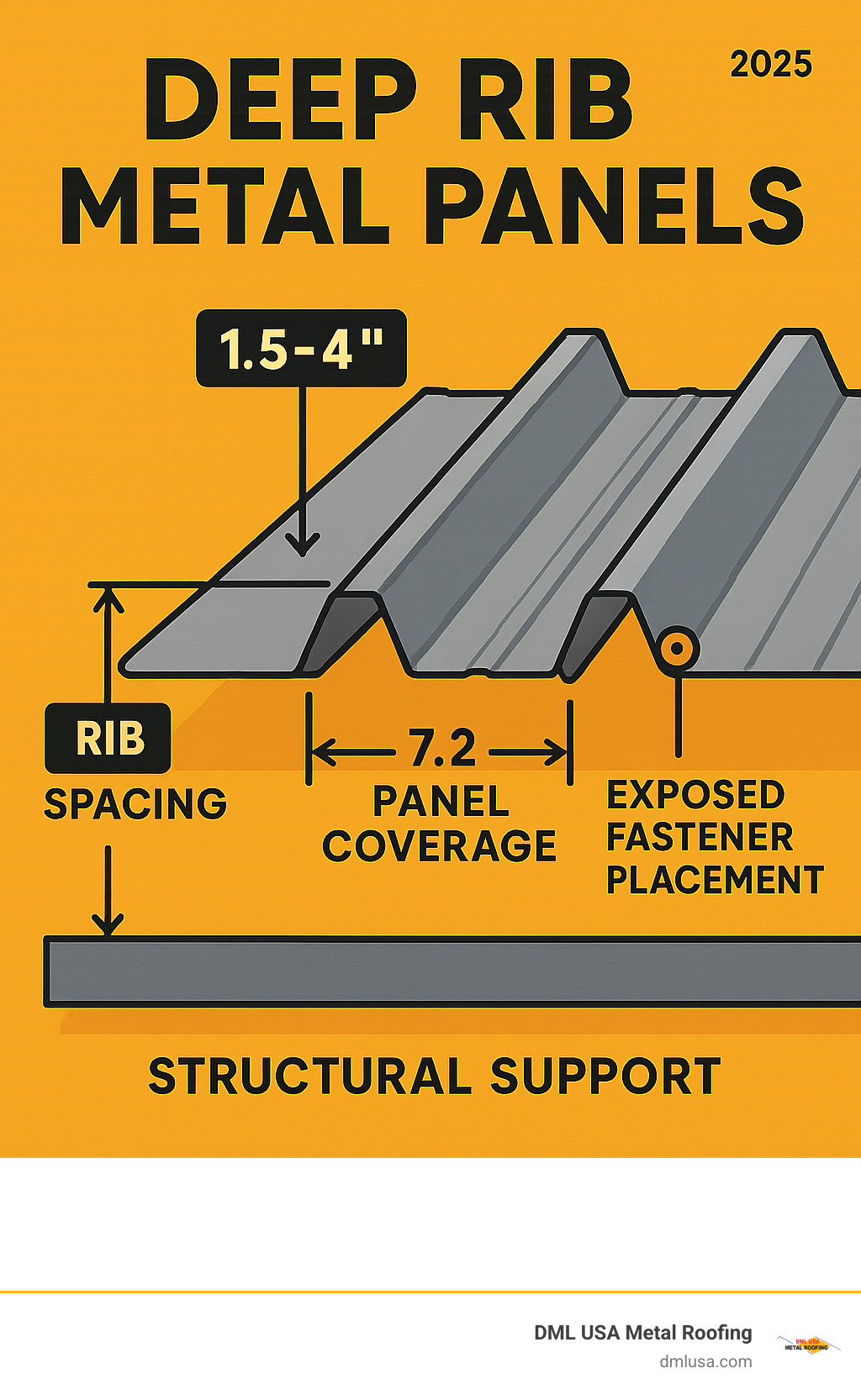
Deep rib metal panels are metal roofing and siding panels featuring ribs that extend 1.5 to 4 inches deep from the panel surface, creating distinctive shadow lines and providing exceptional structural strength. Here’s what defines them:
- Rib Depth: Typically 1.5″, 3″, or 4″ deep profiles
- Panel Coverage: Standard 36-inch width with ribs spaced 7.2″ on center
- Length Options: Custom lengths from 5 feet to 40 feet
- Materials: Available in galvanized steel, Galvalume, aluminum, and copper
- Applications: Suitable for both roofing and wall systems
- Fastening: Exposed or concealed fastener options
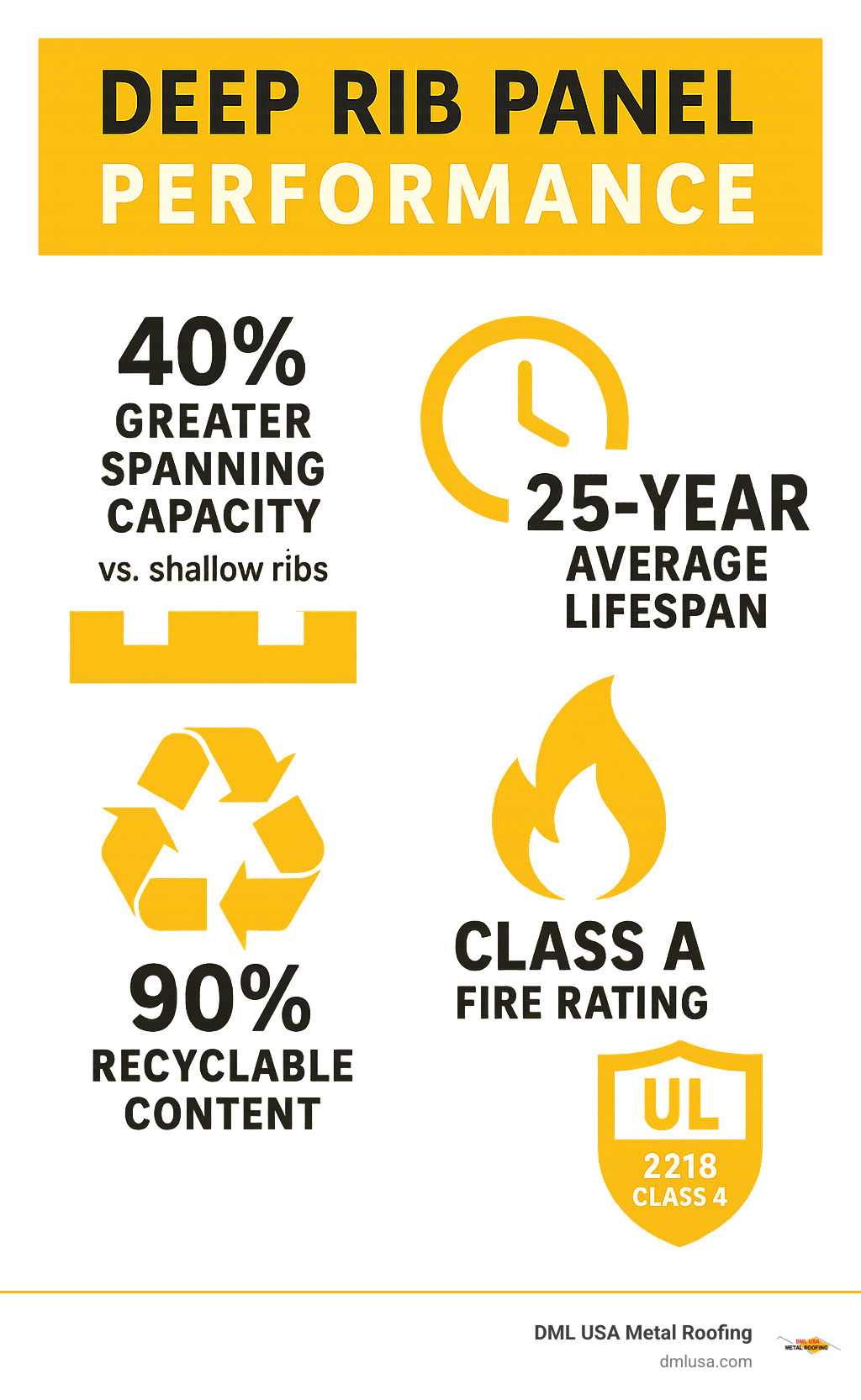
The deep profile design offers superior spanning capacity compared to shallow rib panels, allowing for wider spacing between structural supports. This translates to lower overall building costs while maintaining excellent resistance to wind uplift and impact damage.
These panels have become increasingly popular because they combine the structural benefits of traditional ribbed metal with bold architectural appeal. The deep ribs create striking shadow effects that add visual texture to building facades, making them ideal for both commercial and residential applications where aesthetics matter.
I’m Adam Kadziola, and through my experience manufacturing metal roofing products at DML USA since 2007, I’ve seen how deep rib metal panels deliver the perfect balance of durability, cost-effectiveness, and architectural beauty that today’s property owners demand. Let me walk you through everything you need to know about these game-changing panels.
Deep rib metal panels further reading:
What Defines a Deep Rib Metal Panel?
Think of deep rib metal panels as the heavy-duty option in metal roofing. While standard panels have shallow corrugations, deep rib panels feature ribs that rise 1.5 inches or more above the surface. That extra depth is what gives them their distinctive look and – more importantly – their extra strength.
The taller rib increases the panel’s moment of inertia, so it can span longer distances with fewer supports. At the same time, the profile throws bold shadow lines that change throughout the day, giving architects free “moving-light” drama with zero maintenance.
For customers who have swapped shallow panels for deep ribs, the building often goes from “warehouse” to “architect-designed” overnight.
More info about metal roofing options
Characteristics and Typical Dimensions
Common profiles include 1.5-inch, 3-inch, and 4-inch rib depths.
- 1.5 in panels – the budget-friendly workhorse; 36 in. coverage with ribs 7.2 in. on-center.
- 3 in panels – higher strength for long spans or high-wind zones.
- 4 in panels – maximum spanning power and the most dramatic visual effect.
Standard production runs from 5 ft to 40 ft so in many cases a single piece can cover an entire roof slope or wall bay.
Exposed vs. Concealed Fastener Systems
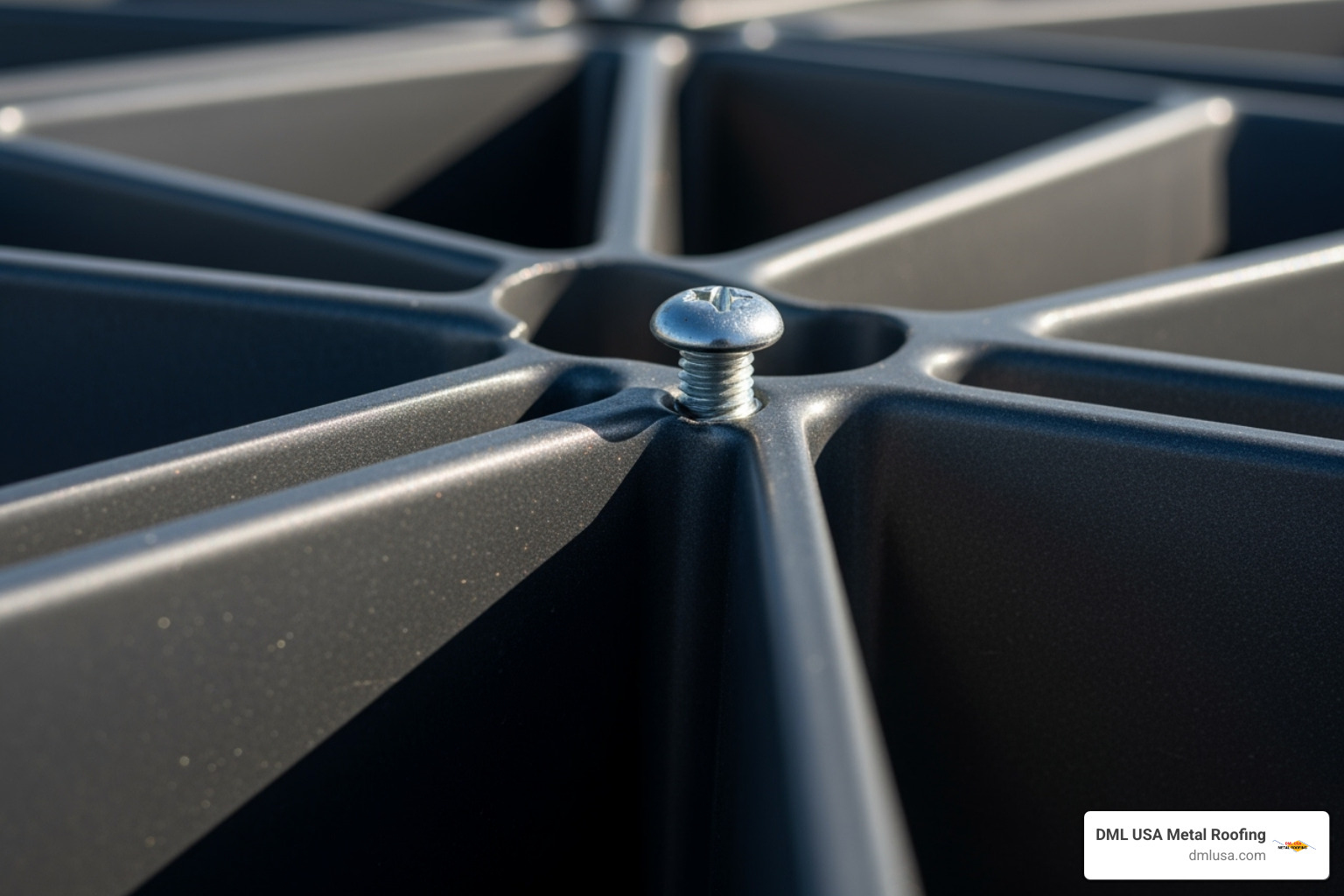
- Exposed fasteners – quickest to install and the most economical. Color-matched screws with neoprene washers seal the panel and stay accessible for future service.
- Concealed clips – hide hardware completely for an uninterrupted facade and eliminate face penetrations. They cost a bit more and take longer to install but deliver a premium aesthetic and additional weather protection.
Choose the system that best balances appearance, budget, and performance for your project.
The Structural and Aesthetic Advantages of Deep Rib Metal Panels
Why do builders and architects gravitate to deep rib metal panels? Because they deliver serious structural muscle and eye-catching style in a single product.
Lightweight yet stiff, the panels often allow you to eliminate purlins or girts, trimming steel and labor costs. At the same time, they can be installed horizontally, vertically, or even inverted, giving designers freedom that traditional cladding can’t match. And with virtually no required maintenance, property owners enjoy decades of worry-free service.
More info about why metal is a great choice
Superior Strength and Spanning Capacity
Deeper ribs equal higher spanning capacity. A shallow panel may need supports every 4 ft; a 3-in. deep rib can often jump to 6 ft or more (engineering required). That longer span means fewer members, smaller foundations, and faster erection.
Many profiles carry the UL 2218 Class 4 hail rating and meet high-wind uplift loads, proving their value in harsh climates.
Creating Bold Designs with Light and Shadow
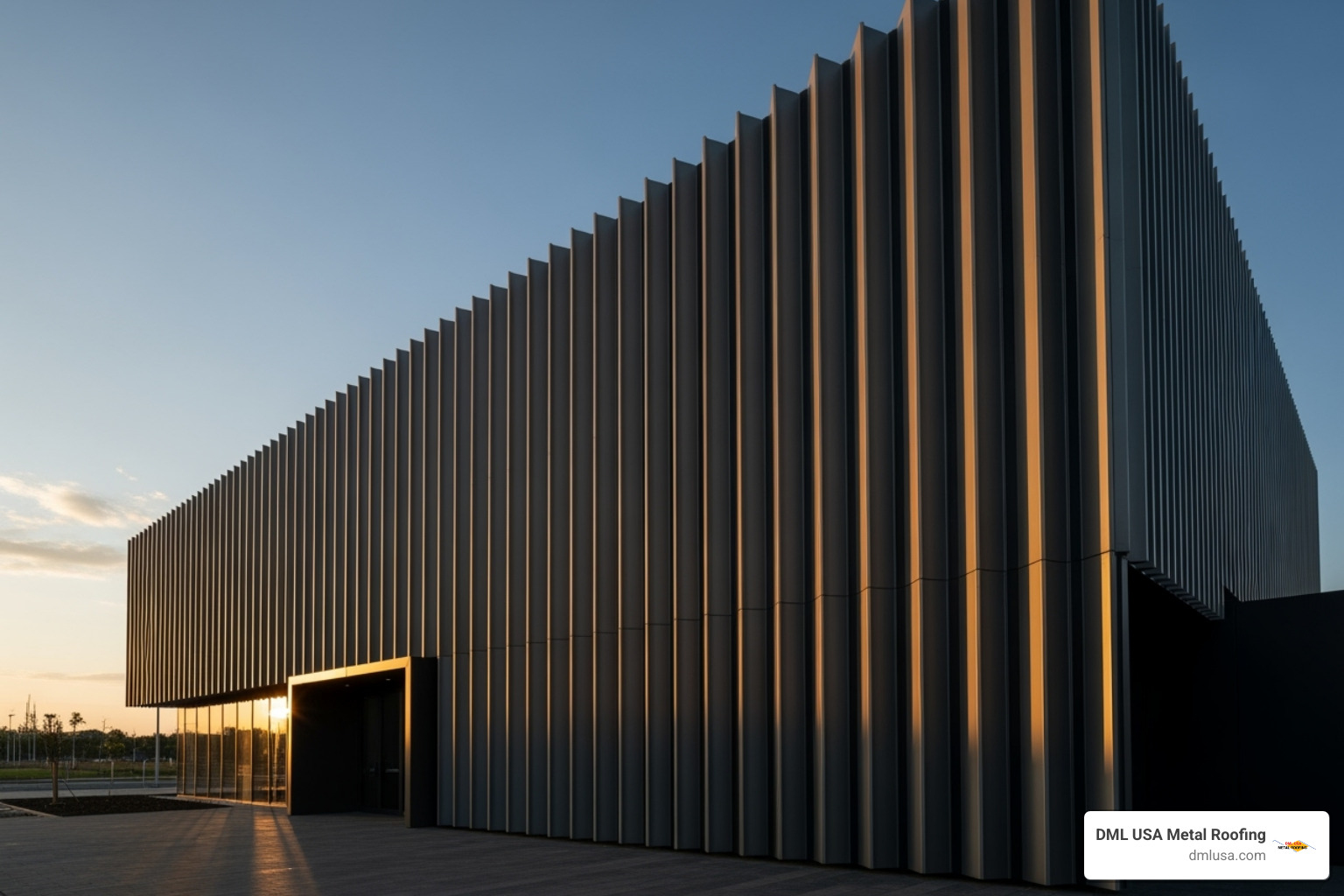
The near-vertical rib angles throw pronounced shadows that shift throughout the day. Install them:
- Horizontally to make a building appear longer and blend with the landscape.
- Vertically to emphasize height and create a contemporary statement.
Varying colors or mixing profiles can further customize the facade without compromising performance.
Technical Specifications: Materials, Dimensions, and Finishes
The performance of deep rib metal panels starts with premium coils, precise roll-forming, and rigorous quality control at our Illinois facilities. Consistent rib height and thickness ensure smooth installation and long service life.
Common Materials for Deep Rib Metal Panels
| Material | Typical Gauge/Thickness | Weight (per sq ft) | Corrosion Resistance | Relative Cost |
|---|---|---|---|---|
| Galvanized Steel | 26, 24, 22 ga | 1.5–2.5 lbs | Good | Low |
| Galvalume Steel | 26, 24, 22 ga | 1.5–2.5 lbs | Excellent | Moderate |
| Aluminum | .032–.050 in | 0.5–1.0 lbs | Excellent | High |
| Copper | 16 oz, 20 oz | 1.0–1.25 lbs | Superior | Very High |
Most commercial jobs use 24-ga. Galvalume for its balance of cost and durability. Aluminum shines in coastal or retrofit work where low weight is crucial, and copper remains the century-long premium option.
Gauges, Finishes, and Color Options
- Gauge – 26 ga. for light duty, 24 ga. for most commercial, 22 ga. for extreme loads.
- Paint – Kynar 500® (PVDF) for best fade resistance; SMP for budget-sensitive projects.
- Cool pigment technology lets even dark colors meet ENERGY STAR® reflectivity levels, reducing AC bills and potentially earning tax incentives.
More info about technical resources
Key Considerations for Installation and Specification
Getting deep rib metal panels right from the start makes all the difference between a successful project and costly headaches down the road. After years of helping customers steer these decisions at DML USA Metal Roofing, I’ve learned that the most successful projects start with careful planning and attention to a few key factors.
The first step is understanding your local building codes and wind load requirements. Here’s where deep rib panels can really shine – their superior strength often allows for wider structural spacing than traditional panels. But don’t just assume this will work; proper engineering calculations based on your specific location and conditions are essential.
Building codes vary dramatically from one area to another, especially when it comes to fire ratings, wind resistance, and installation requirements. Many jurisdictions have specific rules for metal roofing installations, covering everything from minimum slopes to fastener specifications and flashing details. Trust me, it’s much easier to ensure compliance during the design phase than to make costly changes during construction.
Professional installation becomes even more critical with deep rib metal panels because their structural advantages depend entirely on proper attachment and detailing. These panels are engineered to be stronger than alternatives, but improper installation can completely negate those advantages and create serious performance problems.
One factor that catches many people off guard is thermal movement. Metal expands and contracts with temperature changes, and deep rib panels, with their potential for longer lengths, require careful attention to expansion joints and fastener placement. Without proper accommodation for this movement, you can end up with stress concentrations that lead to premature failure.
Important Factors for Specifying Deep Rib Metal Panels
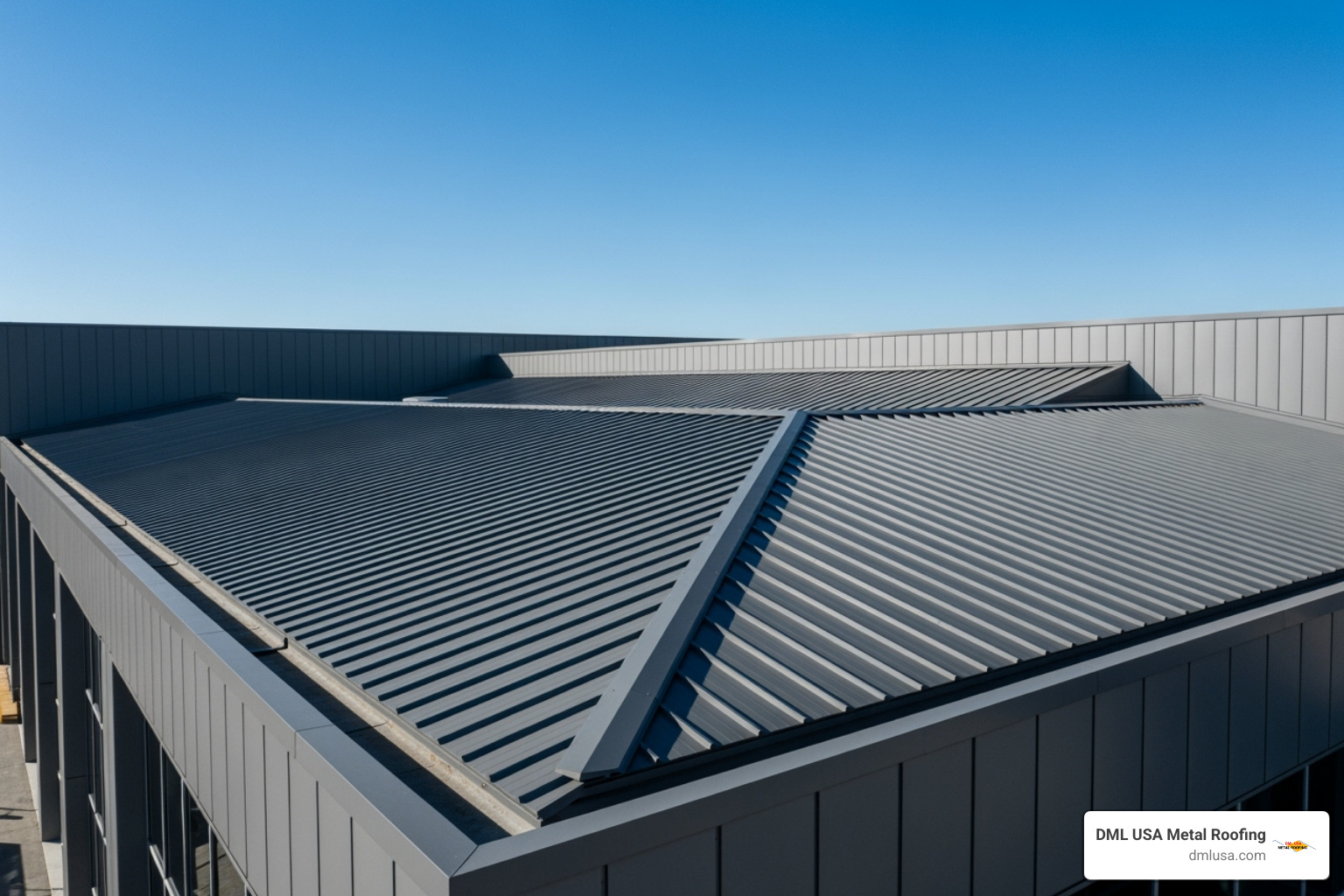
When specifying deep rib metal panels for roofing applications, the minimum pitch requirement is absolutely crucial to get right. Most deep rib panels need at least a 1:12 slope (that’s about 5 degrees) when you install them with butyl sealant at the side laps. This relatively gentle slope makes them perfect for commercial and industrial buildings where steeper roofs just aren’t practical.
If you skip the sealant, you’ll need to bump that minimum pitch up to 3:12 to ensure proper water drainage. The choice between sealed and unsealed installations really depends on your specific situation – the building’s use, your local climate, and how much wind-driven rain or snow you typically see.
Let’s talk about oil canning for a moment – it’s one of those things that can surprise people. Oil canning shows up as visible waviness in flat metal surfaces, and while it doesn’t hurt the panel’s structural performance, it can be pretty noticeable. The good news is that deep rib panels are much less prone to oil canning than flat panels because those ribs provide structural stiffness. You might still see some in the flat areas between ribs, but it’s typically much less of an issue.
Expansion and contraction planning is where many projects run into trouble. Metal moves with temperature changes – it’s just physics. For long buildings, this usually means incorporating expansion joints or designing the fastener system to allow panels to move without creating stress points that could lead to fatigue failures over time.
For wall applications with panels longer than 36 feet, you’ll need flashing breaks to accommodate thermal movement. These breaks let different sections of panels move independently while still keeping the weather out. Getting the flashing design right at these locations is critical – it’s often where water infiltration problems start if not handled properly.
Testing, Certifications, and Warranties
The performance promises we make about deep rib metal panels aren’t just marketing talk – they’re backed by extensive testing to rigorous industry standards. Understanding what these tests mean helps you make informed decisions and gives you confidence that the panels will perform as expected in real-world conditions.
ASTM E1592 testing puts panels through structural performance evaluation under uniform static air pressure, basically simulating wind loads. This testing determines the maximum allowable spans and loads for different panel configurations – it’s how we know exactly what these panels can handle.
ASTM E283 and E331 test air and water infiltration resistance for wall applications. These tests ensure that panels will provide adequate weather protection when properly installed. It’s reassuring to know that panels have been thoroughly tested for the conditions they’ll actually face.
UL Class A Fire Rating certification means panels meet the highest standards for fire resistance, with minimal flame spread and smoke development. This certification is often required by building codes for commercial applications and provides important safety benefits that can affect insurance rates too.
Florida Product Approvals deserve special mention because Florida’s building codes are among the most stringent in the nation due to hurricane exposure. Panels that meet Florida requirements typically exceed requirements everywhere else. See an example Evaluation Report for specific testing data and approved configurations.
Paint warranties vary significantly based on the coating system and environmental exposure. Kynar 500® systems typically carry 30-40 year warranties for residential applications and 20-30 year warranties for commercial applications. These warranties cover both fade and chalk resistance, giving you long-term assurance that your building will maintain its appearance.
Perforation warranties protect against corrosion-related failure of the substrate material itself. Galvalume substrates typically carry 25-year perforation warranties, while galvanized substrates may have shorter warranty periods. These warranties provide important protection against premature panel failure due to corrosion – essentially guaranteeing that the metal won’t rust through during the warranty period.
Frequently Asked Questions about Deep Rib Panels
Can deep rib panels be installed on both roofs and walls?
Yes, and this versatility is honestly one of my favorite things about deep rib metal panels. They’re like the Swiss Army knife of metal building materials – incredibly useful in multiple situations.
When it comes to wall applications, you have two main orientation options. Horizontal installation creates those strong horizontal lines that make buildings look longer and more grounded. It’s a classic look that works especially well for commercial buildings where you want that sense of stability and permanence.
Vertical installation is where things get exciting from a design perspective. Those dramatic vertical lines emphasize height and create a really contemporary appearance that architects love. I’ve seen some stunning buildings where vertical deep rib panels completely transform the look from ordinary to extraordinary.
For roofing applications, deep rib metal panels are particularly effective on low-slope commercial and industrial buildings. The panels are often inverted for roofing so the side lap occurs in the high cell rather than the low cell. This configuration dramatically improves water shedding and reduces any risk of water infiltration at the seams.
The minimum pitch requirement of 1:12 makes these panels suitable for many low-slope applications where other materials simply won’t work. This flexibility means you can achieve a consistent appearance across both your roof and walls, which creates a really cohesive architectural look.
How do deep rib panels handle extreme weather like high winds and hail?
This is where deep rib metal panels really shine, and I can speak from experience here at DML USA Metal Roofing. The deep ribs provide exceptional structural rigidity that helps them resist high wind uplift forces that would tear other roofing materials right off the building.
The engineering behind this is fascinating. The increased moment of inertia created by the deep profile makes the panels much more resistant to deflection under wind loads. It’s like the difference between trying to bend a flat ruler versus a ruler that’s been folded into a deep channel – the folded one is dramatically stronger.
Many deep rib systems carry UL 2218 Class 4 impact resistance certifications, which means they can withstand impacts from hailstones up to 2 inches in diameter without damage. That’s the highest level of impact resistance available, and it often qualifies property owners for insurance discounts.
I’ve personally seen deep rib panels survive extreme weather events that destroyed other roofing materials in the same area. The combination of impact resistance, wind resistance, and fire resistance makes them one of the most resilient roofing options you can choose.
The superior wind resistance comes from both the panel strength itself and the fastening system design. When properly installed, deep rib panels can resist wind uplift forces well beyond what most buildings will ever experience, even in hurricane-prone areas.
Are deep rib metal panels energy-efficient?
Absolutely, and this is where modern technology has really transformed metal roofing. Many deep rib metal panels are available with ‘cool roof’ paint finishes that use reflective pigments to deflect solar radiation. This reduces heat absorption, lowers cooling costs, and can help buildings qualify for ENERGY STAR® ratings and potential energy tax credits.
The cool roof technology works by reflecting infrared radiation that would otherwise be absorbed as heat. Traditional dark-colored roofing materials can reach temperatures of 150°F or higher in direct sunlight, while cool roof coatings can keep surface temperatures 50-60°F cooler. That temperature reduction translates directly to reduced cooling loads and real energy savings on your utility bills.
At DML USA Metal Roofing, we offer cool color pigments that allow you to achieve bold aesthetic effects without energy penalties. Even dark colors like black or dark blue can be formulated with cool pigments to provide energy benefits while maintaining the exact appearance you want.
The energy efficiency benefits extend beyond just the cool roof coatings. Metal roofing systems can be designed to accommodate insulation and ventilation systems that further improve energy performance. The durability of deep rib panels also means that energy performance is maintained over the long term without degradation.
Energy tax credits are often available for qualifying metal roofing systems, providing immediate financial benefits in addition to long-term energy savings. These incentives, combined with the long-term durability and minimal maintenance requirements, make deep rib panels an excellent investment for energy-conscious building owners.
Conclusion: The Smart Choice for Modern Construction
After 15 years at DML USA Metal Roofing, I’ve seen countless roofs put to the test. Deep rib metal panels consistently come out on top for durability, design flexibility, and total cost of ownership.
They shrug off hail, wind, and fire, all while creating a facade that evolves with the daylight. Install them once, and they can protect your building for 40 years or more with minimal upkeep—something very few materials can claim.
Ready to see how deep rib panels can work on your project in Illinois or beyond? Explore specifications, color charts, and pricing here: Explore Our Metal Panel Products