

Energy-Efficient Building Materials: Top 10 Powerful Picks 2025
Why Energy-Efficient Building Materials Are Essential for Modern Construction
Energy-efficient building materials are construction products designed to minimize energy consumption throughout a building’s lifecycle while maintaining structural integrity and comfort. These materials help reduce heating and cooling costs, lower carbon emissions, and create healthier indoor environments.
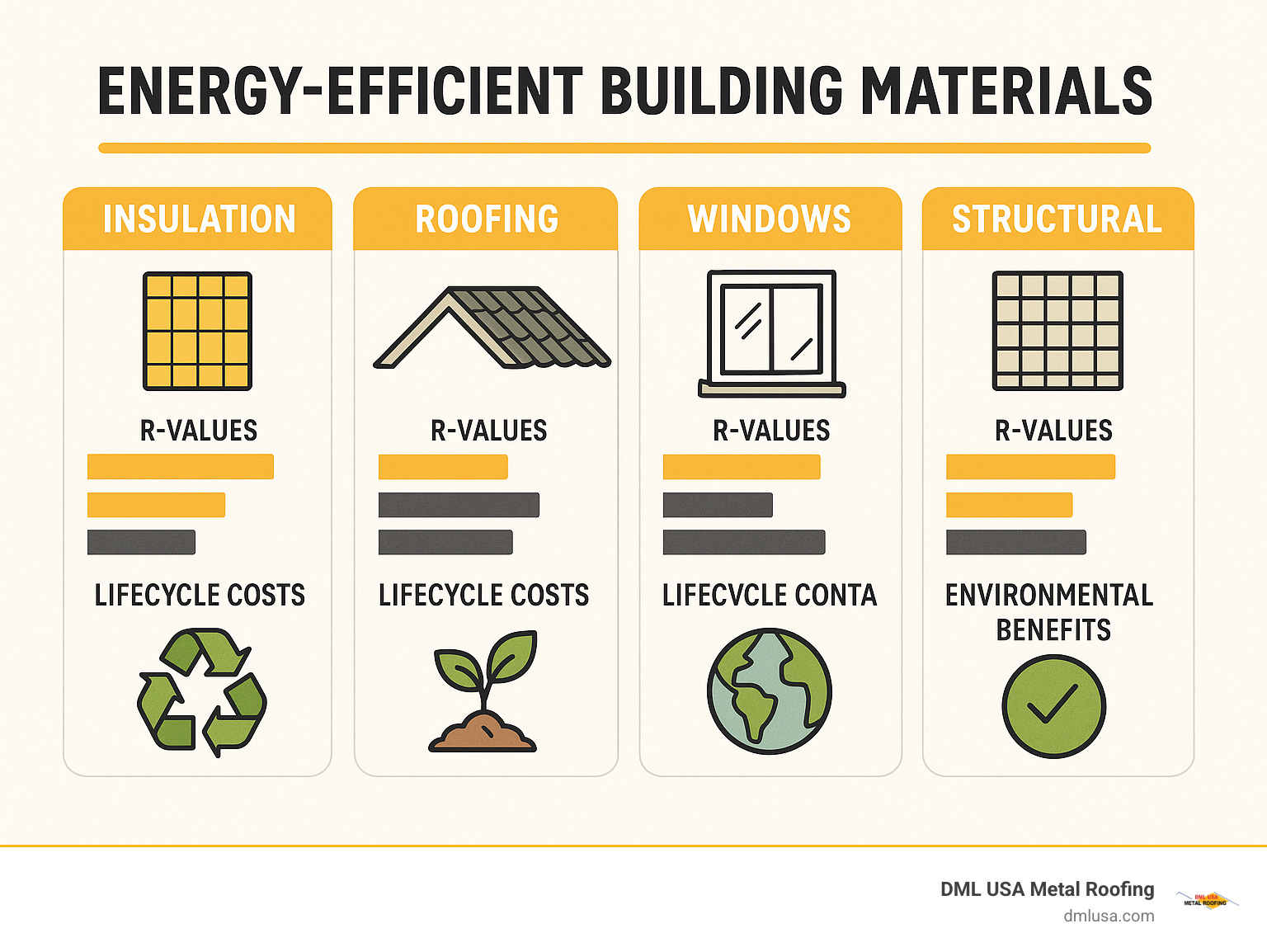
Top Energy-Efficient Building Materials:
– Insulation: Structural Insulated Panels (SIPs), stone wool, vacuum insulation panels
– Roofing: Cool metal roofing, green roofs, solar-integrated systems
– Windows: Low-E glass, triple-pane glazing, smart windows
– Structural: Recycled steel, rammed earth, hempcrete, cross-laminated timber
– Concrete: Insulated concrete forms (ICFs), autoclaved aerated concrete
Residential buildings consume 21% of total U.S. energy, with most used for heating and cooling. Energy-efficient homes can slash energy bills by 30% on average – saving homeowners hundreds of dollars annually. As global energy demand is expected to grow by 50% by 2050, choosing the right materials isn’t just smart economics – it’s essential for our planet’s future.
The “tight envelope” approach – keeping wind, rain, and energy loss out – drives every material decision. From recycled steel that uses 75% less energy to produce than virgin steel, to vacuum insulation panels providing seven times the insulating power of traditional materials, today’s options deliver both performance and sustainability.
I’m Adam Kadziola, and through my work at DML USA Metal Roofing since 2007, I’ve seen how energy-efficient building materials transform both construction costs and long-term performance. My experience in manufacturing and home renovations has shown me that selecting the right materials upfront creates lasting value for homeowners seeking durability, efficiency, and peace of mind.
Energy-efficient building materials glossary:
– commercial roofing Chicago
– durable roofing Chicago
Understanding Energy-Efficient Building Materials
Energy-efficient building materials are specifically designed to work harder for you, cutting down on heating and cooling costs while keeping your home comfortable year-round. These materials consider the whole picture – including embodied carbon (greenhouse gases released during manufacturing, shipping, and installation) and long-term energy savings.
Buildings in America use 21% of all our energy, with most going to heating and cooling. Every choice you make – from insulation to roofing – either helps or hurts that number.
Scientific research on recycled materials shows that choosing materials with recycled content often perform better than new counterparts, thanks to improved manufacturing processes and decades of real-world testing.
Why They Matter for Climate & Wallet
Homes built with energy-efficient building materials typically save 30% on energy bills – several hundred dollars annually that stays in your pocket. These savings compound year after year for decades, while regular energy costs keep rising.
These materials also make your home more resilient. When the power grid gets stressed during extreme weather, efficient homes need less energy to stay comfortable and hold their temperature longer during outages.
From a climate perspective, buildings cause nearly 40% of the world’s carbon emissions. Choose the right materials upfront, and you can cut both daily energy use and manufacturing-related carbon significantly.
How They Contribute to Sustainability
Energy-efficient building materials support sustainability through resource conservation – recycled steel framing uses material from about six old cars instead of cutting down 40-50 trees for a typical home.
The circular economy creates another benefit. Materials like stone wool contain about 75% recycled content and can be completely recycled when buildings are eventually torn down, creating a closed-loop system that minimizes waste.
Some materials actually help fight climate change while installed. Hempcrete is “carbon-negative” – it pulls more CO2 out of the air during production than it ever releases. The best part? You don’t have to choose between doing good and getting good performance.
Natural & Recycled Structural Champions
Building with materials that nature provides or that we’ve given a second life creates some of the most impressive energy-efficient building materials available today. These aren’t just feel-good choices – they often outperform conventional options while treating our planet with respect.
Recycled Steel Framing
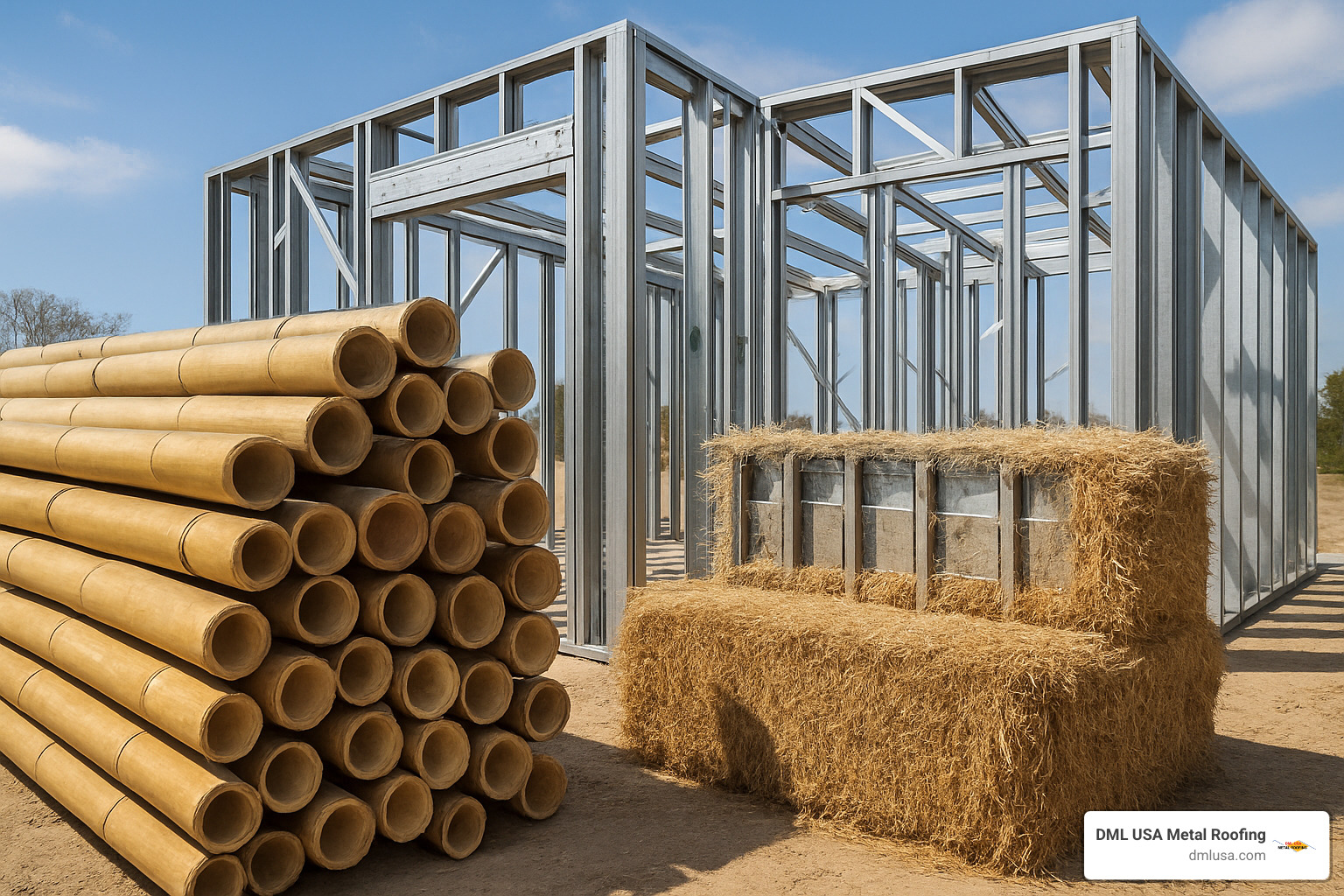
Two out of every three pounds of new steel comes from recycled material, saving 75% of the energy needed to make steel from scratch. A typical 2,000 square foot home needs 40-50 trees for wood framing, but with recycled steel you’re using material equivalent to just six scrapped cars.
Steel Recycling Institute data shows that steel framing delivers exceptional durability and seismic resistance. Unlike wood that can warp or attract termites, steel maintains its strength year after year without shrinking, swelling, or bowing.
Steel beams can be fabricated to exact specifications off-site, meaning less waste and faster construction with everything arriving ready to install.
Rammed Earth & Straw Bale Walls
Rammed earth and straw bale construction have kept people comfortable for centuries. Rammed earth walls act like a thermal battery, soaking up heat during warm periods and slowly releasing it when temperatures drop. This high thermal mass means your home naturally stays comfortable without constantly running HVAC systems.
Straw bale construction uses about 300 bales for a typical 2,000 square foot home. When properly plastered, these thick walls (18-24 inches) provide excellent fire resistance – the dense, plastered surface prevents flames from reaching the straw core. The natural insulation properties create barriers that keep heat in during winter and out during summer.
Hempcrete & Bamboo Innovations
Hempcrete is truly special – a carbon-negative material made from hemp plant cores mixed with lime binder. It absorbs CO2 while curing and continues pulling carbon from the air throughout its life. Hemp grows fast without pesticides or much water, and can be harvested multiple times per year.
Bamboo brings similar benefits with growth rates reaching maturity in just 3-5 years while providing strength comparable to hardwoods. Both materials contribute to better indoor air quality as they’re naturally antimicrobial and don’t release volatile organic compounds (VOCs).
High-Performance Insulation Solutions
Today’s energy-efficient building materials in the insulation category go far beyond traditional options. These advanced solutions can slash your energy bills while taking up less space in your walls.
Structural Insulated Panels & ICF Blocks
Structural Insulated Panels (SIPs) work like building your home as a giant sandwich – foam insulation between strong outer layers. These panels serve as both walls and insulation system with no gaps where cold air sneaks through. The result? Homes that use up to 50% less energy than traditional stick-built houses.
Insulated Concrete Forms (ICFs) are foam building blocks that you stack up, then fill with concrete. The foam stays as permanent insulation while concrete provides incredible strength. In cold climates, ICF homes typically save about 20% on energy costs compared to wood-frame construction.
Both systems create a “tight envelope” – meaning your heated or cooled air stays exactly where you want it.
Stone Wool & Plant-Based Foam
Stone wool insulation starts as basalt – volcanic rock that’s melted down and spun into fibers that trap air beautifully. Stone wool won’t burn, won’t rot, and helps quiet your home by absorbing sound. Buildings using stone wool have maintained performance for over 60 years.
Stone wool typically contains 75% recycled content and can be completely recycled when buildings come down. Plant-based foam offers another sustainable option, performing better than traditional petroleum-based options while reducing dependence on fossil fuels.
Vacuum Insulation Panels—Future of Energy-Efficient Building Materials
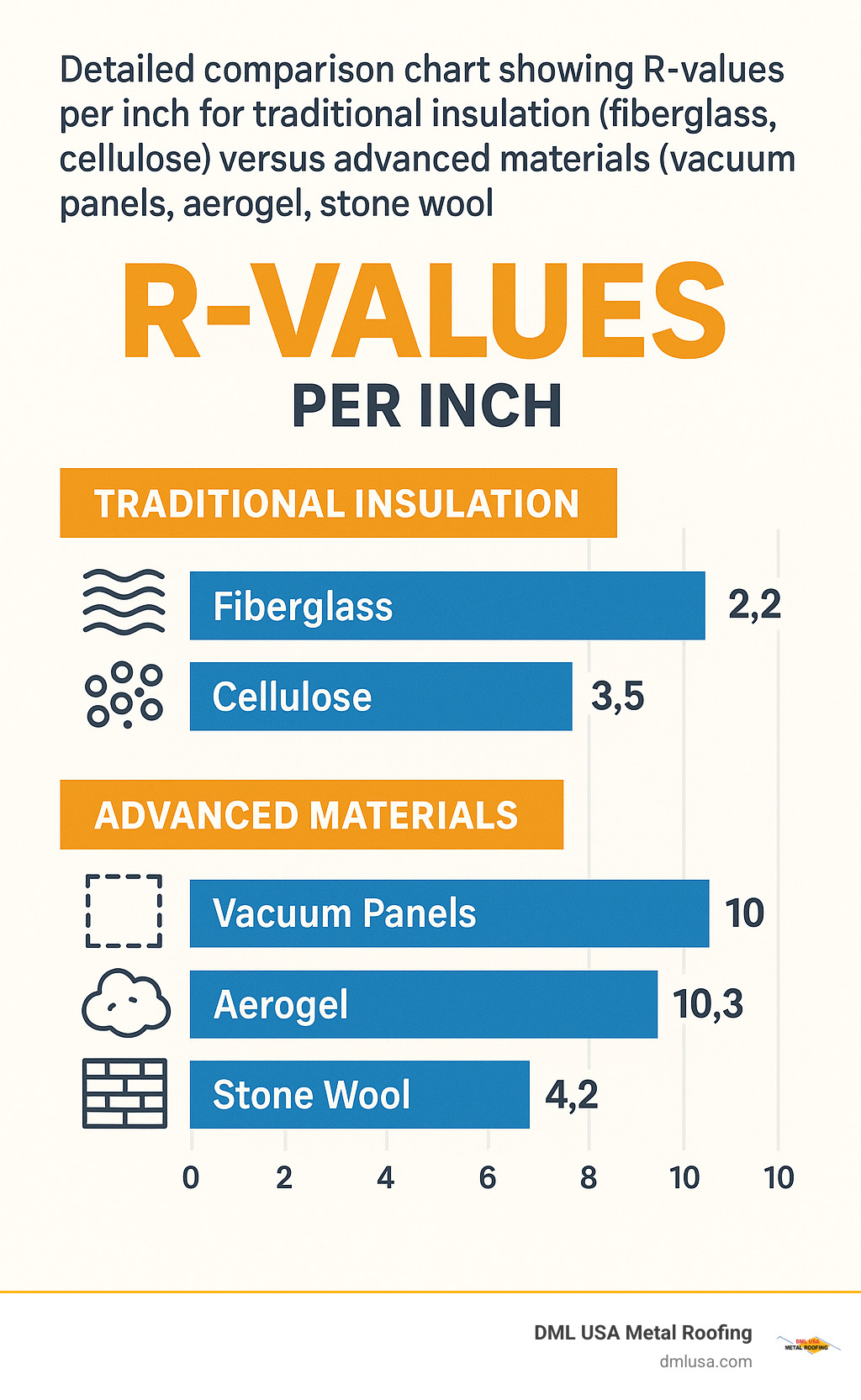
Vacuum Insulation Panels (VIPs) work like thermos bottles, removing air between specially designed panels to eliminate most heat transfer. A one-inch VIP provides seven times the insulating power of traditional materials.
The technology traces back to NASA’s spacecraft thermal protection but is becoming practical for everyday construction. Canadian researchers found panels maintain more than 80% effectiveness after 30 years of service.
While costs remain higher than conventional insulation, they’re dropping as manufacturing scales up. Forward-thinking builders are already incorporating VIPs into custom homes where maximum performance matters most.
Smart Glazing & Roofing Systems
Windows and roofs represent the largest opportunities for energy gains or losses in most buildings. Advanced glazing systems and roofing materials can dramatically improve comfort while reducing energy consumption.
Low-E & Dynamic Glazing Cut Solar Heat Gain
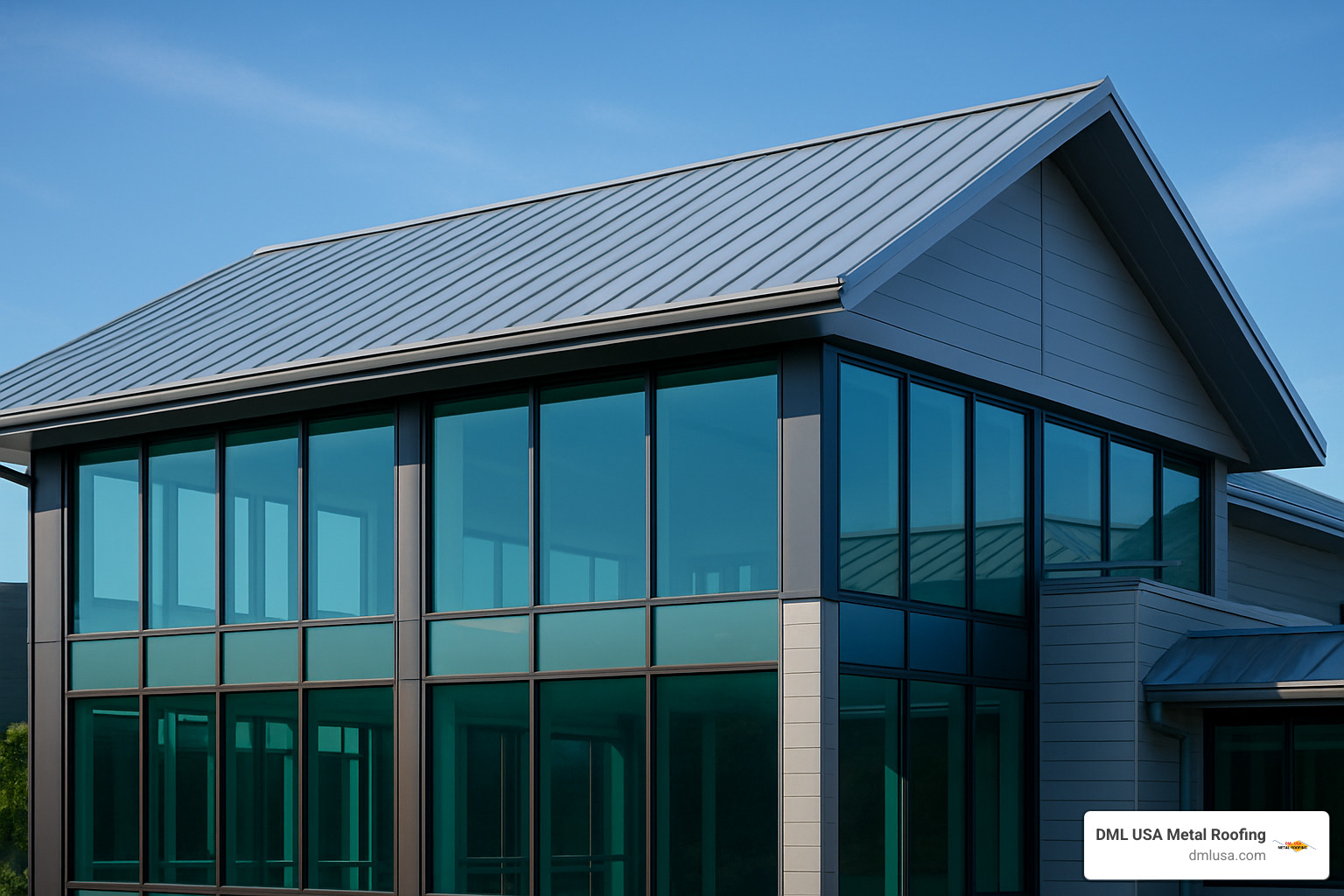
Low-emissivity (Low-E) glass transforms window performance by controlling heat transfer while maintaining visible light transmission. What is Low-E glass explains how microscopic metallic coatings reflect infrared radiation while allowing visible light through.
Low-E windows can reduce heat flow by 50%, helping reduce heating costs by 10-20%. Smart windows use nanotechnology for dynamic control of light and heat transmission. Princeton University researchers predict these windows could save up to 40% in energy costs while being self-powered by integrated transparent solar cells.
Triple-pane windows with gas fills (argon or krypton) between panes provide exceptional thermal barriers while reducing condensation issues.
Cool & Green Roof Options
Cool roofing reflects sunlight and absorbs less heat than traditional materials. When sunlight strikes a white cool roof surface, 80% gets reflected, with only 1.5% heating the building. Surface temperatures on cool roofs can run 60-70 degrees cooler than non-reflective roofs.
Green roofs use vegetation to provide insulation, evapotranspiration cooling, and stormwater management. Large vegetative roofs can capture up to 1.8 million gallons of stormwater annually while reducing urban heat island effects and extending roof membrane life by protecting from UV radiation.
Metal Roofs for Long-Term Efficiency
Metal roofing combines energy efficiency with exceptional durability and sustainability. Why Choose Metal Roofing highlights the multiple benefits that make metal roofs ideal for energy-conscious construction.
Metal roofs provide the perfect platform for solar energy systems, with panels attachable directly to standing seam roofs without penetrations that could cause leaks. Metal roofing products are 100% recyclable at end-of-life and typically contain high recycled content during manufacturing.
Cool metal roof coatings can prevent 75-80% of the sun’s energy from being absorbed into the roof structure. Combined with proper insulation, this can save building owners up to 20% on cooling energy costs.
At DML USA Metal Roofing, we’ve seen how metal roofs provide decades of maintenance-free performance while supporting energy efficiency goals. The typical lifespan of 50-60 years means homeowners enjoy long-term energy savings without replacement costs.
Selecting the Right Energy-Efficient Building Materials for Your Project
Picking the perfect energy-efficient building materials requires understanding your local climate, building codes, and long-term financial goals. Success comes from matching performance characteristics to your actual needs rather than following trends.
Matching Materials to Climate & Code
Your local climate zone determines which energy-efficient building materials will perform best. ASHRAE 90.1 and the 2018 International Energy Conservation Code (IECC) provide the foundation for understanding minimum insulation levels and performance requirements.
In Illinois, where we experience harsh winters and hot summers, thermal mass materials like ICFs shine. The concrete acts like a thermal battery – soaking up heat during warm periods and releasing it when temperatures drop.
In hot climates, reflective materials and radiant barriers become essential. Cool roofing isn’t just nice to have – it’s critical for reasonable cooling costs.
Mixed climates present the biggest challenge because materials need to perform in both heating and cooling seasons. Stone wool insulation handles this beautifully, providing consistent thermal performance whether it’s 20 below or 90 above.
Balancing Upfront Cost vs Lifetime Savings
Yes, energy-efficient building materials often cost more upfront, but material costs might represent 15-20% of your total project budget while impacting energy bills for the next 30-50 years.
Return on investment (ROI) calculations should include energy savings, reduced maintenance costs, and increased property values. Energy-efficient homes consistently sell faster and command higher prices.
Incentives and financing options can dramatically reduce upfront cost pain. Federal tax credits, state rebates, and utility programs often support energy-efficient choices. PACE financing lets you spread improvements over many years through property tax assessments.
The sweet spot usually involves materials with 10-15 year payback periods. After that break-even point, you enjoy 15-35 years of pure savings.
Overcoming Adoption Obstacles
Higher upfront costs worry builders and homeowners, but education about total cost of ownership helps. Builder training and familiarity significantly impact adoption rates, though manufacturer training programs and technical support have improved dramatically.
Code approval processes can create delays with innovative materials. Getting ahead by working with local building officials during design prevents surprises.
At DML USA Metal Roofing, we’ve seen how education and proper support eliminate most adoption obstacles. Our Resources section can help you steer these challenges and identify optimal solutions for your specific project needs.
Frequently Asked Questions about Energy-Efficient Building Materials
How do I compare R-values between materials?
R-value measures how well a material resists heat flow. Higher R-values mean better insulation performance, but comparing materials isn’t as simple as looking at package numbers.
Traditional fiberglass delivers R-3.2 to R-3.8 per inch, while vacuum insulation panels achieve R-30 or higher per inch – seven times better in a fraction of the space.
Real-world performance depends on “effective R-value,” which accounts for thermal bridging, air gaps, and moisture effects. A wall with R-20 insulation but thermal bridges might perform worse than R-15 continuous insulation.
Installation quality makes or breaks performance. Gaps and poor fitting can reduce effective R-values by 20-50%.
Are recycled products as durable as new ones?
Recycled materials often outlast their virgin counterparts. The recycling process doesn’t weaken quality materials – it often proves their durability.
Recycled steel maintains all structural properties through recycling, with decades of proof showing identical performance to new steel. Two out of every three pounds of new steel comes from recycled material.
Stone wool insulation with 75% recycled content has been tested in real buildings for over 60 years with consistent performance. Quality control during manufacturing ensures recycled materials meet or exceed performance standards.
What certifications should I look for when choosing materials?
LEED certification recognizes materials supporting sustainable building practices. Energy Star certification applies to windows and specific building materials, with certified homes achieving at least 10% better energy efficiency than code-minimum construction.
Cradle to Cradle certification evaluates materials across their entire lifecycle, including material health, renewable energy use, water stewardship, and recyclability.
The most important factor is third-party testing and verification by independent organizations like UL, ASTM, and ICC-ES. When in doubt, look for multiple certifications from organizations with no financial stake in the results.
Conclusion
The journey through energy-efficient building materials reveals a clear truth: today’s construction choices shape tomorrow’s comfort, costs, and environmental impact. From carbon-sequestering hempcrete to vacuum panels with seven-fold insulation boosts, these materials are investments in a more sustainable future.
Homeowners who choose energy-efficient building materials typically see 30% reductions in energy bills, savings that compound year after year. But benefits extend beyond utility statements – these materials create healthier indoor environments, increase property values, and contribute to reducing building-related carbon emissions.
Success requires thinking systematically. The tight envelope approach means every material choice works together as an integrated system. Climate considerations matter enormously – matching materials to local conditions ensures maximum value from every dollar invested.
At DML USA Metal Roofing, we see how the right roofing choice anchors an entire energy-efficient building strategy. Our metal roofing systems provide durable, maintenance-free performance that qualifies for energy tax credits while offering exceptional resistance to fire, wind, and impact damage. The 100% recyclability supports sustainability goals, while the 50-60 year lifespan means decades of energy savings without replacement costs.
Whether you’re planning new construction or renovating, energy-efficient building materials offer unprecedented opportunities to create spaces that are comfortable, cost-effective, and environmentally responsible. Your building project represents more than shelter – it’s a chance to reduce your environmental footprint while creating a more efficient home.
Our Products represent one piece of your energy-efficient building puzzle. Metal roofing’s combination of longevity, efficiency, and sustainability makes it an excellent foundation for any high-performance building project that’s built to last.