

Energy efficient roofing illinois: Boost Savings 2025
Why Energy Efficient Roofing is Essential for Illinois Homeowners
For Illinois residents, installing energy efficient roofing isn’t a luxury—it’s a strategic financial decision and a necessity for year-round comfort. Our state’s climate is one of extremes, swinging from humid, 90°F summers that push air conditioners to their limits to frigid, sub-zero winters that test our heating systems. The wrong roof acts like a sponge for summer heat and a sieve for winter warmth, causing utility bills to soar. From Chicagoland’s lake-effect snow to the powerful derecho storm systems that can sweep across the entire state, a roof in Illinois must be more than just a cover; it must be a high-performance shield.
Quick Answer: Energy-Efficient Metal Roofing Benefits for Illinois
- Primary Material: High-reflectivity metal roofing
- Solar Reflection: Bounces up to 70% of solar energy away from your home.
- Cooling Cost Reduction: Trims summer cooling expenses by 10–40%.
- Typical Annual Savings: $200–$500 on cooling costs alone.
- Federal Tax Credits: Incentives can cover up to 30% of material costs (up to $1,500).
- Increased Home Value: Adds an average of 7% to your home’s resale price.
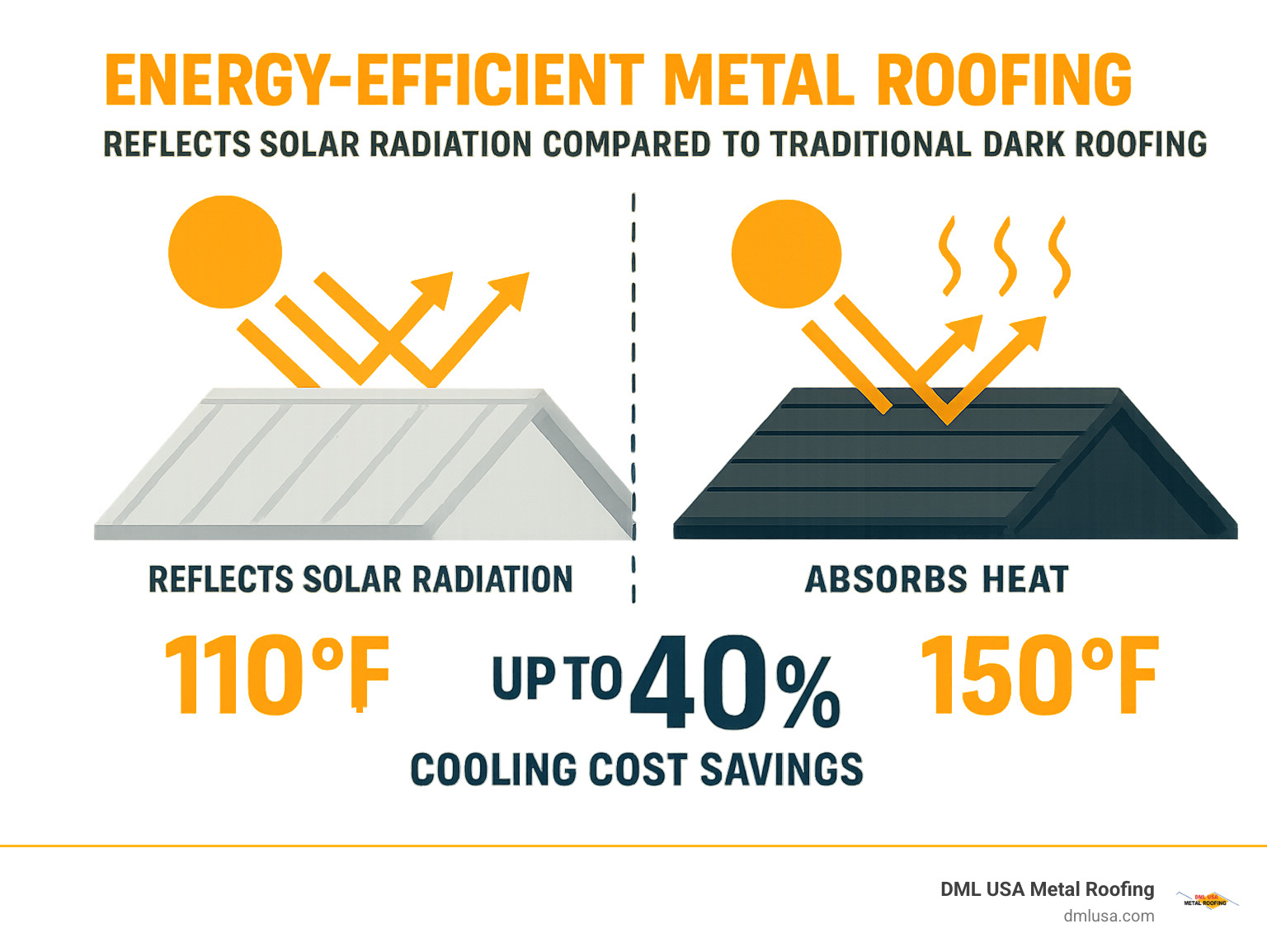
Americans spend roughly $40 billion a year running air conditioners—about one-sixth of all electricity used nationally. A significant portion of that energy is wasted compensating for inefficient homes. Traditional dark asphalt roofs can reach a scorching 150°F under the July sun, radiating that heat directly into your attic and forcing your A/C system into overdrive. By contrast, a modern cool metal roof can stay up to 50°F cooler, dramatically slashing peak energy demand and your monthly bills.
I’m Adam Kadziola of DML USA Metal Roofing, headquartered in Northlake and Chicago, IL. Since 2007, our family-owned company has been dedicated to helping thousands of Illinois homeowners fortify their homes and cut energy costs with durable, maintenance-free metal roofs purpose-built for the demanding Midwest weather.
Understanding Energy-Efficient Metal Roofs: How They Work in the Illinois Climate
When you step outside on a blazing Illinois day, you instinctively reach for a light-colored shirt to stay cooler. A cool metal roof operates on the exact same principle, but its performance is measured by two key scientific properties:
- Solar Reflectance: This is the measure of how much sunlight and its heat (solar radiation) a surface can bounce away. A higher value means less heat is absorbed by the roof. Modern metal roofs can reflect up to 70% of solar energy.
- Thermal Emittance: This property measures how quickly a surface releases any heat it has absorbed. A high thermal emittance means the roof cools down rapidly once the sun sets, preventing that stored heat from transferring into your home overnight.
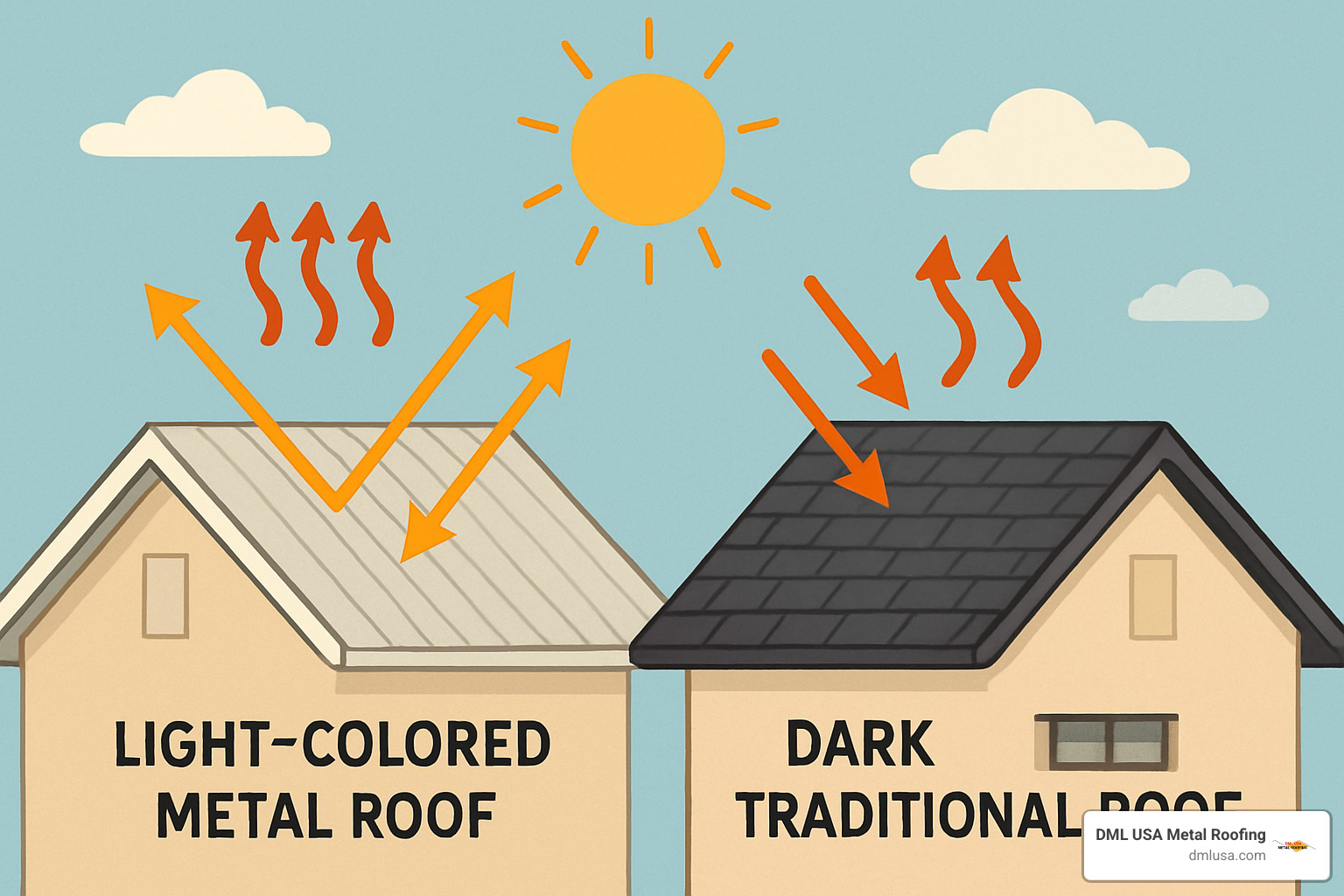
A light-colored metal roof reflects far more solar energy than traditional dark asphalt, keeping surface temperatures around a manageable 100°F instead of a blistering 150°F. With less heat penetrating your attic, your air conditioning system doesn’t have to work nearly as hard. Independent studies have repeatedly shown this leads to significant 10–30% reductions in cooling costs.
Year-Round Illinois Performance
- Summer: The primary benefit is undeniable. Lower attic temperatures directly translate to immediate and substantial utility savings on your electricity bill.
- Winter: While a dark roof might absorb a tiny amount of solar heat in winter, this effect is minimal due to shorter days, lower sun angles, and frequent cloud cover. Furthermore, snow, a natural reflector, covers roofs for much of the season anyway. The smooth, even temperature of a metal roof is far more beneficial in preventing destructive ice dams, which form when melting snow refreezes at the eaves of a warmer roof.
- Storm Season: Illinois is no stranger to severe weather. Metal roofing provides superior protection with hail resistance ratings up to Class 4 (the highest available) and wind resistance certified for up to 140 mph. This durability means fewer repairs and a roof that keeps performing for decades, no matter what the weather brings.
According to the U.S. Environmental Protection Agency (EPA), cool roofs also mitigate urban heat-island effects in cities like Chicago. By reflecting sunlight, they help lower ambient air temperatures, benefiting entire neighborhoods while shrinking your personal carbon footprint.
Why Metal Roofing Is the Top Energy-Efficient Choice for Illinois Homes
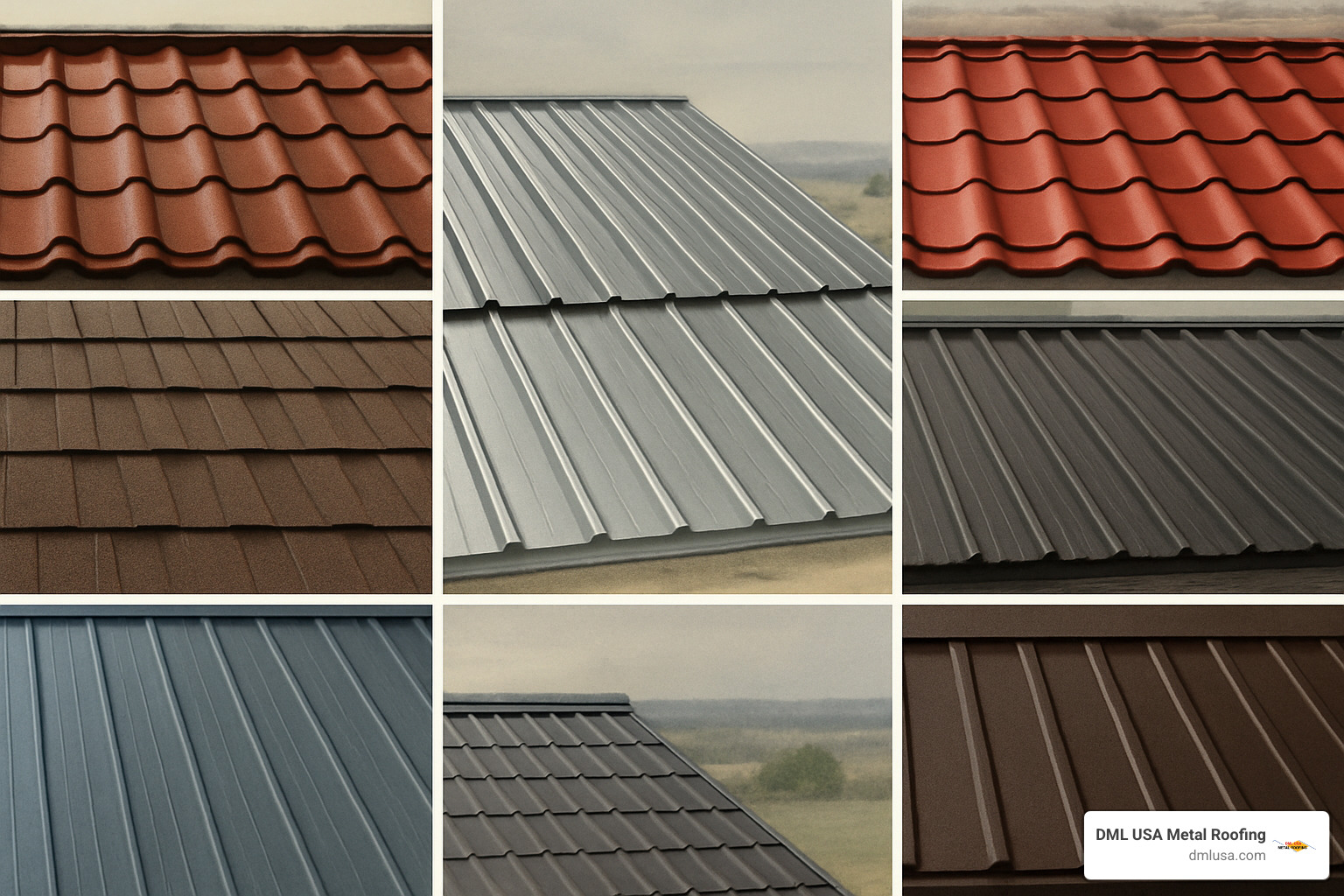
After 15 years manufacturing in Northlake, IL, we’ve found metal outperforms every other residential roofing option on three fronts: energy savings, durability, and low maintenance.
- Longevity: 40–70 year life—double or triple asphalt’s.
- Reflectivity: Cool-pigment finishes bounce up to 70 % of solar energy.
- Sustainability: 100 % recyclable, fire-resistant, and strong against 140 mph winds and large hail.
Styles & Finishes
- Standing Seam Panels – sleek, contemporary, excellent water shedding.
- Metal Shingles – mimic slate or cedar while staying ultra-light and reflective.
- Color Options – modern coatings keep even dark hues ENERGY STAR-rated.
Whichever style you choose, you get the same core benefits: lower bills, near-zero upkeep, and a roof likely to outlast your mortgage.
The Financial Case for Energy-Efficient Metal Roofing in Illinois
Yes, a high-quality metal roof typically has a higher upfront cost than a standard asphalt shingle roof—often $8,000–$16,000 for metal versus $5,000–$10,000 for asphalt on an average Illinois home. However, focusing only on the initial price tag is shortsighted. The long-term financial math overwhelmingly favors metal.
Let’s break down the lifetime value:
- Annual Energy Savings: You can expect to save $200–$500 per year on cooling costs alone. Over the life of the roof, this adds up to thousands of dollars.
- Extreme Lifespan: A metal roof has a functional lifespan of 40–70 years. An asphalt roof will likely need a full, costly replacement every 15-20 years. This means you would have to pay to re-roof your home 2 to 3 times with asphalt in the same period you would have one metal roof.
- Increased Property Value: A durable, attractive, and energy-efficient metal roof is a major selling point. Studies show it can boost a home’s resale value by an average of 7%. On a $250,000 Illinois home, that’s an immediate equity increase of $17,500.
When you combine the energy savings with the avoided cost of future re-roofing, most homeowners find their metal roof investment reaches its break-even point in just 7–12 years. After that, you enjoy decades of pure savings and peace of mind.
Tax Credits & Incentives
The financial benefits don’t stop there. Government programs are in place to encourage homeowners to make energy-efficient upgrades:
- Federal Tax Credit: Homeowners can claim a tax credit for 30% of the material cost, up to a maximum of $1,500, for installing qualifying ENERGY STAR certified metal roofs.
- Solar-Ready Platform (ITC): If you plan to install solar panels now or in the future, a metal roof is the perfect foundation. Its long lifespan ensures you won’t have to undertake the expensive process of removing and reinstalling your solar array just to replace a failing asphalt roof. The 30% federal Investment Tax Credit (ITC) for solar systems makes this combination even more attractive.
- State and Local Rebates: Programs like Illinois Solar for All and various utility company rebates can further reduce the overall project cost, making the switch to energy-efficient metal roofing more affordable than ever.
Smart roof, smart money.
Maximizing Performance: The Role of Insulation and Ventilation
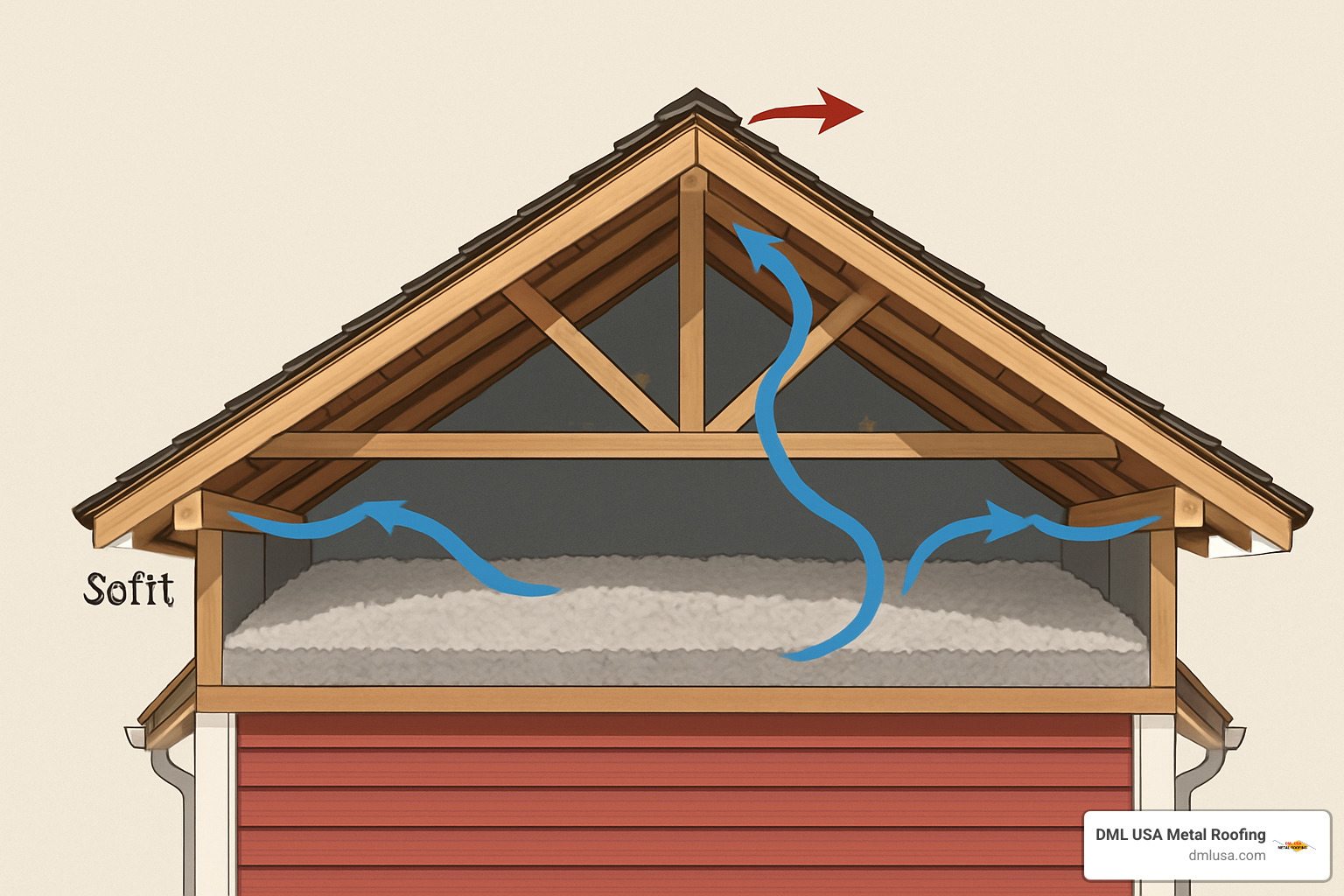
A great roof needs backup from the attic. The Department of Energy estimates 40 % of a home’s energy loss escapes through poorly insulated roofs and walls.
- Insulation: Aim for R-38 to R-60 in Illinois attics. Spray foam delivers an airtight seal and up to 50 % better performance than fiberglass batts.
- Ventilation: Balanced soffit (intake) and ridge (exhaust) vents stop moisture, curb summer heat buildup, and prevent winter ice dams. Target 1 sq ft of net free vent area per 150 sq ft of attic floor.
Upgrading insulation and ventilation when you reroof turns a good energy upgrade into a great one.
How to Choose the Right Metal Roofing Solution for Your Illinois Property
Selecting a roof is like choosing a long-term investment—look past sticker price and focus on lifetime return.
Key Decision Points
- Budget vs. Payback – Higher first cost, lower monthly bills, higher resale value.
- Architecture – Standing seam suits modern lines; metal shingles fit classic styles.
- Roof Complexity – Steep or multi-facet roofs may need extra flashing skill—hire pros.
- Local Codes & Loads – Metal is lighter than asphalt, but older homes should still be inspected.
Finding a Qualified Contractor
Work with licensed, insured, ENERGY STAR-savvy professionals experienced in Illinois weather. DML USA Metal Roofing maintains a vetted installer network—see our metal roofing suppliers list for a pro near Chicago or Northlake.
Frequently Asked Questions about Energy-Efficient Metal Roofs in Illinois
Do cool metal roofs hurt winter heating?
No, this is a common misconception. While a dark roof absorbs slightly more solar energy, the potential heating benefit in winter is negligible in the Illinois climate due to frequent cloud cover, shorter days, and the low angle of the sun. Any minor heat gain is far outweighed by the substantial energy savings achieved during our long, hot, and humid summers. Furthermore, a metal roof’s ability to shed snow and prevent the formation of destructive ice dams provides a significant performance advantage over asphalt in winter.
What’s the cost difference between metal and asphalt?
The initial installation cost for a metal roof is higher, typically averaging $8,000–$16,000 compared to $5,000–$10,000 for asphalt. However, the lifetime cost of metal is significantly lower. When you factor in the 40-70 year lifespan (meaning you avoid paying for 2-3 asphalt roof replacements), thousands of dollars in cumulative energy savings, and a boost in home equity, metal roofing provides a far superior return on investment.
Are metal roofs noisy in the rain?
This is a myth that comes from old-fashioned barns where metal panels were installed on open framing. Modern residential metal roofs are installed over a solid wood deck and a layer of underlayment, just like shingles. This structure, combined with your attic insulation, effectively muffles the sound of rainfall, making a metal roof just as quiet, if not quieter, than other roofing materials.
Will a metal roof attract lightning?
No, a metal roof does not attract lightning or increase the risk of a strike. In the rare event that lightning does strike a home, a metal roof is actually safer than combustible materials like asphalt or wood. Metal is non-combustible and will safely dissipate the electrical charge throughout the structure, reducing the risk of fire.
Can’t I just paint my roof white?
While it may seem like a simple fix, regular house paint is not a substitute for a factory-finished metal roof. Cool metal roofing is treated with special coatings containing infrared-reflective pigments that are engineered to reflect heat and withstand decades of harsh UV exposure and weather. Standard paint will quickly fail, chip, and lose its reflective properties, and it won’t come with the warranty or guaranteed performance of a rated roofing product.
What are the maintenance requirements?
Metal roofs are famously low-maintenance. The primary tasks are simple: an annual gutter cleaning to ensure proper drainage and a quick visual inspection after a major storm to check for any debris. You won’t have to deal with the constant granule loss, curling, cracking, or algae streaks that plague asphalt shingles.
Are metal roofs compatible with solar panels?
They are perfectly compatible and, in fact, the ideal choice for a solar installation. The incredible longevity of a metal roof ensures that you will not have to remove and reinstall your expensive solar panels just to replace a worn-out roof halfway through the solar array’s lifespan. Furthermore, mounting systems for standing seam metal roofs often allow for panel attachment without making a single penetration in the roof surface, eliminating potential leak points.
Conclusion
Choosing energy efficient roofing illinois homeowners trust means lower bills, higher comfort, and a roof tough enough for Midwest storms. Add the 30 % federal tax credit and an average 7 % bump in property value, and metal roofing from DML USA Metal Roofing of Northlake & Chicago, IL is an easy call.
Ready to cut energy costs for the next 40-plus years? Explore our durable, maintenance-free metal roofing products today!