 Skip to main content

False
Why Proper Valley Installation Protects Your Home Investment
Installing valley metal on a shingle roof is one of the most critical waterproofing tasks for any roofing project. Roof valleys are the V-shaped channels where two roof planes meet, and they handle far more water runoff than any single roof surface – making them highly vulnerable to leaks if not properly protected.
Quick Answer for Installing Valley Metal on a Shingle Roof:
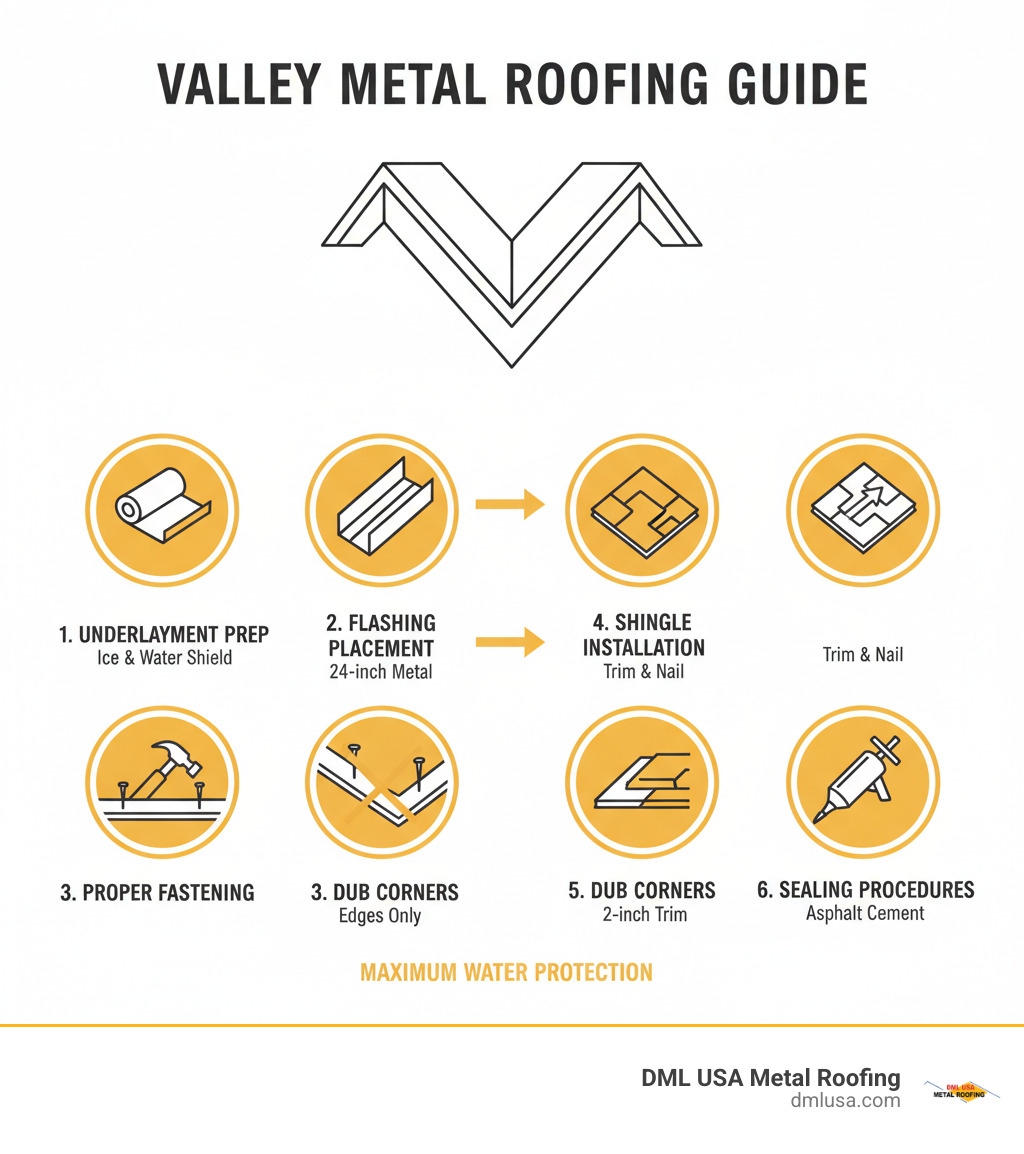
- Prepare the valley – Install 36-inch wide ice and water shield underlayment
- Center the metal flashing – Use minimum 24-inch wide, 28-gauge metal valley flashing
- Fasten properly – Nail only along outer edges, never through the water channel
- Overlap sections – Minimum 6-inch overlap with asphalt cement sealing
- Install shingles – Snap chalk lines, trim shingles to lines, nail 2 inches back
- Dub corners – Cut 2-inch triangles from shingle corners and seal with cement
As builder Mike Guertin notes, valleys “collect and channel a greater volume of water than a single roof plane,” which is why proper installation requires extra attention to design and build valleys as watertight as possible.
The open metal valley method is widely recommended by roofing professionals because metal sheds ice and water faster than shingles alone. This prevents ice dams and debris buildup that can force water back under your roof system, causing expensive interior damage.
I’m Adam Kadziola, and through years of manufacturing metal roofing products and home renovations at DML USA Metal Roofing, I’ve seen how proper valley installation protects homes from water damage. My experience installing valley metal on a shingle roof has taught me that attention to detail in this crucial area can mean the difference between a roof that lasts decades and one that fails within years.
Installing valley metal on a shingle roof further reading:
Understanding Roof Valley Types
When installing valley metal on a shingle roof, you have three main construction methods to choose from. Roof valleys are the highways for water runoff, so how you build them is critical for your roof’s performance. The three types—open, closed-cut, and woven—offer different aesthetics, durability, and installation challenges. Your choice can also impact your shingle warranty, so it’s important to understand the differences.
| Feature | Open Metal Valley | Closed-Cut Valley | Woven Valley |
|---|---|---|---|
| Pros | Excellent water/ice shedding, durable, easy to repair, recommended for architectural shingles, aesthetic options | Clean appearance, good water protection if installed correctly | Most weather-resistant (no exposed materials), no cut shingles along valley |
| Cons | Exposed metal (some prefer concealed), requires precise metal work | Shingles can lose granules faster, harder to repair than open, requires precise cutting | Not recommended for architectural shingles, difficult to repair leaks, less professional aesthetic, can be bumpy |
| Best For | Architectural shingles, heavy rain/snow climates, modern aesthetics | Three-tab shingles, where a concealed look is desired | Three-tab shingles, traditional roofing |
| Appearance | Defined metal channel, clean lines, can be a design feature | Seamless shingle surface, clean, uniform shingle lines | Continuous shingle surface, can appear bumpy or uneven with thicker shingles |
| Warranty Implications | Generally excellent if installed per manufacturer specs | Generally acceptable if installed per manufacturer specs | May void warranty with architectural shingles due to stress/bumping |
Open Metal Valley
The open metal valley is our recommended method when installing valley metal on a shingle roof. It features a visible metal channel running down the valley’s center, creating an unobstructed path for water, ice, and debris. This method wins because metal sheds ice and water faster than shingles, reducing the risk of ice dams and providing superior protection during heavy rain. The smooth surface also prevents debris buildup.
Open valleys are perfect for architectural shingles. These thicker, less flexible shingles lay flat on the metal, avoiding the bumps and stress points that can cause premature failure. Open valleys are also easier to maintain and repair, and the exposed metal can be an attractive design feature.
Closed-Cut & Woven Valleys
Closed-cut and woven valleys hide the flashing under the shingles.
Closed-cut valleys offer a seamless look by running shingles from one roof plane across the valley and then cutting the shingles from the other side in a neat line. While this looks tidy, the cut shingle edges can lose granules faster due to concentrated water flow.
Woven valleys interlace shingles from both sides for a continuous surface. However, this method is problematic for architectural shingles. They are too thick to weave smoothly, creating a bumpy, unprofessional look that can trap debris and may even void your warranty.
For these reasons, closed-cut and woven valleys are best reserved for traditional three-tab shingles. When using modern architectural shingles, the open metal valley method provides superior performance and warranty protection.
Preparation: Tools and Materials for Valley Flashing
Getting your tools and materials organized before installing valley metal on a shingle roof makes the process smoother and more successful.
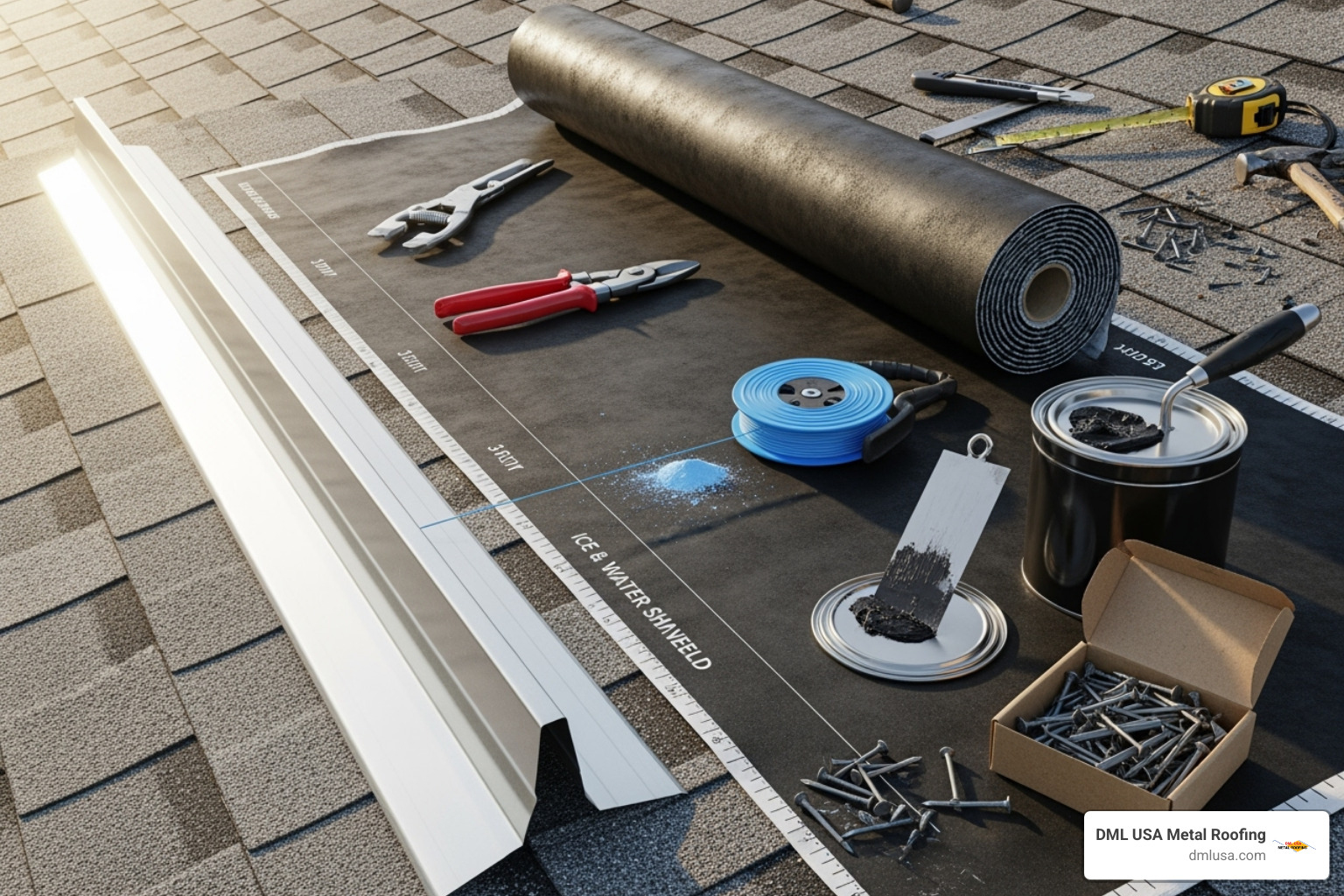
You’ll need metal valley flashing, ice and water shield underlayment, corrosion-resistant roofing nails, and asphalt plastic cement for sealing. For measuring and cutting, have a chalk line, tape measure, and tin snips. You’ll also want a utility knife with hook blades for trimming shingles and a hammer or roofing hatchet. Finally, ensure you have proper safety gear, including gloves, eye protection, safety boots, and a sturdy ladder.
Choosing the Right Valley Metal
Selecting quality metal is crucial for a durable valley. Common options include galvanized steel (durable and corrosion-resistant), aluminum (lightweight and corrosion-proof), and copper (premium longevity and appearance).
Key specifications include a minimum 28-gauge thickness for steel and a minimum width of 24 inches to ensure proper coverage. Many professionals prefer W-profile metal, which has a raised center crimp to prevent water from crossing between roof planes, especially on asymmetrical slopes.
Always take care to understand your local code’s thickness requirements for flashing, as they can vary. For more on metal’s benefits, see our comparison of steel vs shingles.
Preparing for Installing Valley Metal on a Shingle Roof
With materials ready, prepare the roof deck. Start with a thorough roof deck inspection. Remove all old shingles, underlayment, and debris from the valley. The deck must be clean, sound, and dry; repair any damage before proceeding.
The ice and water shield installation is a critical step. Center a 36-inch wide strip of high-quality ice and water protector membrane along the entire valley. This self-adhering membrane creates a vital waterproof barrier.
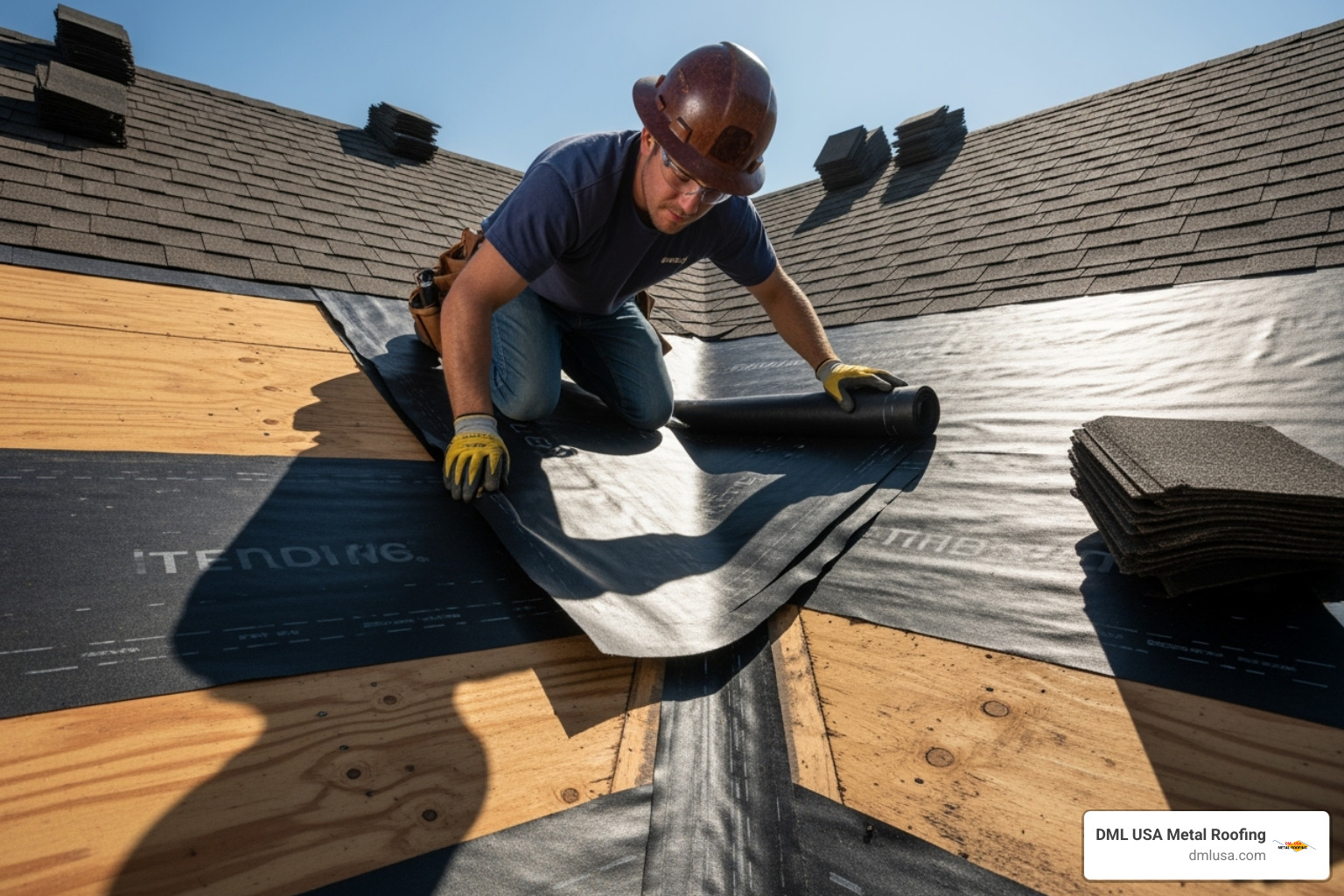
Apply it by peeling the backing while pressing firmly to remove air bubbles. For long valleys, overlap additional pieces by at least 6 inches, always working from the eave upward so water flows over the seam. This preparation is especially important in Illinois, providing an essential defense against our heavy rain, snow, and freeze-thaw cycles.
Step-by-Step Guide to Installing Valley Metal on a Shingle Roof
Now we’re getting to the exciting part! With all our preparation complete, it’s time to dive into the actual process of installing valley metal on a shingle roof. I’ll walk you through each step of the open metal valley method, which is hands-down the most reliable approach for long-term performance.
Think of this process like creating a highway for water – every detail matters to keep that water flowing smoothly off your roof instead of finding its way into your home.
Step 1: Placing and Fastening the Metal Flashing
Getting your metal flashing positioned correctly is absolutely crucial. This is where precision pays off in spades.
Start by carefully centering your valley flashing over the ice and water shield. The metal should extend about an inch beyond the eave to ensure proper water runoff. If you’re using W-profile metal with that raised center crimp, make sure it’s perfectly centered – this little ridge will help direct water flow and prevent it from crossing between roof planes.
Here’s where many DIYers make a critical mistake: never, ever drive nails through the center water channel. I can’t stress this enough! Instead, fasten the flashing along its outer edges, about 1 inch in from each side. Space your nails every 12 to 18 inches – just enough to hold everything securely in place.
This edge-fastening technique allows the metal to expand and contract naturally with temperature changes. Trust me, metal moves more than you’d think, and if you restrict that movement, you’ll end up with buckles, stress cracks, or worse.
When you need to overlap sections (and you probably will), always work from bottom to top. Each upper piece should overlap the lower one by at least 6 inches. Before securing the overlap, apply a generous band of asphalt plastic cement underneath to create that watertight seal. It’s a small step that makes a huge difference in preventing leaks.
One last tip: clean up any metal shavings as you work. These tiny pieces can rust and stain your beautiful new roof if left behind.
Step 2: Marking Chalk Lines and Installing Shingles
Now comes the part where we create those clean, professional lines that make an open valley look so sharp. This is where your chalk line becomes your best friend.
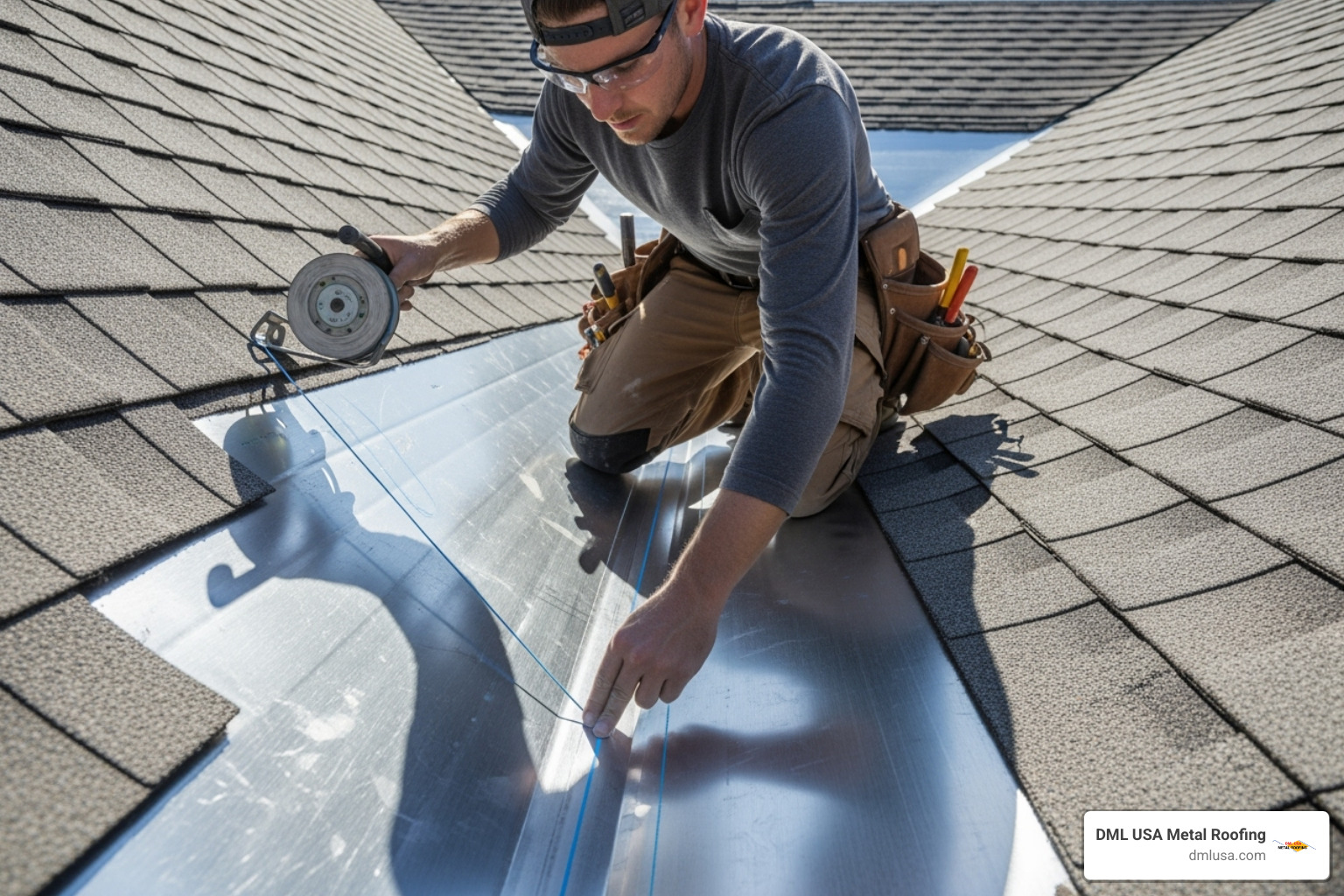
Snap two parallel chalk lines the full length of your valley, starting 6 inches apart at the top – that’s 3 inches on each side of the centerline. But here’s the key detail: these lines need to taper outward as they go down, widening by 1/8 inch per foot. This creates a funnel effect that accommodates the increasing volume of water as it flows downward.
Why the taper? Simple physics. Water from the entire upper portion of both roof planes funnels into that valley, so you need more capacity at the bottom to handle the flow during heavy downpours.
As you install your shingles from both roof planes, work your way up from the eaves as usual. When each course reaches the valley, lay the shingles right over the metal flashing, then trim them precisely to your chalk lines using a sharp utility knife. Pro tip: slip a piece of scrap metal under the shingle you’re cutting to protect the valley flashing from accidental cuts.
The nailing pattern here is absolutely critical for installing valley metal on a shingle roof successfully. Keep all shingle nails at least 2 inches back from the chalk line. This ensures no fasteners penetrate the exposed metal or create potential leak paths. Every nail should be driven straight and flush – no over-driving that could damage the shingles.
For more detailed guidance on metal roof valley techniques, check out our comprehensive resource: More info about metal roof valley installation.
Step 3: Dubbing Corners and Sealing for a Watertight Finish
This final step might seem like a small detail, but it’s one of those finishing touches that separates amateur work from professional results.
Dubbing corners means cutting a small 2-inch triangle off the upper corner of each shingle that meets the valley. I know it sounds odd, but there’s solid science behind this technique. Without dubbing, water can actually be drawn sideways along the underside of the shingle corner through capillary action. That’s exactly how water finds its way where it doesn’t belong!
By creating that small gap with the triangular cut, you ensure water flows directly down into the metal channel instead of sneaking sideways under the shingle. It’s a simple cut that prevents complex problems down the road.
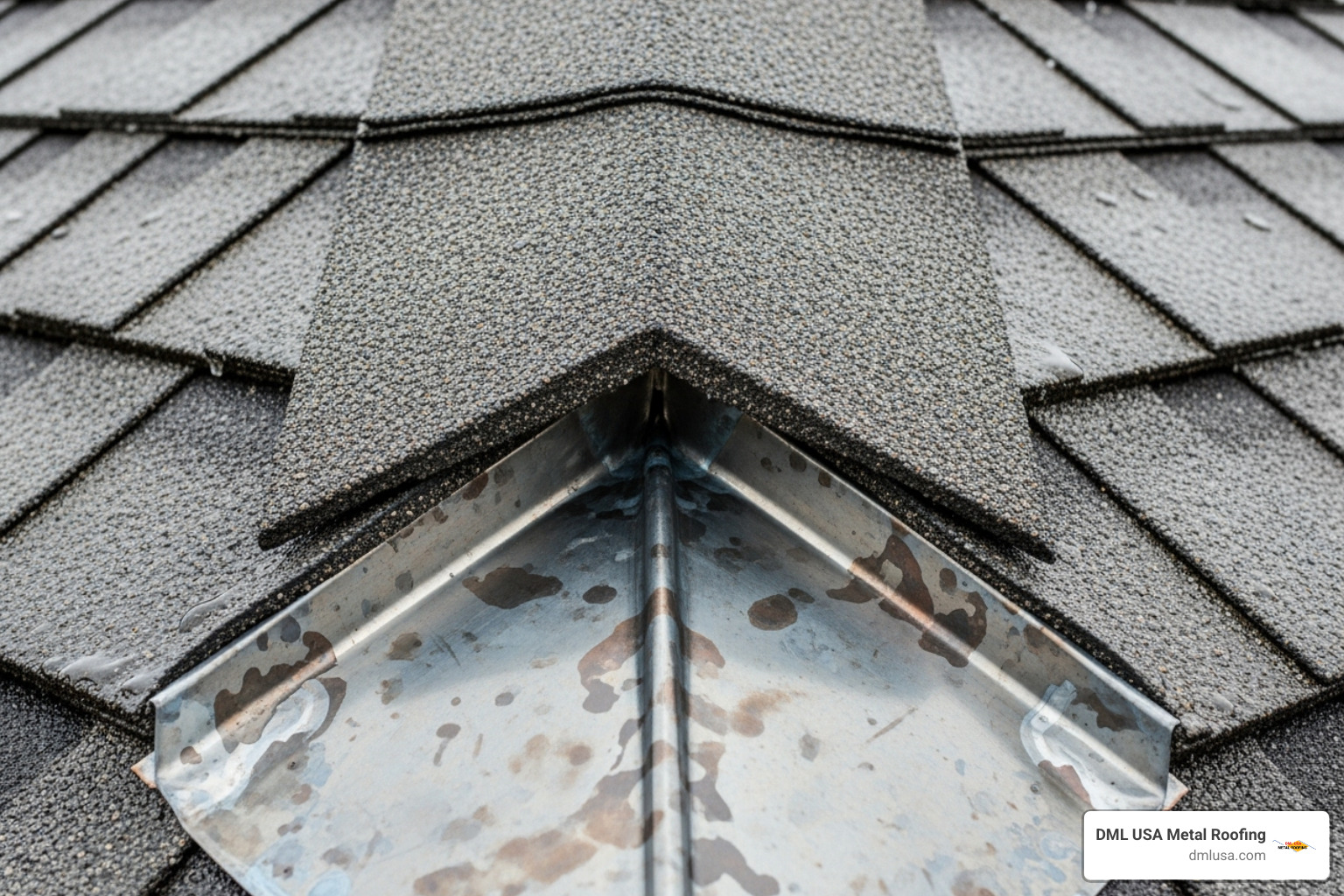
The final sealing step is equally important. After trimming and dubbing each shingle, embed the valley end into a 3-inch band of asphalt plastic cement. This creates a strong, flexible seal between the shingle and metal that can handle thermal movement while keeping wind-driven rain from lifting shingle ends.
Apply the cement generously but neatly – you want complete coverage without creating a messy appearance. This combination of proper cutting, dubbing, and sealing creates a watertight barrier that’ll protect your home through decades of Illinois weather, from summer thunderstorms to winter freeze-thaw cycles.
When you step back and look at your completed valley, you should see clean, straight lines with consistent spacing and no exposed cement or rough edges. That’s the mark of a professional installation that’ll perform beautifully for years to come.
Advanced Tips and Common Problems
Even with the best preparation, installing valley metal on a shingle roof can present challenges. Most issues are preventable with the right knowledge. For a broader understanding of what can go wrong, you might find our guide on metal roof installation mistakes helpful.
Best Practices for Installing Valley Metal on a Shingle Roof
Your shingle type affects your approach. Thick architectural shingles require an open metal valley to lay flat and avoid damage that could void a warranty. More flexible three-tab shingles can be used with open or closed-cut valleys, but the open method offers the best long-term performance.
Climate is also a key factor. For heavy rain, a tapered valley is essential to manage water volume. In climates with snow and ice, like Illinois, open metal valleys excel at shedding buildup and preventing ice dams.
To avoid common mistakes, follow these tips:
- Avoid Over-driven Nails: Drive nails flush with the shingle surface. Over-driving tears the shingle and creates a leak point.
- Prevent Hollows Under Flashing: Press the ice and water shield and metal flashing firmly to the deck to eliminate air pockets that can trap moisture.
- Clear Debris Buildup: Regularly check valleys for leaves and debris that can block water flow and cause backups.
- Don’t Skimp on Sealing: Use asphalt plastic cement under all overlaps and shingle ends. It’s critical insurance against leaks.
- Use Compatible Materials: Ensure your sealants, fasteners, and underlayment are compatible with your shingles and metal to prevent premature degradation.
Following these tips ensures your valley installation will withstand the elements for years.
Frequently Asked Questions about Valley Metal Installation
Here are answers to common questions about installing valley metal on a shingle roof to help you avoid pitfalls and ensure a smooth project.
How wide should metal valley flashing be?
Your metal valley flashing should be a minimum of 24 inches wide. This width provides adequate coverage on both sides of the valley’s centerline and allows for proper fastening away from the water channel. Always check your local building codes, as some areas may require wider flashing, especially in regions with heavy rain or snow.
Can I nail through the center of the valley metal?
No. Nailing through the center of the valley metal creates holes that will leak, defeating the purpose of the flashing. Fasteners should only be placed along the outer edges, about 1 inch from the side. This secures the metal while allowing it to expand and contract with temperature changes, preventing buckling and cracks.
Why do my valley chalk lines need to be wider at the bottom?
Water accumulates and increases in volume as it flows down the roof. Tapering the valley—widening it by 1/8 inch per foot from top to bottom—creates a funnel that can handle the increased flow. A straight, untapered valley can overflow during heavy rain, forcing water under the shingles. This simple step is crucial for preventing water damage.
A Watertight Finish for Your Illinois Home
Properly installing valley metal on a shingle roof creates a durable fortress against water damage, protecting your investment for decades. In Illinois, where roofs endure everything from torrential rain to heavy snow, a well-installed open metal valley is essential. This method creates a reliable channel for water and ice, directing it safely off your roof.
By following the steps for proper preparation, placement, and sealing, you ensure protection that lasts the lifetime of your roof, preventing leaks and costly repairs. The clean, professional lines of an open metal valley also improve your home’s curb appeal.
At DML USA Metal Roofing, we provide materials designed for Illinois’ challenging weather. Our products offer energy efficiency and high resistance to fire, wind, and impact, upgrading your home’s entire protection system. This investment brings peace of mind, knowing your roof is ready for any storm.
Learn more about our metal roofing products and find how our Illinois-made materials can give your home the protection it deserves.
