

Metal Building Gutters and Downspouts: Top Tips 2025
Why Metal Building Gutters and Downspouts Are Essential for Your Property
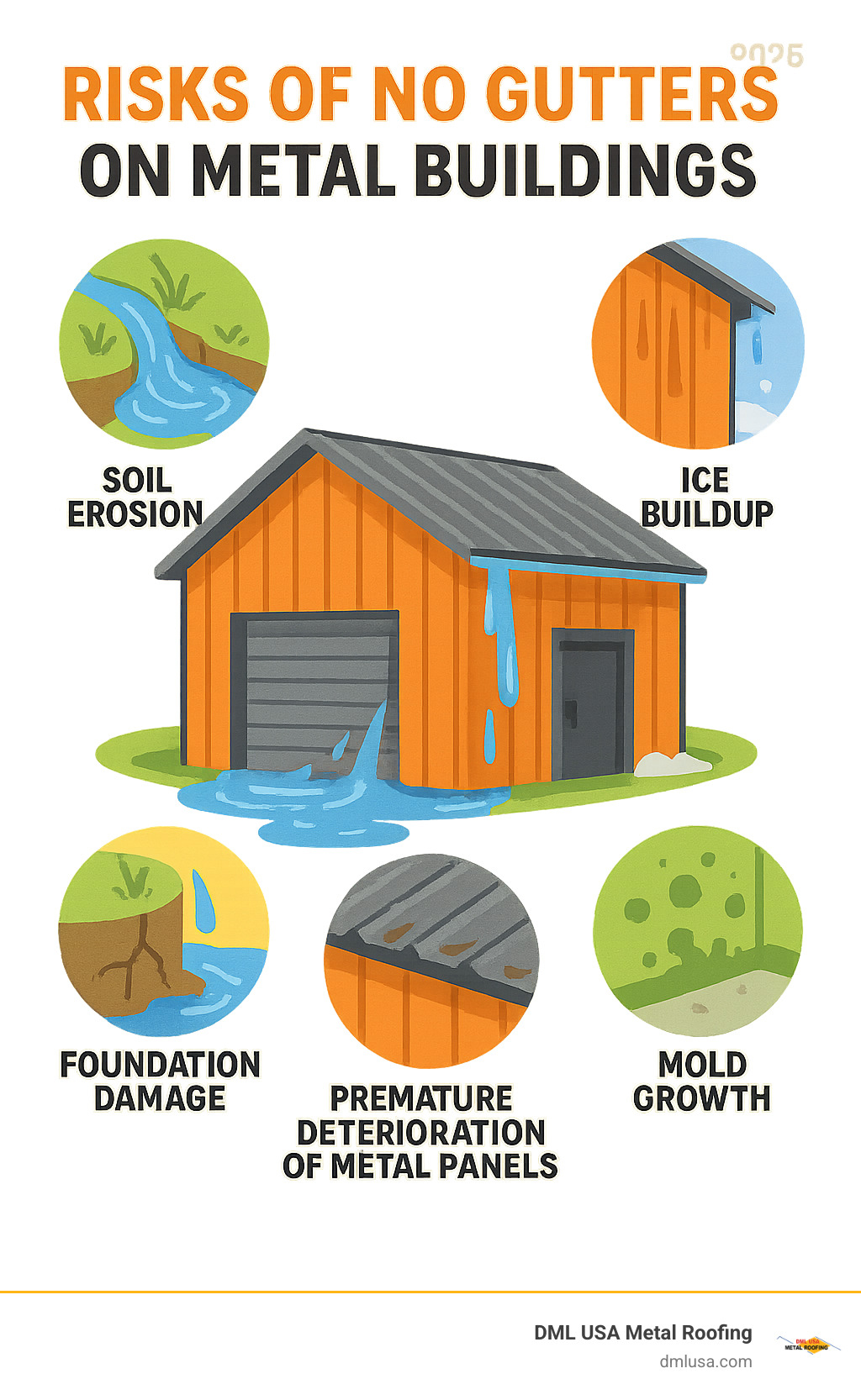
Metal building gutters and downspouts are critical water management systems that protect your structure from costly damage while enhancing its appearance. Their primary function is to collect rainwater and snowmelt from the roof and direct it safely away from the building’s foundation. This prevents serious issues like foundation damage, soil erosion, water infiltration, and premature deterioration of metal panels.
Without proper drainage, rainwater can cause foundation cracks, soil erosion, and water infiltration, leading to expensive structural repairs. The unique design of metal buildings, which often lack fascia boards, requires specialized hanging systems and careful consideration of roof slopes (typically 1/4:12 to 3:12) for proper water flow.
Poorly managed water can also freeze and expand, damage seals, waterlog the ground around your foundation, and create unsafe, slippery entryways. Beyond protection, gutters are a cost-effective alternative to wide overhangs and can significantly improve your building’s aesthetics by providing a finished look.
I’m Adam Kadziola, and with over 17 years of experience at DML USA Metal Roofing, I’ve seen the importance of proper metal building gutters and downspouts for long-term structural protection. This guide will walk you through making the right choice for your building.
Why Your Metal Building Needs a Gutter System
Without metal building gutters and downspouts, your investment is vulnerable to water damage. Your roof funnels every drop of rain and melting snow to its edges. Without gutters, this water cascades down, saturating the ground around your foundation and splashing onto your walls, creating a host of problems.
Water damage prevention is the most critical benefit. A proper gutter system provides essential foundation protection by channeling water away from the building’s base, preventing the soil saturation that can lead to costly foundation cracks. It also offers soil erosion control, stopping uncontrolled runoff from washing away topsoil and undermining your property’s stability.
Gutters are key to preventing water infiltration through cracks, doors, and wall seams, which can cause interior damage and unhealthy mold growth. They also aid in protecting landscaping from being washed away and reducing splash-back that causes mud stains on your building’s lower panels.
In colder climates, gutters are vital for preventing ice buildup and safety hazards like slippery walkways. Beyond these protective functions, they offer significant aesthetic improvement, giving your building a finished, polished look that complements its trim and color scheme.
For more insights on protecting your investment, check out our guide on Why Choose Metal Roofing.
The Risks of Going Without Gutters
Skipping metal building gutters and downspouts invites expensive and serious problems. The primary risks include:
- Structural Damage: Constant water exposure can compromise your building’s frame and foundation. Freezing water can get under seals and cause significant damage.
- Foundation Cracks: Saturated soil expands and contracts, creating stress that cracks concrete foundations—a very expensive repair.
- Mold and Mildew Growth: Damp conditions created by runoff are ideal for mold, which can spread inside, posing health risks and requiring costly remediation.
- Premature Deterioration: Constant water contact can accelerate corrosion and shorten the lifespan of your metal panels.
- Unsafe Conditions: Waterlogged ground and icy patches near entryways create perpetual mud and serious slip-and-fall hazards.
Benefits Beyond Protection
Beyond damage prevention, metal building gutters and downspouts offer several advantages:
- Improved Building Aesthetics: A well-designed gutter system creates a finished edge that boosts curb appeal and makes your building look more professional.
- Cost-Effective Alternative to Wide Overhangs: Gutters provide water diversion and a strong visual line without the expense and complexity of structural overhangs.
- Increased Property Value: Functional, attractive gutters signal that a property is well-maintained, increasing its value.
- Controlled Water Collection: A gutter system is the first step for rainwater harvesting, allowing you to collect water for irrigation and reduce reliance on municipal sources.
Exploring Gutter and Downspout Types for Metal Buildings
Choosing the right metal building gutters and downspouts is crucial, as the system must fit your building’s specific roof profile, slope, and local climate. Your metal building’s unique design dictates its water management needs.
Common Gutter Styles
- Eave Gutters: The most common choice, these run along the roof’s edge to catch water. They are effective and work well with standard roof slopes.
- Box Gutters: These deep, rectangular gutters handle high water volume, making them ideal for commercial buildings. We offer them in 5″, 6″, 7″, and 8″ sizes that work with our 7.2 Panel, PBR, and PBU Panel systems. Larger sizes also add significant visual presence.
- Sculptured Gutters: Custom-designed to match specific roof panel profiles (like PBR or 7.2 Panel), these create a seamless, professional look. They are engineered for specific roof slopes, typically between 1/2:12 and 6:12.
- Hang-on Gutters: These systems attach to the building’s eave rather than integrating with the roof, making them ideal for retrofitting existing buildings.
- Parapet and Valley Gutters: Used on large commercial buildings with flat or low-slope roofs, these internal gutters are designed for heavy rainfall and often require secondary drainage like scuppers or overflow drains.
Choosing the Right Material
The material you choose determines your gutter system’s longevity and maintenance needs. We focus on materials that offer the best long-term value.
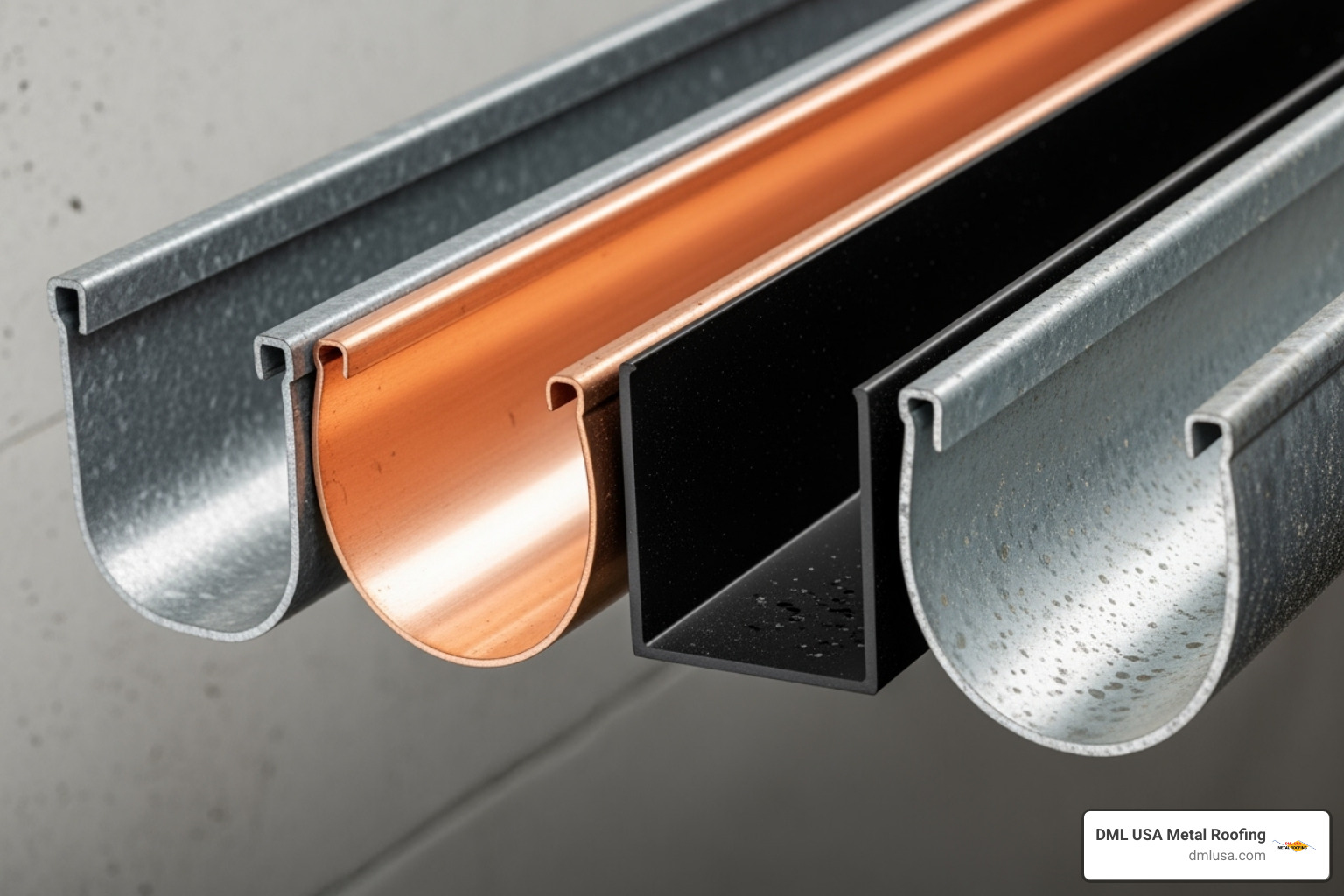
- Galvanized Steel: Offers excellent strength and durability with good rust resistance from its zinc coating.
- Galvalume Steel: Provides superior corrosion resistance with its zinc and aluminum coating, requiring little maintenance.
- Pre-finished Steel: Comes with factory-applied color coatings (like Kynar 500®) for excellent color retention and rust resistance, allowing a perfect match with your building’s trim.
- Aluminum: Naturally rust-proof and lightweight, making it a great choice for coastal environments. It may dent more easily than steel.
- Copper and Zinc: Premium options that can last over a century. Copper develops a classic patina, while zinc provides clear water runoff. Their long-term value can outweigh the higher initial cost.
We primarily work with high-quality steel and aluminum. See examples in our Gallery.
Key Components of Metal Building Gutters and Downspouts
A complete system requires several components working together:
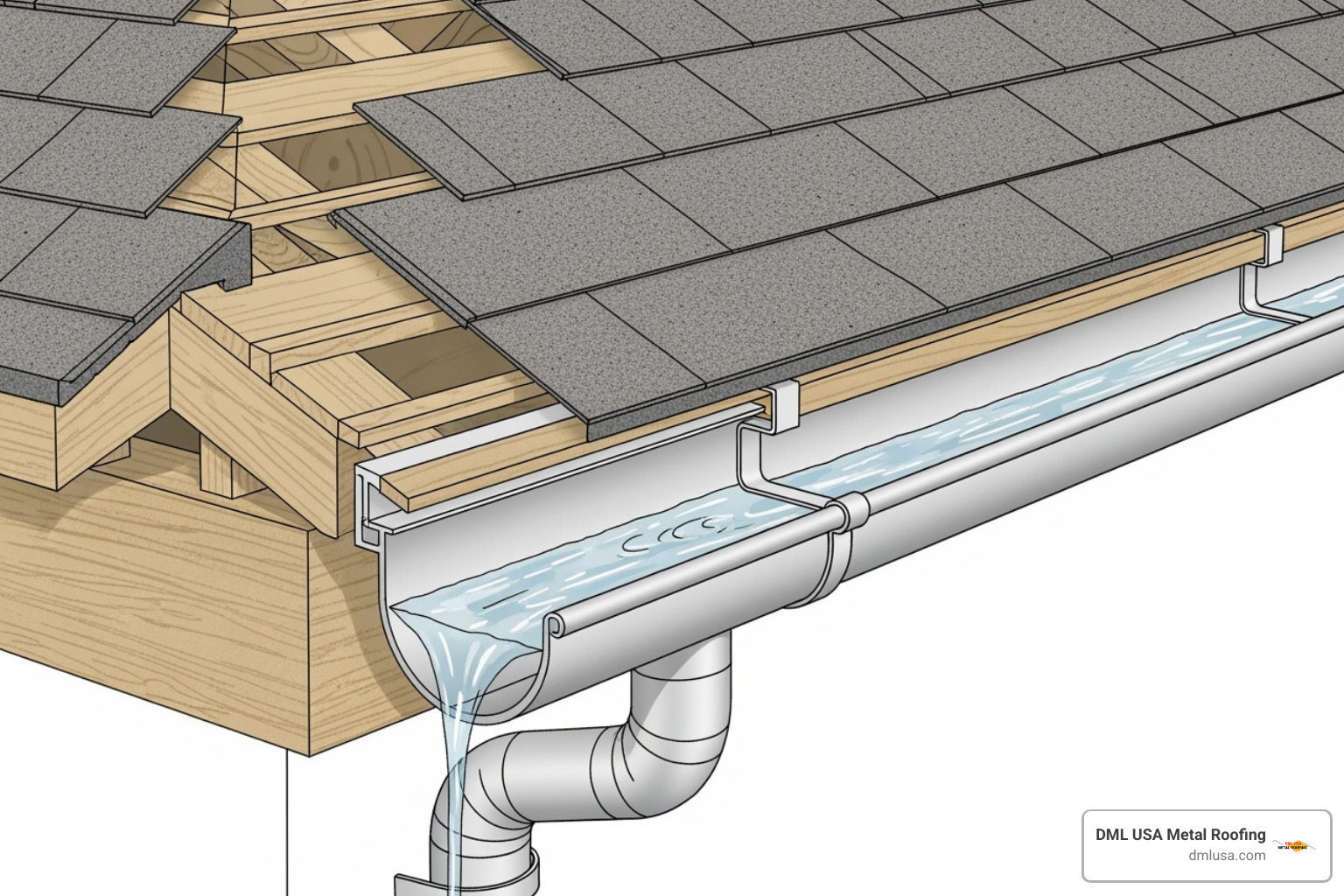
- Gutter Sections: The main troughs that collect water. They come in 10′ or 20′ sections, or can be seamless (custom-formed on-site) to reduce leaks.
- Downspouts: Vertical pipes that carry water to the ground. A 3×4 inch downspout handles up to 800 sq. ft. of roofing, while a 4×5 inch downspout is for larger areas.
- End Caps: Seal the ends of gutter runs to prevent spills.
- Gutter Hangers and Straps: Specialized systems for metal buildings that attach to the roof system or purlins, as there is often no fascia board.
- Elbows: Allow downspouts to steer around obstacles.
- Outlets (Dropouts): Connect gutters to downspouts.
- Sealant: High-quality silicone sealant is crucial for creating watertight joints and preventing leaks.
- Fasteners: Screws and rivets that hold the system together.
- Gutter Guards: Optional covers that prevent debris from clogging the system, significantly reducing maintenance.
Properly Designing and Sizing Metal Building Gutters and Downspouts
Correctly sizing your metal building gutters and downspouts is critical to prevent overflows during heavy rain. The design must be based on calculations that account for your roof size and local weather patterns to ensure the system can handle peak water volume.
Calculating Gutter and Downspout Size
Proper sizing depends on several factors:
- Roof Square Footage: The larger the roof, the more water the gutters must handle.
- Local Rainfall Data: We follow Metal Building Manufacturers Association (MBMA) guidelines. Eave gutters are designed for a 5-year recurrence interval rainfall, while more critical interior systems (valley, parapet gutters) are designed for a 25-year recurrence interval.
- Gutter and Downspout Capacity: Gutter capacity is based on its width and depth. As a rule of thumb, a 3×4 inch downspout can handle up to 800 square feet of roofing. For larger areas, you will need more or larger downspouts.
For precise calculations, you can use a professional Gutter sizing calculator.
Design and Placement Rules of Thumb
- Roof Slope: A sufficient slope, typically between 1/4:12 and 3:12, is needed for water to flow properly off the roof.
- Gutter Slope: Gutters themselves must be sloped toward the downspouts (about 2-4 inches over a run) to ensure drainage and prevent standing water.
- Gutter Run Length: A single gutter run draining to one side should not exceed 32 feet.
- Downspout Spacing: Place downspouts every 20-40 feet. Locating them at frame-line locations helps avoid interference with wall openings.
- Secondary Drainage: For valley and parapet gutters, secondary drainage like scuppers or emergency overflow drains is critical to prevent water from entering the building.
Installation Considerations for Metal Building Gutters and Downspouts
Installing gutters on metal buildings requires special attention because they typically lack a fascia board.
- Specialized Hanger Systems: Hangers must attach directly to the building’s roof system or purlins. These can be post-hung (after roof completion) or pre-hung (during construction).
- Space for Cleaning: Ensure there is enough space between the roof edge and the gutter for maintenance access. Roof panels may need to be trimmed with tools like turbo shears for a clean edge.
- Sealing Joints: All joints, end caps, and connections must be sealed with high-quality silicone to prevent leaks.
- Snow Retention Systems: In cold climates, install snow guards on the roof to prevent snow and ice from sliding off and damaging the gutters.
Maintaining Your Gutter System and Preventing Clogs
Your metal building gutters and downspouts require regular maintenance to function correctly and prevent costly water damage. A small amount of preventative care each year will keep your system flowing smoothly.
Routine Maintenance Checklist
- Seasonal Cleaning: Clean gutters at least twice a year, in the spring and fall, to remove leaves, twigs, and other debris.
- Check for Sagging: During cleaning, inspect for loose or sagging sections that could disrupt water flow. Tighten or replace damaged hangers as needed.
- Flush Downspouts: After cleaning the gutters, run a hose through the system to ensure downspouts are clear and water drains properly.
- Inspect Sealant: Regularly check the sealant at all joints, end caps, and outlets. Reapply high-quality silicone sealant to any gaps to prevent leaks.
- Check Underground Drains: If you have underground drainage, use durable DWV PVC pipe instead of corrugated pipe, which is prone to clogging and tearing.
Gutter Guards and Clog Prevention
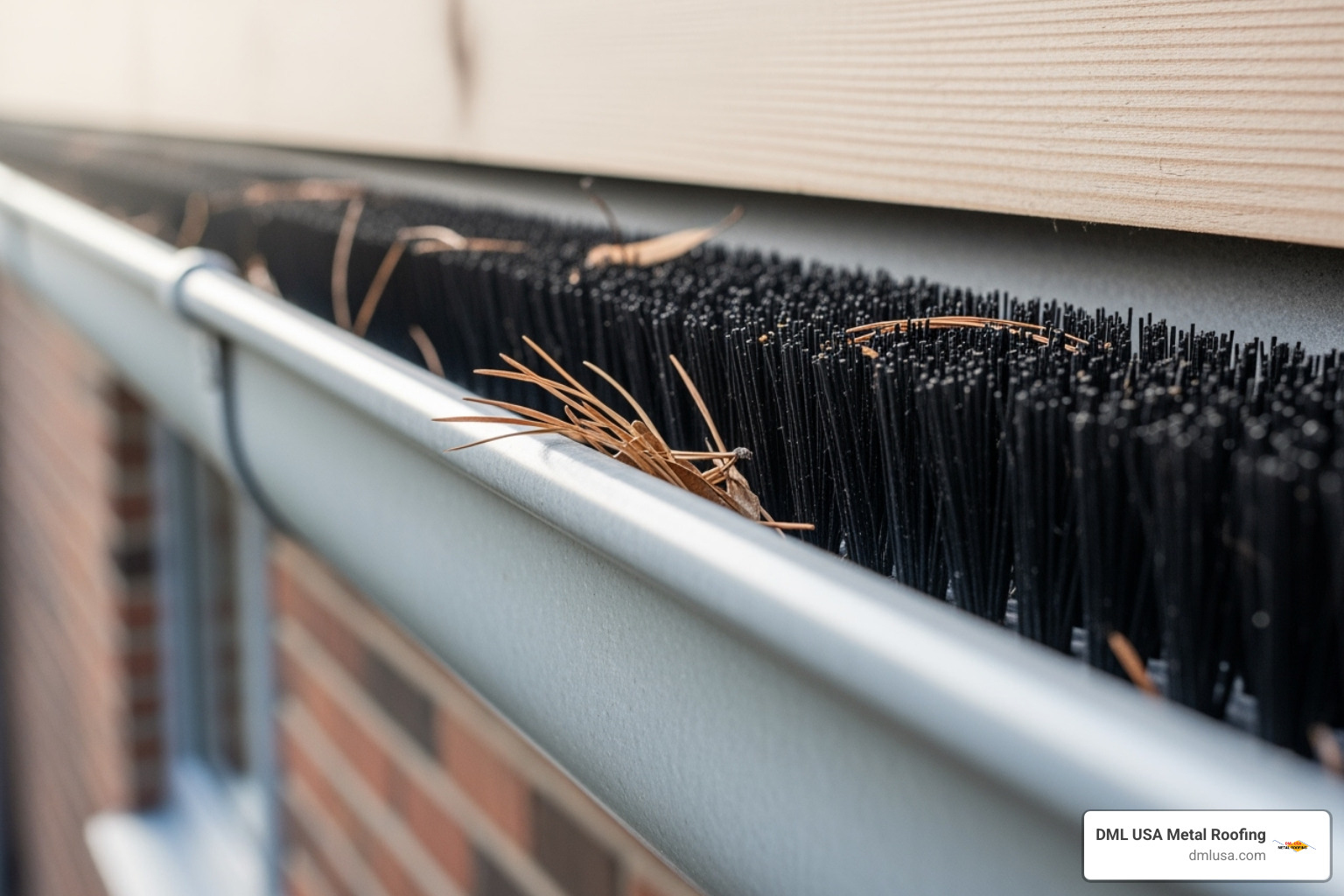
Gutter guards are an excellent solution for reducing maintenance, especially if your building is surrounded by trees. They cover the gutter to keep debris out while allowing water to flow through.
- Screen Guards: Mesh covers that block larger debris. Effective but may require occasional cleaning of smaller debris from the top.
- Brush-Style Guards: Cylindrical brushes that fill the gutter, allowing water to flow through the bristles while leaves sit on top. They work particularly well with the unique profiles of metal building gutters.
- Cover Systems: Solid covers that use surface tension to guide water in while deflecting debris. They are low-maintenance but can be overwhelmed in very heavy rain.
Gutter guards are worth considering because they prevent overflows, dramatically reduce maintenance, and protect against water damage by ensuring optimal drainage. It is crucial to choose a guard system designed specifically for the unique profiles and attachment methods of metal building gutters and downspouts.
Frequently Asked Questions about Metal Building Gutters
Metal building gutters and downspouts are specialized systems that often generate questions. Here are answers to the most common inquiries.
Can I add gutters to an existing metal building?
Yes, absolutely. Retrofitting gutters on an existing metal building is a smart investment. The process involves assessing your building’s roof edge, slope, and panel type to determine the best mounting approach. Since most metal buildings lack a traditional fascia board, professional installers use specialized hanger systems that attach securely to the roof structure or purlins, ensuring a durable and effective installation.
How many downspouts does my metal building need?
The number of downspouts depends on your roof size, gutter length, and local rainfall intensity.
- The general rule is one downspout per 20-40 feet of gutter.
- A standard 3×4 inch downspout can handle runoff from up to 800 square feet of roofing.
- Buildings in high-rainfall areas may require more downspouts to handle heavy storms.
Proper placement balances function with aesthetics, ensuring optimal drainage without cluttering the building’s appearance.
Are seamless gutters better for a metal building?
Yes, seamless gutters are almost always the superior choice for metal buildings. Unlike sectional gutters, which have multiple joints that can leak over time, seamless gutters are custom-fabricated on-site from a single piece of metal to fit your building’s exact dimensions.
- Reduced Risk of Leaks: The primary advantage is the elimination of seams along the gutter run, which are the most common failure points.
- Custom Fit: They provide a perfect, custom fit for your building’s specific structure.
- Professional Installation: While professional installation is required, it ensures the gutters are sloped correctly and securely attached for long-term performance.
Seamless gutters are available in various materials and colors to match your building, offering a clean, professional look that improves property value.
Conclusion
Metal building gutters and downspouts are not an optional accessory; they are essential for protecting your investment. Proper water management prevents costly issues like foundation damage and soil erosion, preserving the structural integrity of your commercial, agricultural, or residential metal building for decades.
We’ve covered the importance of choosing the right style, such as box or sculptured gutters, and sizing them correctly—remembering that a 3×4 downspout handles up to 800 square feet of roofing. The unique installation challenges for metal buildings, like attaching gutters without fascia boards, highlight the need for specialized hanger systems and professional installation.
At DML USA Metal Roofing, we know that a quality gutter system is the perfect complement to our durable, maintenance-free metal roofing products. When you combine our fire, wind, and impact-resistant roofing with a properly designed gutter system, you create a complete, high-performance building envelope.
Investing in quality metal building gutters and downspouts is proactive protection. It ensures your foundation remains dry, your landscaping intact, and your building’s value and appearance are maintained. With the right system in place, you can have peace of mind during every storm.
Ready to give your metal building the protection it deserves? View our metal roofing and trim products and let’s create a complete water management solution for your property.