

Metal Roof Repair Companies: Top 5 Expert Solutions 2025
Why Professional Metal Roof Repair Companies Are Essential for Long-Term Protection
Metal roof repair companies are experts in maintaining and restoring metal roofing systems, which can last 40-80 years with proper care. Here’s what you can expect from quality metal roof repair companies:
Key Services:
– Panel replacement and seam resealing
– Fastener tightening and rust treatment
– Coating application for UV protection
– Emergency repairs and leak detection
– Preventive inspections (recommended twice yearly)
When to Call Professionals:
– Rust spots or corrosion
– Loose or missing fasteners
– Water stains on ceilings
– Damaged flashing around chimneys or vents
Average Repair Costs:
– Basic repairs: $380-$1,800
– Gutter repairs: $180-$560
– Major structural fixes: $1,500-$7,000
Metal roofs expand and contract with temperature changes, which can loosen fasteners and separate seams over time. Professional repair companies use specialized techniques to restore your roof’s protective barrier.
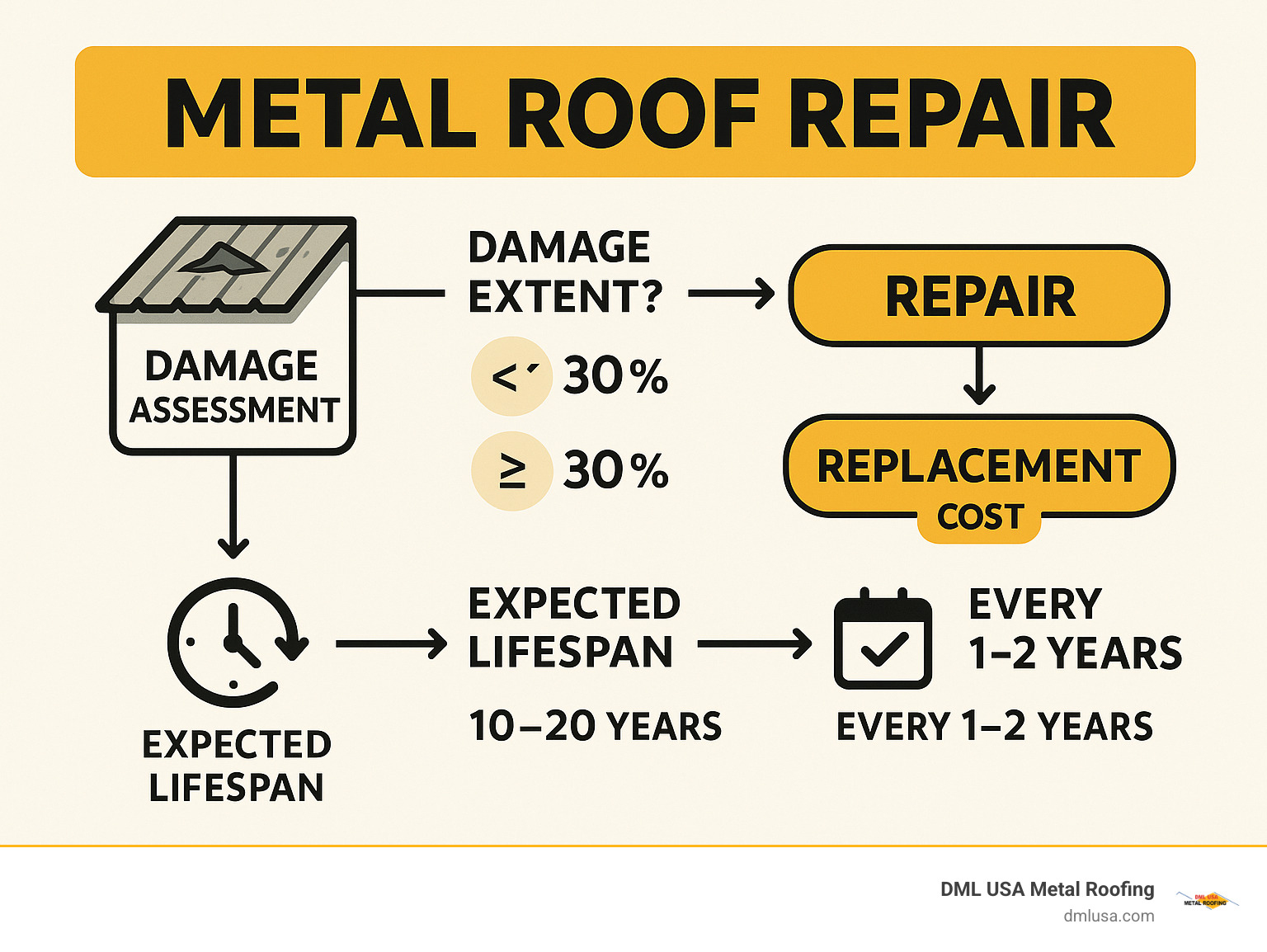
If less than 30% of your roof area is damaged, repairs are usually the most cost-effective choice.
I’m Adam Kadziola from DML USA Metal Roofing. With over 15 years of experience manufacturing metal roofing products and working with metal roof repair companies across Illinois, I’ve seen what makes repairs last.
Quick metal roof repair companies definitions:
– metal roof coating companies
– metal roofing and siding experts
– metal roofing installation companies
Why and When Your Metal Roof Needs Pro Repair
Metal roofs are famous for their strength and longevity, but even the toughest roof needs professional care from time to time. If you want your investment to go the distance (and save money in the long run), it’s important to know when to call in metal roof repair companies.
The main reason most metal roofs need attention is simple: Mother Nature. Every day, your metal roof expands in the heat and contracts in the cold. This gentle shifting is perfectly normal, but over months and years, it slowly works fasteners loose and can cause seams to separate. Even the best-installed roof isn’t immune!
You might notice fasteners starting to back out, or seams between panels that aren’t as tight as they used to be. UV rays and weather can break down sealants, and where the metal is exposed—like around vents or chimneys—rust can sneak in. Poor drainage creates ponding water, which is like a welcome mat for leaks and damage.
And let’s not forget storm season. High winds can lift panels or flashing, hail can leave dents and punctures, and debris can damage gutters. Sometimes, problems are obvious right after a storm. Other times, they start small and hidden, quietly growing worse over time.
That’s why regular inspections by metal roof repair companies are so important. Small leaks or rust spots today can turn into expensive structural problems tomorrow. We always recommend having a pro check your roof at least twice a year—spring and fall are perfect times—and definitely after any major storm.
There’s a handy “30% rule” to help you decide if repair or replacement is the way to go: if less than 30% of your roof area is damaged, repairs usually make sense and are more cost-effective. If the damage covers more than that, replacement often ends up saving you money in the long run.
Warning Signs You Can’t Ignore
Sometimes your roof whispers for help, and sometimes it shouts. If you see water stains on your ceilings or walls, dripping during or after rain, daylight peeking through panels, or any musty smells in your attic, don’t ignore these red flags. On the outside, look for loose or missing fasteners, visible gaps at seams, rust spots, or flashing that’s been bent or lifted up—especially around chimneys, vents, or skylights.
Don’t forget to check your gutters. If they’re pulling away from the roof, overflowing, or letting ice dams form in winter, there could be a bigger problem brewing up top.
The bottom line: what might be a $200 sealant fix today could become a $2,000 panel replacement if water gets into your roof’s structure. If you spot any of these signs, it’s time to call in the professionals.
Repair or Replace? Decision Factors
Deciding between roof repair and replacement isn’t just about the size of the damage. Think about the age of your roof—if it’s under 20 years old, repairs are usually a solid bet. Roofs between 20 and 40 years need a closer look, and anything older than 40 years might be ready for retirement.
The type and extent of the damage matter too. If you’re dealing with a few loose fasteners or a minor leak, repairs are likely all you need. But if you have lots of rust, several panels failing, or structural damage from a storm, replacement could be smarter.
Budget always comes into play. Repairs can help you buy time if you’re not ready for a big expense. But if your insurance or energy savings can help cover the cost of replacement, it might be worth the investment—especially since new roofs often bring up to a 107% return when you sell your home.
And don’t forget about energy efficiency. Newer metal roofing systems can cut cooling costs by up to 25%. If your current roof is missing modern reflective coatings, a replacement could pay you back in energy savings over the years.
Scientific research on roof lifespan
Services Offered by Metal Roof Repair Companies
When you call metal roof repair companies, you get more than a patch-up job. These experts offer a full suite of services to keep your roof in top shape, year after year. Here’s what you can expect:
- Preventive inspections: Using tools like drones and infrared cameras, pros spot hidden trouble before it becomes expensive. Inspections usually cost about $235 and catch issues you might miss.
- Panel and structural repairs: Replacing damaged panels, resealing seams, adjusting overlaps, and reinforcing sagging areas.
- Fastener and hardware services: Tightening or replacing screws, upgrading gaskets, fixing brackets, and installing snow guards or safety equipment.
- Protective coatings: Acrylic, silicone, or polyurethane coatings are recommended based on your climate and roof needs. Acrylic is budget-friendly, silicone lasts longer, and polyurethane is best for high-traffic roofs.
- Gutter and drainage solutions: Repairing or replacing gutters ($180-$560), realigning downspouts, improving drainage, and preventing ice dams.
- Emergency services: 24/7 leak response, temporary tarping, storm damage assessments, and insurance documentation help.

Common Problems These Metal Roof Repair Companies Fix
From years of working with metal roof repair companies in Illinois, a few issues come up often:
– Fasteners loosen over time due to freeze-thaw cycles, sometimes wiggling out or cracking gaskets. Over-tightening can distort panels, and storms can yank fasteners out.
– Sealants and joints dry up or lose stick, and expansion joints can separate as metal shifts.
– Rust appears around scratches, cut edges, or where different metals meet. Rust blooms often show up around fastener heads or where coatings have worn away.
– Weather damage: hail dents or punctures panels, wind lifts sections or tears flashing, and ice dams form if ventilation is poor. UV rays break down sealants and coatings over time.
– Installation errors: improper flashing, not enough panel overlap, missing closure strips, or poor ventilation can cause leaks and condensation. The good news? Metal roof repair companies know how to fix these issues.
Step-by-Step Process Metal Roof Repair Companies Follow
A trustworthy metal roof repair company follows a step-by-step process:
- Initial Site Assessment: Visual inspection from the ground and roof, with photos and notes on trouble spots.
- Moisture Mapping and Testing: Infrared scanning for hidden leaks, sometimes core samples if bigger water problems are suspected.
- Surface Preparation: Cleaning affected areas, removing rust, priming bare spots, and masking areas not needing work.
- Primary Repair Work: Replacing panels, upgrading fasteners, fixing structural problems, and repairing or replacing flashing.
- Sealing and Weatherproofing: Applying sealants, reforming seams, adding coatings, and double-checking for leaks.
- Quality Control and Inspection: Water-testing repaired areas, final walkthrough, and providing documentation and maintenance tips.
- Maintenance Planning: Setting up regular inspection schedules and suggesting preventive measures.
For more details about metal roofing products or services, visit more info here.
How to Choose the Right Metal Roof Repair Company
Finding the right metal roof repair companies can feel overwhelming, but it doesn’t have to be. After working with contractors across Illinois for over 15 years, I’ve learned what separates the professionals from the pretenders.
The foundation of any good contractor relationship starts with proper licensing and insurance. Don’t just take their word for it – ask to see the actual certificates. A legitimate company will gladly show you their current state contractor’s license, general liability insurance (at least $1 million coverage), and workers’ compensation insurance. You can verify licenses through your state’s licensing board online.
Metal-specific experience matters more than you might think. Metal roofing isn’t just “roofing with different materials” – it requires understanding thermal expansion, different fastening systems, and specialized sealing techniques. When you’re interviewing contractors, ask to see their portfolio of recent metal roofing projects. A company that mostly does shingle work might not understand why your standing seam panels are separating or how to properly seal them.
Local contractors bring valuable local code knowledge to your project. They understand permit requirements, wind load specifications for your area, and any historical district restrictions that might apply. This knowledge prevents costly delays and ensures your repairs meet all safety standards.
Look for companies with strong material partnerships too. Contractors who work regularly with quality suppliers can often get better pricing on materials and have access to technical support when unusual problems arise. They’re also more likely to find matching materials for older roofing systems.
Pay attention to how companies handle communication from your first phone call. Professional contractors respond promptly, show up on time for appointments, and treat your property with respect. If they’re disorganized during the sales process, imagine what the actual work will be like.
Interview Checklist
When meeting with potential metal roof repair companies, having a structured conversation helps you compare options fairly.
Start by verifying their active license and asking for their license number so you can check it yourself. Request to see workers’ compensation proof – if someone gets hurt on your property and the contractor isn’t properly insured, you could be liable.
Ask to see their portfolio and references from recent metal roofing projects. Don’t just look at the photos – actually call a few references. Most happy customers are glad to share their experience, and you might learn valuable details about the contractor’s work quality and cleanup habits.
Discuss their timeline and cleanup plan in detail. When will they start? How long will the work take? What happens if weather delays the project? How will they protect your landscaping and clean up at the end of each day? These conversations reveal a lot about how organized and professional a company really is.
Red Flags When Interviewing Metal Roof Repair Companies
Some warning signs should send you looking elsewhere immediately.
Never work with contractors who demand full upfront payment. Legitimate contractors typically ask for a small deposit to order materials, with the balance due upon completion. Anyone demanding large upfront payments is either financially unstable or running a scam.
Be wary of extremely low bids that seem too good to be true. Quality materials and skilled labor cost money. Contractors who underbid often cut corners with cheap materials or inexperienced workers, creating bigger problems down the road.
Run from anyone who offers to cover your insurance deductible. This practice is illegal in many states and suggests the contractor inflates prices to compensate. It can also void your insurance coverage.
Finally, avoid contractors with vague warranty terms. Professional companies provide clear, written warranties that specify exactly what’s covered and for how long. If they can’t explain their warranty clearly, they probably won’t honor it when problems arise.
The goal isn’t finding the cheapest option – it’s finding the best value. A slightly higher upfront cost often saves money in the long run when the work is done right the first time.
Cost, Materials & Longevity Insights
Let’s talk money – understanding repair costs helps you make smart decisions about your metal roof investment.
Most homeowners spend $380 to $1,800 for typical metal roof repairs, with the average around $1,100. That’s much less than a full roof replacement, which can cost $15,000 to $30,000.
Gutter repairs usually run $180 to $560, and sagging roof repairs can cost $1,500 to $7,000, depending on the extent of structural damage.
What affects cost? Roof size and complexity matter most, but pitch and accessibility can increase labor costs. Steep or hard-to-reach roofs cost more to repair.
The type of metal also impacts cost. Premium metals like copper cost more to repair than standard steel, but they last longer. Location matters too – labor costs are higher in big cities than rural areas.
When metal roof repair companies discuss coatings, you’ll hear about three main types:
– Acrylic coatings: Most cost-effective for basic waterproofing.
– Silicone coatings: Higher upfront cost, but last longer and handle weather and expansion well.
– Polyurethane coatings: Best for high-traffic areas, but most expensive.
Standing seam systems cost more to repair than corrugated panels, but repairs last longer.
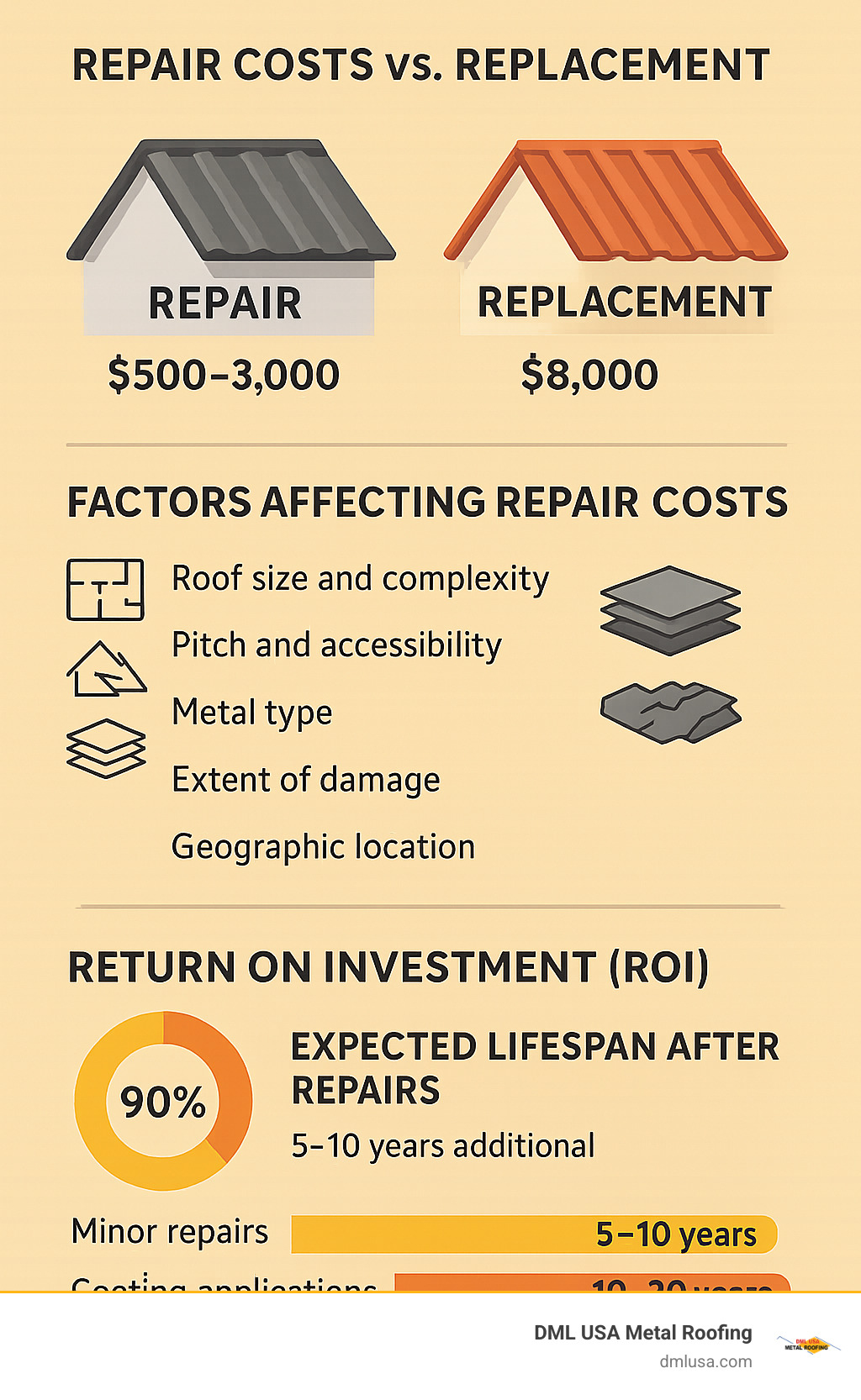
Well-executed repairs can add 20+ years to your metal roof’s life. Minor repairs like fastener replacement and sealant work can add 5-10 years, while comprehensive coatings often provide 10-20 years of extra life.
Financial incentives make repairs even more attractive. Federal tax credits can cover up to 30% of qualifying energy-efficient improvements, and some states and utilities offer additional incentives.
A 107% return on investment makes strategic repairs smart. Immediate repairs prevent small problems from becoming expensive disasters, and energy-efficient upgrades can pay for themselves through lower energy bills.
Think long-term: a $1,200 repair today is a fraction of what you’d pay for emergency replacement after water damage.
Frequently Asked Questions about Metal Roof Repair Companies
When choosing metal roof repair companies, homeowners naturally have questions about costs, longevity, and warranties. Based on our years of experience in the metal roofing industry, here are the answers to the most common questions we hear.
How much do metal roof repairs cost?
Metal roof repair costs depend heavily on what needs fixing and how extensive the damage is. Most homeowners spend between $380 and $1,800 for typical repairs, with the average project costing around $1,100.
Minor issues like loose fasteners might only cost $200-$500 to address, while sealant replacement typically runs $300-$800. If you need actual panel replacement, expect to pay $500-$1,500 per panel, depending on the metal type and complexity of installation.
Coating applications cost about $2-$6 per square foot but can dramatically extend your roof’s life. Gutter repairs are usually more affordable at $180-$560, while major structural issues can reach $1,500-$7,000.
Several factors push costs higher or lower. Roof accessibility is huge – if your roof is steep or difficult to reach safely, labor costs increase significantly. Premium metals like copper cost more to repair than standard steel. Your geographic location matters too, as labor rates vary widely across the country.
Emergency repairs typically cost 25-50% more than planned maintenance, which is why catching problems early saves money. If you’re dealing with multiple issues at once, the combined project usually costs less per repair than addressing each problem separately.
How long will a repaired metal roof last?
A properly repaired metal roof can serve you well for decades, though the exact lifespan depends on what type of repair was done and how well it’s maintained.
Fastener replacements typically last 10-15 years, especially if you upgrade to higher-quality screws with better gaskets. Sealant renewals usually need attention again in 5-10 years, depending on weather exposure and UV levels in your area.
Panel replacements are the longest-lasting repair option. When new panels are properly integrated with your existing system, they can last 20+ years or more. Protective coatings vary widely – basic acrylic coatings might last 10 years, while premium silicone coatings can protect for 15-20 years.
Complete restoration projects that address multiple issues simultaneously can approach new roof longevity. We’ve seen well-executed restorations last 30+ years when combined with regular maintenance.
The quality of materials makes a huge difference in longevity. Spending a bit more upfront on premium sealants, fasteners, and coatings usually pays off through extended service life. Installation quality is equally important – even the best materials won’t perform if they’re not installed correctly.
Climate conditions affect how long repairs last. Harsh weather, extreme temperature swings, and high UV exposure all reduce lifespan. However, regular maintenance can significantly extend the life of any repair by catching small issues before they become big problems.
What warranties do metal roof repair companies provide?
Warranty coverage varies significantly among metal roof repair companies, but reputable contractors typically offer multiple layers of protection to give you peace of mind.
Workmanship warranties cover the actual installation and repair work, typically lasting 2-5 years. This protects you if the repair fails due to improper technique or installation errors. Material warranties are separate and usually longer, ranging from 5-20 years depending on what products were used.
Some companies offer comprehensive system warranties that cover both materials and labor under one umbrella. These are often the most valuable because there’s no finger-pointing between the contractor and material supplier if something goes wrong.
Manufacturer warranties on materials like coatings, sealants, and panels are separate from your contractor’s warranty. Quality metal roof repair companies will help you understand and register for these additional protections.
Look for transferable coverage if you might sell your home – this adds value and appeal to potential buyers. Some companies offer renewable warranty options that let you extend coverage for additional fees.
Clear warranty terms are essential. Good contractors specify exactly what’s covered, what’s excluded, and how to file claims. Make sure the company has local support and will be around to honor their commitments years from now.
Most warranties cover workmanship defects, premature material failures, leak protection due to repair failure, and structural issues with panel or fastener installation. However, they typically exclude normal wear and tear, new storm damage, lack of maintenance, and modifications made by other contractors.
Always get warranty information in writing before work begins, and understand the claims process. The best warranties come from established companies with proven track records of standing behind their work.
Conclusion & Next Steps
Your metal roof is a significant investment that deserves professional care. The right metal roof repair companies can help your roof deliver decades of reliable protection while maintaining the energy savings and durability that made metal roofing attractive in the first place.
Think of it this way – you wouldn’t trust your car’s engine to just anyone, so why settle for less when it comes to your roof? Professional metal roof repair requires specialized knowledge about thermal expansion, proper fastening techniques, and the unique characteristics of different metal types.
The numbers speak for themselves. With repair costs typically ranging from $380 to $1,800 and the potential for 107% return on investment, professional maintenance makes excellent financial sense. Add in the energy savings of up to 25% and available tax credits, and you’re looking at repairs that practically pay for themselves over time.
At DML USA Metal Roofing, we’ve spent over 15 years manufacturing quality metal roofing products right here in Illinois. This experience has shown us that the secret to a long-lasting metal roof isn’t just quality materials – it’s working with experienced professionals who understand what makes metal roofing tick.
The warning signs we’ve discussed – water stains, loose fasteners, visible rust, or gaps in seams – won’t fix themselves. In fact, they’ll only get worse and more expensive over time. Remember the 30% rule: if damage affects less than 30% of your roof area, repairs are almost always your best bet financially.
Here’s what you should do next. Schedule a professional inspection if you haven’t had one in the past year – especially after any severe weather. Most reputable companies charge around $235 for thorough inspections, but this small investment can identify problems before they become major headaches.
Don’t wait for leaks to appear inside your home. By then, water may have already caused damage to insulation, framing, or interior finishes. The cost difference between fixing a loose fastener today versus replacing water-damaged panels next year can be thousands of dollars.
Develop a maintenance relationship with a qualified contractor rather than scrambling to find help during an emergency. Companies that know your roof’s history can provide better service and often offer maintenance programs that keep small issues from becoming big problems.
Document everything – inspection reports, repair invoices, warranty information. This documentation proves valuable for insurance claims and helps maintain your roof’s warranty coverage. Plus, if you decide to sell your home, maintenance records demonstrate the care you’ve taken of this major home system.
The peace of mind that comes with a properly maintained metal roof is worth every penny. You’ll sleep better during storms knowing your roof is sound, and you’ll appreciate the energy savings every month when your utility bills arrive.
A well-maintained metal roof truly is an investment that keeps giving back – through energy savings, increased home value, storm protection, and decades of reliable service. Don’t compromise on quality when selecting repair companies. Your roof’s performance and your family’s protection depend on making the right choice.
More info about our contact options
Take action today rather than waiting for problems to worsen. Your future self will thank you for the foresight, and your wallet will appreciate the savings that come from preventive care versus emergency repairs.