

Why Your Metal Roof Needs Proper Drip Edge Installation
Metal roofing drip edge is the L-shaped metal flashing that protects your roof’s most vulnerable areas – the edges where water naturally wants to creep under your roofing material and cause expensive damage.
Quick Answer for Homeowners:
- What it is: Metal strip installed along roof edges to direct water away from fascia
- Primary function: Channels water into gutters, prevents rot and structural damage
- Installation order: Eaves first (under underlayment), then rakes (over underlayment)
- Materials: 24-gauge steel or aluminum for wind resistance
- Gap requirement: ¼ to ½ inch from fascia board
- Fastening: Every 12-16 inches with roofing screws
Without proper drip edge installation, water can seep behind your fascia boards, leading to rot, mold, and costly structural repairs. This small but critical component also prevents ice dams in winter and keeps pests from entering your roof system.
Your roof works as a complete puzzle to protect your home from rain, wind and everything else in nature. The drip edge protects one of the most vulnerable sections – the edges where water naturally tries to find its way under your roofing material.
I’m Adam Kadziola, and I’ve been manufacturing high-quality metal roofing systems since founding DML USA Metal Roofing in 2007. Through years of helping homeowners install metal roofing drip edge systems, I’ve seen how proper installation can prevent thousands of dollars in water damage while giving your roof that finished, professional look.
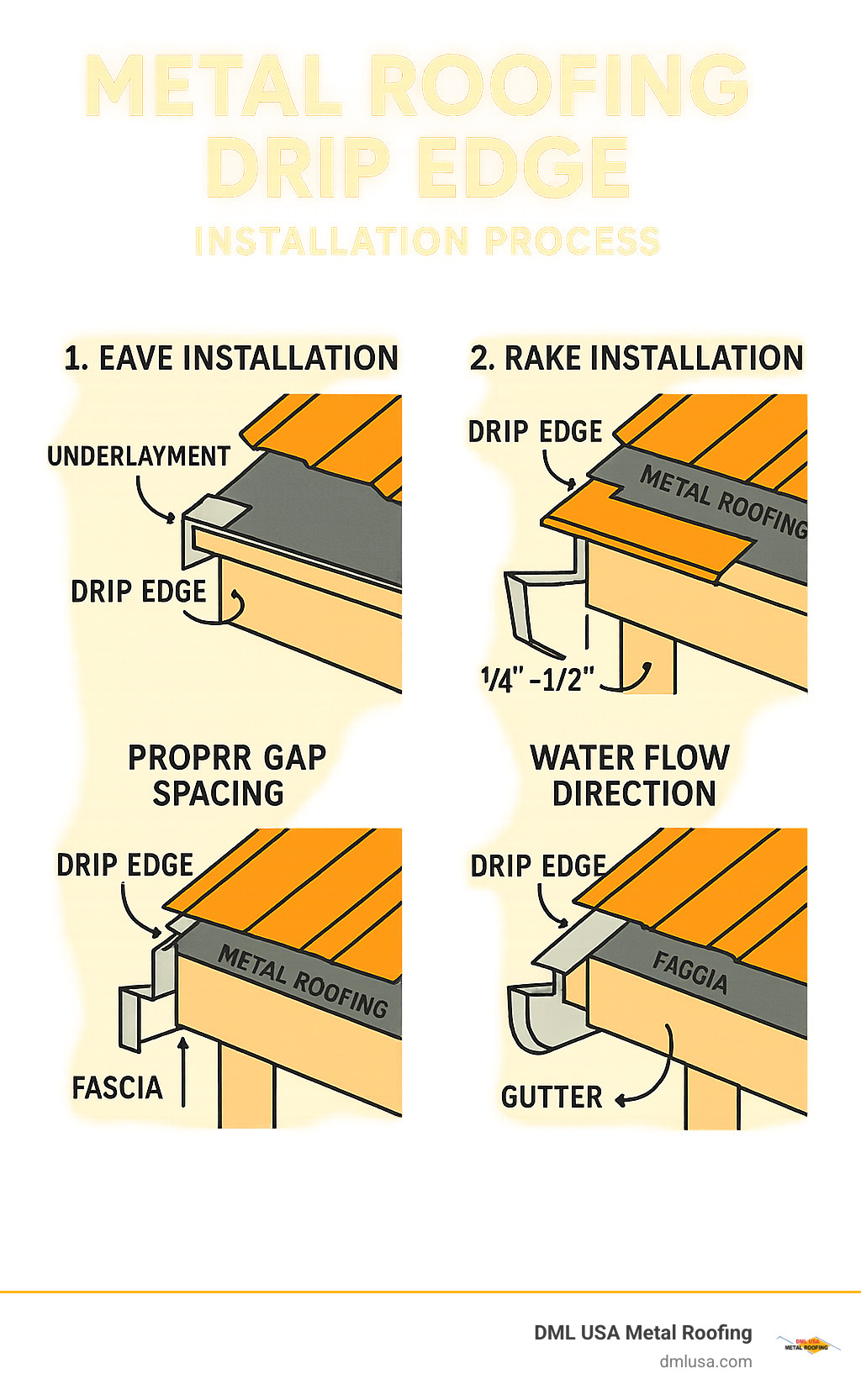
Metal roofing drip edge terms to learn:
Pre-Installation Essentials: Gearing Up for Success
Before we even think about climbing onto the roof, thorough preparation is key. This isn’t just about gathering materials; it’s about ensuring safety, understanding local regulations, and making smart choices about the components that will protect your home for decades.
Safety is paramount when working on any roofing project. We always recommend taking every precaution. First and foremost, never work on a roof during inclement weather, whether it’s snowing, raining, or excessively windy. The risks of slips and falls increase dramatically. Always use appropriate Personal Protective Equipment (PPE), including non-slip boots, gloves, and safety glasses. For added security, especially on steeper pitches, a roofing harness is a must. If you’re using ladders, always follow the three-point contact rule (maintaining three points of contact with the ladder at all times) and ensure it’s securely set on stable ground. Perhaps most importantly, never work alone. Having an experienced partner on hand can provide an extra set of eyes, help with larger materials, and be there in case of an emergency. Metal roofing installation is complex and should be handled by an expert, or at least with expert guidance.
Beyond personal safety, we must always consider building codes. Drip edges are required by most building codes across North America. While some older homes might lack them, and some metal roofing systems with sufficient overhang might technically bypass a strict requirement, installing a metal roofing drip edge is always a wise investment. These codes are in place to ensure your home’s structural integrity and protection against the elements. Before starting any project, we diligently check local building codes and regulations. These can vary significantly by region and even by municipality, so what’s acceptable in one area of Illinois might be different in another. Compliance ensures your project is up to standard and avoids potential issues down the line.
Choosing the Right Materials and Profiles for Your Metal Roofing Drip Edge
Selecting the right material for your metal roofing drip edge is crucial for its longevity and performance. At DML USA, we focus on high-quality materials that stand the test of time.
| Material | Pros | Cons | Best for |
|---|---|---|---|
| Steel (galvanized or aluminum-zinc coated) | Strong, durable, cost-effective; coatings resist rust; excellent wind resistance | Heavier than aluminum | Most climates, high-wind regions |
| Aluminum | Lightweight, naturally corrosion-resistant; easy to cut and form | Softer; may dent in severe hail; avoid direct contact with dissimilar metals without isolation | Coastal/high-salt environments and complex trim work |
We recommend 24-gauge steel for superior strength and resistance to bending or wind damage. Profile matters, too: L-style (simple 90° bend) and F-style (extra flange for the fascia) are common. DML USA offers standard and custom profiles to match your roofing system and trim details. Many of our finishes are also ENERGY STAR certified, which may qualify for federal energy tax credits. Learn more about eligibility here: ENERGY STAR Roofs Tax Credits.
Why Your Metal Roof Needs Proper Drip Edge Installation
Metal roofing drip edge is the L-shaped metal flashing that protects your roof’s most vulnerable areas – the edges where water naturally wants to creep under your roofing material and cause expensive damage.
Quick Answer for Homeowners:
- What it is: Metal strip installed along roof edges to direct water away from fascia
- Primary function: Channels water into gutters, prevents rot and structural damage
- Installation order: Eaves first (under underlayment), then rakes (over underlayment)
- Materials: 24-gauge steel or aluminum for wind resistance
- Gap requirement: ¼ to ½ inch from fascia board
- Fastening: Every 12-16 inches with roofing screws
Without proper drip edge installation, water can seep behind your fascia boards, leading to rot, mold, and costly structural repairs. This small but critical component also prevents ice dams in winter and keeps pests from entering your roof system.
Your roof works as a complete puzzle to protect your home from rain, wind and everything else in nature. The drip edge protects one of the most vulnerable sections – the edges where water naturally tries to find its way under your roofing material.
I’m Adam Kadziola, and I’ve been manufacturing high-quality metal roofing systems since founding DML USA Metal Roofing in 2007. Through years of helping homeowners install metal roofing drip edge systems, I’ve seen how proper installation can prevent thousands of dollars in water damage while giving your roof that finished, professional look.
Metal roofing drip edge terms to learn:
Pre-Installation Essentials: Gearing Up for Success
Before we even think about climbing onto the roof, thorough preparation is key. This isn’t just about gathering materials; it’s about ensuring safety, understanding local regulations, and making smart choices about the components that will protect your home for decades.
Safety is paramount when working on any roofing project. We always recommend taking every precaution. First and foremost, never work on a roof during inclement weather, whether it’s snowing, raining, or excessively windy. The risks of slips and falls increase dramatically. Always use appropriate Personal Protective Equipment (PPE), including non-slip boots, gloves, and safety glasses. For added security, especially on steeper pitches, a roofing harness is a must. If you’re using ladders, always follow the three-point contact rule (maintaining three points of contact with the ladder at all times) and ensure it’s securely set on stable ground. Perhaps most importantly, never work alone. Having an experienced partner on hand can provide an extra set of eyes, help with larger materials, and be there in case of an emergency. Metal roofing installation is complex and should be handled by an expert, or at least with expert guidance.
Beyond personal safety, we must always consider building codes. Drip edges are required by most building codes across North America. While some older homes might lack them, and some metal roofing systems with sufficient overhang might technically bypass a strict requirement, installing a metal roofing drip edge is always a wise investment. These codes are in place to ensure your home’s structural integrity and protection against the elements. Before starting any project, we diligently check local building codes and regulations. These can vary significantly by region and even by municipality, so what’s acceptable in one area of Illinois might be different in another. Compliance ensures your project is up to standard and avoids potential issues down the line.
Tools and Materials Checklist
- DML USA drip edge strips (L- or F-style as specified for your roof)
- Measuring tape and chalk line
- Tin snips or metal shears
- Power drill/driver
- Roofing screws (color-matched, with neoprene washers) spaced 12–16 inches on center
- Butyl sealant or compatible metal roofing sealant (as specified)
- Safety harness, roof anchors, and lifeline for steep pitches
- Non-slip boots, gloves, and safety glasses
Pre-Installation Essentials: Gearing Up for Success
A quick refresher before installation: plan for clear, dry weather; work with a partner; and secure ladders on stable ground. Confirm your local municipality’s requirements—many adopt standards that expect drip edge at eaves and rakes for moisture protection. Even where not explicitly mandated for metal systems, it’s a best practice that extends roof life and prevents hidden damage.
For general background on how a drip edge functions to shed water away from the fascia and structure, see: Drip edge.
Choose materials suited to your environment (24-gauge steel for strength, aluminum for coastal exposure), confirm profile compatibility with your roof panels and gutters, and stage all tools before starting.
Pre-Installation Essentials: Gearing Up for Success
Before starting, verify substrate condition and replace any damaged decking at the edges. A clean, flat edge ensures your drip edge seats properly and sheds water as intended.
Choosing the Right Materials and Profiles for Your Metal Roofing Drip Edge
- Material options:
- Steel (galvanized or aluminum-zinc coated): robust, wind-resistant, economical for most climates.
- Aluminum: lightweight, naturally corrosion-resistant—excellent in coastal/high-salt areas.
- Recommended thickness: 24-gauge steel for superior stiffness and durability.
- Profiles:
- L-style for straightforward edge protection.
- F-style where you want an additional flange to secure to the fascia and improve water kick-out.
- DML USA can supply standard or custom profiles to match your roof geometry and trim package.
With the right material and profile selected—and safety and code checks complete—you’re ready to proceed to layout, cutting, and fastening for a clean, watertight edge.