

Metal Shingle Roof Installation: Ultimate 2025 Guide
Shingle Up! Your Journey to a Durable Roof Starts Here
Installing a metal shingle roof is a smart move for long-term protection and value. Here’s a quick overview of the key steps for a metal shingle roof installation:
- Prepare the Roof Deck: Remove old materials if needed, inspect and repair the sheathing, then install a high-quality underlayment and drip edge.
- Lay the Metal Shingles: Establish a straight reference line, then carefully place and fasten each interlocking metal shingle panel across the roof.
- Install Flashing and Ridge Caps: Secure flashing around roof penetrations (vents, chimneys) and install ridge caps to ensure a watertight seal.
Homeowners are increasingly choosing metal roofing for its durability, longevity, and value. Tired of constant asphalt shingle repairs? Metal offers a low-maintenance solution.
The popularity of metal roofing has nearly quadrupled in the last 20 years, showing a clear trend towards resilient homes.
I’m Adam Kadziola, founder of DML USA Metal Roofing. With years of expertise in home building and high-quality metal shingle roof installation, my passion is delivering lasting, maintenance-free roofing solutions. This guide covers everything you need to know about this excellent roofing choice.
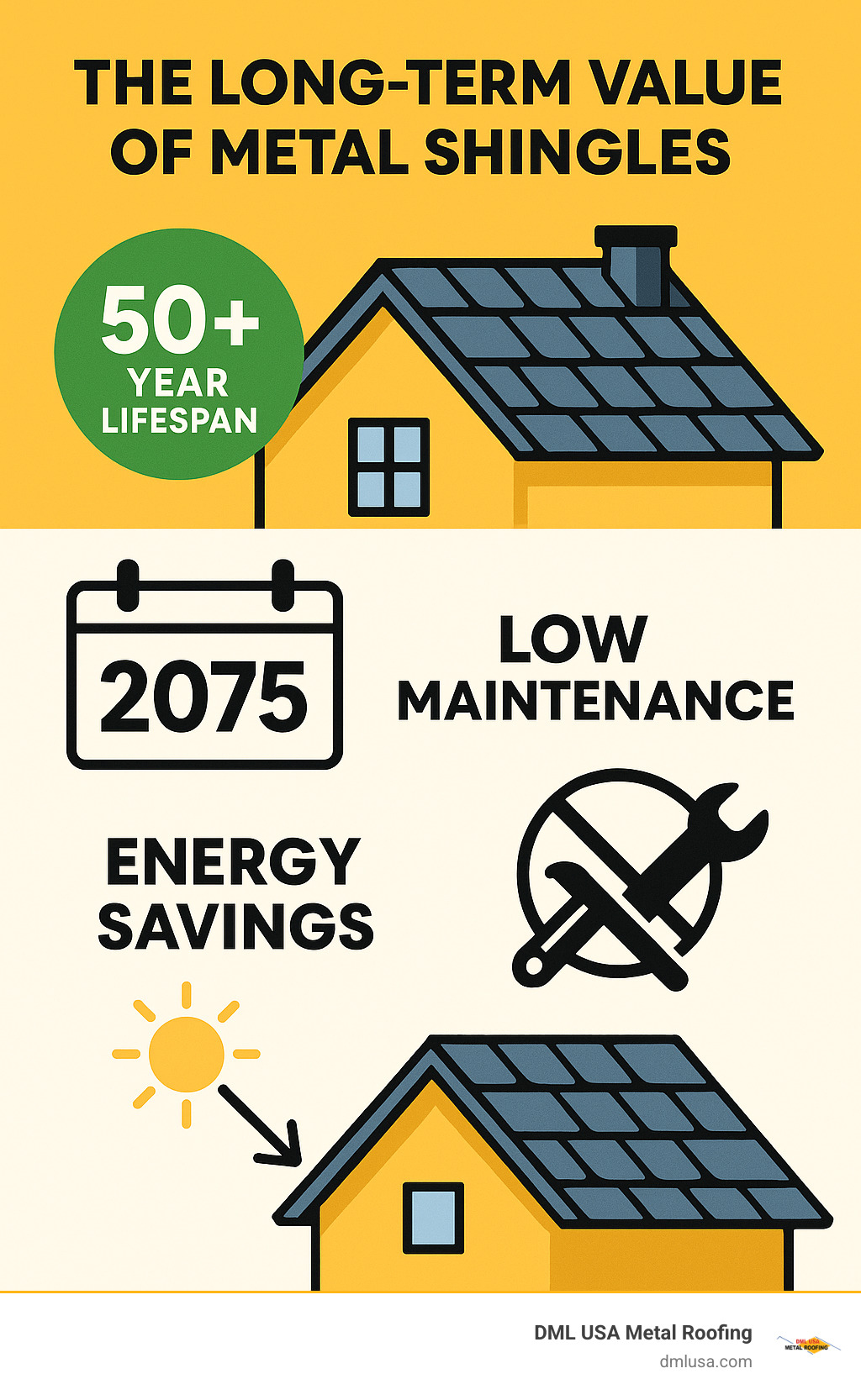
Relevant articles related to metal shingle roof installation:
- metal roofing that looks like shake shingles
- metal roof over shingle roof
- metal roof over shingles condensation
Why Metal Shingles are a Superior Choice
Today’s metal shingle roof installation options defy the old stereotype of a rusty barn roof. Modern metal shingles have transformed residential roofing.
The aesthetics are surprisingly versatile. Metal shingles come in various styles and colors that mimic traditional materials like asphalt, wood shake, slate, or clay tiles, complementing any home design.
Beyond looks, the durability is exceptional. With a lifespan of 40 to 70 years, compared to 15-20 for asphalt, a metal roof could be the last one your home ever needs.
Their weather resistance is impressive, handling hurricane-force winds (up to 190 kph) and hailstorms. While large hail might cause minor dents, the shingles won’t crack or chip, maintaining your roof’s integrity.
Fire resistance is another key benefit. Metal shingles are non-combustible and often have a Class A fire rating, the highest possible, for your family’s peace of mind.
Metal roofs are also energy efficient. By reflecting heat, they can stay 50-60 degrees cooler than other materials, potentially cutting cooling costs by 10-15% or more. You might also qualify for energy tax credits.
Finally, metal shingles are a sustainable choice. Made from a high percentage of recyclable materials, they are 100% recyclable at the end of their long life, unlike asphalt shingles which contribute to landfill waste.
More info about our roofing materials
| Feature | Metal Shingles | Asphalt Shingles |
|---|---|---|
| Lifespan | 40-70 years (often 50+ years) | 15-20 years |
| Cost | Higher initial cost ($7-$20/sq ft installed) | Lower initial cost ($3-$5/sq ft installed) |
| Durability | Excellent (wind, hail, fire, snow) | Good (susceptible to wind lift, hail damage) |
| Maintenance | Very low (virtually maintenance-free) | Moderate (periodic repairs, granule loss) |
| Energy | High (heat reflective, lower cooling costs) | Low (absorbs heat) |
| Resale Value | Can boost home’s value by up to 6% | Minimal direct boost |
| Recyclability | 100% recyclable | Rarely recycled, contributes to landfills |
Understanding Metal Shingle Materials
Understanding your material options is key for your metal shingle roof installation. Each metal offers unique performance.
Steel is the most popular choice: economical, strong, and great for handling snow or hail. It lasts 30-50 years and uses protective coatings like Galvalume to prevent rust and provide color options.
Aluminum is lightweight, naturally rustproof, and ideal for coastal areas. It lasts 30-50 years and can be painted any color.
Copper is a premium, long-lasting option (up to 200 years). It develops a beautiful green patina over time, adding character to historic buildings.
Zinc lasts 80-100 years and develops a handsome bluish-gray patina. It’s corrosion-resistant and great for complex architectural details.
Quality coatings like Kynar 500®/PVDF are crucial for durability and fade resistance. For energy efficiency, Check the Cool Roof Rating Council’s database for products with high Solar Reflective Index ratings.
Debunking Common Metal Roofing Myths
Let’s debunk some common myths about metal shingle roof installation.
Myth: Metal roofs are noisy in the rain.
Reality: When installed over solid sheathing with underlayment, a metal roof is only slightly louder than an asphalt roof. Many find the sound soothing.
Myth: Metal roofs attract lightning.
Reality: Lightning strikes the highest point, regardless of material. A metal roof is actually safer if struck because it’s non-combustible and won’t catch fire.
Myth: Metal roofs dent easily from hail.
Reality: Modern metal roofing is very tough, with many products having a Class 4 impact resistance rating. While very large hail might cause cosmetic dents, it won’t compromise the roof’s integrity.
Myth: Metal roofs rust.
Reality: Modern steel roofs have advanced protective coatings. Aluminum and copper are naturally rust-resistant. Quality products are engineered to resist corrosion for decades.
Myth: Metal roofs are too expensive.
Reality: While the upfront cost is higher, the long-term value is superior. Factoring in a 40-70 year lifespan, low maintenance, energy savings, and increased home value, a metal roof is a smart investment.
Pre-Installation: Planning Your Project
A successful metal shingle roof installation requires careful planning to ensure a smooth, on-budget process.
First, define your project scope and budget. A metal shingle roof costs $7 to $20 per square foot installed. While the upfront cost is higher than asphalt, our DML USA Metal Roofing products offer superior long-term value through durability and energy savings.
Next, understanding permits and local building codes is crucial. Check with your local Illinois municipality, whether in Northlake or Chicago, for required permits and inspections to ensure your roof meets safety standards and to avoid fines.
Accurately measure your roof to order the right amount of material. Calculate the square footage of each roof plane (rake x width) and sum them up. Order about 10% extra material to account for waste from cuts and mistakes.
Essential Tools for Metal Shingle Roof Installation
The right tools are essential for a successful metal shingle roof installation. Here’s what you’ll need:
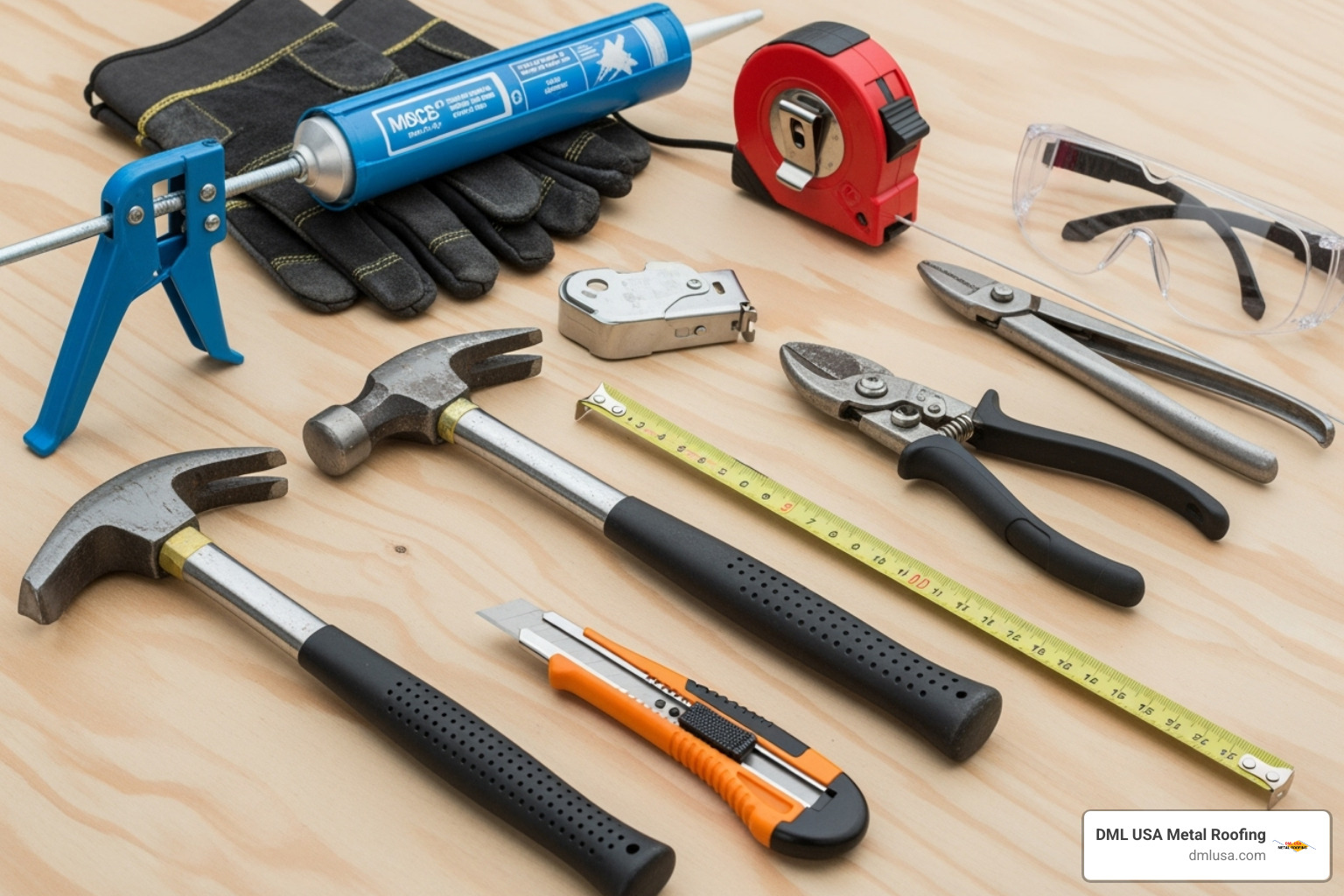
Safety Gear (Non-Negotiable!):
- Safety Harness and Ropes: For fall protection when working at heights.
- Non-Slip Work Boots: For good grip on sloped surfaces.
- Gloves and Safety Goggles: To protect hands and eyes.
- Sturdy Ladders: Properly secured for safe access.
- First-Aid Kit: Keep one accessible on site.
Power Tools:
- Power Drill with a Clutch: For driving screws without overtightening.
- Circular Saw with a Metal-Cutting Blade: For straight cuts on panels.
- Nibbler: For clean, curved cuts.
Hand Tools:
- Tin Snips (Aviation Snips): For small, intricate cuts and trimming.
- Pry Bar or Roofing Shovel: For removing old roofing.
- Chalk Line: For snapping straight reference lines.
- Tape Measure: For accurate measurements.
- Utility Knife: For cutting underlayment.
- Hammer: For general use.
- Caulking Gun: For applying sealants.
Safety is paramount. A successful metal shingle roof installation requires precision and the right equipment.
DIY vs. Professional Metal Shingle Roof Installation
Deciding between a DIY metal shingle roof installation and hiring a professional is a common question. While our DML USA products are designed for efficient installation, the process is complex.
Skill & Complexity:
Metal roofing is more difficult to install than asphalt. It requires specialized knowledge of flashing, thermal expansion, and fastening. Complex roofs with valleys or skylights increase the difficulty and risk.
Time Commitment:
A DIY installation can take weeks or months. Professionals can often finish in a few days.
Warranty Considerations:
A DIY installation typically voids the workmanship warranty, leaving you responsible for installation-related failures. Professionals provide labor warranties for peace of mind.
Cost Savings vs. Risks:
While DIY saves on labor costs, improper installation can lead to leaks, a shorter roof lifespan, voided warranties, and safety hazards. Repair costs can negate any initial savings, and it may affect your homeowner’s insurance.
When to Hire a Professional:
We strongly recommend hiring a professional, especially for roofs with extensive damage, steep pitches, or if you lack the experience, tools, or comfort with heights. Professional installation ensures warranty coverage. A properly installed metal roof can last 50 years, and this longevity is best achieved through expert installation. You can search for qualified installers through local trade organizations or contact us at DML USA Metal Roofing for recommendations from our network of professionals in Illinois.
Your Step-by-Step Metal Shingle Roof Installation Guide
Now, let’s cover the metal shingle roof installation process. Safety is the top priority: wear safety gear, secure ladders, work with a helper, and check the weather forecast to avoid poor conditions.
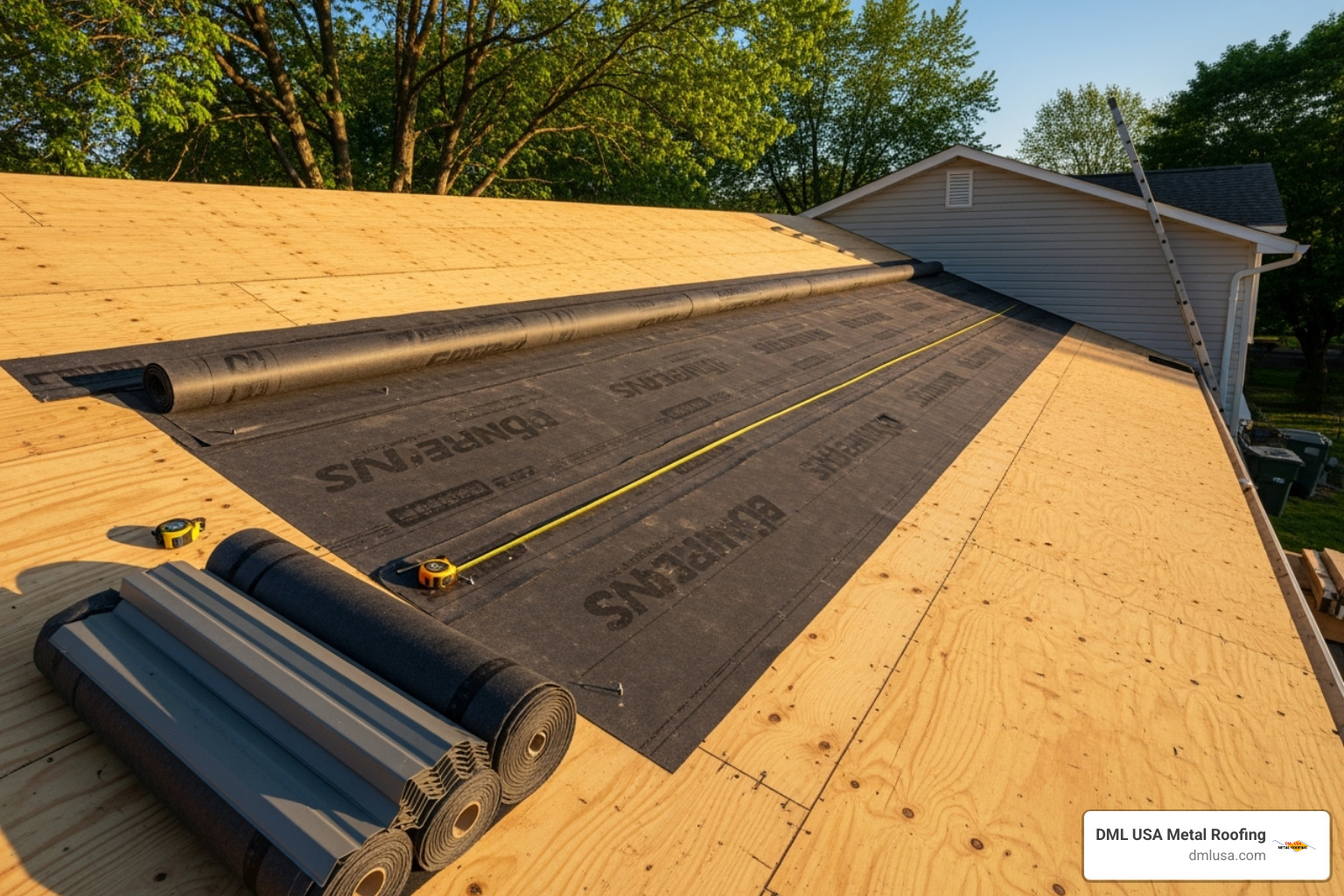
Step 1: Preparing the Roof Deck
A properly prepared deck is crucial for the longevity of your metal shingle roof installation.
Tear-off Old Roofing (Recommended): A full tear-off is recommended to inspect the sheathing for damage and ensure a flat surface. Remove or hammer down any exposed nails.
Inspect and Repair Sheathing: After tear-off, inspect the sheathing for damage. Repair or replace any compromised areas and clean the surface of all debris.
Installing Over Existing Roof: If local codes in Illinois permit and the existing single layer of shingles is flat and in good condition, you can install over it. This saves on tear-off costs. Always place a synthetic underlayment between the old and new roof.
Install Underlayment: Use a high-quality synthetic underlayment for a durable, waterproof barrier. Apply it horizontally from the eaves up, overlapping each row by at least six inches. In cold climates, install an ice-and-water shield at the eaves.
Install Drip Edge: Install drip edge flashing along eaves and rakes to direct water into the gutters. Secure it with galvanized roofing nails.
Step 2: Installing the Metal Shingles
With the deck prepared, it’s time to lay the shingles. Precision is key for a beautiful metal shingle roof installation.
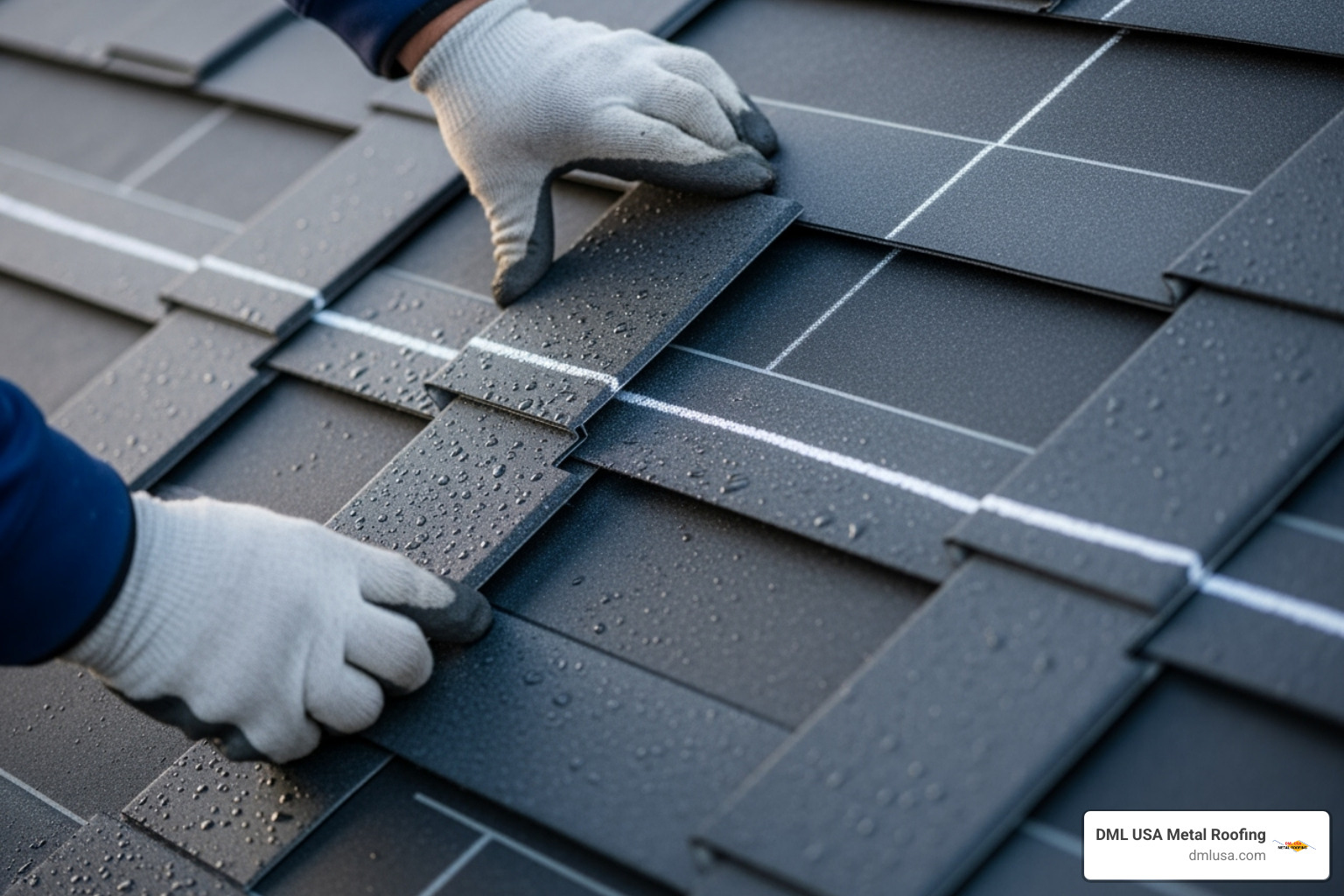
Establish a Square Reference Line: To ensure straight courses, use the 3-4-5 method to establish a 90-degree angle from the eave. Snap a chalk line to guide the first course of shingles.
Start the First Course: Following manufacturer guidelines, start from one side of the roof. Align the first shingle with the drip edge and your chalk line. Some systems require a starter shingle or a staggered pattern.
Panel Alignment and Overlap: Securely interlock each shingle with the previous one. The four-way interlock is key to wind and water resistance. Apply sealant as recommended by the manufacturer and work methodically across and up the roof.
Fastening Techniques: Use roofing screws with rubber washers for a watertight seal. Use a power drill with a clutch set to the correct torque to avoid over- or under-tightening the screws. Follow manufacturer guidelines for screw placement.
Cutting Panels: Carefully measure and cut shingles to fit around obstacles like vents or chimneys. Use a circular saw for straight cuts (cut upside down) and tin snips or a nibbler for intricate cuts. Clean up all metal shavings immediately to prevent rust.
Step 3: Finishing with Flashing and Ridge Caps
The final flashing and trim are critical for a watertight metal shingle roof installation.
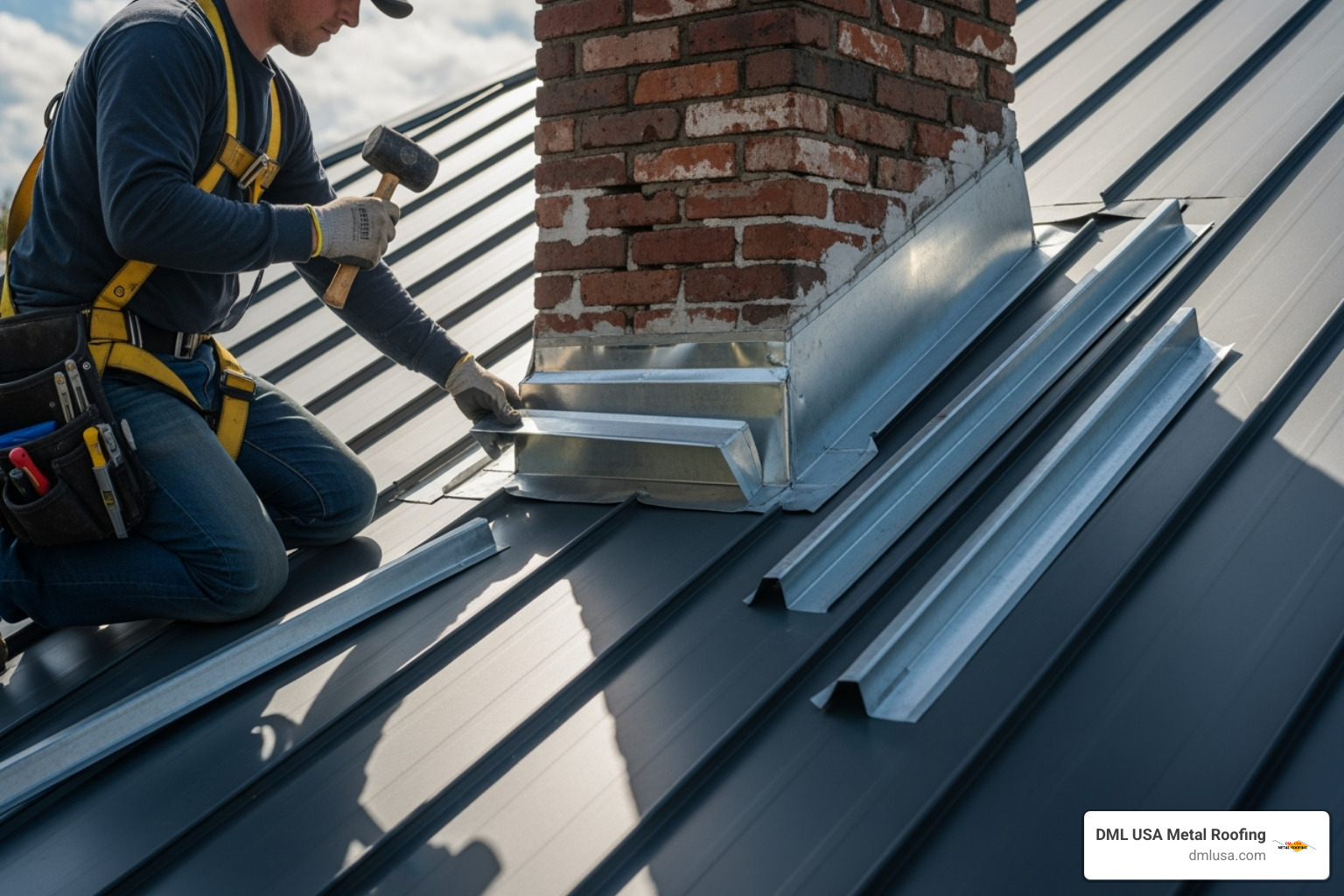
Install Valley Flashing: In valleys, install a continuous piece of pre-formed metal valley flashing over the underlayment. Ensure it extends under the shingles on both sides. Trim shingles to fit the valley without blocking water flow.
Seal Around Vents and Pipes: Use specialized flashing like rubber pipe boots to seal around all roof penetrations. Install flashing over the lower shingle course and cut the upper shingle to fit snugly. Apply high-quality sealant around the base.
Install Rake Trim: Finish the sloped gable edges with rake trim. This covers the shingle edges, providing a clean look and protection from wind and water. Secure it over the shingles with fasteners.
Install the Ridge Cap: The ridge is the final area to seal. Install foam closure strips that conform to the shingle profile to block pests and weather. Place the ridge cap pieces over the closure strips, overlapping each piece, and secure with screws. Use a vented ridge cap for proper attic ventilation.
Ensure a Watertight Seal: Double-check all flashing, trim, and caps. Apply sealant at all overlaps and potential water entry points. This attention to detail guarantees the long-term performance of your metal shingle roof installation.
Frequently Asked Questions about Metal Shingle Installation
Here are answers to common questions about metal shingle roof installation.
How long does a metal shingle roof last?
A properly installed metal shingle roof installation can last 40 to 70 years, far outpacing asphalt shingles (15-20 years). This longevity depends on the type of metal (steel and aluminum last 30-50 years; copper and zinc can exceed 100), the quality of the coating, the local climate, and most importantly, the quality of the installation. A professional installation is crucial to ensure every component is sealed and fastened correctly, maximizing the roof’s lifespan. Our DML USA Metal Roofing products are built to provide durable, maintenance-free protection for generations.
Can metal shingles be installed over an existing roof?
Yes, in many cases, a metal shingle roof installation can be done over a single layer of existing asphalt shingles. This method, known as an overlay, can save on tear-off costs and reduce landfill waste. However, it’s only possible if a few conditions are met: the existing roof deck must be structurally sound (no rot or damage), the surface must be flat and even, and the overlay must comply with local building codes in Illinois. A high-quality synthetic underlayment must always be installed between the old and new roofs to act as a moisture barrier. While an overlay has benefits, a full tear-off is recommended if there are any underlying issues or for the best possible installation foundation.
How much does a metal shingle roof installation cost?
The cost for a metal shingle roof installation typically ranges from $7 to $20 per square foot. This price varies based on several factors:
- Material Type: Steel is the most economical, while copper and zinc are premium options.
- Roof Complexity: Simple roofs cost less than those with many valleys, dormers, or penetrations.
- Labor and Location: Costs vary by region and installer experience.
- Tear-off vs. Overlay: Installing over an existing roof can reduce costs.
While the initial investment is higher than asphalt ($3-$5 per sq. ft.), a metal roof provides superior long-term value. Its extended lifespan (40-70 years), minimal maintenance, and energy savings lead to a significant return on investment over time, potentially boosting home value by up to 6%. Our affordable DML USA Metal Roofing products are designed to deliver this long-term value.
Conclusion
A metal shingle roof installation is a smart, long-term investment in your home’s protection and value. We’ve covered the superior benefits of metal shingles, from their incredible durability and long lifespan to their resistance to weather and fire, all while saving you money on energy bills.
We’ve also debunked common myths and walked through the key installation steps. From proper deck preparation to meticulous flashing and sealing, every detail contributes to a flawless, watertight roof. While DIY is an option, professional installation is often the wisest choice to ensure longevity and warranty protection.
For homeowners in Illinois and beyond seeking a durable, maintenance-free roofing solution with outstanding performance, consider the high-quality materials from DML USA Metal Roofing. We provide roofs that deliver lasting value and peace of mind.
Ready to upgrade your home’s protection?