

Metal Siding Panels: 8 Powerful Types for Stunning 2025 Homes
Why Metal Siding Panels Are the Smart Choice for Modern Homeowners
Metal siding panels are steel, aluminum, or copper cladding systems that protect and beautify building exteriors while lasting 40-70 years with minimal maintenance. Here’s what makes them stand out:
Key Benefits:
- 40-70 year lifespan vs. 15-20 years for vinyl
- Fire-resistant and termite-proof protection
- 100+ color options including wood-grain finishes
- Minimal maintenance – just occasional soap and water cleaning
- Energy efficient with reflective coatings that reduce cooling costs
Popular Panel Types:
- Exposed fastener (PBR, corrugated) – most affordable
- Concealed fastener (standing seam, flush reveal) – premium appearance
- Specialty styles (board & batten, shake, lap siding) – traditional looks
Gauge Options:
- 29-gauge – standard residential, lighter weight
- 26-gauge – premium strength, better dent resistance
Unlike vinyl siding that can crack, warp, or fade, metal siding panels maintain their appearance and structural integrity through extreme weather. They’re made from up to 80% recycled materials and are 100% recyclable at end of life.
I’m Adam Kadziola, and I’ve been manufacturing high-quality metal roofing and siding solutions since founding DML USA Metal Roofing in 2007. Through years of helping homeowners replace traditional siding with durable metal siding panels, I’ve seen how the right panel choice transforms both home protection and curb appeal.
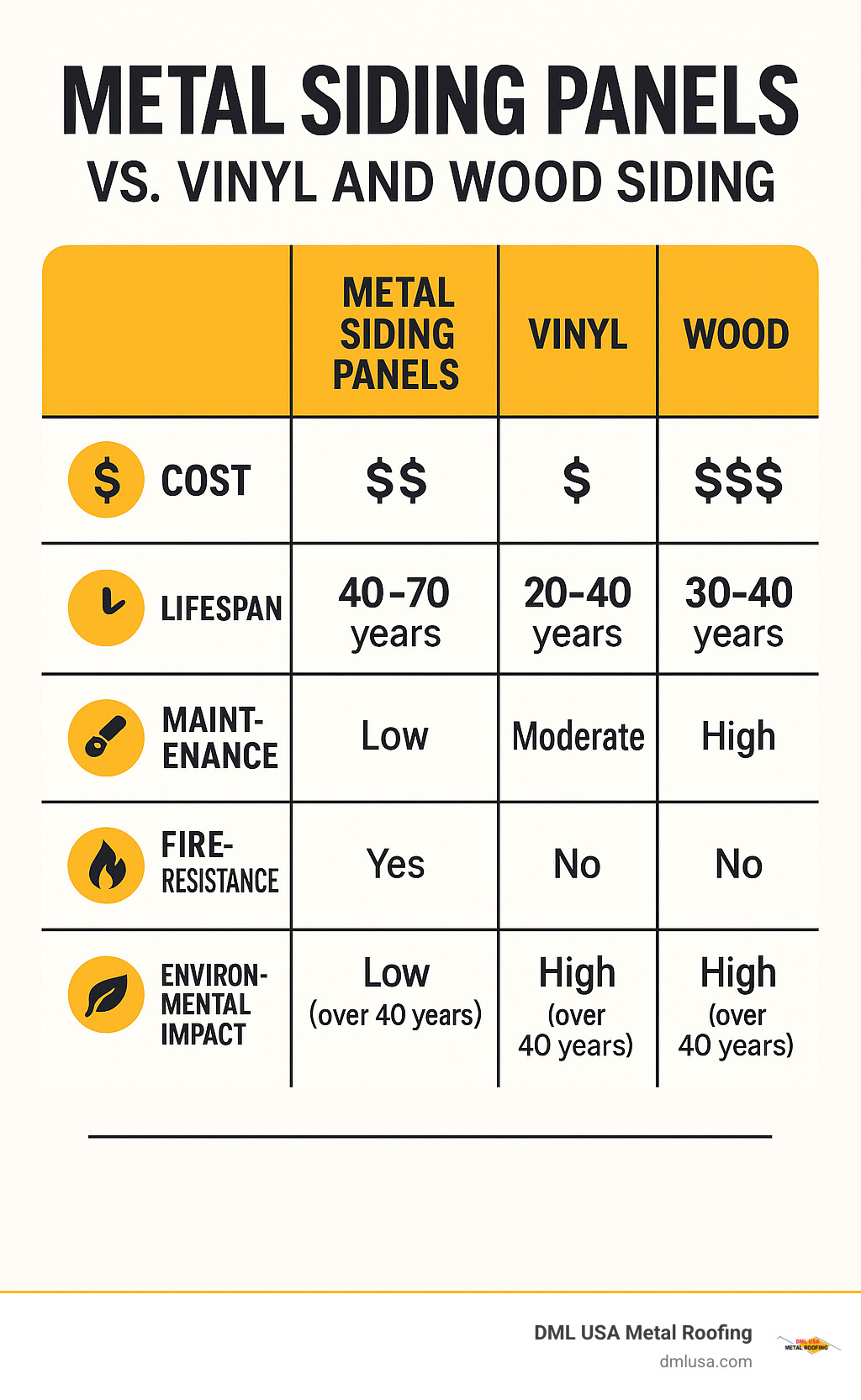
Metal siding panels word guide:
What You’ll Learn
In this guide, we’ll walk you through everything you need to know about selecting the perfect metal siding panels for your project. You’ll find which panels work best for different climates, how to balance upfront costs with long-term value, and what installation considerations matter most. By the end, you’ll have the knowledge to make an informed decision that delivers both style and strength for decades to come.
Understanding Metal Siding Panels
Metal siding panels are engineered cladding systems that combine serious protection with outstanding curb appeal. These aren’t just sheets of metal – they’re carefully designed systems that maintain their crisp lines and vibrant colors year after year, unlike wood that warps, vinyl that cracks, or fiber cement that chips.
What Are Metal Siding Panels?
Metal siding panels start with a steel substrate providing 50,000 to 80,000 PSI strength – strong enough to handle hailstones and flying debris during storms. The steel is coated with Galvalume – a zinc-aluminum alloy that creates permanent corrosion protection.
The paint system is where quality shows. Premium PVDF finishes bond at the molecular level, resisting fading, chalking, and scratching for 30-50 years. SMP finishes offer excellent performance at lower cost.
Gauge numbers work backwards – 26-gauge steel is thicker and stronger than 29-gauge. For most homes, 29-gauge delivers excellent durability at reasonable cost. In severe weather areas, 26-gauge provides extra peace of mind.
Fire resistance sets metal apart. Metal siding panels earn Class A fire ratings – they won’t ignite, feed fires, or release toxic gases like vinyl does.
How Metal Siding Panels Differ From Other Options
Impact strength is where metal excels. A baseball might crack vinyl siding, but metal panels absorb the impact. Cold weather that makes vinyl brittle doesn’t affect metal performance.
Maintenance requirements show the real ownership difference. Wood demands repainting every 5-7 years, vinyl needs regular cleaning to prevent mold. Metal siding panels need only occasional soap and water cleaning.
Fade protection with premium PVDF finishes maintains color for 30-50 years, while vinyl starts looking washed out within 10-15 years.
| Feature | Metal Siding | Vinyl Siding | Aluminum Siding |
|---|---|---|---|
| Lifespan | 40-70 years | 15-20 years | 20-30 years |
| Fire Rating | Class A | Melts/burns | Class A |
| Maintenance | Minimal | Moderate | Moderate |
| Dent Resistance | Excellent | Poor | Fair |
| Color Retention | 30-50 years | 10-15 years | 15-25 years |
| Recycled Content | Up to 80% | 0% | High |
Metal siding panels often contain up to 80% recycled content and are 100% recyclable at end of life.
Top Metal Siding Panel Types & Styles
Choosing the right metal siding panels comes down to two main approaches: exposed-fastener systems (visible screws) and concealed-fastener systems (hidden fasteners). Each serves different budgets and style goals.
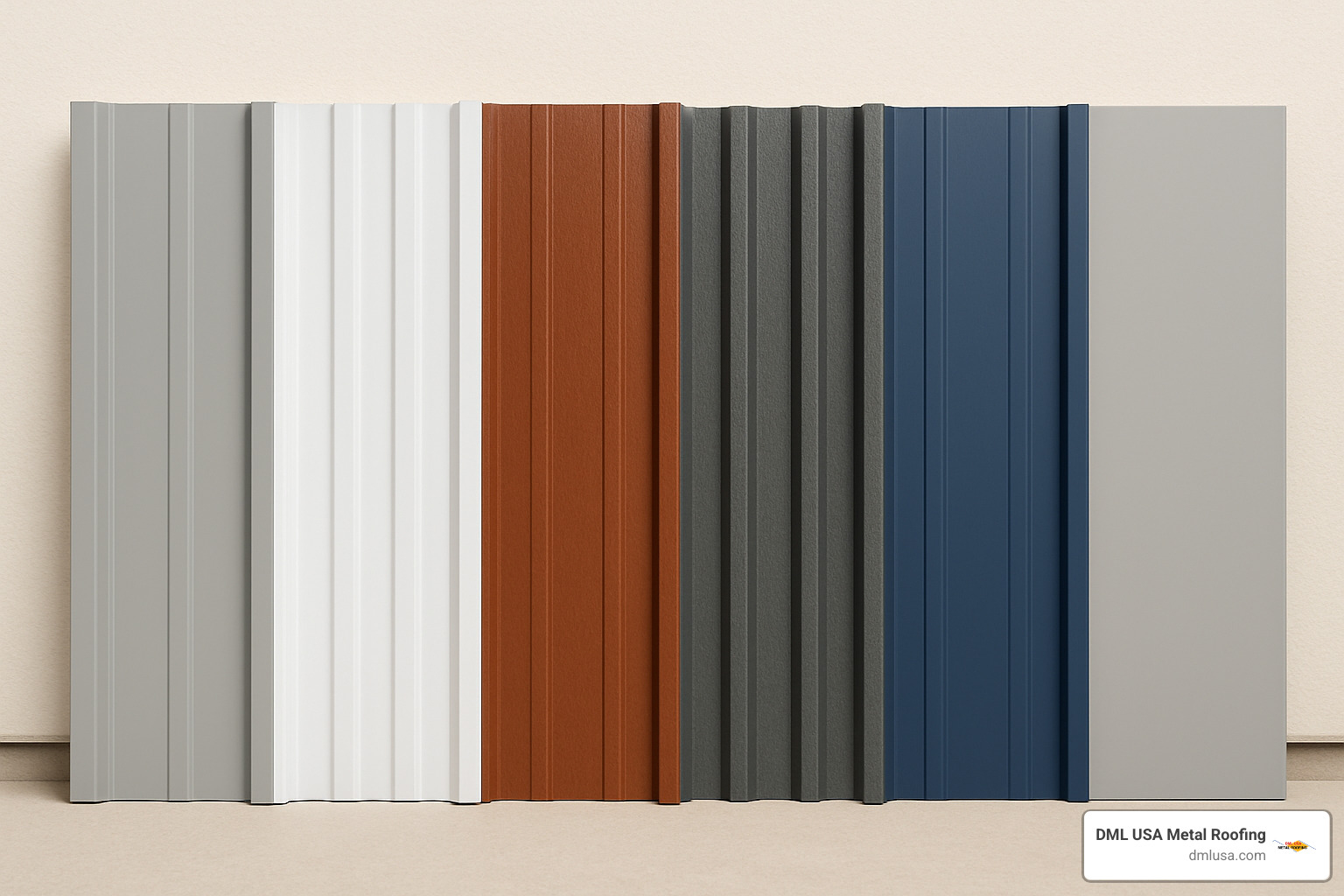
Exposed-Fastener Metal Siding Panels
Exposed-fastener panels offer excellent value, costing 10-20% less than concealed systems while delivering outstanding performance.
PBR panels are the workhorses with 1.25″ rib height providing serious strength. The overlapping connections make them incredibly reliable – many contractors call PBR “the nicest steel siding panel for the least money.”
Corrugated panels create dynamic shadow patterns as the sun moves. Choose from 7/8″, 1.25″, or 2.5″ corrugation depths. They work equally well on rustic barns and modern homes.
Classic rib panels provide clean lines with ¾” rib height at budget-friendly prices. Perfect for homeowners who love standing seam aesthetics but need to watch costs.
Concealed-Fastener Metal Siding Panels
Concealed-fastener systems cost more upfront but deliver premium appearance and superior weather resistance.
Standing seam panels excel in severe weather with raised seams that interlock tightly while allowing thermal movement. Seam heights from 1″ to 2.5″ create striking vertical lines that make buildings look substantial.
Flush reveal panels create smooth surfaces with minimal shadow lines – perfect for clean, modern design. Panel widths of 12″ to 16″ provide balanced proportions.
Board and batten panels capture traditional wood charm while hiding fasteners. The 10″ coverage width and ¾” rib height create authentic proportions with steel’s durability.
Specialty Looks: Board & Batten, Shake, Composite
Modern manufacturing lets metal siding panels mimic virtually any traditional material while keeping steel’s advantages.
Wood-grain finishes use digital printing so realistic you’ll need to touch panels to believe they’re steel. Get cedar, barn wood, or other natural textures without fire risks or maintenance.
Shake profiles recreate dimensional shadows and textures while achieving 160 MPH wind ratings. Rustic charm meets modern protection.
Weathering steel options develop protective rust patina over time, creating unique coloration that improves with age. Corten steel can last up to 100 years.
Copper panels offer potential 100-year lifespan with distinctive green patina that develops naturally.
Check out our 8 Types of Metal Siding video for comprehensive visual overview of different panel styles.
Specifications: Gauge, Colors, Finishes & Customization
Getting specifications right makes the difference between good and great results. Focus on three key areas: gauge thickness, color and finish systems, and customization options.

Choosing the Right Gauge for Your Climate
With steel gauge, smaller numbers mean thicker, stronger panels.
29-gauge steel (0.0150″ thick) is the sweet spot for most homes. Manufacturers offer 40-year or lifetime warranties on 29-gauge performance. Perfect for typical climates without extreme weather.
26-gauge steel (0.0185″ thick) handles whatever Mother Nature delivers. Better dent resistance and wind uplift protection justify the extra cost in severe weather areas.
24-gauge and 22-gauge steel are commercial-grade, usually overkill for residential projects unless you’re in extreme weather zones.
Color & Finish Trends for Metal Siding Panels
Today’s metal siding panels come in 100+ colors with advanced finish quality.
PVDF paint systems resist UV rays for decades with 30-35 year warranties against fading. SMP finishes cost less with 25-year coverage. PVDF is worth the investment for most projects.
Current trends include matte black for stunning contrast, wood-look prints for warmth without maintenance, streaked series for weathered metal appearance, and earth tones that blend with natural settings.
Textured finishes add visual interest while hiding minor imperfections and reducing glare.
Special order colors expand possibilities with 3-4 week lead times and 10-25% premium pricing.
Our Metal Siding Color Visualizer helps you preview colors on your specific project.
Can Metal Roofing Panels Be Used as Siding?
Yes, with important considerations. Standing seam panels designed for roofing work beautifully as vertical siding, creating seamless roof-to-wall transitions.
Structural requirements differ – walls handle different loads than roofs. Fastening systems may need adjustment for vertical applications. Professional installation ensures proper attachment details for long-term performance.
Cost, Installation & Maintenance Insights
Metal siding panels require higher upfront investment than vinyl, but deliver long-term savings through reduced maintenance and extended lifespan.
Price Factors for Metal Siding Panels
Panel type creates the biggest price difference. Exposed-fastener panels cost 10-20% less than concealed-fastener options due to simpler installation and less material overlap.
Gauge thickness affects pricing significantly. 26-gauge panels cost 15-20% more than 29-gauge but provide better dent resistance for high-wind or hail-prone areas.
Finish quality impacts cost and longevity. PVDF finishes cost 15-25% more than SMP systems but offer longer fade warranties. Specialty finishes like wood-grain add 20-30% but eliminate premium maintenance.
Custom lengths up to 40 feet minimize seams. Trim and accessories add 15-20% to material costs. Freight charges vary by distance from manufacturer.
For current pricing, check our Products section.
Installation Methods by Panel Type
Exposed-fastener installation is straightforward. Screws go through panel face with color-matched screws and gaskets preventing leaks. Need about 75 screws per 100 square feet with 1-2 inch side lap.
Concealed-fastener systems require precision and specialized tools. Clip systems allow thermal movement while maintaining weather-tight seals. Standing seam panels need mechanical seaming tools for proper installation.
Vertical installation makes buildings appear taller, while horizontal panels deliver contemporary aesthetics.
For installation guidance, visit our Resources page.
Maintenance Checklist
Metal siding panels need minimal maintenance compared to other materials. While wood demands repainting every 5-7 years, metal panels stay beautiful with minimal effort.
Annual maintenance takes just hours. Rinse panels with garden hose, wash with eco-friendly soap for stubborn stains, inspect fasteners for looseness, and check sealants around openings.
Touch-up maintenance is simple. Minor scratches touch up with matching paint, loose fasteners tighten easily, and sealant renewal around openings might be needed every 10-15 years.
Minimal maintenance saves hundreds annually compared to traditional siding while keeping your home looking new.
Performance: Fire, Weather & Energy Efficiency
Metal siding panels are engineered to protect homes through decades of extreme weather while reducing energy costs.
Fire resistance achieves Class A ratings – steel won’t ignite or fuel fires. Unlike vinyl that melts and releases toxic fumes, metal siding panels maintain integrity in extreme heat, often reducing insurance premiums.
Weather protection exceeds expectations. Premium profiles handle 160 MPH wind ratings, resist hail and debris impact, are completely termite-proof, and won’t support mold or mildew growth.
Energy efficiency comes from reflective coatings that reduce cooling costs by 10-25%. Some installations qualify for energy tax credits.
Environmental advantages include up to 67% recycled content and 100% recyclability at end of service life, compared to vinyl heading to landfills after 15-20 years.
For warranty support, visit our Weather Tightness Warranty Request page.
Metal Siding Panels and Building Codes
Metal siding panels consistently meet or exceed building code requirements nationwide. UL ratings and IBC compliance ensure national safety standards for fire resistance and wind performance.
Local permits are typically straightforward since panels exceed most requirements. Some areas have architectural guidelines or color restrictions affecting selection.
Non-combustible construction often allows reduced property line setbacks compared to wood siding, potentially maximizing building footprint on smaller lots.
Residential, Commercial & Agricultural Applications
Residential homes benefit from clean lines and contemporary colors. Board and batten profiles suit farmhouse styles, while standing seam panels create striking modern lines.
Commercial buildings choose metal for professional appearance and minimal maintenance. Flush panels create clean facades, while retail structures match brand colors perfectly.
Agricultural structures use exposed-fastener panels for maximum economy. Livestock facilities appreciate easy cleaning and pest resistance.
Design trends include mixed materials combining metal with wood, stone, or brick, color blocking with contrasting panels, and vertical emphasis with standing seam accent walls.
Frequently Asked Questions about Metal Siding Panels
How long do metal siding panels last?
Metal siding panels typically last 40-70 years, making them an excellent investment compared to vinyl’s 15-20 years or wood’s 20-30 years with constant maintenance.
Lifespan depends on gauge thickness (26-gauge outlasts 29-gauge in severe weather), paint system quality (PVDF lasts longer than SMP), installation quality, and environmental conditions.
Manufacturers back these claims with serious warranties: lifetime paint adhesion coverage, 30-year chalk and fade protection, and 50-year Galvalume perforation warranties.
Are metal siding panels noisy during rain?
Modern metal siding panels aren’t significantly noisier than other siding when properly installed. Solid substrate installation over sheathing and insulation reduces sound transmission. Panel thickness (heavier gauges vibrate less) and proper fastening prevent rattling. Wall insulation dampens sound.
The noise concern often comes from experiences with thin, poorly-installed metal roofing from years past. Today’s quality panels with professional installation perform much differently.
Can I install metal siding panels myself?
DIY installation is possible for experienced homeowners, but complexity varies by panel type.
Exposed-fastener panels like PBR and corrugated are most DIY-friendly, requiring standard tools and manageable panel sizes.
Professional installation is recommended for concealed-fastener systems requiring specialized tools and techniques. Standing seam needs mechanical seaming equipment.
Safety considerations include sharp edges, height work, and power line proximity. Cost-benefit analysis shows potential 50-75% labor savings, but consider warranty implications – some require professional installation.
For most homeowners, professional installation ensures proper performance and maintains warranty coverage.
Conclusion
Choosing metal siding panels doesn’t have to feel overwhelming. These remarkable panels combine lasting beauty with superior durability – something rare in building materials.
The numbers are clear: while upfront costs exceed vinyl, metal siding panels deliver 40-70 years of protection with almost zero maintenance. That’s buying siding once for a lifetime.
Your next steps should focus on matching panel type to your needs. Severe weather areas benefit from 26-gauge panels, while 29-gauge offers excellent protection at friendlier prices for most climates.
Today’s metal siding panels can mimic wood grain so realistically that neighbors might not realize it’s steel until they see how perfectly it looks after ten years. Whether you prefer standing seam’s clean lines or board and batten’s rustic charm, there’s a metal panel for your style.
Installation quality matters as much as panel quality. Perfectly engineered panels installed incorrectly won’t perform as promised. Whether DIY or professional, don’t cut corners on proper fastening and sealing.
At DML USA Metal Roofing, we’ve watched thousands of homeowners find what we’ve known since 2007 – metal siding panels provide peace of mind. When severe weather hits, you’ll sleep better knowing your home is wrapped in steel that handles hail, ignores termites, and won’t feed fires.
Our single-supplier advantage means consistent quality, coordinated warranties, and technical support from people who understand both products and local conditions. From our Illinois facilities, we ship panels nationwide, each designed to handle whatever Mother Nature delivers.
Ready to see how metal siding panels can transform your project? Contact our team for a custom quote and find why builders and homeowners nationwide trust DML USA Metal Roofing for siding solutions that last.
Your project deserves metal siding panels that deliver style, strength, and decades of worry-free performance. The best siding is the kind you install once and admire for a lifetime.