

False
Why Residential Metal Roof Repair Matters for Your Home’s Protection
Understanding residential metal roof repair is crucial for protecting your investment. Properly maintained, metal roofs can last 40-70 years, but even the most durable systems need occasional attention.
Quick repair guide for common issues:
- Small holes/punctures: Clean area, apply sealant, secure with patch if needed
- Rust spots: Wire brush clean, apply rust converter, prime and paint
- Loose fasteners: Tighten or replace with proper sealing washers
- Minor leaks: Locate source, clean thoroughly, seal with metal-compatible sealant
- Cost range: $100-$300 for small repairs, $300-$1,000+ for extensive damage
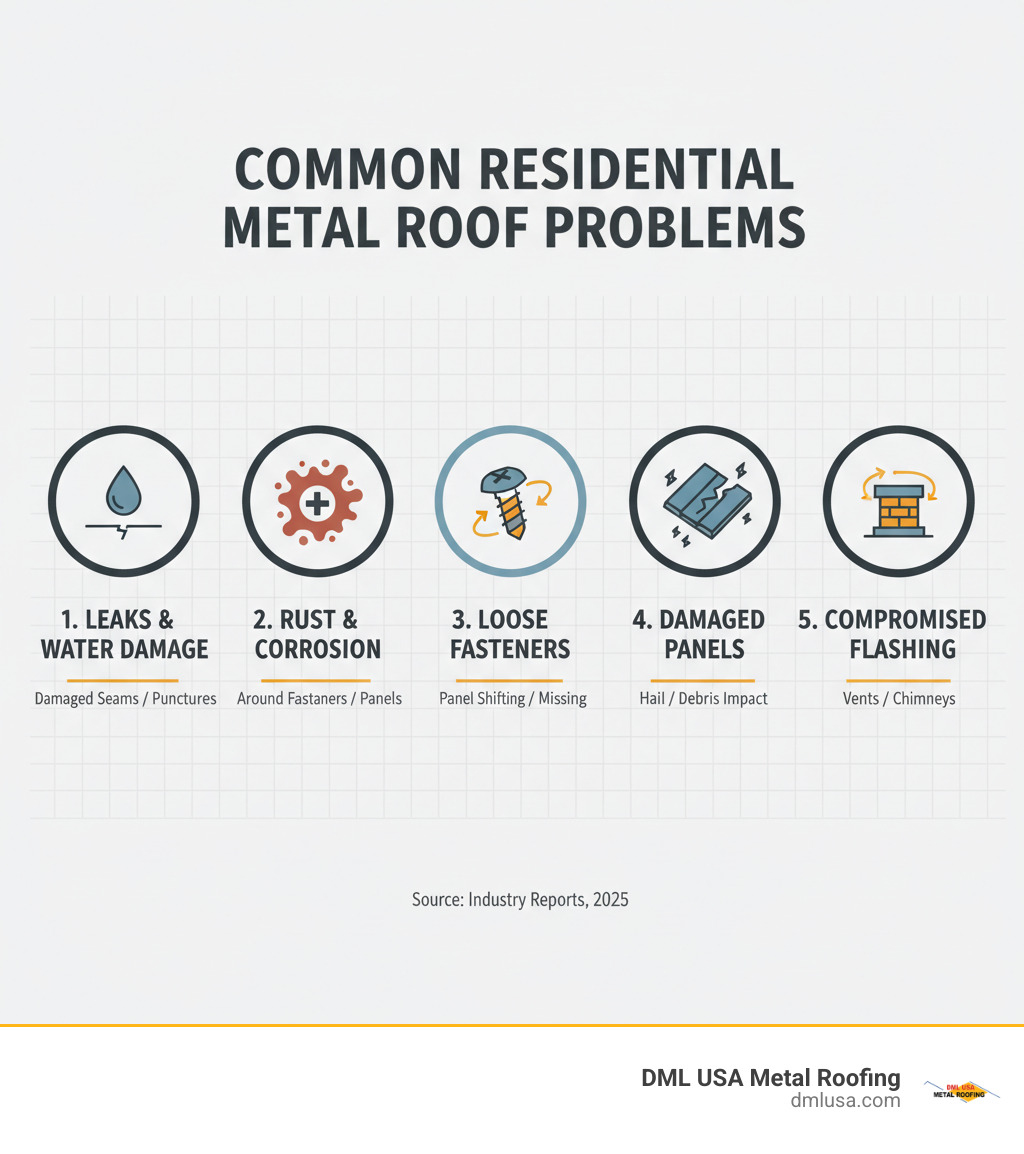
While known for durability, metal roofs can suffer from rust, loose fasteners, or punctures from debris. If left unaddressed, these issues compromise your roof’s integrity.
Prompt repair is essential. Signs like water stains on your ceiling, visible rust patches, or loose panels mean your roof needs attention. Some fixes are DIY-friendly, but others require professional expertise for safety and warranty compliance.
Most metal roof problems are manageable when caught early. Regular maintenance and timely repairs can extend your roof’s lifespan significantly and save you thousands in replacement costs.
I’m Adam Kadziola of DML USA Metal Roofing. With over 15 years in metal roofing and home renovations, I’ve helped many Illinois homeowners with residential metal roof repair. I’ve seen how proper maintenance provides decades of reliable protection.
Residential metal roof repair terminology:
- affordable metal roofing company near me
- amish metal roofing companies near me
- best metal roofing companies near me
Identifying the Problem: Signs Your Metal Roof Needs Repair
Knowing the warning signs of a failing metal roof is key to avoiding costly surprises. Watch for these issues during regular maintenance checks.
Water stains and leaks are major red flags. Brown or yellow patches on ceilings or walls signal a problem. Water can travel, so the leak source may not be directly above the stain. Also, check for increased humidity in your attic. Dampness or new condensation is an early warning that can prevent major water damage.
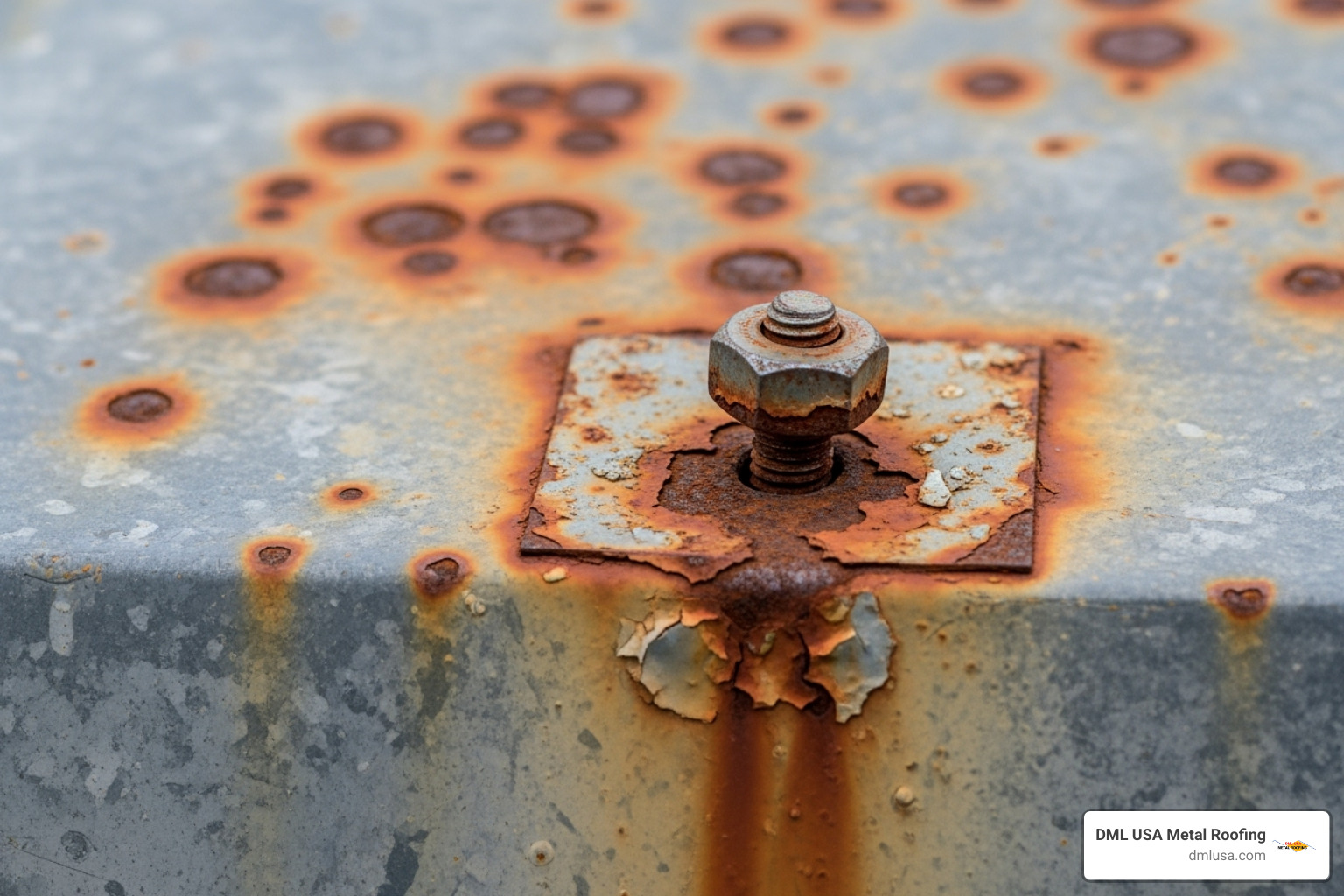
Rust and corrosion are concerning because they spread quickly. These reddish-brown spots indicate that your roof’s protective coating is compromised, a common issue in areas with high humidity or changing seasons like we have in Illinois.
Don’t overlook scratches and peeling paint. A damaged finish makes the underlying metal vulnerable to moisture, which leads to corrosion.
Loose, missing, or damaged fasteners are common. Metal roofs expand and contract with temperature changes, which can loosen fasteners over time. You might find screws in your gutters or notice panels rattling in the wind.
Severe weather can cause dents and punctures from debris like hail or falling branches. While small dents may seem harmless, they can collect water and lead to more serious problems.
Separated or lifting seams create direct pathways for water to enter your home. The sealant in these seams can degrade over time, especially with repeated freeze-thaw cycles.
Finally, pay attention to damaged flashing around chimneys, vents, and skylights. These transition areas are common trouble spots. If flashing is bent, cracked, or pulling away, water can get in.
Most residential metal roof repair issues are manageable when caught early. A monthly visual inspection from the ground, plus a check after severe weather, can help you spot problems before they become expensive headaches. Addressing minor issues promptly is always more cost-effective.
DIY vs. Professional: When to Call for Residential Metal Roof Repair
When you find a problem with your metal roof, you must decide whether to fix it yourself or call an expert. Some residential metal roof repair tasks are suitable for handy homeowners, while others require professionals with the right tools and safety equipment.
Knowing the difference is key.
| Repair Type | DIY Feasibility (Minor Issues) | Professional Recommendation (Moderate to Extensive) |
|---|---|---|
| Minor Leaks | Possible: Small punctures (up to 1/4 inch), isolated loose fasteners, or minor seam separation can often be sealed with appropriate metal-compatible sealants and tightened screws. | Recommended: If the leak source is unclear, if it’s widespread, or if it involves complex flashing. Professionals can quickly diagnose and ensure a watertight seal. |
| Widespread Rust | Possible: Small, isolated rust spots can be cleaned, treated with rust converter, primed, and painted. | Recommended: For large sections of rust, especially if it indicates structural weakness or has caused holes. Professionals have the tools and expertise for thorough rust removal and application of protective coatings, or even panel replacement. |
| Panel Replacement | Not Recommended: Replacing entire panels requires specialized tools, knowledge of panel types (e.g., Standing Seam Metal Roof), proper fastening techniques, and safety protocols. Even a small mistake can lead to bigger problems. | Essential: For severely damaged, bent, or punctured panels. Professionals ensure proper alignment, sealing, and fastening to maintain the roof’s integrity and warranty. |
Assessing damage extent is the first step. A few loose screws or a small puncture are often manageable DIY fixes. However, widespread corrosion, multiple problem areas, or structural issues require a professional.
Your skill level and comfort with heights matter tremendously. Metal roofs can be slippery, especially when wet. If you’re not comfortable working at height with proper safety gear, hiring a professional is the smart choice.
Warranty implications are critical. Many metal roof warranties require that repairs be done by certified professionals. A DIY repair could void your coverage, so always check your warranty documents before picking up any tools.
Safety risks include falls and cuts from sharp metal edges. Professionals are equipped with harnesses, proper footwear, and experience to steer these hazards safely.
A professional repair is often more effective long-term. A quick DIY patch might fail, costing you more in the long run. Professional repairs typically come with guarantees and use commercial-grade materials.
For complex issues, consulting with reputable Metal Roof Repair Companies provides access to specialized knowledge.
Deciding when to repair vs. replace is another crucial point. Roof age is a major factor. An older roof with multiple problems may be due for replacement. Widespread damage is another red flag; if you have rust, loose fasteners, and damaged panels in several spots, a new roof may be a better investment than continuous repairs.
A Step-by-Step Guide to Common Metal Roof Repairs
For a successful residential metal roof repair, a clear plan is essential. But before you begin, prioritize safety.
Safety Precautions
Safety is paramount. Metal roofs can be slippery, especially when wet.
- Work in good weather only. Avoid rain, high winds, or ice. A dry, calm day is essential.
- Wear proper footwear. Use high-traction, soft-soled shoes to prevent slips and roof damage.
- Use ladders safely. Ensure your ladder is stable, on level ground, and extends three feet above the roofline. Have someone hold it steady.
- Use fall protection. A safety harness anchored to a strong point is crucial for any significant repair work.
- Wear protective gear. Gloves and safety glasses protect you from sharp metal edges and flying debris.
- Never work alone. Always have someone nearby who can help in an emergency.

Essential Tools and Materials for Residential Metal Roof Repair
Gathering the right tools and materials beforehand saves time and frustration.
- Safety Gear: Harness, non-slip shoes, gloves, and eye protection.
- Cleaning: Wire brush, fine-grit sandpaper, rags, and mild cleaner. A low-pressure washer can also be used carefully.
- Tools: Metal snips, drill with appropriate bits, screwdriver, and a caulking gun.
- Repair Materials: High-quality silicone or polyether sealant for metal roofing, matching metal for patches, corrosion-resistant screws with sealing washers, rust-inhibiting primer, and matching metal paint. Roofing cement or mastic and a putty knife are also useful.
The Process for Residential Metal Roof Repair of Holes and Punctures
Fixing holes and punctures properly is crucial to prevent water damage.
- Locate and Assess: Small holes (under 1/4 inch) may only need sealant, while larger ones require a metal patch.
- Clean the Area: Thoroughly clean the damaged area and 2-3 inches around it. Remove all dirt, debris, loose paint, and rust. Rinse and let it dry completely. This step is critical for adhesion.
- Scuff the Surface: Lightly scuff the clean metal with fine-grit sandpaper for better adhesion.
- Prepare the Patch: If needed, cut a patch from matching metal at least 2 inches larger than the hole on all sides. Round the corners to prevent lifting.
- Apply Sealant: Apply a generous bead of urethane sealant around the hole’s perimeter and on the underside of the patch.
- Secure the Patch: Press the patch firmly into the sealant. Secure it with corrosion-resistant screws every 1-2 inches around the perimeter.
- Seal the Edges: Apply another bead of sealant around the entire patch perimeter and smooth it with a putty knife.
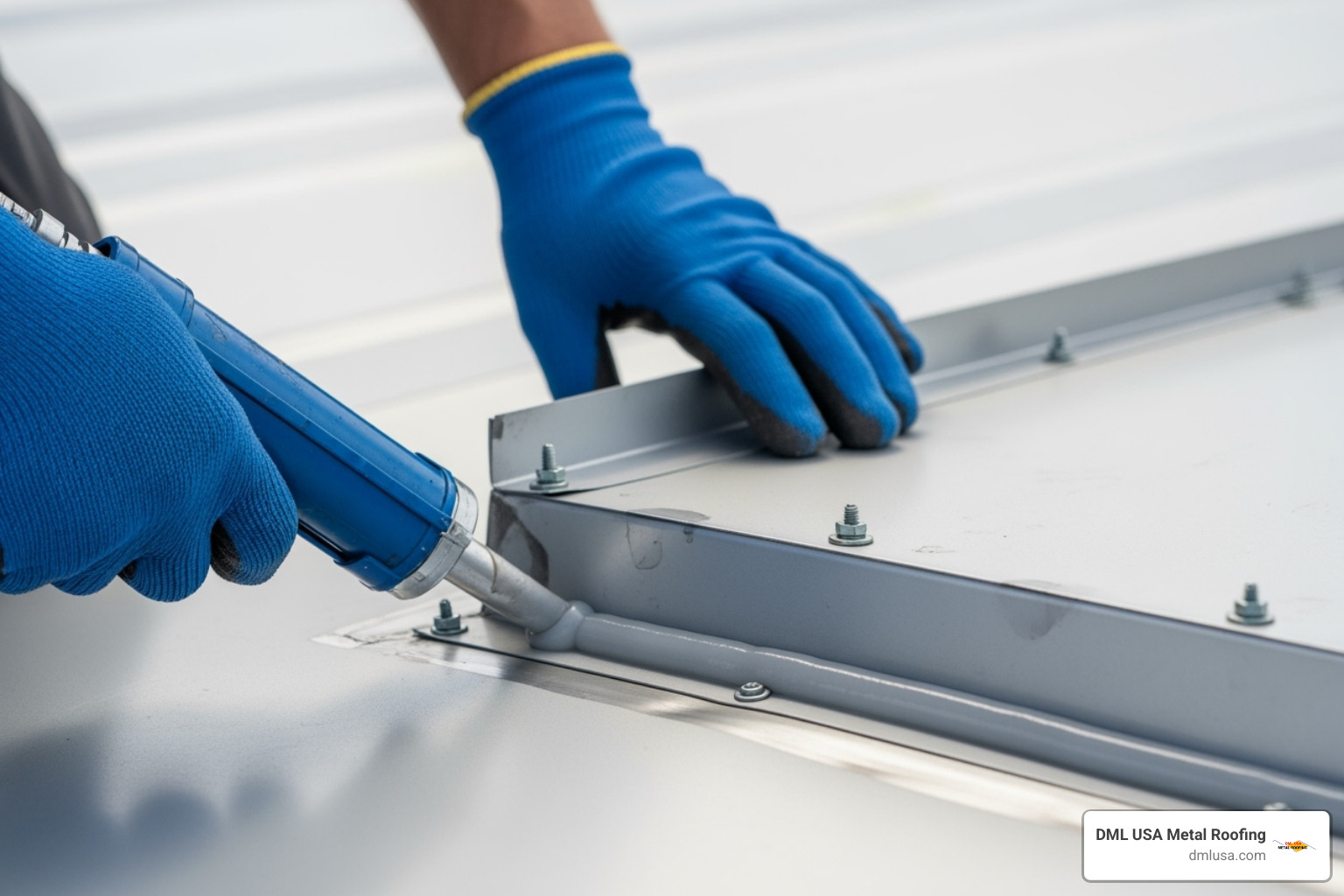
- Paint the Repair: Once the sealant cures (about a week), paint the patch with matching metal-specific paint for appearance and added protection.
Our team at DML USA Metal Roofing is also ready to help through our Metal Roof Service.
Fixing Rust, Corrosion, and Loose Fasteners
Rust and loose fasteners are common issues. While our DML USA products are highly rust-resistant, decades of weather can take a toll.
- Address Rust: For small spots, use a wire brush to scrub away all loose rust down to the bare metal. Rinse and dry. Apply a rust converter to transform any remaining rust, then coat with a rust-inhibiting primer and finish with matching paint or sealant. Widespread corrosion requires professional help.
- Tighten Fasteners: Gently tighten any loose screws with a drill or screwdriver, being careful not to strip them.
- Replace Damaged Screws: Remove any rusted, stripped, or missing screws and replace them with new corrosion-resistant roofing screws that have a sealing washer.
- Seal Separated Seams: Work sealant under the lifted section, press it down, and secure with new screws if needed. Smooth any excess sealant.
Regular maintenance keeps your roof in optimal condition.
Costs, Prevention, and Long-Term Care
Understanding the costs and preventive care for residential metal roof repair helps protect your home and your budget.
What You’ll Actually Pay for Repairs
When caught early, most metal roof repairs are affordable. Small repairs typically cost $100-$300 for tasks like sealing a minor leak or tightening a few screws. Larger repairs fall into the $300-$1,000+ range for replacing damaged panels or addressing complex flashing. Extensive damage can exceed $2,000-$3,000. Costs are affected by the type of metal, roof accessibility, and pitch. Remember to check if your repair is covered under warranty, which could minimize out-of-pocket expenses.
Simple Prevention That Pays Big Dividends
Proactive care is the most cost-effective strategy.
- Inspect regularly: Check your roof twice a year (spring and fall) and after severe storms.
- Clean your gutters: Clogged gutters cause water backup that can lead to corrosion.
- Trim overhanging branches: This prevents damage from falling limbs during storms.
- Address minor issues immediately: A small scratch or loose screw is easier and cheaper to fix now than later.
- Clean gently: Use mild soap and a soft brush to remove debris that traps moisture.
This simple maintenance protects your entire Weatherproof Metal Roofing investment.
How Weather Shapes Your Repair Needs
In Illinois, extreme temperature swings cause metal to expand and contract, which can loosen fasteners and stress seams. Systems like a Standing Seam Metal Roof are engineered to handle this movement. Severe storms can cause hail dents and wind damage, making post-storm inspections crucial. Humid or salt-air conditions increase rust risk, requiring more frequent checks.
Different Systems, Different Repair Approaches
Repair methods vary by roofing system. Standing seam systems have concealed fasteners and require specialized techniques for panel or seam repairs. Corrugated panels have exposed fasteners that are easier to access but may need more frequent attention. Metal shingles or tiles may require individual unit replacement, while specialty metals like copper or zinc demand professional expertise. Understanding your system helps you make informed maintenance decisions.
Frequently Asked Questions about Metal Roof Repair
Homeowners often have similar questions about residential metal roof repair. Here are answers to the most common ones.
How long does a metal roof patch last?
A properly applied patch can last 10-20 years. Its longevity depends on the quality of materials and installation technique. High-grade materials and proper application ensure a durable fix. However, a patch is often considered a long-term temporary solution compared to full panel replacement. It’s wise to monitor patched areas, especially after severe weather.
Can I perform a repair on my own, or should I hire a professional?
Minor repairs like sealing a small puncture or tightening a loose screw can be a DIY project for a skilled homeowner who is comfortable with heights and safety precautions. However, for widespread damage, structural issues, or complex repairs, hiring a professional from our list of Metal Roofing Installation Companies is the safest and most effective option. Professional repairs are generally more reliable, use better materials, and come with safety expertise and insurance.
Will a DIY repair void my roof’s warranty?
Yes, it is highly possible. Many manufacturer and installer warranties specify that repairs must be performed by an authorized professional to remain valid. Always check your warranty documents before starting any work yourself. Risking a warranty that could provide decades of coverage isn’t worth the small savings from a DIY repair. If you’re unsure, consult a professional to ensure your warranty remains intact.
Protect Your Investment with Proper Roof Care
Caring for your metal roof protects one of your home’s most valuable assets. This guide has covered spotting warning signs like water stains and loose fasteners and effective residential metal roof repair techniques.
Key takeaways include performing regular inspections, giving prompt attention to minor problems, and knowing when to DIY versus calling a professional to protect your safety and warranty. A well-maintained metal roof doesn’t just last its expected 40-70 years—it thrives, providing decades of reliable protection and peace of mind.
Spending a few hundred dollars on timely repairs can save you thousands in premature replacement costs and even increase your home’s value.
At DML USA Metal Roofing, we’ve spent over 15 years perfecting metal roofing systems built to last with minimal maintenance. Our Eco-Friendly Metal Roofing products are engineered to resist fire, wind, and impact damage.
Choosing quality materials from the start sets you up for decades of worry-free protection. Ready to see how the right metal roofing system can minimize your repair needs? Explore our full range of products and find why homeowners across Illinois trust DML USA Metal Roofing.