

Roofing Cost 2025: 10 Powerful Ways to Avoid High Prices
What Homeowners Need to Know About Roofing Cost
Roofing cost is one of the biggest worries for homeowners facing a needed roof replacement. Here’s what you need to know:
Typical Roofing Cost (U.S. 2024–2025):
– Most homeowners spend $8,500 – $14,300 for a new roof.
– National average: about $10,000.
– Cost per square foot: ranges from $4 to $40 depending on material.
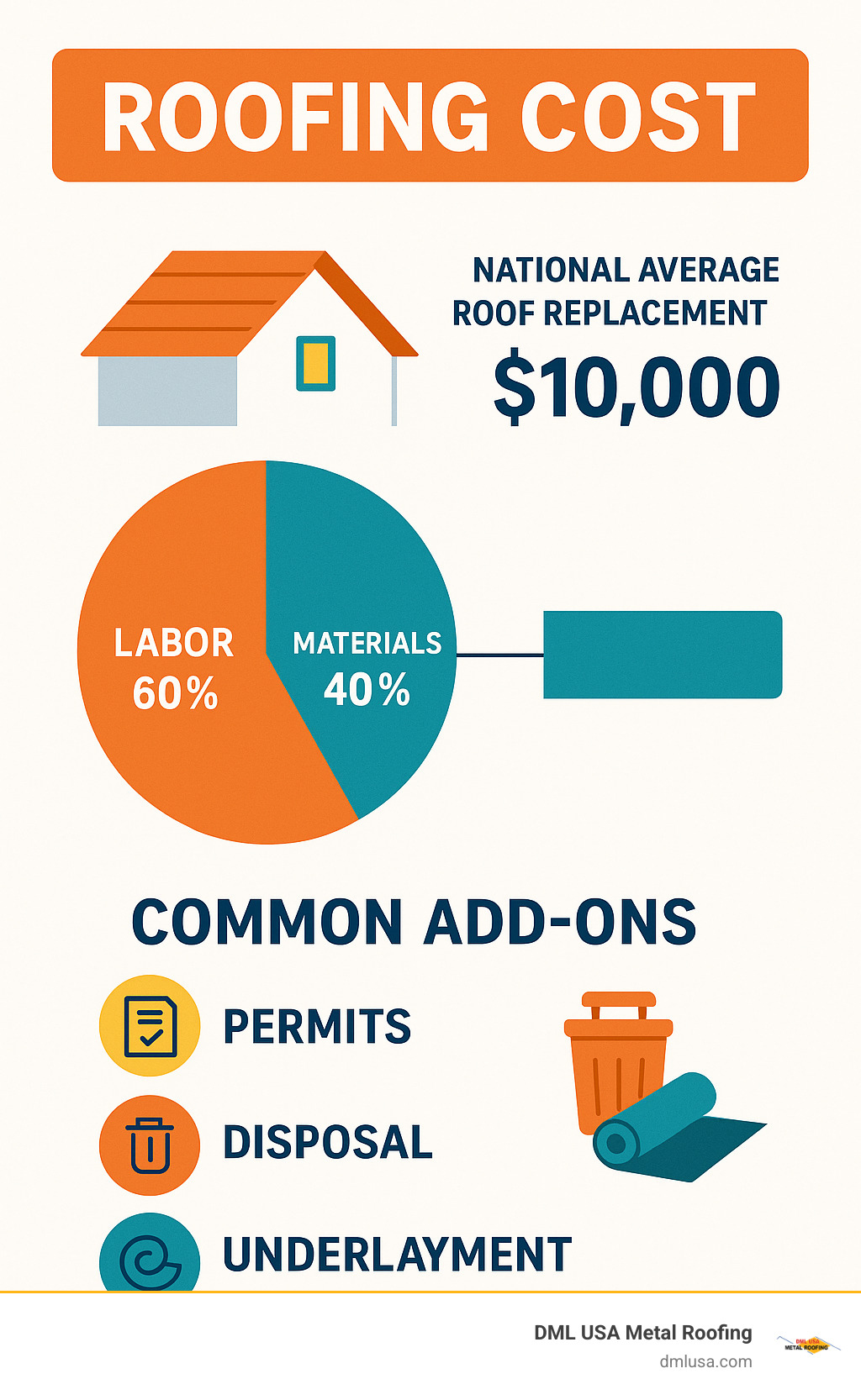
– Labor is 60% of the total, materials are 40%.
– Asphalt shingles are most budget-friendly, metal and slate cost more but last longer.
| Roof Size | Asphalt Shingles | Metal Roofing | Premium Options |
|---|---|---|---|
| 1,000 sq ft | $4,000 – $8,500 | $8,000 – $20,000 | Up to $40,000+ |
| 2,000 sq ft | $8,000 – $17,000 | $14,000 – $30,000 | Up to $60,000+ |
Prices vary by region, roof shape, and market trends.
“Replacing a roof costs thousands, even at the lowest end of the spectrum. Labor usually makes up the largest part of your roofing cost, averaging about 60% of what you pay.”
(Homeowners interviewed, 2024)
If you’re just here for a quick estimate, you’re set. If you want to dig deeper into what shapes roofing cost, how to budget, and how to get the most value, the rest of this guide is for you.
I’m Adam Kadziola, founder of DML USA Metal Roofing. With more than a decade manufacturing and installing metal roofs across Illinois and beyond, I know roofing cost inside and out—from material sourcing to final installation. I’m here to break down every part of the process so you can make smart, confident choices for your home.
Essential roofing cost terms:
– cost difference between metal roof and shingle roof
– metal shingle roof cost
Roofing Cost Snapshot: 2024–2025 Averages
Across the U.S., roofing cost for a full replacement typically ranges $8,500 to $14,300, with the national average around $10,000. About 60% of your total roofing cost goes toward labor, while 40% covers materials.
Inflation has made its mark. Since 2020, roofing costs have climbed due to material shortages, higher transportation costs, and strong demand for skilled workers. Some areas have seen prices jump more than 15% over just the last two years.
Regional differences matter significantly. A 2,000 sq ft asphalt shingle roof might run $8,000 in Texas, $12,000 in New Jersey, or $16,000 in parts of California.
Thinking ahead? The U.S. Department of Energy recommends adding solar panels during a roof replacement for maximum efficiency and cost savings.
Roofing Cost per Square Foot
Here’s what you’ll typically see for roofing cost per square foot:
- Asphalt shingles: $4.25 to $8.50 per square foot
- Metal roofing: $8 to $16 per square foot (premium designs can reach $20+)
- Tile, slate, and specialty roofs: $10 to $40 per square foot
A standard 1,500 sq ft roof could cost as little as $6,375 with basic asphalt, or up to $60,000 with premium slate or solar shingles.
Contractors price projects in “squares” (100 square feet each). So a 2,500 sq ft roof equals 25 squares.
Roofing Cost Over Time
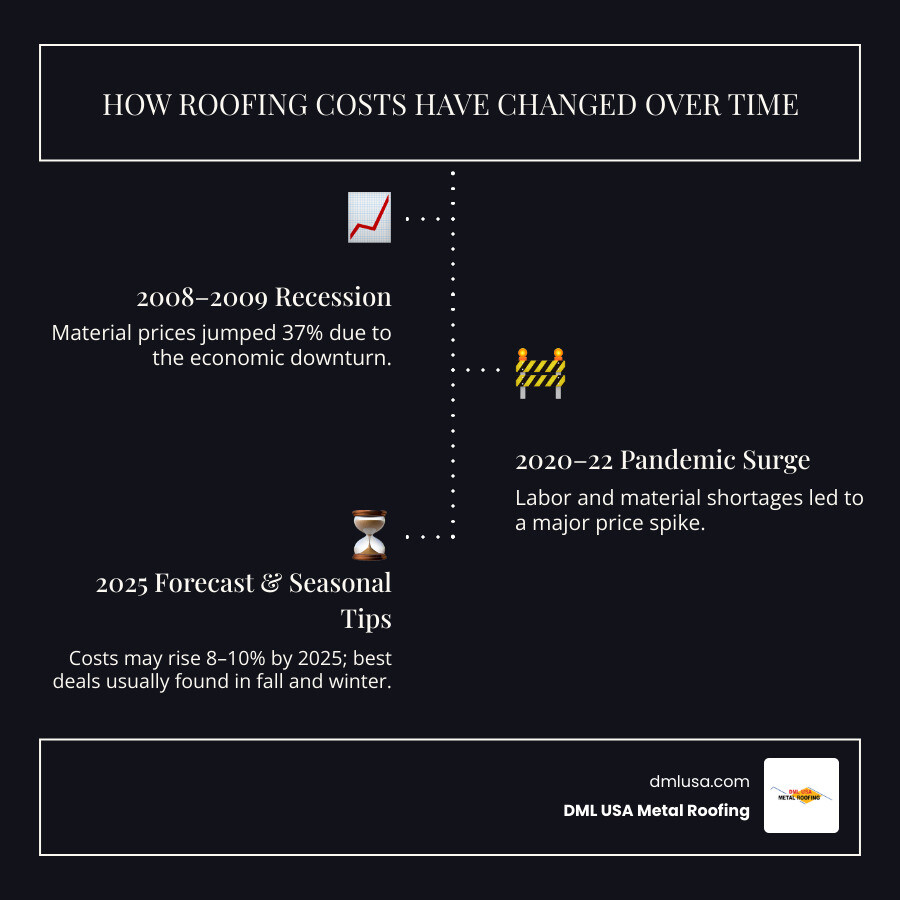
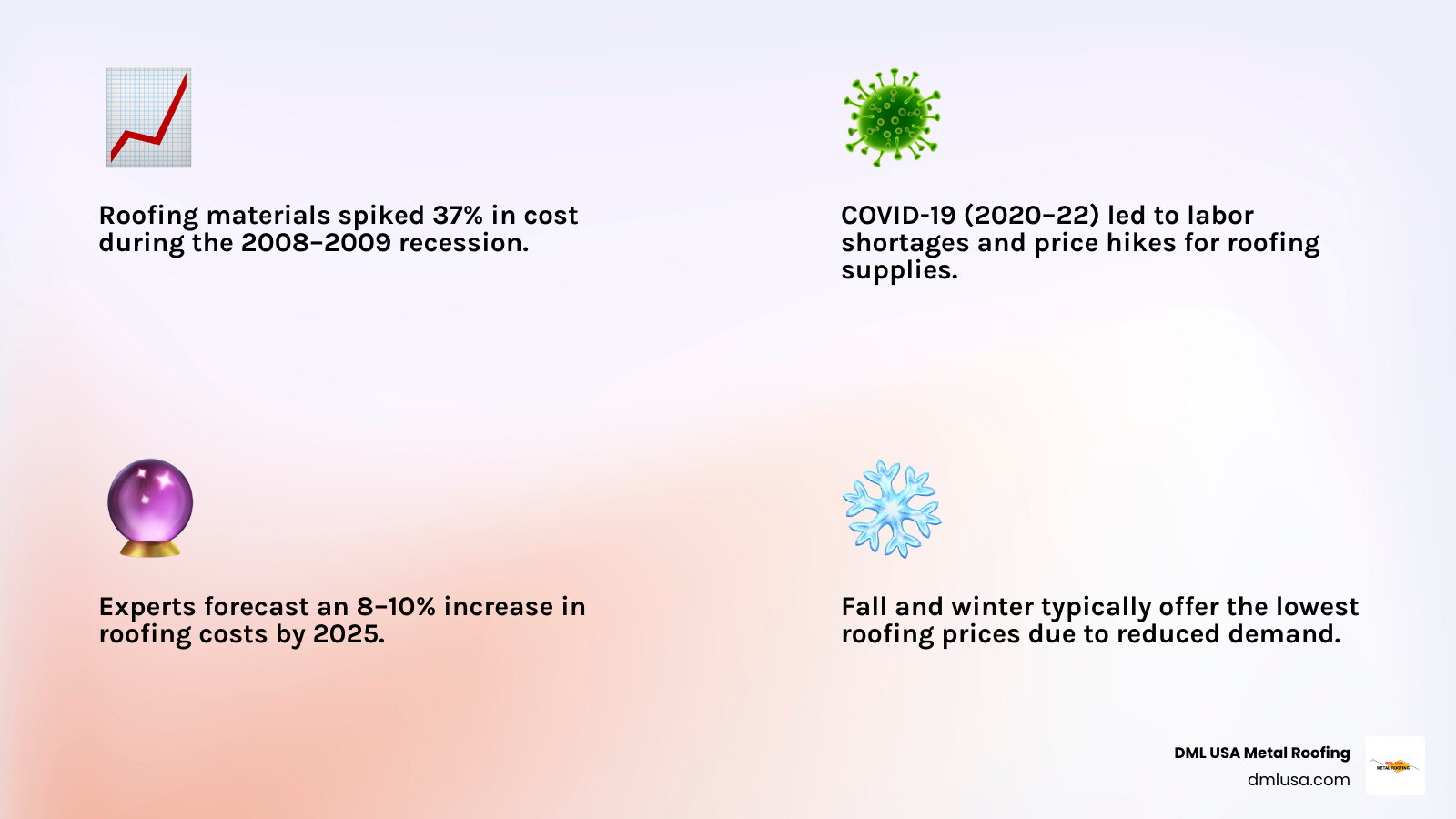
Roofing costs fluctuate significantly. During 2008–2009, material prices spiked 37%. The 2020–2022 period saw supply chain disruptions and labor shortages drive costs even higher.
Looking ahead to 2025, forecasts point to another 8–10% increase in roofing cost. Fall and winter often bring the lowest prices as demand slows.
For the best value, timing and material choice both matter. Our cost difference between metal and shingle roofs page offers detailed comparisons.
Roofing Cost by Material & Roof Size
When it comes to roofing cost, the type of material you pick plays the biggest role. Let’s walk through your main options, what they cost, how long they last, and what you can expect for your investment.
| Material | Cost per Sq Ft | Average Lifespan | Pros | Cons |
|---|---|---|---|---|
| Asphalt Shingles | $4–$8.50 | 15–25 yrs | Affordable, quick install | Shorter lifespan |
| Metal Roofing | $8–$16 | 40–60 yrs | Durable, energy-efficient | Higher upfront cost |
| Tile Roofing | $10–$25 | 50+ yrs | Long life, distinct look | Heavy, expensive |
| Wood Shake | $7–$15 | 20–30 yrs | Natural look | Maintenance, fire risk |
| Slate Roofing | $20–$40 | 75–150 yrs | Longest life, premium value | Very heavy, very expensive |
| Solar Shingles | $25–$40+ | 25–30 yrs | Generates power, incentives | High initial cost |
The chart above paints a quick picture: asphalt shingles are the go-to for many homeowners because they’re budget-friendly and easy to install, but their shorter lifespan means you might be replacing them again in 20 years. Metal roofing costs more upfront but can last 40–60 years (sometimes longer) and offers real peace of mind when it comes to storms, fire, and energy efficiency. Tile and slate are long-haul champions—beautiful and tough, but they come with a much higher price tag and can be quite heavy. Wood shake has a lovely natural look but does need regular TLC and isn’t ideal in areas with wildfire risk. Then there’s the new kid on the block: solar shingles. These combine roof protection with energy generation, but expect to pay a premium as the technology is still expensive.
It’s also important to remember that the size of your roof—measured in “squares” (each square is 100 sq ft)—directly affects the total roofing cost. A bigger roof means more materials and more labor, so costs rise with every extra square foot.
Let’s take a closer look at each material:
Asphalt & Architectural Shingles
If you’re looking for the most affordable route, asphalt shingles are hard to beat. Installation usually costs between $4.25 and $8.50 per square foot. These roofs typically last 15 to 25 years—not bad if you just need a straightforward replacement without breaking the bank. Upgrading to architectural shingles bumps up the look and lifespan a bit, plus you get extra wind resistance, which is especially helpful here in the Midwest.
Metal Roofing (Energy-Smart Choice)
Metal roofing is having a moment—and for good reason! Expect to pay $8 to $16 per square foot installed (Illinois averages can go a bit higher, up to $20 for premium selections). With a 40–60 year lifespan, metal often outlasts two or three shingle roofs. It’s also an energy-saver—reflective coatings can actually cut your cooling bills by up to 20%. And let’s not forget, metal roofs are tough, shrugging off fire, high winds, and even hail. Plus, many options qualify for federal energy tax credits. Learn more about the benefits of metal roofing here.
At DML USA Metal Roofing, our products are designed to be maintenance-free. You get durability and style, built especially for homes right here in Illinois and the Midwest.
Premium & Specialty Options
If you’re after a roof that turns heads and stands the test of time, premium materials like tile and slate might be your style. These can run anywhere from $15 to $40 per square foot. Yes, they cost more, but with that investment comes serious longevity—50 to 150 years is not unheard of! Just be sure your home’s structure is ready for the extra weight.
Wood shake roofing lands in the $7 to $15 per square foot range. It’s got a classic, rustic charm, but you’ll need to stay on top of maintenance and consider local fire safety.
And for those looking for modern innovation (and a smaller electric bill), solar shingles offer roofing with a side of power generation. They’re a premium investment—$25 to $40+ per square foot—but incentives and energy savings can help offset the upfront cost.
No matter which material you choose, balancing roofing cost with lifespan, energy savings, and maintenance needs is the best way to get the most value for your money. If you want a roof you’ll never have to think about again (except to admire from the curb), metal just might be your perfect fit.
Factors That Influence Roofing Cost
Understanding what drives your roofing cost helps you budget smarter and avoid surprises.
Roof size is the most obvious factor. A 1,000 square foot ranch costs half what a 2,000 square foot colonial does, all else being equal.
Pitch and steepness can bump up your roofing cost by 10–20%. Steep roofs require extra safety equipment, slower work, and often hazard pay.
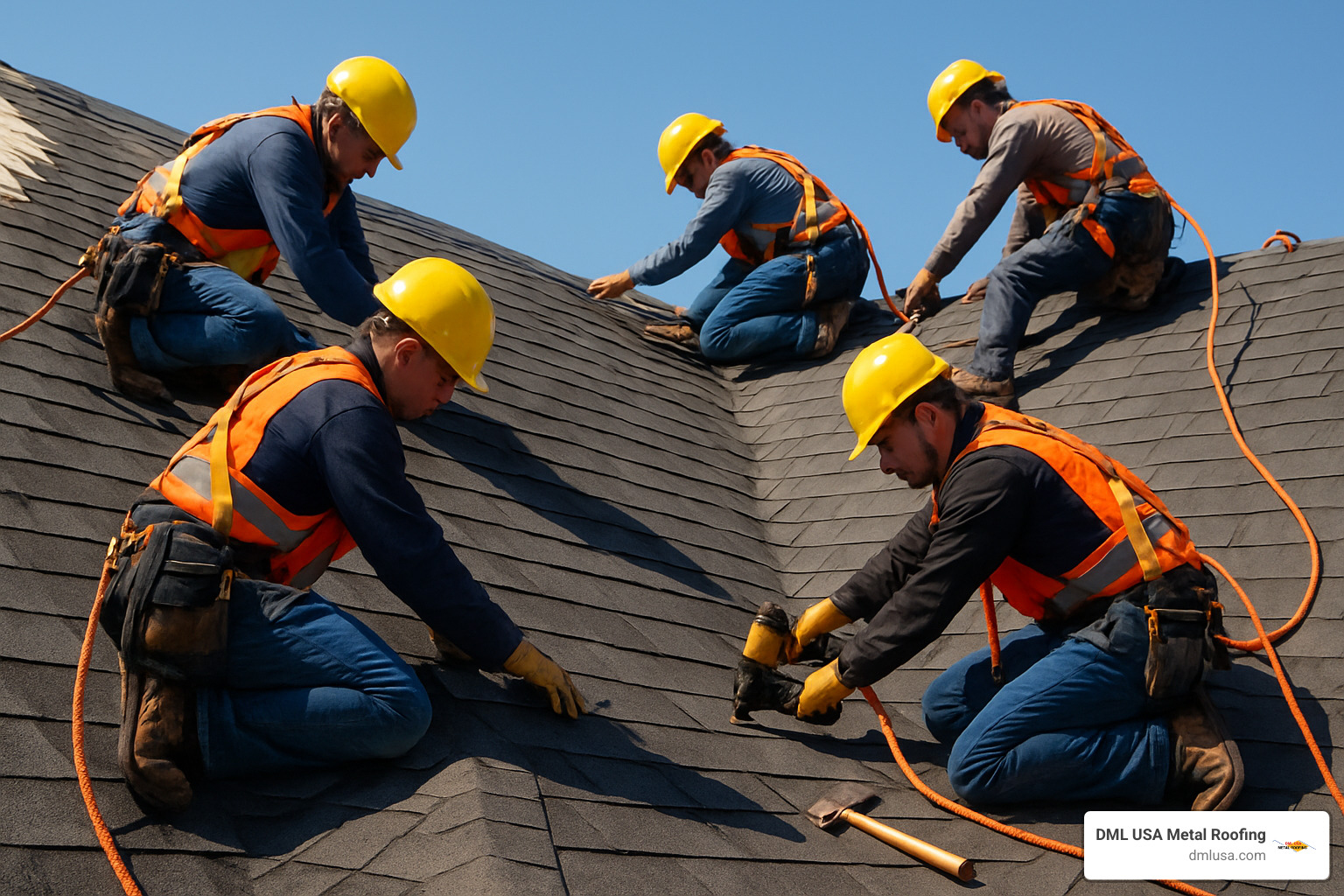
Roof complexity matters significantly. Simple rectangles are efficient, but dormers, valleys, chimneys, and skylights require cutting, custom flashing, and detail work.
Tear-off layers add $1–$5 per square foot. Some homes have multiple layers of old shingles requiring removal.
Permits typically cost $300–$700. Decking repairs run $5–$10 per square foot when rotted wood is finded.
Climate and region play huge roles. Rural Iowa costs less than downtown Chicago or coastal California due to labor rates, transportation, and local codes.
Labor Impact on Roofing Cost
Labor makes up about 60% of your total roofing cost. Hourly rates average $60 nationwide but range from $40s in rural areas to $80+ in major metros.
Steep roofs and complex designs require specialized skills and equipment, often adding surcharges.
Hidden & Additional Fees
Common add-ons include:
Drip edge installation ($300–$1,250), ice and water barrier ($500–$1,500), ridge venting ($300–$900), skylight installation ($900–$2,500), new gutters ($1,000–$2,500), and disposal fees ($40–$80 per ton).
Smart move: Ask for an all-inclusive quote upfront. Good contractors identify potential extras before work begins.
Paying for Your Roof & Saving Money
A new roof is a big investment, but take a deep breath—there are smart ways to make roofing cost much more manageable.
Most homeowners use home equity loans or a HELOC (that’s a home equity line of credit) to tap into their house’s value with a lower interest rate. If you’re refinancing anyway, you might be able to roll your roofing cost into a cash-out refinance and spread payments out over time.
If your roof was damaged by a storm, hail, or even a falling tree, don’t forget about your homeowner’s insurance. Many policies cover much of the cost to repair or replace, so it’s worth filing a claim before you dip into savings.
Some communities also offer government grants, especially for seniors or low-income families. These programs can knock thousands off your bottom line, so check your local and state options.
Many roofing companies (including DML USA!) offer contractor financing with payment plans. That means you don’t have to put off a needed replacement just because of budget worries. And don’t be shy—ask about bulk discounts if you’re bundling gutters, skylights, or insulation with your roof.
Always remember, you can negotiate. Get three to five quotes from reputable contractors, make sure you’re comparing the exact same scope and materials, and don’t be afraid to ask for a better deal.
A quick word of caution: while a DIY approach might be tempting to save on labor, it’s a risky move. Roofing is dangerous work, requires specialized tools, and any mistakes can void warranties or leave you with leaks and long-term headaches.
Analyzing Quotes & Negotiating Roofing Cost
Getting the best value on your new roof starts with a careful look at every quote. Review every line item—labor, materials, add-ons, and any “optional” extras. Make sure you’re comparing apples to apples with each bid: same materials, same job details, same warranties.
It’s perfectly reasonable to ask if you can bundle services (like gutters or skylights) for a better price. Some contractors will offer a discount for paying cash, scheduling during their slower season, or agreeing to their preferred timeline.
Let your contractors know you’re seeking multiple bids. Having options gives you leverage, and many companies will be willing to adjust pricing or payment terms to win your business.
Need more insider tips? Check our Resources page for help understanding quotes and avoiding common pitfalls.
Timing & Seasonal Strategies
When you schedule your roof replacement can make a real difference on your final roofing cost.
Fall and winter are often slower for roofing crews, so you’re more likely to find discounts—or at least more flexible scheduling. Just keep in mind, icy conditions can slow work or limit your options in some climates.
After a major storm or during peak spring and summer demand, prices usually spike and wait times get longer. If your roof emergency can wait, you’ll save money by planning ahead.
And remember: if you’re in a hurry, expect an emergency surcharge for rushed jobs. The best way to keep costs down? Don’t put off needed repairs until the last minute! Plan ahead, know your options, and you’ll feel more in control of your budget.
Repair vs. Replace vs. DIY
Deciding whether to repair, replace, or try a bit of DIY on your roof can feel overwhelming—especially when roofing cost is front and center in your mind. Let’s break it down together so you can make the right call for your home, your wallet, and your peace of mind.
The classic “50/50 Rule” is a great place to start. If the price of repairs sneaks up past 50% of what a full replacement would cost—or if your roof is nearing the end of its expected life span—it’s probably time to consider a new roof. For example, asphalt shingle roofs often need replacing after 15–25 years. Metal and tile options last much longer, but if yours is pushing 40 years or more, it may be ready for retirement.
Minor repairs can be a smart way to stretch your budget if your roof has isolated damage. Fixing a few missing shingles or patching a small leak usually runs between $300 and $500. If you’ve got a bigger issue, like flashing damage or a larger leak, expect repair costs to climb to $500–$2,000. But if you see signs of structural damage—think sagging, rotting wood, or widespread water stains—a full replacement is safest for your home’s integrity.
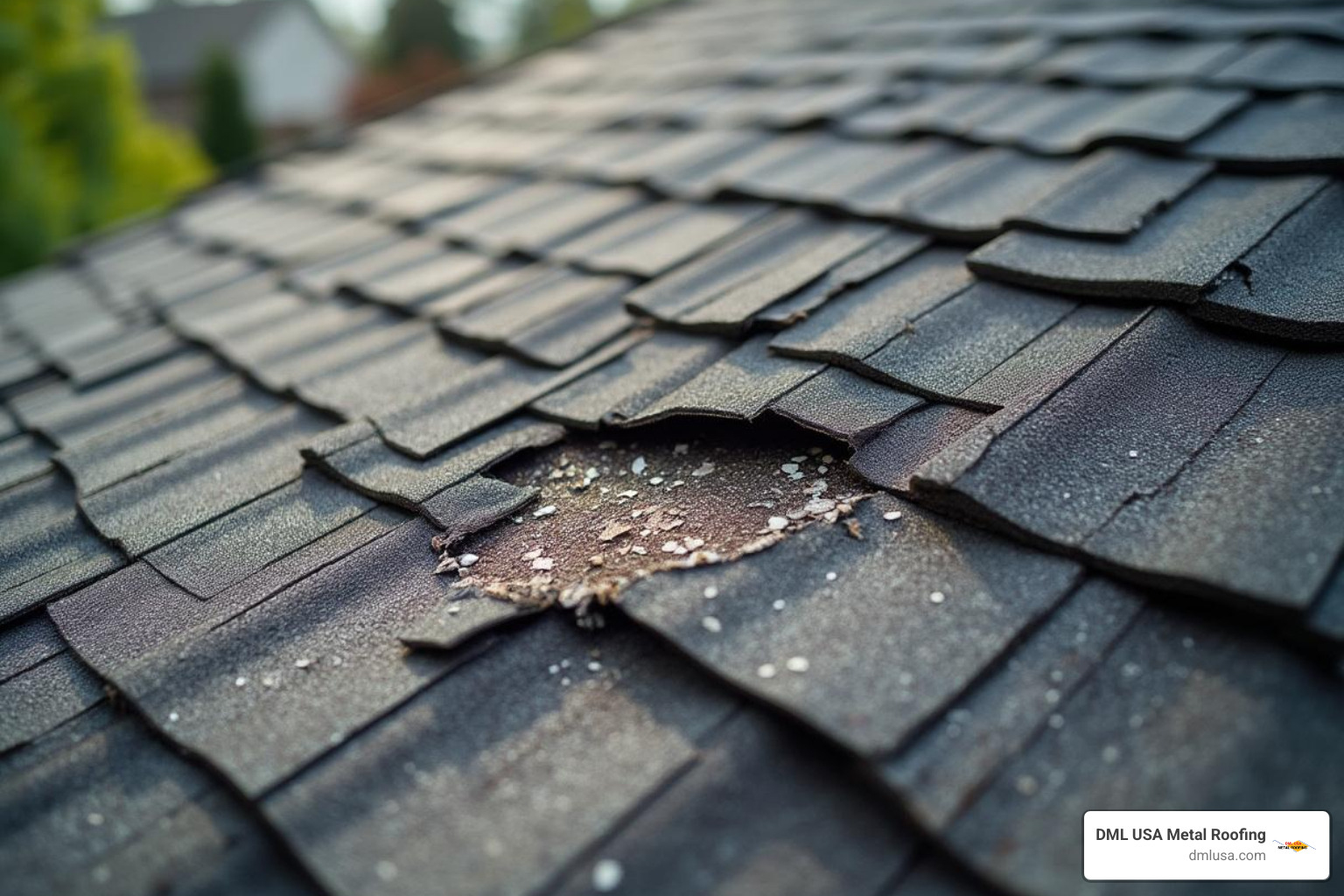
Thinking about handling those repairs yourself? It’s tempting to save on labor, but roof work is dangerous and can actually void warranties or insurance coverage. Even if you’re handy, one slip or misstep can cause a lot more harm (to you and your house) than good. Trust me, your future self—and your ankles—will appreciate calling in a professional.
When does a repair make sense? If the damage is limited to a small area, your roof is under 10 years old, and your budget is tight, a quick patch or shingle swap can buy you valuable time. But if you’re seeing repeated leaks, your shingles are balding, or your roof is showing its age, investing in a full replacement will almost always be the better value in the long run—especially as energy upgrades and new materials can help lower future roofing costs.
If you’re unsure which path is best, don’t hesitate to reach out for a professional opinion. At DML USA Metal Roofing, we’re always happy to help you weigh your options and figure out the solution that fits your needs (and your budget). Sometimes, a little expert guidance is all you need to make a smart, confident choice.
Frequently Asked Questions about Roofing Cost
Let’s tackle the most common questions I hear from homeowners wrestling with roofing cost decisions. These are real concerns from real people—and I want to give you straight answers.
How much does it cost to replace a 1,000 sq ft roof?
For a 1,000 square foot roof, you’re looking at a pretty wide range depending on your material choice. Asphalt shingles will run you $4,000 to $8,500—that’s your most budget-friendly option and what most folks choose when they need to keep costs down.
Metal roofing jumps up to $8,000 to $20,000 for the same size roof. I know that sounds like a lot more upfront, but remember you’re buying a roof that’ll last 40 to 60 years instead of needing replacement every 15 to 20 years.
If you’re dreaming of premium materials like slate, tile, or solar shingles, you could be looking at up to $40,000 or more. These are lifetime investments that add serious curb appeal and value to your home.
The key thing to remember? A 1,000 sq ft roof is on the smaller side, so you’re actually getting some of the best per-square-foot pricing available.
Is $30,000 too much for a roof?
This is the question that keeps homeowners up at night! The honest answer is: it depends entirely on what you’re getting.
For a large roof (think 2,500+ square feet) or a complex design with lots of angles, dormers, and valleys, $30,000 can be completely reasonable. Same goes if you’re choosing premium materials like metal, slate, or adding solar components.
But if someone’s quoting you $30,000 for a basic asphalt roof under 2,000 square feet, that’s when you should raise an eyebrow. Get at least three more quotes and make sure you understand exactly what’s included—permits, tear-off, disposal, underlayment, and any extras.
Here’s my rule of thumb: A good quote breaks down every single cost. If you can’t see where that $30,000 is going, keep asking questions or find a contractor who’s more transparent.
What’s the cheapest way to lower roofing cost without cutting corners?
Smart question! There’s a big difference between saving money and cutting corners that’ll bite you later. Here’s how to do it right:
Choose quality but affordable materials. Architectural asphalt shingles give you better looks and durability than basic three-tab shingles without breaking the bank. Or consider basic metal panels—they’ll cost more upfront but save you money over decades.
Keep your roof design simple. The more valleys, angles, and fancy features you have, the more labor you’ll pay for. If you’re building new or doing major renovations, simpler rooflines save serious money.
Schedule during the off-season. Fall and winter often bring 10 to 20% discounts because contractors want to keep their crews busy. Just make sure weather conditions are safe for the work.
Get at least three quotes from reputable, insured contractors. But don’t automatically pick the cheapest—look for the best value. A slightly higher quote from an experienced pro often saves you headaches and callbacks.
Never skimp on the stuff you can’t see. Good underlayment, proper ventilation, and quality flashing are essential for a roof that actually lasts. These aren’t places to save a few bucks—they’re what keep your investment protected for years to come.
Conclusion
At DML USA Metal Roofing, we understand that roofing cost is more than just numbers on paper—it’s about protecting your family, your investment, and your peace of mind. After more than a decade helping homeowners across Illinois and beyond, we’ve seen how the right roofing choice can transform not just a home’s appearance, but its long-term value and efficiency.
Our metal roofing systems aren’t just built to last—they’re designed to be the last roof you’ll ever need. While the upfront roofing cost might be higher than basic asphalt, the math is simple: when you factor in our 40-60 year lifespan, energy savings, and maintenance-free durability, metal roofing often costs less per year than replacing asphalt shingles every 15-20 years.
The DML USA advantage goes beyond durability:
– Fire, wind, and impact resistance that insurance companies reward with discounts
– Energy efficiency that can cut cooling costs by up to 20%
– Tax credits that help offset the initial investment
– Zero maintenance headaches—no more weekend gutter cleaning or shingle replacement
We’ve built our reputation on honest pricing, quality craftsmanship, and standing behind our work. No surprises, no hidden fees, just straightforward roofing cost estimates that include everything you need for a complete, professional installation.
Ready to find what your personalized roofing cost would be? We’d love to show you how metal roofing can fit your budget and exceed your expectations. Contact us for a free metal-roof quote—because your next roof should be your final roof.
Want to dive deeper into the numbers?
– Cost difference between metal roof and shingle roof
– Metal shingle roof cost
– Why Choose Metal Roofing
– Resources
DML USA Metal Roofing: Built for Illinois. Built for life.