 Skip to main content

Standing Seam Metal Roof With Yankee Gutter Systems: 7 Powerful Benefits 2025
Why Historic Character Meets Modern Performance
Standing seam metal roof with yankee gutter systems combine old-world craftsmanship with today’s advanced roofing technology. This pairing offers homeowners a unique solution that preserves architectural integrity while delivering exceptional durability and water management.
Quick Overview: Standing Seam Metal Roof with Yankee Gutter Systems
- What it is: Built-in gutters integrated into roof cornice + concealed-fastener metal panels
- Key benefit: Hidden drainage that preserves decorative trim and historic appearance
- Lifespan: 60-100+ years with proper copper lining and maintenance
- Best for: Historic homes, Colonial/Georgian/Federal styles, high-end restoration projects
- Cost: Higher upfront investment but superior long-term value vs. conventional systems
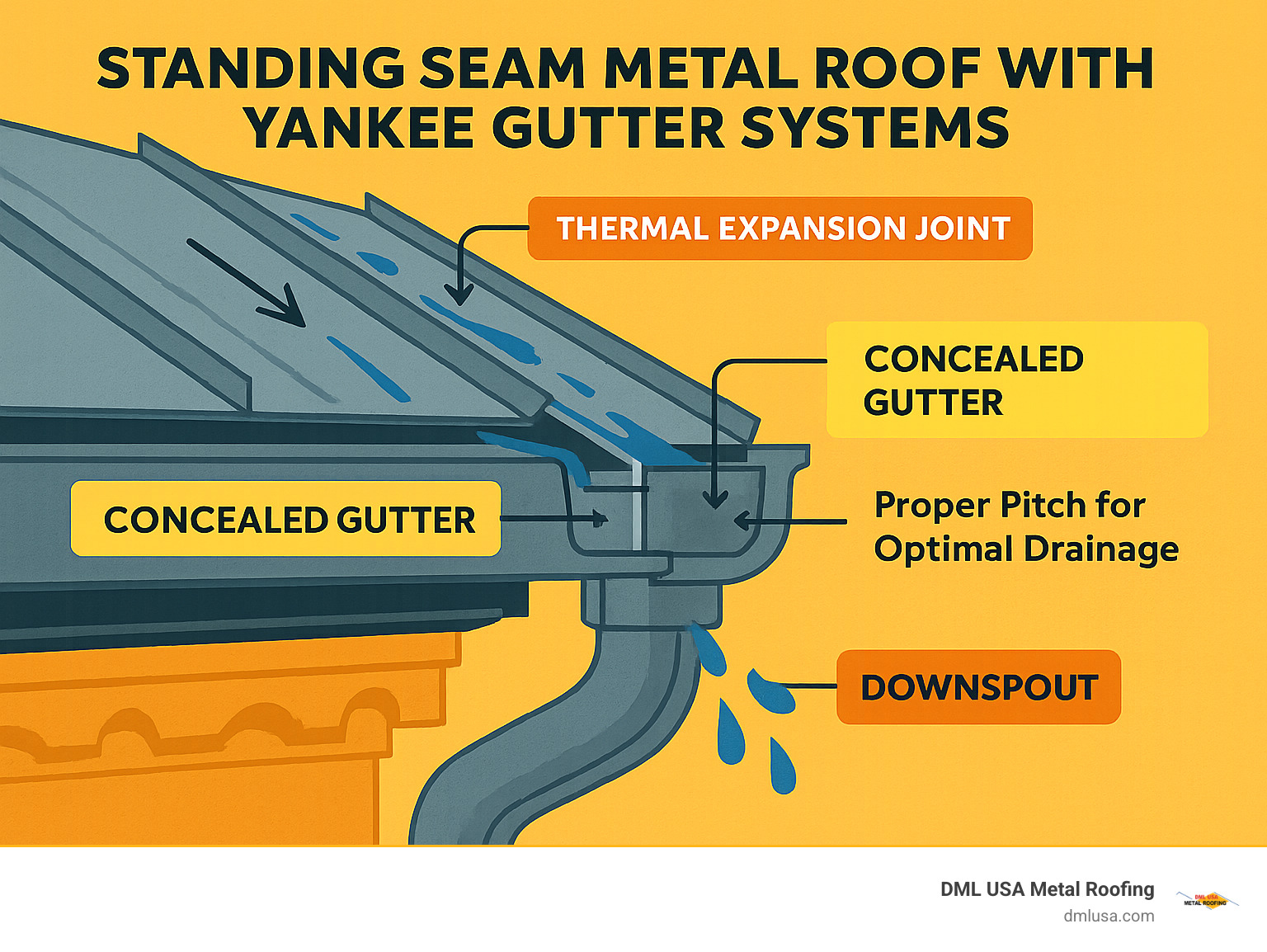
Yankee gutters date back to the 18th century and were originally carved wooden troughs coated with linseed oil. These systems shine when paired with standing seam metal roofs because both prioritize longevity over quick fixes. The concealed fasteners of standing seam panels complement the hidden nature of built-in gutters, creating a clean roofline that can handle massive water volumes without compromising your home’s architectural details.
The integration requires precise flashing work, proper thermal expansion allowances, and expert craftsmanship. But when done right, you get a roof and gutter system that can outlast three generations of conventional roofing.
I’m Adam Kadziola, and over my years in metal roofing manufacturing and home renovations, I’ve seen how standing seam metal roof with yankee gutter systems can transform both the performance and curb appeal of historic properties.
Standing seam metal roof with yankee gutter systems further reading:
– metal roof gutter systems
– standing seam gutter
– standing seam metal roof concealed gutter system
What Makes Standing Seam Metal Roofs Unique?
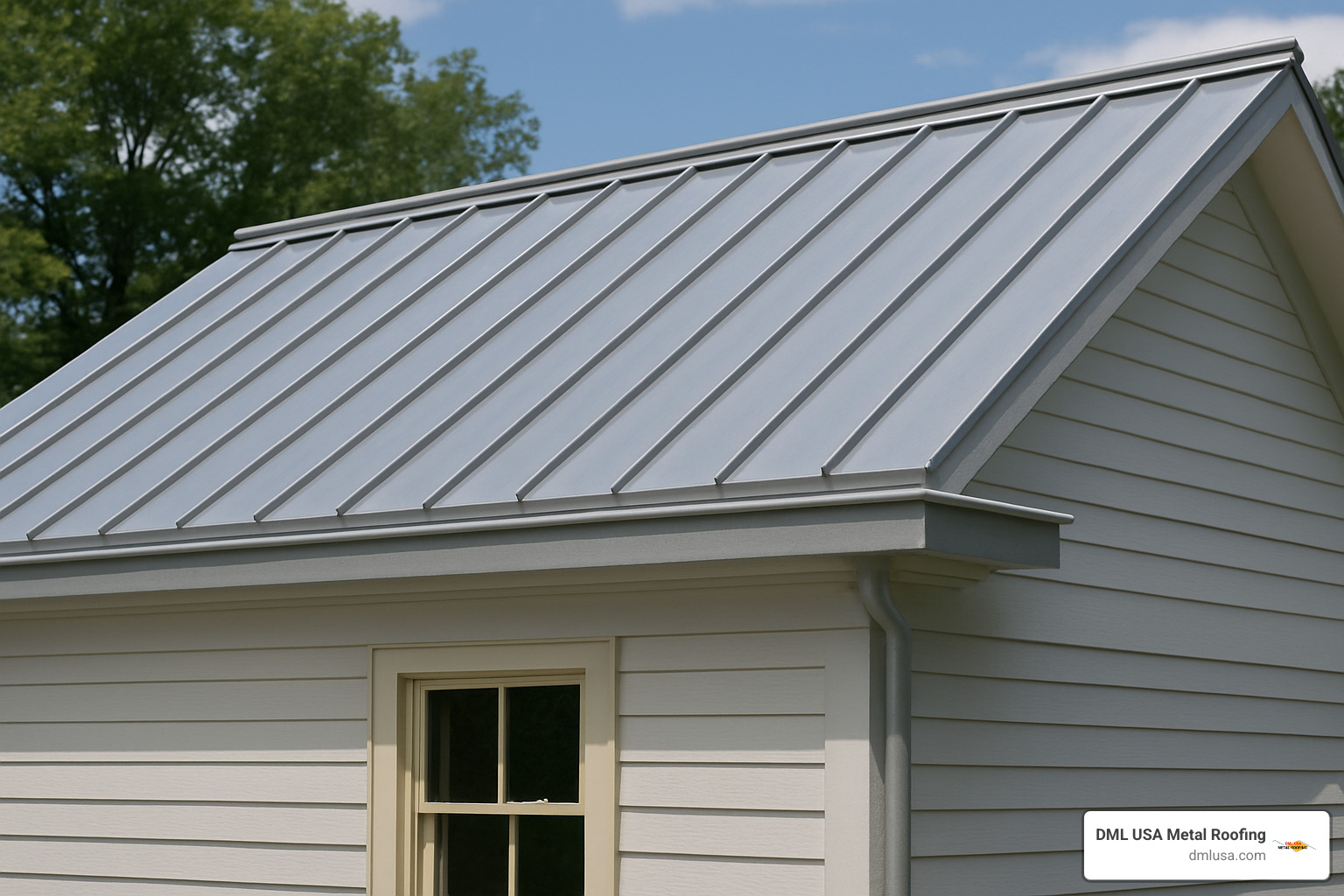
What sets a standing seam metal roof apart is the concealed fasteners hidden underneath the panels, eliminating leak-prone exposed screws. The raised seams, typically standing an inch or more above the flat surface, create a watertight barrier that handles even severe weather.
These roofs excel at thermal movement. When temperatures swing from summer heat to winter cold, the concealed clip system allows panels to expand and contract without cracking. This flexibility becomes crucial when pairing with Yankee gutter systems, since both components move together.
Fire resistance earns these roofs top Class A ratings, often reducing insurance premiums. While asphalt shingles may be sold as “30-year roofs,” most fail after 10-15 years. A well-installed metal roof can last 60+ years.
Energy savings come naturally as panels reflect sunlight, keeping spaces cooler. Many homeowners qualify for energy tax credits. Plus, metal roofs are 100% recyclable, unlike asphalt which heads to landfills.
For northern climates, the smooth panels and tall seams let snow slide off easily, preventing ice dams.
| Feature | Standing Seam Metal | Asphalt Shingles |
|---|---|---|
| Lifespan | 50-60+ years | 15-20 years |
| Fire Rating | Class A | Varies |
| Wind Resistance | Up to 140 mph | Up to 110 mph |
| Energy Efficiency | Reflective, reduces cooling | Heat absorbing |
| Maintenance | Minimal | Regular replacement |
| Recyclability | 100% | 0% |
Profiles, Materials & Finishes
Standing seam systems come in snap-lock and mechanically seamed styles. Snap-lock panels “click” together for easier installation and replacement. Mechanical seaming uses special tools to crimp seams tight for maximum weather protection.
Materials include galvanized steel, aluminum, copper, and Galvalume. Copper starts shiny brown, then develops a beautiful green patina over about 30 years while adding protection (see the Copper entry for the science behind its natural weathering).
Kynar coatings (PVDF resin) are the gold standard for color retention, resisting fading and chalking far better than basic paint.
Modern Performance Backed by Science
Oak Ridge National Laboratory found that properly designed metal roofs with above-sheathing ventilation can cut heat transfer by up to 30%. Many homeowners see energy bills drop 20-40%.
The ¾” air space under standing seam panels creates natural airflow, keeping things cool and dry. Light-colored metal roofs can earn Cool Roof ratings and LEED credits.
When you combine a standing seam metal roof with yankee gutter systems, you get engineered performance for generations.
Yankee Gutters 101: History, Anatomy, Function
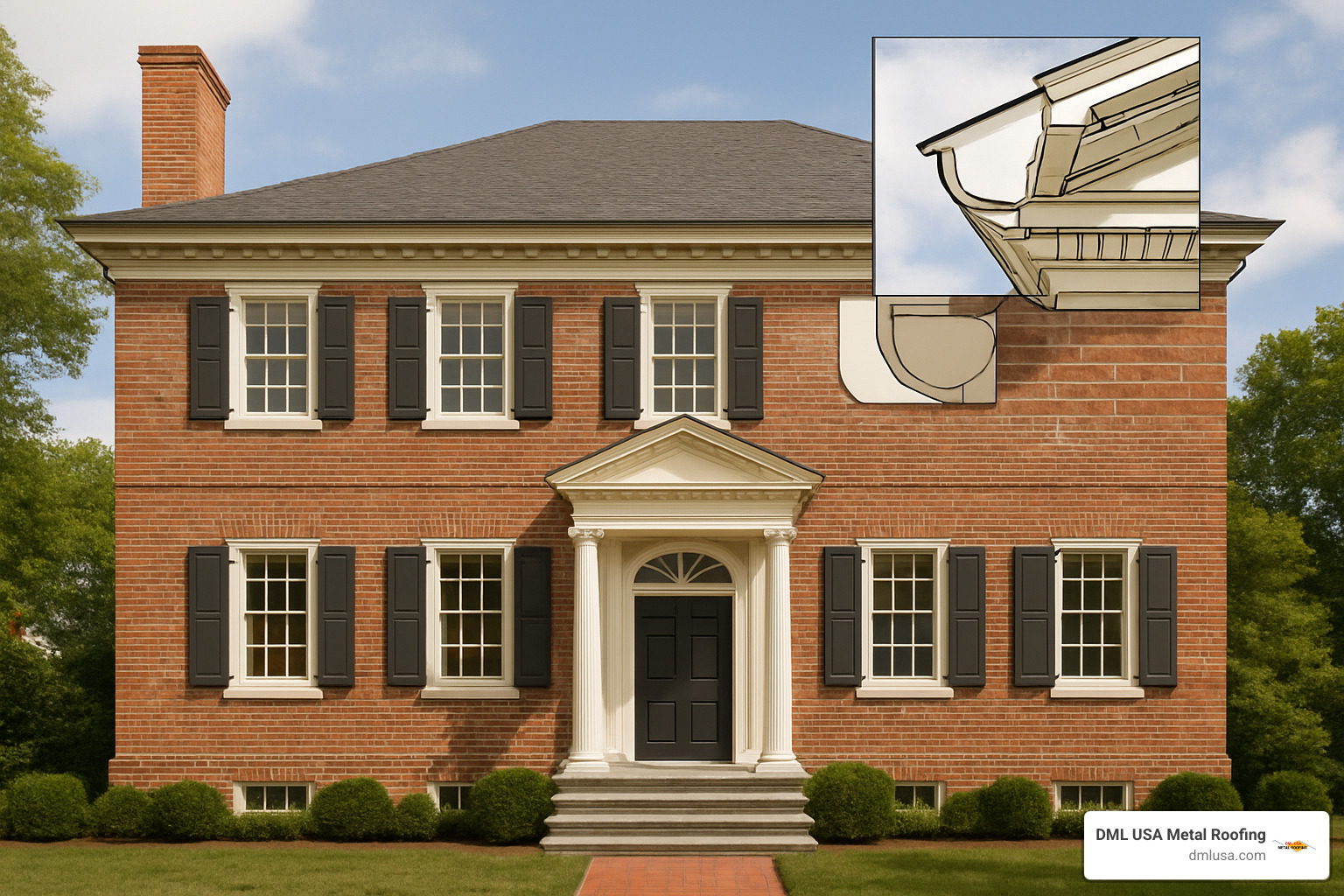
Yankee gutters date to the 18th century when architects used these built-in systems on Georgian and Federal homes. They’re completely hidden in the cornice, preserving beautiful moldings and trim details.
The construction follows the old formula: a wooden box sits on the roof deck or is carved into the roof itself, then lined with metal. Originally lead or tin, today’s systems use copper or stainless steel. The entire setup hides inside the architectural cornice.
Standing seam metal roof with yankee gutter systems work well because these gutters handle large water volumes. Built-in channels are much wider and deeper than standard gutters, managing heavy rain from big, steep roofs without problems.
Built-in Yankee gutters reduce ice dam problems. The thick wood box and protected location keep temperatures stable, meaning less ice buildup than exposed gutters. When paired with standing seam metal roofs, you get natural snow shedding and dry edges.
The biggest advantage is preserving your home’s character. Unlike chunky modern gutters that cover decorative trim, built-in gutters let historic details shine.
Typical Lining Metals & Their Pros/Cons
Soft copper is the gold standard, flexing with temperature changes so seams stay tight. Properly installed soft copper linings last 50+ years.
Stainless steel is another excellent modern option. It’s tough, long-lasting, can be soldered for tight seals, and typically costs less than copper upfront.
EPDM rubber linings offer 20-year warranties but can’t be soldered, making seams less reliable long-term. We recommend EPDM only for temporary fixes.
Always choose metals that can be soldered – copper or stainless steel create genuinely watertight joints. Avoid tar and patch compounds that only hide problems.
Why They Fail & Early Warning Signs
The number one enemy is pin-holes from corrosion in metal lining. Small holes let water into wood, starting slow rot that spreads inside the cornice.
Ponding water from lost slope causes gutters to rot or sag. Peeling paint on gutter faces often means moisture behind the lining. Soffit rot below gutters indicates long-term leaking. Masonry stains around downspouts show overflow or leaking issues.
Understanding these basics helps keep your standing seam metal roof with yankee gutter systems performing for decades.
Standing Seam Metal Roof With Yankee Gutter Systems: Best-Practice Integration
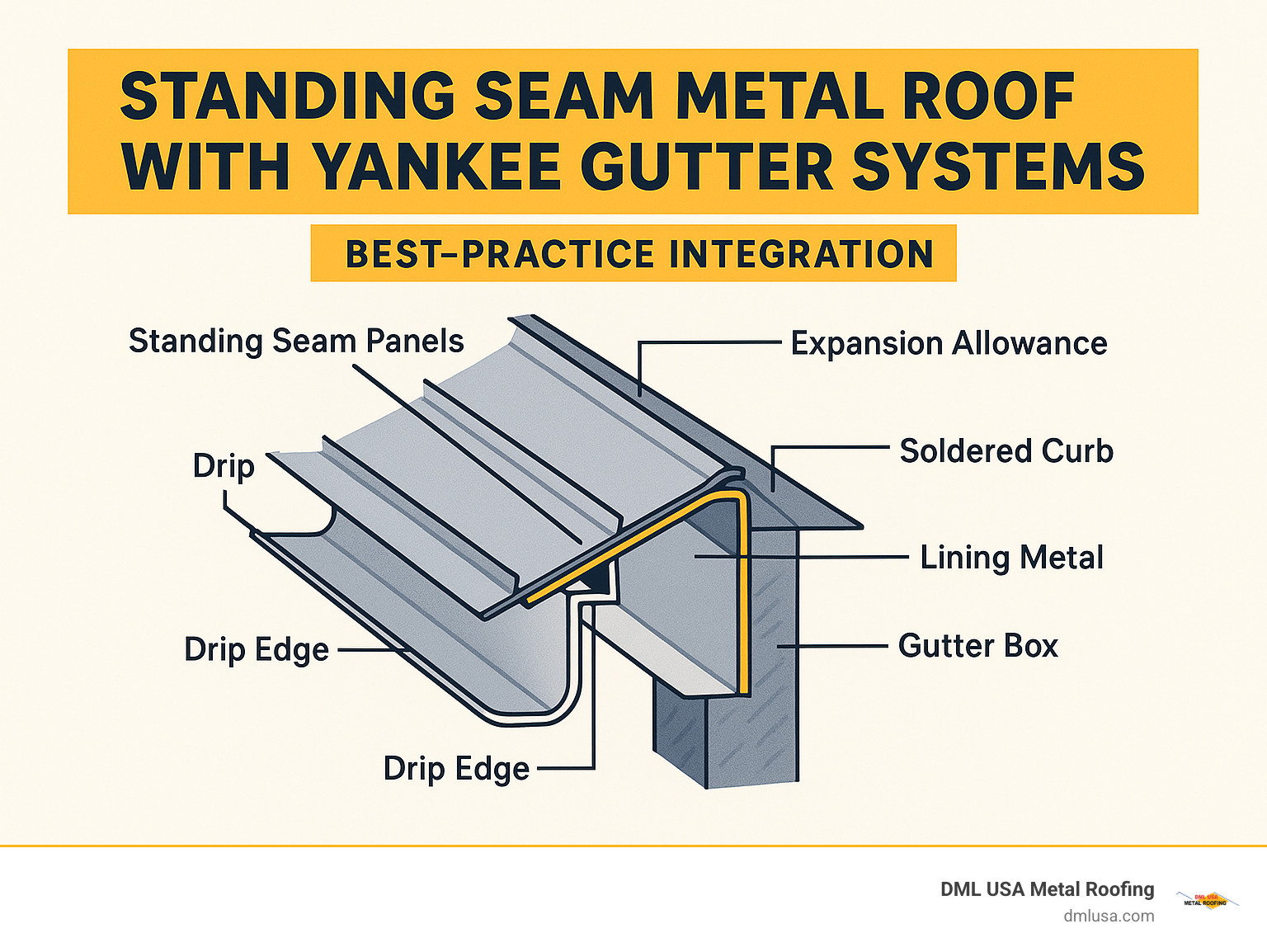
Getting standing seam metal roof with yankee gutter systems to work together requires careful coordination. The panel-to-gutter lock represents the most critical connection, usually requiring a soldered curb that creates a bulletproof seal between roof and drainage.
Expansion allowance becomes crucial since both metal roof and gutter lining expand and contract with temperature changes. Connection details must flex without opening leak paths or creating stress points.
Your drip edge strategy needs complete rethinking. Standing seam panels must integrate seamlessly with the gutter’s back wall, often requiring custom-formed flashings that match your roof profile exactly.
Clip spacing near gutters requires special positioning to allow panel movement while maintaining secure fastening. The underlayment tie-in needs proper extension into gutter areas without interfering with metal lining installation.
Historic Methods vs. Modern Upgrades
Traditional hand-bent pans formed on-site created perfectly fitted systems lasting decades. Red rosin paper served as underlayment that won’t corrode metal through chemical reactions – still recommended for restoration projects.
Modern elastomeric ice-and-water shield provides backup waterproof protection. Duragutter inserts offer contemporary solutions when wooden boxes have deteriorated beyond repair. Slip-seams handle thermal movement in long panel runs better than historic shorter panels.
Common Mistakes
Roof tar patching represents the most destructive mistake – bituminous compounds hide problems, corrode metal linings, and create irreversible damage. Never use tar-based products on metal gutter linings.
Wrong pitch causes immediate problems. Gutters need at least 1/8″ per foot slope toward outlets. Hard copper splitting happens when installers use wrong copper temper – soft copper accommodates thermal movement while hard copper cracks.
Color mis-match destroys aesthetic benefits. Gutters should match trim color, never roof color. Contractor inexperience leads to multiple avoidable problems – always verify specific experience with both components.
Maintenance, Restoration & Common Pitfalls
Maintaining your standing seam metal roof with yankee gutter systems requires attention but isn’t complicated. Annual cleaning tops the list – clear leaves, twigs, and debris every fall and spring to prevent moisture buildup that corrodes metal lining.
Downspout flushing reveals system health. Run water through each downspout – it should flow freely without backing up. Ice melt cables prevent ice dams in harsh climates when installed properly.
When restoration becomes necessary, KDAT framing repairs provide decay-resistant foundations. Soft copper re-lining represents the gold standard – removing old materials, repairing structural issues, and installing fresh copper with soldered joints lasts another century.
Acrymax coatings offer middle-ground solutions when metal lining is sound but aging, creating new waterproof surfaces at fraction of full restoration cost. Wood petrifier hardens deteriorated wooden components, often saving irreplaceable architectural details.
DIY inspections can catch obvious problems like peeling paint or water stains, but professional inspections reveal hidden issues requiring trained assessment.
Step-by-Step Restoration Roadmap
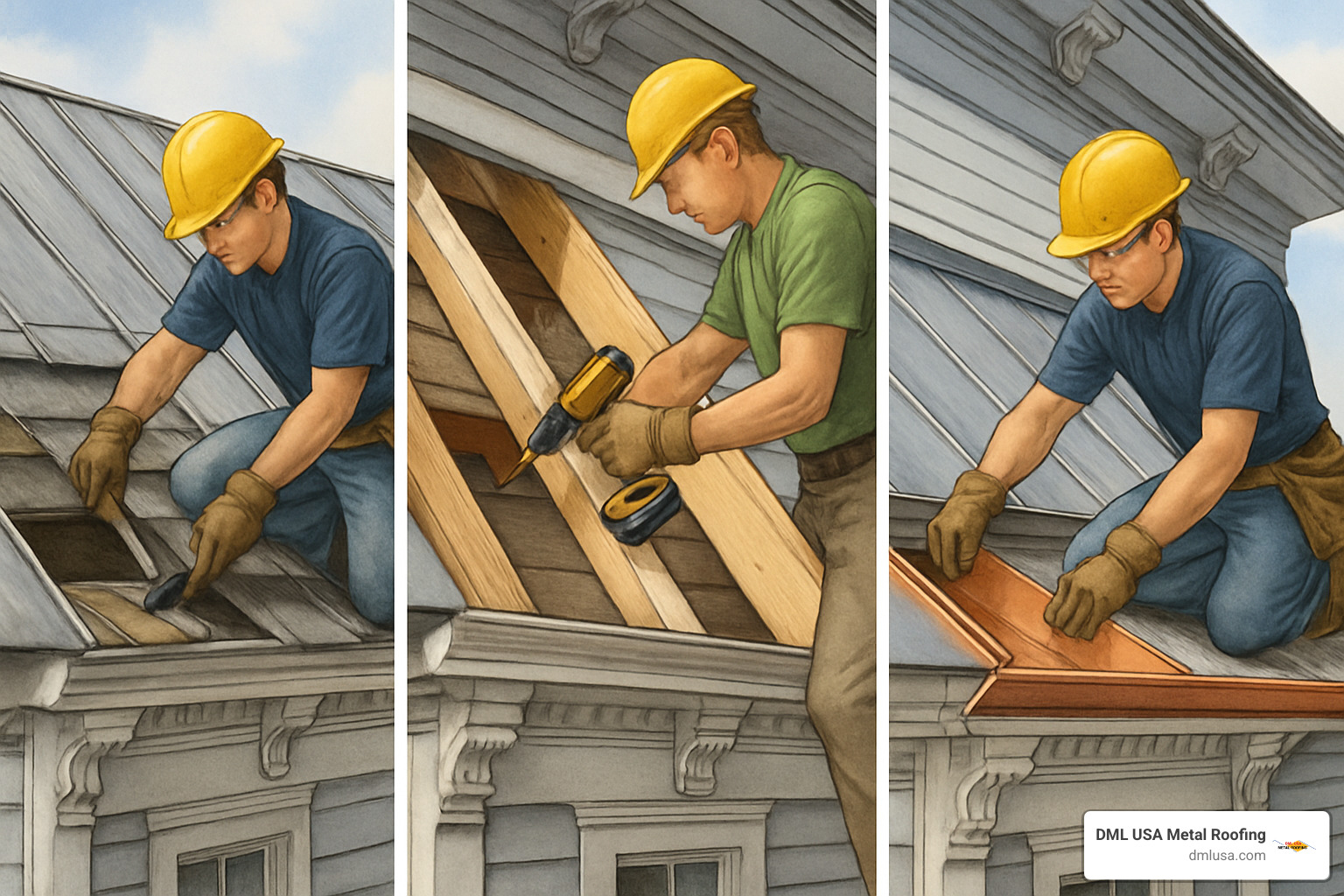
Restoration follows logical sequence. Tearing out 2 feet of roofing above gutters seems excessive but provides essential access to gutter boxes and structural evaluation.
Sistering rafters addresses deteriorated framing using KDAT lumber matching original dimensions. The new belly installation creates properly pitched gutter box bottoms using KDAT materials.
Soldered lining installation separates professionals from amateurs. Every joint must be soldered watertight, with corner details and outlets demanding particular skill. Reinstalling panels completes the integration with proper flashing and expansion details.
Finding Qualified Craftspeople
Preservation architects maintain lists of qualified contractors understanding historic systems. Metal roof guilds provide directories of certified installers with specific training.
References from similar projects provide best insight into contractor capability. Ask to see completed installations combining both roofing and gutter work. Insurance verification protects against unexpected liability – ensure contractors carry appropriate coverage.
Scope specifications should detail every work aspect in writing. Vague contracts lead to disputes and cost overruns.
Cost, Materials & Aesthetic Considerations
A standing seam metal roof with yankee gutter systems requires higher investment than standard systems, but delivers superior long-term value. Copper commands premium pricing but offers best longevity and beauty. Galvanized steel and aluminum provide more affordable options with shorter lifespans.
Labor costs run 25-50% higher for experienced contractors, but quality installation means fewer headaches and longer performance. Don’t forget scaffolding costs for multi-story homes – budget for safe access from the start.
With 60-100 years of service life, minimal repairs, and energy savings, initial investment pays back over time. Many homeowners qualify for tax credits – federal credits can cover up to 30% of material costs (up to $1,500) for energy-efficient projects.
Aesthetics matter equally with function. Gutters should match trim, not roof – this keeps rooflines balanced and highlights historic features. Trim matching makes roof, gutters, and decorative elements feel cohesive.
Restore vs. Replace Decision Matrix
If your home is officially historic or in preservation districts, restoration is often required. Original cornice details – crowns, dentils, moldings – are irreplaceable treasures worth preserving.
Severity of leaks shapes options. Minor damage allows planned restoration, while major rot may require modern replacement for safety. Budget is always a factor – full restoration costs 2-3 times regular gutter replacement, but financing and tax credits can help.
Modern seamless systems can sometimes mimic Yankee gutter appearance with less complexity – not authentic but practical for some homes.
Frequently Asked Questions about Standing Seam Metal Roof With Yankee Gutter Systems
Do I have to remove my original Yankee gutters when installing a new metal roof?
It depends on condition. If gutters have solid wooden boxes and recent metal lining, you can often integrate new standing seam panels into existing systems.
Have professionals assess before committing. Watch for paint peeling on gutter faces, water stains on soffits, or visible rot in wooden parts. Address these problems during roof replacement.
Integration requires removing at least 2 feet of old roofing above gutters anyway, providing perfect opportunity to assess underneath conditions. If you’re investing in 60+ year roofing, ensure gutters can keep up.
Which metal lining lasts the longest in a Yankee gutter?
Soft copper wins, typically lasting 50-100 years when properly installed. Soft copper accommodates thermal movement without cracking soldered joints, unlike brittle hard copper that splits under stress.
Stainless steel comes close for longevity at lower upfront cost. Modern stainless can be soldered like copper, creating watertight connections. You won’t get copper’s beautiful green patina though.
EPDM rubber offers 20-year warranties as budget option but can’t create seamless, solderable joints. We suggest EPDM only for temporary solutions before full restoration.
Installation quality matters most – even best materials fail with sloppy soldering work.
How much does a full restoration typically cost per linear foot?
Expect $75-150 per linear foot for complete restoration including removing old roofing, fixing wooden gutter boxes, installing new metal lining, and integrating with standing seam panels.
Gutter condition makes biggest difference – solid wooden boxes cost less than complete rebuilding. Access difficulty on multi-story homes adds scaffolding costs. Material choice affects budgets – copper costs more than stainless or EPDM. Architectural complexity requires more skilled labor.
While restoration costs more than conventional gutters, standing seam metal roof with yankee gutter systems last 60-100 years with minimal maintenance. Energy savings help offset restoration costs. Neglected gutters cause damage costing several times more than proper restoration.
Conclusion & Next Steps
When you invest in a standing seam metal roof with yankee gutter systems, you’re choosing protection that can outlast three generations of conventional roofing. This preserves your home’s architectural soul while embracing advanced materials science.
The environmental benefits improve yearly. While neighbors replace their third set of asphalt shingles, your metal roof performs like new. 100% recyclable materials mean every component becomes part of another building instead of filling landfills. Energy efficiency improvements start paying dividends immediately.
Curb appeal changes often surprise homeowners. Clean rooflines where gutters disappear into classical proportions create magical architectural integrity that translates directly into property value.
At DML USA Metal Roofing, we’ve learned that standing seam metal roof with yankee gutter systems succeed based on understanding component integration. Thermal expansion, proper flashing details, and color coordination make or break the entire investment.
The single-source advantage matters – when your roof manufacturer understands gutter integration, you avoid finger-pointing when systems don’t work together.
Start with honest assessment even if major work is years away. Understanding your situation helps plan smart and avoid emergency calls during storms. Sometimes simple maintenance buys years of planning time.
The century-long protection these systems provide isn’t marketing talk. We’ve inspected copper installations from the 1920s still performing beautifully. Quality materials and skilled installation benefit your children and grandchildren.
Ready to explore what standing seam metal roof with yankee gutter systems can do for your property? Our team can walk you through options fitting your timeline, budget, and architectural goals. Explore our solutions at Products.
This isn’t just roofing – it’s honoring craftsmanship while embracing innovation. Choose systems respecting your home’s history while delivering modern performance for every storm.
