

Types of gutters for metal roofs: 3 Best Options
Why Your Durable Metal Roof Still Needs the Right Gutters
Metal roofs are strong, look great, and can last for 50 years or more. But even the best metal roof needs a quality gutter system to protect your home from water damage. Gutters are essential for moving rainwater away from your foundation and walls, preventing erosion and structural problems. Choosing the right types of gutters for metal roofs is key to a complete system that lasts for decades.
Adam Kadziola from DML USA Metal Roofing brings years of experience in manufacturing and home renovations, with a profound understanding of how gutters play a critical role in protecting homes. Our family-owned company carefully selects materials to provide lasting quality and beautiful, maintenance-free designs.
Simple types of gutters for metal roofs glossary:
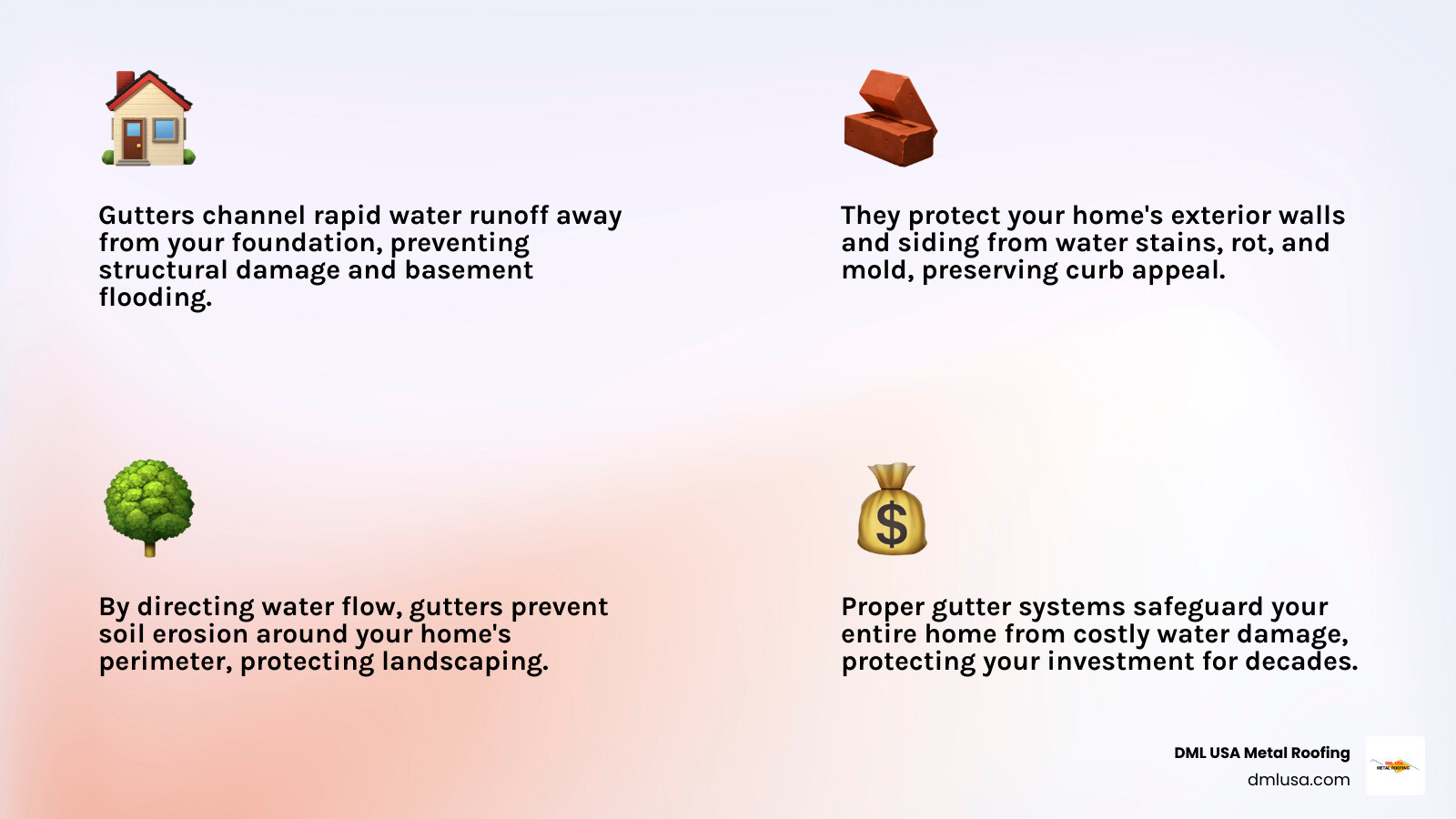
Homeowners often ask, “My metal roof is so durable, do I really need gutters?” It’s a fair question. Metal roofs are incredibly efficient at shedding water due to their smooth surface. This rapid runoff is great for your roof, but it means water comes off at a high velocity. Without a well-designed gutter system, this can lead to a host of issues:
- Erosion: The force of falling water can erode the soil around your foundation.
- Foundation Damage: Water pooling near your foundation can seep into cracks, causing dampness, mold, and structural instability.
- Siding and Window Damage: Constant splashing can degrade siding, cause wood rot, and lead to leaks.
- Landscape Destruction: Uncontrolled water flow can wash away flowerbeds and shrubs.
While your metal roof is a fortress, gutters act as its essential moat, channeling rainwater safely away from your home’s vulnerable areas. They are an investment that protects your larger investment—your home. At DML USA Metal Roofing, we believe in providing comprehensive protection, which includes guiding you to the best gutter system choices.
Want to learn more about the incredible benefits of metal roofing itself? Check out our insights on Why Choose Metal Roofing?
Exploring the Best Types of Gutters for Metal Roofs
Now that we understand why gutters are a vital companion to your metal roof, let’s explore the different types of gutters for metal roofs. Each style offers unique aesthetics and practical benefits to match your home and climate.
K-Style Gutters
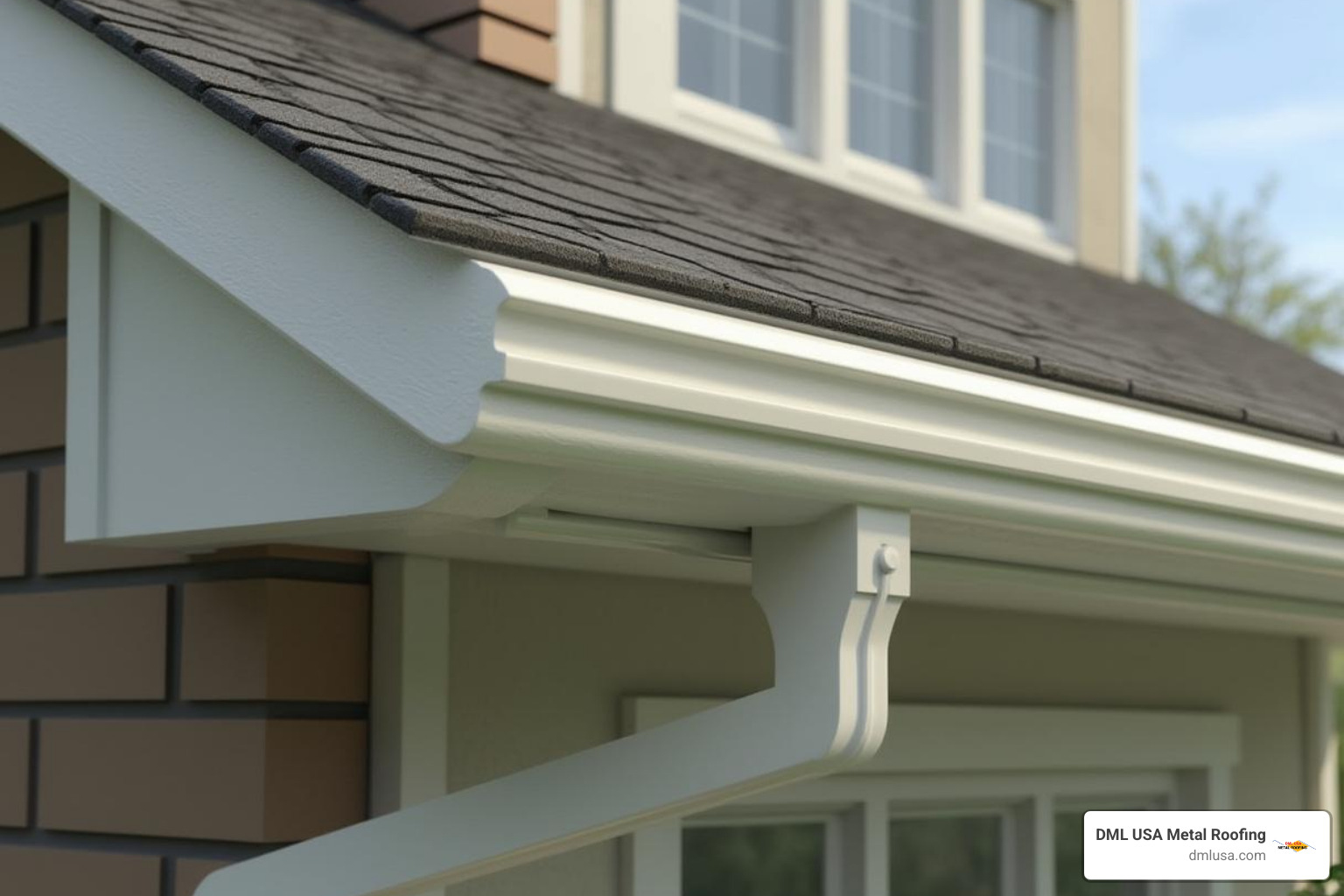
K-style gutters are the most popular choice for residential homes. Their front side resembles decorative crown molding, adding a touch of elegance to your exterior. Beyond looks, their design allows them to hold a high volume of water, making them a fantastic choice for areas with heavy rainfall. They efficiently manage the rapid water flow from a smooth metal roof. While they are a residential favorite, their angled interior can be prone to debris buildup, so gutter guards are a smart addition. K-style gutters typically range from $6 to $40 per linear foot, depending on the material and installation.
Half-Round Gutters
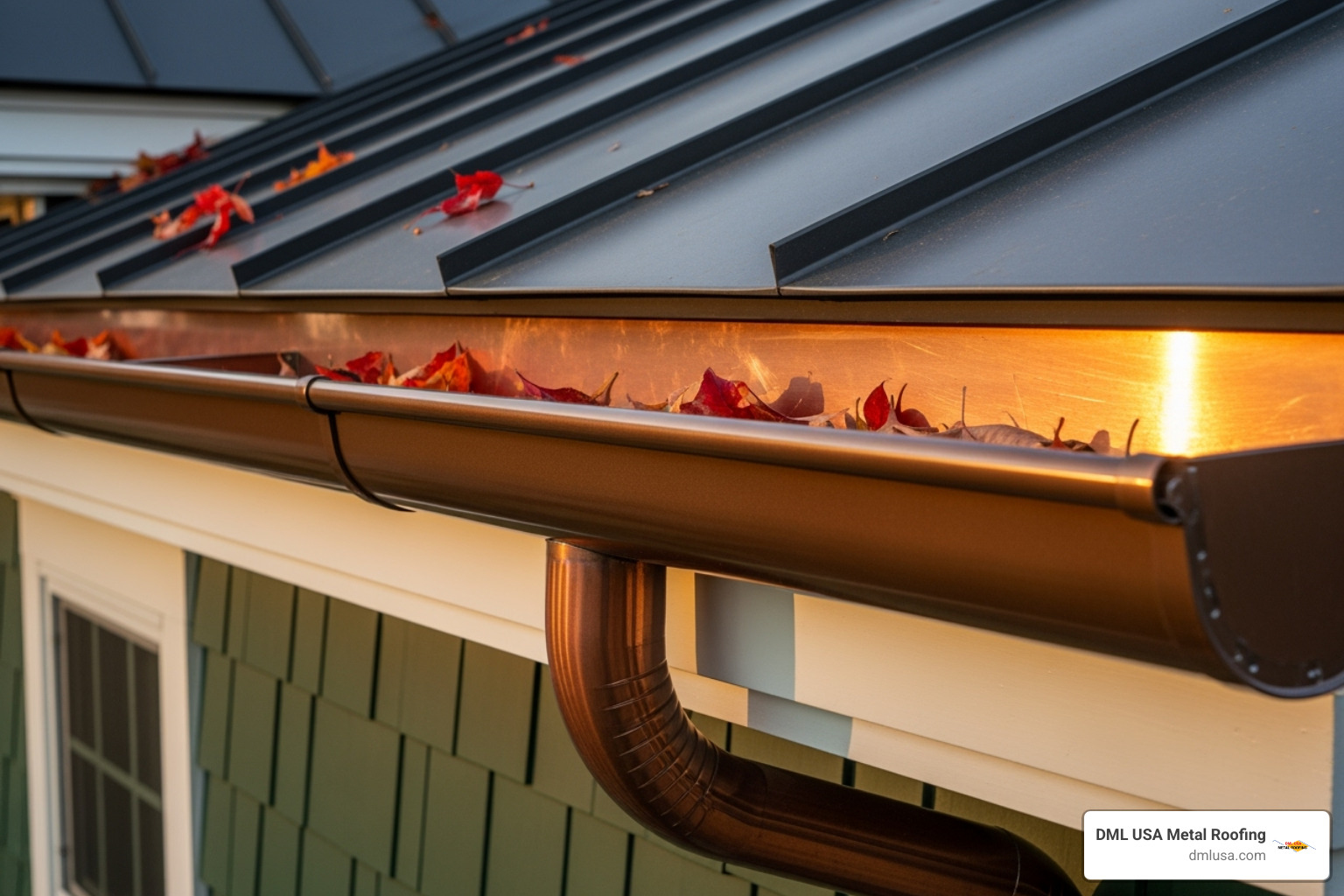
For a neat and low-maintenance option, consider half-round gutters. Shaped like a cylinder cut in half, they offer a smooth, rounded profile that provides a classic aesthetic. They are especially popular for traditional or historic homes. A major benefit is that they are easy to clean; their smooth, curved interior helps prevent leaves and debris from getting stuck, leading to less clogging. While their capacity is slightly less than K-style gutters of the same size, they perform exceptionally well. Half-round gutters typically cost $13 to $45 per linear foot, and their timeless appeal and easier maintenance make them a worthwhile investment.
Box Gutters
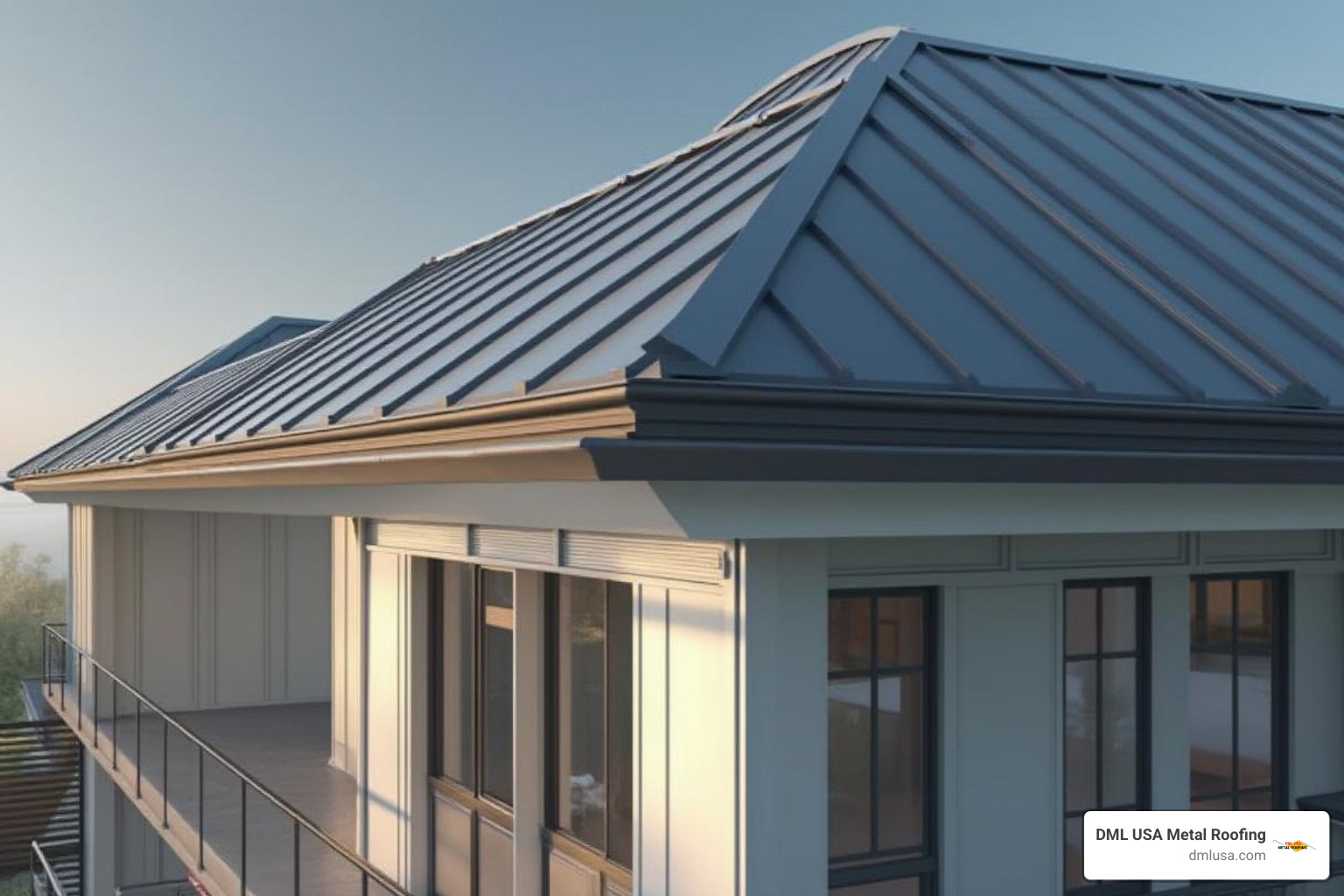
If you prefer a clean, minimalist look, box gutters are a perfect match. Unlike other styles, box gutters are built directly into the eaves of the home, creating a sleek, built-in look that preserves the clean lines of modern architecture. These gutters are powerhouses, designed to handle a high volume of water, making them ideal for large roofs or areas with heavy downpours. Because they are integrated into the home’s structure, they require custom fabrication and professional installation. The cost per linear foot can range from $4 to $30, but the custom nature of the project can increase the overall cost. For homeowners who prioritize a minimalist aesthetic and superior water handling, box gutters are a sophisticated option.
Choosing the Right Gutter Material
After choosing a style, the next important decision is the material. This choice affects longevity, maintenance, and, most importantly, compatibility with your metal roof. You want gutters that will last as long as your roof, and that means avoiding issues like galvanic corrosion.
Key Material Choices for Different Types of Gutters for Metal Roofs
Different materials offer different benefits in terms of durability, cost, and maintenance. Here are the most popular choices:
| Material | Lifespan (Years) | Cost per Linear Foot | Corrosion Resistance | Maintenance | Weight |
|---|---|---|---|---|---|
| Aluminum | 20-30 | $7 – $13 | Excellent | Low | Lightweight |
| Steel | 20-40 | $6 – $40 | Good (Galvanized/zinc-aluminum alloy coated) | Moderate | Heavy |
| Copper | 50+ | $30 – $80+ | Excellent | Very Low | Heavy |
Let’s break down these options:
Aluminum Gutters: The most common and budget-friendly choice. Aluminum is lightweight, easy to install, and naturally rust-resistant. It comes in many colors to match your home but can be more prone to dents than other metals.
Steel Gutters: For serious strength, steel is a champion. Usually treated with a galvanized or zinc-aluminum alloy coating, it’s incredibly tough against harsh weather, heavy snow, and hail. It’s heavier than aluminum but offers unparalleled durability.
Copper Gutters: The premium choice, known for being incredibly durable and often outlasting the roof itself (50+ years). Over time, copper develops a beautiful, distinctive patina. While the initial cost is higher, its longevity and low maintenance can make it cost-effective long-term.
The “best gutter material depends on budget and desired lifespan.” For a deeper dive into our high-quality metal roofing options that pair perfectly with these gutter materials, Explore Our Metal Roofing Products.
Material Compatibility and Sustainability
When choosing gutter materials for a metal roof, material compatibility is crucial to avoid galvanic corrosion. This occurs when two different metals touch in the presence of water, causing one to corrode much faster. For example, copper gutters on an aluminum roof could cause the aluminum to wear away quickly.
Matching Metals: The golden rule is to match your gutter material to your roof material. Aluminum gutters are a safe bet with most aluminum or painted steel roofs. If you choose copper gutters, special care and isolation layers may be needed to prevent reactions with other metals. Our team at DML USA Metal Roofing can guide you through the best compatibility practices for your specific roof system.
Recyclability and Water Harvesting: Many metal gutter materials, like aluminum, steel, and copper, are highly recyclable, reducing their environmental impact. Gutters also allow for water harvesting; you can collect rainwater in barrels for gardening, which is a great way to conserve water. For more information, you can learn about Environmentally preferable materials and potential Energy Star tax credits for your new roof.
Key Factors for a Perfect Gutter System
Choosing the right style and material is a great start, but a perfect gutter system also requires proper sizing, expert installation, and consistent maintenance. These factors are critical for ensuring your gutters function flawlessly for decades.
Gutter Sizing: 5-inch vs. 6-inch
Size matters for handling water runoff, especially from a slick metal roof where water moves quickly. For most homes, standard 5-inch gutters are sufficient. However, you should consider 6-inch gutters if you live in an area with heavy rainfall, have a large roof, or a steep roof pitch. A 6-inch gutter holds about 50% more water than a 5-inch one, which is a significant capacity boost for catching rapid water flow. Consulting an expert like our team at DML USA Metal Roofing can help you determine the right size for your home.
Installation Best Practices for All Types of Gutters for Metal Roofs
Proper installation is critical for the longevity of your gutter system. We highly recommend professional installation for metal roofs due to their unique characteristics. An improper job can lead to water damage and void your roof’s warranty.
Key installation points include:
- Proper Slope: Gutters need a slight tilt (about 1/16 to 1/8 inch per foot) towards the downspouts to ensure complete drainage and prevent pooling water.
- Secure Attachment: Gutters must be securely attached to the fascia board to withstand rain, snow, and wind. Hidden hangers are often the best choice for metal roofs, providing strong support without visible spikes that could damage the roof. Ensure your fascia board is sturdy enough to support the weight.
- Snow Guards & Retention Systems: In snowy regions, these are a must. Metal roofs shed snow in large sheets, which can rip gutters off. Snow guards break up sliding snow, protecting your gutters. Some systems even allow snow to slide over the gutters entirely. This is a crucial consideration for all types of gutters for metal roofs in cold climates.
For examples of expertly installed metal roofs, View Our Metal Roofing Gallery.
Maintenance and Common Issues
Regular maintenance is key to preventing common issues and extending the life of your gutters.
- Clogging: Leaves and twigs can block water flow. Clean your gutters at least twice a year (spring and fall). Consider installing gutter guards or screens to keep debris out.
- Ice Dams: In cold climates, melted snow can refreeze at the eaves, trapping water. Prevent this with a well-insulated and ventilated attic and by installing snow retention systems. Heated gutter cables are also an option in very cold areas.
- Leaks: Seams can separate over time. Opting for seamless gutters greatly reduces this risk. Inspect joints regularly and re-seal any leaks promptly.
- Expansion/Contraction: Metal expands and contracts with temperature changes. Proper installation accounts for this movement, but in long gutter runs, expansion joints may be needed.
Regularly inspect your gutters, especially after big storms. While many homeowners can handle cleaning, professional services can catch potential problems early.
Frequently Asked Questions about Metal Roof Gutters
We get many questions about pairing gutters with our durable metal roofs. Here are answers to some of the most common ones.
Can I install gutters myself on a metal roof?
While it’s possible for an experienced DIYer, we highly recommend professional installation. Metal roofs have unique characteristics that make gutter installation tricky. Professionals have the right tools, safety gear, and knowledge to attach gutters securely without damaging your roof or causing leaks. An improper installation can lead to costly repairs and void your roof’s warranty, so letting an expert handle it is the smartest choice for long-term peace of mind.
What size gutters are best for a metal roof?
The best gutter size depends on your roof’s size, its pitch, and your local climate. A 5-inch gutter is sufficient for most homes. However, if you live in an area with heavy rainfall, have a large roof, or a steep pitch, you should upgrade to 6-inch gutters. A 6-inch gutter can handle about 50% more water, which is necessary to manage the high-velocity runoff from a steep or large metal roof. A local expert can help you make the right choice.
How do I prevent ice dams in gutters on a metal roof?
Preventing ice dams requires a multi-step approach. The most important step is ensuring your attic has proper insulation and ventilation to keep the roof surface cold, which prevents snow from melting and refreezing at the eaves. Secondly, install snow guards or a snow retention system to break up large sheets of sliding snow and ice, protecting your gutters from damage. Finally, keep your gutters clean and free of debris before winter arrives. For very cold climates, heated gutter cables can also be installed to maintain a clear path for water to drain.
Ensure Your Roof is Protected with the Right Gutter System
You’ve explored the various types of gutters for metal roofs, from different styles like K-style and half-round to materials like aluminum and copper. Choosing the right gutter system is a critical final step in protecting your home. Your DML USA metal roof is a champion built to last, but it needs a strong support system.
By matching the right gutter style, material, and size to your home’s needs and climate, you complete a comprehensive water management system. This system will work flawlessly to channel rainwater away, safeguarding your home’s foundation, siding, and landscaping for years to come.
At DML USA Metal Roofing, we believe your gutter system should be as robust as our high-quality roofs. It’s about creating a high-performance duo that keeps your home safe and beautiful. Ready to take the next step? For more information on our exceptional metal roofing options, we invite you to explore our products. Let’s ensure your home is protected from top to bottom!